The Pientko estate in the village of Turbivka (until 2020 - Popylnia Raion, currently Kornyn hromada of Zhytomyr Raion) is one of those lesser-known architectural landmarks of Zhytomyr region that deserve more attention from researchers and tourists. Despite the modest amount of information, available data allows us to piece together a general picture of the estate's history, its owners, and its current state.
Historical Context and Owners
The wooden single-story estate that has survived to this day was probably built in the mid-19th century, although the exact construction date remains a subject of debate. According to Polish historian Tadeusz Epstein, who collected materials on Polish landowners as of 1890, the estate belonged to Ewaryst Pientko and later passed to his son Erazm, who owned it until the revolution. Other family members are also mentioned in sources - Teofila, Maria, Ignacy, and Aleksander.
Archival files of the Central State Historical Archive indicate that in the mid-19th century, the estate changed hands among several landlord families. In 1858-1859, the estate in Turbivka passed from landowner I. E. Checheli to nobleman I. F. Mionczynski as collateral for a loan, and in 1861 Mionczynski obtained ownership rights. However, in 1866-1877, guardianship was established over the estate and the minor children of the deceased landowner, recorded as S. Pientko, which raises questions about family relations and the transfer of ownership.
Researchers suggest that there might have been an error in the record regarding S. Pientko and it actually refers to Ewaryst Pientko, while Teofila Oleksandrivna could have been his wife and Erazm's mother. However, this hypothesis contradicts the fact that Ewaryst was still listed as a landowner in 1890. Thus, the history of the Pientko family and the transfer of the estate awaits further research.
Architecture and Current State
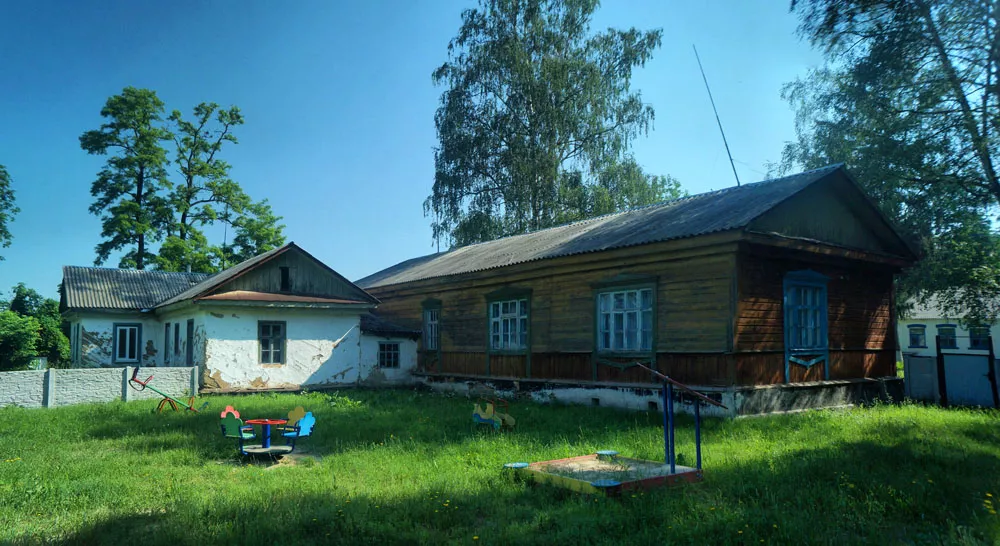
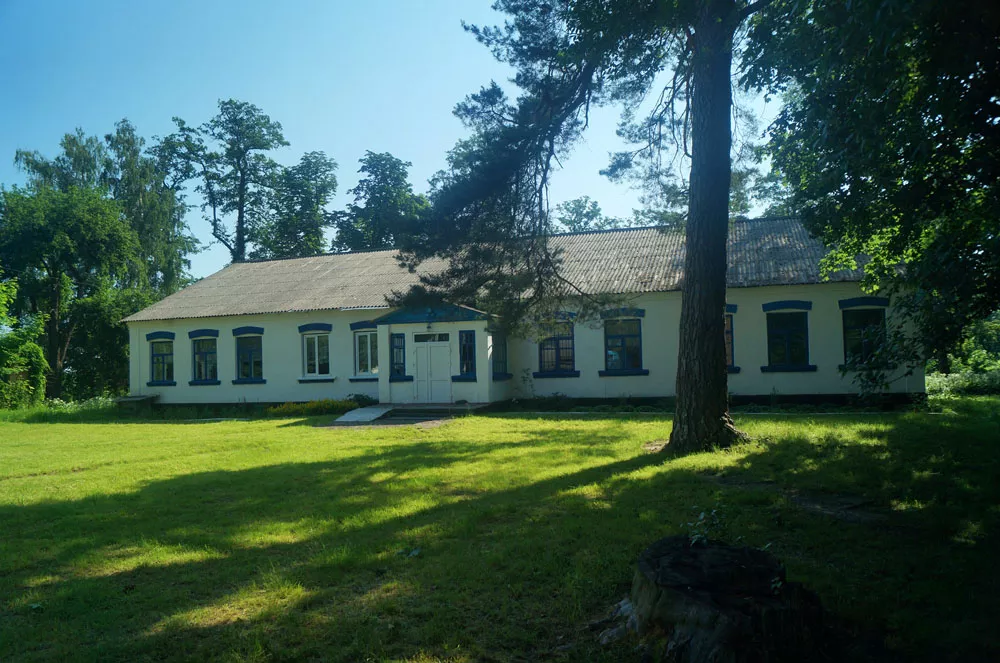
The Pientko estate is a wooden single-story building that has survived to the present day. The estate is not widely popular among tourists, but it is precisely the building's authenticity and its history that give it value.
Some outbuildings have survived to this day - a cellar and an outbuilding (wing). Until recently, there was also a tile stove in the building, which was later dismantled. Today, a village school operates on the premises of the historical estate, and the building itself looks well-maintained and attractive - the old-style windows are especially striking.
The park or garden around the estate is partially preserved: near the entrance, the area is quite neat, but further on the space is overgrown with weeds, burdocks, and nettles - there is no regular maintenance here.
Historical Sources and Further Research
There is not much information about the Pientko estate, and the available data mostly relies on the works of historians and archival records. Archival files related to the estate in Turbivka number more than 460 pages - a rich source for further research.
Perhaps part of the Pientko family had connections outside of Ukraine: in particular, there is a mention of the marriage of Halina-Marie Pientko in New Jersey in 1961, although a direct connection to the Turbivka Pientkos has not been confirmed.
Turbivka - Historical Context
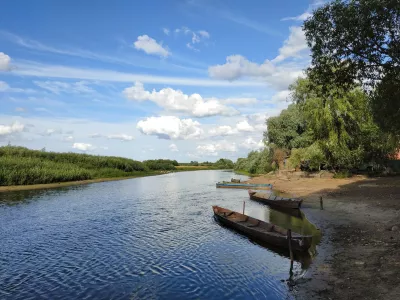
Turbivka is a small village on both banks of the Kalynivka River, a tributary of the Irpin; it has been known since the 18th century. According to local legend, the village was founded by people who survived the destruction of the town of Turbiv during the Mongol invasion of 1240, and they named it in memory of their hometown. Like many other villages in the region, Turbivka has its tragic page—the Holodomor of 1932–1933, when local residents suffered significant losses.
How to get there
Turbivka lies in the east of the Zhytomyr district, not far from Kornyn; the T-06-11 highway passes through the village. It is most convenient to travel by car.
Significance and potential
The Piontkiv Estate may interest lovers of 19th-century history and architecture as an example of a landowner's estate preserved in its authentic form. So far, it is little known and hardly featured in the tourist routes of the Zhytomyr region, even though such landmarks can become points of cultural revival for the area.
Ihor Dorozhko, Roman Malenkov, Serhii Shcherbii.