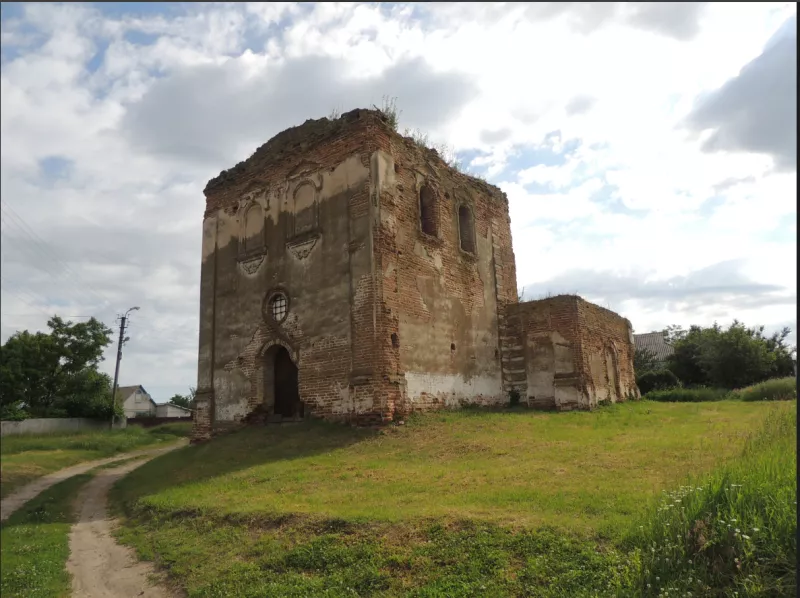

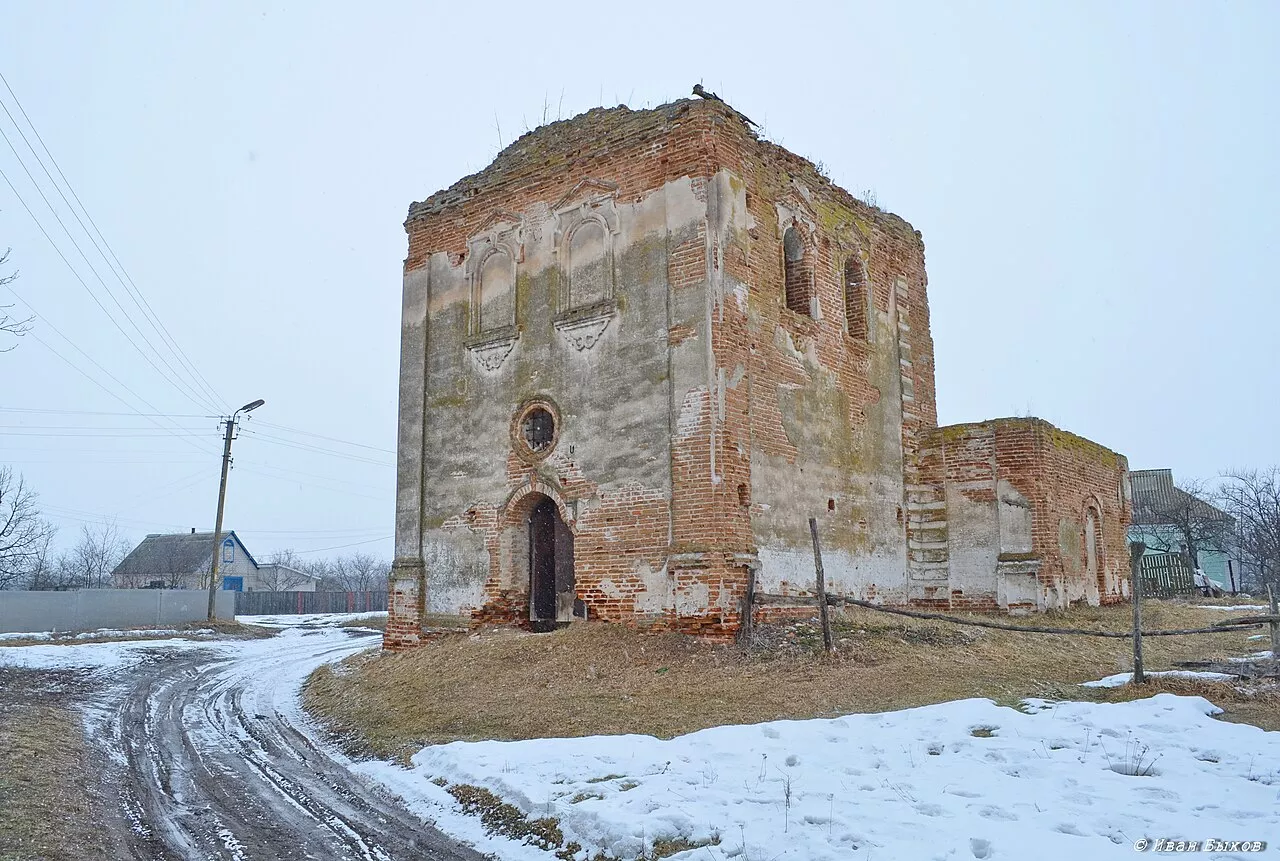
Hostroluchchia is an ancient village in the Baryshivka hromada of Brovary Raion, 65 km from Kyiv and 12 km from the Baryshivka station. In the middle of the village stand the ruins of the masonry Trinity Church, completed in 1787. Even semi-ruined, it has preserved its Baroque window and entrance frames — a rare example of a late 18th-century rural church that has remained almost unaltered.
Village on a sharp bend
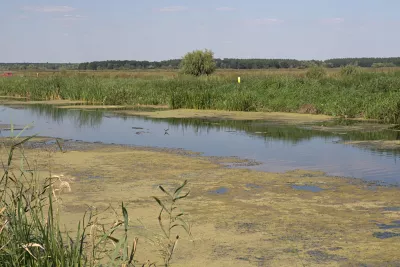
The name of the village comes from "hostryi luk" (sharp bend) — a protrusion of the bank where the Dovha River once flowed into the Trubizh, and the latter turned sharply southwards. The first mention of Hostroluchchia dates back to 1590. Even then, there was evidently a church here: the old Trinity Church kept a bell from 1612, cast at the expense of the Hostroluchchia Cossack Matvii Polotskyi. The village belonged to Stanisław Żółkiewski, in the early 18th century to the Cossack starshyna family of Myrovych, and after the Myrovych family went into exile with Ivan Mazepa in 1709, Peter I granted it to Colonel Hryhorii Ivanenko in 1717. Until 1781, Hostroluchchia was part of the Baryshivka sotnia of the Pereiaslav Regiment.
The colonel's church
In 1784, instead of the old wooden church, the construction of a masonry one began at the expense of Hryhorii Ivanenko. On May 12, 1784, Bishop Ilarion of Pereiaslav issued a charter for construction, and in 1787 the church was completed. It has the shape of an equal-armed cross, typical of classicism, while the ornamentation is Baroque. The length of the church is 20.8 m, and its width is 12.6 m. The church was single-domed, with a small cupola covered with shingles and painted green. Separately, to the south of the church, stood a two-tier brick bell tower.
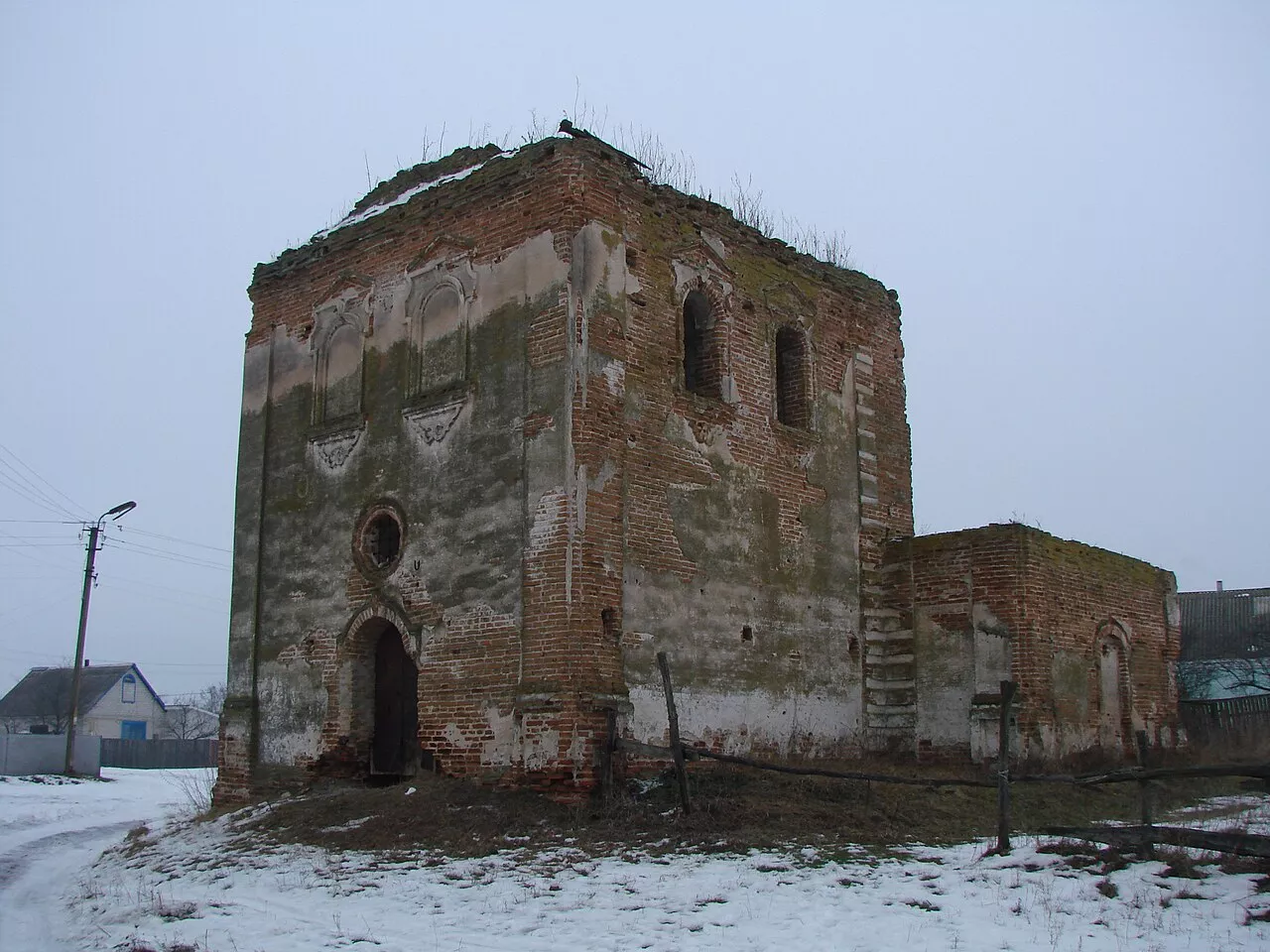
In 1836, a large St. Nicholas Church was completed in the village, and the Trinity Church became an annex: all valuable property was transferred to the new one. Therefore, in the 19th and early 20th centuries, the old church was not altered, and it retained its original appearance.
Shop in the church and ruin
Under the Soviet regime, the church was closed and adapted for economic needs: until 1957 there was a shop here, and from 1965 to the 1970s — a rural consumer society. In those years, the central and eastern parts of the church were dismantled to a height of 3.7 meters, the sacristy near the altar and the entire bell tower disappeared. Only in the narthex did the walls survive to their full height — 7 meters to the cornice. In 2012, the ruins received the status of a newly discovered architectural monument. Experts believe that the condition of the walls allows for reconstruction, but for now the church remains in ruins.
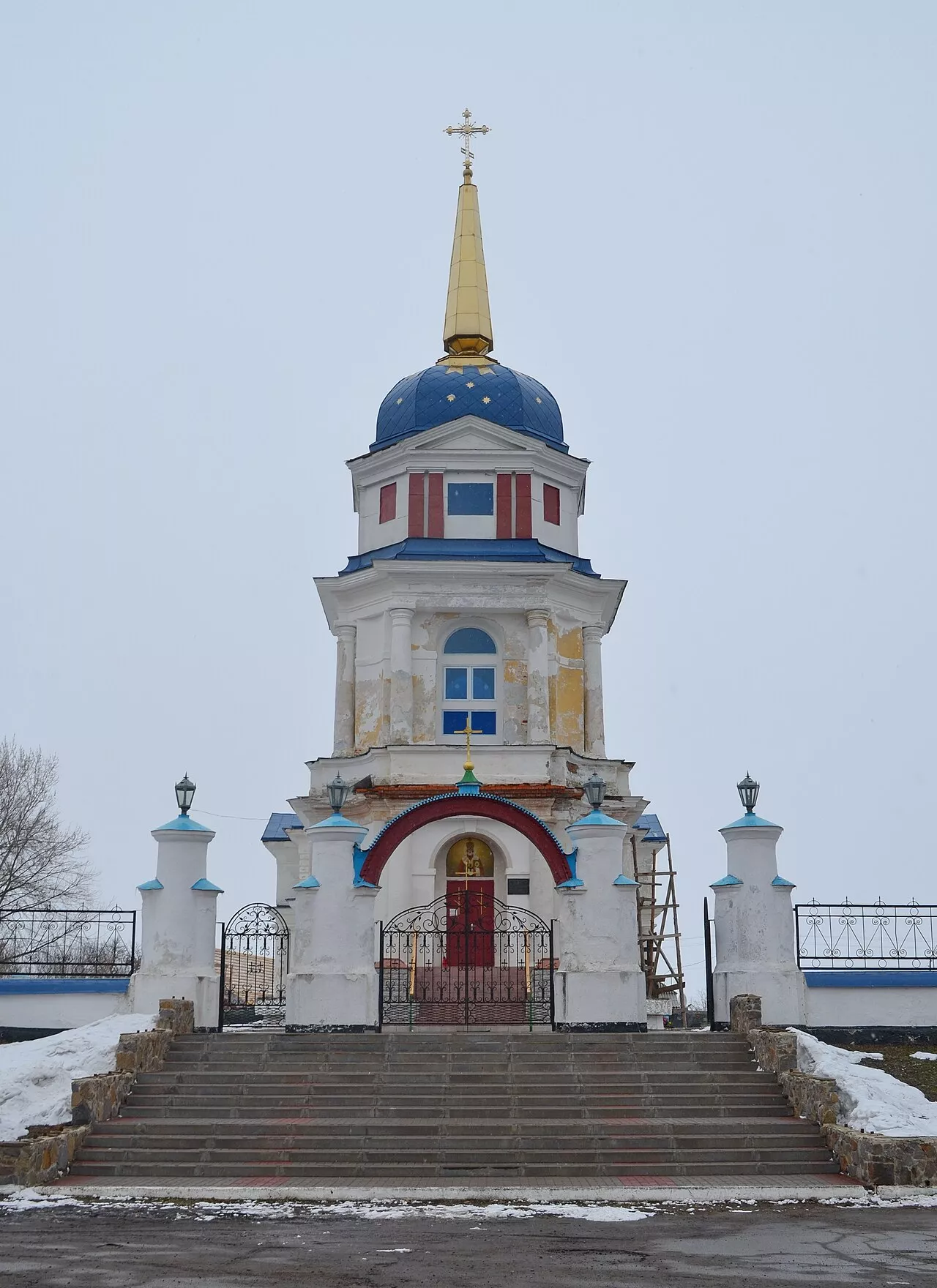
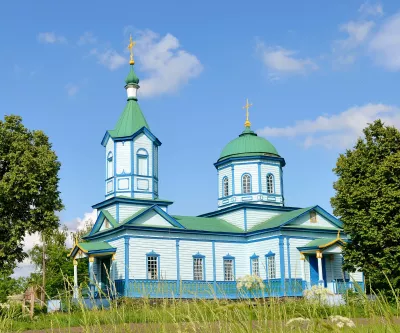
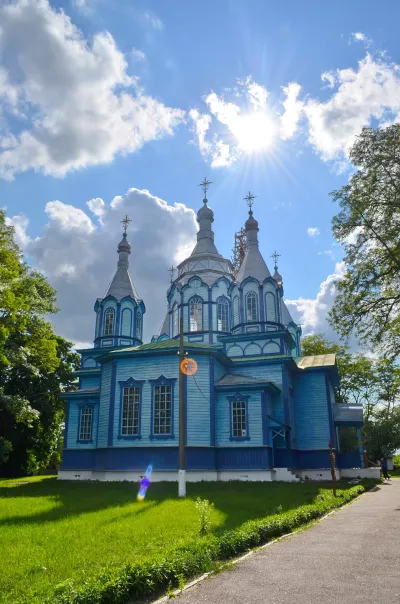
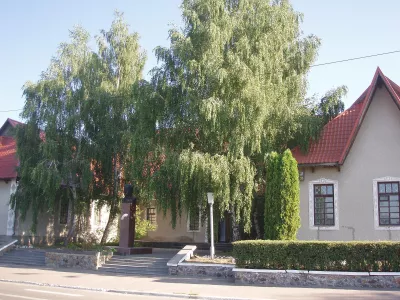
A few hundred meters away, the active St. Nicholas Church from 1827–1836 stands — a large masonry classical church, the design of which is attributed to Giacomo Quarenghi. A 1906 Zemstvo school has also survived in the village.
How to get there
From Kyiv — via the Kyiv — Kharkiv highway to Baryshivka, then northeast for about 12 km. It is also convenient to get to Baryshivka by suburban train. The ruins are in the center of the village, near the Church of St. Nicholas.
Tip
The ruin is not preserved, so do not climb the walls or enter the dismantled eastern part. It is worth examining both churches — this clearly shows how rural architecture changed over half a century. Nearby, in the Brovary district, are the ruins of the Church of the Ascension in Lukianivka. More about the region can be found in the article about Kyiv Polissia.