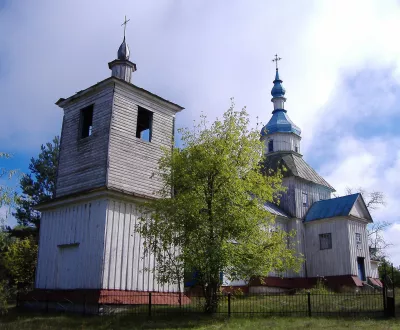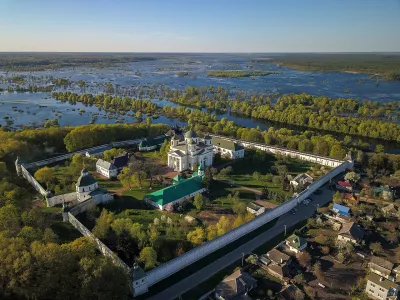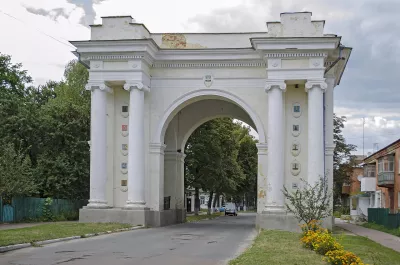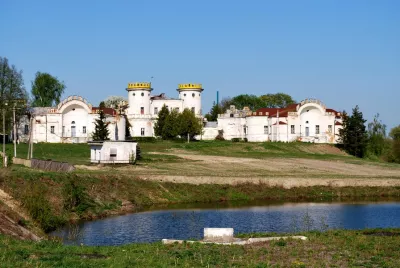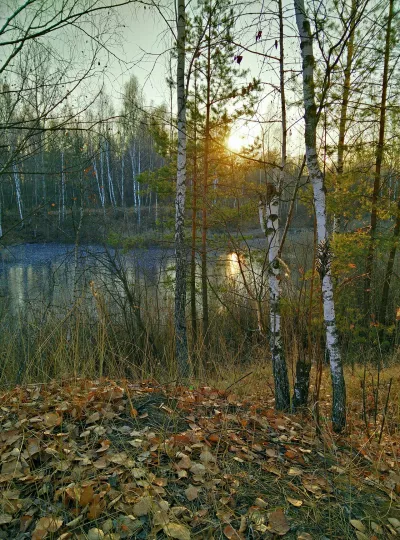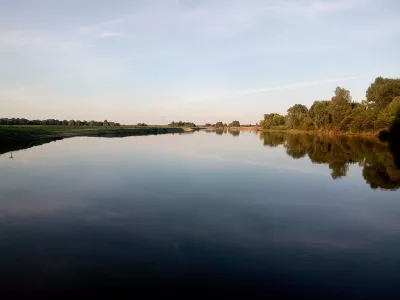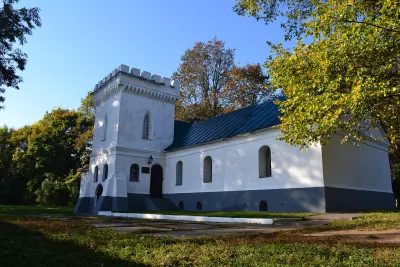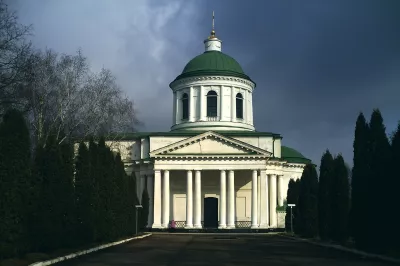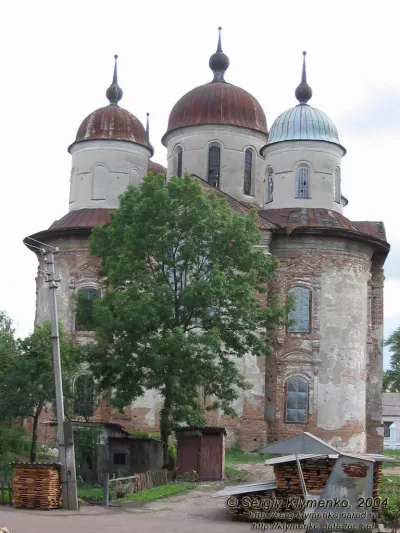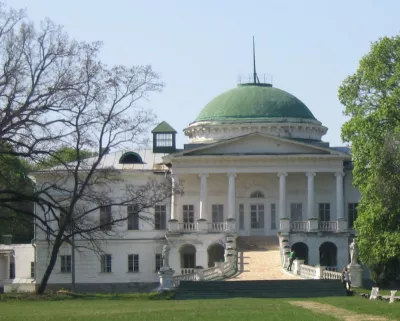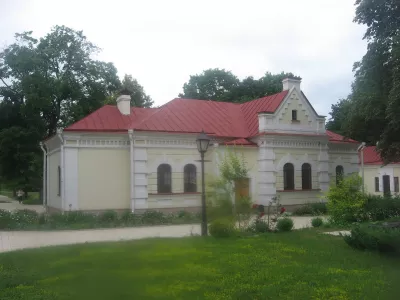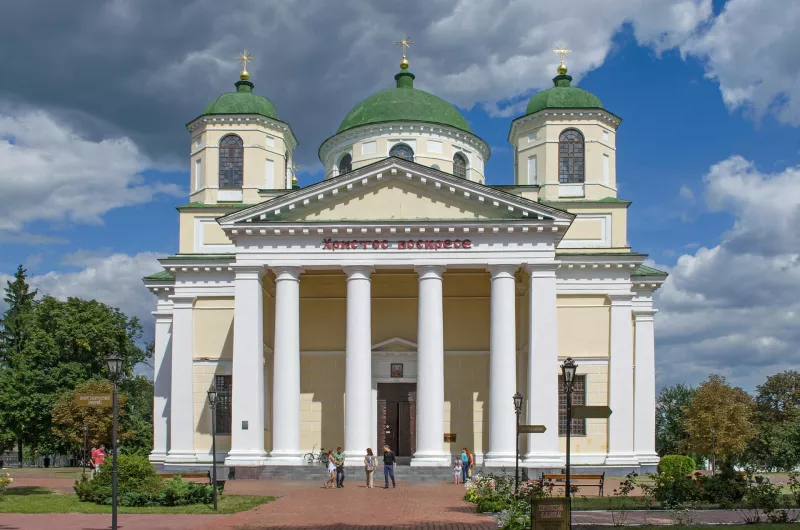
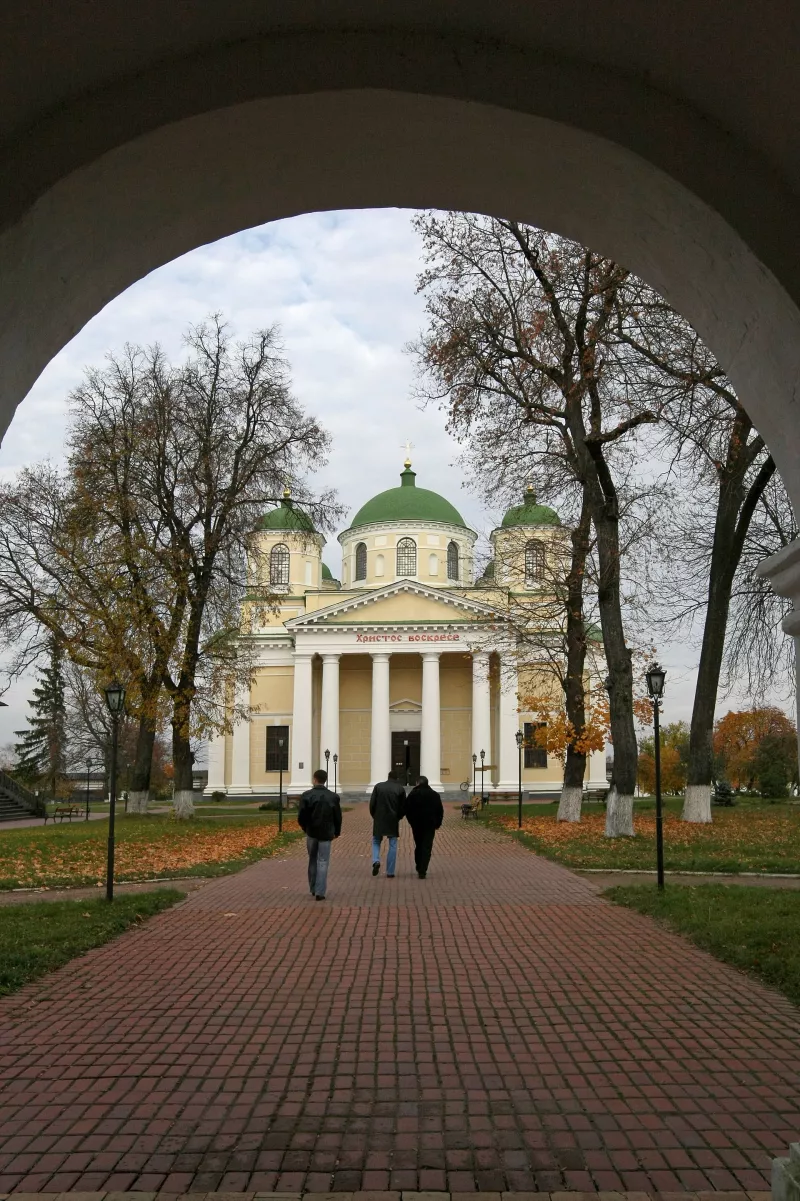
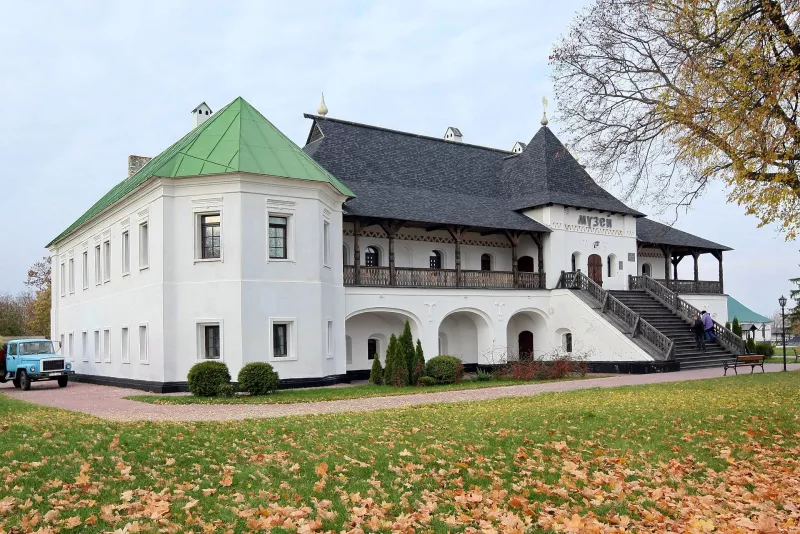
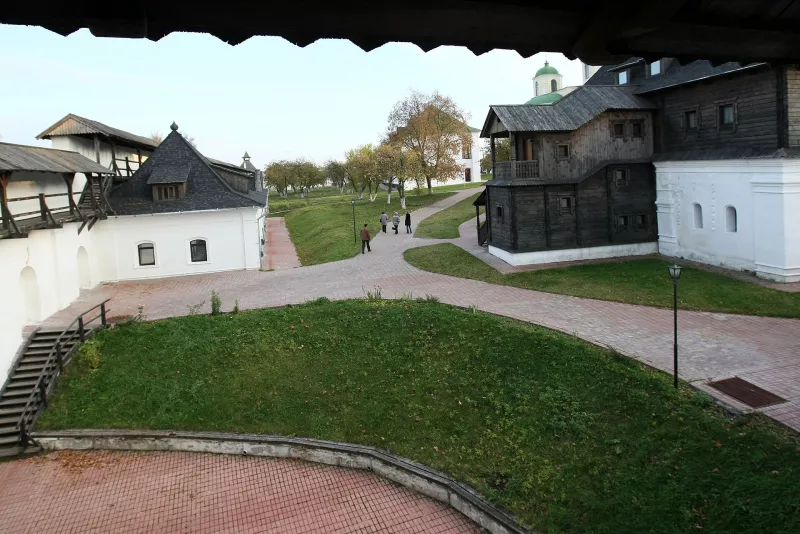

The Spaso-Preobrazhenskyi Monastery stands on the high bank of the Desna and Lake Zhran in Novhorod-Siverskyi. It is one of the oldest preserved fortress monasteries in Ukraine and the city's only surviving monastery. Rising above the walls and towers is the Spaso-Preobrazhenskyi Cathedral, built according to the design of Giacomo Quarenghi. The monastery is part of "The Tale of Ihor's Campaign" Museum-Reserve.
From Prince Mstyslav
The exact date of foundation is unknown. According to legend, the monastery was founded in 1033 by Prince Mstyslav Volodymyrovych. At first it was wooden, and the first stone structures—the cathedral and the Church of Saints Peter and Paul—appeared in the 12th century. Unlike the Trinity Monastery in the city itself, the Spaso-Preobrazhenskyi Monastery stood outside its limits and became part of Novhorod-Siverskyi only in the early 19th century. In 1552, the monastery was burned by the Crimean Khan Devlet I Giray.
Walls and Towers
The brick walls with towers form a quadrangle almost 800 metres long—a rare example of 17th–18th-century fortifications. They were erected under Archimandrite Mykhailo Lezhayskyi in the last third of the 17th century, along with the superior's residence, cells, and bell tower. The side towers are rectangular and two-tiered, with loopholes below, while round towers with rich decoration stand at the main gate. In the 1830s, the tent-shaped roofs were replaced with helmet-shaped domes, and the combat gallery with a decorative attic. Part of the north-western wall was lost during the Second World War.
What to See
The main structure is the Spaso-Preobrazhenskyi Cathedral of 1791–1817, designed by Giacomo Quarenghi and supervised during construction by Ivan Yasnyhin. A distinctive 17th-century monument is the Church of Saints Peter and Paul with its hall building: its northern and eastern facades are decorated with an arcaded frieze featuring ornament inspired by the architecture of the Rus era. The gate tower-bell tower, the superior's chambers with the Church of Saint Elijah, the bursa, and cell blocks have also survived.
Among the superiors of the monastery were Ioanykyi Halyatovskyi and Dymytrii Tuptalo—Saint Dymytrii of Rostov, who completed the third part of the Chetii-Minei (Menaion) here. Today, the monastery belongs to the UOC of the Moscow Patriarchate.
How to Get There
The monastery stands on the outskirts of Novhorod-Siverskyi, above the Desna, not far from the centre. You can reach it on foot. The Novhorod-Siverskyi region is a border area, so before travelling it is worth checking martial law restrictions.