The Sumovsky Estate in Kmitiv is one of the most interesting yet controversial landmarks in Zhytomyr region. It is located in the village of Kmitiv in the Hlybochytsia hromada of Zhytomyr district and combines features of historical architecture from the late 19th and early 20th centuries with later alterations. Because of this, it is often compared to a "cyborg": partly authentic, partly reconstructed.
History of the Sumovsky Family
The estate in Kmitiv was built by the Sumovsky (Shumovsky) family in the late 19th century. According to researchers, in particular the Polish historian Roman Aftanazy, the family moved from East Prussia to Volhynia in the mid-17th century. The first known representative was Maciej Sumowski (born 1769), whose residence was located in Lityn.
In the 19th century, the Sumovskys were influential landowners: they owned mills in Zamlychi and Lukovychi, and distilleries, including one in Kmitiv. The annual income of the estate reached 38,000 rubles, and the land holdings amounted to about 3,500 hectares along with hunting grounds.
The last owner of the estate was Evelina Sumowska. According to legend, she was known for her kindness and bequeathed the estate to orphans. There is a version that this very decision helped preserve the building during the revolutionary events of the early 20th century.
Architecture: What Has Survived to This Day
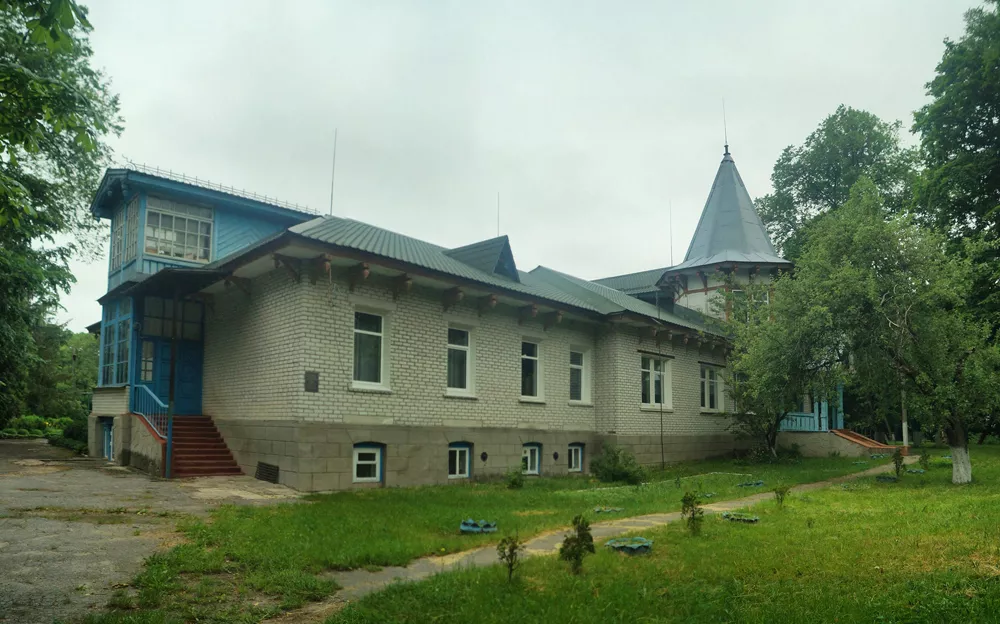
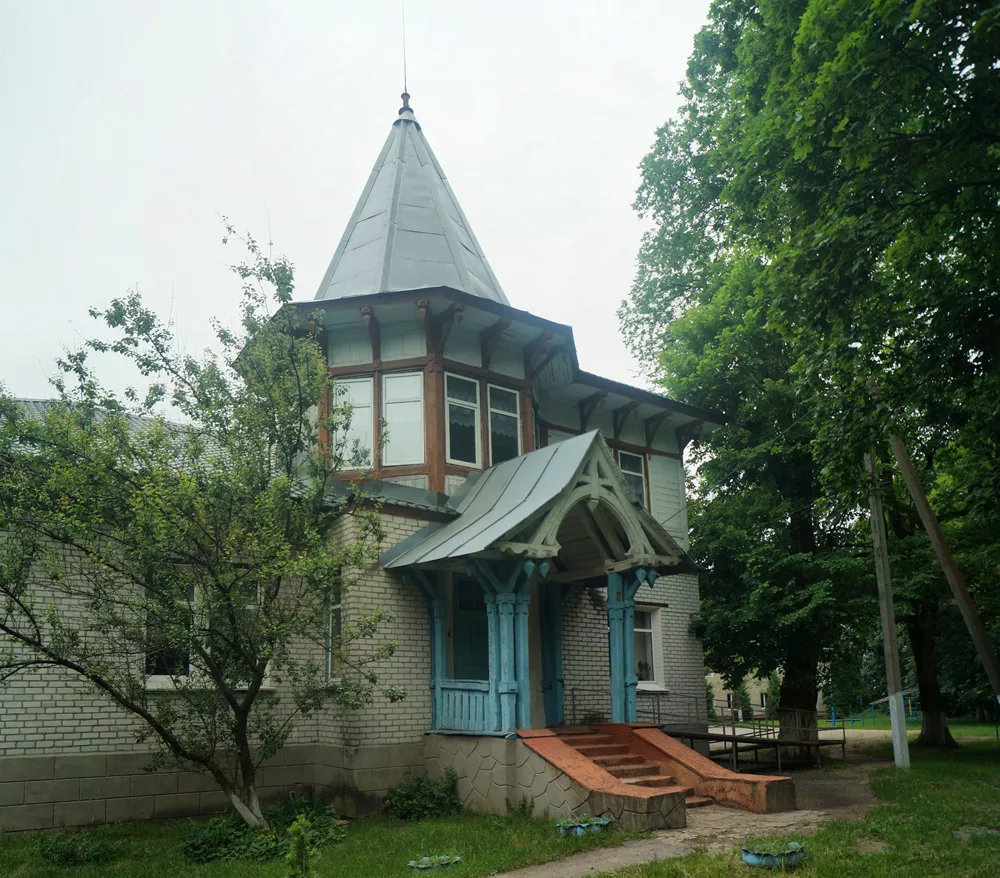
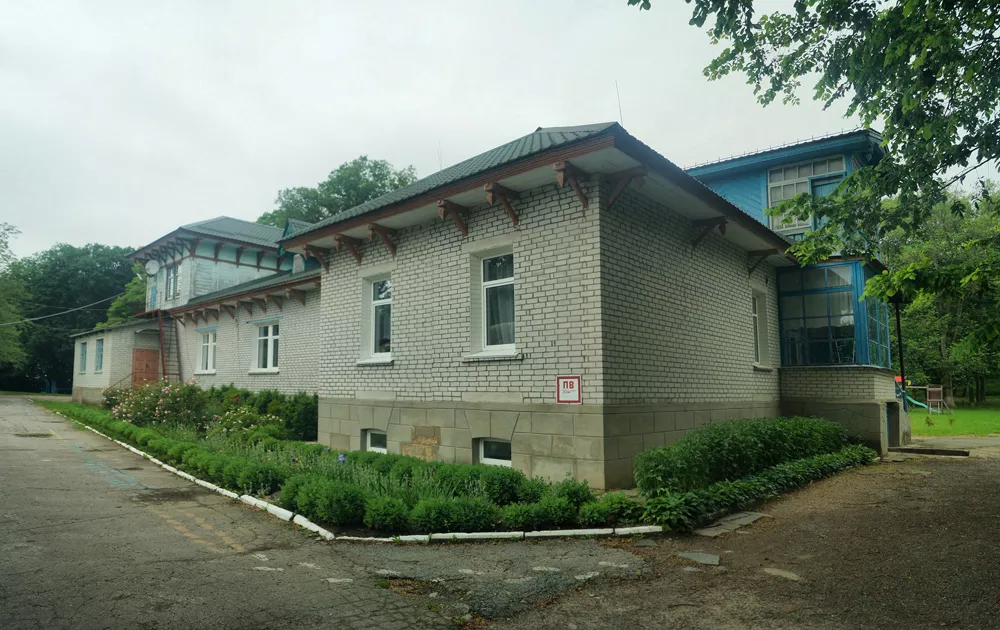
The original estate featured elements typical of manorial residences: decorative porches, a small tower, and a second floor with a distinctive silhouette. However, in 1973 the building was substantially remodeled. Today, about 70–80% of the structure consists of brick and metal tile roofing.
Despite this, certain authentic parts have survived — the original porches, the small tower, and fragments of the second floor. It is these elements that shape the historical image of the structure and recall its noble past.
The estate holds the status of a local landmark with a conservation number, though the question remains open as to whether it was granted before or after the large-scale reconstruction.
Park and Surroundings
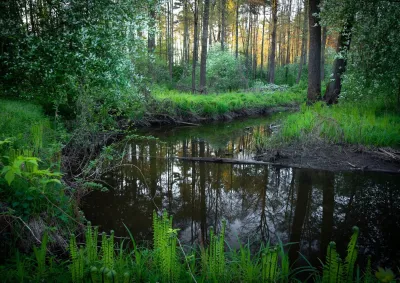
Around the estate lies a park extending over a small ravine. Once part of the palace and park ensemble, it was a composition typical of wealthy Volhynian families. Today, the green area retains an old-world atmosphere, although it is in need of maintenance.
Modern Use
Since 1973, a boarding school for children with special educational needs has operated in the estate. Therefore, free access to the grounds is limited — the building can only be viewed up close by prior arrangement.
Kmitiv and the Museum of Fine Arts
Not far from the estate is the well-known Yosyp Bukhanchuk Kmitiv Museum of Fine Arts, one of the most interesting rural museums in Ukraine. It was founded in 1974 by the artist and collector Yosyp Bukhanchuk in his native village of Studenytsia: initially, the exhibition was housed in the corridors of the local school. When the number of exhibits exceeded 600, a new building was erected in Kmitiv (completed in 1984, opened to its first visitors in 1985) designed by the architect M. Sieverov under the supervision of I. Fomin.
The collection encompasses painting (including works of Socialist Realism), graphics, sculpture, tapestries, porcelain, faience, majolica, and crystal; the holdings include about 3,000 items. The museum regularly hosts thematic and author exhibitions and serves as a significant cultural hub in the region.
The Sumovsky Estate in Kmytiv is an example of the complex fate of historical estates in the Zhytomyr region. Despite alterations, it retains the features of a past era and remains an important part of the region's cultural landscape. For tourists, history researchers, and architecture enthusiasts, this place is well worth a visit while traveling through the Zhytomyr region.
Photos by Roman Malenkov, Serhii Shcherbii.