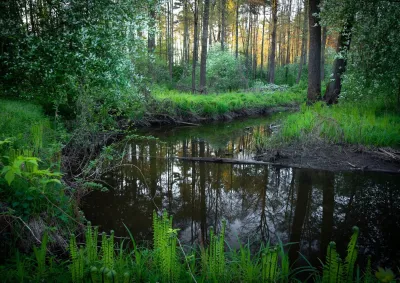
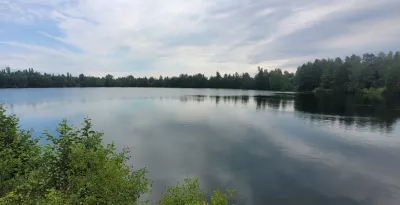
Just a few kilometers west of the Kyiv Oblast border, near the sources of the Temnianka River, lies the small village of Budo-Vorobi within the Malyn hromada. Its population is about 200 people.
The first mention of the village dates back to 1705; until 1870, it was called Buda-Yasenivska. Administratively, the village was part of Novo-Vorobiivka volost, Ovruch uyezd, Volhynia Governorate. According to N. I. Teodorovych, in the early years of the village's existence, there was no church of its own yet, and the residents were parishioners of St. Michael's Church in the neighboring village of Stari Vorobi.
Budo-Vorobi is part of a whole group of villages with related names: Stari Vorobi is 5 km away, Novi Vorobi is 7 km away, Rudnia-Vorobiivska is 10 km away, and Vorobiivshchyna is approximately 20 km away. Such a concentration of "sparrow" names in a small area is a rare trace of the ancient settlement of the region.
Church of the Kazan Icon of the Mother of God
In the center of Budo-Vorobi, next to the former village council building, stands a wooden church without domes. Its long-unpainted gray walls and leaning wire crosses on the roof give it an abandoned appearance. The only bright element is the four-column porch, painted in a fresh blue color.
The church is three-part: narthex, nave, and altar. Low rooms for the sacristy and vestry are attached to the faceted altar block. The foundation is made of brick. Previously, the church was adorned with a tent-roofed bell tower and a dome, which were demolished in 1963.
The church was built in 1898, as confirmed by the foundation stone bearing the inscription: "...this church in the name of the Most Holy Theotokos... Kazan was built in the year 1898...". The foundation stone is a rarity for 19th-century churches; likely, a millstone from an old mill was used for it.
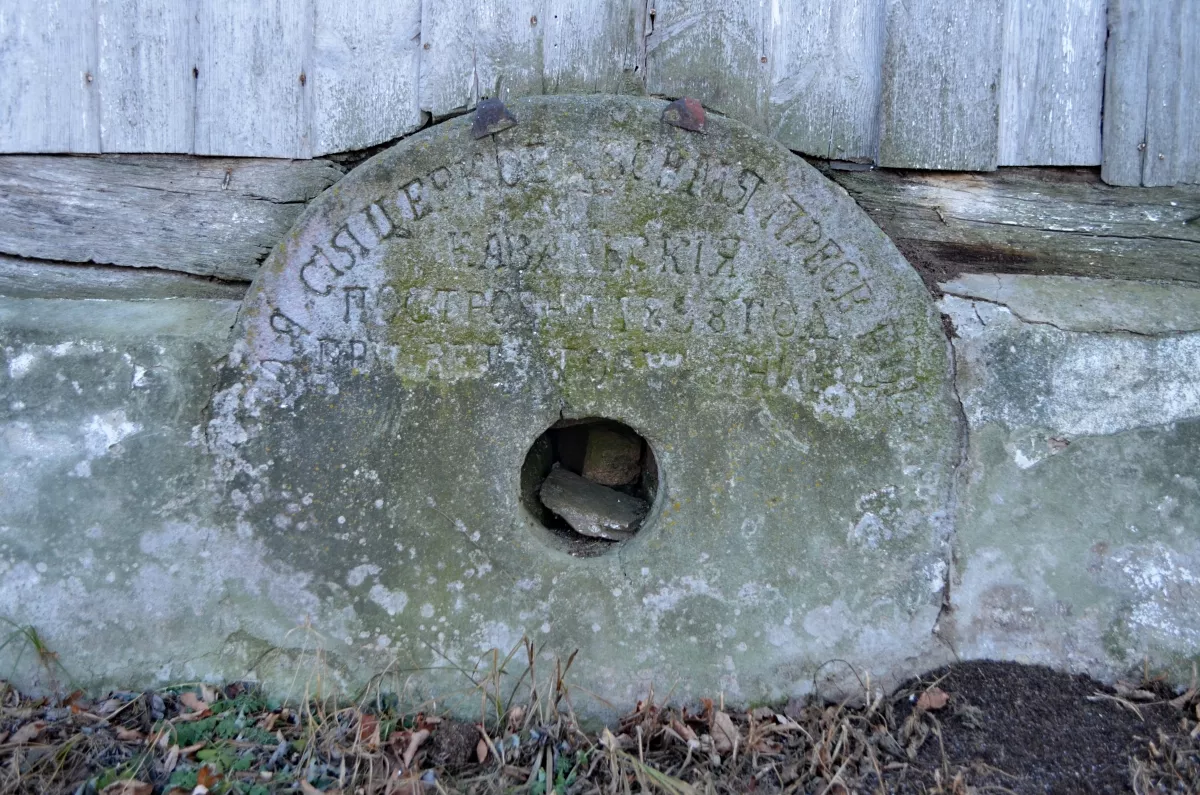
Rare millstone. 1898
Architecture and Decor
- Simple and ascetic decor: horizontal siding, simple architraves, wide cornice.
- The windows are rectangular, except for the altar block, which has two hexagonal and one round louvered window.
- Overall, the church is built in the diocesan style of the late 19th century, widespread on Right-Bank Ukraine.
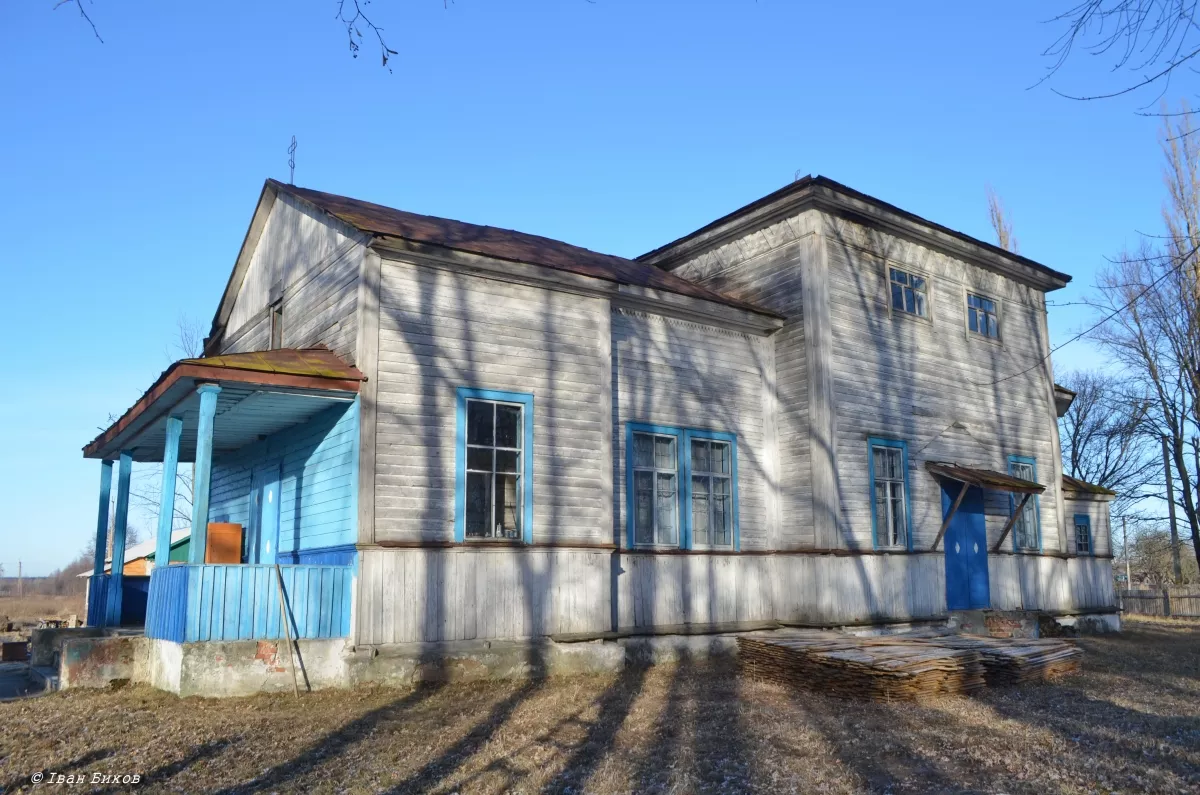
Kazan Church built in 1898
Historical Events
Local stories say that during the Second World War, the church saved the lives of the villagers. The Germans planned to burn down Budo-Vorobi, having gathered the villagers in the church, but suddenly a horseman on a white horse appeared, frightening the occupiers, and they retreated.
After the war, the church was turned into a village club, destroying the upper part, the choir loft, and part of the decor. A balcony was installed on the northern facade instead of the second-tier windows. Local old-timers are convinced that the fate of those who destroyed the domes was tragic.
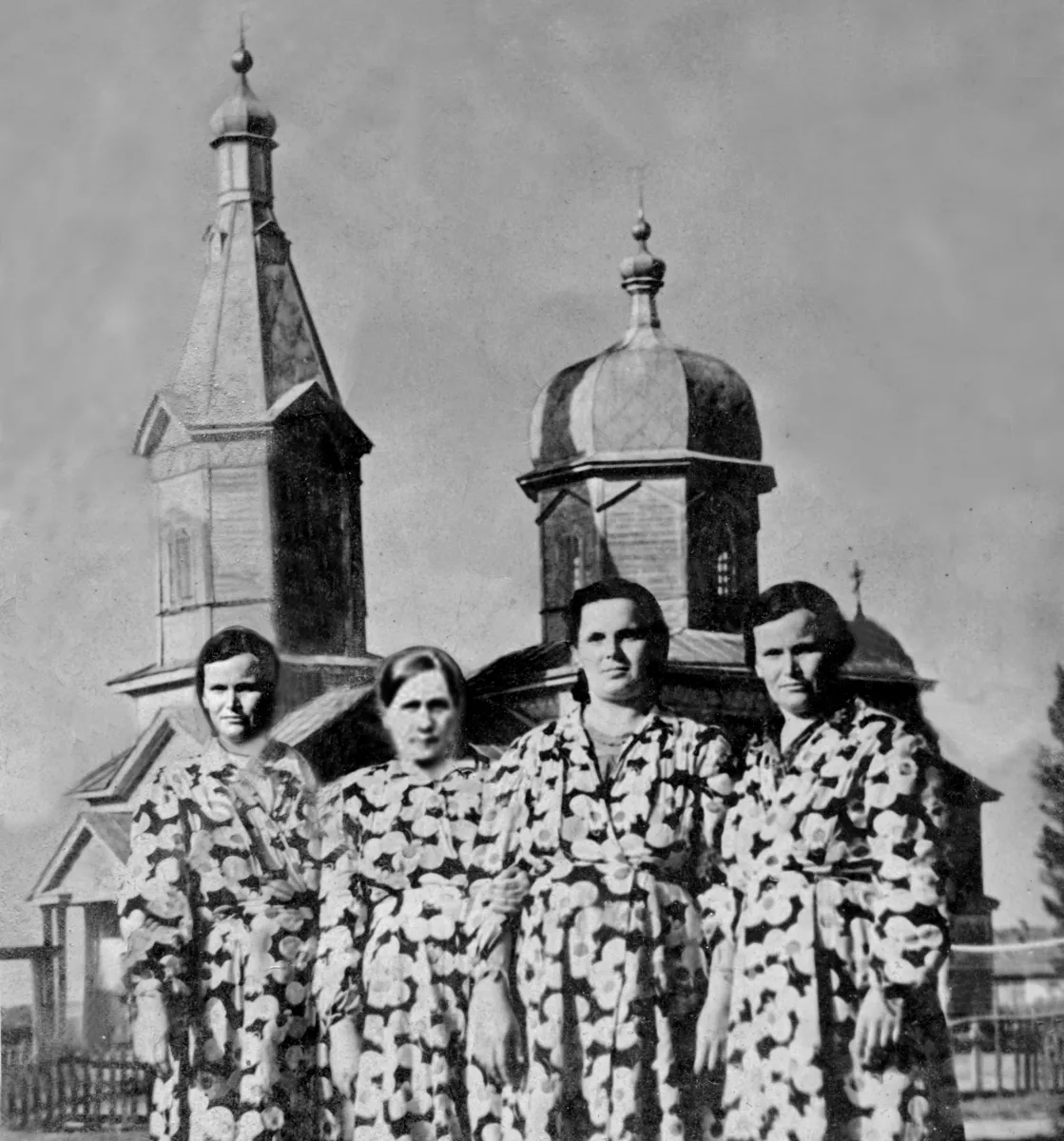
Archival photo from the early 20th century
Restoration of the Church
In 1992, worship services were resumed in Budo-Vorobi. The interior partitions were removed, the walls were painted white, and the ceiling was painted light blue. Due to a lack of funds for an iconostasis, its function is performed by icons of various styles and sizes.
Local activists and parishioners want the church to be included in the register of architectural monuments and restored with the reconstruction of its dome and bell tower. The archives have preserved old photographs, which makes it possible to recreate the original appearance of the church.
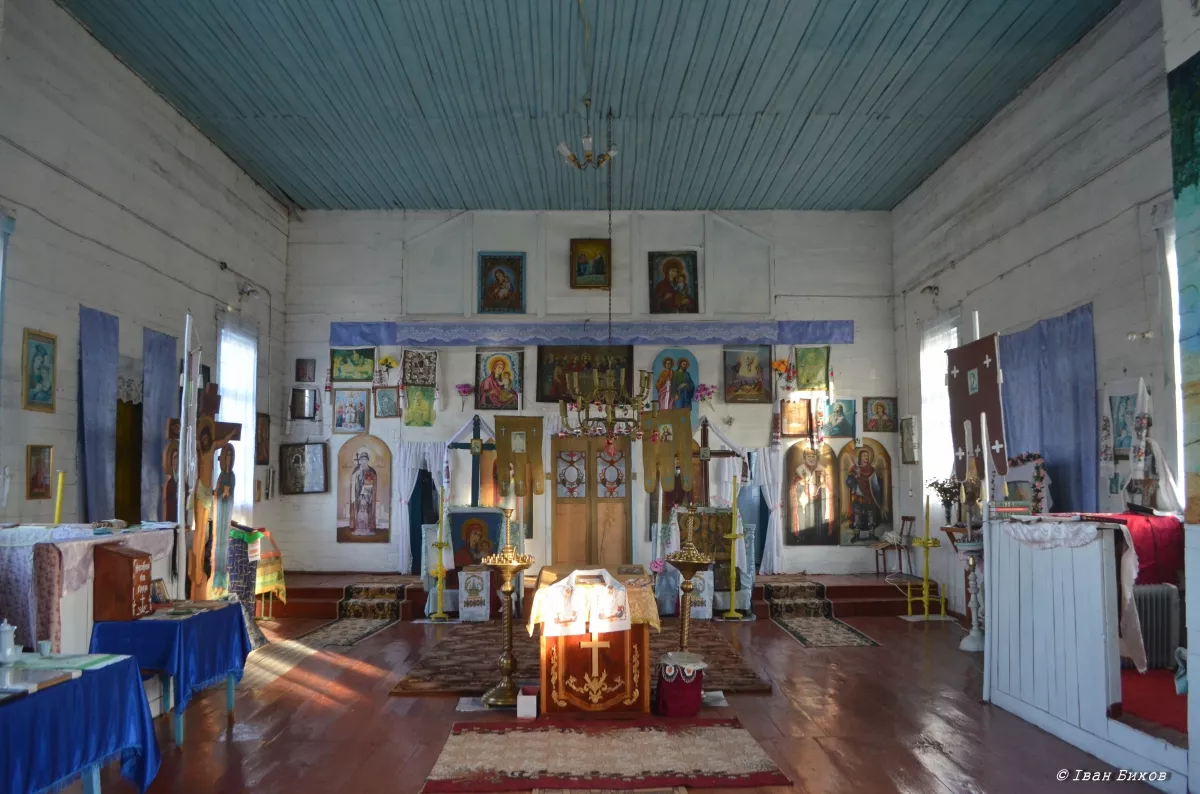
Modest interior of the rural church
What is nearby
5 km from the village, in Stari Vorobiiv, the wooden Church of Saint Michael from 1897 has been preserved — another monument of the diocesan style with a noticeable influence of local construction traditions. Read about it in the article "Vorobiiv around Budo-Vorobiiv: Geography of Names and a Wooden Church with Character".
How to get there
The village can be reached via the Malyn — Ivankiv highway, passing through Nove Zhythya and Klitnya. The village is small, but its center is easily recognizable by the old wooden church with its characteristic silhouette.
Text and photos by architect Ivan Bykov (from the publication "Architectural Treasures of Kyiv Region").