In the urban-type settlement of Huiva, just a few kilometres from Zhytomyr, there is a unique World War II site — the field headquarters of Reichsführer-SS Heinrich Himmler named "Hegewald" (which translates as "Reserved Forest").
This is one of the few surviving field headquarters of the Third Reich's top leadership in Ukraine and Europe. Unlike Adolf Hitler's destroyed "Werwolf" headquarters near Vinnytsia and Hermann Göring's "Steinbruch" headquarters in the Vinnytsia region, "Hegewald" in Huiva has partially survived to this day and is an important historical monument of the Nazi occupation of Ukraine.
Where the "Hegewald" Headquarters is Located
The site is located along the Zhytomyr — Berdychiv highway.
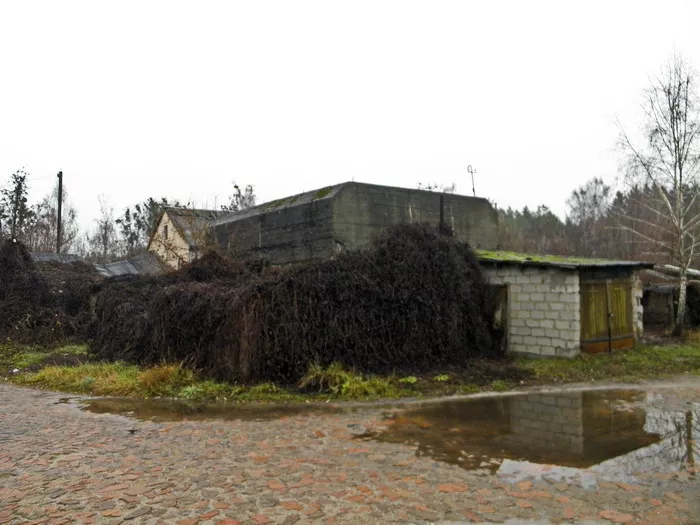
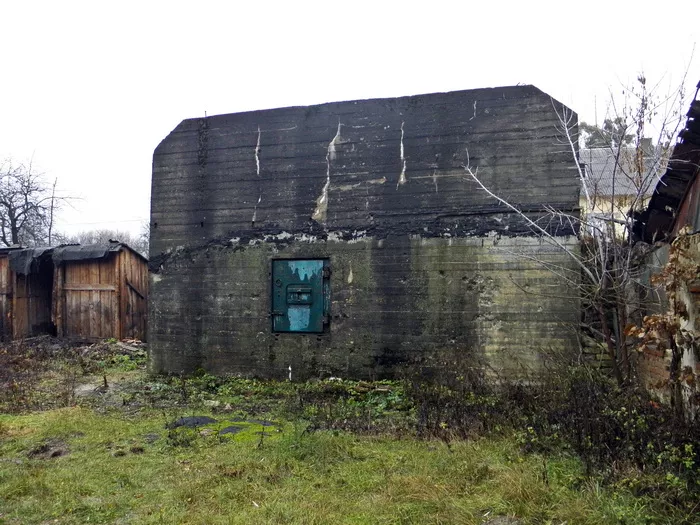
- The first surface bunker is located to the left of the road — it can be seen and inspected from the outside.
- The second bunker is located on the opposite side of the highway, on the territory of a military unit, so access to it is closed.
Today, it is one of the least known yet most preserved Nazi headquarters in Ukraine.
History of Construction
The headquarters was built between October 1941 and July 1942. The construction was carried out by Soviet prisoners of war under the supervision of SS men.
Main characteristics of the site:
- total area of the complex — about 1.2 hectares;
- two reinforced concrete surface bunkers with very thick walls and ceilings — according to various descriptions, from 3 to 4–4.5 metres;
- additional protection — a layer of special rubber approximately 50 cm thick;
- camouflage as ordinary buildings: a fake roof, camouflage netting, and dense green spaces;
- direct communication with Berlin and the "Werwolf" headquarters.
Inside, after passing through massive walls, the visitor finds themselves in small rooms — such structures were designed primarily to withstand air raids and artillery shelling.
What has Survived of the Bunker
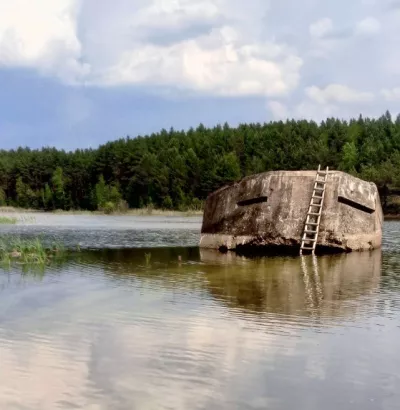
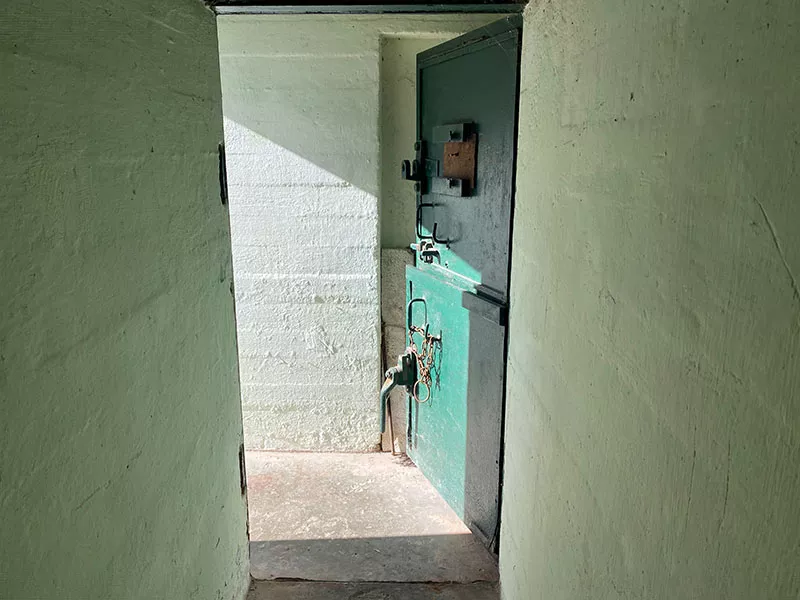
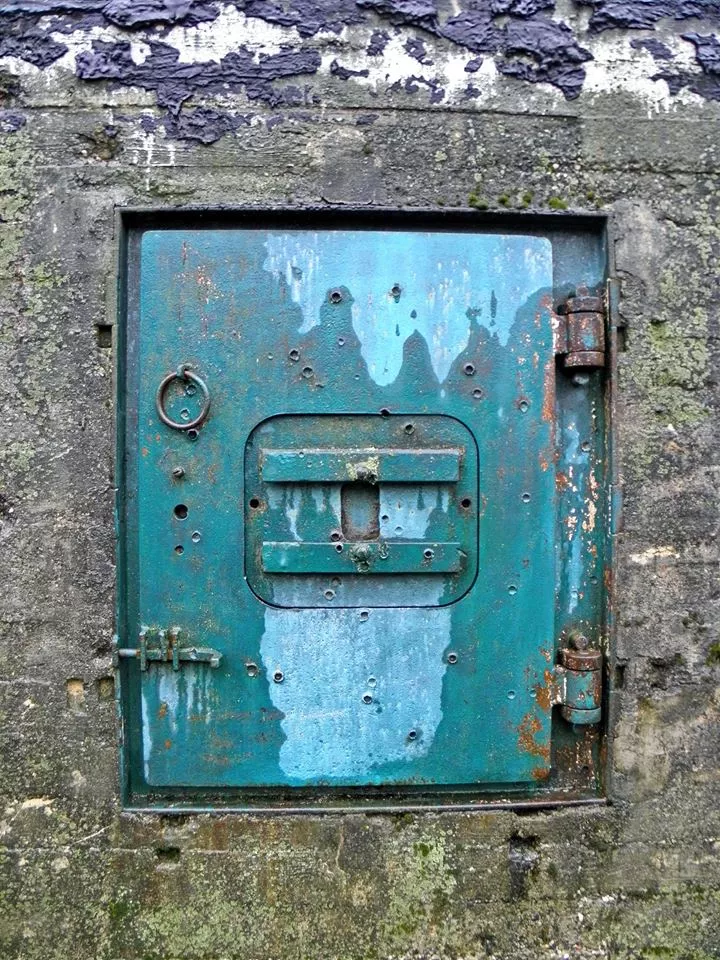
The main part of the underground complex was destroyed or filled in after the war, and most of the underground rooms are currently inaccessible. The two surface reinforced concrete entrances have survived the best. One of them stands near the Zhytomyr — Berdychiv highway: from the outside, it is a massive concrete pillbox with a narrow entrance closed by a wooden door, and an armored embrasure where a machine gunner was on duty during the war. Dents from bullets and shell fragments remain on the concrete and metal doors.
There is a version that this structure was not the main entrance, but a ventilation unit through which fresh air was supplied to the underground complex; the bunker itself could also be accessed through a network of tunnels connecting it to the headquarters buildings. Inside, there was a guard post, and the entrance was closed by two massive steel doors divided into two sections to make them easier to open. The remains of a thick cable are still visible here, which, according to researchers, provided communication with the "Werwolf" headquarters.
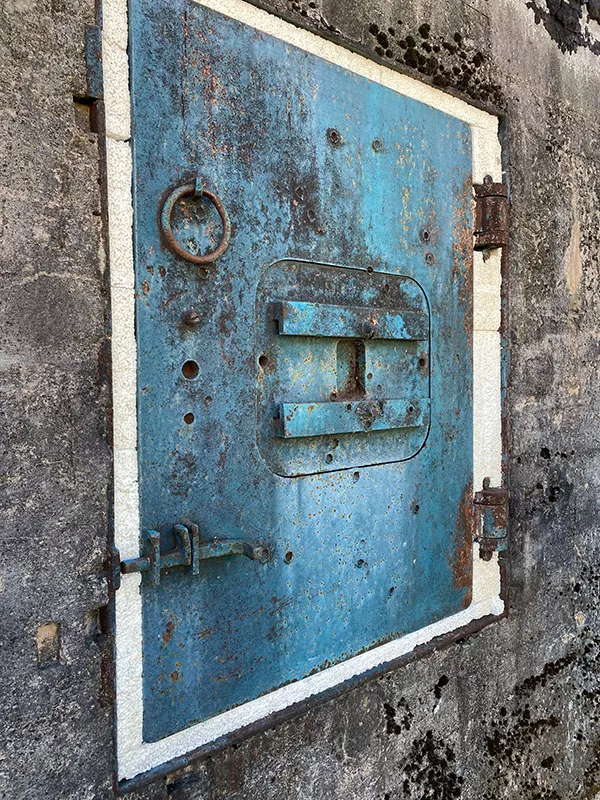
Shell marks on the metal doors
Daily Life and Atmosphere of the Headquarters
A tennis court was set up on the lawn next to the bunker, and horse riding was organized for guests. Such entertainment caused concern among the guards due to possible partisan activity in the surrounding forests.
One of the tragic episodes is connected with the death of Himmler's personal pilot, who disappeared during a walk. According to historians, after his body was found in one of the surrounding villages, the occupiers carried out a brutal punitive action against the local residents.
Visits by High-Ranking Officials
Himmler stayed in Hegewald mainly during Hitler's visits to the Werewolf headquarters in the Vinnytsia region. However, the site was also used for important meetings. Notably, it was here that Himmler celebrated his 42nd birthday in October 1942.
In August 1942, Walter Schellenberg, the head of German political intelligence, arrived here. Other visitors mentioned include:
- Hans Lammers;
- Joachim von Ribbentrop;
- Reich Commissar for Ukraine Erich Koch.
On September 16, 1942, a major meeting of SS and police leaders took place here, during which Himmler presented his vision of the Generalplan Ost: after the war, the expanses from the Baltic Sea to the Urals were to become a living space for German settlers. It was then that the creation of the first experimental German colonies in Ukraine was announced.
The Colonization Experiment Around the Huyva
The Zhytomyr General District had one of the largest communities of Volksdeutsche—ethnic Germans who had lived here since before the war. Therefore, the SS leadership viewed the region as a springboard for the Germanization of the occupied lands. Near the headquarters, Himmler ordered the creation of three colonization centers: Hegewald, between Zhytomyr and Berdychiv; Försterstadt, between Cherniakhiv and Korosten; and Kelenfeld, near Kalynivka in the Vinnytsia region. Försterstadt was never fully implemented.
The Hegewald colony included 29 Ukrainian villages whose names were changed to German ones. People were woken up before dawn: police and SS surrounded the village, ordering residents to leave their homes immediately, allowing them to take only a minimum of belongings. Livestock, poultry, and supplies were confiscated, and within a few hours, Volksdeutsche settlers arrived at the houses—the names of the new owners were even written in chalk on the gates. Each of them received land (up to 20 hectares), housing, and the property of the deported Ukrainian families.
The colony was officially opened on October 1, 1942. The legislation of the occupation administration did not apply to it—it was meant to be a "German island" with its own administration, schools, and farms. A separate cemetery was also planned for the colony: one of the first to be temporarily buried here was SS General Theodor Eicke, one of the creators of the concentration camp system, who died near Kharkiv on February 26, 1943; his remains were later moved. Thus, the headquarters became the center not only of military administration, but also of the experiment in the violent colonization of Ukrainian territories.
Why the Headquarters Survived
In 1943, following defeats on the Eastern Front, the implementation of the Generalplan Ost became impossible. At the end of the year, the colonists began evacuation, and retreating troops destroyed a significant part of the headquarters' infrastructure. However, the bunkers themselves withstood: they were saved by the thickness of the walls, camouflage, and the short period of use.
After the liberation of the Zhytomyr region in 1944, the Soviet authorities paid no attention to the site. Most of the surface structures were dismantled for building materials, and individual underground premises were used by locals as cellars for vegetables and canned goods—many did not even know that these were the remnants of Himmler's residence. Only since the 1990s have historians, local historians, and searchers begun exploring the complex, and documentary films have subsequently been shot here.
The plot with part of the underground structures is privately owned, so there is no museum here, and no large-scale research or restoration is carried out. Visitors are often told about the history of the headquarters and the colony by local enthusiasts.
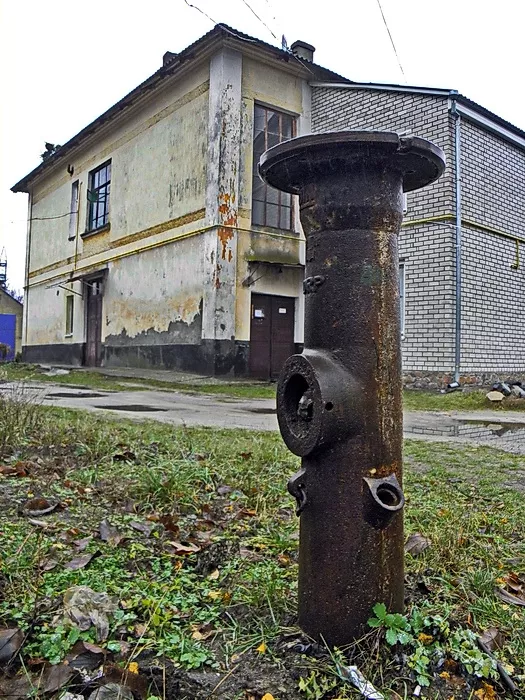
A German hydrant, behind which stands the two-story building of the German military command headquarters (before the war — the officers' house).
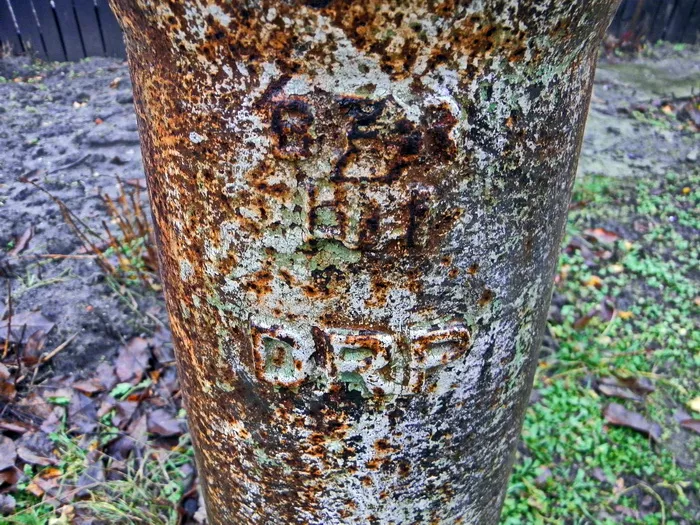
The hydrant still works. German inscriptions on the hydrant:
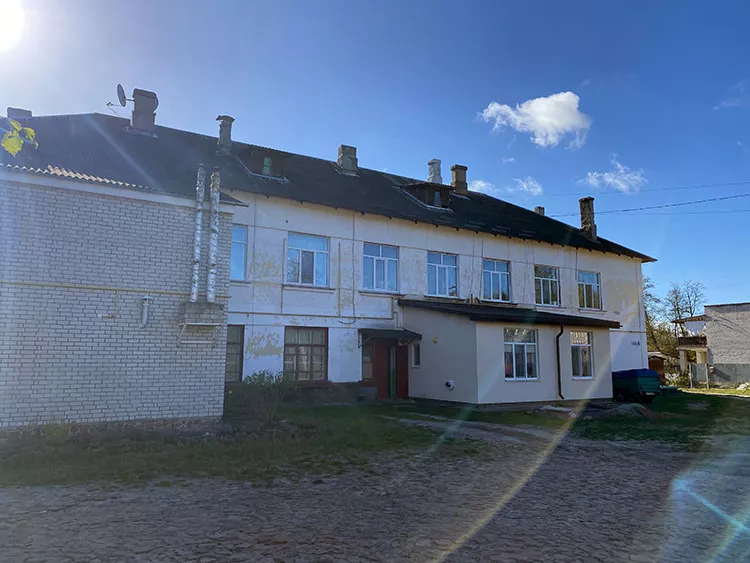
Barracks remaining from the complex
The Legend of the "Gate to Valhalla"
A mystical narrative has persisted around Huiva for decades: supposedly, Himmler did not choose this place by chance, but sought the "gate to Valhalla" — the entrance to the otherworldly hall of fallen warriors from Scandinavian mythology — in the depths of the Zhytomyr granite shield. The legend is based on real facts: Himmler was indeed fascinated by occultism and ancient Germanic mythology, and the Ahnenerbe ("Ancestral Heritage") SS organization he founded in 1935 studied runic symbolism, mythology, and searched for "traces of the Aryan race" all over the world.
However, there is not a single document confirming that the headquarters in Huiva was built for the sake of the "gate" or that Ahnenerbe studied the granite shield here. The reasons for the appearance of "Hegewald" are much more prosaic: a protected location near Hitler's headquarters, and the granite a few meters below the surface is an excellent foundation for a bunker. Therefore, the "entrance to Valhalla" is a legend, illustrative for understanding Nazi ideology, but not historical truth. Likewise, stories that Himmler's grandson allegedly tried to visit the place remain unconfirmed.
Tourist and Historical Value
Today, the "Hegewald" headquarters in Huiva is an important site for researchers of World War II and the history of the Nazi occupation. Here you can see the remains of reinforced concrete structures, ventilation shafts, foundation fragments, old cobblestones, and forest roads from the time of the complex. At the same time, it is a reminder of the crimes of the Nazi regime, the policy of forced eviction and repressions.
If You Decide to Visit
- The site is located along the Zhytomyr — Berdychiv highway, a few kilometers from Zhytomyr, in the area of the Huiva settlement.
- The surface bunker to the left of the road can be viewed from the outside. The second bunker is on the territory of the military base: approaching it is forbidden, especially in wartime.
- Treat the place with respect: this is not an entertainment location, but a place associated with tragic pages of the history of the Zhytomyr region. Do not leave garbage or damage the structures.