The village of Kryve lies within the Popilnia hromada of Zhytomyr Raion (until 2020 — Popilnia Raion), 18 km from Popilnia. According to the 2001 census, 630 residents lived here. The road here is not the easiest: it is most convenient to get there via Brusyliv and Kornyn, although the last stretch of the road from Kornyn to Kryve leaves much to be desired. Yet despite the transport inconveniences, the village conceals a deep history and unique architectural landmarks.
History of the village and the Yurkevych family
The date of foundation of Kryve is considered to be 1618; over the centuries of its existence, the village has lived through various historical eras. In the 19th and early 20th centuries, the famous Yurkevych family lived here, among whom the doctor Yosyp Yurkevych stands out, who worked in Kyiv and was a well-known figure of his time.
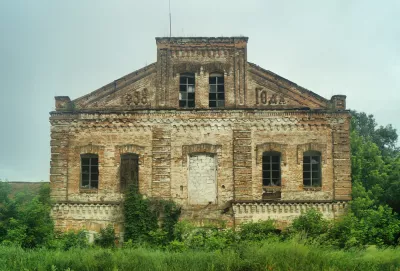
The remains of the Yurkevych estate have been preserved in the village amid a picturesque forest. Unfortunately, only the ruins of the main building have survived to the present day. Above the former porch, a sign with the inscription "Fairytale" is still visible — a silent reminder of the times when a children's camp operated on the estate. More about the history of the family and the manor can be learned from the works of Kyiv local historian Dmytro Malakov.
The People's House — a pearl of Ukrainian Art Nouveau
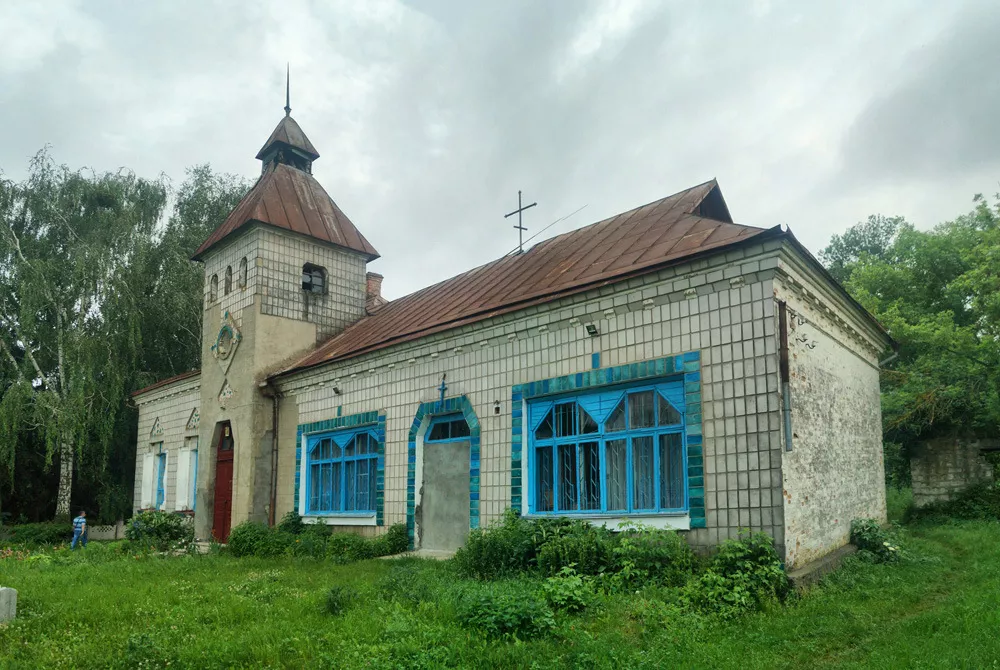
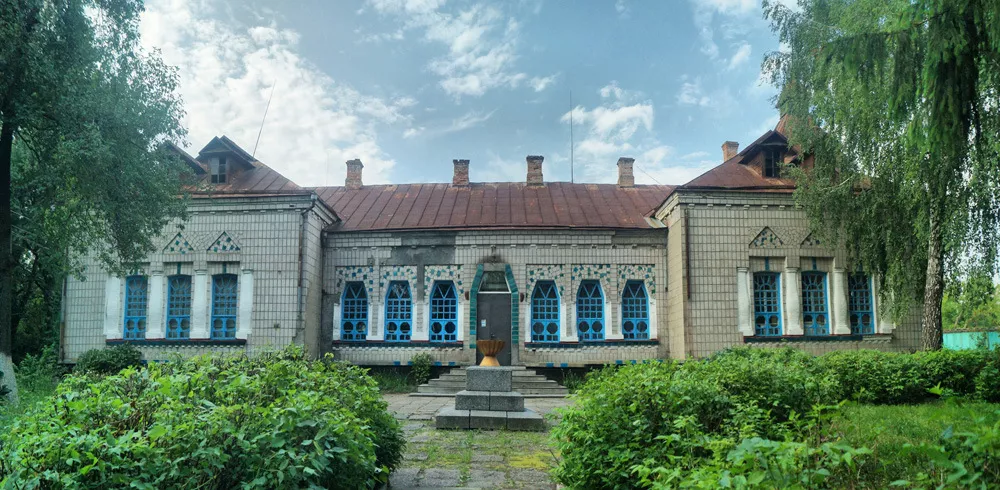
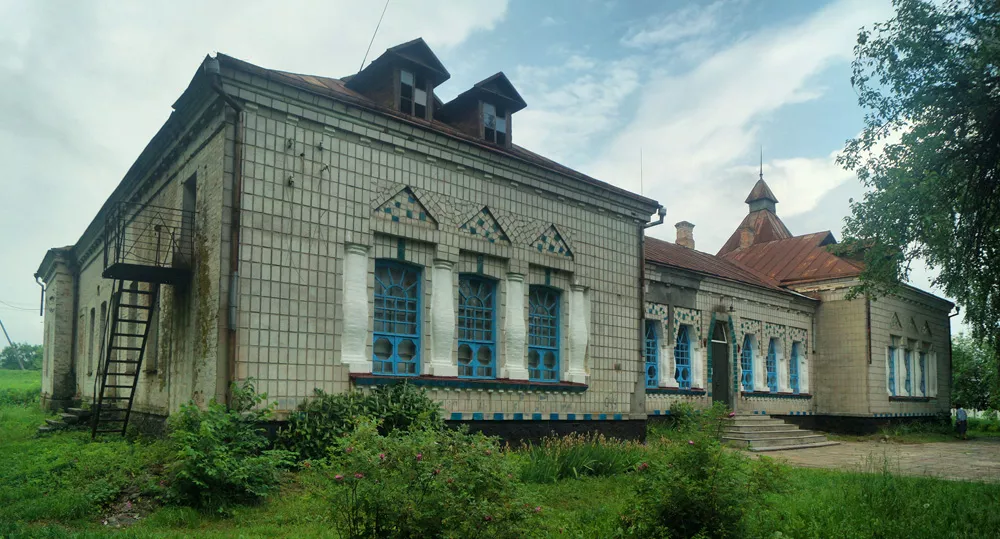
The most valuable architectural monument of Kryve, without exaggeration, is the People's House — a unique example of Ukrainian Art Nouveau, erected in 1924–1929. The building was constructed on the initiative and at the expense of the rural cooperative union — evidence of the high level of self-organization of the community at that time.
The authorship of the project is linked to the architect Mykola Damilovskyi. This version was also supported by Dmytro Malakov, pointing out the similarity of the tower of the People's House with the towers of the Nizhyn power plant, designed by the same architect. Architectural researcher Andrii Vlasenko also mentions this.
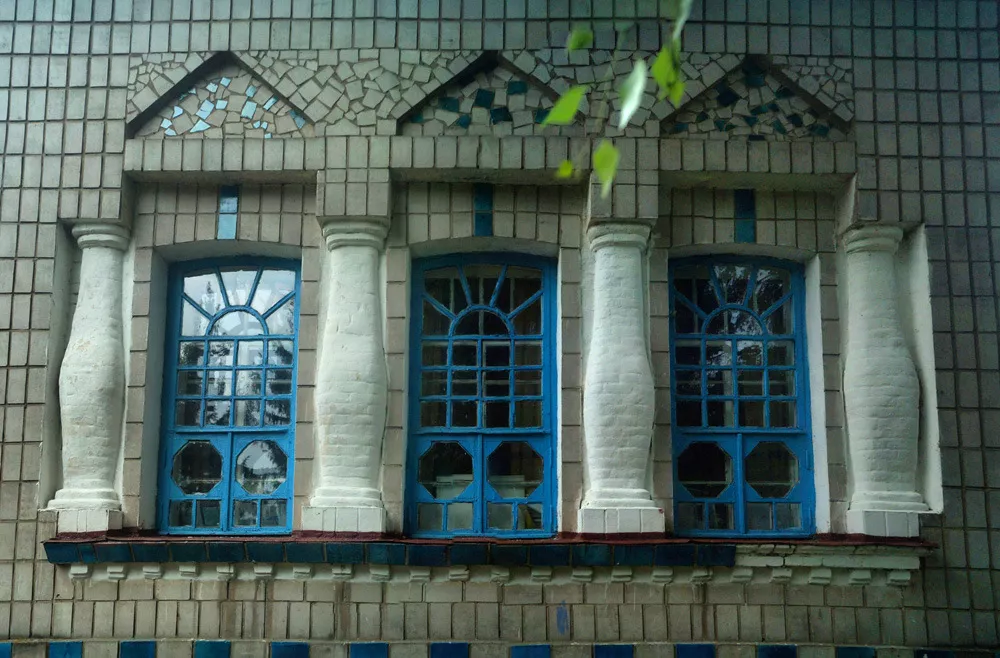
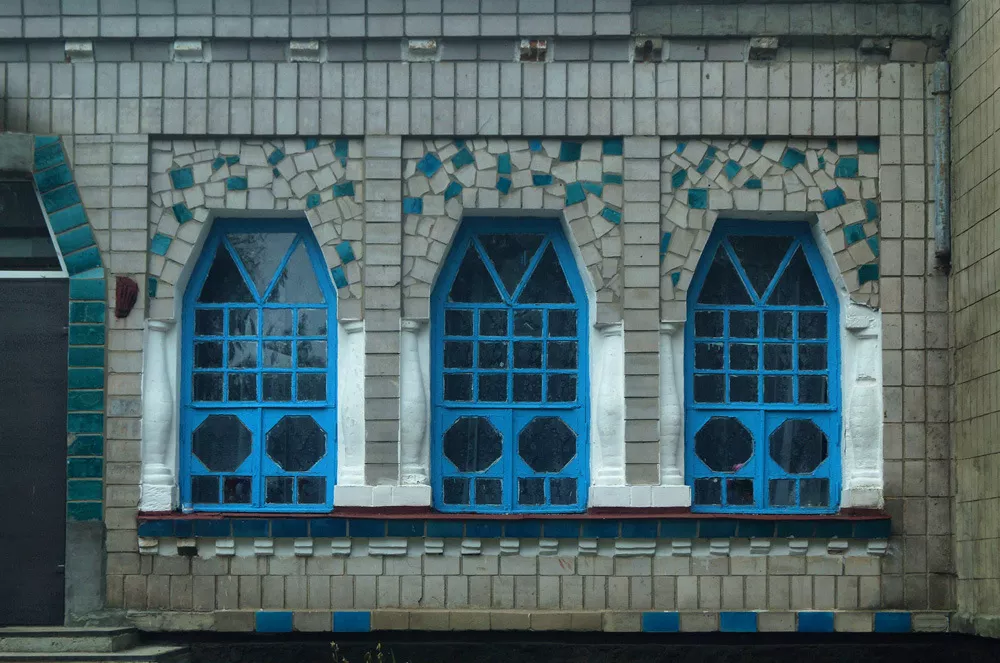
The building impresses with its proportions, silhouette and details, and especially with its windows. Such elegant frames framed by small columns have hardly survived today, and it is they that give the structure a special charm.
Oblivion and distortion of memory
Originally, there was a large clock on the tower of the People's House, symbolically measuring the time of the community. However, the builders could not foresee that soon Ukrainian life would be broken by collectivization, Holodomors and wars. As a result, not only material but also historical memory was lost.
During conversations with local residents, it turned out that most of them know neither the true purpose of the People's House nor the time of its construction. Some even believed that the structure was built in the 1970s — probably due to the unfortunate tiles with which the facade was then disfigured. Unfortunately, it was not possible to convince the villagers of the true historical value of the monument.
It is especially regrettable that this architectural pearl has not been included in the register of monuments, despite repeated attempts by heritage conservationists.
A ray of hope
Recently, a church has been opened in one of the wings of the People's House. This instills cautious hope that the building will not be completely destroyed and will get a chance at a new life.
Kryve is an example of how a genuine cultural treasure, almost unknown to the general public, can be preserved in the remote countryside. The history of the village, the Yurkevych family, the estate ruins and the unique People's House — all of this requires attention, research and preservation. Nearby, in Kornyn, the old water mill is also worth seeing.
Photos by Roman Malenkov.
As of spring 2024, two large Art Nouveau windows were replaced with plastic ones. Below are photos from 2024.
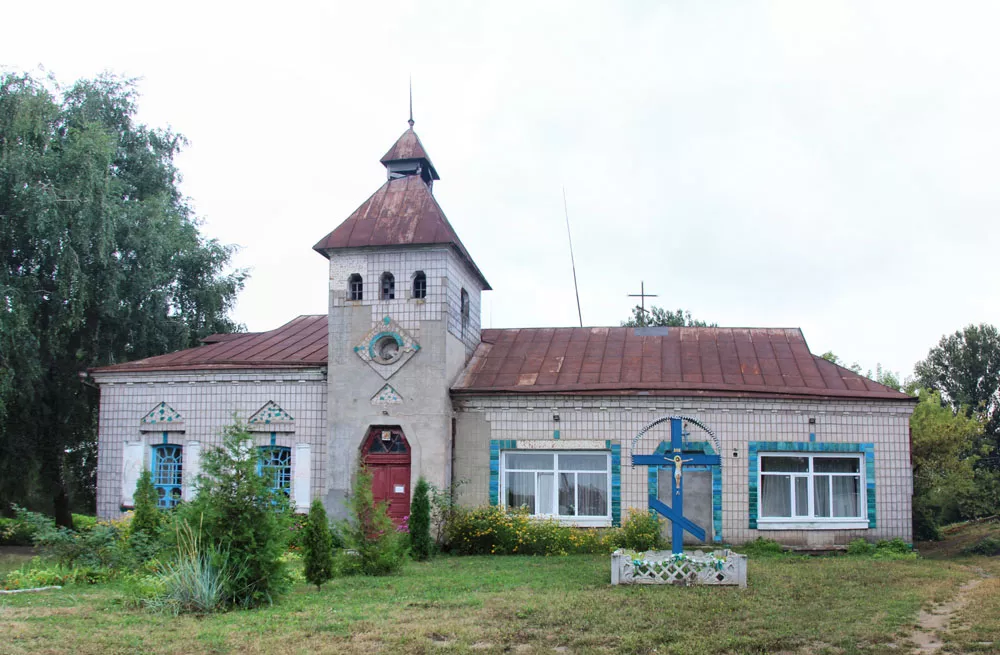
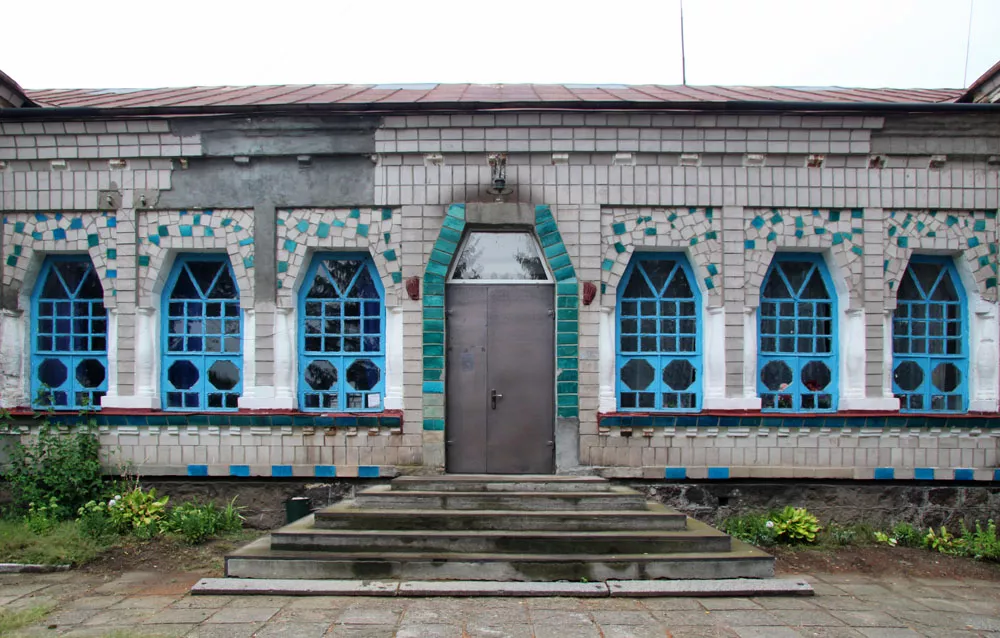
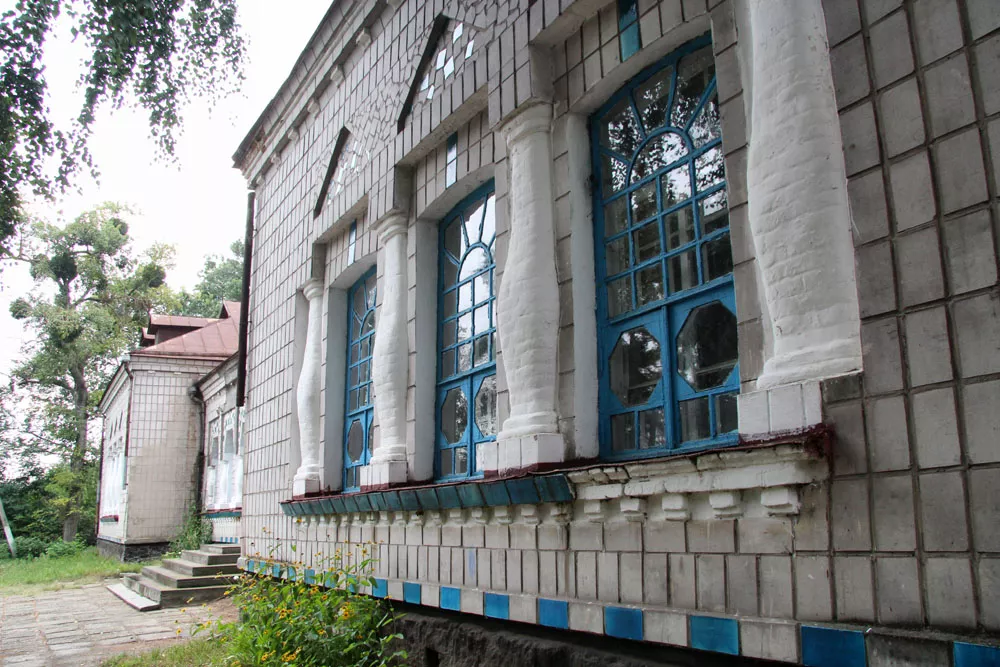
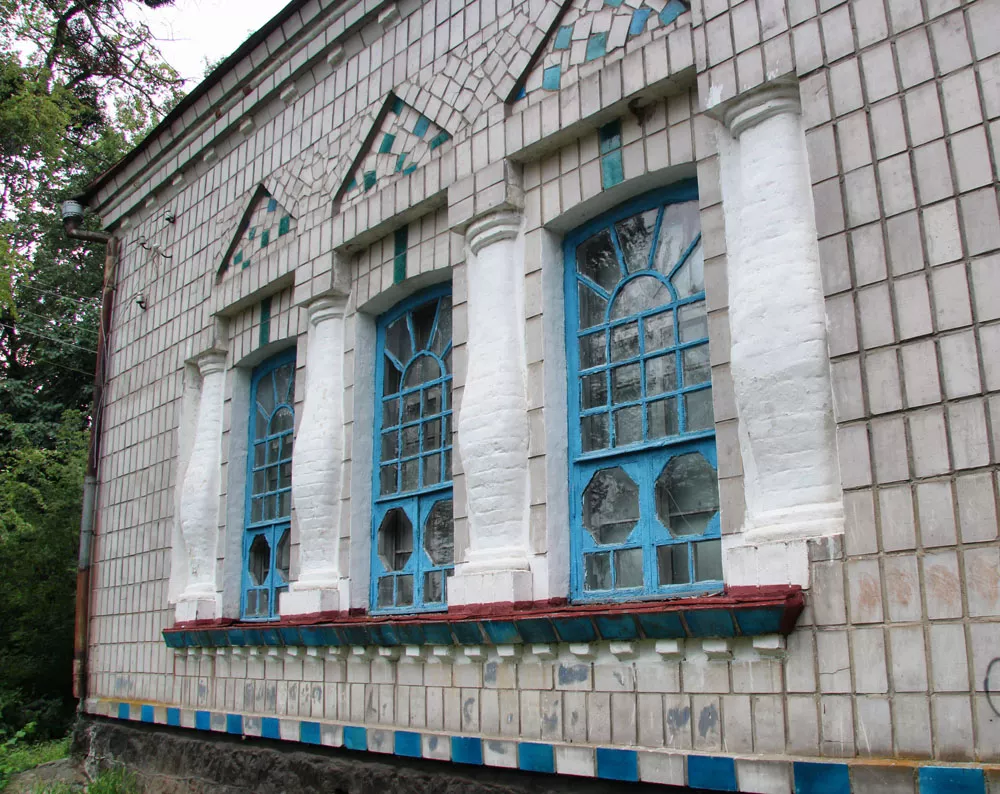
Photos from 2024
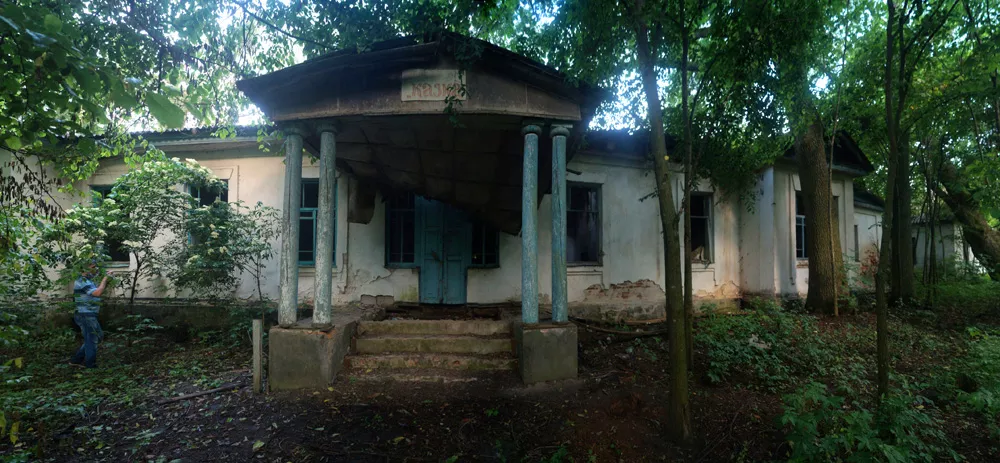
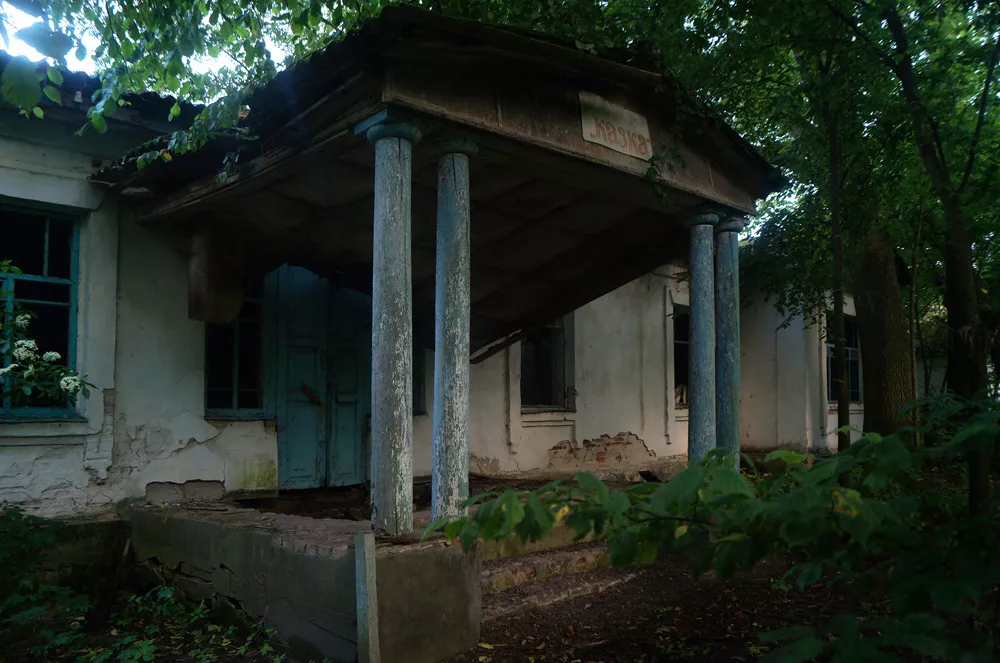
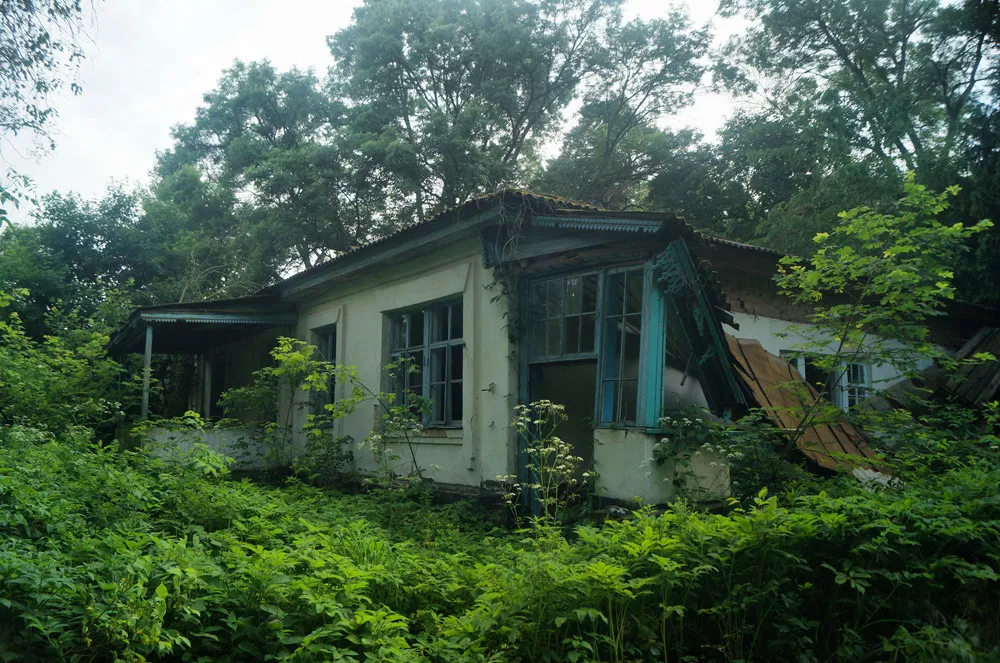
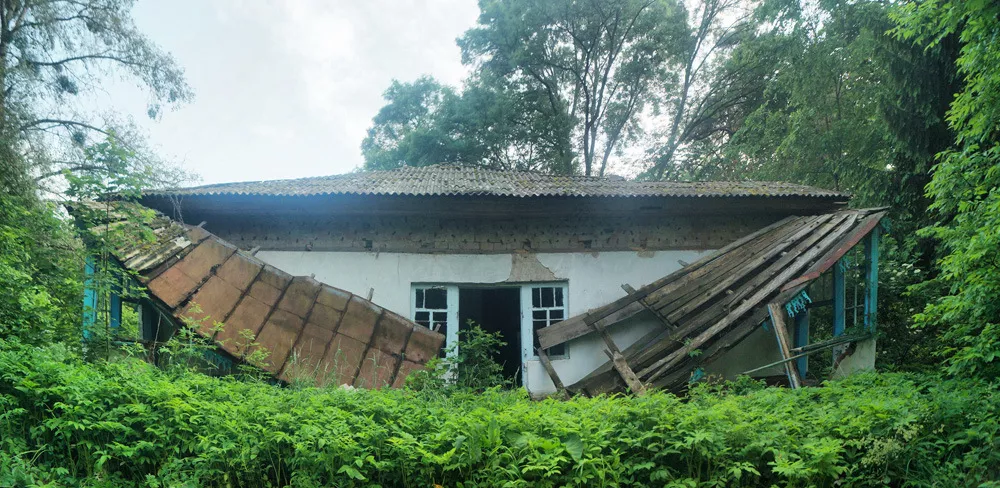
Remnants of the Yurkevych estate house