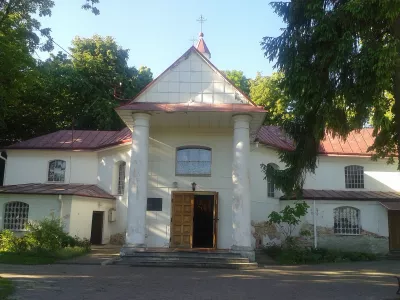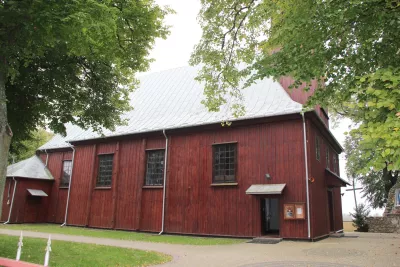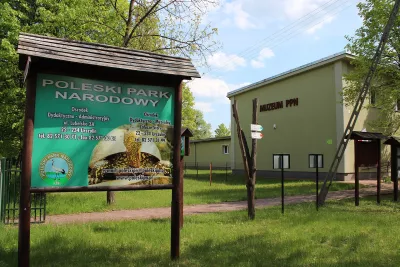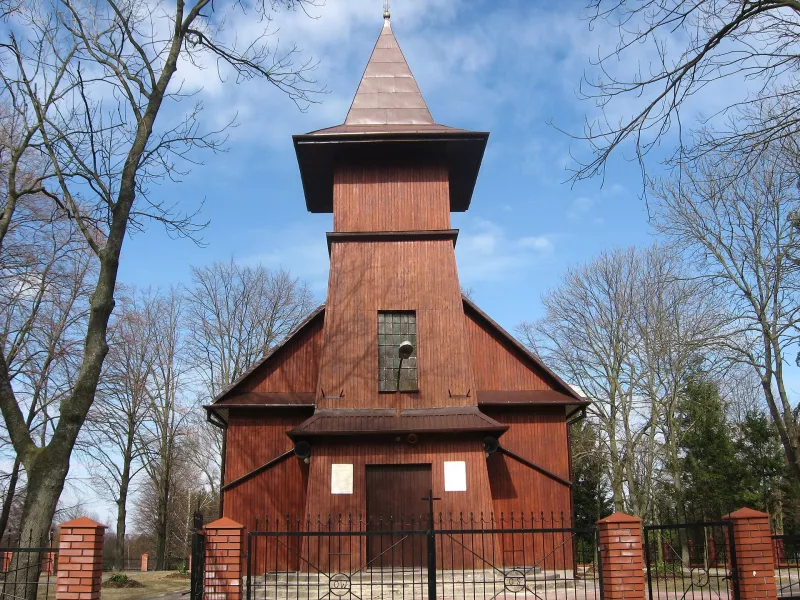
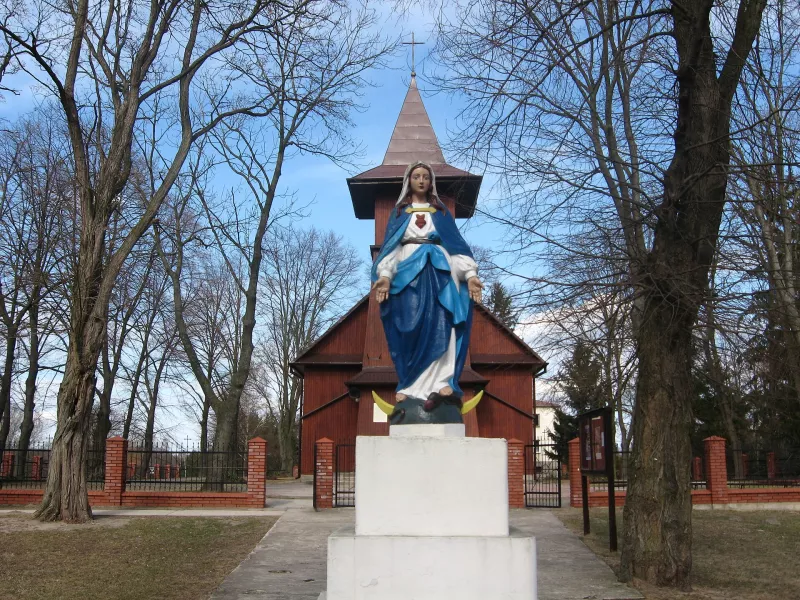
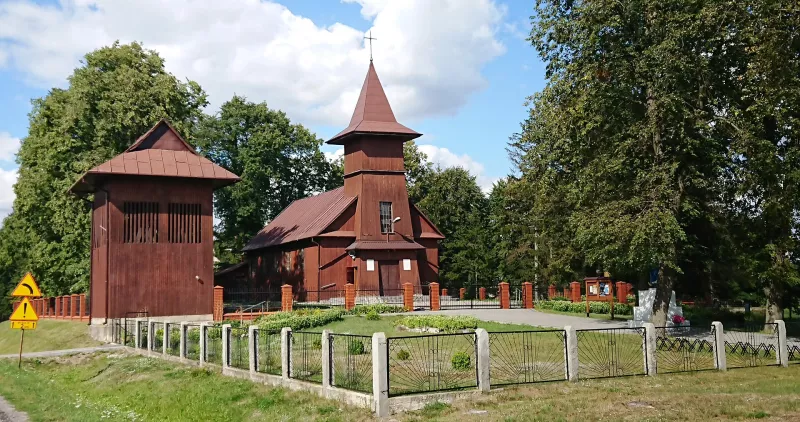

The Church of Saint Andrew Bobola is the parish church of the village of Wytyczno in the Urszulin gmina, on the Lublin — Włodawa route. The wooden church with its tall tower has an unusual history: it is a former Evangelical church that was moved from neighbouring Michałów after the war. Nearby, on the edge of the village, are a military cemetery and a monument to the 1939 battle, and a kilometre away is the "Polissian Homestead" farmstead of the Polesie National Park. Read more about the village itself in the article "Polissian Villages around Urszulin".
The Church from Michałów
The neighbouring village of Michałów was once called Michelsdorf: German Lutheran colonists lived here and had their own wooden church. After the Second World War, the parishioners from Wytyczno bought this building at their own expense and transported it to their village themselves. Here it was expanded between 1947 and 1949, and a tower was added in 1958. The church was dedicated to Saint Andrew Bobola, a Jesuit who died in 1657 in Polissia, in Janów near Pinsk.
The architecture evokes the Zakopane style. The chancel is smaller than the nave, with two sacristies on the sides. At the front stands a tower with walls tapering towards the top, under a sheet-metal pyramidal roof.
The Battle of Wytyczno
On 1 October 1939, one of the last battles of the September campaign against the Red Army took place near Wytyczno. The composite group of the Border Protection Corps under General Wilhelm Orlik-Rückemann, after battles in Volhynia and Polissia, crossed the Bug and was fighting its way towards Parczew to join the troops of General Kleeberg. On the Włodawa — Lublin highway, it was met by the 253rd Rifle Regiment with tanks and artillery. The battalions of border guards were named after Volhrainian and Polissian towns, now Ukrainian: Rokytne, Sarny, Berezne. After a all-day battle, the general ordered a retreat and disbanded the group; about 300 prisoners went missing. On the Tomb of the Unknown Soldier in Warsaw, this battle is mentioned by the inscription "Szczec — Wytyczno".
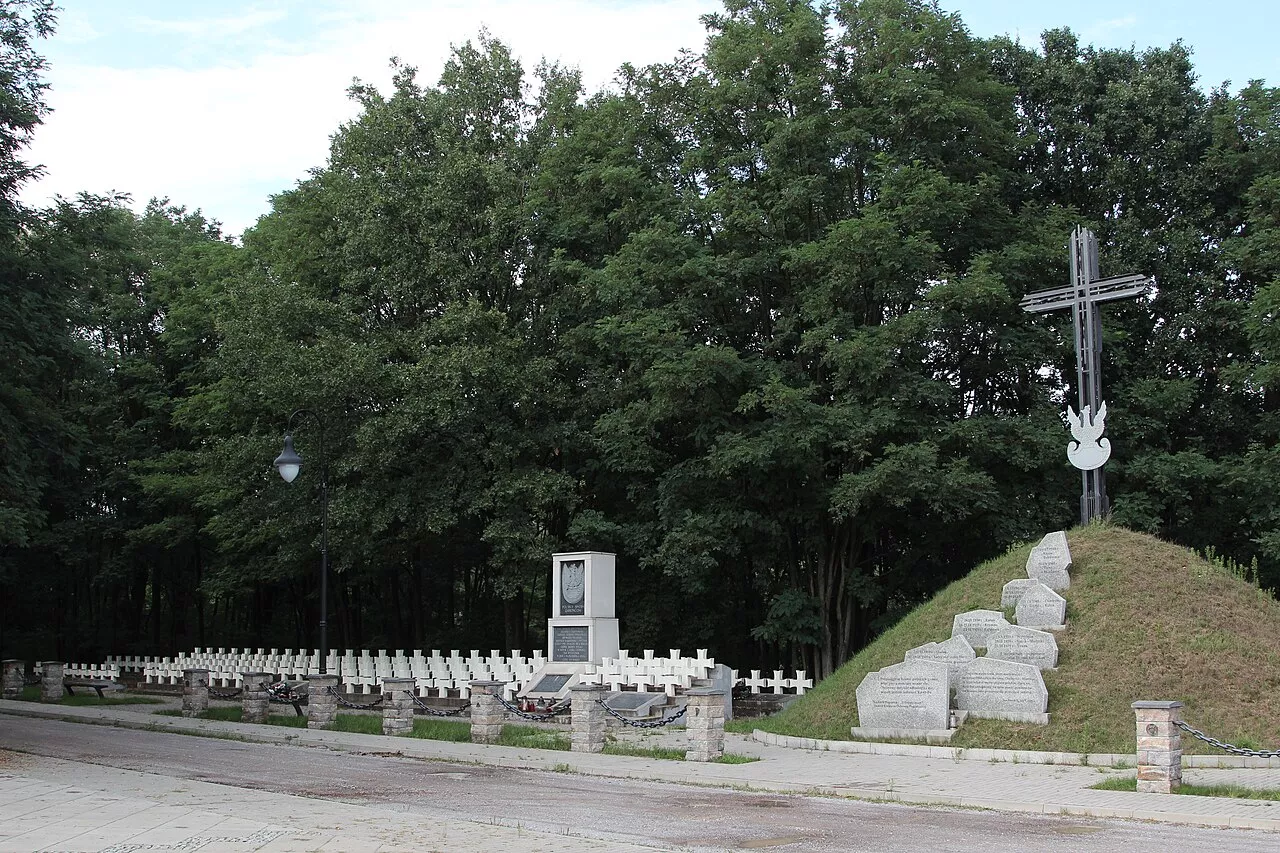
At the military cemetery, there is a symbolic grave of the fallen (most of them are buried in Włodawa). Nearby stands a two-metre mound with a metal cross, an eagle, and a plaque with the words "Wytyczno, Katyn, Kozelsk, Starobelsk, Ostashkov". In 2014, the monument was renovated. Every year in late September, commemorations take place here.
Polissian Homestead and Durne Bagno
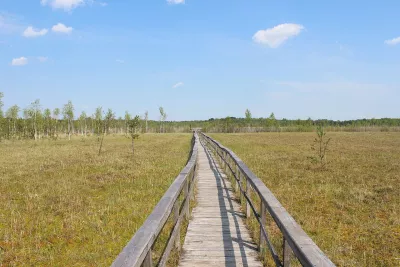
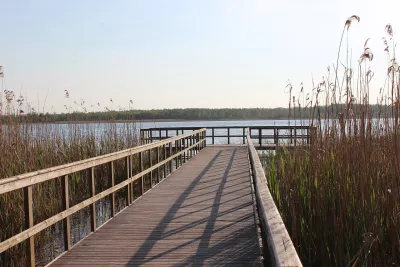
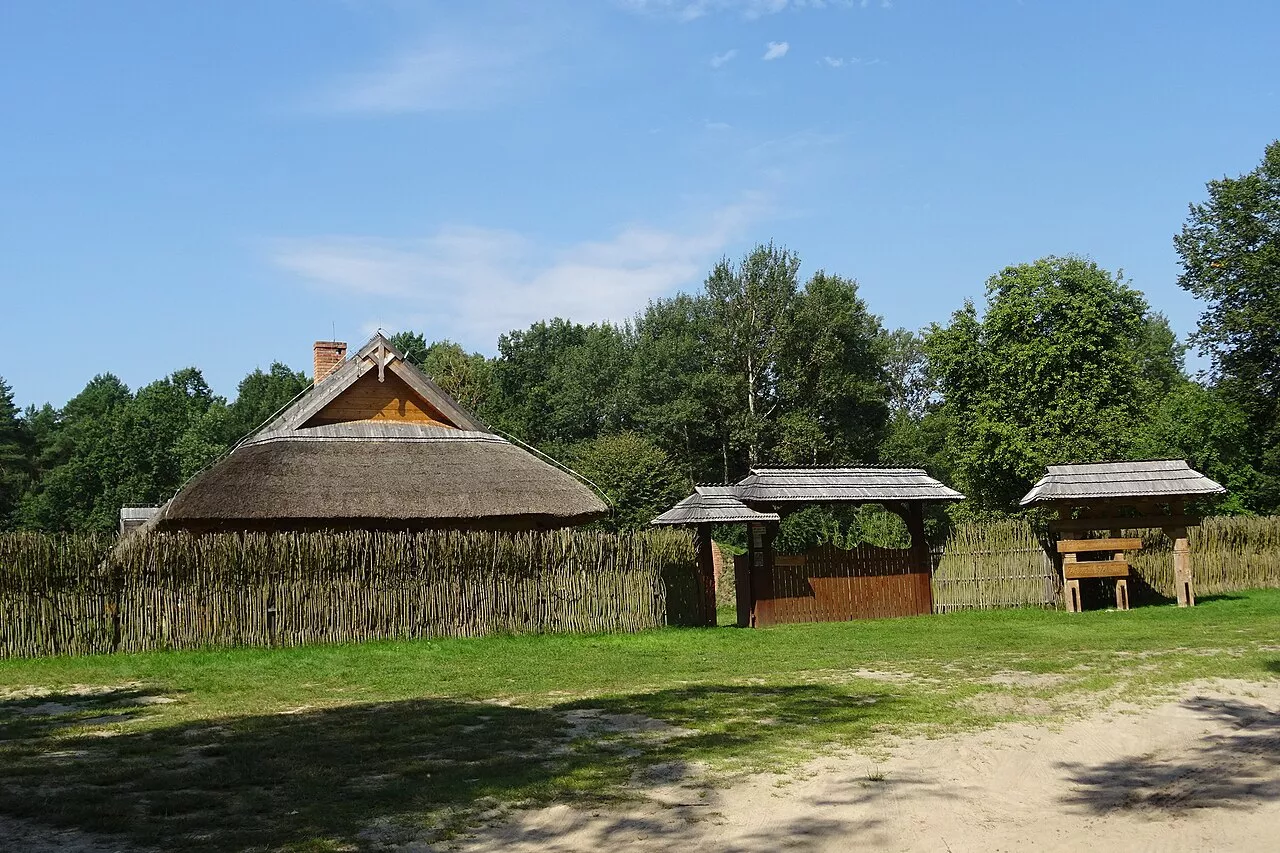
About a kilometre along a dirt road from the monument, in the settlement of Łowiszów, the park has recreated a 19th–20th-century Polissian farmstead: a cottage, a dugout cellar, a storehouse, a barn, a cowshed, a well with a sweep, and a wattle fence, all under a thatched roof. Inside, there are everyday peasant items and tools of shoemakers, carpenters, weavers, and beekeepers. Nearby is the raised peat bog Durne Bagno with an observation tower, Lake Wytyckie, the largest in the Lakeland, and the "Mietiułka" bicycle trail.
How to get there
Wytyczno stands on route No. 82 Lublin — Włodawa, about 25 km from Włodawa and a few kilometres from Urszulin; buses Lublin — Włodawa stop in the village. The "Polissian Settlement" (Wytyczno, 156) is open in October on weekends from 9:00 to 17:00, closed from November to April, and the park announces its summer schedule separately. The blue trail from Włodawa and its continuation to Urszulin via Sosnowyca pass through Wytyczno. Nearby, it is worth seeing the parish church in Wereszczyn and the "Spławy" trail. This is Poland: Ukrainian citizens need a foreign passport; the border with Belarus is about 20 km away from here.