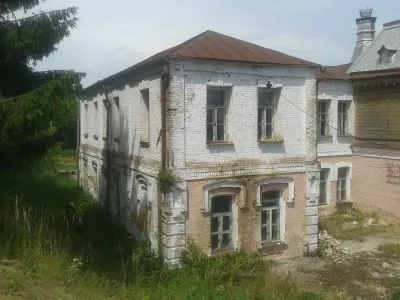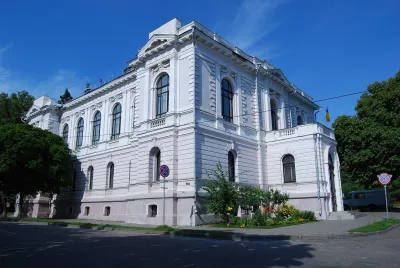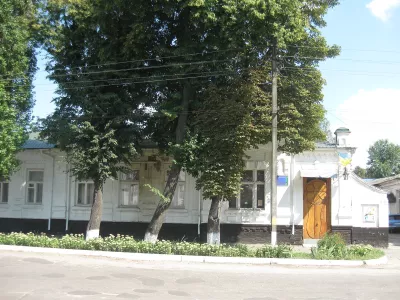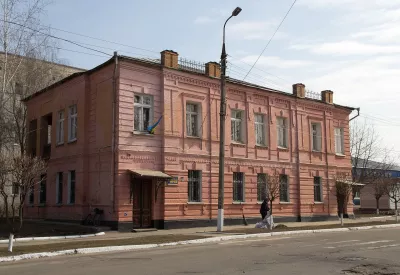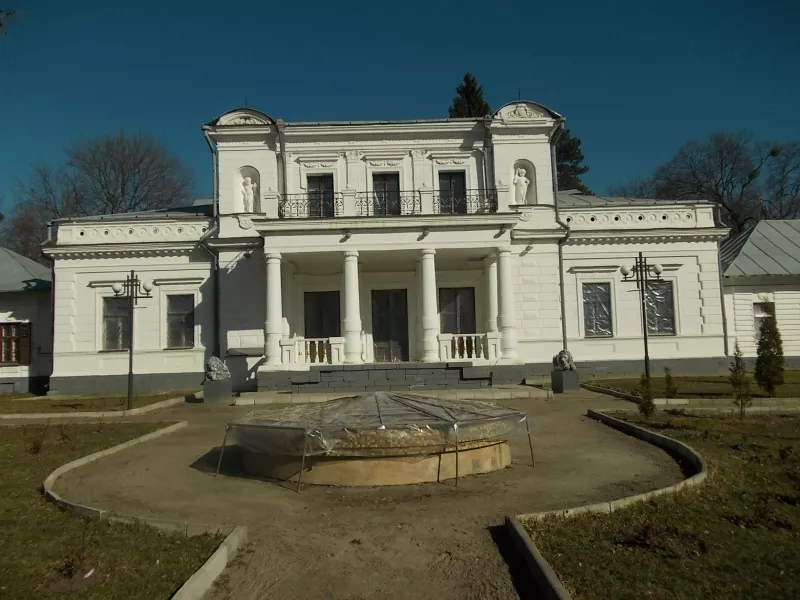

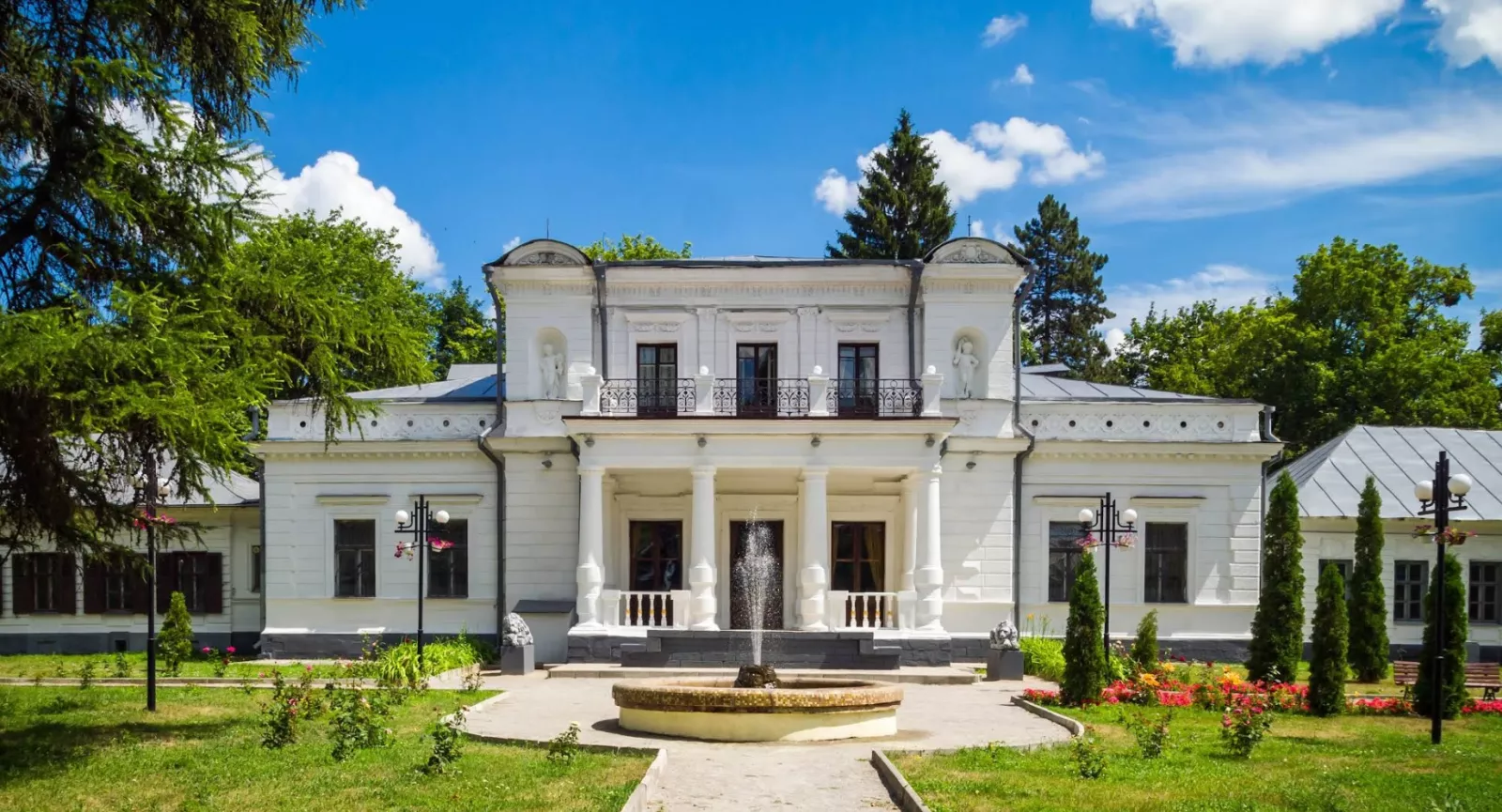
The palace in Trostianets in Sumy Oblast is known by two names — the Golitsyn Palace and the Koenig Manor. Its history is tied to several owners of the estate, its rebuilding by industrialist Leopold Koenig, and the stay here of composer Pyotr Tchaikovsky.
The palace is part of a historical manor complex that also includes the house where Tchaikovsky lived and worked, and the Round Yard. These are separate architectural monuments of national significance.
From the Nadarzhynskyis to the Golitsyns and Koenigs
In 1720, Trostianets became the property of Tymofii Nadarzhynskyi, the confessor of Peter I. The estate remained in the possession of his family for the next century.
The main house of the estate, which later became the palace, was built in the 18th century. Some sources give an exact year — 1762, while the Great Ukrainian Encyclopedia dates it to the late 18th century.
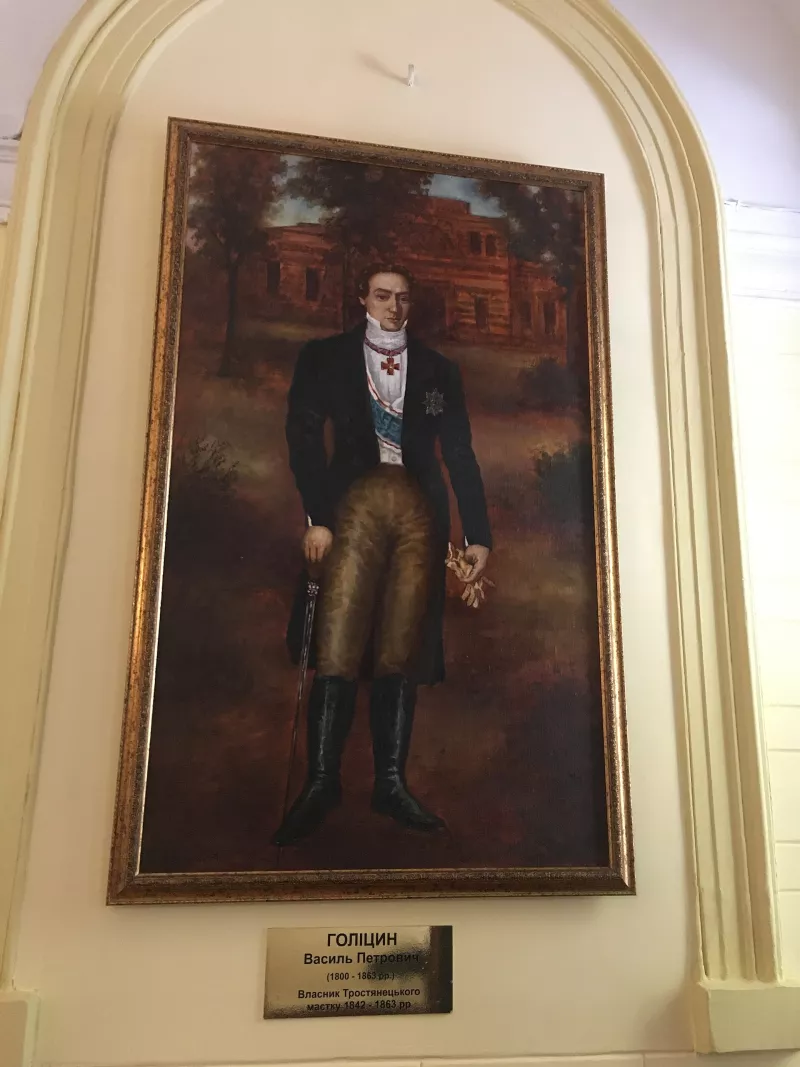
In the 1830s, the estate passed to the Princes Golitsyn. Sofiia Korsakova, a descendant of Tymofii Nadarzhynskyi, married Vasyl Golitsyn. Under the Golitsyns, the manor was expanded: a park was laid out, and outbuildings and service structures were built.
After Vasyl Golitsyn, the estate was owned by his son Oleksii. In 1868, Trostianets was purchased by merchant A. A. Mark, and in late 1874, the manor passed to industrialist Leopold Koenig.
The Koenig family owned the estate until the revolutionary events of 1917.
How Leopold Koenig Rebuilt the Palace
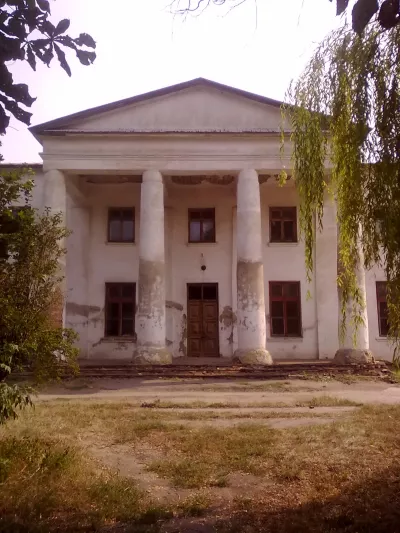
Under Koenig, the main house was significantly rebuilt. The central section of the building was expanded and enlarged with a second floor. The old side wings were preserved, and the new central section was joined with them.
The initial architectural foundation of the building was Classicism. During the reconstruction, the facades received Neo-Baroque elements — stucco molding and sculptural decoration. Therefore, the palace combines features of different architectural styles.
The journal "Zodchyi" wrote about the work on the building in 1885. The publication noted that the new structure was being built between the two wings remaining from the previous house. The sculptures and ornamentation were to be executed according to drawings by A. I. Lapin, and the metalwork by K. Winkler. The publication was signed by architect Viktor Shreter.
The grand wooden staircase and the ballroom with stucco and sculptural decor have been preserved in the palace. The oak staircase leading to the second floor is one of the characteristic features of the historical interior.
Pyotr Tchaikovsky's Summer in Trostianets
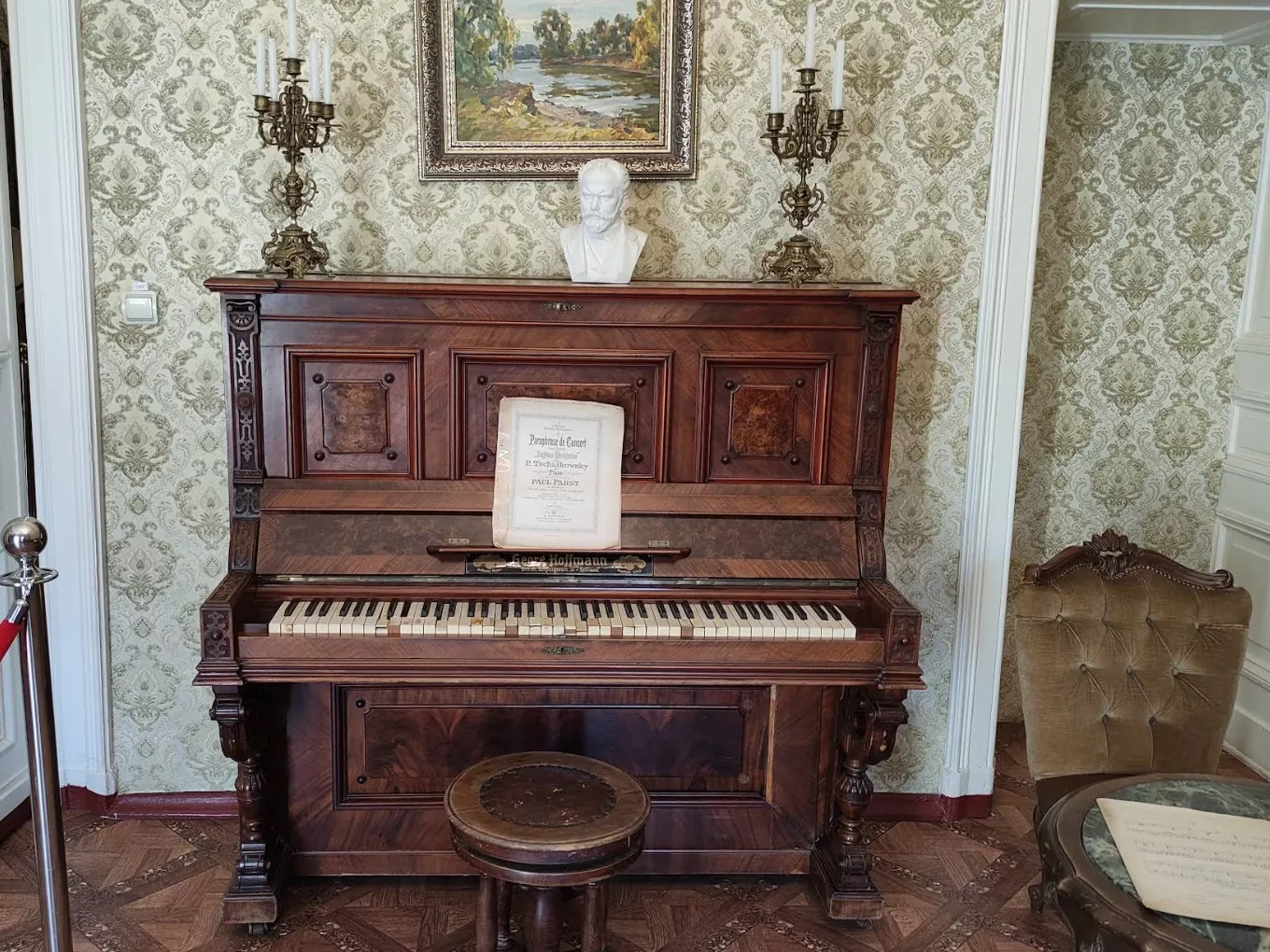
In the summer of 1864, 24-year-old Pyotr Tchaikovsky stayed at the Golitsyn estate. At that time, he was studying at the St. Petersburg Conservatory and came to Trostianets at the invitation of his acquaintance Oleksii Golitsyn.
The composer spent about three months here. In Trostianets, he worked on the overture to Oleksandr Ostrovskyi's drama "The Storm" — one of his first symphonic works.
Tchaikovsky did not live in the main palace, but in a separate house on the manor grounds. This building is also part of the historical complex.
The Round Yard — A Former Riding Hall and Theater
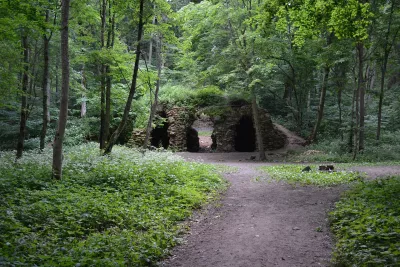
Another well-known building of the manor is the Round Yard. This is an unusual oval brick building with high walls and four round towers. In appearance, it resembles a small fortress.
The structure is associated with the Nadarzhynskyi family. It was used as a riding arena and for household needs. Under the Golitsyns, theatrical and circus performances were held here.
Various dates for the construction of the Round Court appear in sources. The year 1749 is cited most frequently, though some registry records date it to the 19th century. Therefore, it is best not to state a precise date of construction without additional documentary confirmation.
The Round Court is distinguished by a combination of Gothic motifs and elements of Ukrainian Baroque. It is one of the most distinctive historical buildings in Trostianets.
Museum and Exhibition Centre in the Former Palace
After restoration work in the 2000s, museum and exhibition displays were arranged in the palace. The art gallery opened on September 22, 2007.
The Trostianetskyi Museum and Exhibition Centre combined several directions: a local history museum, an art gallery, and a chocolate museum. Rooms dedicated to Leopold Koenig and Pyotr Tchaikovsky were set up on the premises.
The central part of the building was used for the art gallery, while the wings housed museum exhibits. Thus, the historical estate became a cultural hub of the town.
Damage During the Occupation of Trostianets
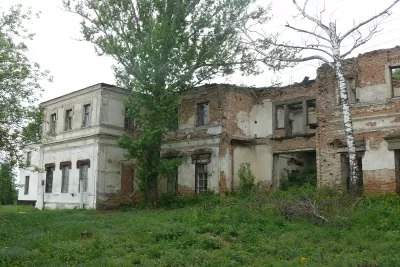
During the occupation of Trostianets in 2022, the Koenig Estate suffered damage and looting. The premises of the museum and exhibition centre, part of the interiors, and museum items were affected.
An explosion in the Leopold Koenig room museum damaged an antique wardrobe and a chair from the second half of the 18th century. In the north-eastern wing, historic doors and windows were lost. Unique chocolate sculptures were also damaged — the "Chocolate Crown" and a swan made of milk chocolate. Computer equipment was stolen from the museum premises.
Some of the exhibits were saved. The local history exhibition was dismantled and moved to storage even before the full-scale invasion. The rescue of the Zarichne Griffin — a 13th-century bone artifact also known as a Simargl — is a story of its own.
Chief curator Yulia Ivashchuk hid the artifact inside a mock stove heater in the estate. It remained there for over six months.
After the town was liberated, restoration of the museum complex began. Repair work started in the summer of 2022, and in August the museum and exhibition centre reopened to visitors.
Palace Repairs and Enhanced UNESCO Protection
In late November 2025, emergency roof repairs of the right wing began at the estate. The work was carried out with the support of the American organisation World Monuments Fund.
On December 4, 2025, the UNESCO Committee for the Protection of Cultural Property in the Event of Armed Conflict included the Koenig Palace — the main house of the estate — in the International List of Cultural Property under Enhanced Protection.
This status provides additional international safeguards for the protection of the monument during an armed conflict. Significantly, it was specifically the main house of the estate that was added to the list, rather than the entire complex with the Round Court and the Tchaikovsky House.
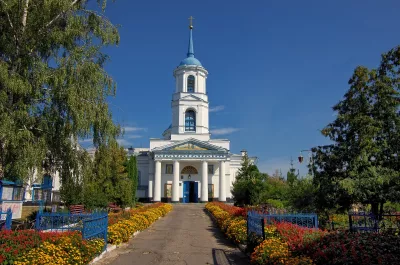
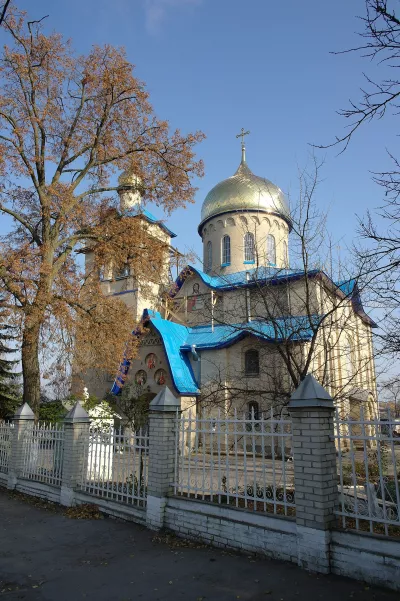
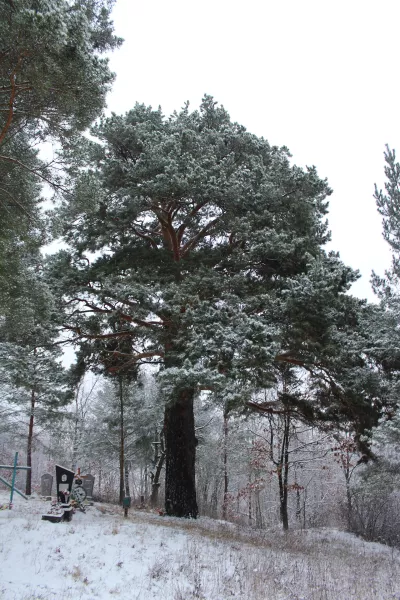
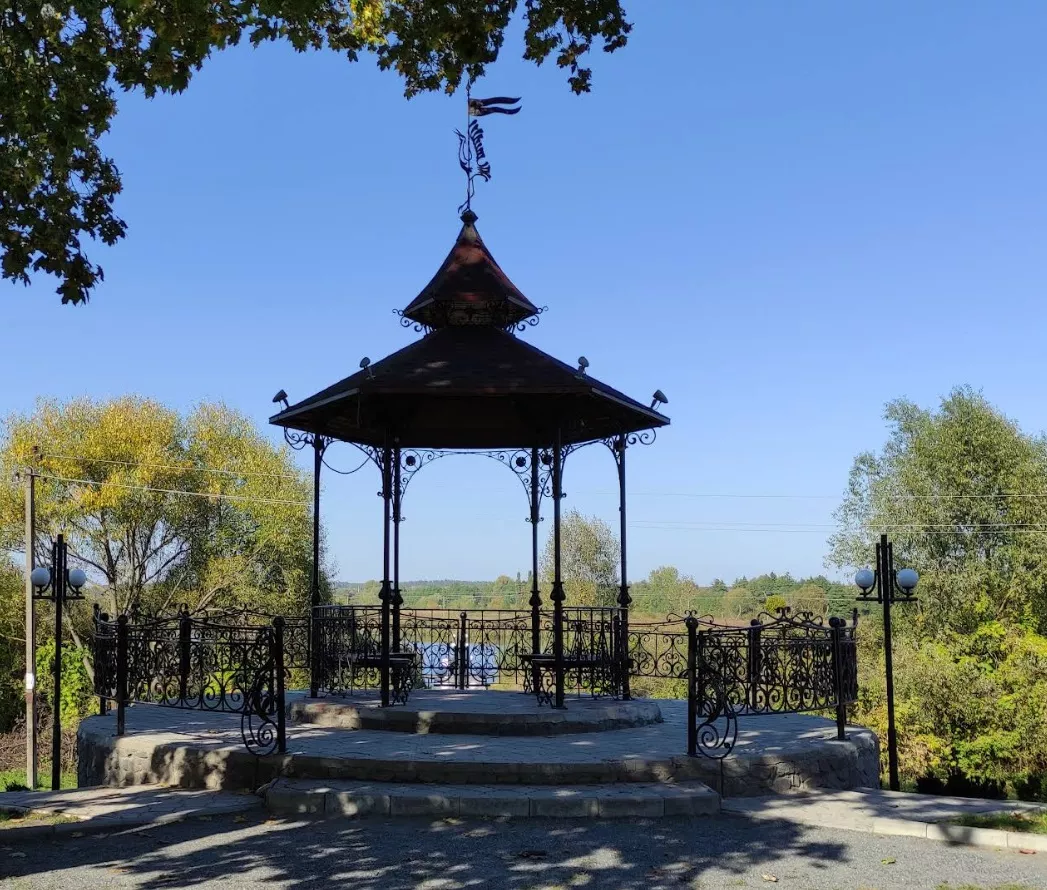
After the palace, it is worth seeing the Ascension Church, the Trostianets linden trees and old oaks on Myru Street, and for a longer walk — Neskuchne Park.
How to get there
The estate stands in the centre of Trostianets on Myru Street. The town is located in Okhtyrka Raion of Sumy Oblast, approximately 19 km from Okhtyrka and 50 km from Sumy. Trostianets can be reached by train to the station of the same name or by bus from Sumy and Okhtyrka.