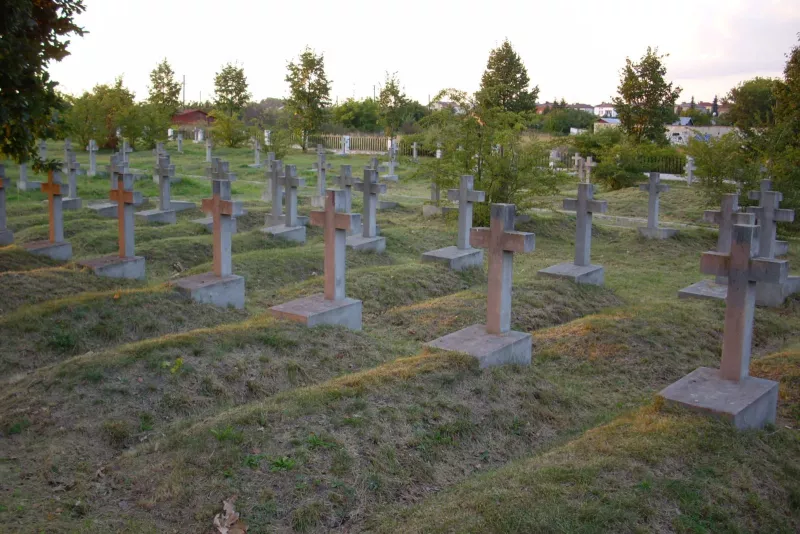
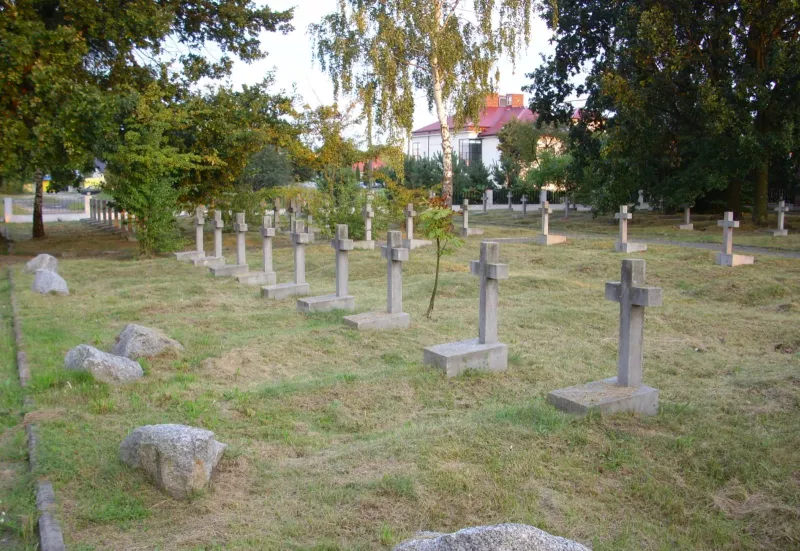
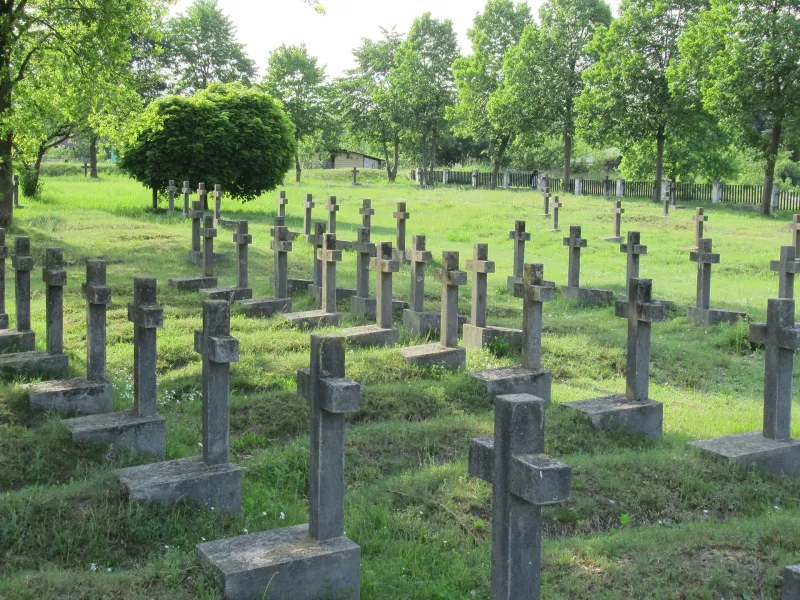
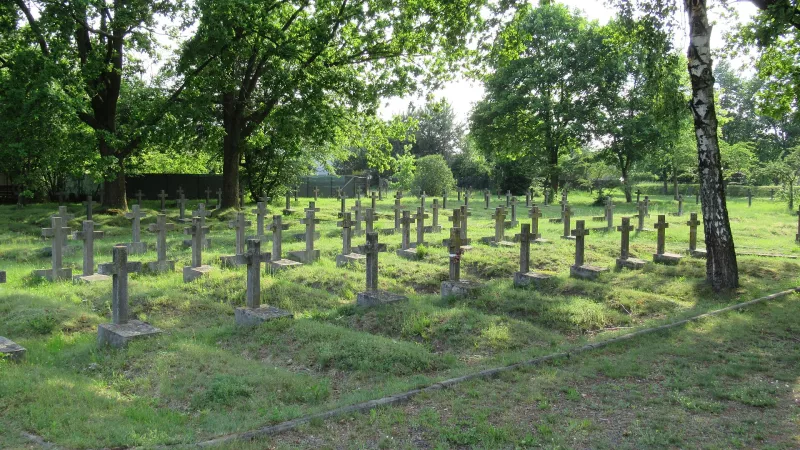

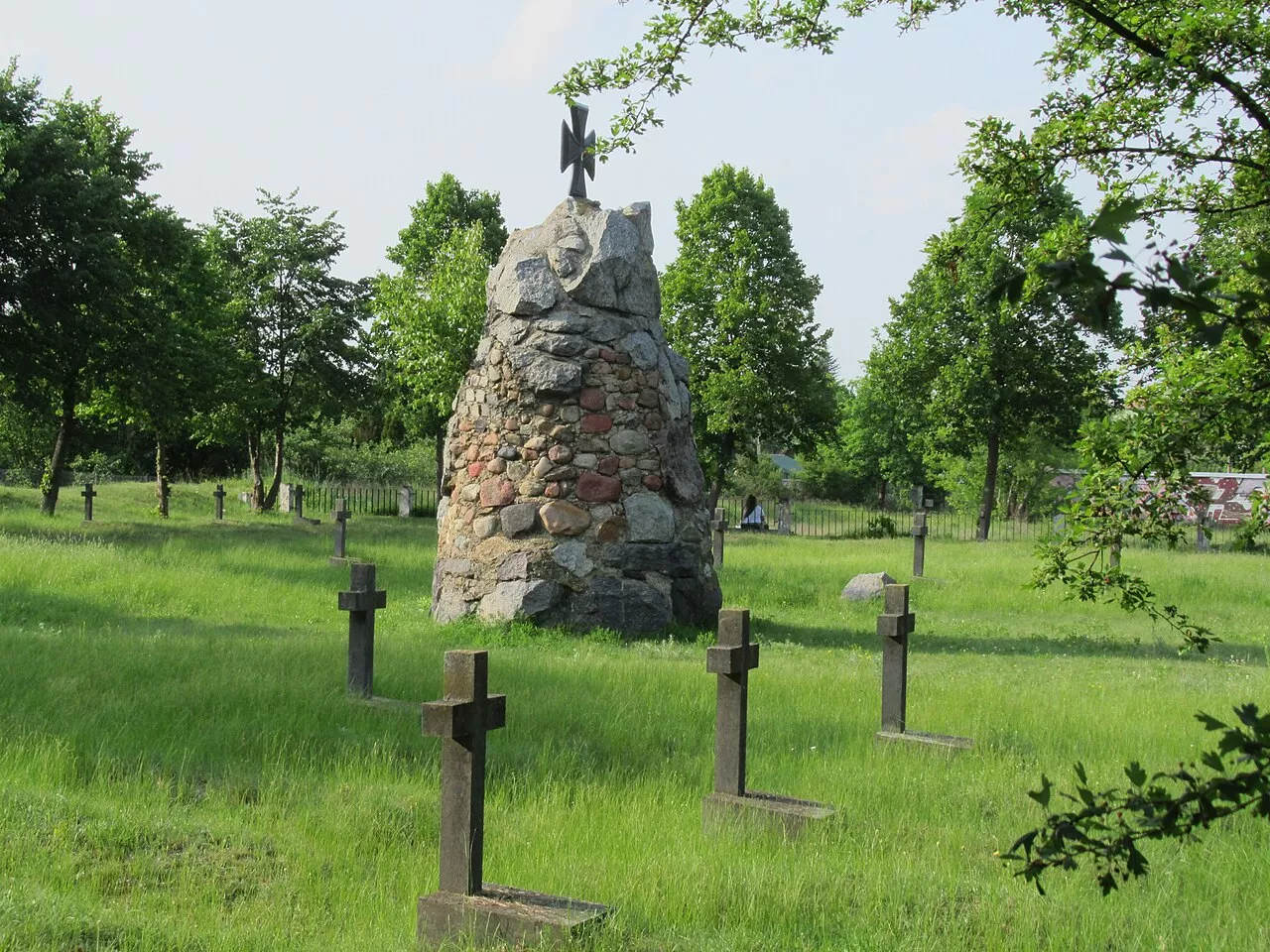
The military cemetery on Pokoiu Street is a quiet place of remembrance of the First World War in Biała Podlaska. Soldiers from various armies who died in the field hospital between 1915 and 1918 are buried here. Locals call it the German-Austrian cemetery because it was established and maintained by the German military administration.
Hospital Cemetery
In the summer of 1915, the Russian army retreated from Podlasie, and Biała was occupied by German troops. The town found itself behind German lines, and a field hospital operated here. Those who died from wounds and diseases were buried nearby. The cemetery was in use from 1915 until December 1918. According to available data, about 687 soldiers from all armies that fought on this front rest here.
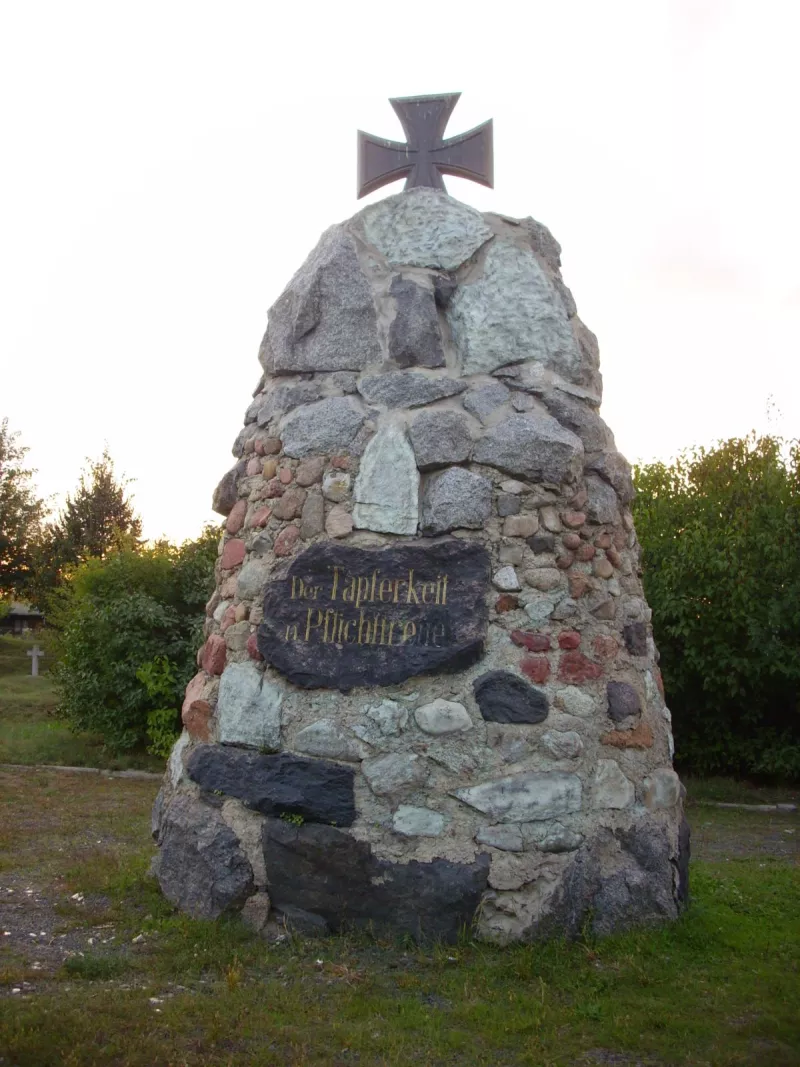
On the stone obelisk, German inscriptions remain: “Der Tapferkeit u. Pflichttreue” — “To bravery and duty loyalty” — and “Et. Kdeur 214,” meaning Stage Command No. 214, which was responsible for the rear in this area.
Second War and Restoration
The cemetery is rectangular, approximately 143 by 78 meters; originally it was planned as a square. During the Second World War, it was expanded from the north and again used to bury those who died in the hospital—likely German soldiers and personnel. Whether they were later exhumed is not precisely known. In the postwar decades, the site was damaged and neglected. Now part of the First World War section has been restored and enclosed with a metal fence; the cemetery is listed as a protected monument.
Other Military Cemeteries in the Town
Biała Podlaska has several similar sites: separate cemeteries of Italian and Soviet prisoners of war have been preserved, and near the Church of Saint Anthony, the Podlasie soldier’s epitaph—memorial plaques to soldiers—is placed on the fence. Together, they show how many armies passed through this town on the border of Polissia and Podlasie.
How to Get There
The cemetery is located on Pokoiu Street, in the western part of Biała Podlaska; entrance is free. The town is conveniently accessible by train from Warsaw (line to Terespol); for Ukrainians, this is Poland, so a passport is required. After visiting the cemetery, it is worth walking through the center: the Church of Saint Anne, the “Under the Prophets” tenement house, and the Radziwiłł Castle Park are 2–3 km away. More about the region can be found in the article Polish Polissia.