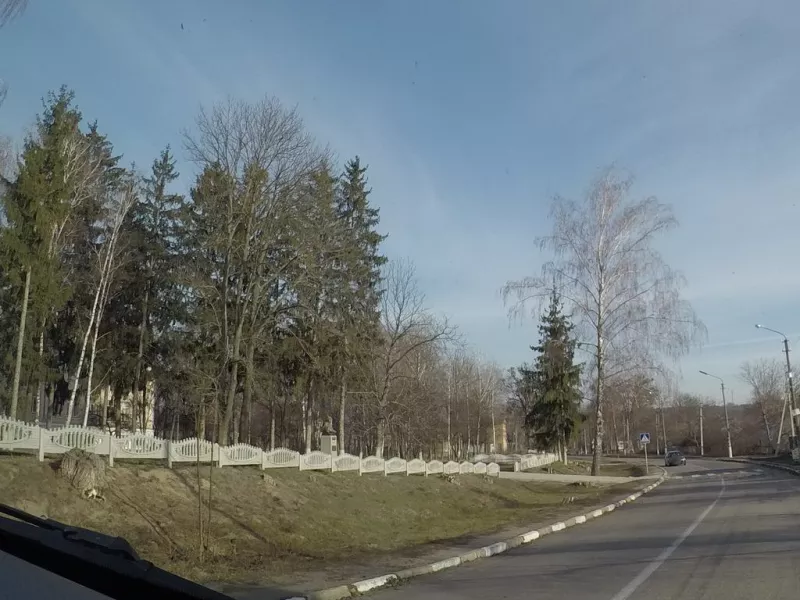

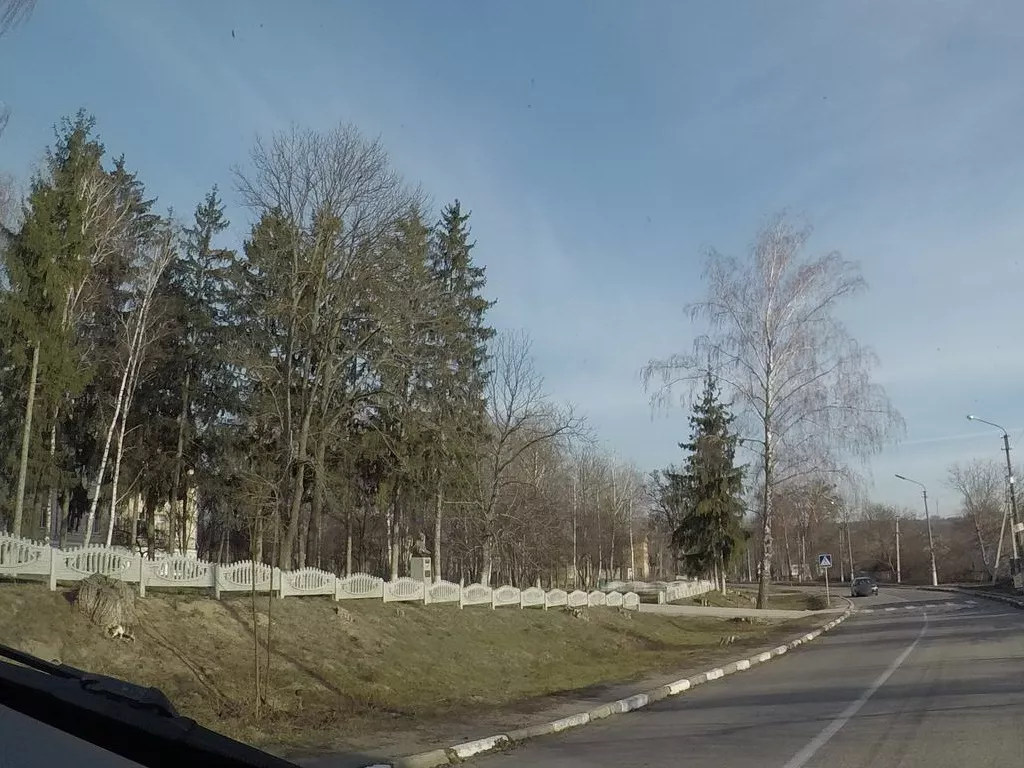
Medvyn is a village in Bila Tserkva Raion of Kyiv Oblast, the center of Medvyn rural hromada. It lies on the Khorobri River, on the watershed of the Ros and Hnylyi Tikach rivers. The first written mention dates back to 1520, although historian Pavlo Klepatsky considered this date a mistake and read it as 1620, when the town received Magdeburg rights.
In the 17th century, Medvyn was a sotnia town of the Korsun Regiment. Later it became famous for the uprisings of 1919 and 1920 against Bolshevik rule, and in 1900 it was one of the largest villages in the region — with almost 10,000 inhabitants. According to the 2001 census, the village had 3,749 residents.
Antiquity and the legend of the name
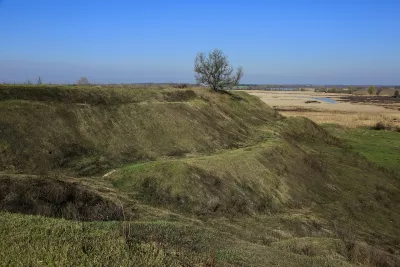
On the territory of the village, a Trypillian culture settlement, Yamnaya burial grounds of the Bronze Age, Chernyakhiv culture artifacts, and more than 30 Scythian burial mounds have been found. Archaeologists have not discovered traces of the city from the 10th–13th centuries mentioned in the legend.
According to legend, there was a large fortified settlement here in the times of Prince Volodymyr. After a Tatar raid, the inhabitants hid the bells, and after a hundred years they found cellars with honey and wine. They broke the barrels, and the drink flowed into the river — supposedly hence the name "Med-vyno" (Honey-wine). This is a legend, not a confirmed etymology.
Magdeburg rights and the Cossack sotnia
In 1362, the region became part of the Grand Duchy of Lithuania, and from 1569, after the Union of Lublin, Medvyn was under the rule of the Polish–Lithuanian Commonwealth. Royal privileges of 1620 and 1655 granted the town Magdeburg rights, its own lands, and elected starostas and judges.
During the Khmelnytsky Uprising, Medvyn became a sotnia town of the Korsun Regiment. In October 1664, Polish troops under Chernecki and Teter unsuccessfully besieged it for four weeks. In 1685, the town was liberated by the Cossack army of Samiylo Samus. After the Prut Peace Treaty of 1711, Polish authorities abolished municipal self-government and serfdom began. From 1793, Medvyn was part of the Russian Empire, and at the end of the 18th century it was purchased by the Branicki counts.
Jewish community
Jews lived in Medvyn already during the Polish–Lithuanian Commonwealth. In 1897, there were 1,082 Jews (11.1% of the population), about 1,500 in 1910, and two synagogues operated. They were engaged in crafts, small trade, and leasing; in 1914 Jews owned a pharmacy, three forest warehouses, and 26 shops.
Sources date the Jewish pogrom carried out by local peasants differently: either March 1918 or January 1919. In September 1941, several dozen Jews were shot in Medvyn. By 1939, only 125 Jewish residents remained.
Medvyn uprisings
In April 1919, the people of Medvyn and Isayky, led by otaman Hryhoriy Pyrkhavka and Kolomiyets, rose up against prodrazverstka and the Bolsheviks, briefly occupied Bohuslav, but the uprising was suppressed. Some sources also call it the "Medvyn Republic."
In August 1920, the uprising resumed under the leadership of otaman Lebid (Khoma Sydorenko) with the involvement of bandurist Antin Mytyai. In October 1920, Budyonny's cavalry units surrounded the village, burned about 600 houses, and near the Kovtuniv tract executed about 80 men, mostly young. A memorial sign to the Medvyn Republic was established in 2000.
Holodomor and the war
During the Holodomor of 1932–1933, about 14% of the inhabitants died; the museum preserves lists of over 400 victims. The German occupation lasted from 27 July 1941 to 27 January 1944: the Nazis tortured 228 residents, and 470 young people were deported for forced labor to Germany. On the fronts, 1,007 Medvyn residents fought, over five hundred died — sources give different numbers.
What is in the village today
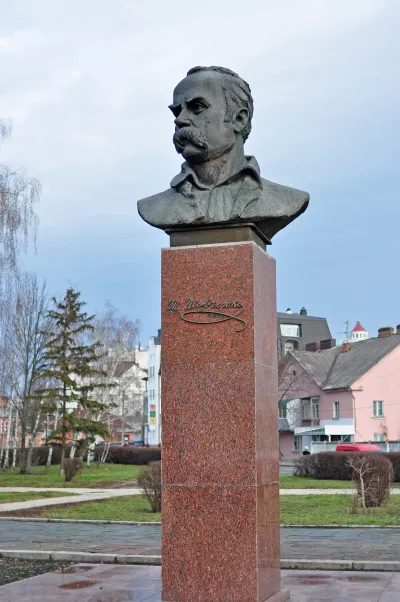
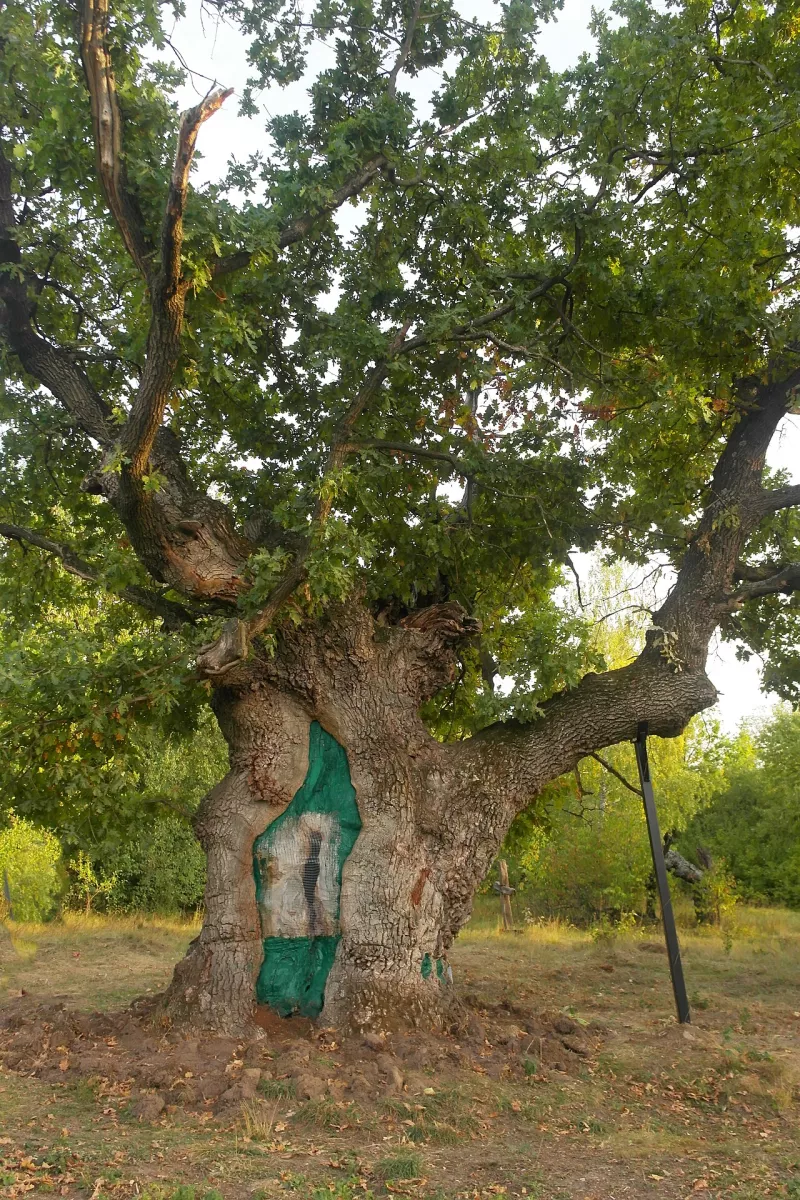
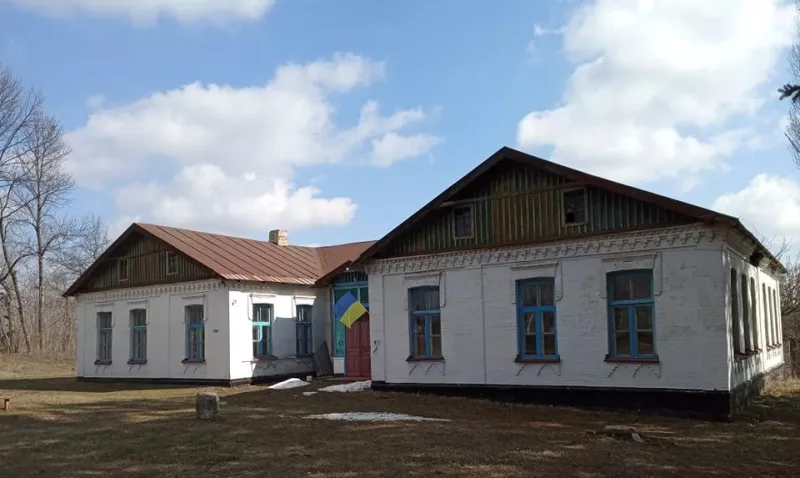
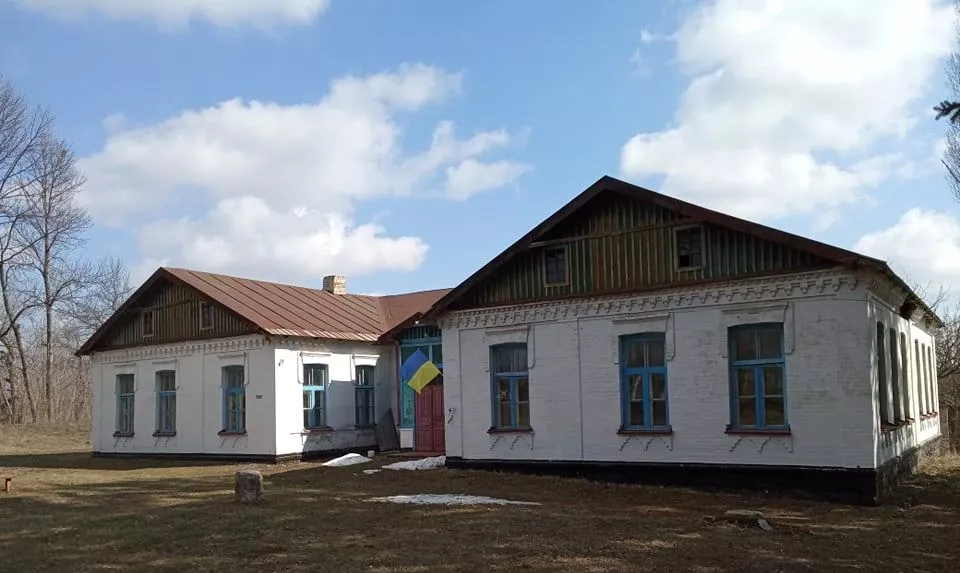
The natural botanical monument “Medvyn Oak” is a tree about 600 years old, 25 m tall, with a girth of 6.10 m; the protected area of 0.02 ha was declared in 2010. The Mykolaiv Church, where services were resumed in 1965, and the Assumption Church, which was burned down in 1920 and had services restored in 1997, are active. The village has a monument to Taras Shevchenko from 1967 and a building of the ministerial school from 1910. The tenor Hryhorii Hrebinichenko, bandurist Antin Mytai, and the author of the song “Horyt Medvyn” Ivan Dubynets come from Medvyn.
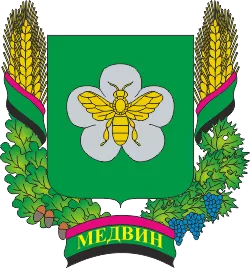
Coat of arms