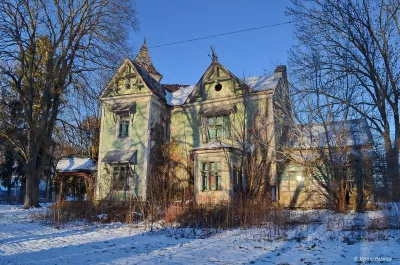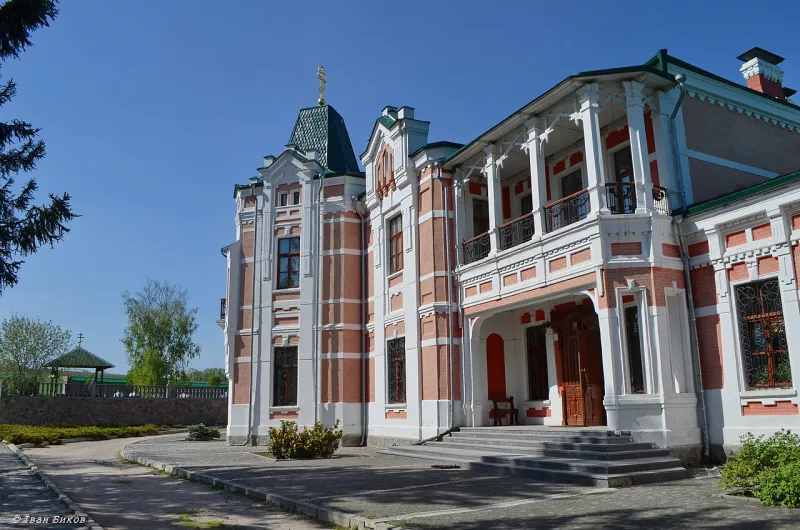
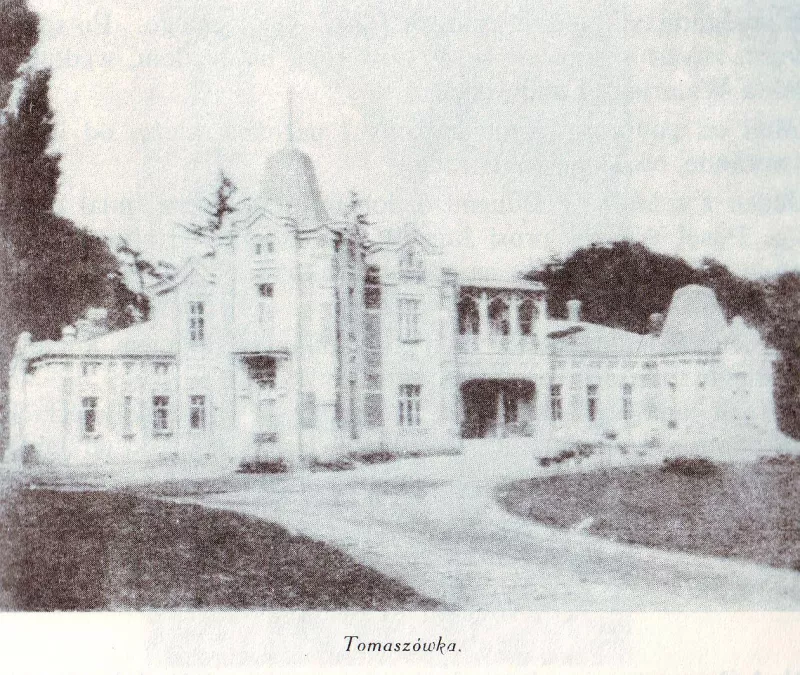
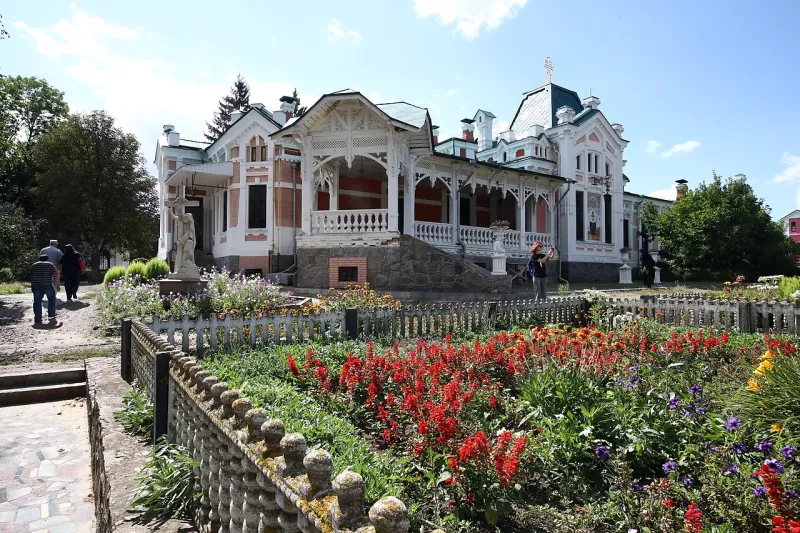

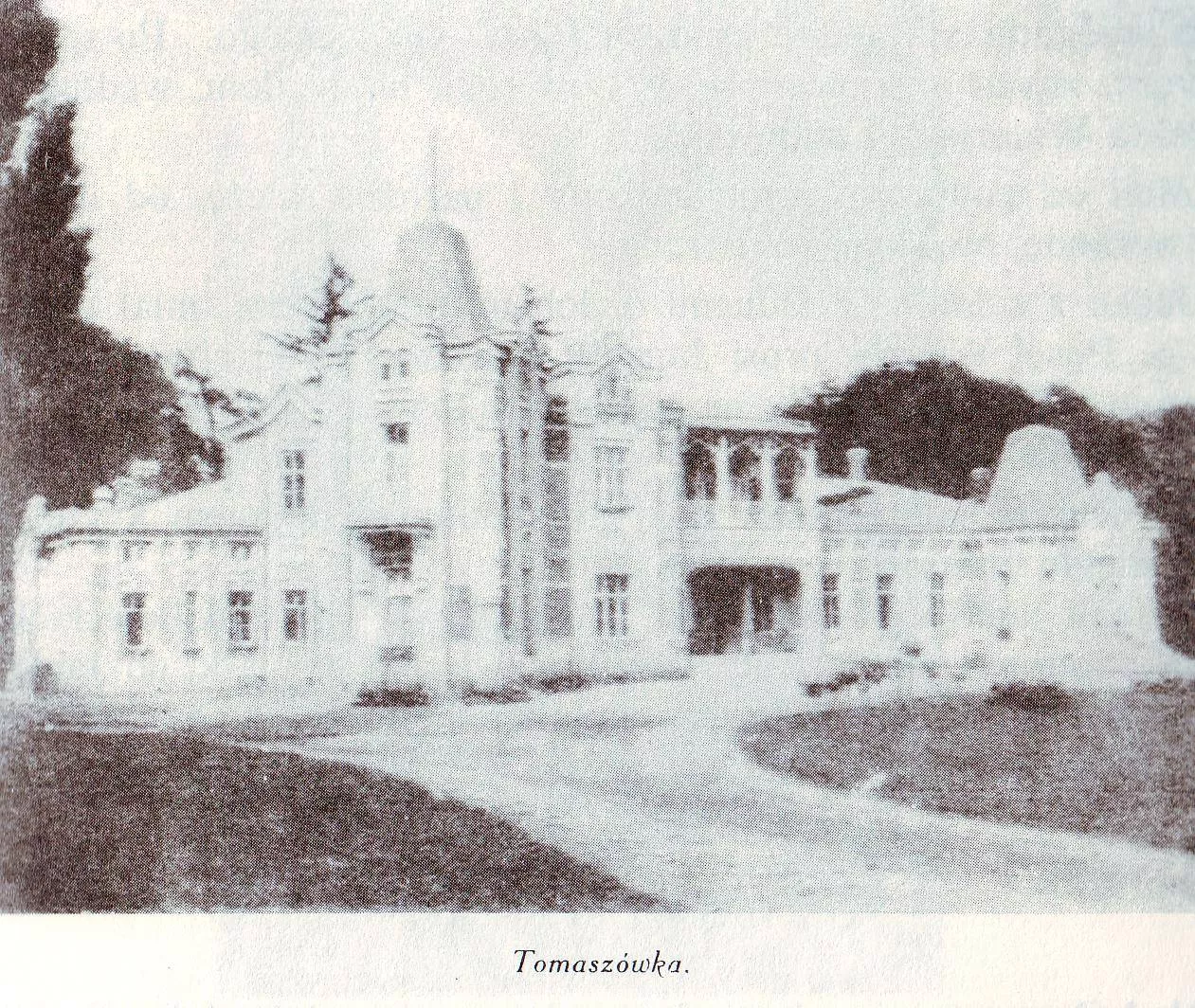
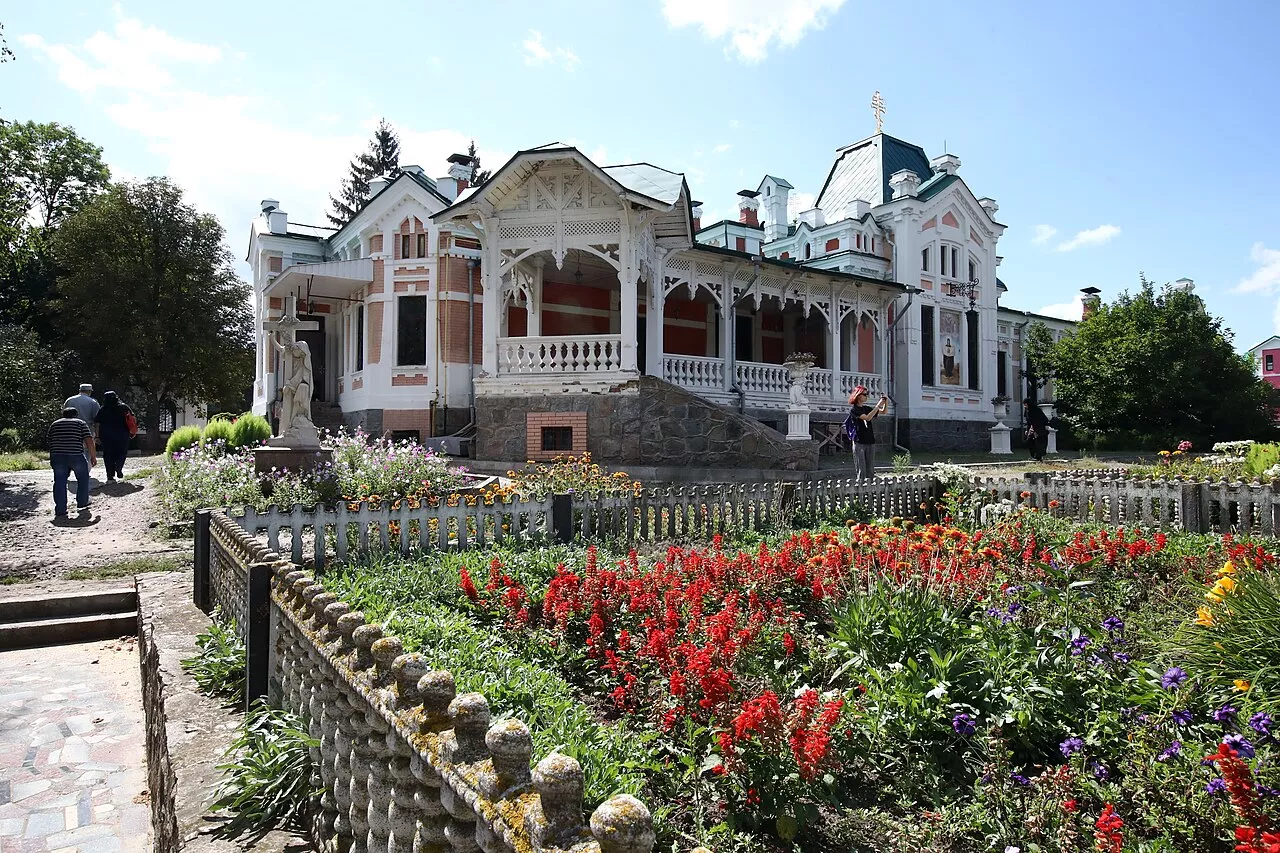
Tomashivka is a village in Fastiv Raion of Kyiv Oblast, the center of Tomashivka hromada. It is located on the left bank of the Irpin River, known for the Khoietskiy estate built in 1903–1910 in the Art Nouveau style, which is a national architectural monument. Today, the former estate houses the Holy Theotokos Rizopolozhenskyi Monastery for men.
The first written mention of the village dates back to 1676. For a long time, Tomashivka belonged to the estates of the Kyiv metropolitans, and at the end of the 18th century it passed into the hands of secular owners.
From Metropolitan Estates to the Khoietskiys
In 1795, the village was granted to Prince Hryhoriy Dolgorukov, and in 1810 he sold it to the Polish nobleman Jan Khoietskiy. The Khoietskiys built a large farmstead around the estate. The villagers rebelled twice: in 1861 against the conditions of the reform, and again in 1863; according to a local history guide, 118 participants of the uprising were tried and punished with lashes.
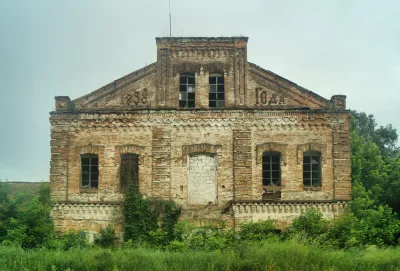
Khoietskiy Palace
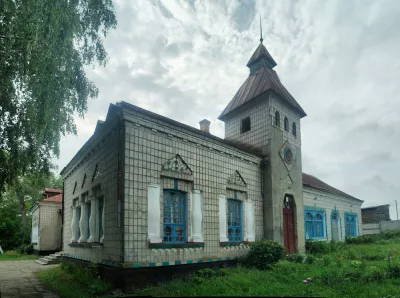
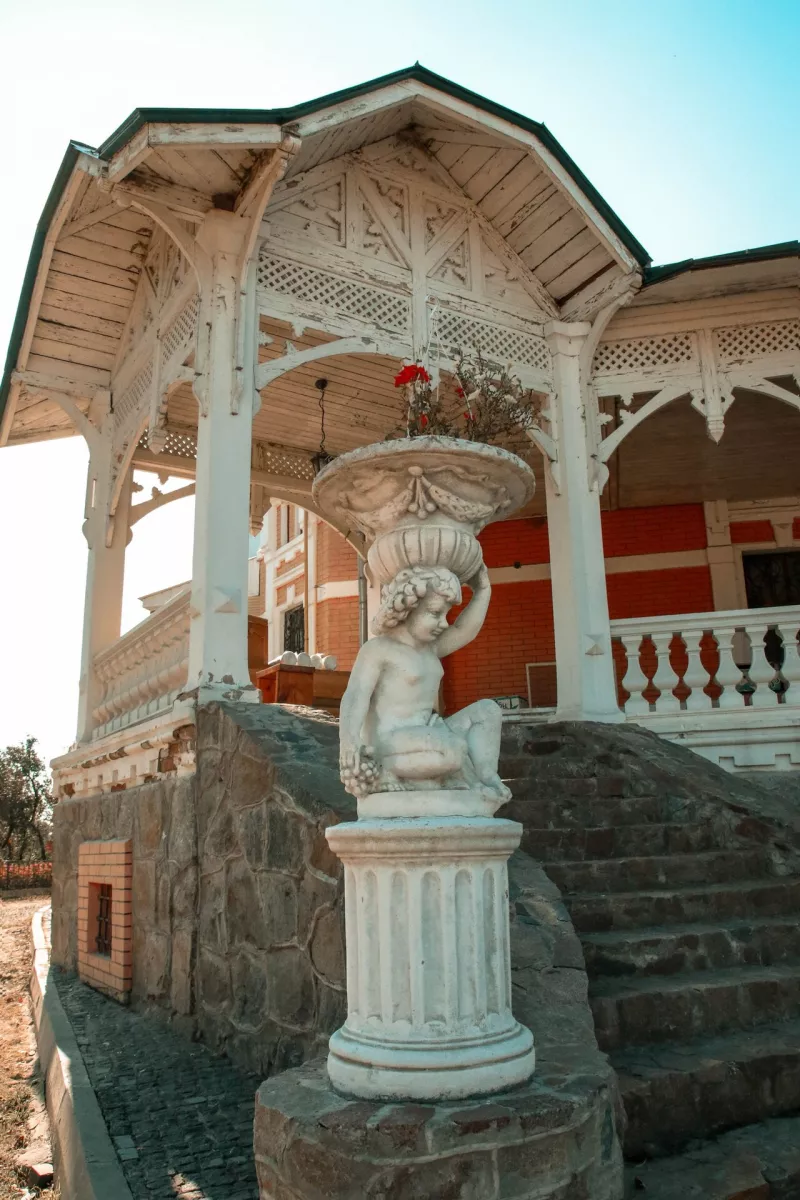
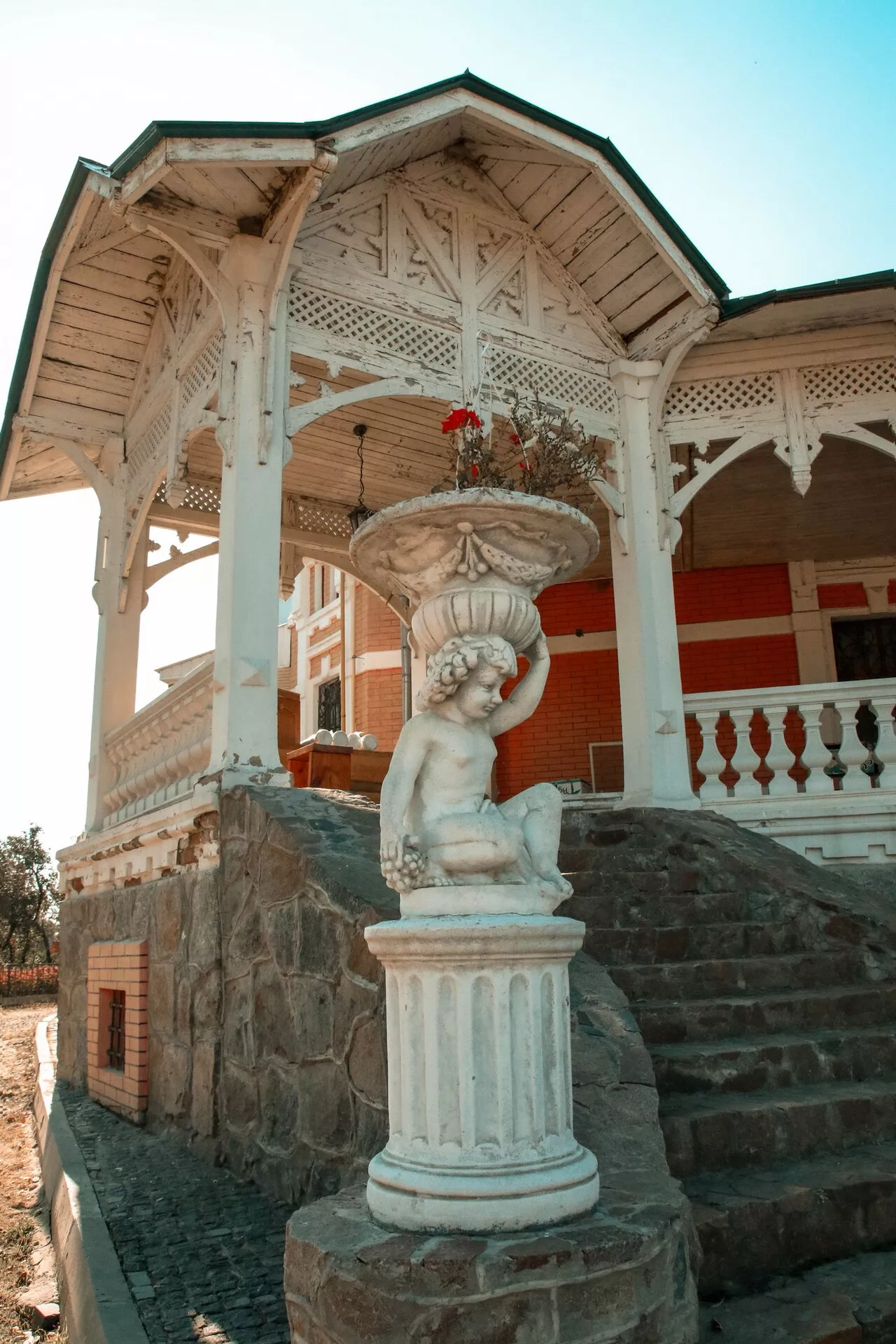
The palace was constructed between 1903 and 1910 according to the design of architect Valerian Kulykovskyi. It is a brick building in the Art Nouveau style with projections, balconies, verandas, and carved wooden decoration. Some of the estate’s outbuildings, presumably stables and granaries, are made of decorative black granite.
During Soviet times, the village was managed by a collective farm established in 1929, and the estate remained half-ruined until 2000.
Monastery in the Estate
In 2000, the estate was transferred to monks who restored the buildings and founded a male monastery in honor of the Deposition of the Robe of the Most Holy Theotokos in Blachernae. The former park was enclosed by a wall, a 51-meter-high bell tower was built, along with chapels and cells. The monastery includes the Church of Saint Grand Princess Elizabeth, the Church of the Lord’s Passion, and a round church of the Venerable Pechersk Fathers. In the park stands the sculptural composition “Golgotha.”
Fights, Famine, and Notable Locals
On 17 November 1920, a battle took place near Tomashivka between units of the Red Army and the insurgent detachment of ataman Feodosiy Bohatyrenko; according to Soviet reports, the insurgents lost 50 killed and 40 captured. In 1932, the village was put on the “black board,” and during the Holodomor of 1932–1933, according to 2005 testimonies, 69 people died. In November 1941, an underground group operated in the village, organized by doctor Petro Buyko, later a partisan commander; a monument to him stands near the school. Among the natives is mathematician Nina Virchenko.
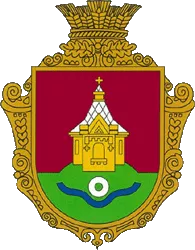
Coat of Arms