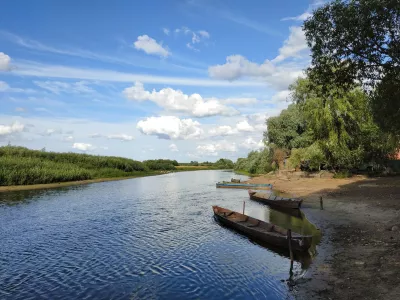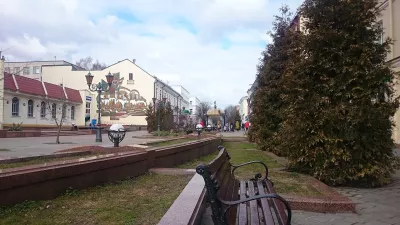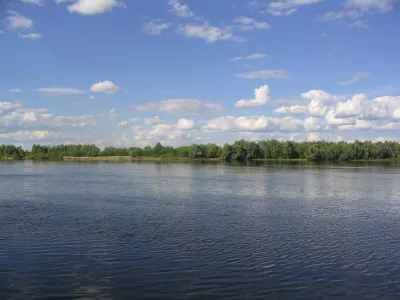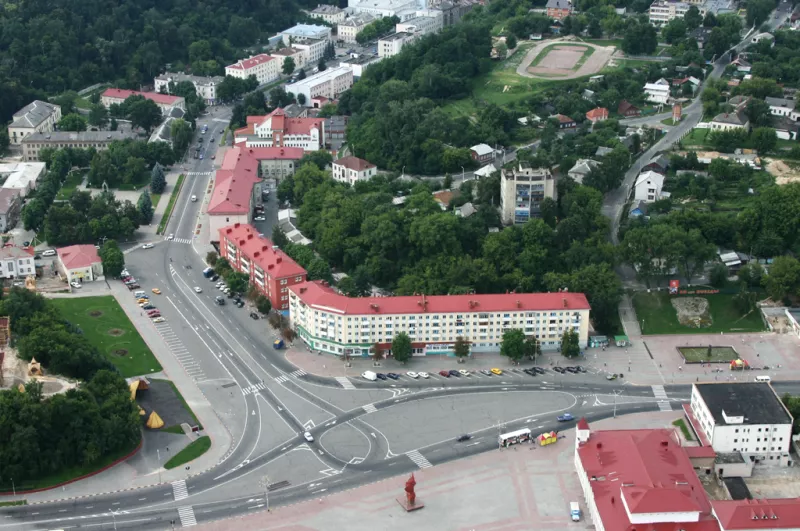


Mozyr stands on the right bank of the Pripyat River in the eastern part of Polissia, in the Gomel region of Belarus. The city was first mentioned in 1155 when Kyiv prince Yurii Dolhorukyi handed it over to Chernihiv prince Sviatoslav Olhovych. In 2016, the population was 112,003, and the city covers an area of 49.46 km².
Castle and Magdeburg Rights
In the mid-14th century, Mozyr became part of the Grand Duchy of Lithuania, and in an old list of Rus' cities from the late 14th century, it was called “Kyivan.” After the Union of Lublin in 1569, the city became part of the Polish–Lithuanian Commonwealth. In 1577, Mozyr was granted Magdeburg rights, and the charter is preserved in the National Historical Archive of Belarus.
At the beginning of the 17th century, a fire destroyed the castle and part of the city. Orders from 1609–1613 required the residents to rebuild the castle and market squares. During the Khmelnytsky Uprising, Mozyr was contested by Cossack and Polish-Lithuanian forces and briefly belonged to the Ukrainian Cossack state.
The City in Revolutions and Wars
After the second partition of Poland in 1793, Mozyr became part of the Russian Empire. From February 1918, it was occupied by German troops, and from December 1918 it belonged to the Ukrainian People’s Republic and was the center of the Polissia starostwo of the Ukrainian State. Polish forces occupied Mozyr from March to June 1920. In 1938, the city became the center of the Polissia region of the BSSR, which was abolished in 1954 when Mozyr and its district were transferred to the Gomel region.
From August 1941 to January 1944, Mozyr was under German occupation.
Jewish Mozyr
At the turn of the 19th and 20th centuries, Mozyr was a Jewish shtetl: in 1897, Jews made up 5,631 of 8,076 residents, about 70%. In 1939, there were approximately 6,307 out of 17,500. The war destroyed most of the Jewish community, and by 2004 fewer than 500 remained.
Temples, Ravines, and the Port
The city has the Orthodox Cathedral of Saint Michael, the Church of Saint Paraskeva Pyatnytsia, and the Catholic Church of the Archangel Michael. The streets of Mozyr rise along the beds and slopes of ravines deep into the city.
The Phiv port on the Pripyat is considered the largest river port in Belarus.
Famous Mozyr Residents
Mozyr is the birthplace of viticulturist scientist Olena Zakharova (1907), cinematographer and director Izrail Pikman (1918–1995), conductor Mykhailo Finberg, and actress Svitlana Sukhovey. In 2005, Mozyr native Kseniia Sytnyk won the Junior Eurovision Song Contest.