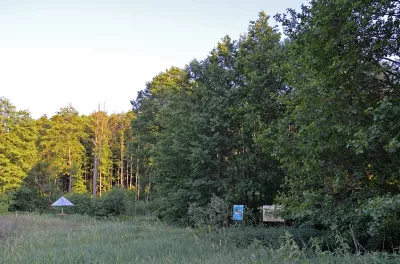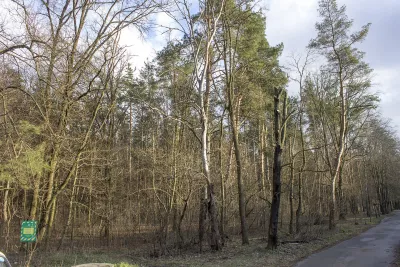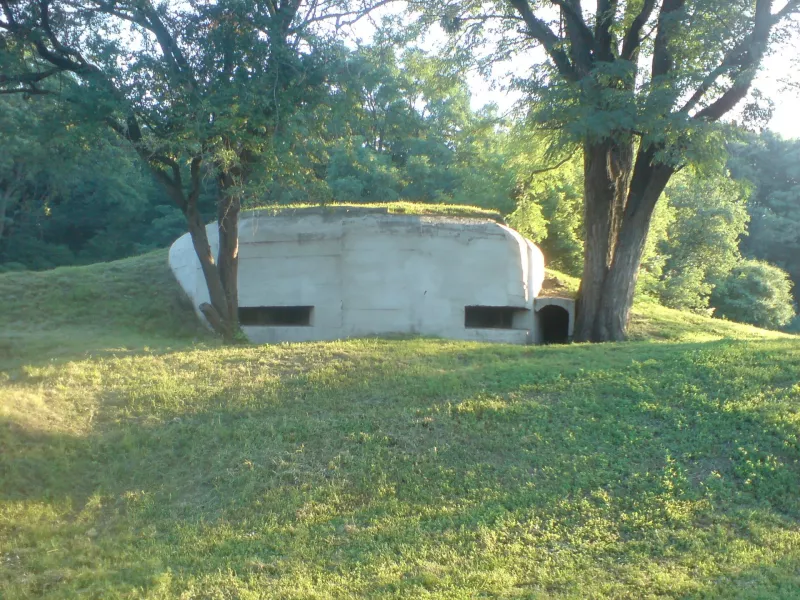
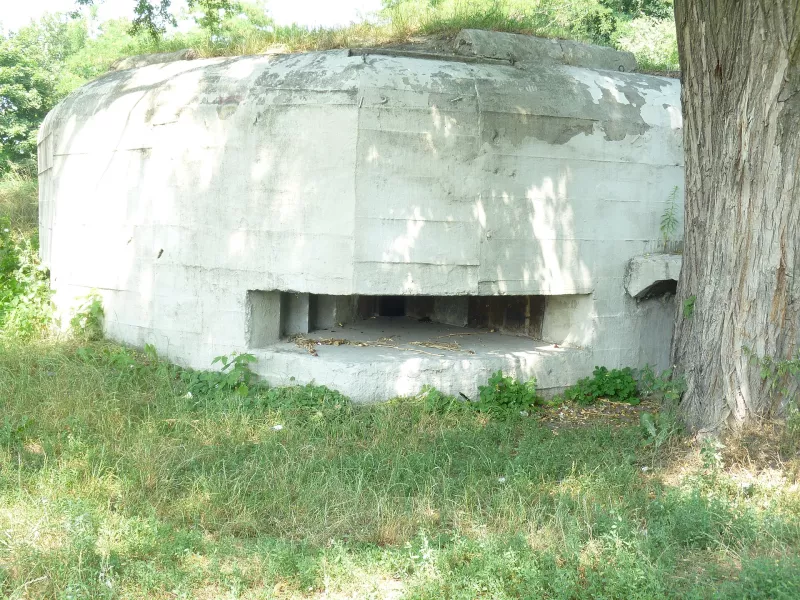
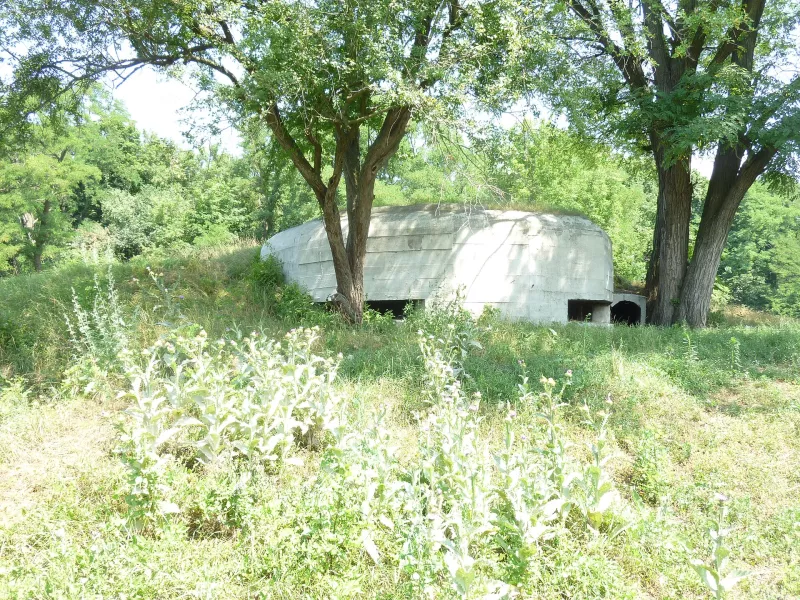
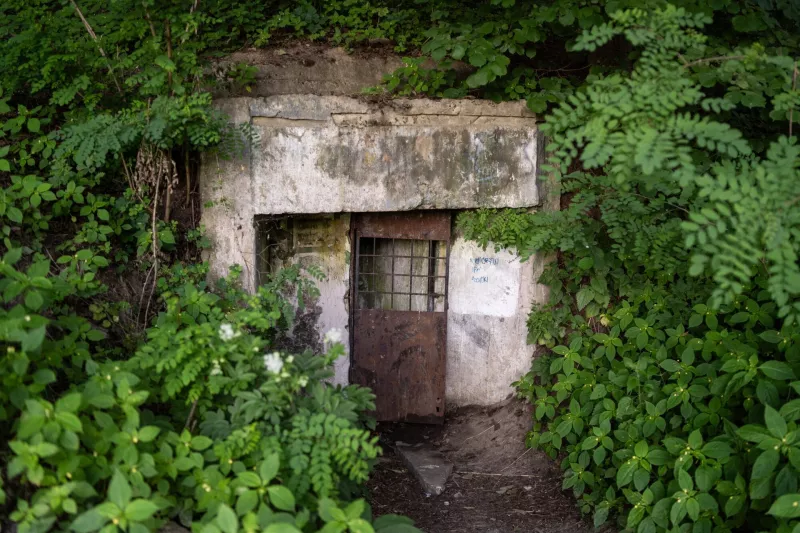

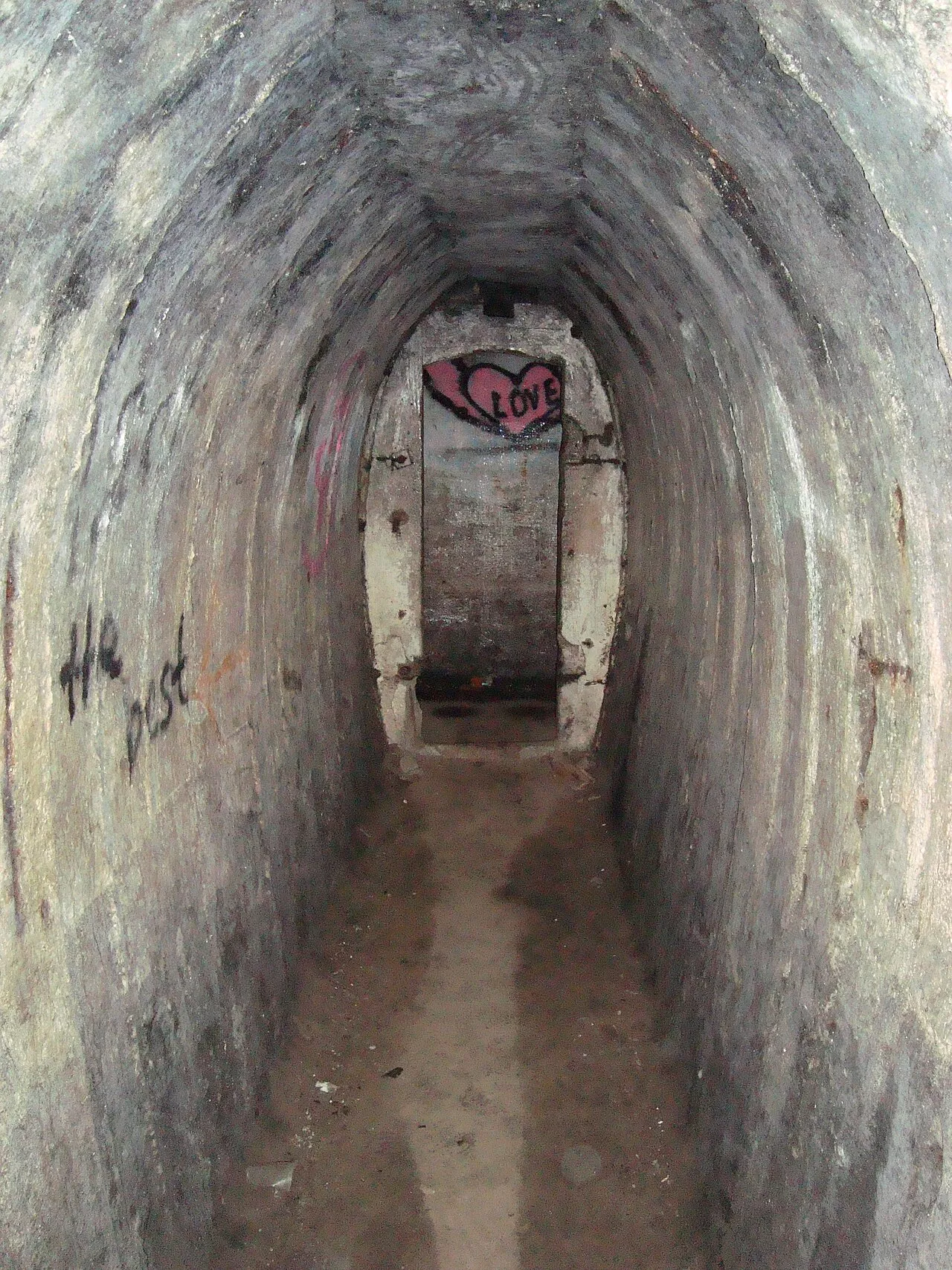
On the northern outskirts of Bilohorodka in Bucha Raion, on a steep slope above the Irpin floodplain, hides one of the most interesting structures of the Kyiv Fortified Region — the so-called "mine group" of pillboxes Nos. 401 and 402. This is not a separate pillbox, but an entire underground fortress: machine-gun casemates connected by underground gallery-posterns about 485 meters long. A local historical, scientific, and technological landmark.
Underground Fortress
The structure was built according to an individual design. The upper head with two embrasures was erected in 1929 — it controlled the direction to the south with fire. A year later, along with the underground complex, two separate casemates, each with a single embrasure, were cut into the steep slope; they were to cover the Irpin floodplain with fire. The armament consisted solely of machine guns.
The posterns housed shelters for riflemen, a storage room, technical rooms for filter-ventilation equipment and a generator. There were two exits from the rear — the main one, covered by an embrasure, and a spare one. The upper head had a spare manhole, an exit for an observer, and an anti-chemical room, so it could withstand a hit from a 203 mm howitzer; the side casemates were designed for one hit from a 122 mm howitzer. The permanent garrison numbered 60 people, and another 50 infantrymen were supposed to counterattack the enemy on the surface near the structure. However, the fortress was never fully equipped.
1941
The pillbox was part of the 3rd battalion defense sector of the Kyiv Fortified Region, which covered the Brest, i.e., Zhytomyr highway. The garrison consisted of soldiers from the 193rd separate machine-gun battalion. In the summer of 1941, trenches were dug near the pillbox, two wood-earth pillboxes were built, and positions for guns were equipped, but the Germans did not conduct active offensives in this area. On September 18, the troops of the 37th Army, following an order, began to withdraw from the Kyiv Fortified Region and Kyiv, and the garrison retreated among the last, without blowing up the structure. On September 19, the German 71st Infantry Division occupied this area without a fight.
What is on the site today
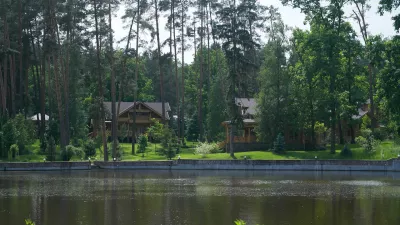
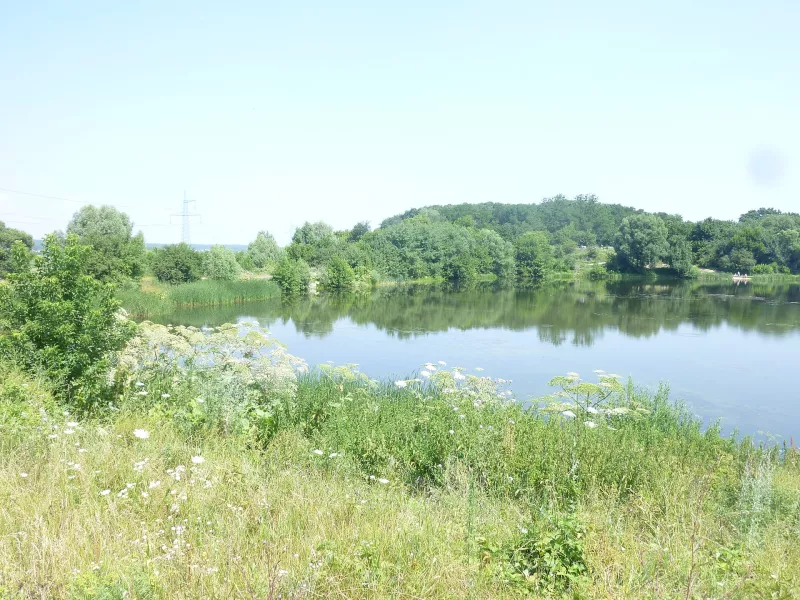
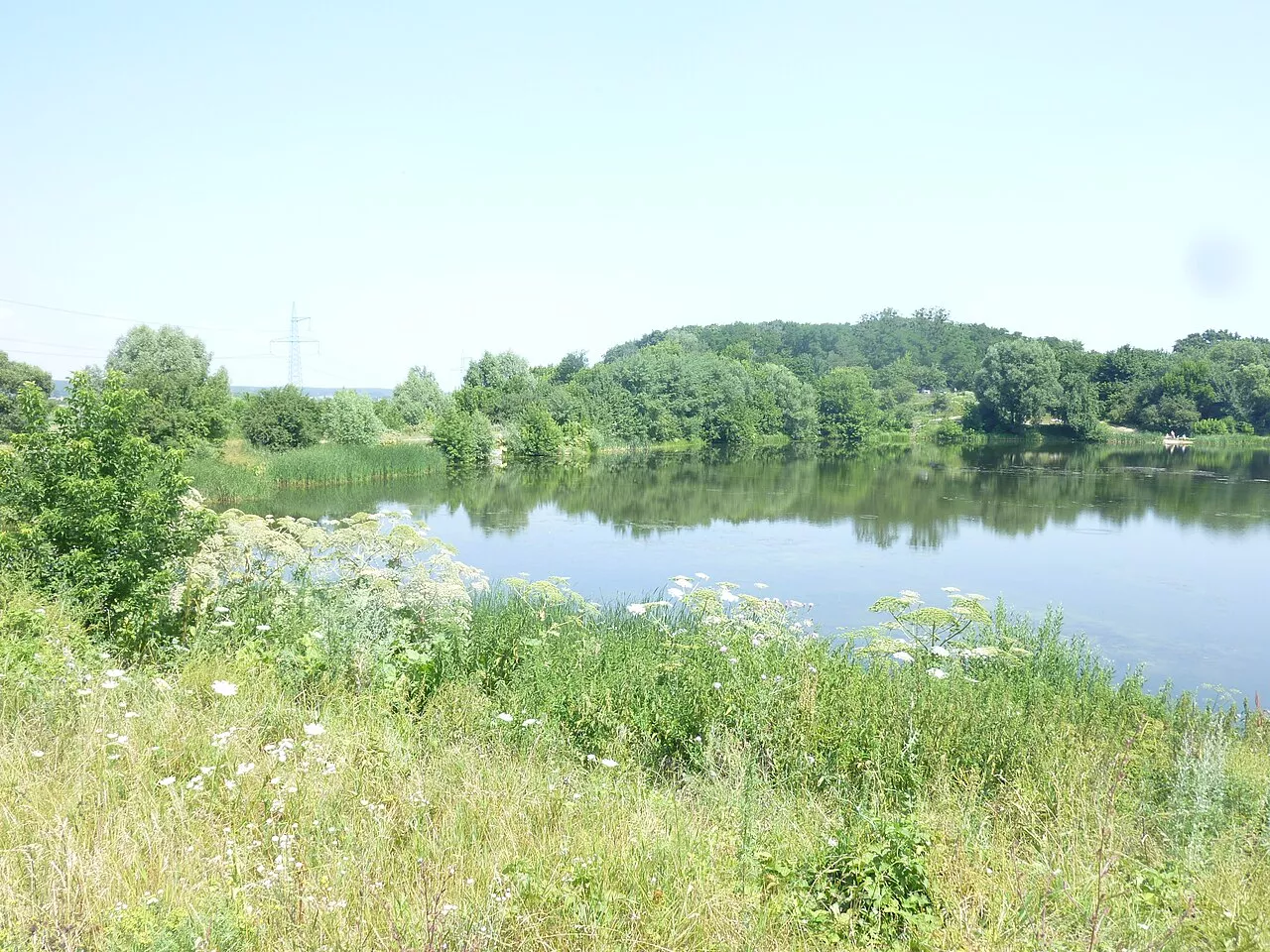
The casemates and part of the posterns have survived, although the equipment is long gone. In 2006, the horror film "Stolyanya" (The Shaft) was filmed in the underground galleries. Near pillbox No. 402, there is a lake, from the side of which the concrete casemate in the slope is clearly visible.
How to get there
Bilohorodka is just beyond the western border of Kyiv, toward Zhytomyr; fixed-run minibuses run here from Kyiv metro stations in the western part of the city. The pillboxes are on the northern outskirts of the village, on the slope above the Irpin River, closer to the village of Shevchenkove.
Tip
Do not go down into the posterns on your own: it is dark, slippery, there may be cave-ins and blockages, and mobile communication does not work underground. Inspect the casemates from the outside. Nearby is the ancient settlement of Bilhorod, on the ramparts of which Kyiv Fortified Region pillboxes also stand. More about the region can be found in the article about Kyiv Polissia.