
European pond turtle in Polissia
Emys orbicularis
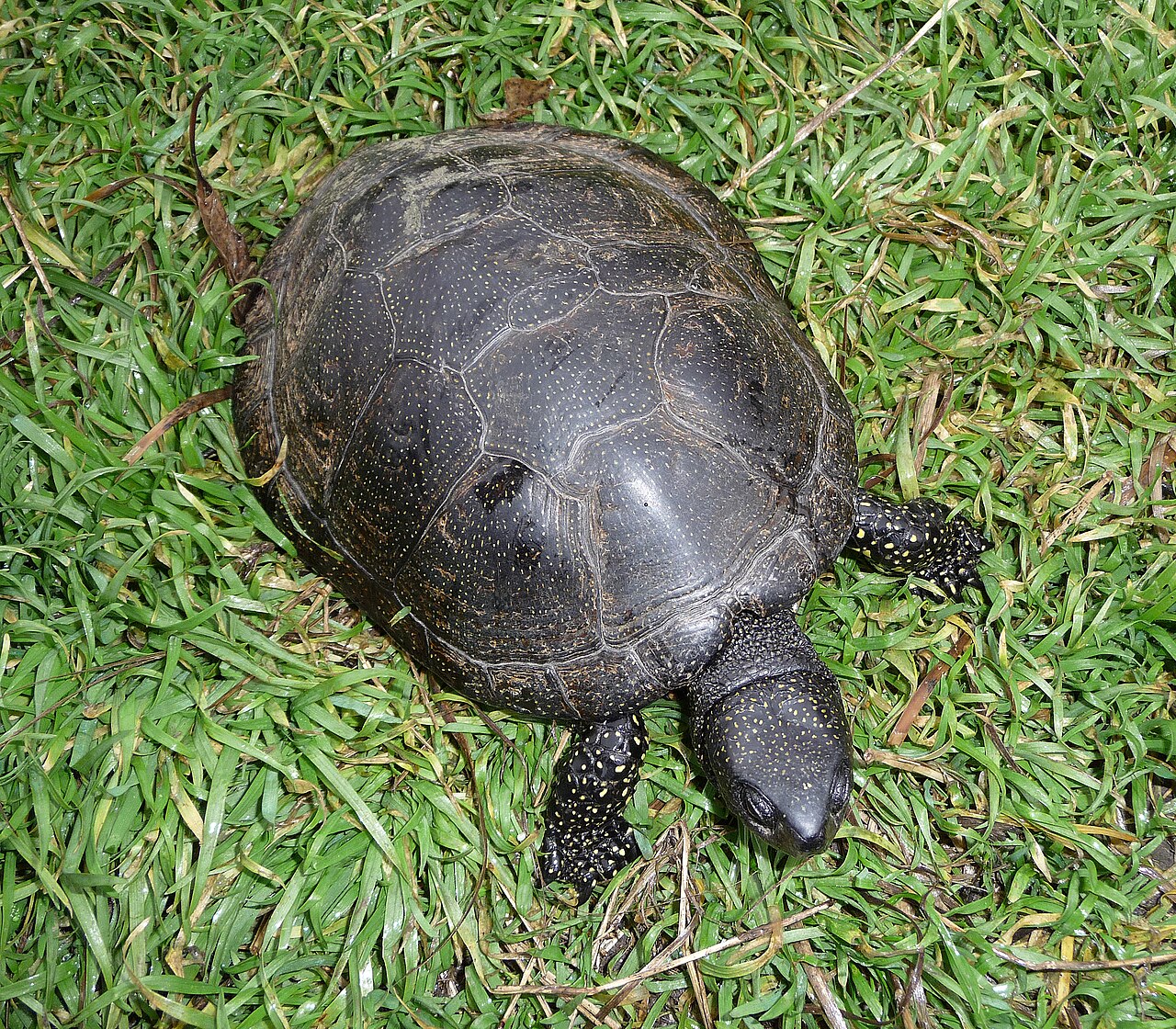
The European pond turtle has a flat, dark, oval shell up to several tens of centimetres long, dotted with small yellow specks. The skin of the head and legs is also dark with yellow spots. The tail is relatively long.
It lives in still and slow-flowing waters with a muddy bottom and dense vegetation: oxbows, ponds, floodplain lakes and canals. In Polissia the pond turtle is found in the valleys of the Prypiat, Stokhid and Desna and in Shatsk National Park.
The turtle is easiest to see when it basks in the sun on a snag or tussock, but at the slightest noise it slips into the water. In spring the females come out onto dry sandy areas, sometimes far from water, to lay their eggs in a hole. Turtles spend the winter at the bottom of ponds and lakes.
Do not take a turtle home: it suffers in captivity, and in the wild every adult female matters to the population. A turtle crossing a road can be carried to the roadside in the direction it was heading.
When to see: April–September; in May–June females come out onto sandy banks to lay eggs
Where it was seen in Polissia
Observations from the open scientific database GBIF since 1990.
More in “Reptiles and amphibians”
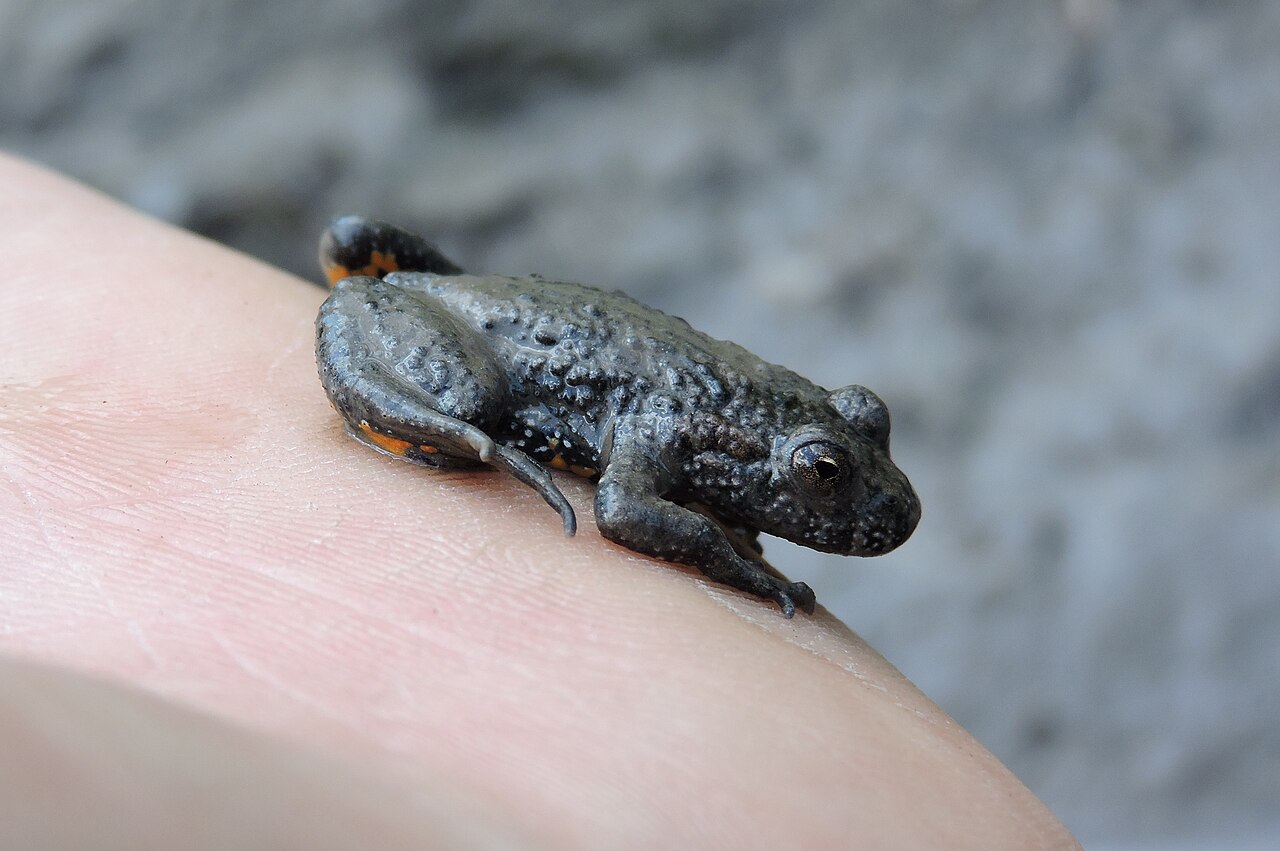 European fire-bellied toad
A small toad of Polissia's ponds and bogs with a bright red-and-black belly; its soft “oom-oom” is heard in spring.
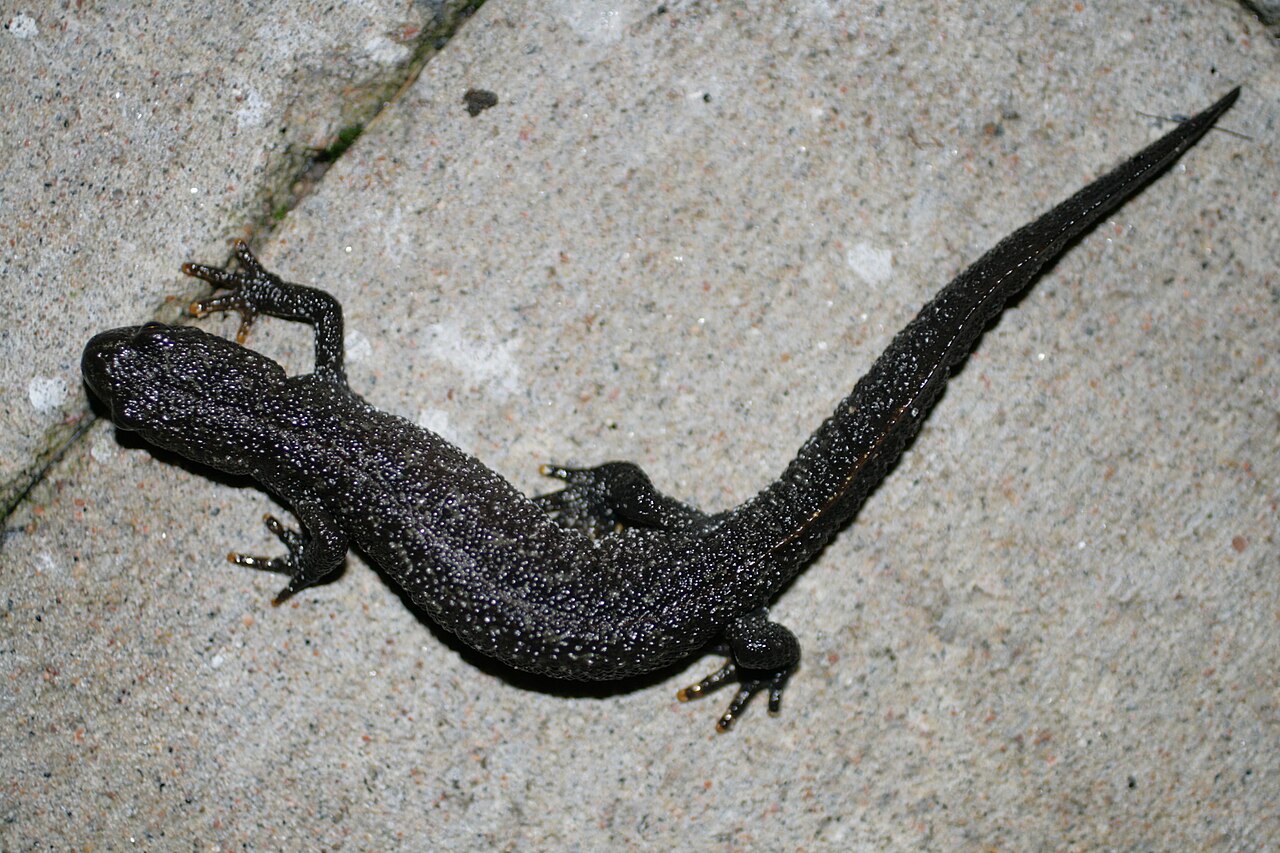 Great crested newt
A large newt of Polissia's ponds; in spring the male grows a tall, jagged crest.
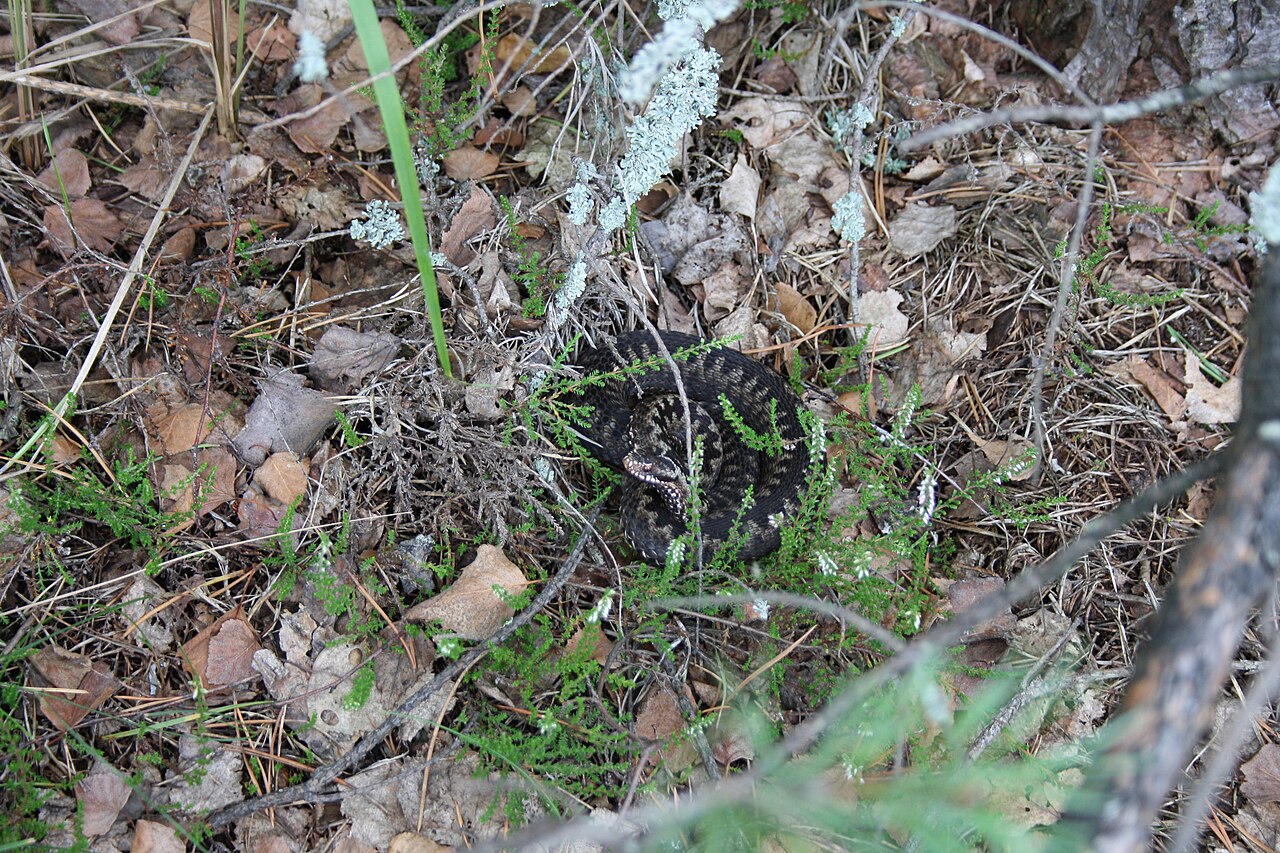 Common European adder
Polissia's only venomous snake: it lives in bogs, clearings and forest edges and attacks people only in self-defence.
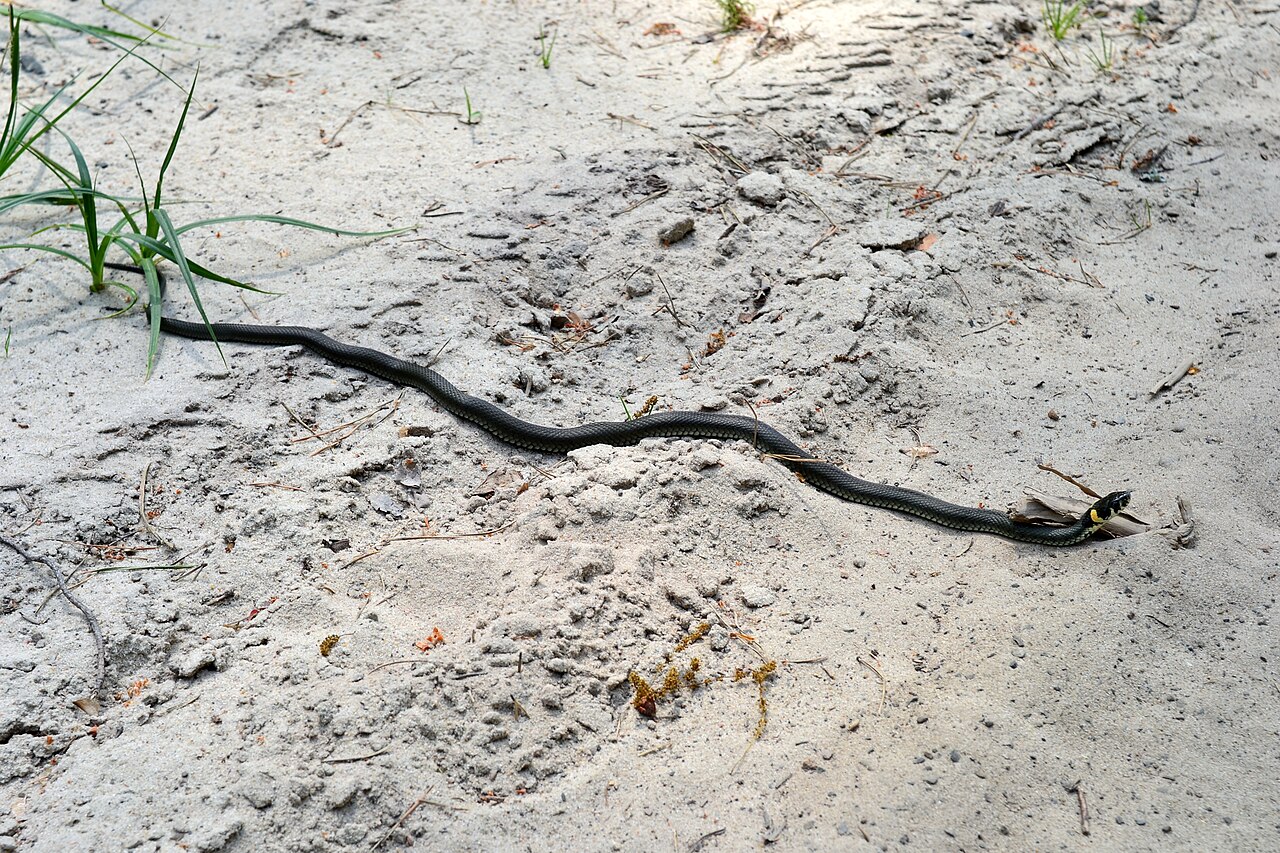 Grass snake
A harmless snake of Polissia's lakes and rivers, easy to recognise by the yellow or orange patches on its head.