
European fire-bellied toad in Polissia
Bombina bombina
Caution: skin secretions irritate mucous membranes; wash your hands after touching
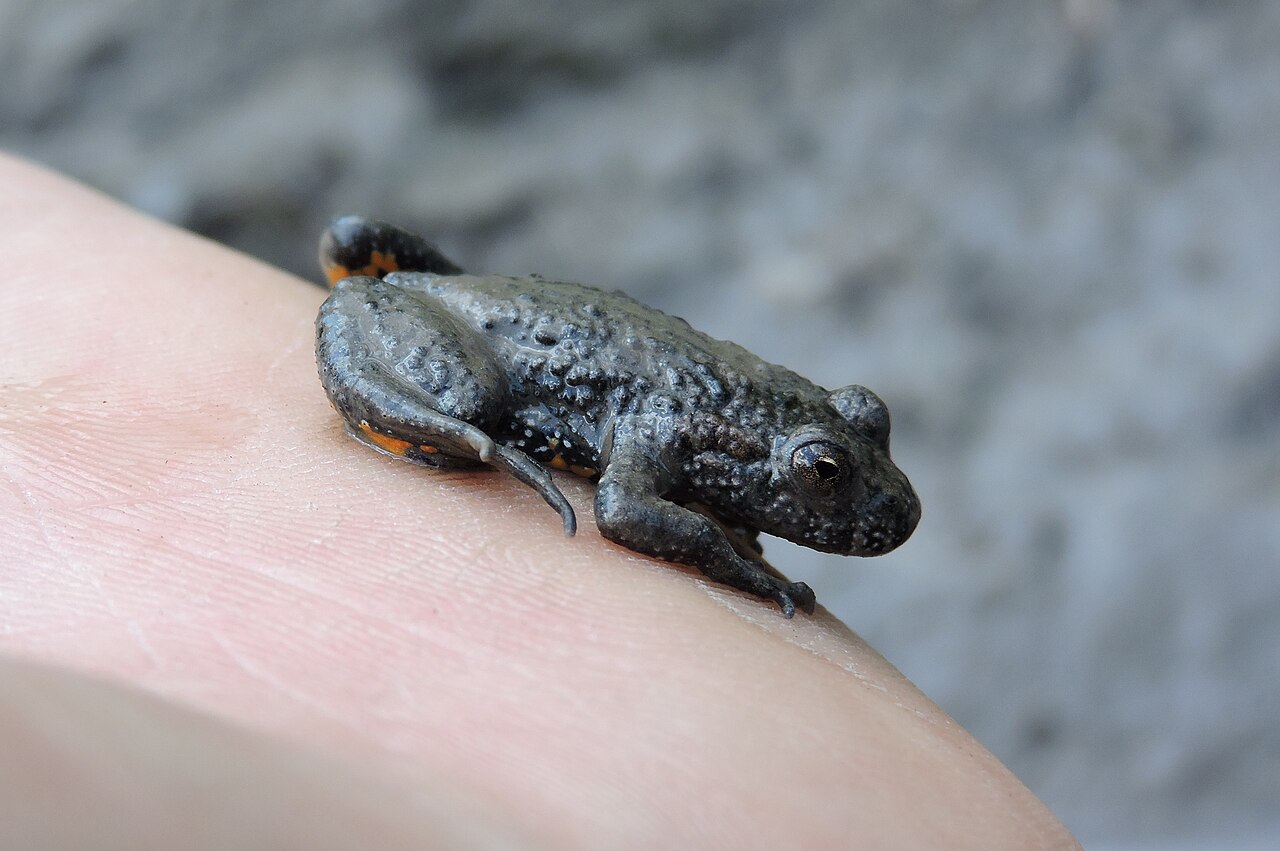
The European fire-bellied toad is a small toad with a warty dark back and a bright orange or red belly with black blotches. The pupil is triangular or heart-shaped.
The fire-bellied toad lives in shallow, warm waters: oxbows, ponds, floodplain lakes, ditches and puddles in meadows. In Polissia it is common in river floodplains.
In spring the males sing while sitting in the water – a soft, melodious “oom… oom” that sounds like a little bell and can be heard all night. The toad meets danger by arching its back and showing its bright belly – a warning to predators that its skin tastes unpleasant.
The toad's skin secretions irritate the eyes and mucous membranes, so wash your hands after touching one. Fire-bellied toads suffer from the drying-up of small ponds and from chemical fertilisers washed off fields.
When to see: April–June, in the evenings near water
Where it was seen in Polissia
Observations from the open scientific database GBIF since 1990.
More in “Reptiles and amphibians”
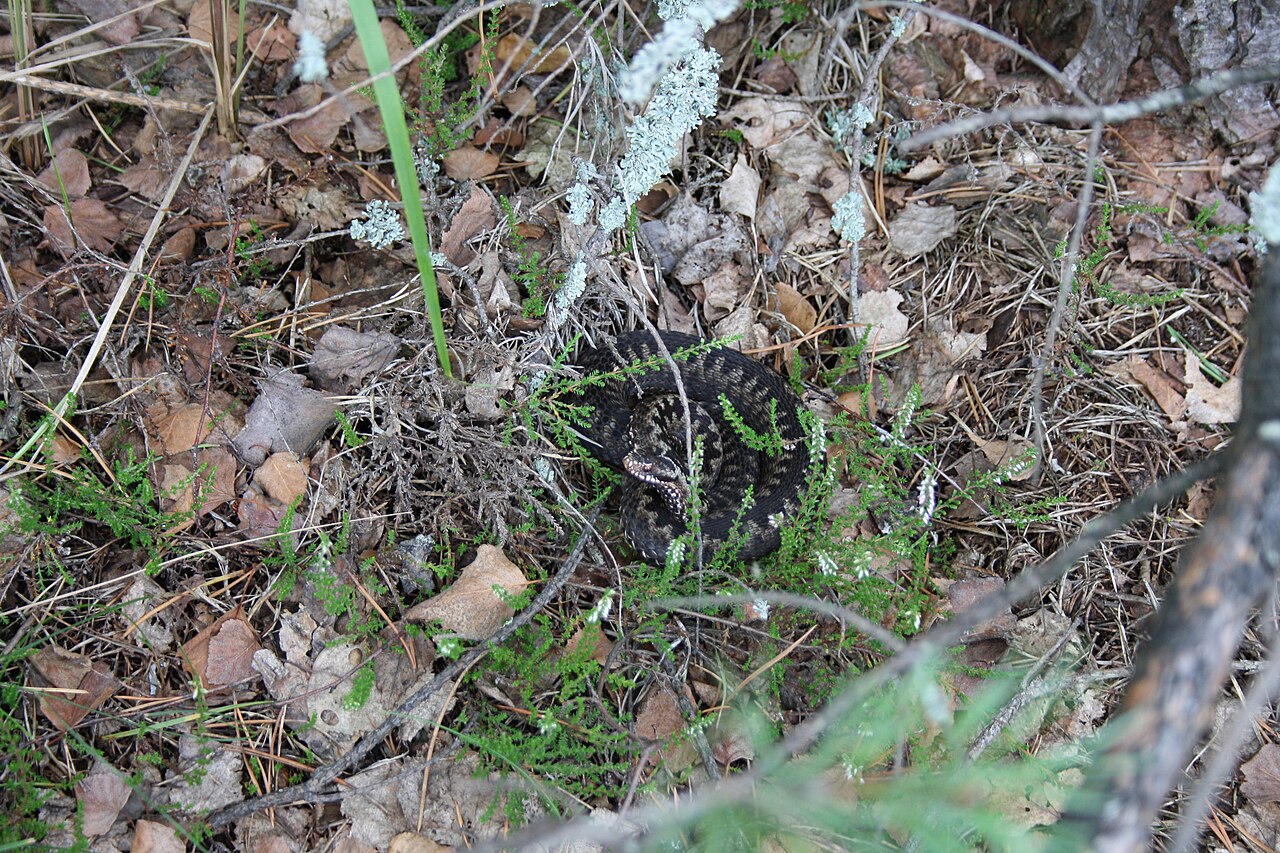 Common European adder
Polissia's only venomous snake: it lives in bogs, clearings and forest edges and attacks people only in self-defence.
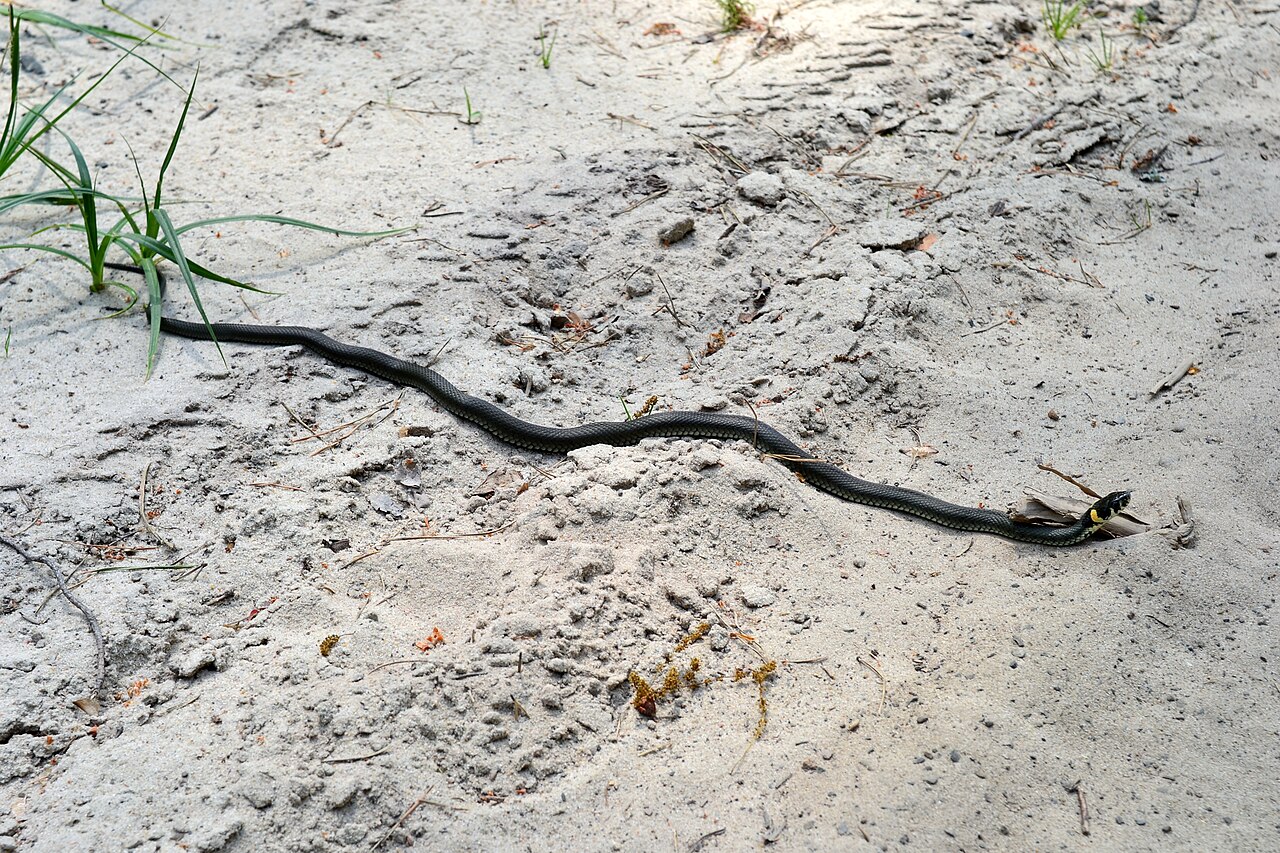 Grass snake
A harmless snake of Polissia's lakes and rivers, easy to recognise by the yellow or orange patches on its head.
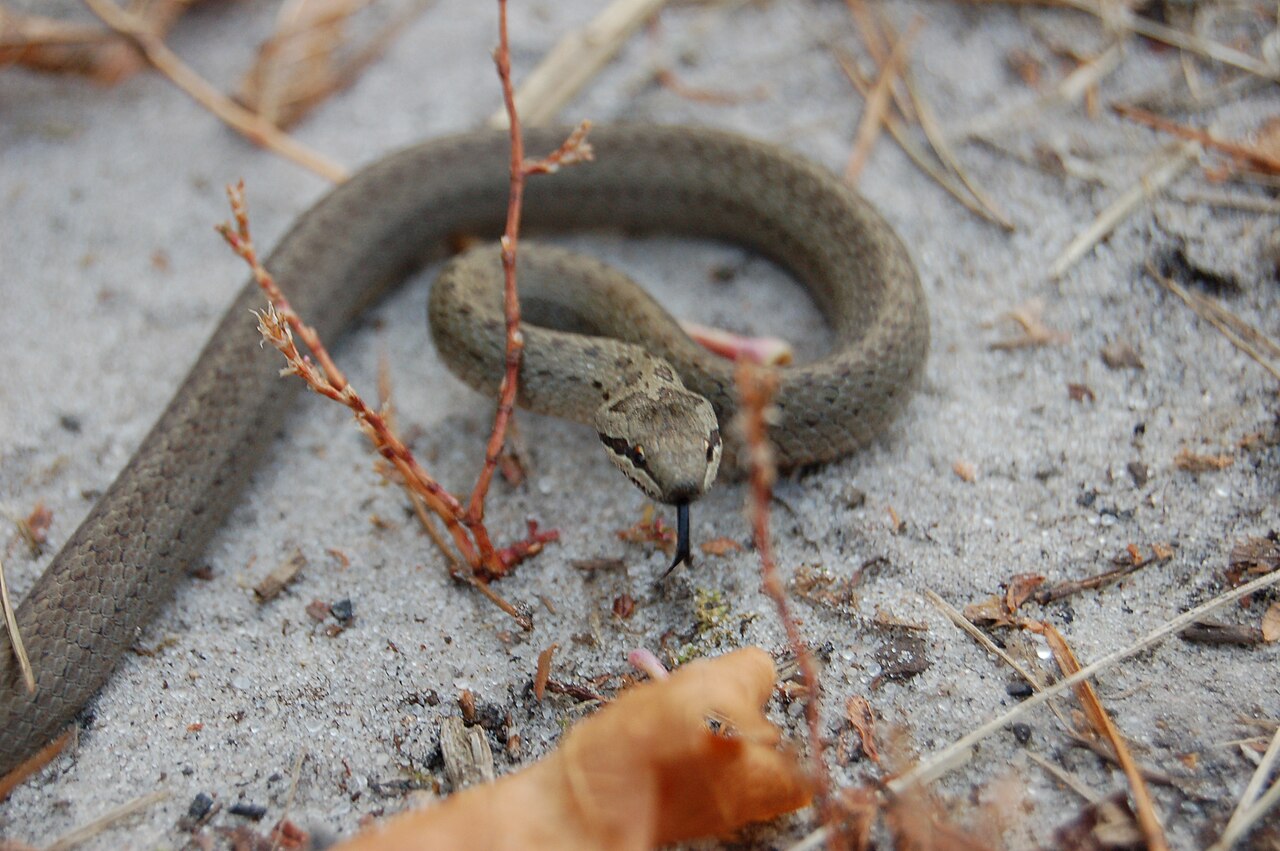 Smooth snake
A rare, harmless snake of dry pine forests, often mistaken for an adder because of its zigzag-like pattern.
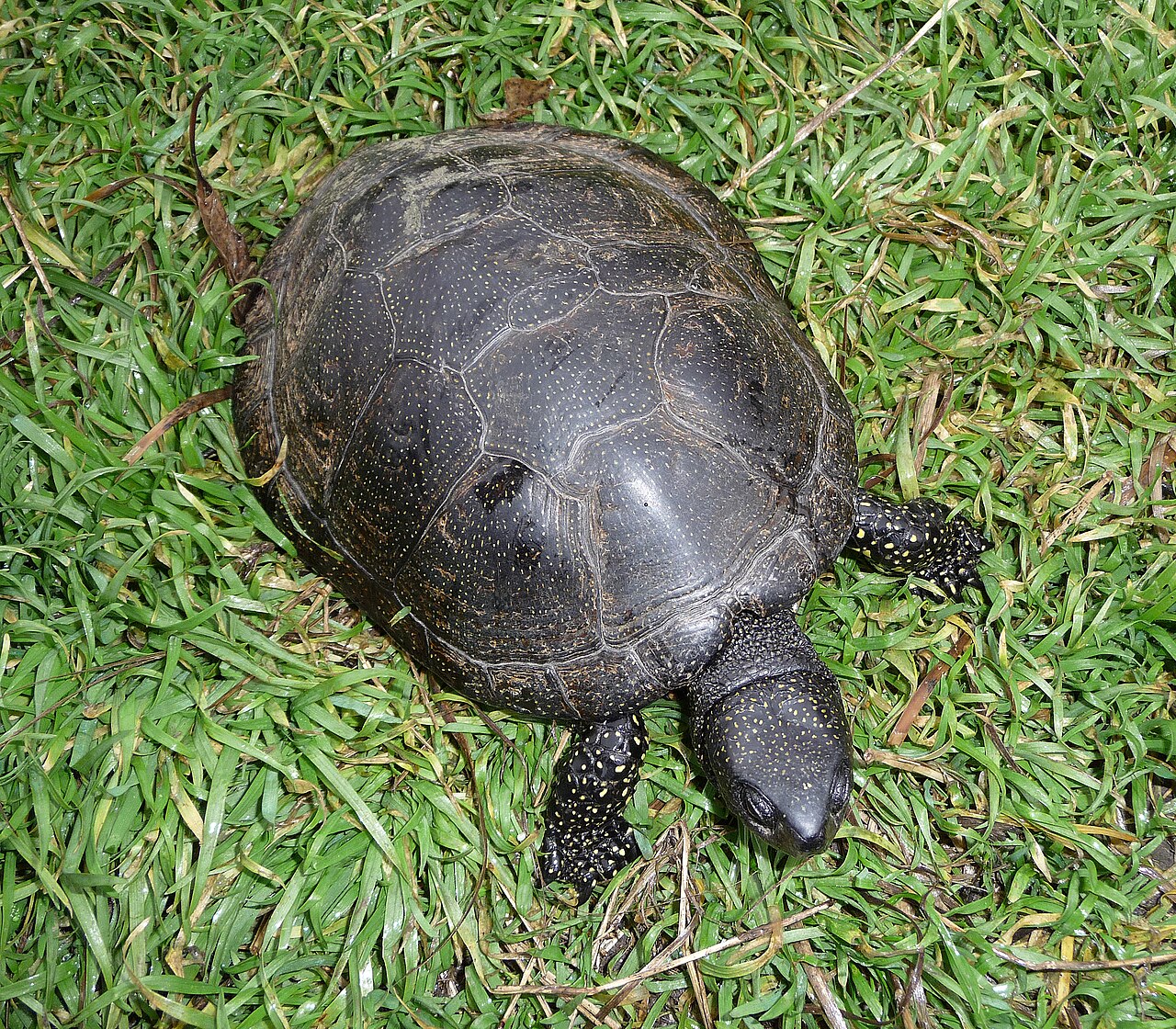 European pond turtle
The only native freshwater turtle, living in the oxbows, ponds and bogs of Polissia.