
Moose in Polissia
Alces alces
Red Data Book of Ukraine
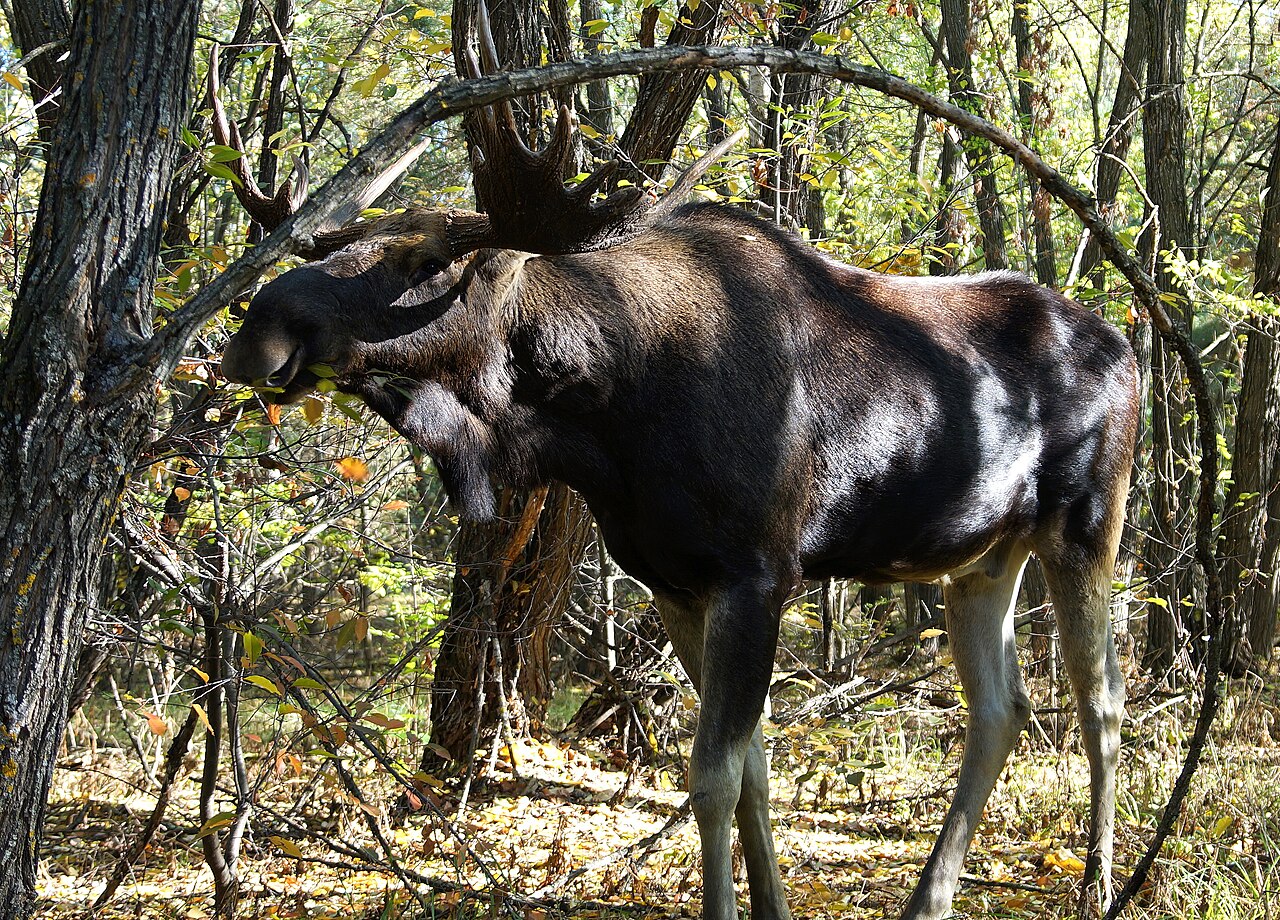
The moose is the largest member of the deer family. It has long legs, a humped shoulder, an elongated muzzle with an overhanging upper lip and a “bell” – a leathery flap of skin under the throat. Males carry broad, shovel-shaped antlers, which they shed every winter. The coat is dark brown, the legs lighter.
In Polissia the moose lives where bogs, floodplains, alder forests and young pine plantations meet. It is regularly seen in the Polissia and Rivne nature reserves, in Shatsk National Park and in the Chornobyl zone, where the number of hoofed animals has grown noticeably in the absence of people.
Moose graze mostly in the morning and evening: they browse shoots of willow, aspen and pine, and in summer wade into water for aquatic plants. In winter their presence shows in gnawed young pines and large, deep tracks. In autumn, during the rut, males become excitable and can be dangerous.
If you see a moose, do not approach it and do not block its way out. Be especially careful with a cow leading a calf and with a bull during the rut. The moose is listed in the Red Data Book of Ukraine. On Polissia's forest roads it is often involved in road accidents, so slow down at dusk.
When to see: all year; easiest at dawn and dusk, in winter by tracks
Where it was seen in Polissia
Observations from the open scientific database GBIF since 1990. Locations are shown approximately, to within 10 km.
More in “Mammals”
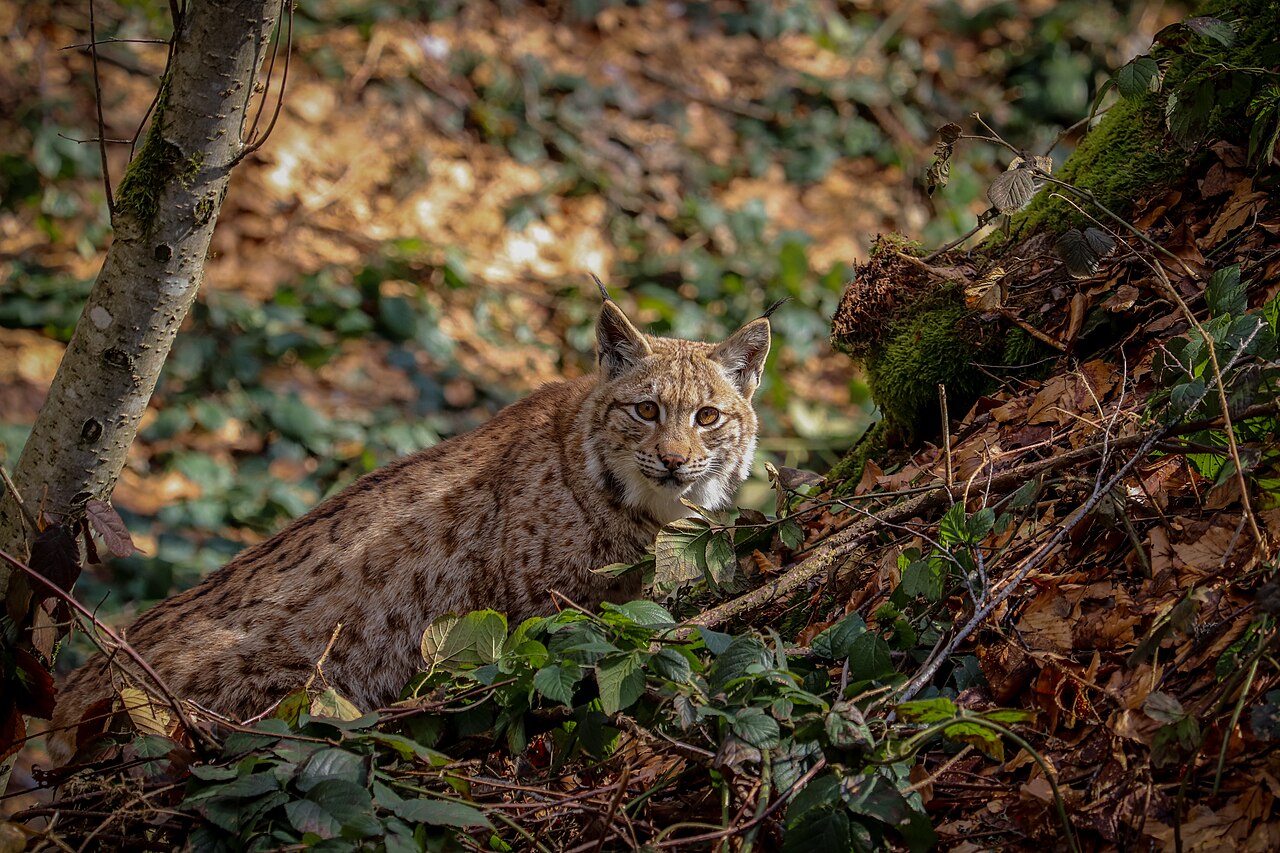 Eurasian lynx
Polissia's only large wild cat: a secretive predator of remote forests, found far more often by its tracks than seen.
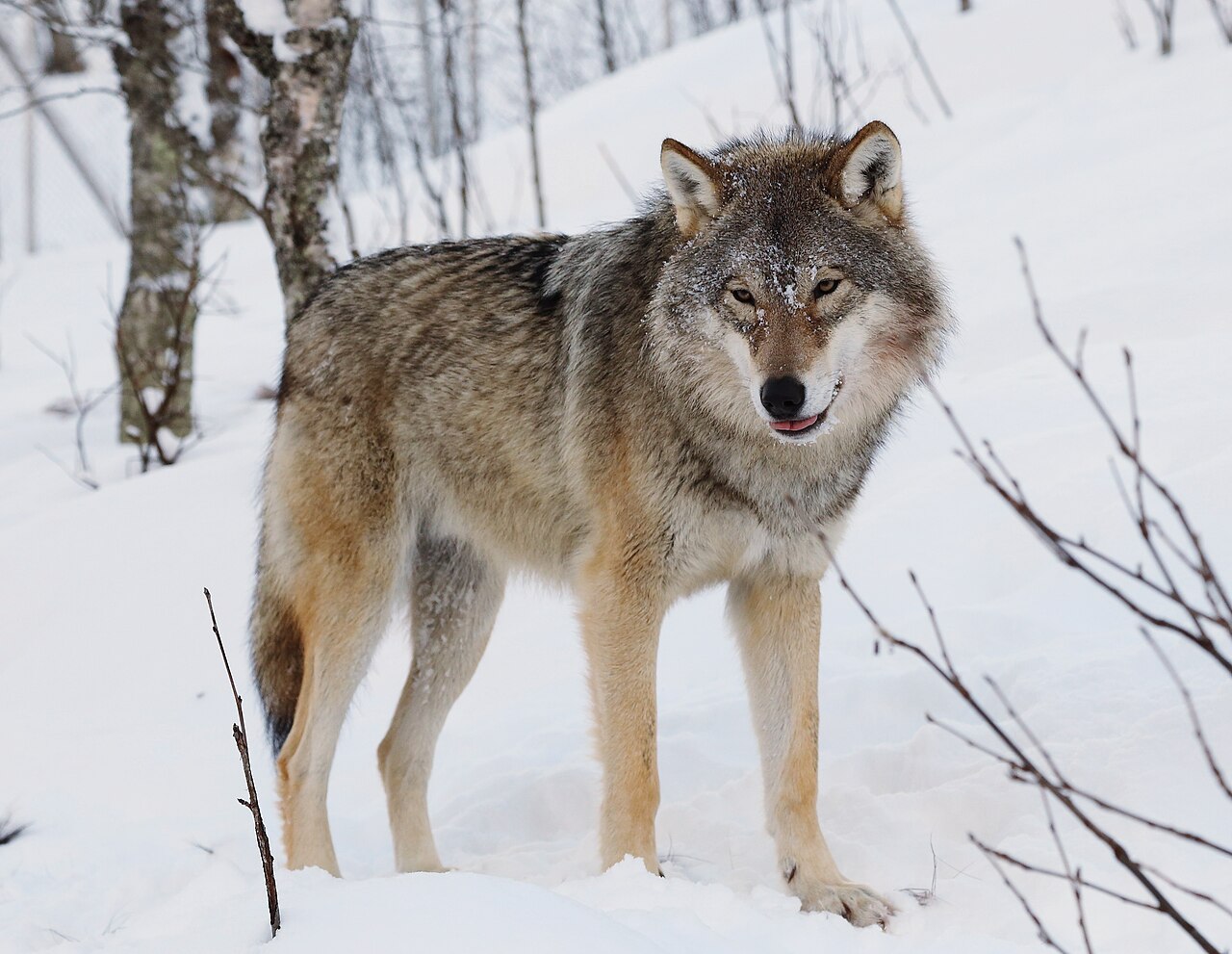 Grey wolf
The top predator of Polissia's forests and bogs, keeping numbers of wild boar, roe deer and red deer in check.
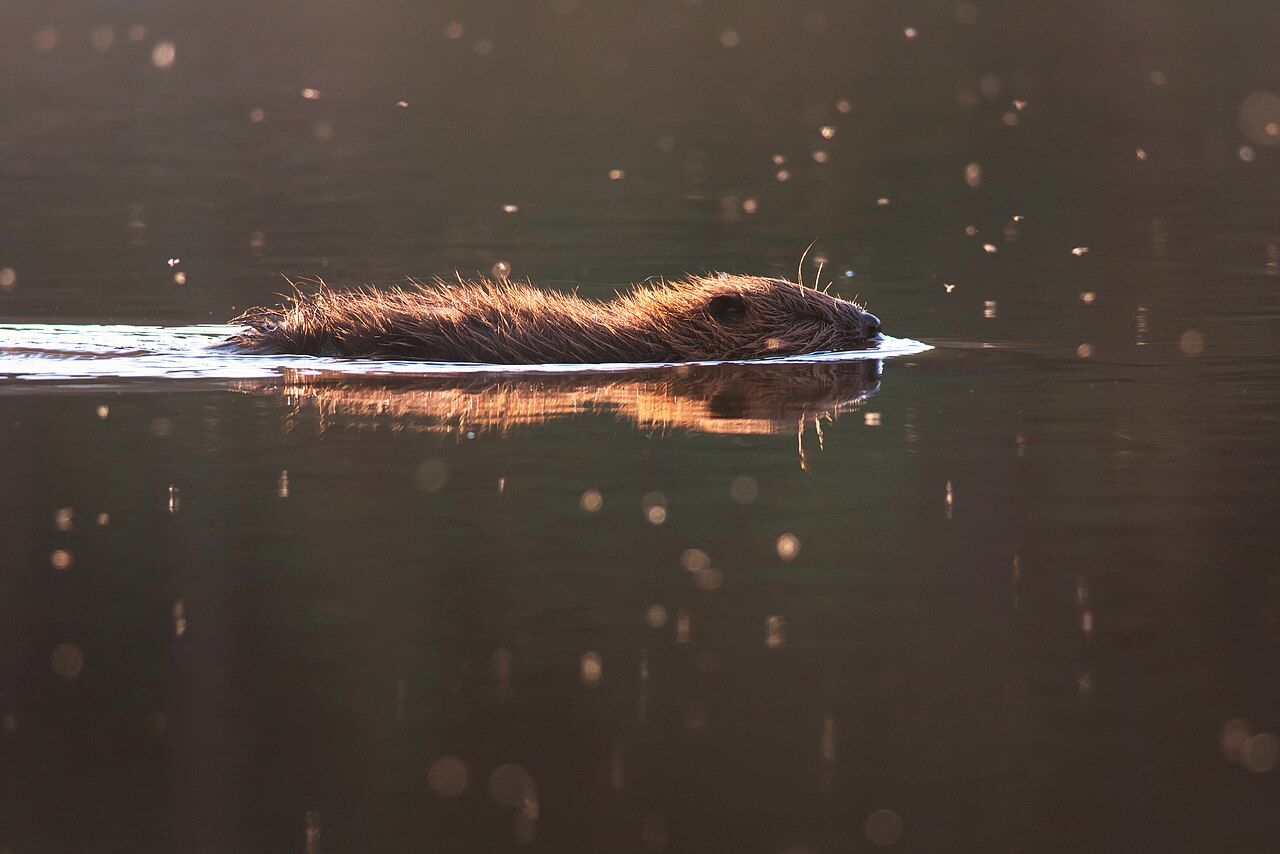 Eurasian beaver
The natural engineer of Polissia's rivers: its dams and lodges reshape floodplains and create new ponds.
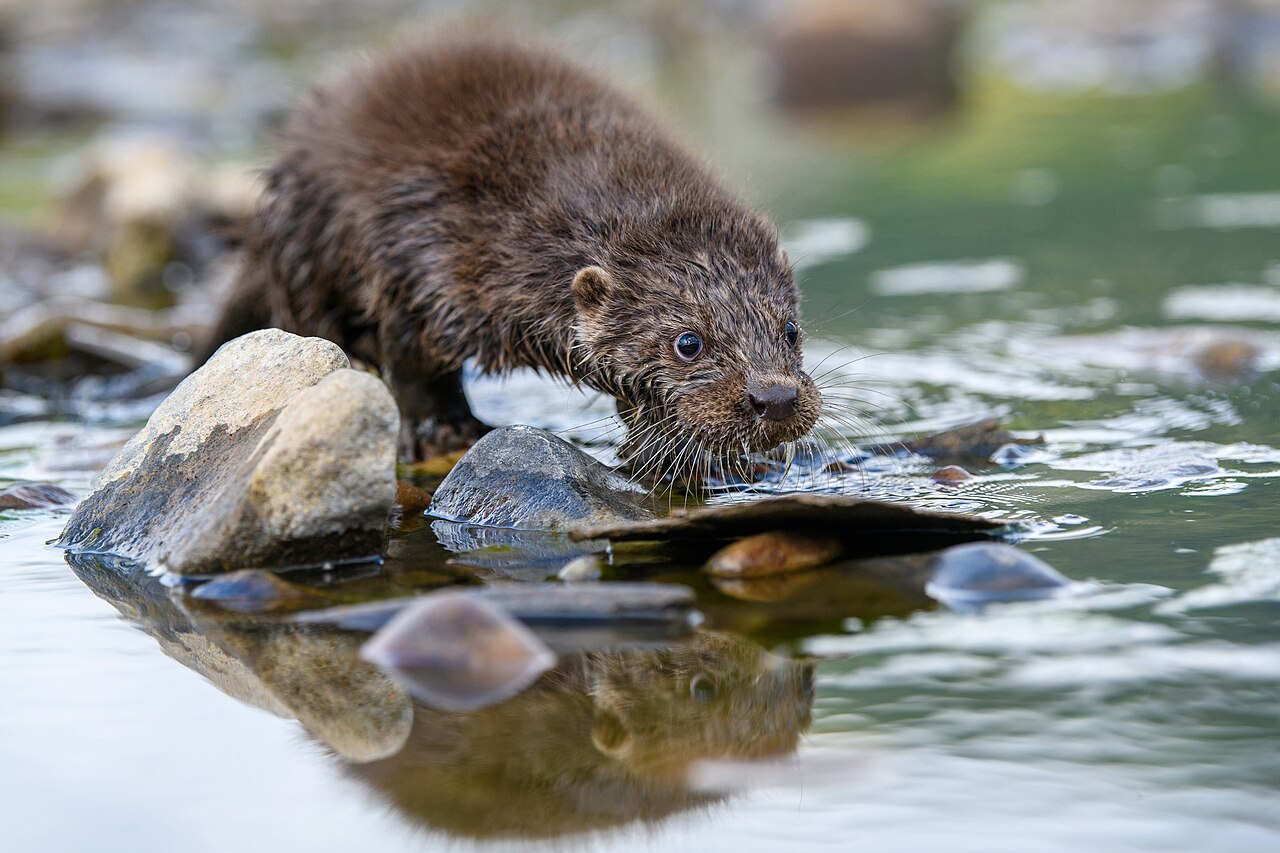 Eurasian otter
An agile semi-aquatic predator of the weasel family that lives on the clean rivers and lakes of Polissia.