
Hare's-tail cottongrass in Polissia
Eriophorum vaginatum
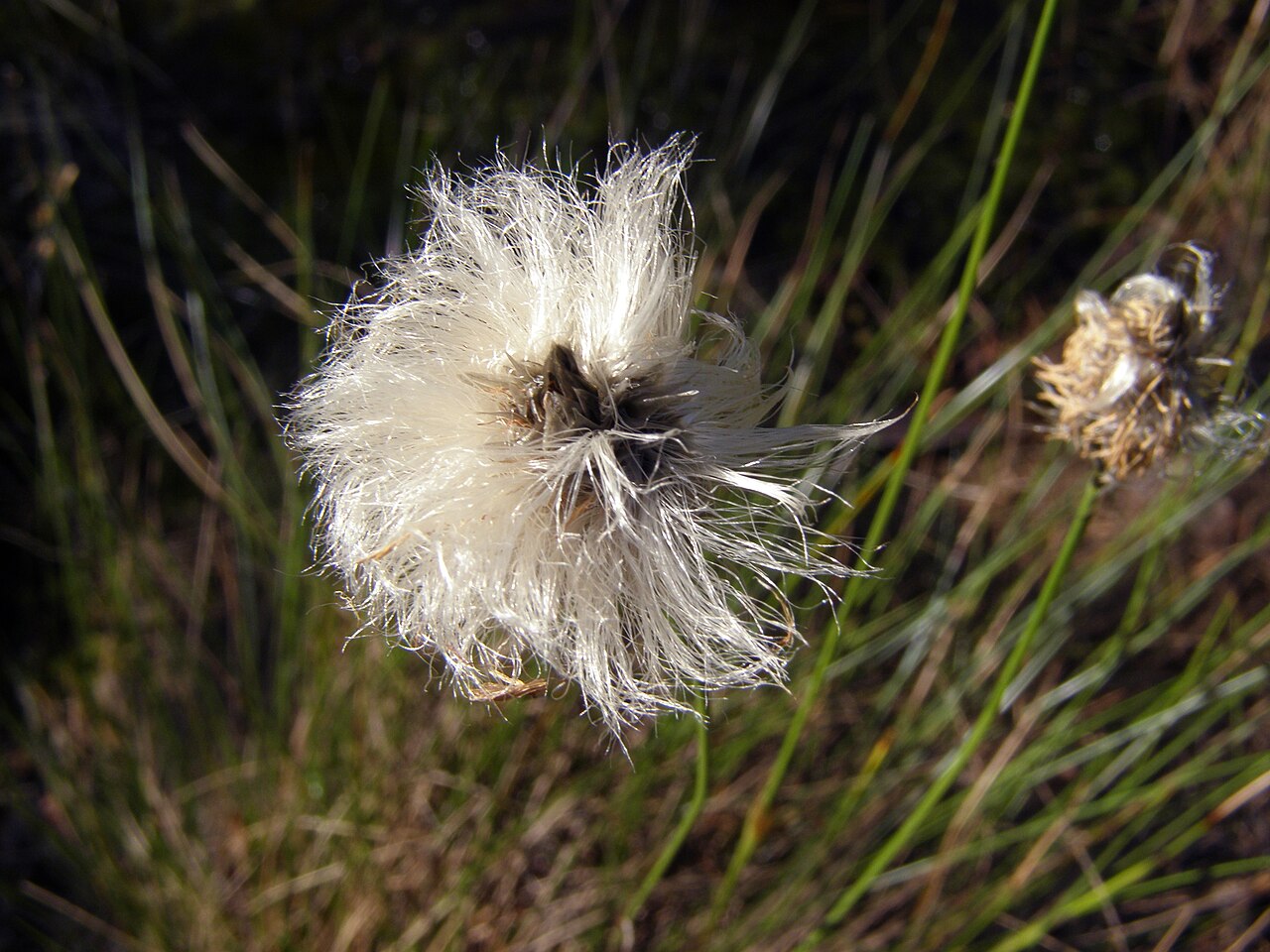
Hare's-tail cottongrass is a perennial herb that grows in dense tussocks. Its leaves are narrow and stiff. In spring a single spikelet appears at the top of the stem, and after flowering it turns into a fluffy white ball of long, silky hairs.
Cottongrass grows on raised and transitional sphagnum bogs and in swampy pine woods. In Polissia it is common on the bogs of Rivne region, Volyn and Zhytomyr region, and in the Rivne and Polissia nature reserves.
In spring, when the cottongrass is in flower, the bog looks as if it were covered in cotton wool. Cottongrass tussocks are an important part of the bog ecosystem: birds nest on them, and cranberry, sundew and other plants grow on them.
Cottongrass is a sign of a healthy raised bog. It is easy to damage the plants and the tussocks themselves, so walk on the bog only along marked paths and boardwalks.
When to see: April–June, fluffy seed heads in May–June
Where it was seen in Polissia
Observations from the open scientific database GBIF since 1990.
More in “Plants”
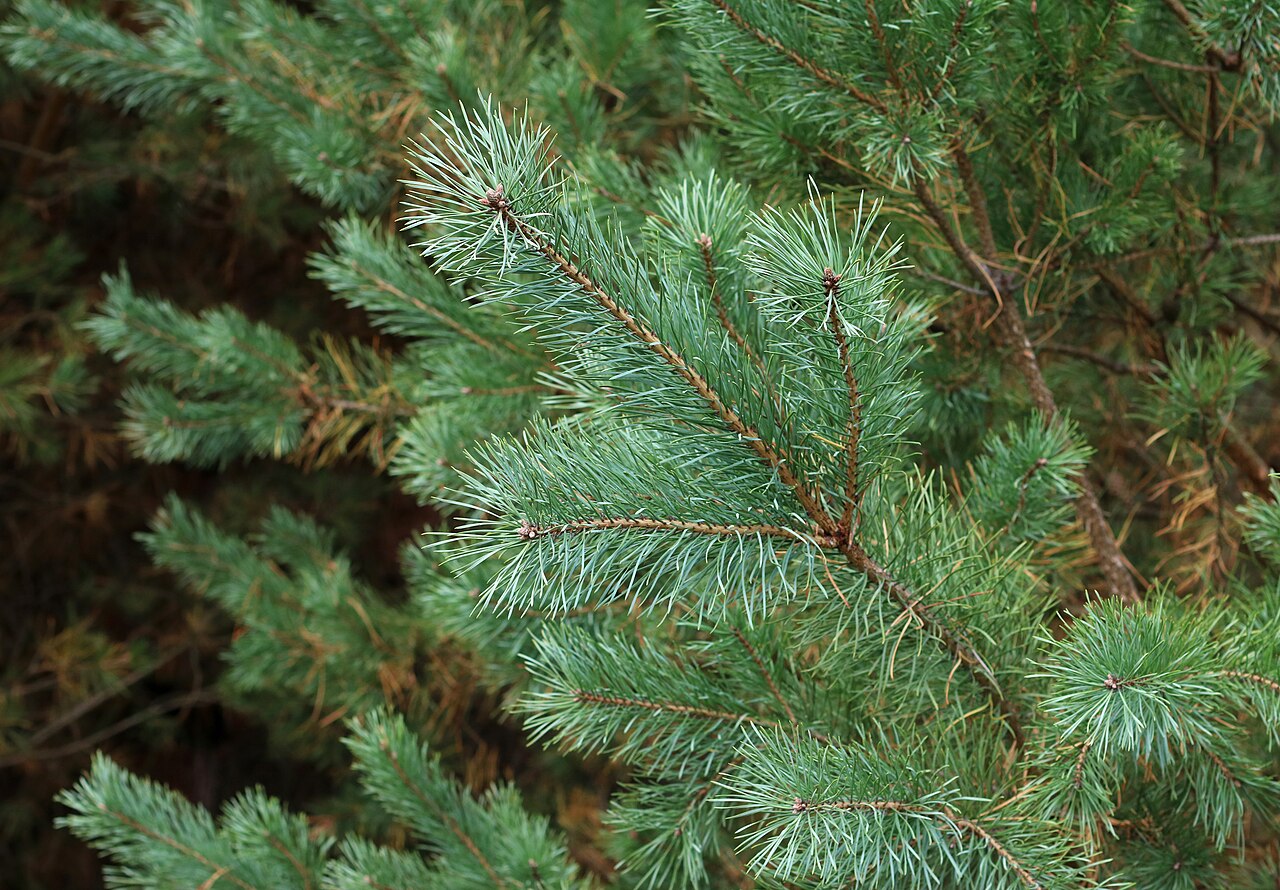 Scots pine
The main tree of Polissia: pine forests on sand define the look of the region from Volyn to Chernihiv region.
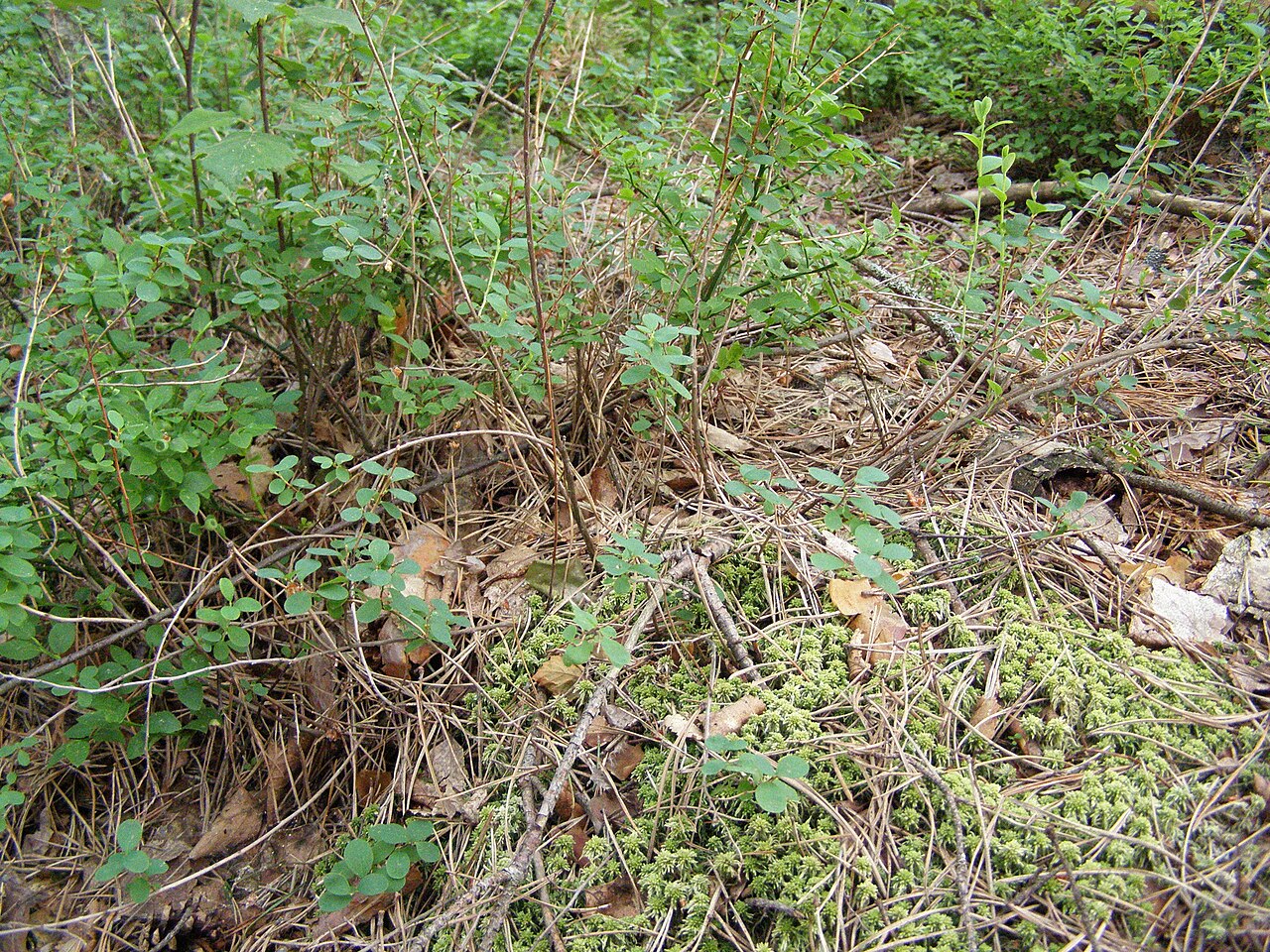 Sphagnum moss
The peat moss that Polissia's bogs are made of: it stores water and over millennia forms peat.
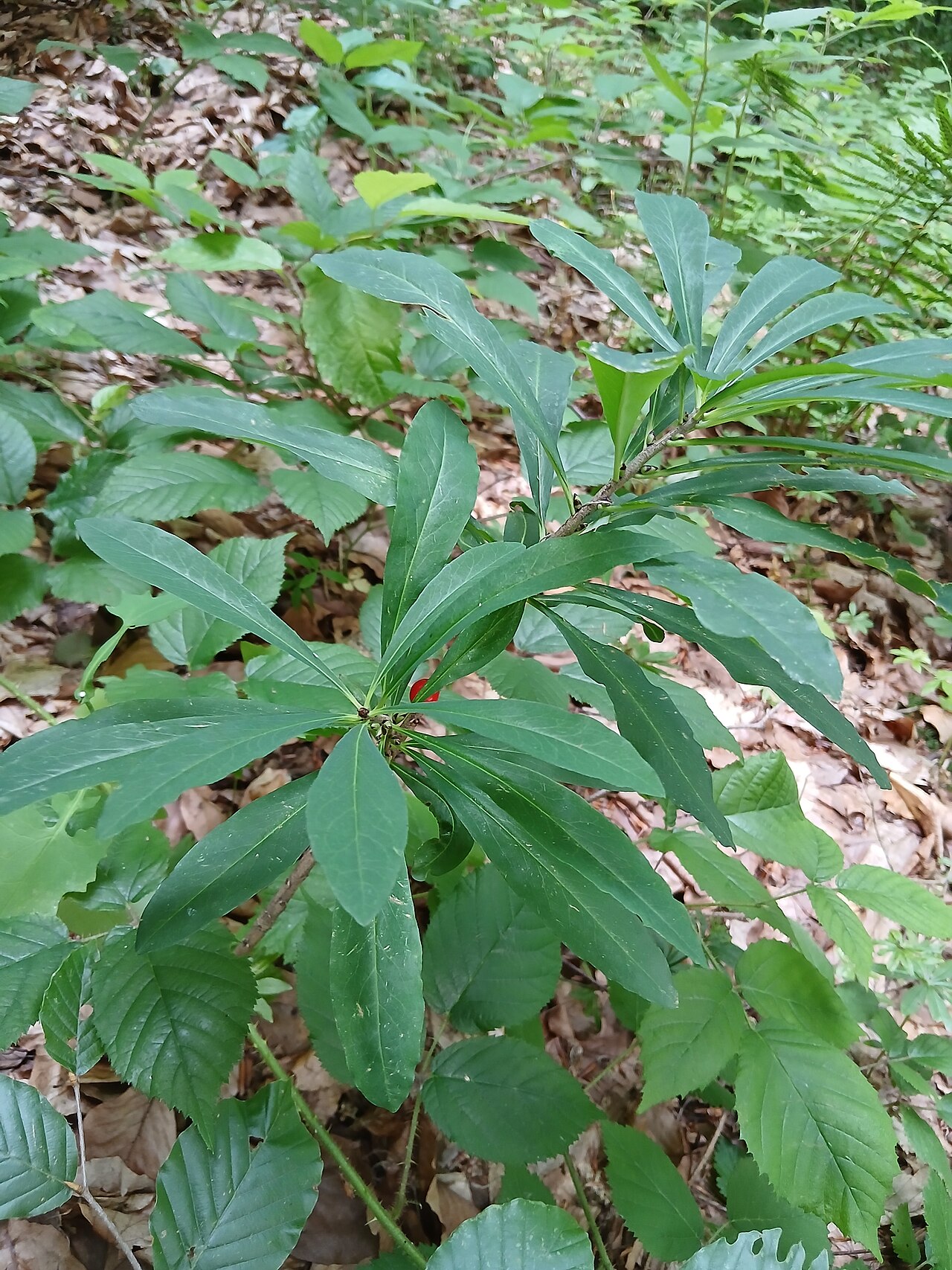 Mezereon
A forest shrub that blooms pink before its leaves appear; its red berries are highly poisonous.
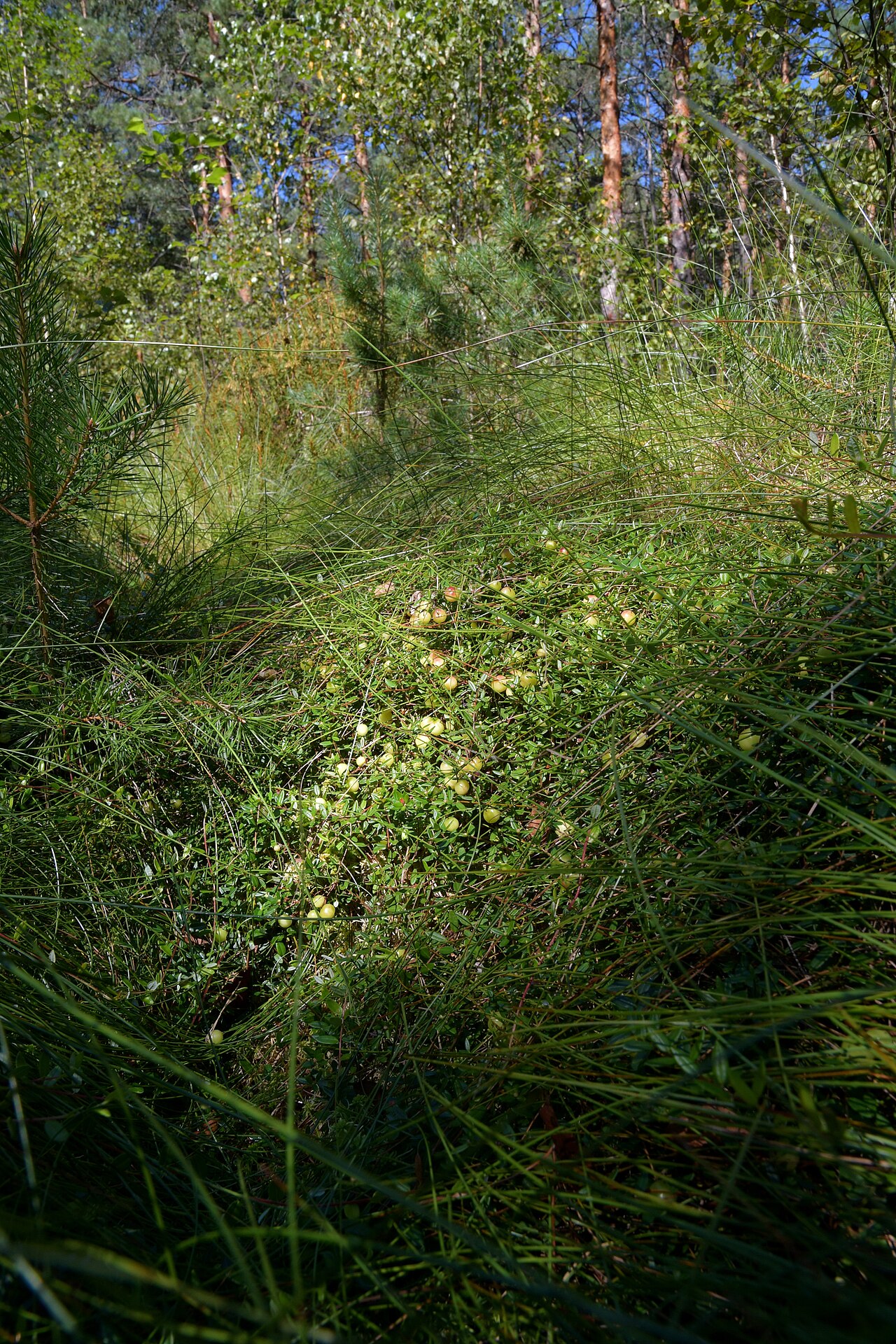 Cranberry
A bog berry of Polissia with thin creeping stems that ripens in autumn and gets sweeter after the first frosts.