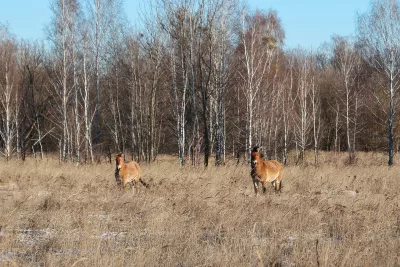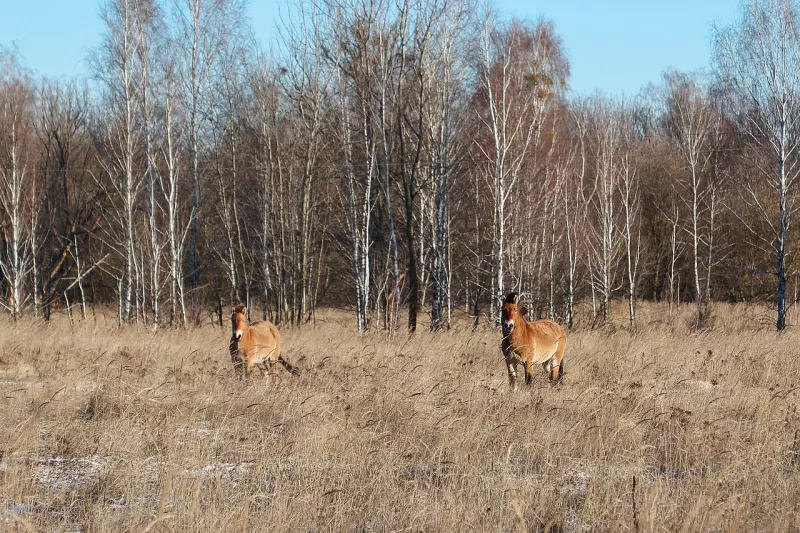

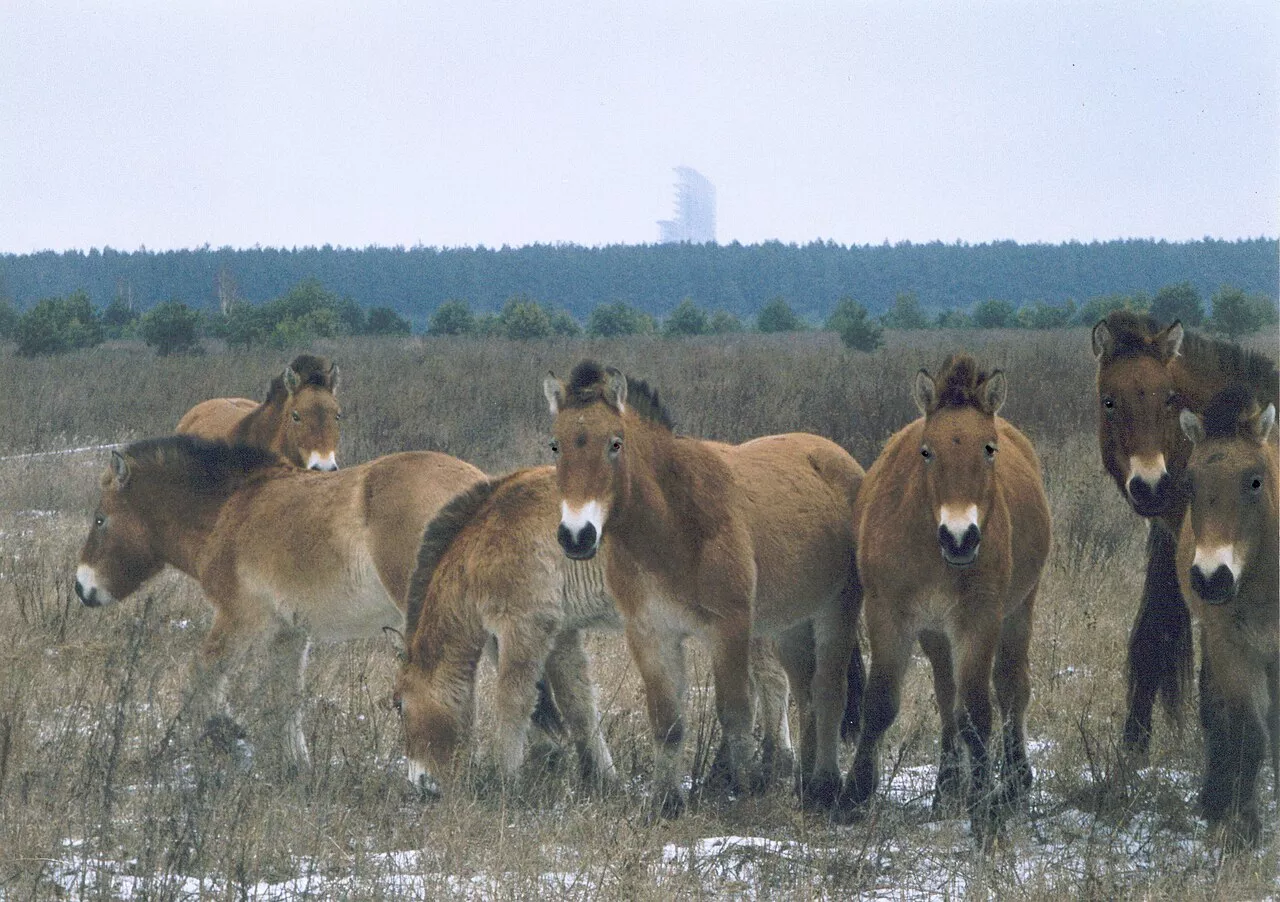
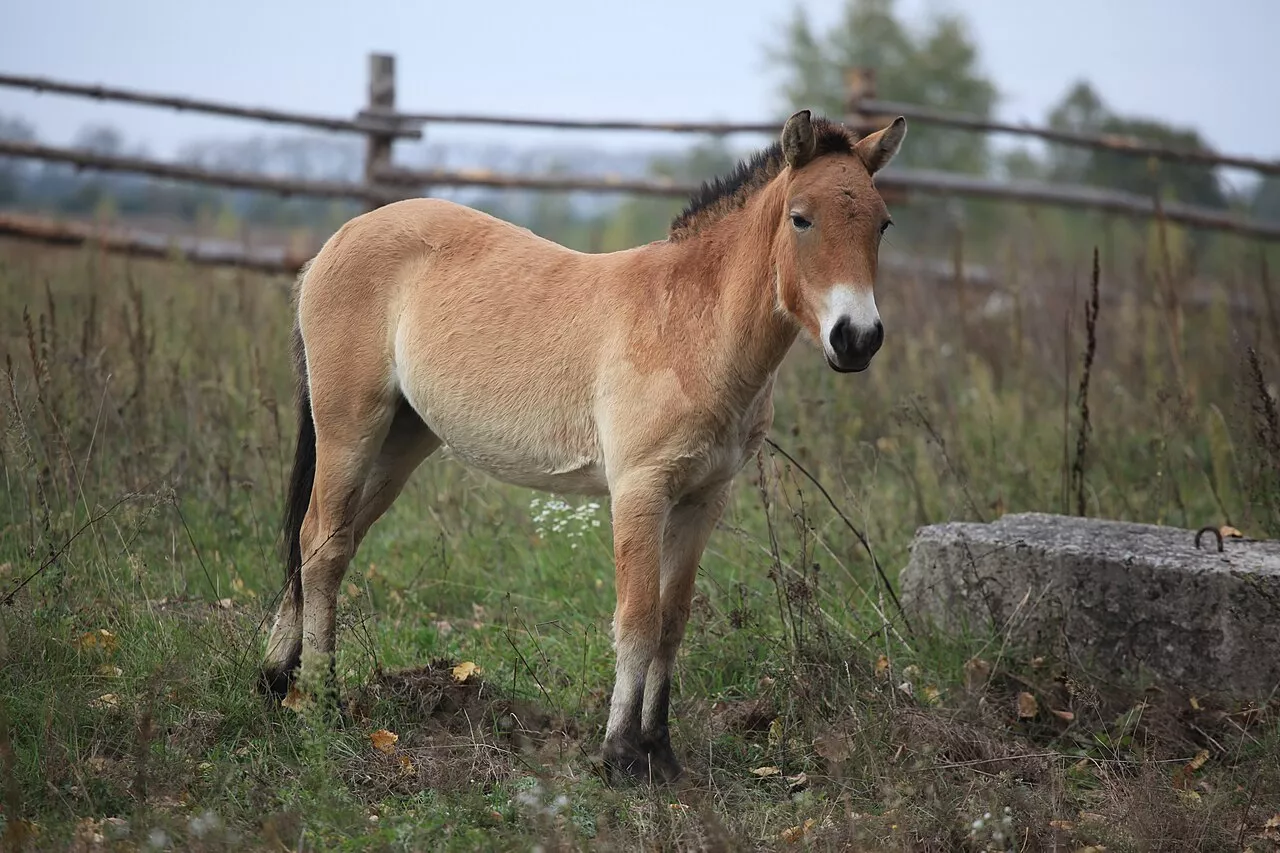
Przewalski's horses are the only true wild horses remaining on the planet and probably the most famous inhabitants of the Chernobyl Exclusion Zone. These stocky animals with a dark brush-like mane and a light muzzle freely roam in herds through the forests, meadows, and abandoned villages of the Chernobyl Biosphere Reserve. For Ukraine, they are also the only representatives of wild horses in nature.
The Horse Saved from Zoos
The species was described in 1879 in honor of the traveler Nikolai Przewalski. At that time, wild horses in the steppes of Central Asia were already scarce, and in the 20th century, they were completely exterminated in the wild. The species survived only in zoos: by the late 1950s, there were about a dozen animals left worldwide, from which all current ones descend. The largest breeding program operates in Ukraine, at Askania-Nova. Genetically, Przewalski's horse differs from the domestic horse: it has 66 chromosomes instead of 64.
How the Horses Ended Up in the Zone
After the evacuation of people in 1986, the exclusion zone became a vast area without economic activity. Starting in 1998, 31 Przewalski's horses were released here—without fences, into the wild. The horses adapted: they formed their own herds, where the lead stallion protects his mares and foals. In 2018, reserve scientists counted 137 animals using camera traps, and before the full-scale war, according to the head of the reserve’s scientific department, Denys Vyshnevskyi, there were about 130–140.
In summer, the horses mainly eat cereals and other grasses, and in winter they nibble on willow, pear, apple, pine, rosehip, and alder branches or dig through the snow with their hooves to reach last year’s grass. In winter, their metabolism slows down by almost half—this helps them survive the lean season. The herds often hide from bad weather and insects in abandoned village buildings and farms.
Threats
Poaching was the greatest threat to the horses for a long time. During the 2022 occupation, the zone was mined, and mines still claim animal lives: in 2025, border guards reported that a Przewalski's horse listed in the Red Book was killed by a mine. Despite everything, the herds survived, and the reserve regularly releases new footage from camera traps.
How to See Them
The Exclusion Zone is a restricted area, and during martial law, visits are limited and possible only with permission and accompaniment. It is not advisable to try to find the horses independently: part of the territory is mined. The best way to see the herds is through camera trap footage published by the Chernobyl Biosphere Reserve. For other zone inhabitants, see the articles “Predators of the Chernobyl Zone” and “Moose, Deer, and Feral Cows.”