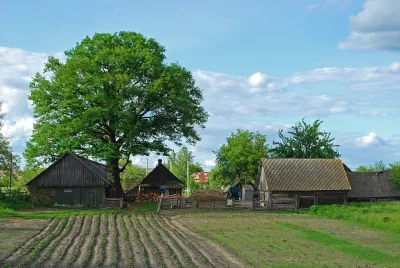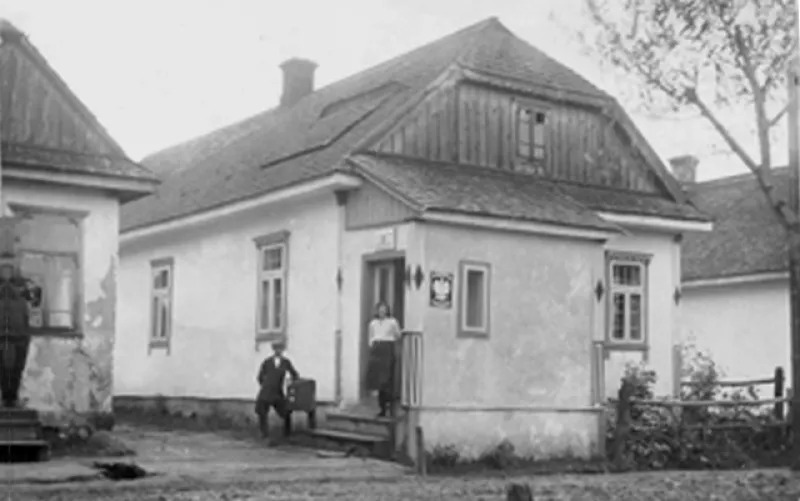
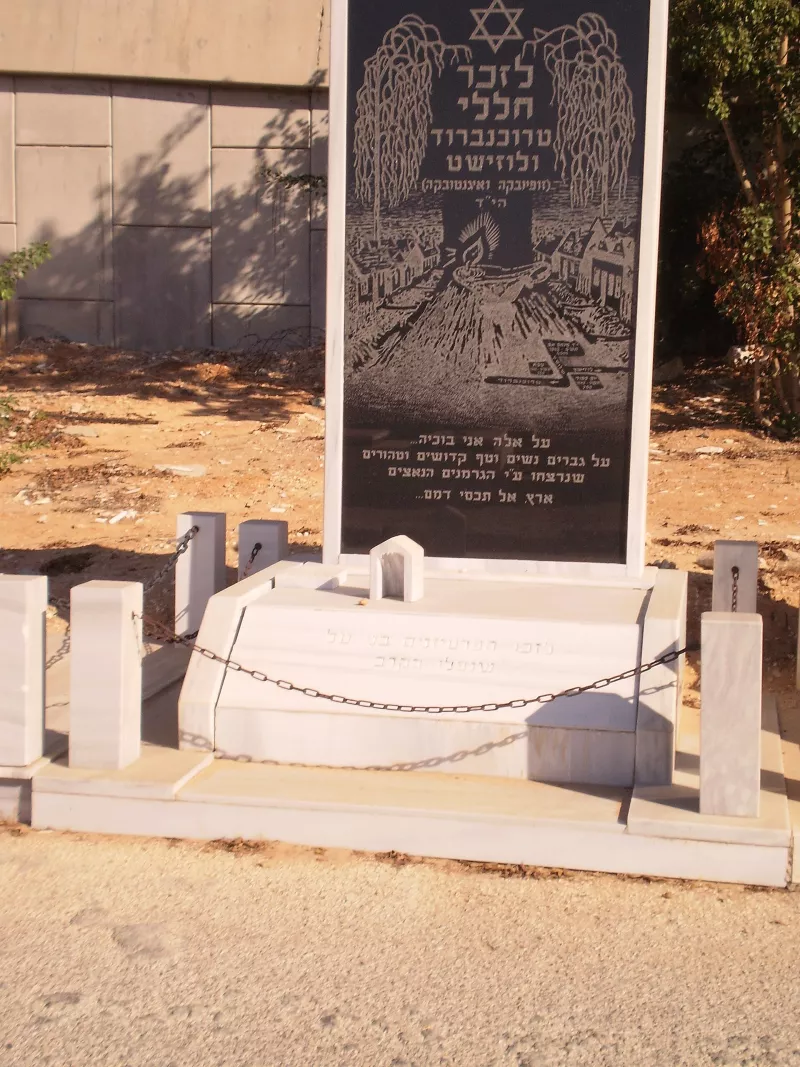
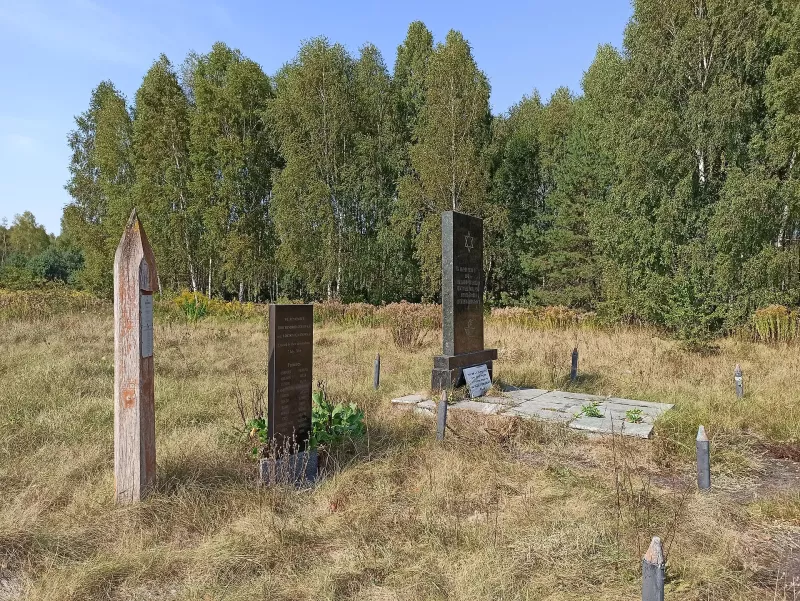
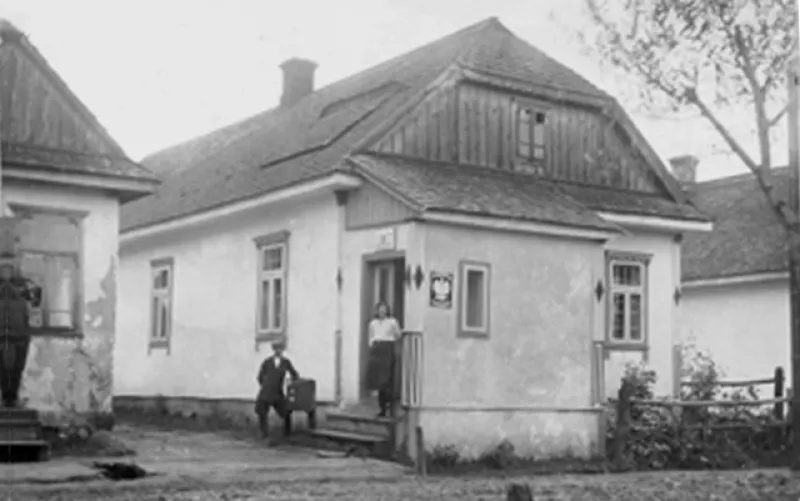

Trokhymbrid was a Jewish town that existed in Volyn from the first half of the 19th century until 1942. It stood thirty kilometers northeast of Lutsk, near another Jewish town — Lozysht. It was also called Sofiivka — after the Russian princess Sofiya, who, according to legend, allowed the Jewish settlement in this place. Today, only forest, fields, and a memorial remain of Trokhymbrid.
The Town
Trokhymbrid was founded in 1835 as a village, which later grew into a small town. In 1889, 1,200 people lived here; by 1897, almost 1,600. Between the wars, Trokhymbrid belonged to Poland, and in 1938 its population reached three thousand. Most residents were engaged in agriculture and leather tanning. The town had seven synagogues.
Destruction
In 1940, the Soviet authorities exiled Rabbi Hersh Weisman to Siberia. During the Nazi occupation, a ghetto was established in Trokhymbrid, where Jews from surrounding villages and towns were gathered. In August–September 1942, the ghetto was destroyed: most Jews were killed by the Nazis and local police. No more than two hundred people managed to escape — they were helped by partisans from nearby Klubochyn. For this, the Nazis shot 137 residents of Klubochyn and about fifty inhabitants of the Polish village Obirky. Trokhymbrid itself was burned to the ground. By the end of the war, only a few dozen of its residents remained alive.
Everything Is Illuminated
The world learned about Trokhymbrid thanks to the novel Everything Is Illuminated (2002) by American writer Jonathan Safran Foer. Its hero travels to Ukraine to find the woman who saved his grandfather. In 2005, Liev Schreiber directed a film of the same name based on the novel. Since then, descendants of Trokhymbrid’s inhabitants from various countries have been visiting the site of the town.
Video
Nearby
Lutsk — thirty kilometers away. More in the article Lutsk District.
How to Find
The site of the former town is among fields and forest northeast of Lutsk. The most convenient way to get there is by car.