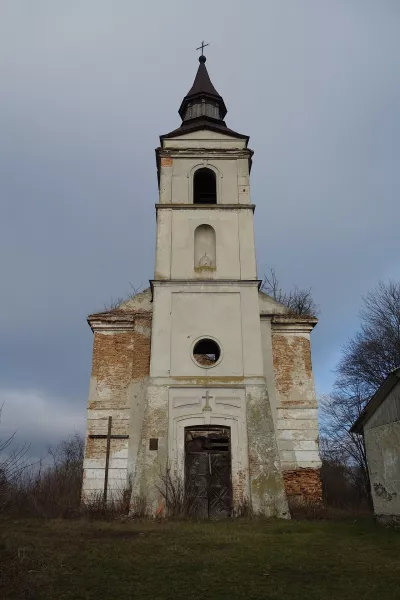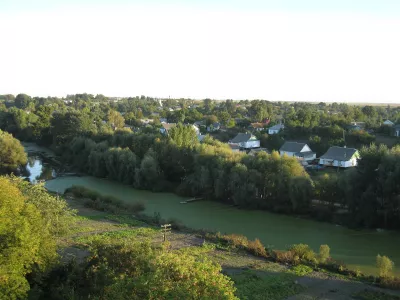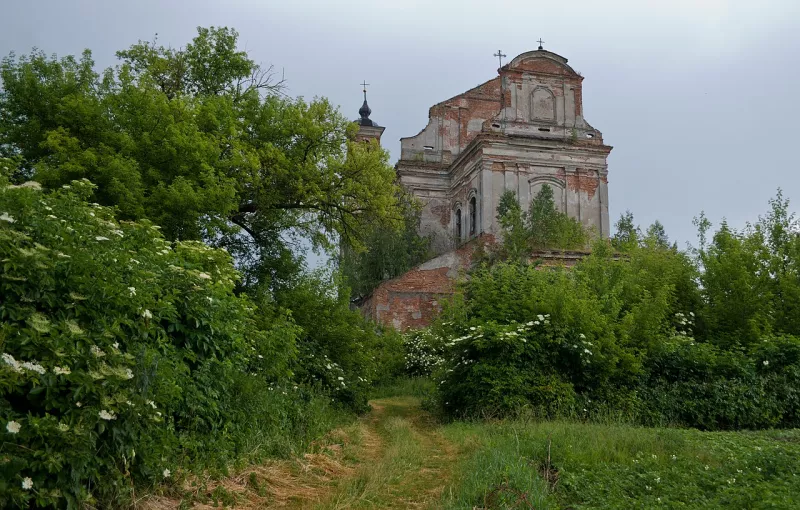
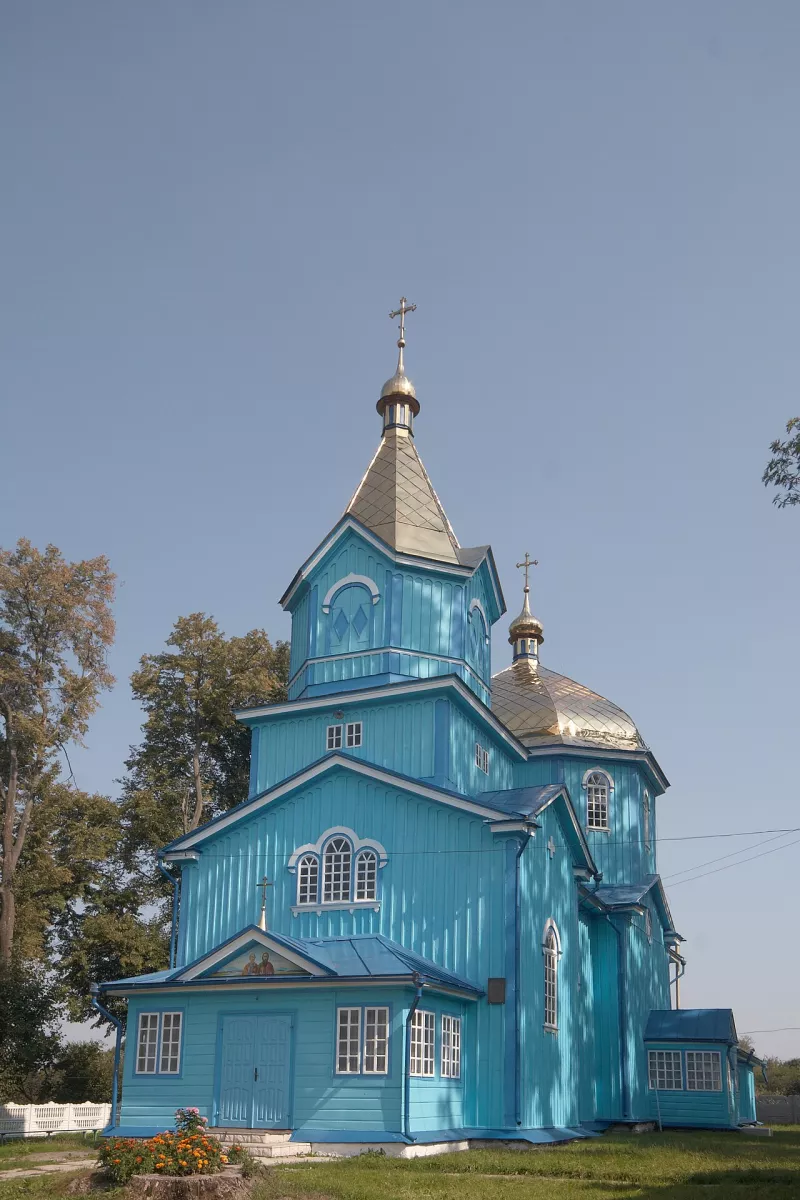
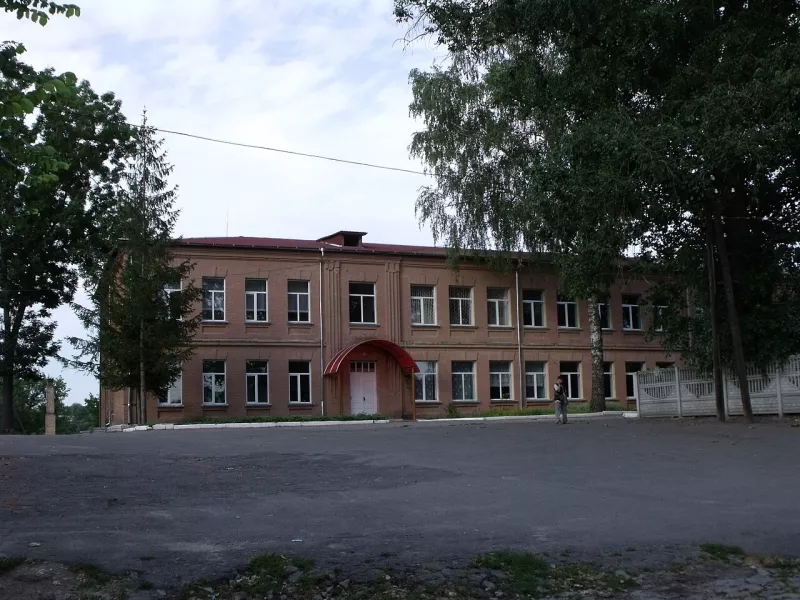
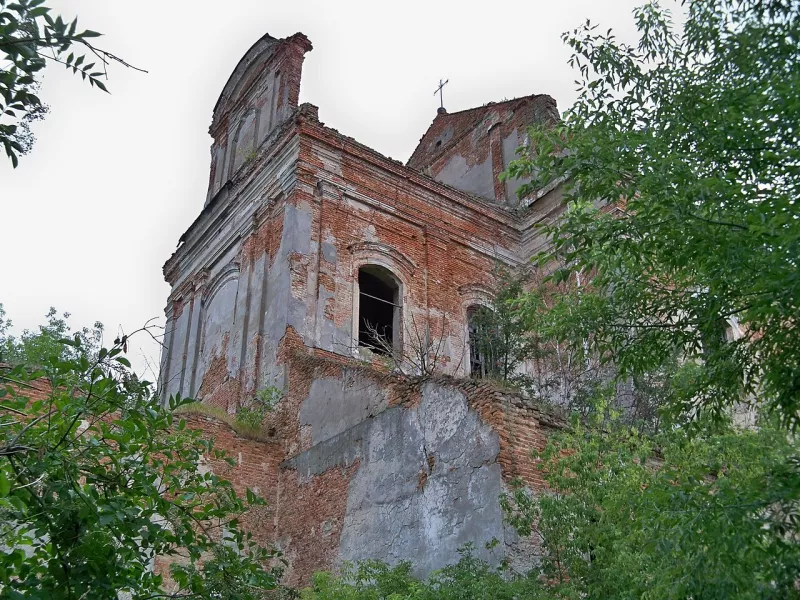
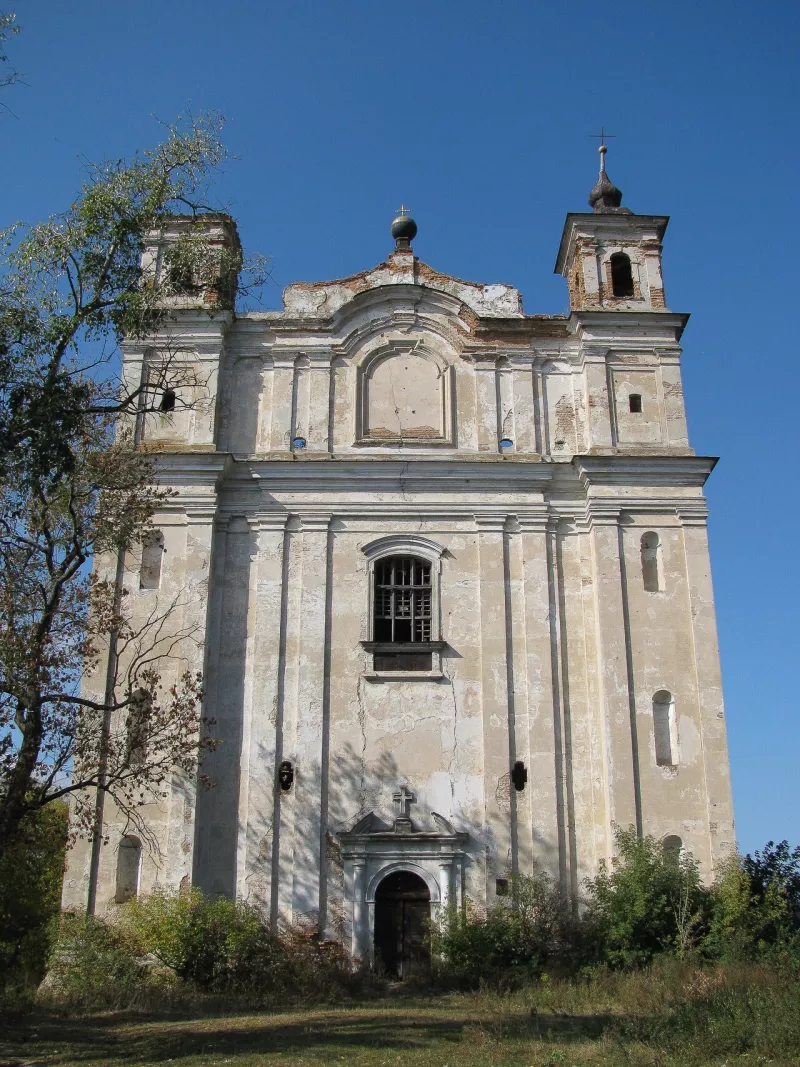
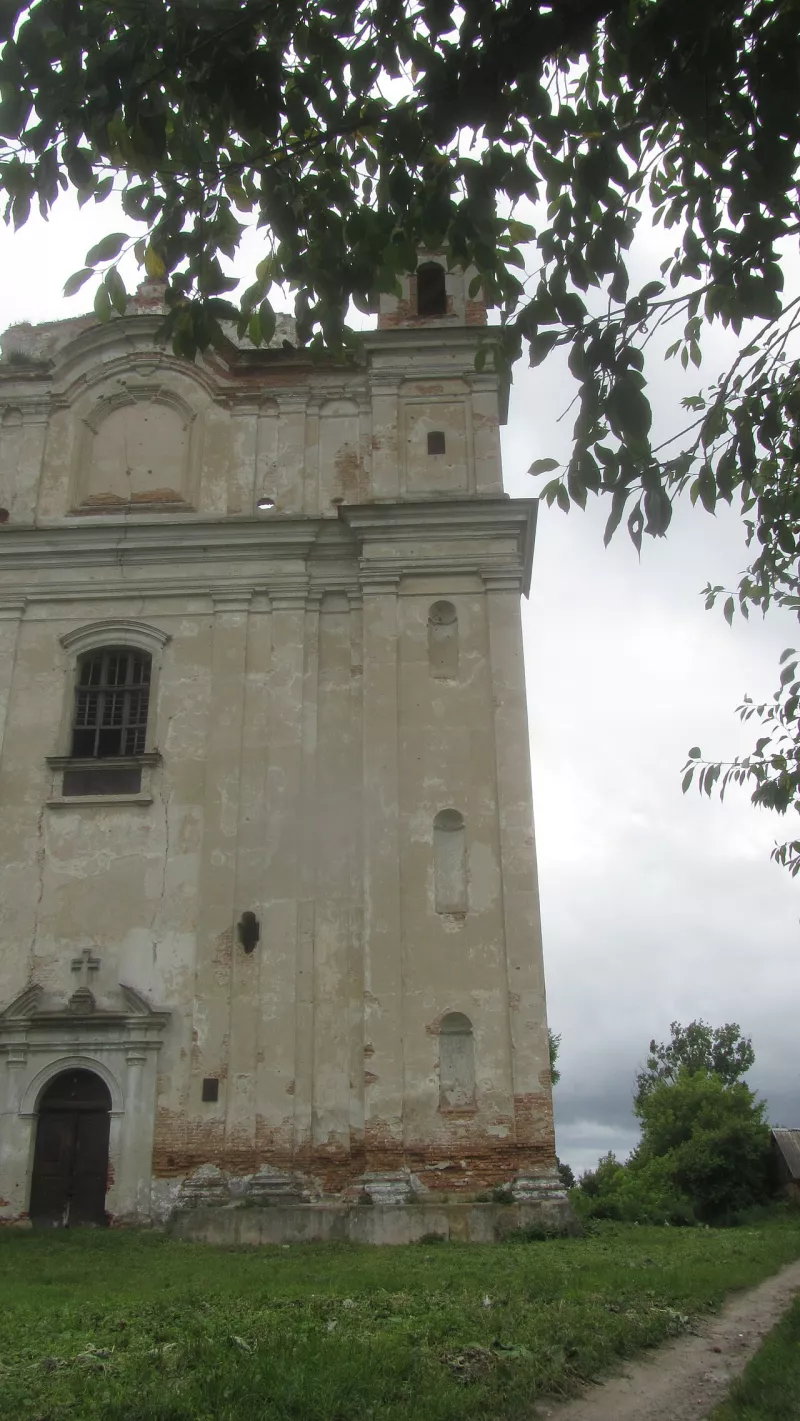
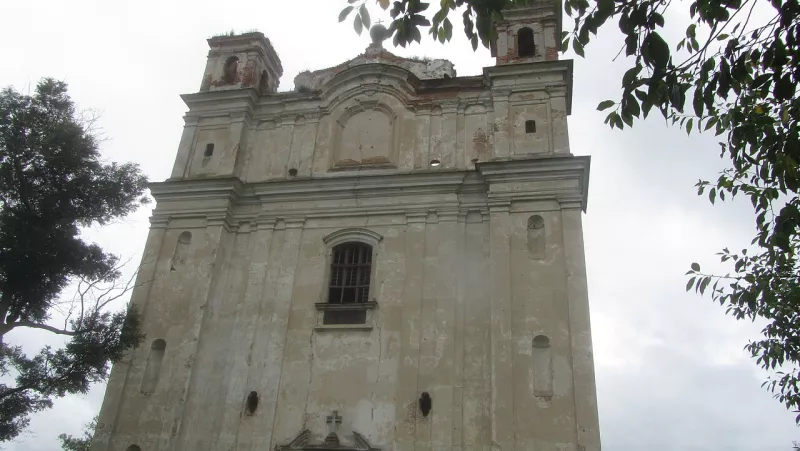
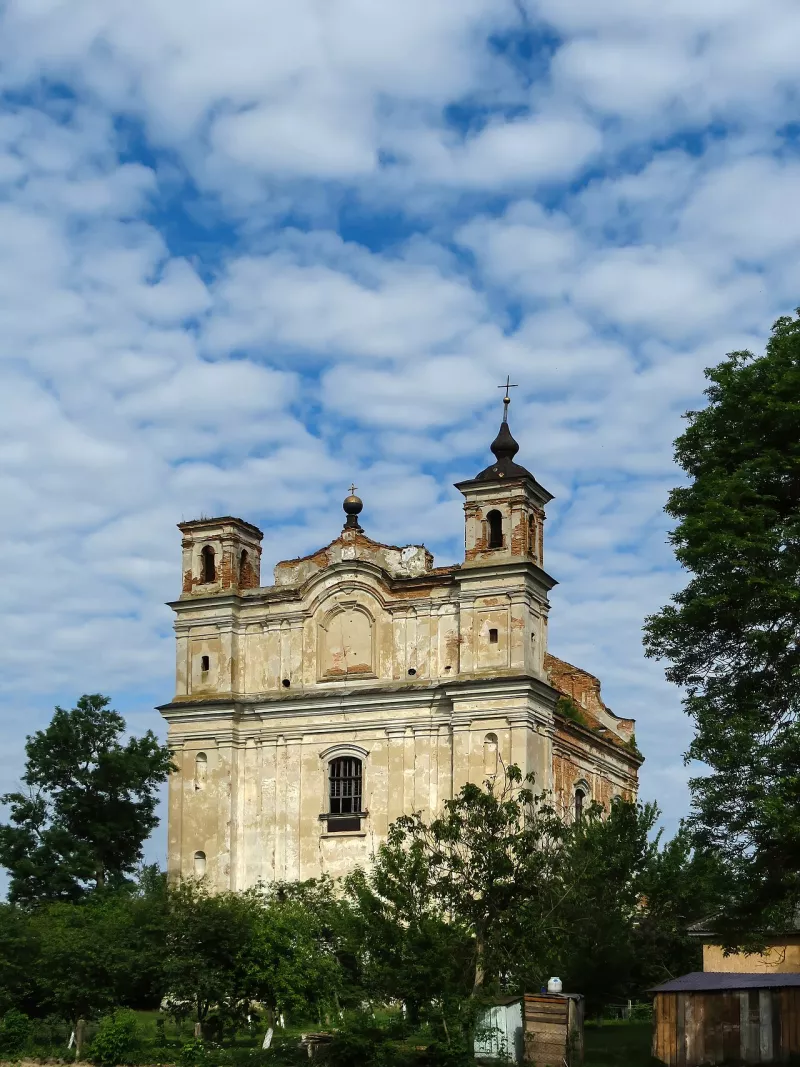
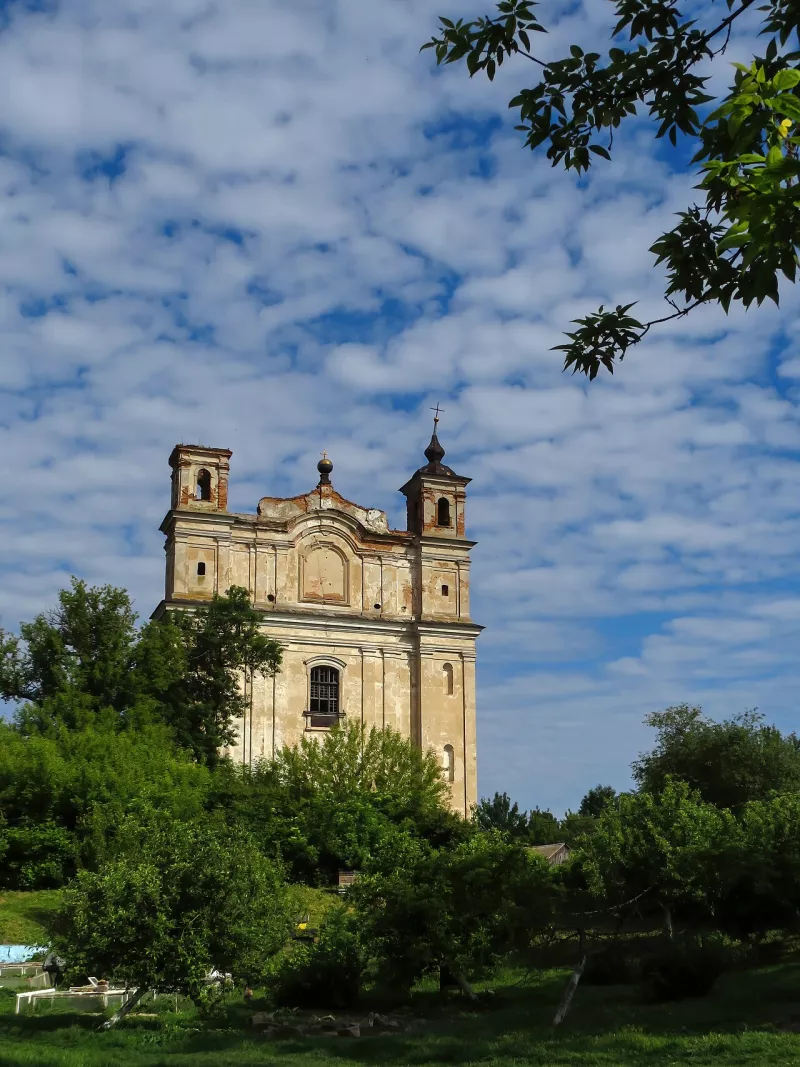
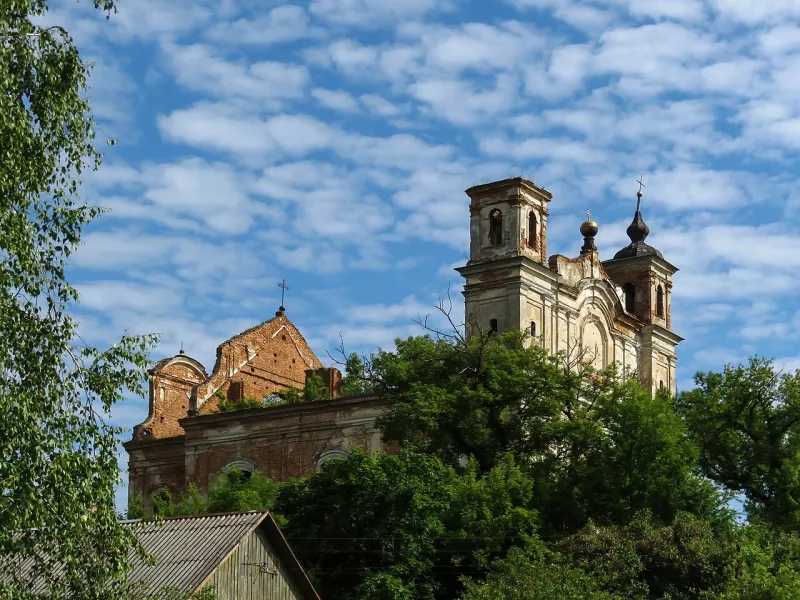
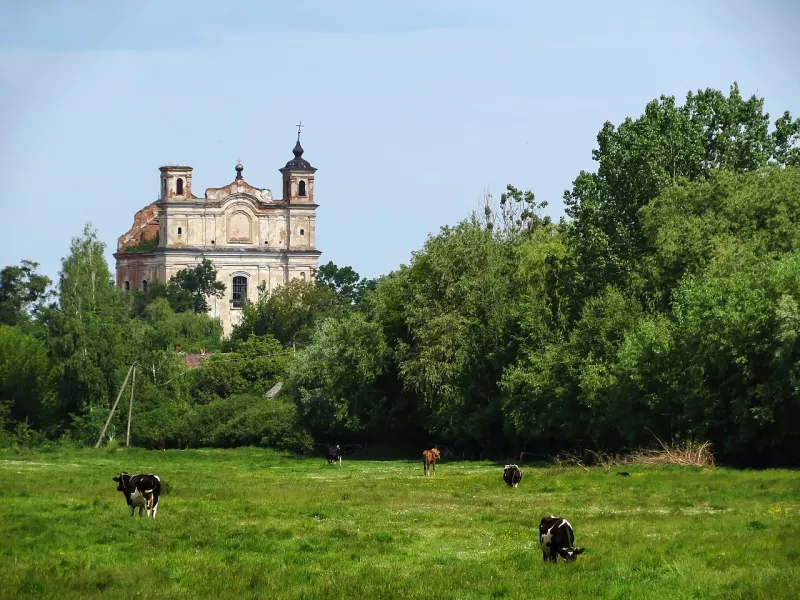
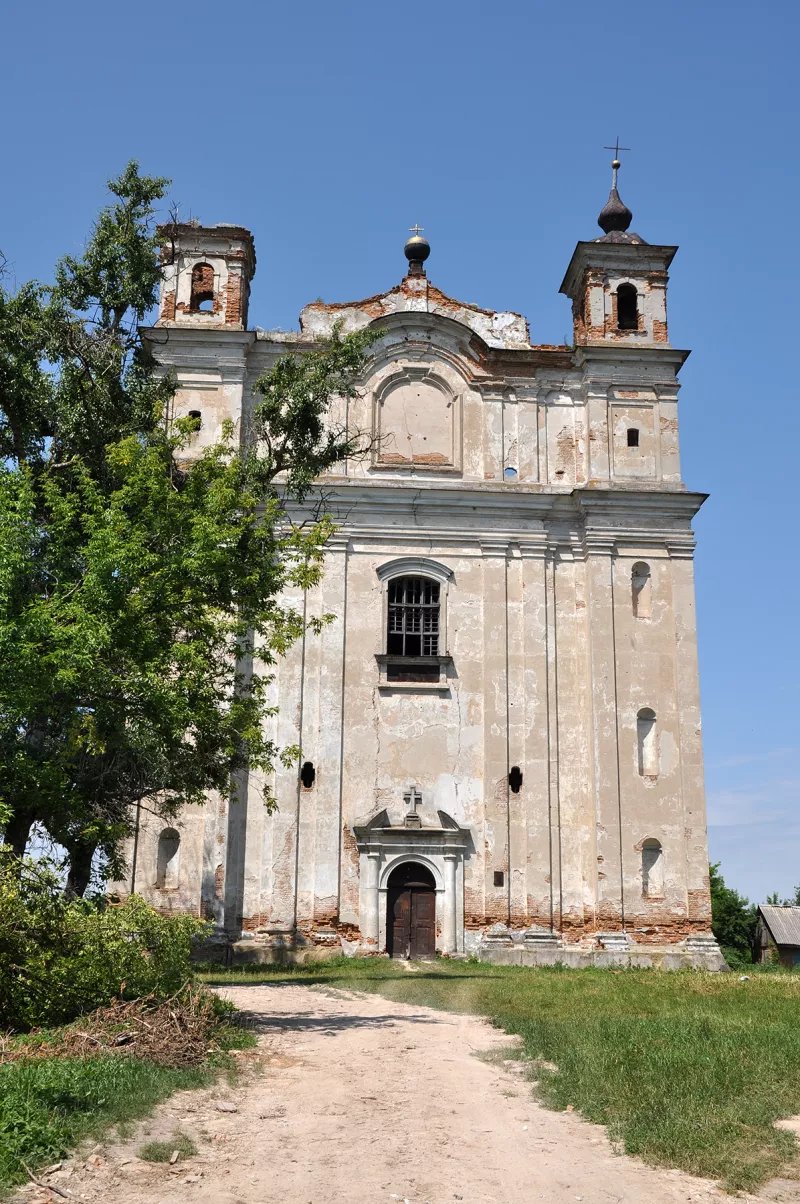

Velyki Mezhyrichi is a village in Rivne Raion, not far from Korets, and the centre of the Velyki Mezhyrichi hromada. About two thousand people live here. The name speaks for itself: the village lies "between rivers". In Polish times, it was called Mezhyrich Koretskyi and was a town featuring a castle, a Piarist collegium, the Tadeusz Czacki gymnasium, and one of the first botanical gardens in Volhynia. Today, an abandoned Baroque church and the ruins of a Classicist palace stand here.
The Koretsky Castle and the Cossack Regiment
Early Bronze Age settlements and 2nd-century Roman coins have been found near the village. In the late 15th and early 16th centuries, the princes Koretsky built a fortified castle here, which has not survived. The first mention of Mezhyrichi dates back to 1544. In 1596, the town suffered from a Cossack detachment that supported Nalyvaiko, and in 1648 the detachments of Maksym Kryvonis arrived here. In 1648–1649, Mezhyrichi was a sotnia town of the Volhynian Regiment, and in 1657 it became a regimental town of the restored regiment. In 1658, Ukrainian-Polish negotiations to end the war began here.
The Piarist Collegium and the Church of Saint Anthony
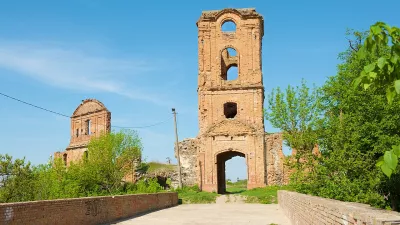
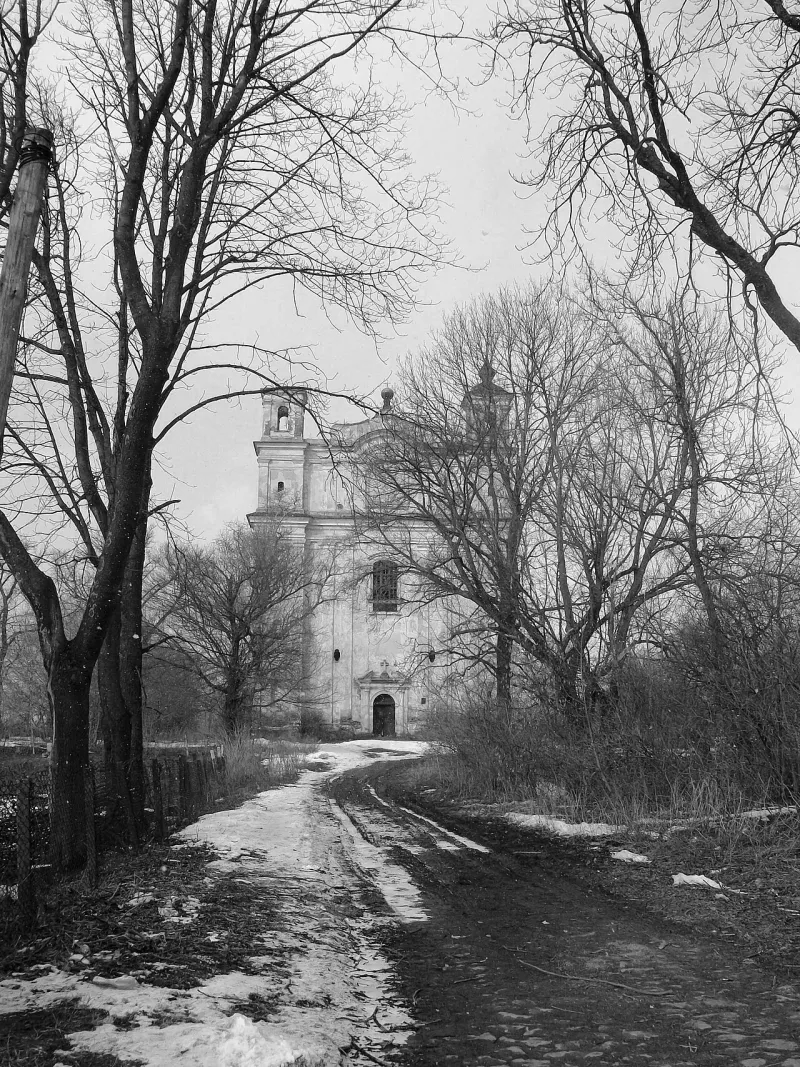
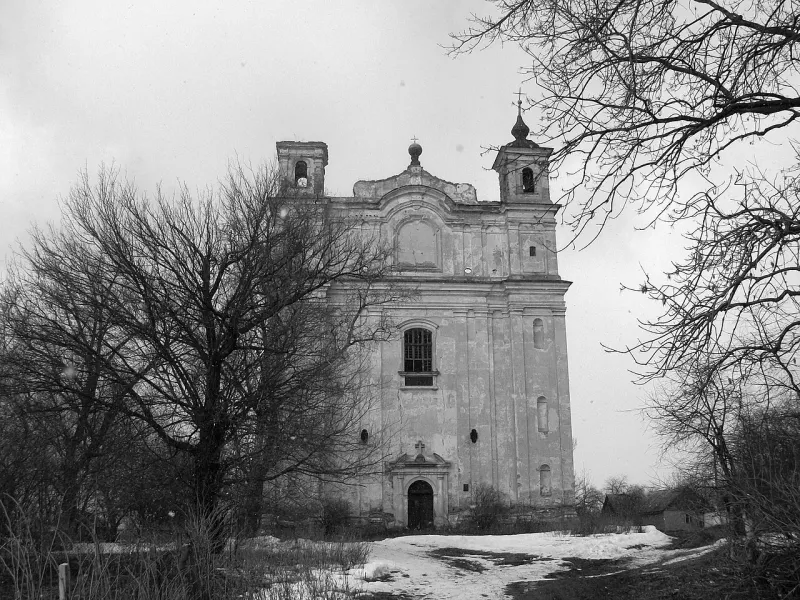
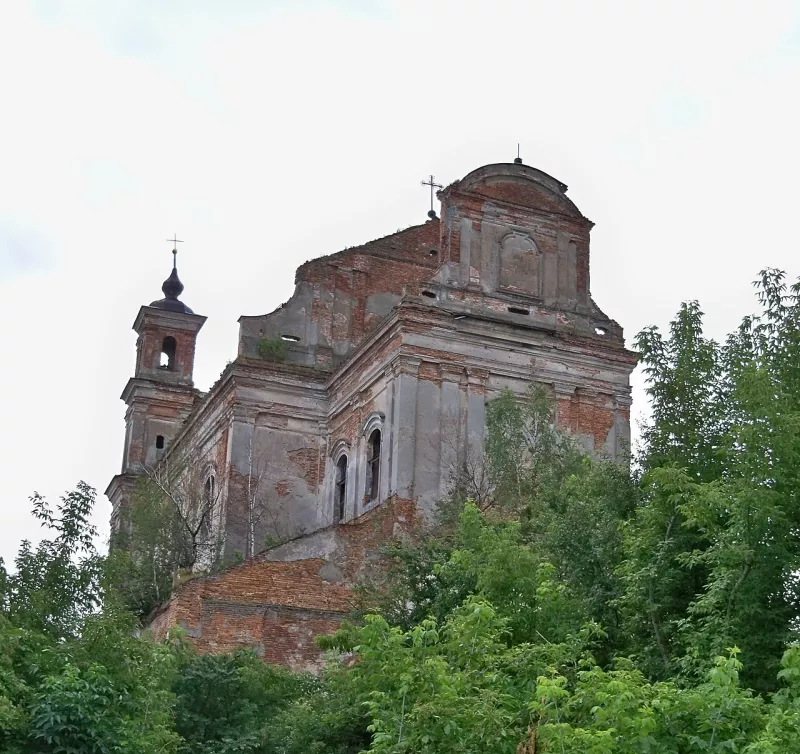
In 1651, the town passed to the Lubomirski family. Under Jerzy Dominik Lubomirski, a collegium of the Piarist order appeared here, and in 1702–1725, the stone Church of Saint Anthony was built. Architect Wojciech Lenartowicz gave it a distinctive look: a play of volumes of varying sizes, each with its own Baroque pediment, and a western façade with two towers, in the niches of which sculptures once stood.
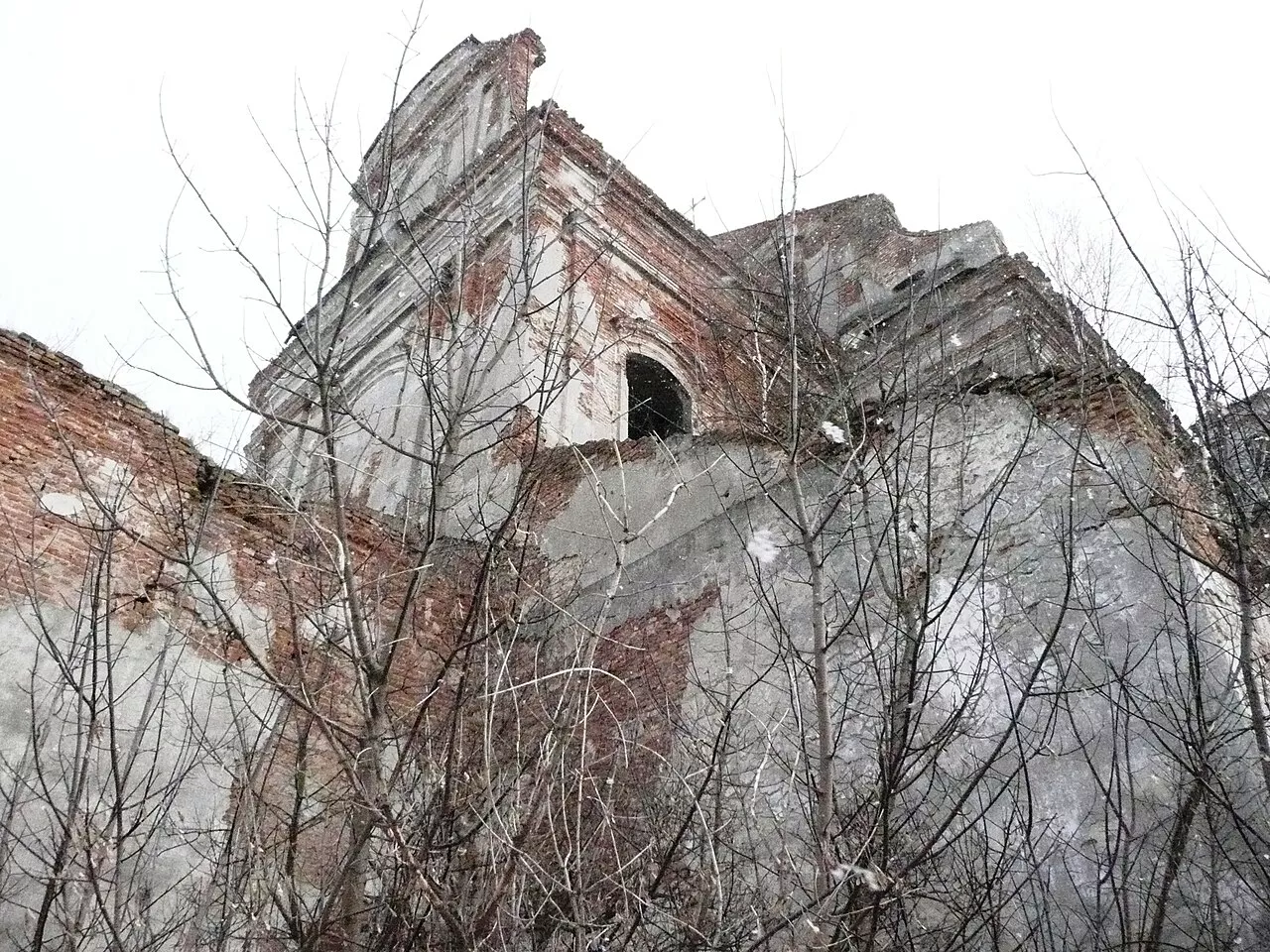
Initially, 18 students studied at the collegium, and by 1784 there were already 250. One of the rectors, Dominik Szybiński, published a calligraphy textbook that standardized Polish writing. In the early 19th century, Tadeusz Czacki turned the collegium into a gymnasium, which was closed in 1832. Today, the church stands empty and in need of restoration, but even in this state, it is impressive.
The Steцкий Palace
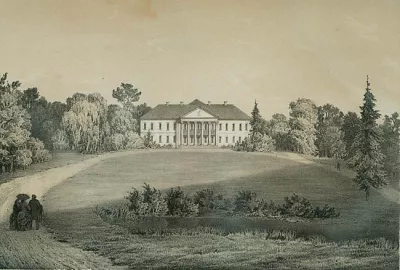
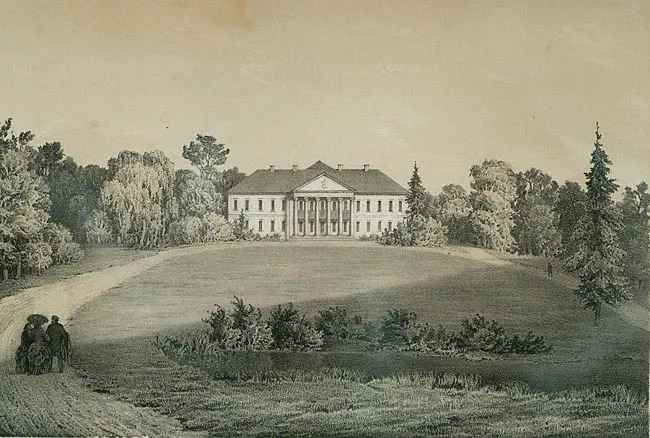
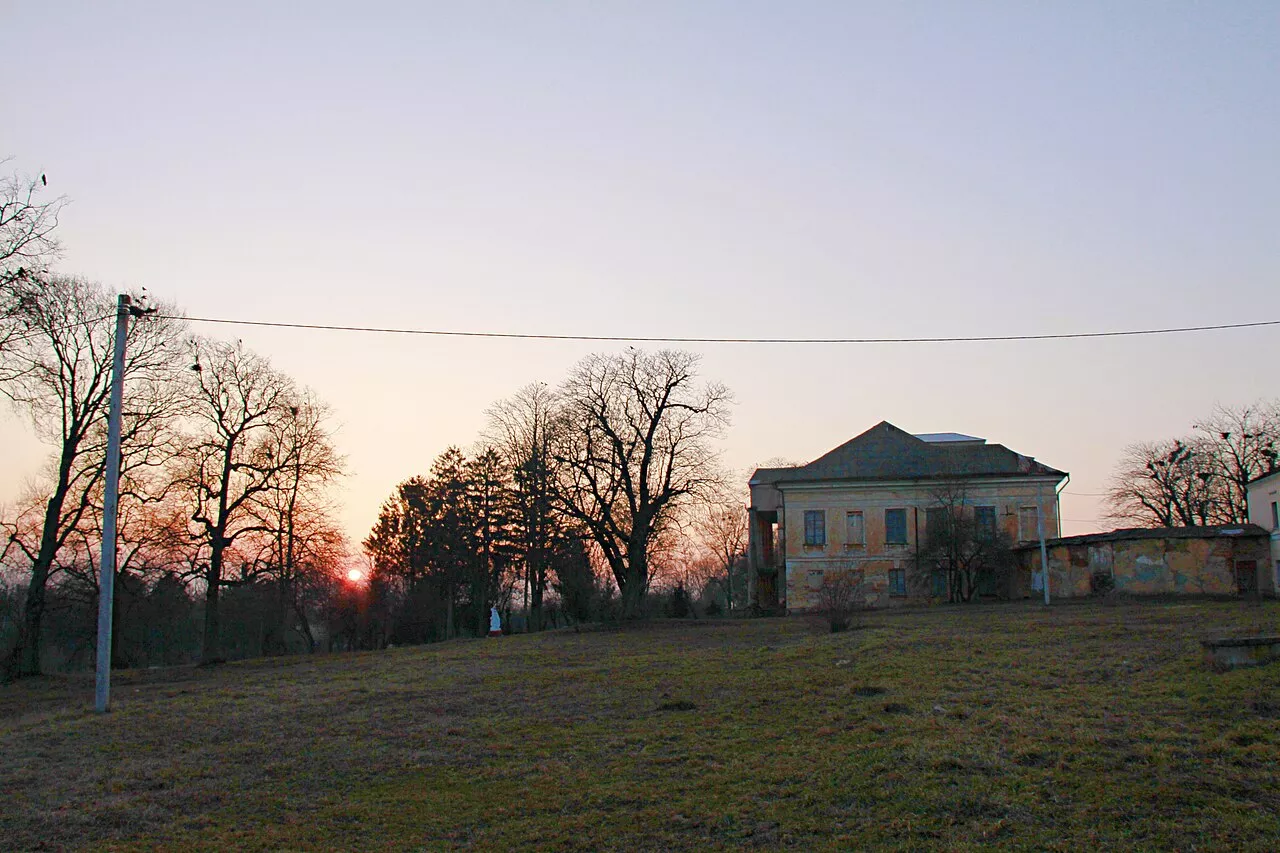
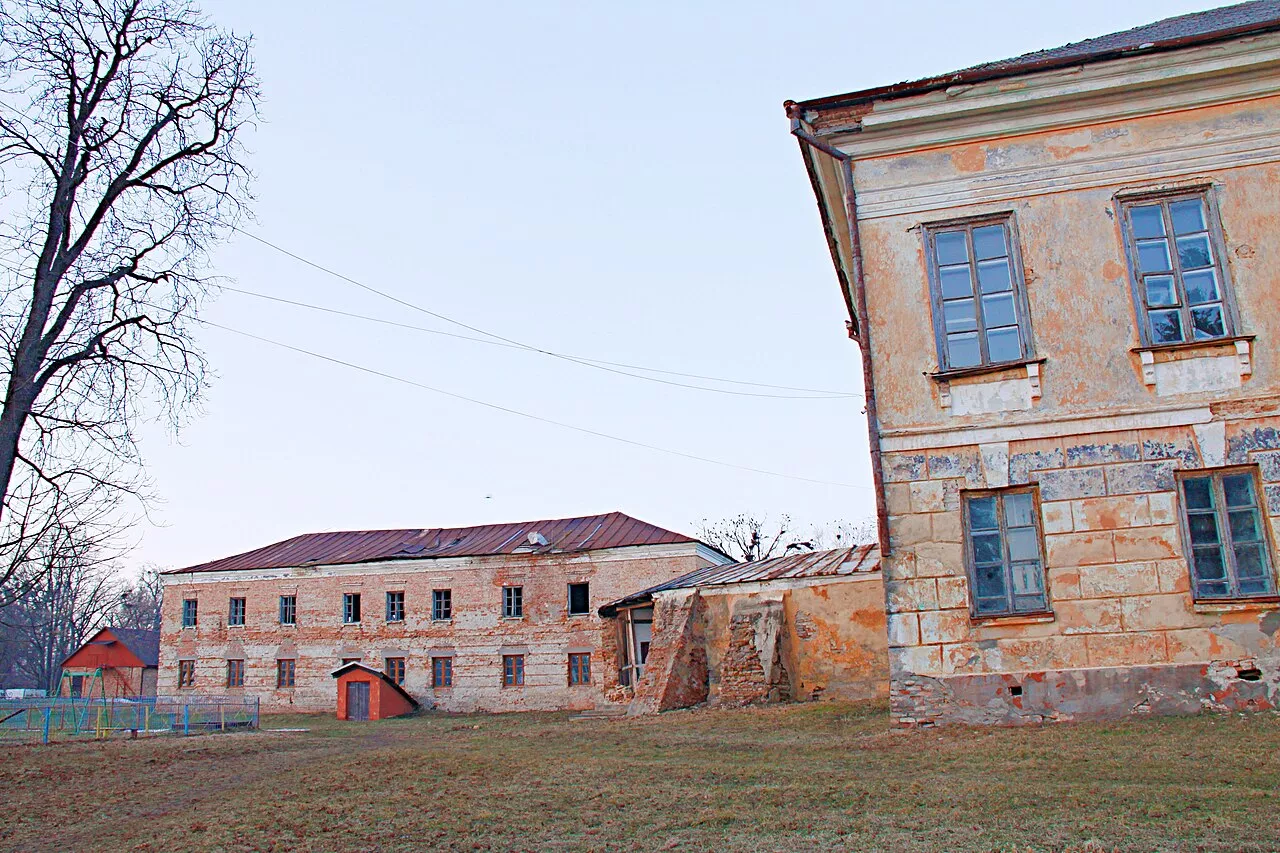
In 1773, the town passed to Jan Kazimierz Steцкий, the starosta of Ovruch — according to legend, he won it in a card game. In 1789–1793, designed by architect Domenico Merlini, the Steckis built a late Classicist palace: a two-storey central body, rounded galleries and pavilions around the front courtyard, and a four-column portico with a pediment. Behind the palace was the first botanical garden in Volhynia. After the uprising of 1830–1831, in which the Steckis participated, their estates were confiscated.
Hasidic Mezhyrich
Jews lived in the town since its very foundation. From 1760 for twelve years, Mezhyrich was the center of the Hasidic movement: its second leader, Dov Ber, known as the Maggid of Mezhyrich, lived here. Before the Second World War, about three thousand Jews lived in the town. Almost all of them were exterminated by the Nazis in 1941–1942. A memorial sign stands at the execution site in the Tsehylnia tract.
Fairs and Mill
In the 19th century, Velyki Mezhyrichi was famous for a large fair that gathered twenty times a year. A cloth factory, a brewery, and a powerful water mill operated here. On the eve of the First World War, over 3,500 people lived here. In 1940–1959, Velyki Mezhyrichi was a district center.
Velyki Mezhyrichi on Video
Nearby
Korets — 15 minutes away by road. More — in the article Rivne Raion.
How to Get There
Velyki Mezhyrichi lies near the Kyiv — Chop highway between Korets and Rivne. Buses run from Korets and Rivne.