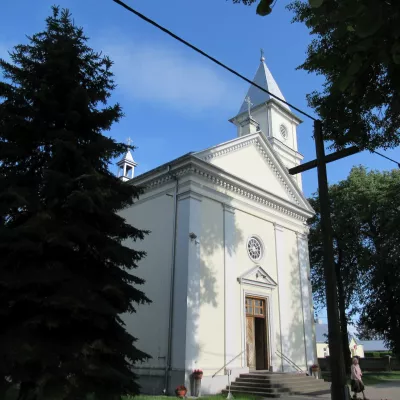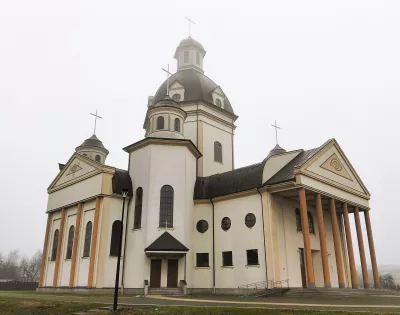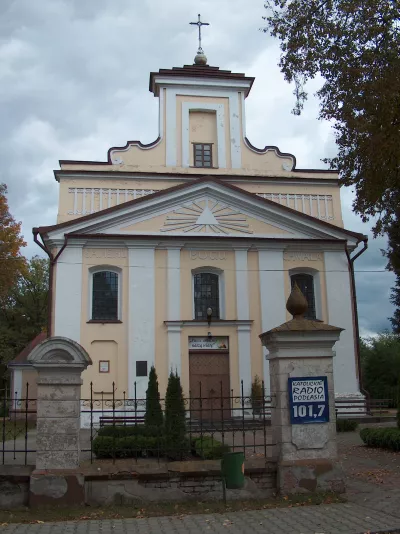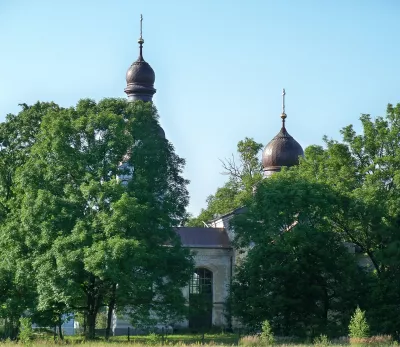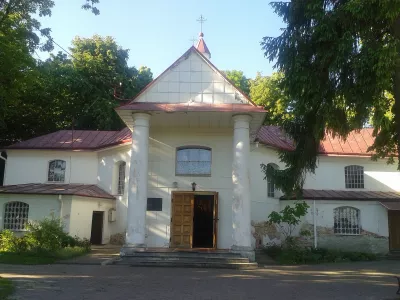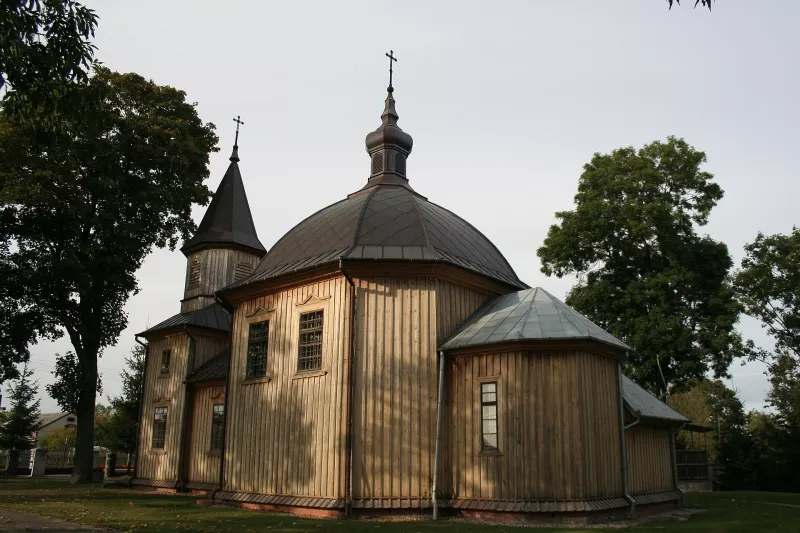
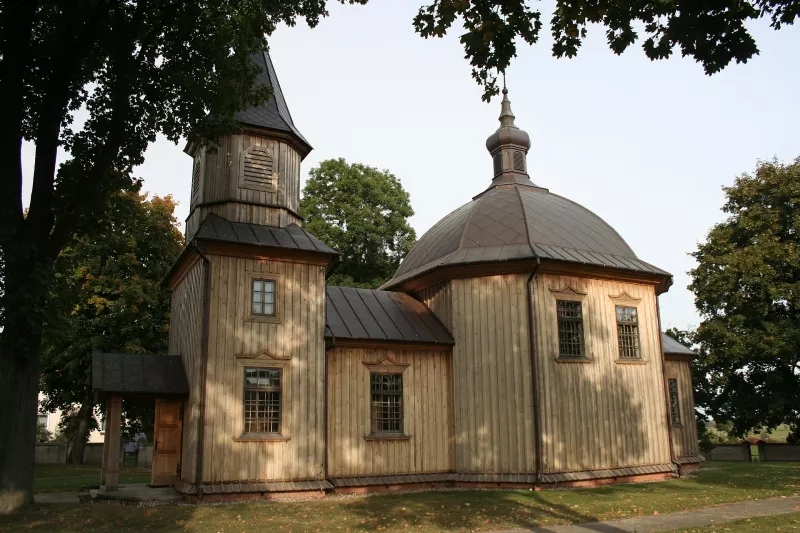
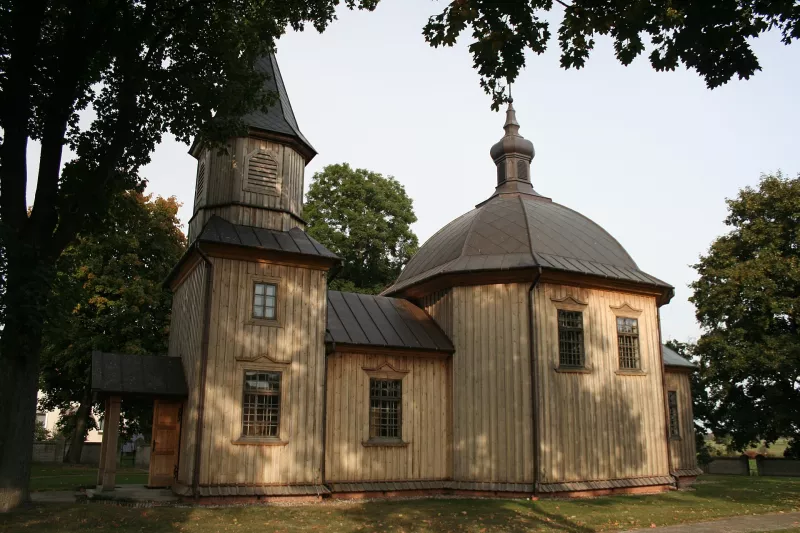
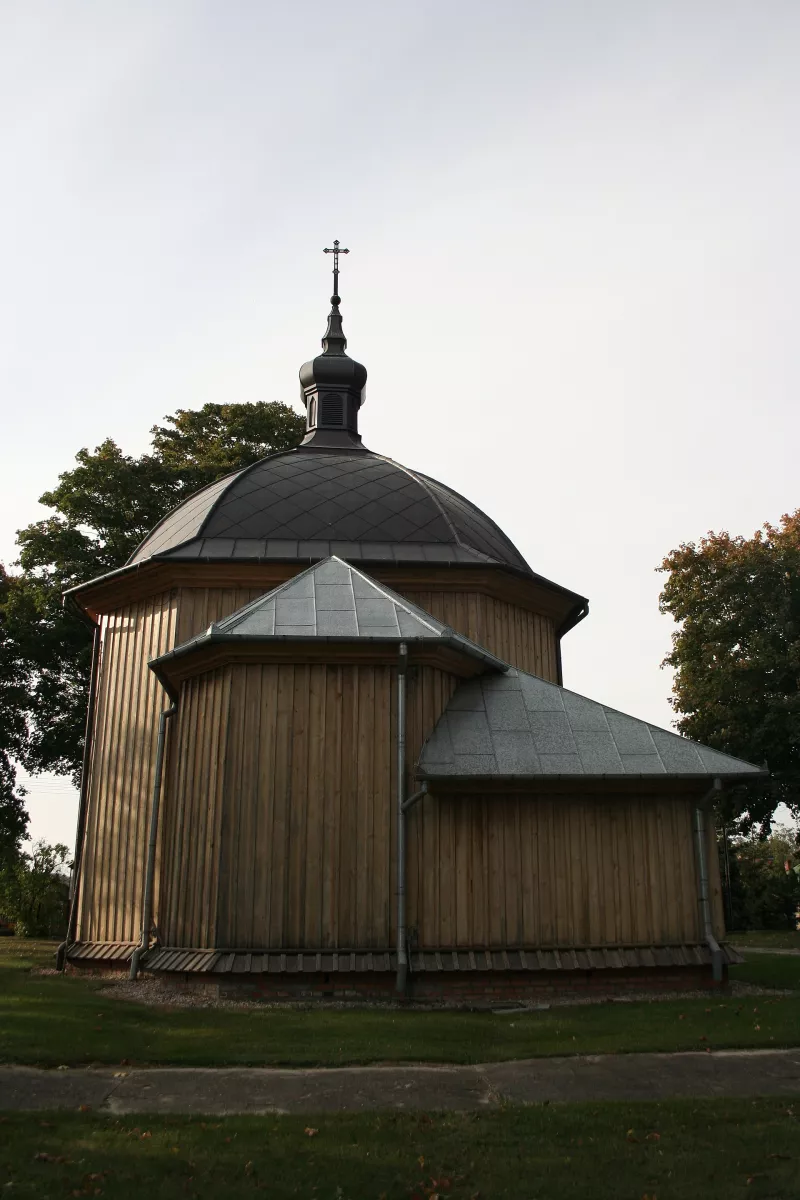
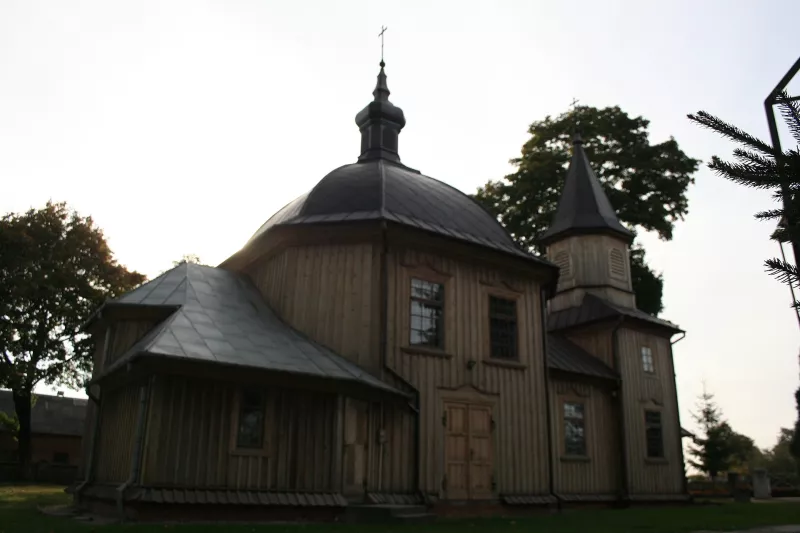

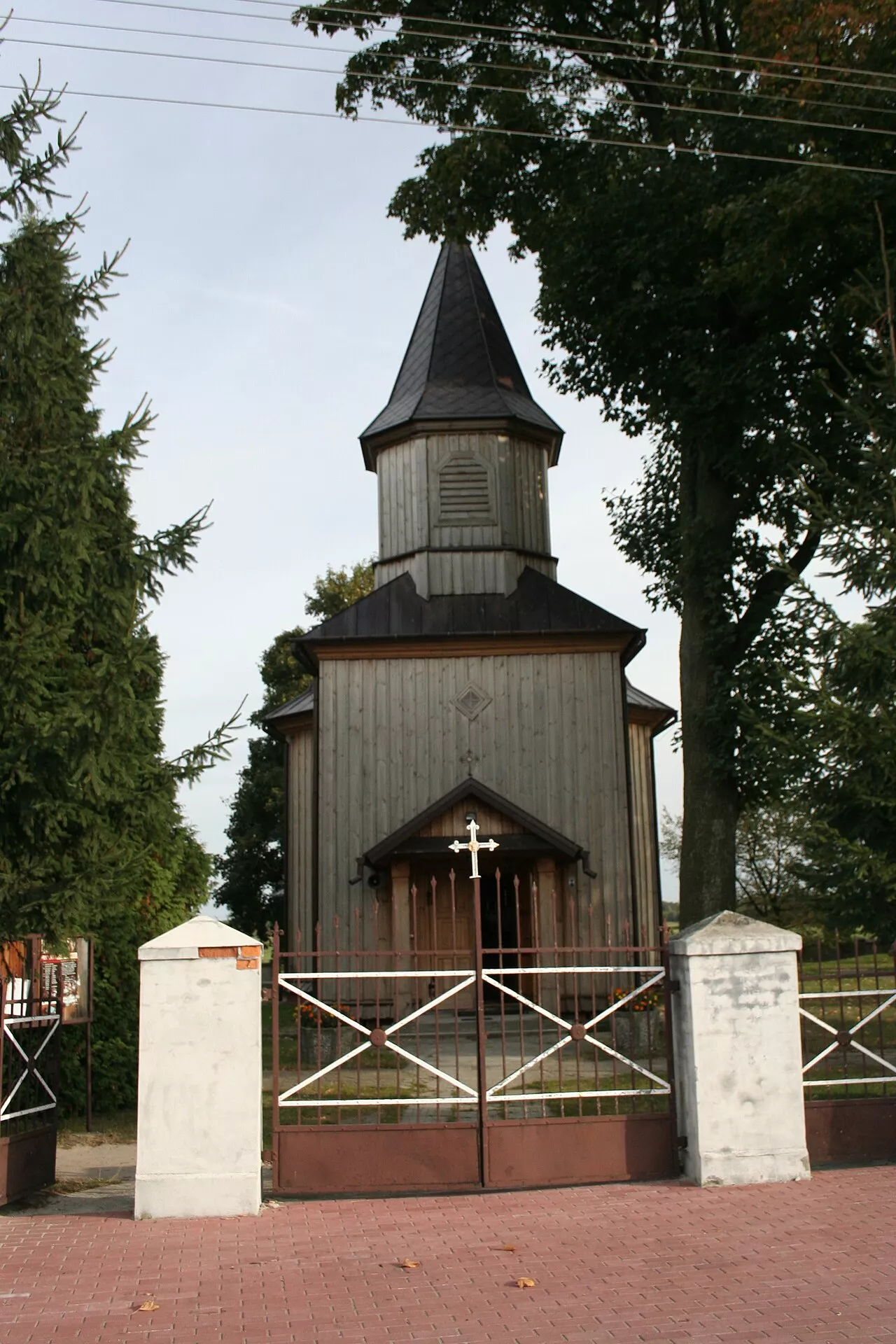
The Holy Trinity Church in Pashenky — a wooden temple in a small village of the Jabłoń commune, about 3 km east of Jabłoń and 18 km from Parczew. It was built as a Uniate church, probably in 1717, and over three centuries it has served as a Greek Catholic, Orthodox, and Roman Catholic church. Its most interesting feature is the octagonal nave under a false dome, rare for wooden churches in this region.
Three confessions of one church
In 1673, Pashenky belonged to the Lublin starost Mykola Andrzej Firlej, and the Firlej family are considered the founders of the church. At the end of the 18th century, the village lay in the Mielnik land of the Podlasie Voivodeship, at the junction of Podlasie and Polissia. The parish was Uniate until 1875, when after the liquidation of the Chełm Uniate Diocese, the church passed to the Orthodox parish. In 1890, the building was expanded: most likely, the current altar and the tower above the narthex were added then. In 1930, during the so-called revindication of churches, the church was transferred to the Catholic Church; the parish registers of the current parish have been kept since 1947. The parish includes Pashenky and the neighboring Pukhova Hura.
Octagonal nave
The oriented three-part log structure stands on a brick foundation. The nave is built on an octagonal plan and covered with a false eight-segment dome, with a four-sided pseudo-lantern rising above the nave’s roof. The altar section is lower and finished with three facets, the narthex has the same width, and a tower wider than the narthex stands in front of it. The ceilings in other parts of the church are flat. Outside, the building is surrounded by a profiled cornice, and under the eaves of the tower’s helmet is an arcade cornice. The church was entered into the register of monuments of the Lublin Voivodeship in 1966.
What has been preserved from the church
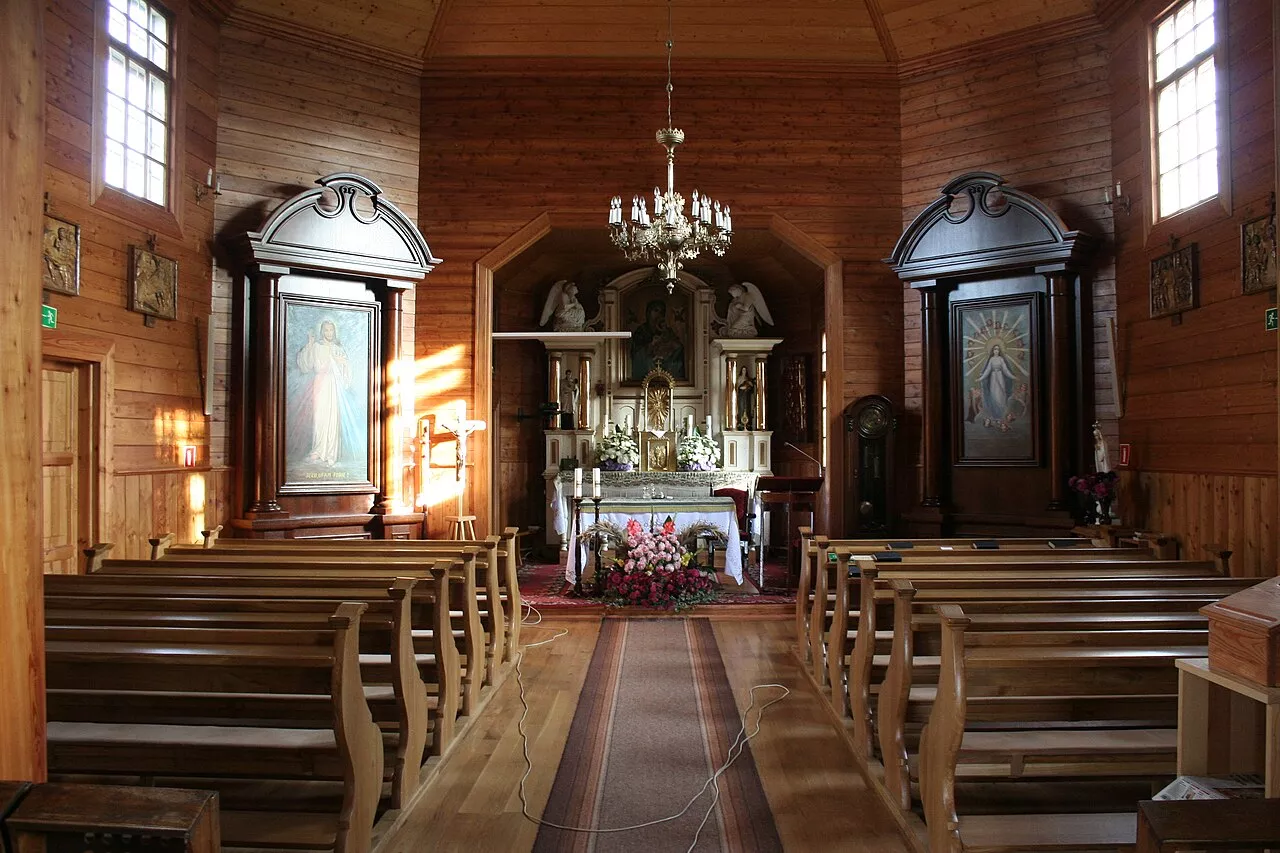
The oldest item inside is a Uniate icon of the Mother of God from the 17th–18th centuries, repeatedly copied; it probably comes from an iconostasis that has not survived. Younger items include a processional cross and four candlesticks from the 19th century, as well as a folk-carved figure of Christ from the same period. In Pashenky, there is also a cemetery of Soviet soldiers.
How to get there
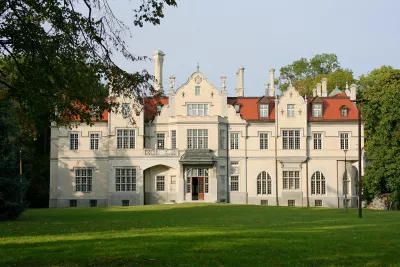
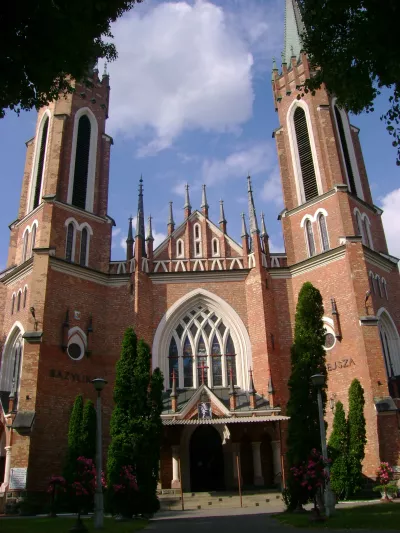
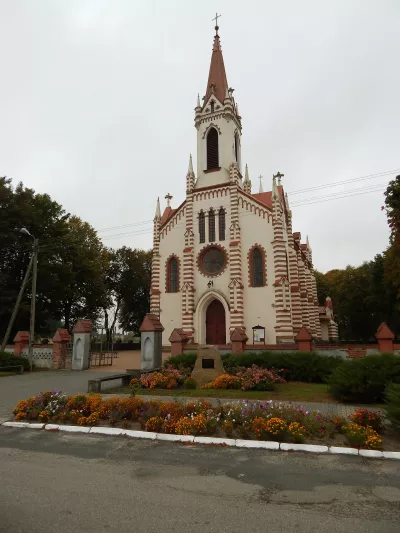
Pashenky lies about 3 km east of Jabłoń and 18 km northeast of Parczew, where buses run from Lublin; from there it is more convenient to continue by car or bicycle. The church is located in the village at number 82; the easiest way to get inside is before the Sunday service. In Jabłoń, it is worth seeing the neo-Gothic Zamoyski Palace, in the commune — the Lubieński Palace in Kołacze, and a few kilometers east — the red church in Podedwuje. A similar fate befell the former church in Łańsk near Hanna. This is Poland: Ukrainian citizens need a foreign passport.