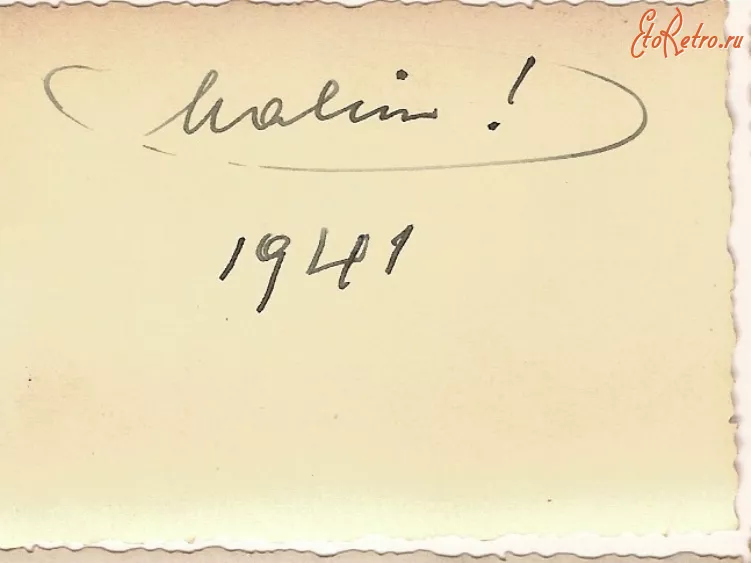
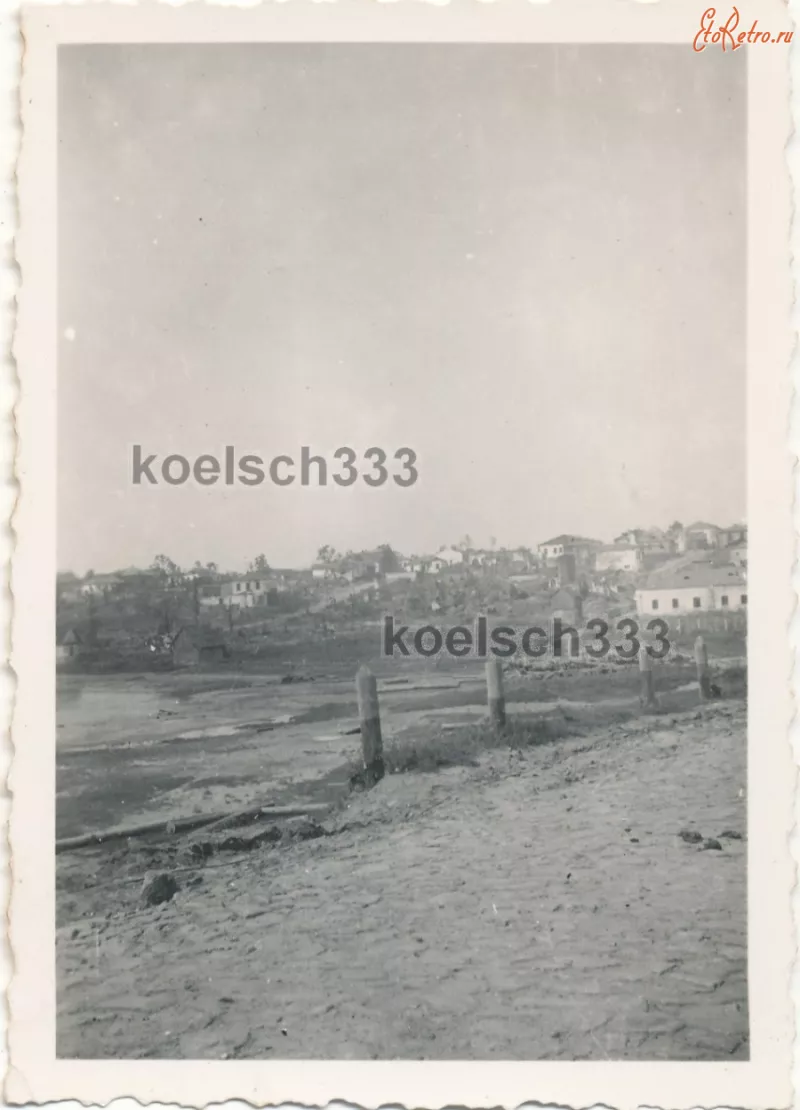
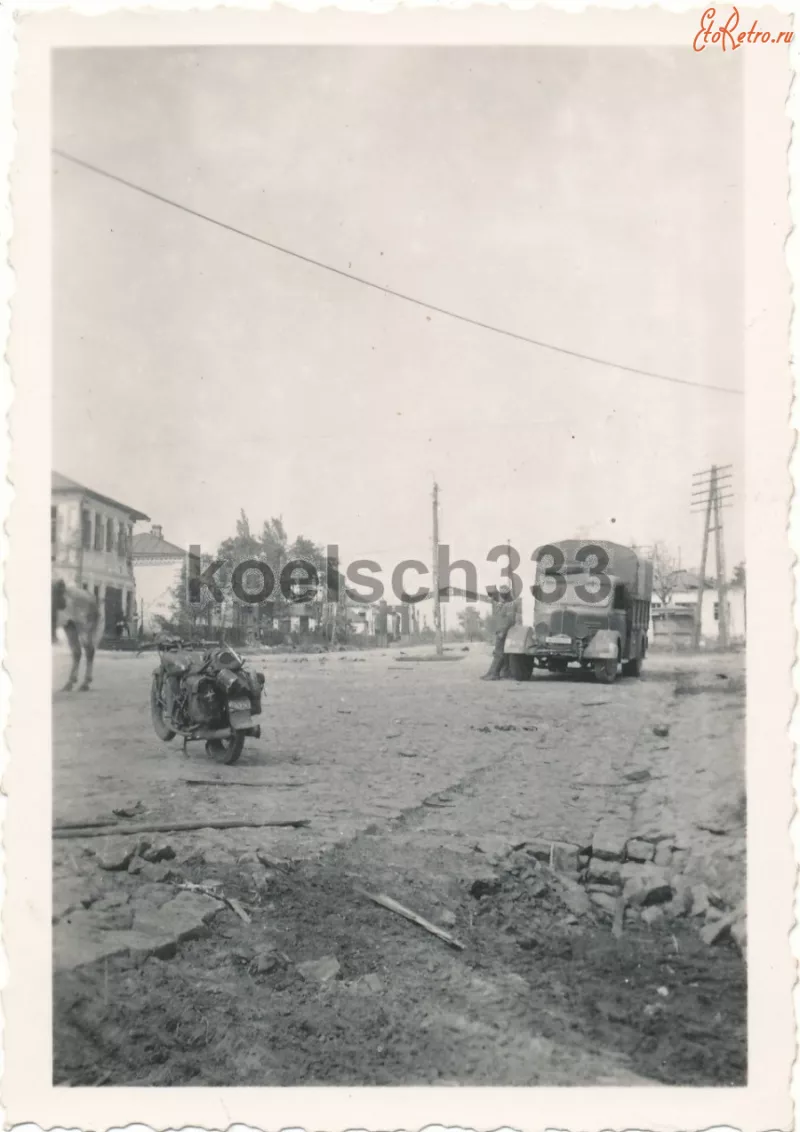
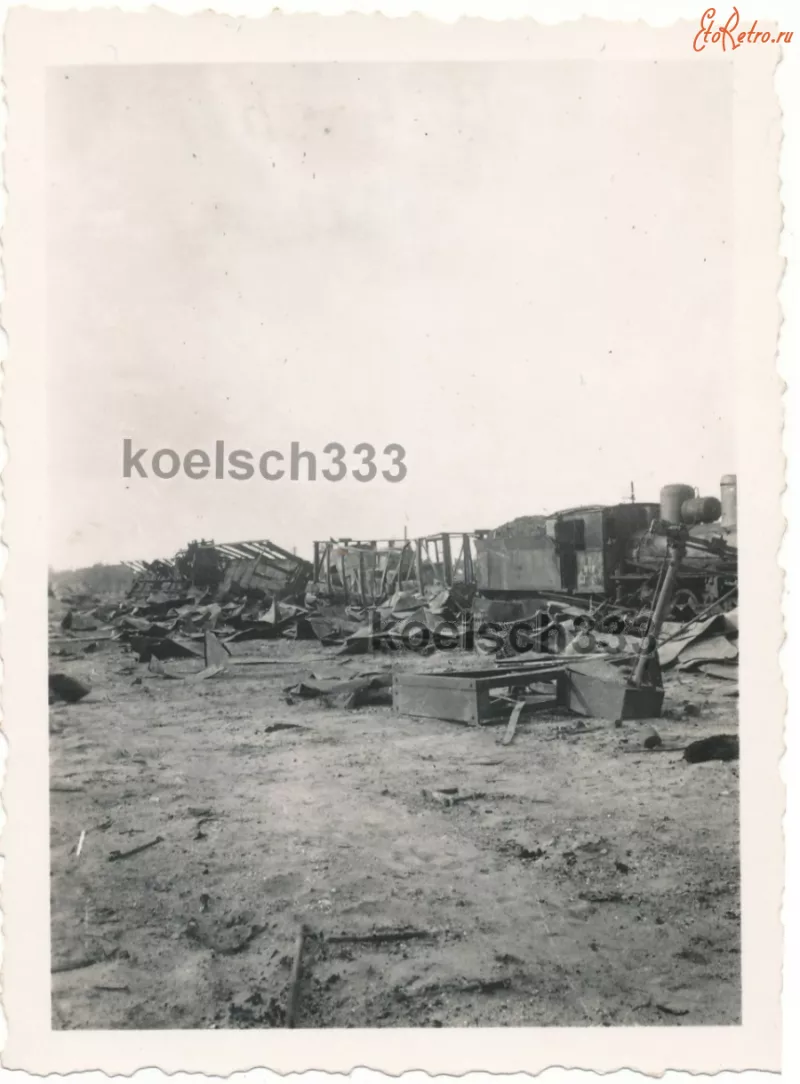
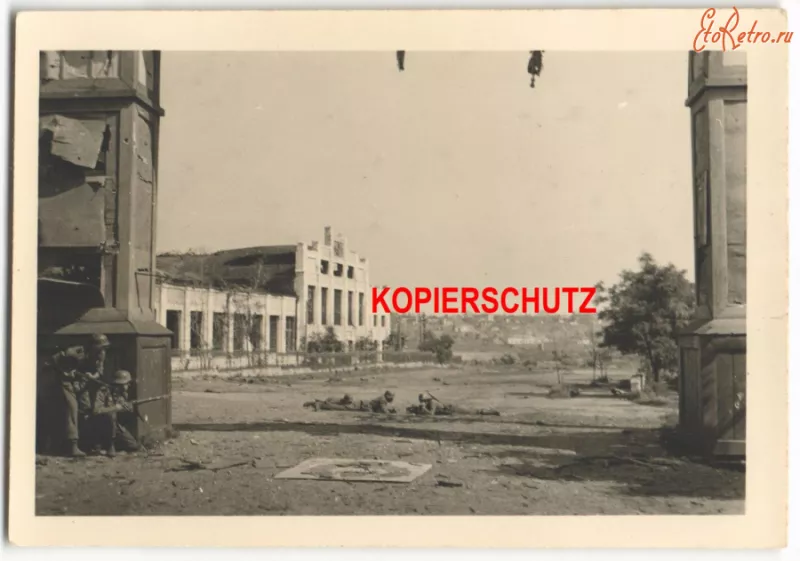
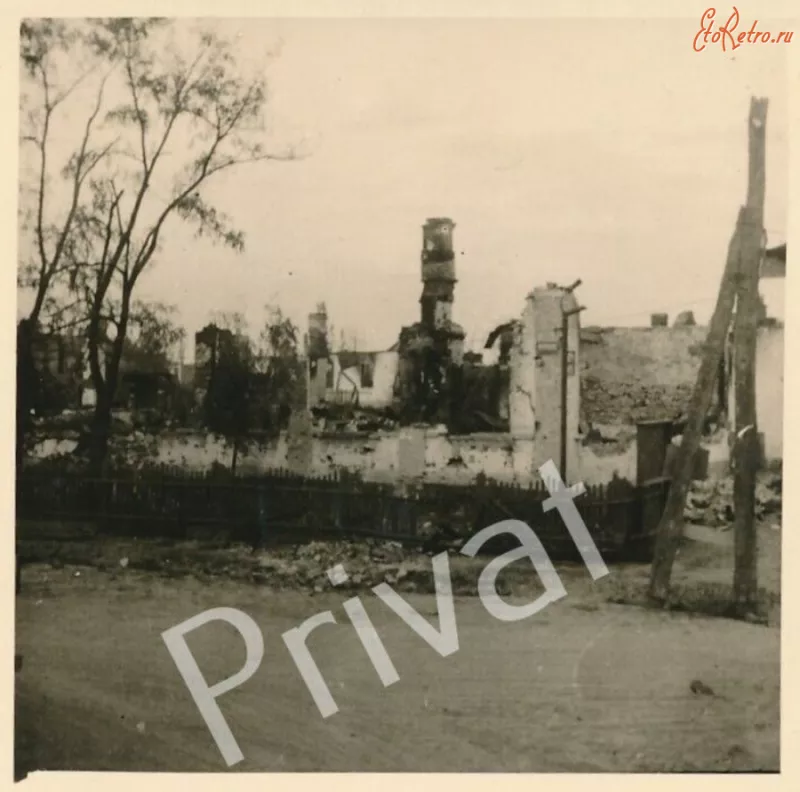
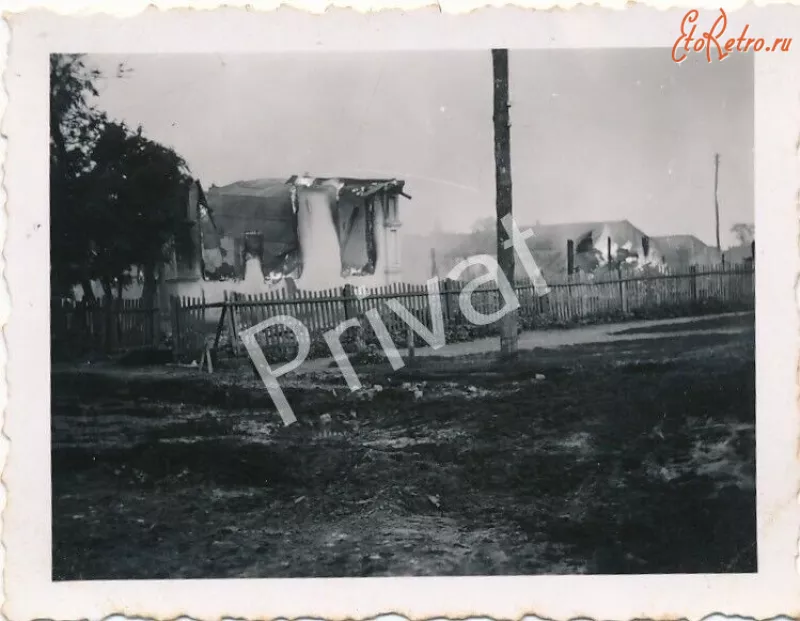
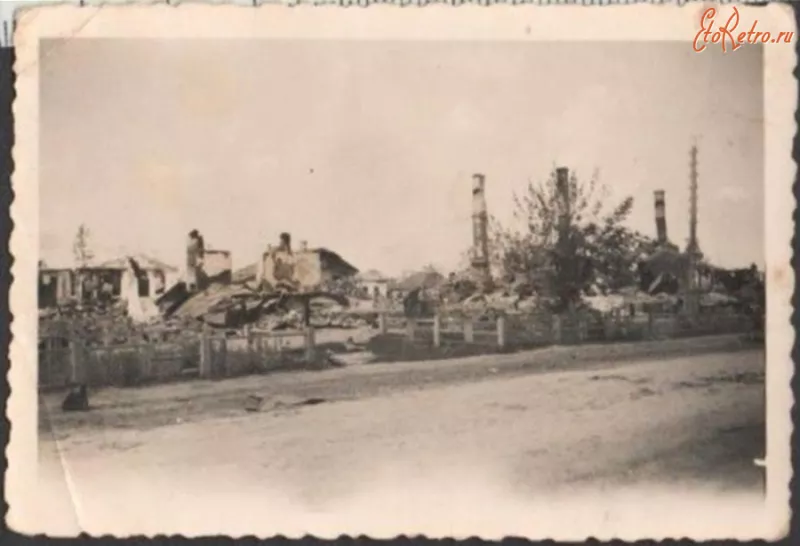
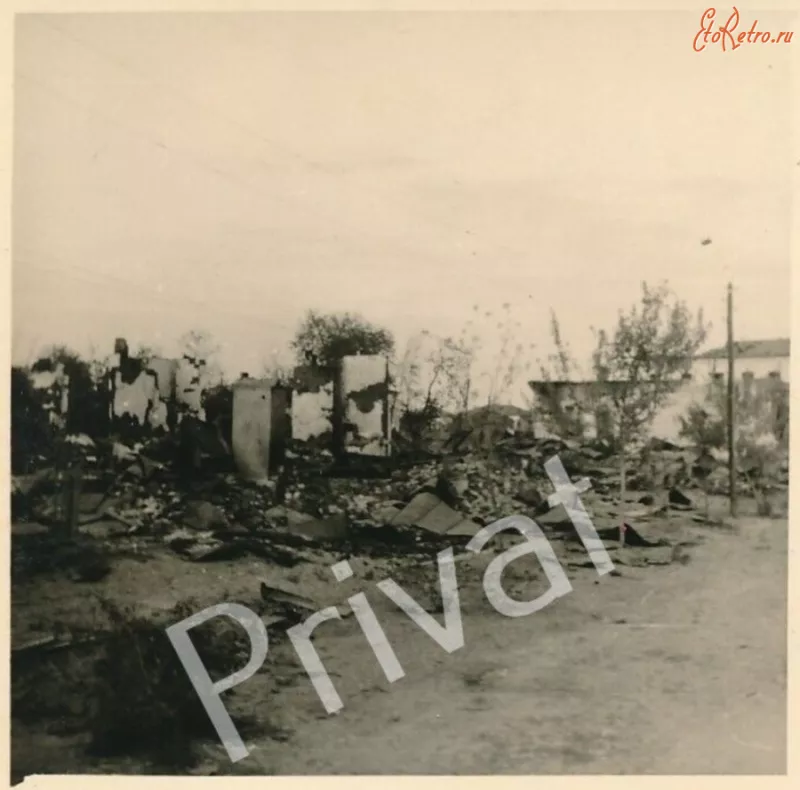
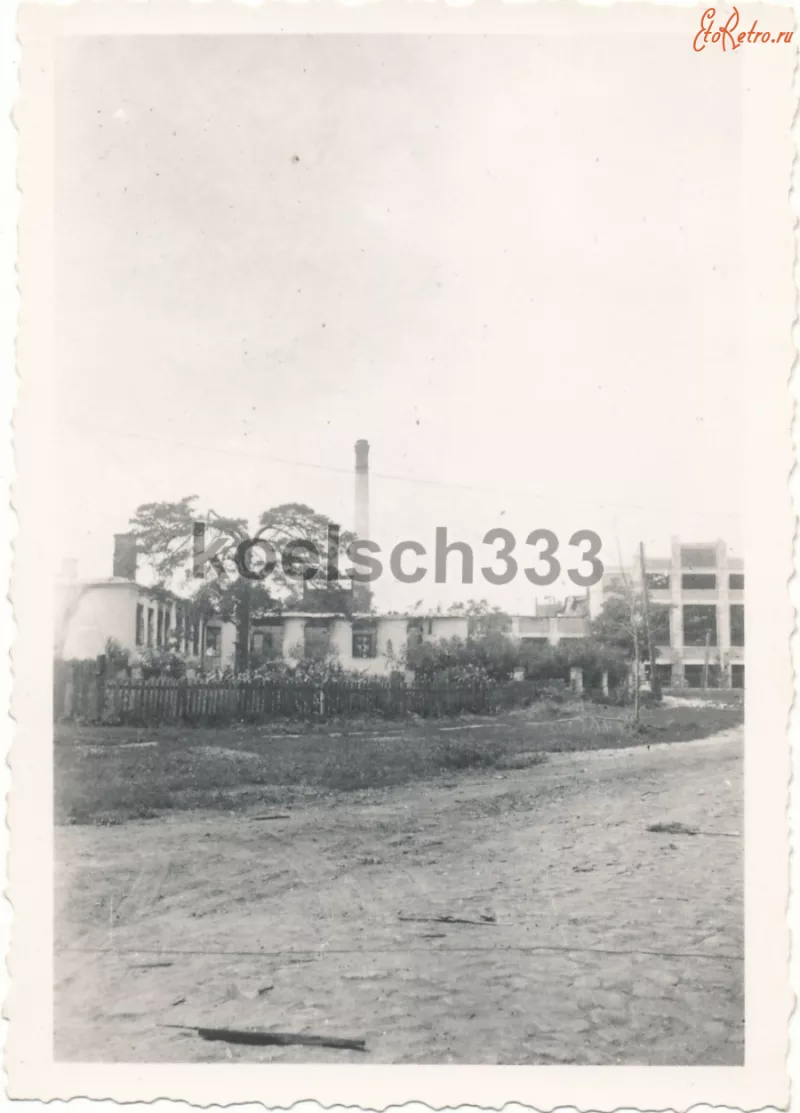
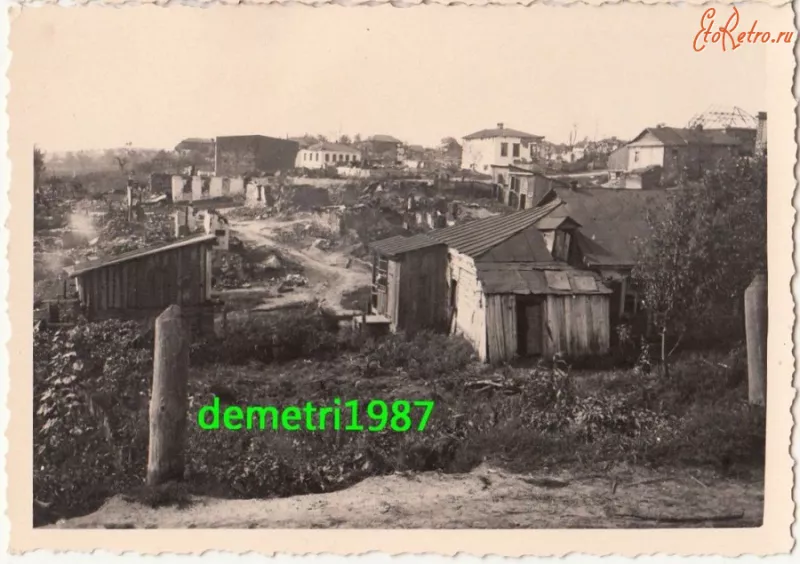
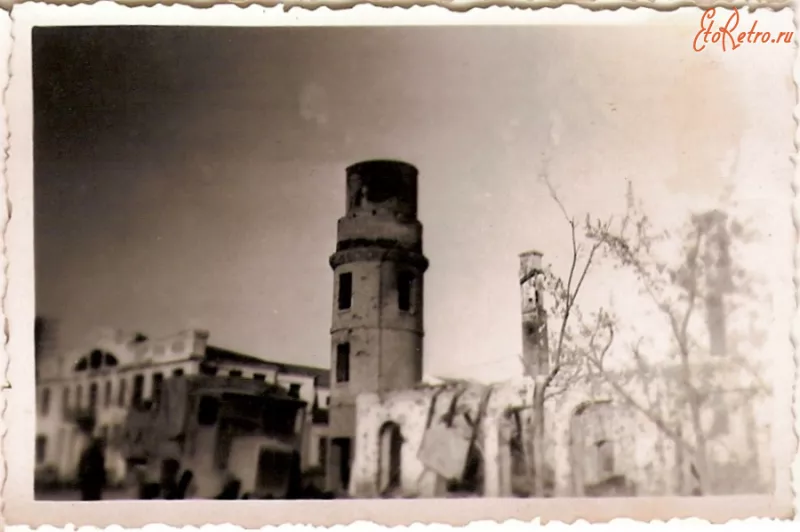

Two years and four months — that is how long the German occupation of Malyn lasted. The town, which in the summer of 1941 held its defense on the approaches to Kyiv for a full month, survived the battles for the railway station, fires, the occupation regime, the executions of underground fighters, and liberation in November 1943. This article is about how it all happened and about the photographs taken by German soldiers in the first weeks of the occupation. On the back of several of them, it is written in pencil: "Malin! 1941".
Battles for the town in the summer of 1941
Already at the beginning of July 1941, the frontline approached Malyn, and heavy defensive battles unfolded on the approaches to the town. Field enlistment offices hastily mobilized local men who had been given no training for war. Most of them perished in the very first days of the district's defense.
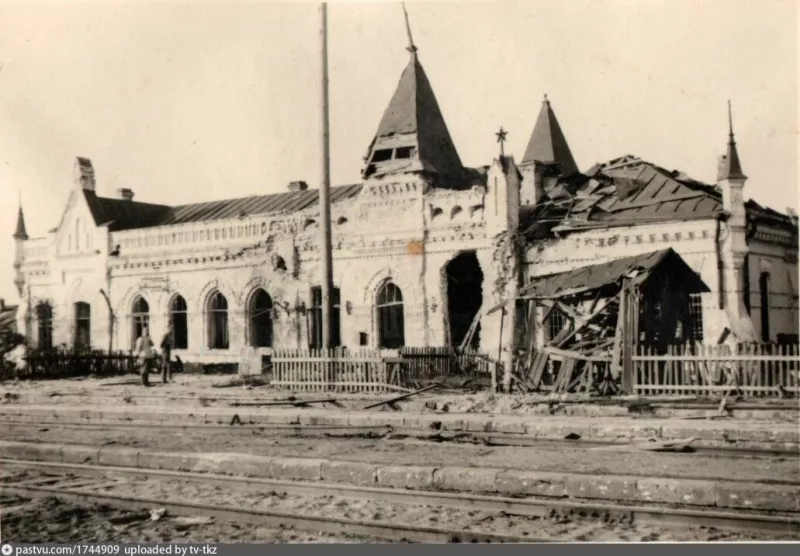
On July 15, battles directly for Malyn began. The fiercest fighting was for the railway station: it changed hands four times. The town was defended by the troops of the 5th Army under General Mykhailo Potapov, the 1st Antitank Artillery Brigade, the 32nd Railway Battalion, and the 215th Motorized Division. The defense lasted for about a month.
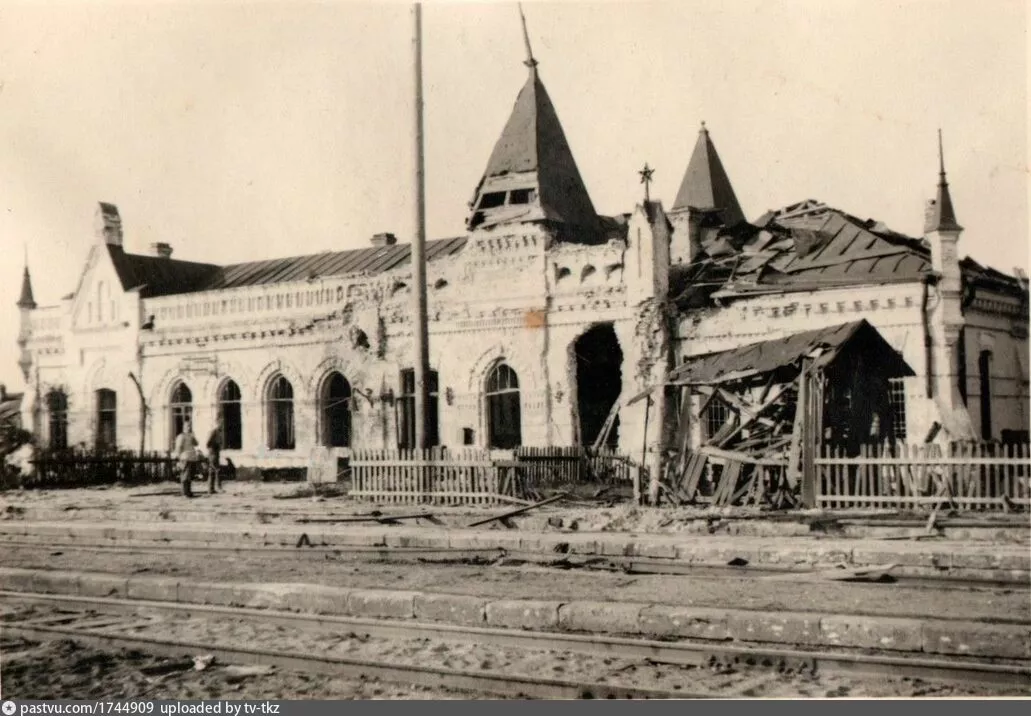
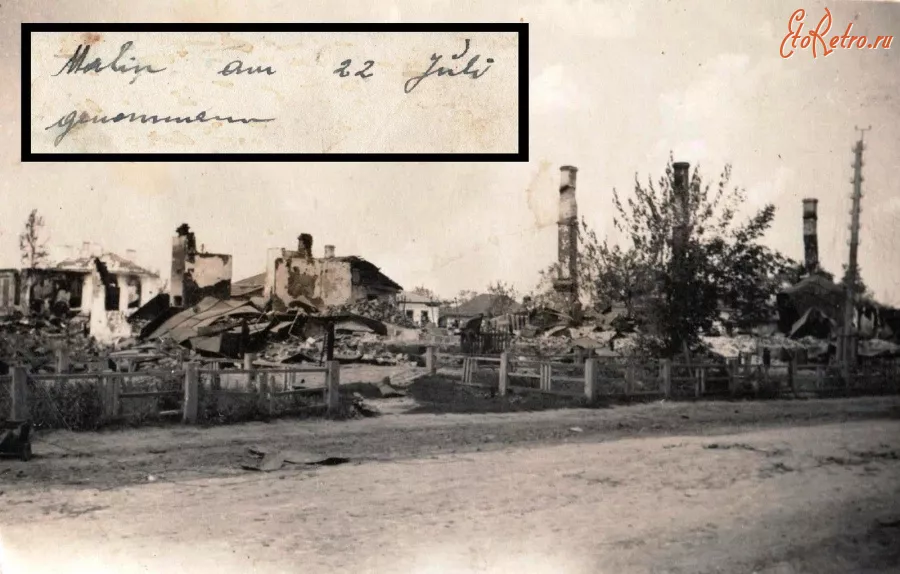
One of the German photographs is captioned: "Malin am 22 Juli genommen" — "Malin captured on July 22". But the battles around the town did not end there: the station and its surroundings were recaptured several more times until the frontline retreated eastward in mid-August.
Video: "Zhytomyr region, summer of 1941", Kinochronika Zhytomyra channel.
The town after the battles
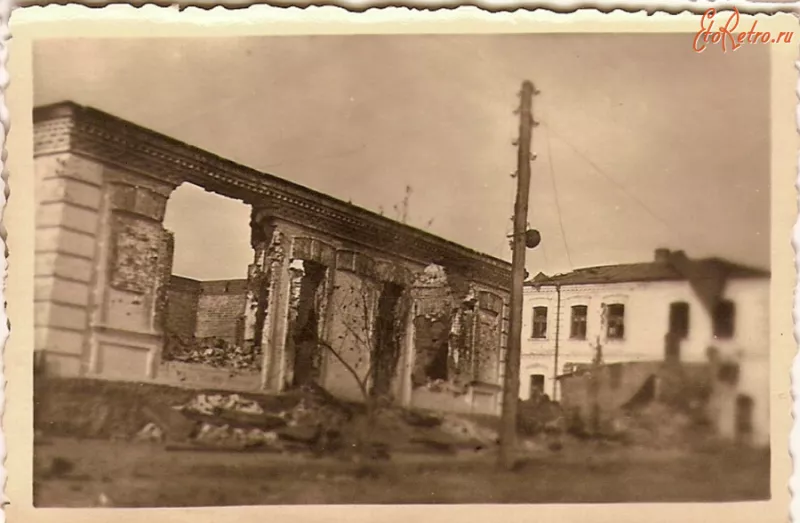
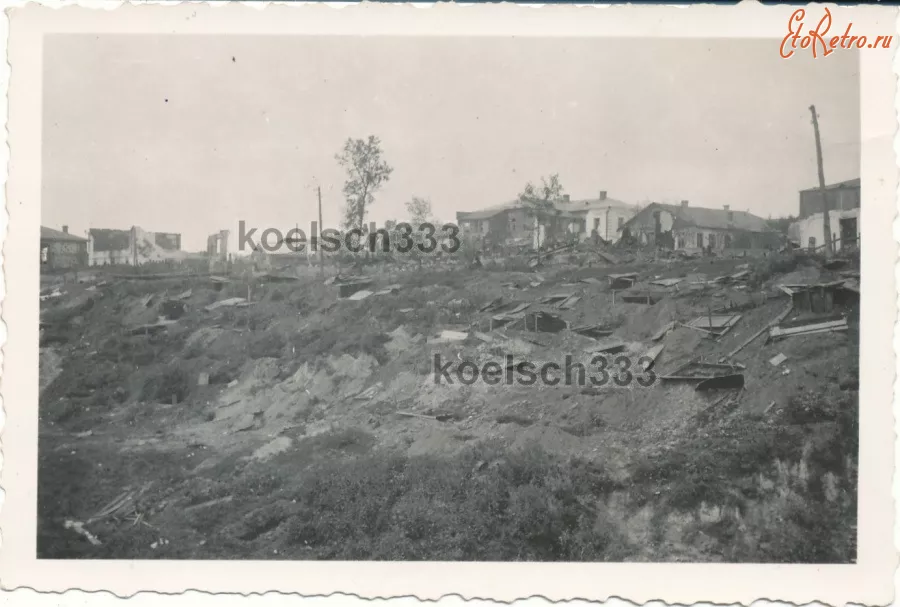
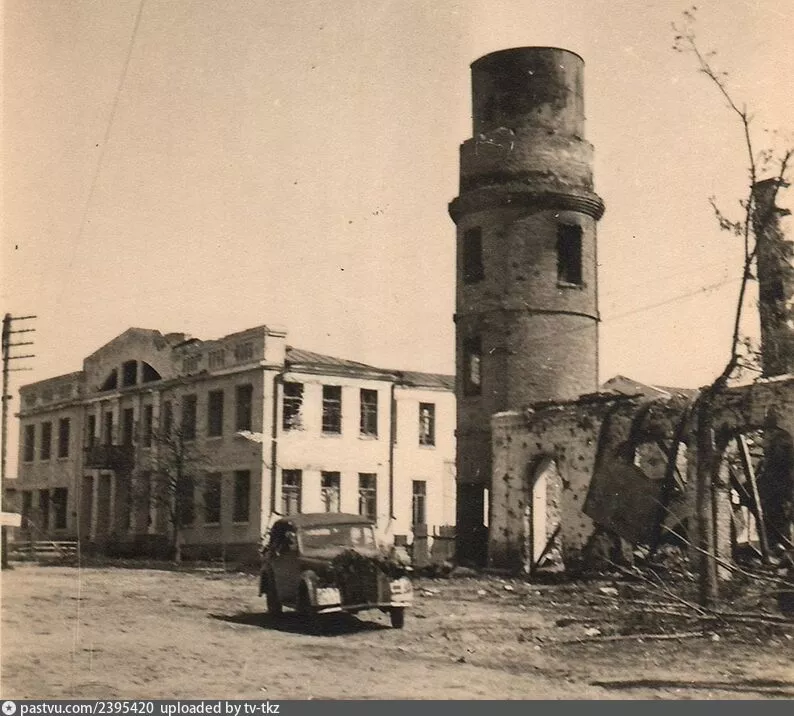
The German soldiers' photographs show Malyn as it was in the late summer of 1941: burned blocks where only chimneys remained of the houses, smashed shops, dead horses right on the paving stones, a semi-ruined water tower. At the station, there are crushed carriages and a wrecked steam locomotive, and the station building itself stands with a collapsed roof.
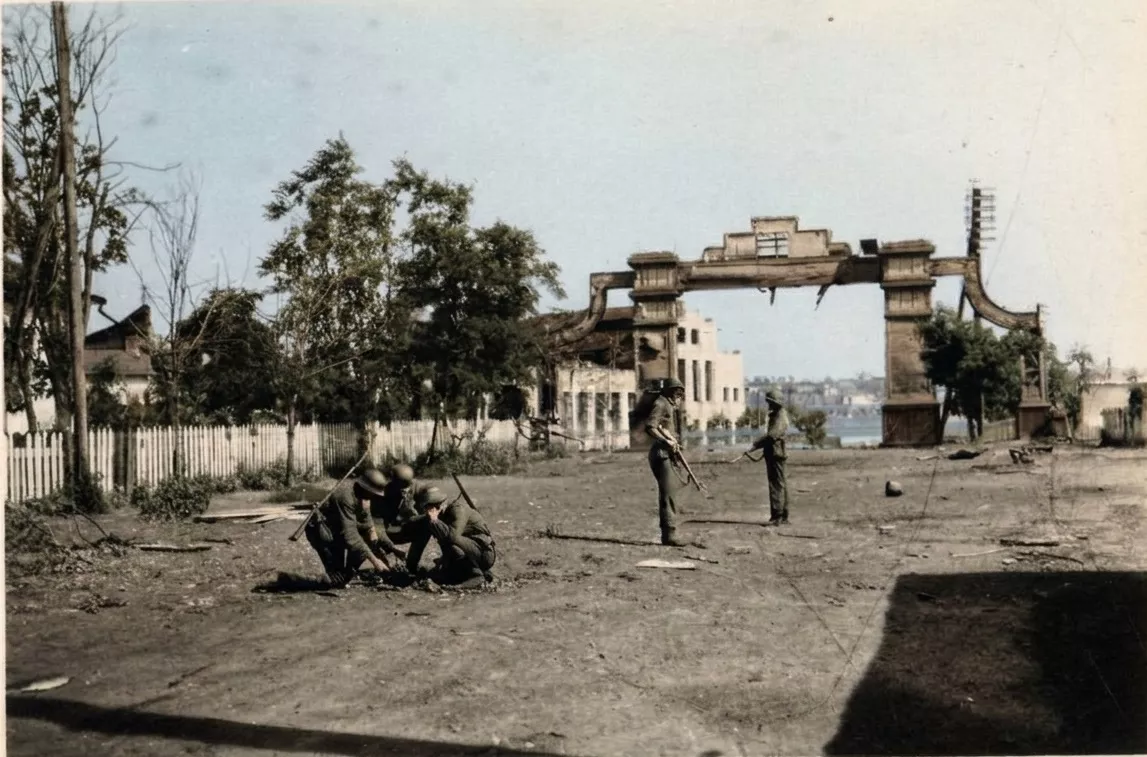
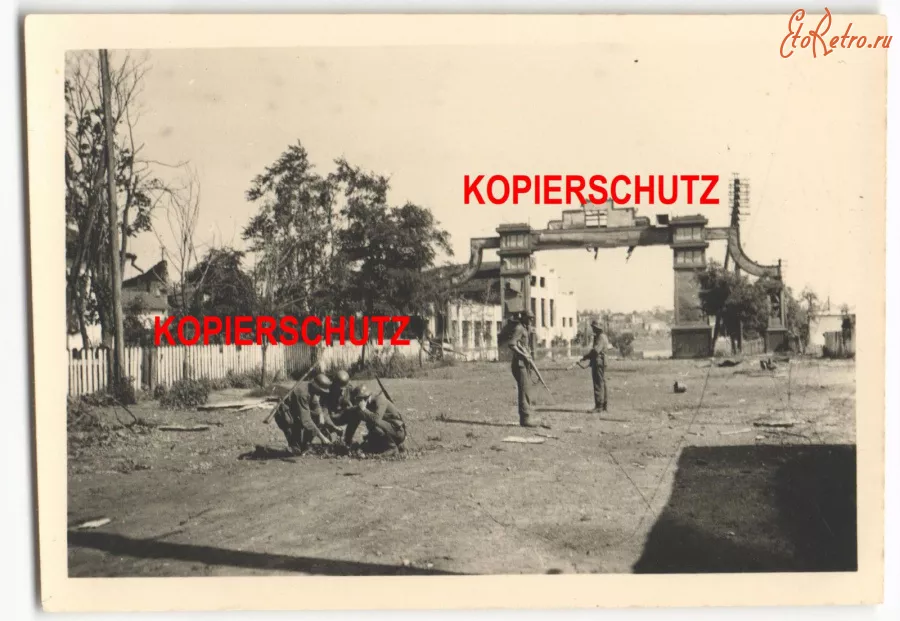
German soldiers clearing mines on the access road to the paper mill
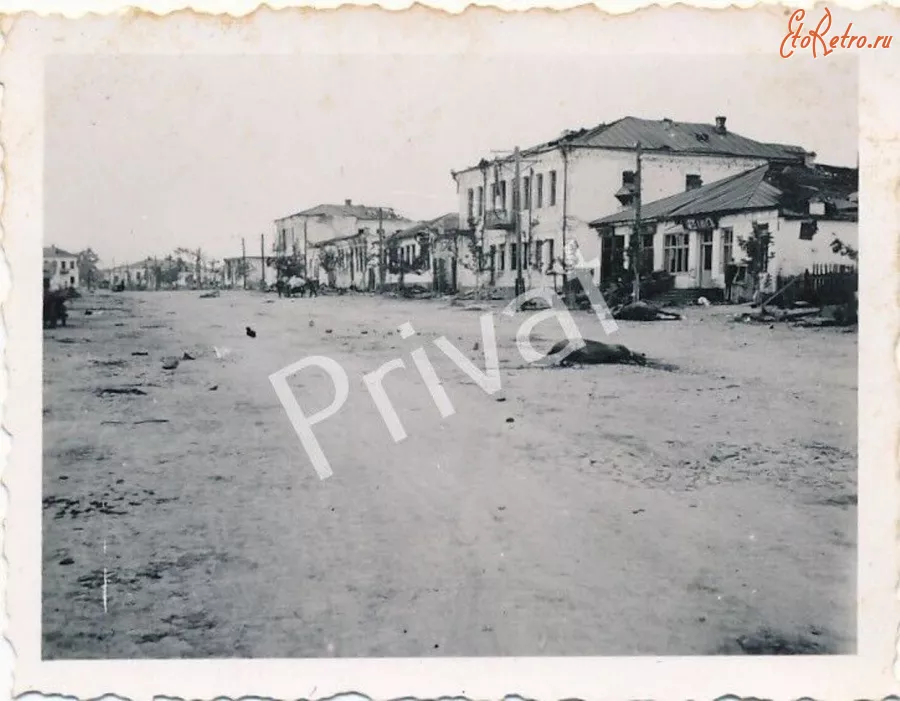
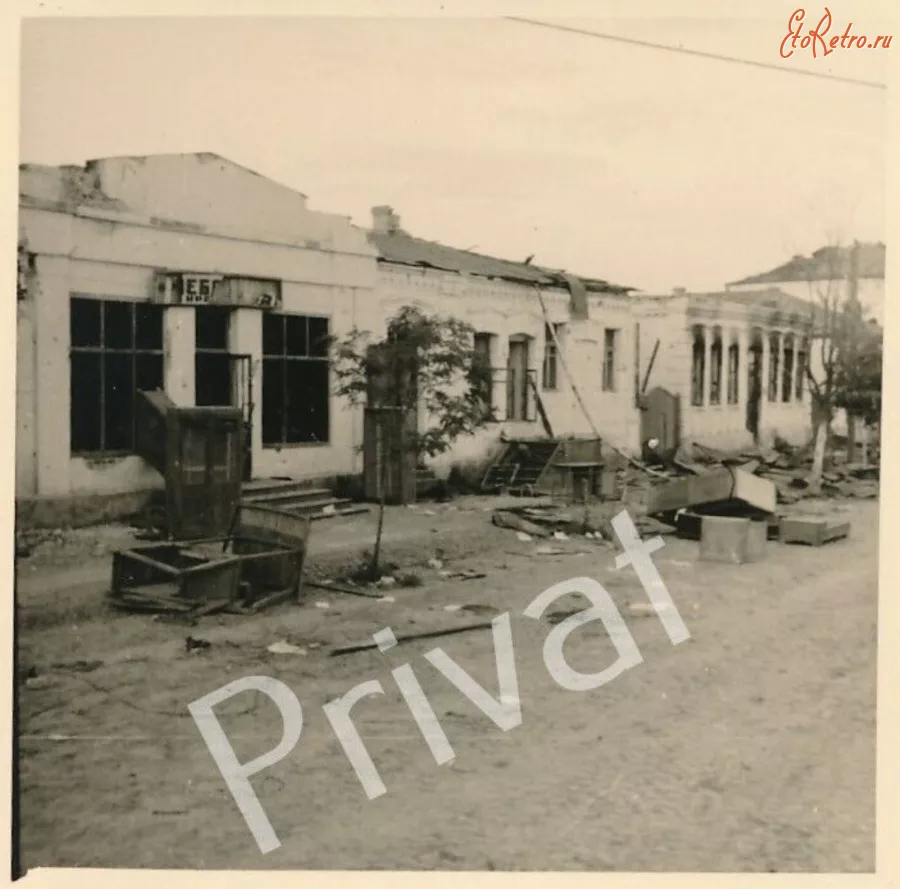
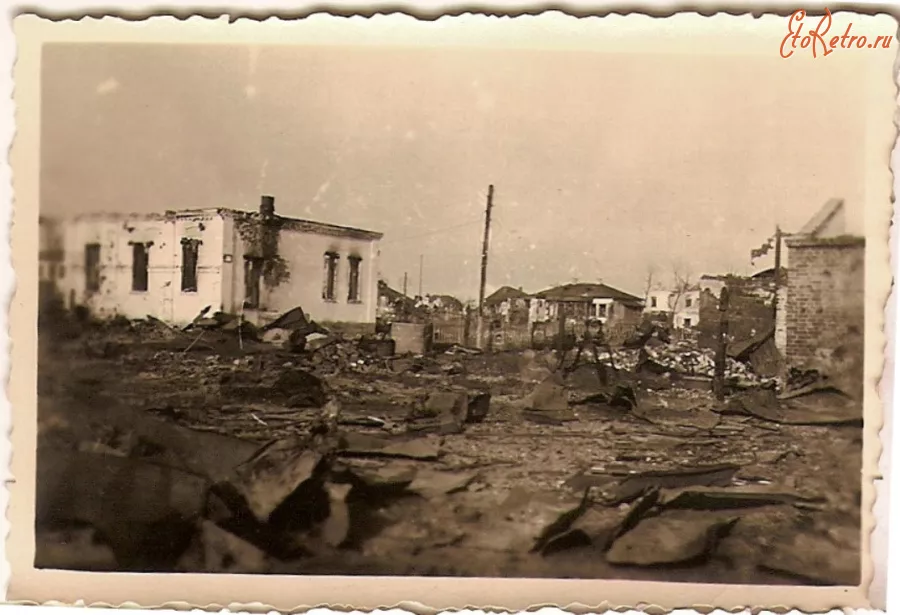
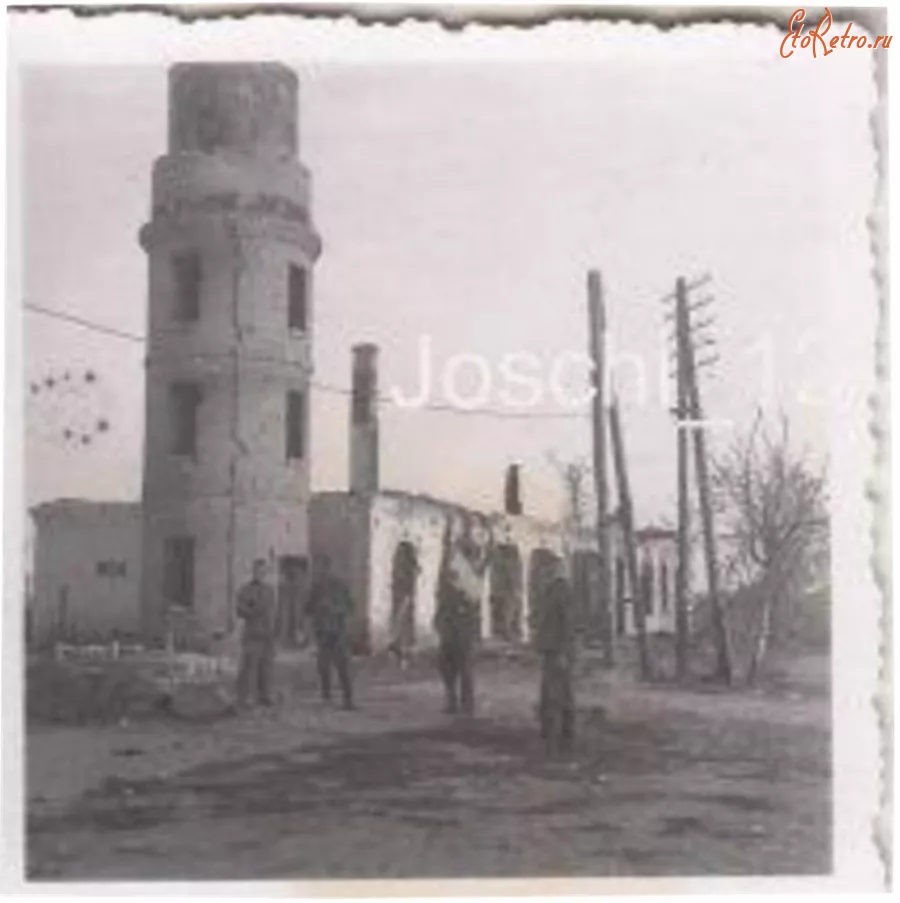
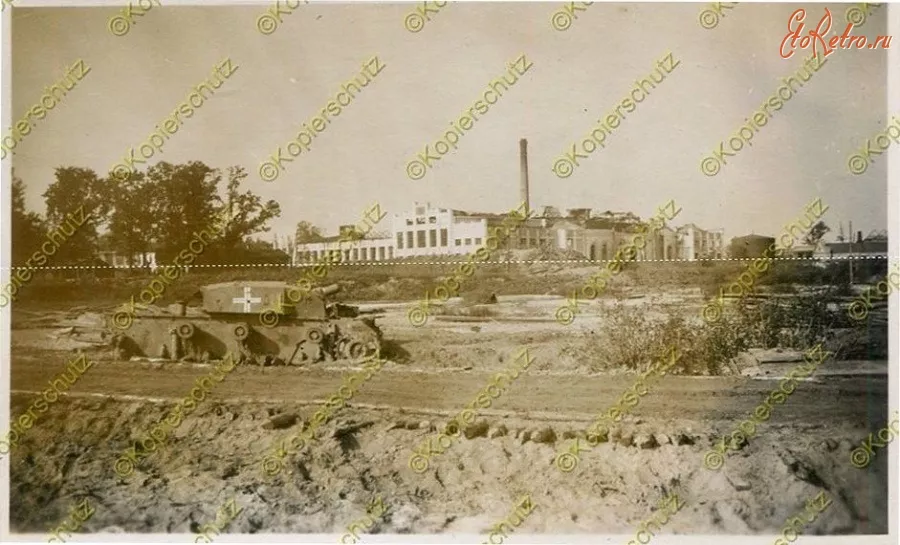
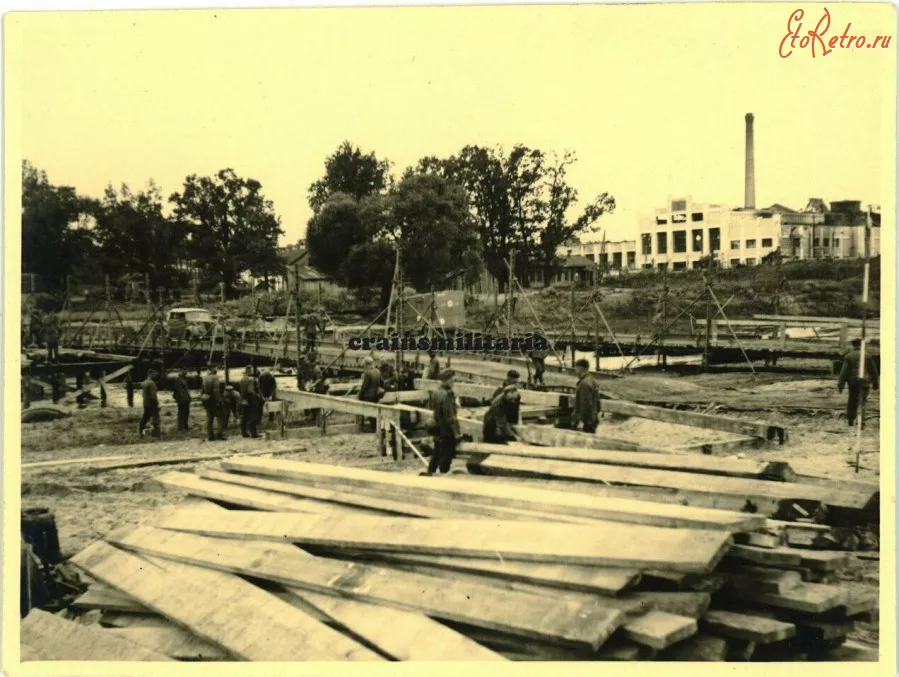
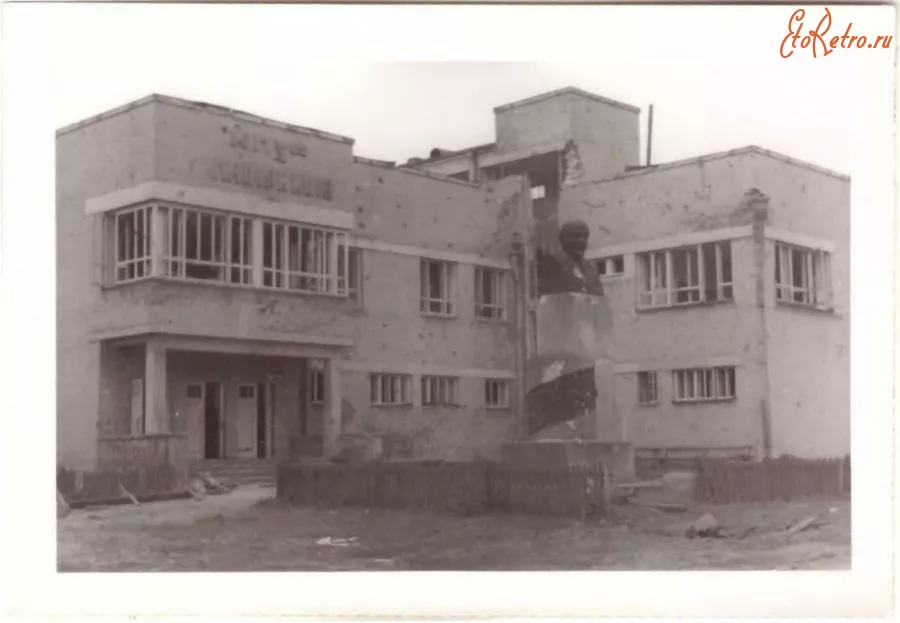
Near the paper mill — the town's main enterprise — a knocked-out tank remained, while German combat engineers were building a wooden bridge to replace the destroyed one. The bullet-riddled building of the Paper Mill Workers' Club, featuring a bust of Lenin in front of the entrance, became one of the most famous photographs of occupied Malyn.
Occupation Regime
Advance German units entered Malyn on July 22, 1941 — exactly one month after the outbreak of the war. An occupation administration was established in the town. As partisan activity grew, the regime became increasingly severe, marked by roundups, arrests, and executions of hostages. Local youth were deported to Germany for forced labor.
The Holocaust in Malyn
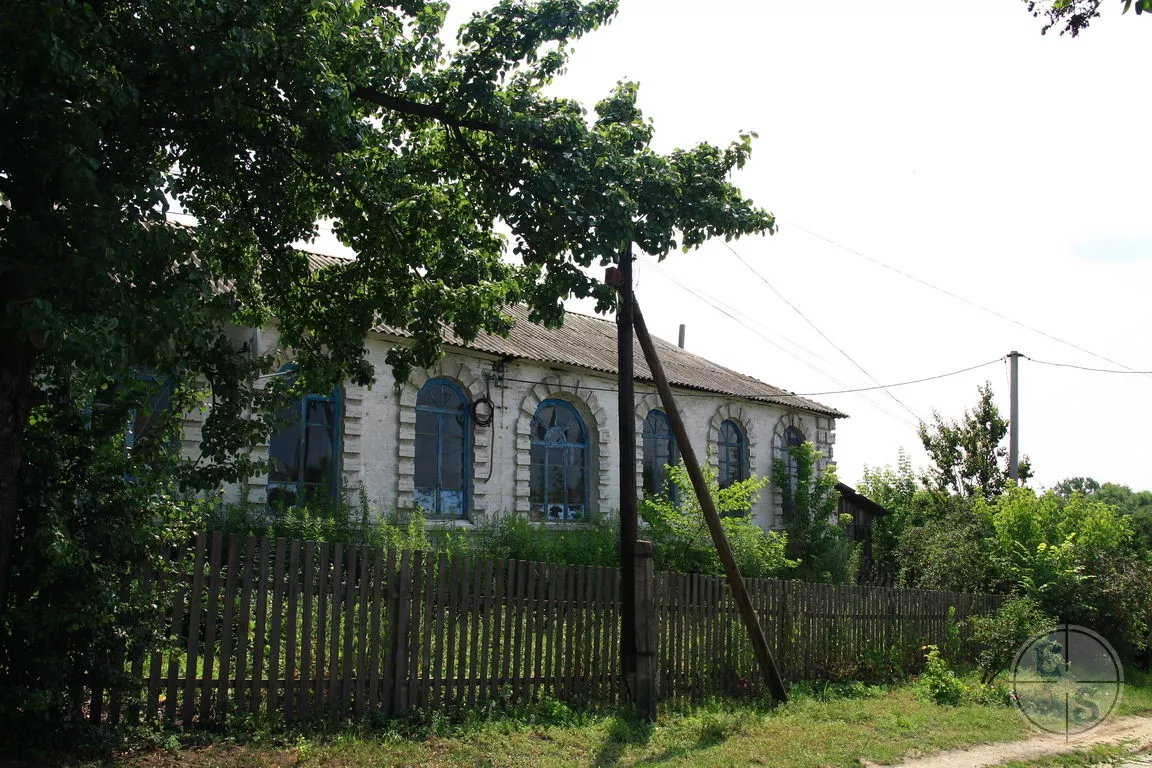
Malyn had long been a Jewish town: a synagogue and a Jewish school stood here, three Jewish cemeteries operated, and fairs on the central square gathered the entire surrounding countryside. Before the war, about ten thousand people lived in the town. According to historian Volodymyr Studinskyi's estimate, almost half of them were Jews; according to the 1939 census, there were 3,607 individuals, or about a third of the population.
Even in the first days of the war, market prices skyrocketed, and within a few weeks it was no longer possible to buy a healthy horse or a working cart: people were preparing for evacuation. Some Jewish families managed to leave by train to Kyiv and further on to Kharkiv, while others set off in carts through Bazar and Narodychi to Chernihiv, leaving behind or burying their belongings at home to retrieve them after returning. But many people, especially the elderly, remained: they remembered the restrained behavior of the German army in 1918 and did not believe it would be any different.
The first killings began immediately after the arrival of the Germans. According to the organisation Yahad-In Unum, which records eyewitness testimonies, a dozen German soldiers led the Jews and Communists hiding in the basement of the Jewish school outside and shot them right behind the building; the bodies were thrown into drainage ditches.
The executions were prepared according to a well-rehearsed scheme. First, all residents were registered through mandatory enrollment. Then announcements were posted or broadcast via a car loudspeaker ordering people to gather with several days' worth of food and warm clothing. In Malyn, the assembly point was the grounds of the furniture factory, while the execution site was Shcherbiv Yar between the town and the railway station.
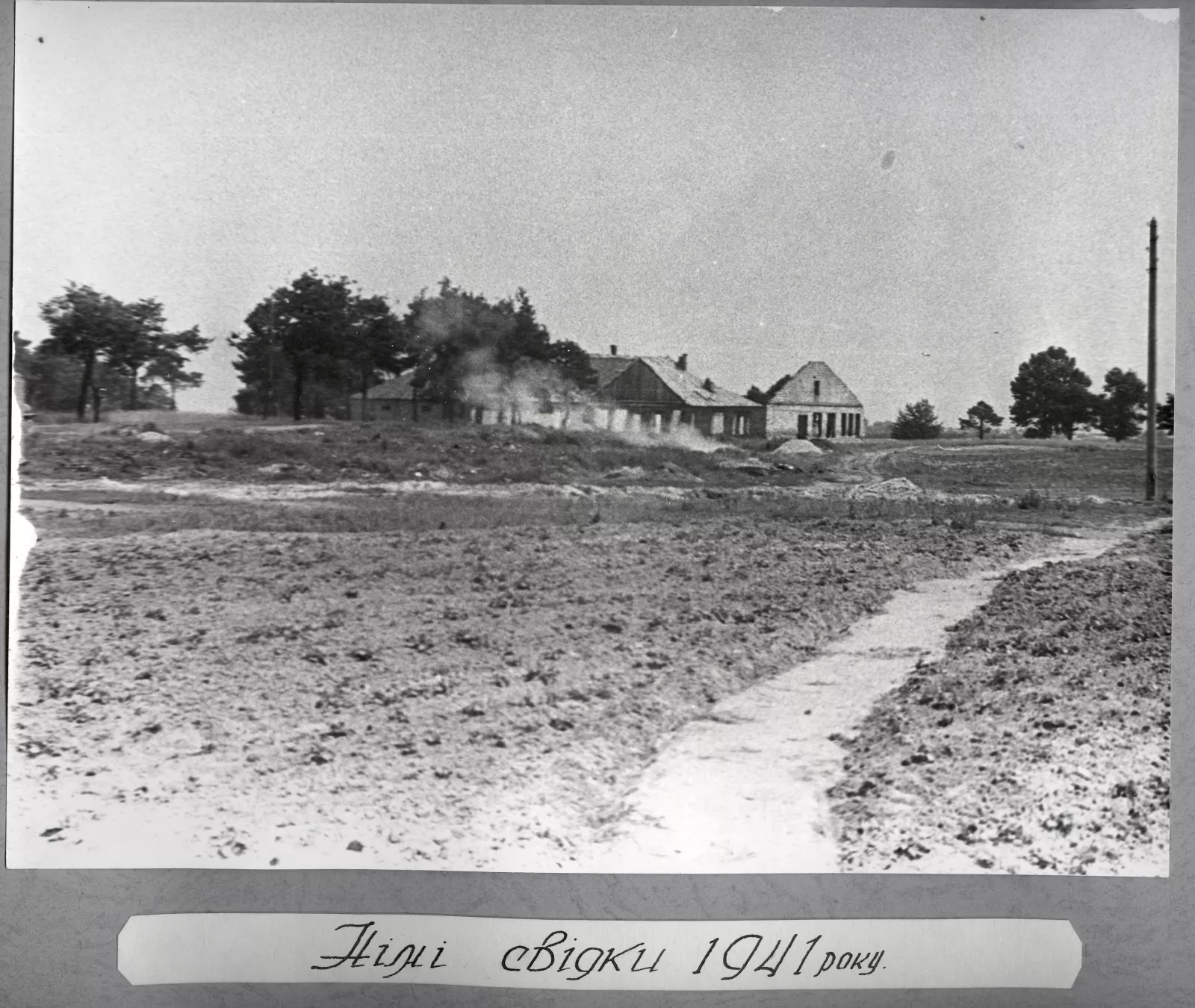
The Sovinformburo reported the first mass execution in occupied Malyn: the Germans arrested 120 people, including 30 women with children, held them at the furniture factory for several days, after which the adults were shot and the children buried alive. Historians write that this referred either to the Jews of Malyn or to a Roma camp that the Nazis completely destroyed.
The largest execution took place in August 1941. People were told they were being resettled, so they brought their belongings and clothing. Tetiana S., who was ten years old at the time, saw the execution while going to gather grass: the people were lined up in a row, shots rang out — and they fell. A large group of victims was forced to dig pits first. The best clothes and valuables were taken, and the remaining items were scattered around.
Data on the mass executions of Jews vary both in dates and in the number of victims. The Yad Vashem Holocaust Memorial Center writes that most of the Jews of Malyn were killed during several actions in August and September 1941, while Soviet reports cited between 670 and 1,000 dead, buried in five mass graves in the area of Shcherbiv Yar. According to the materials of the exhibition “The Holocaust by Bullets: Mass Shootings of Jews in Ukraine 1941–1944” (Kyiv, 2011), 670 Jews were shot in Shcherbiv Yar on August 23, 1941. According to official statistics, 1,113 people were shot in Malyn during the years of occupation. This page of the town's history is still little researched and requires work with archives and eyewitness accounts.
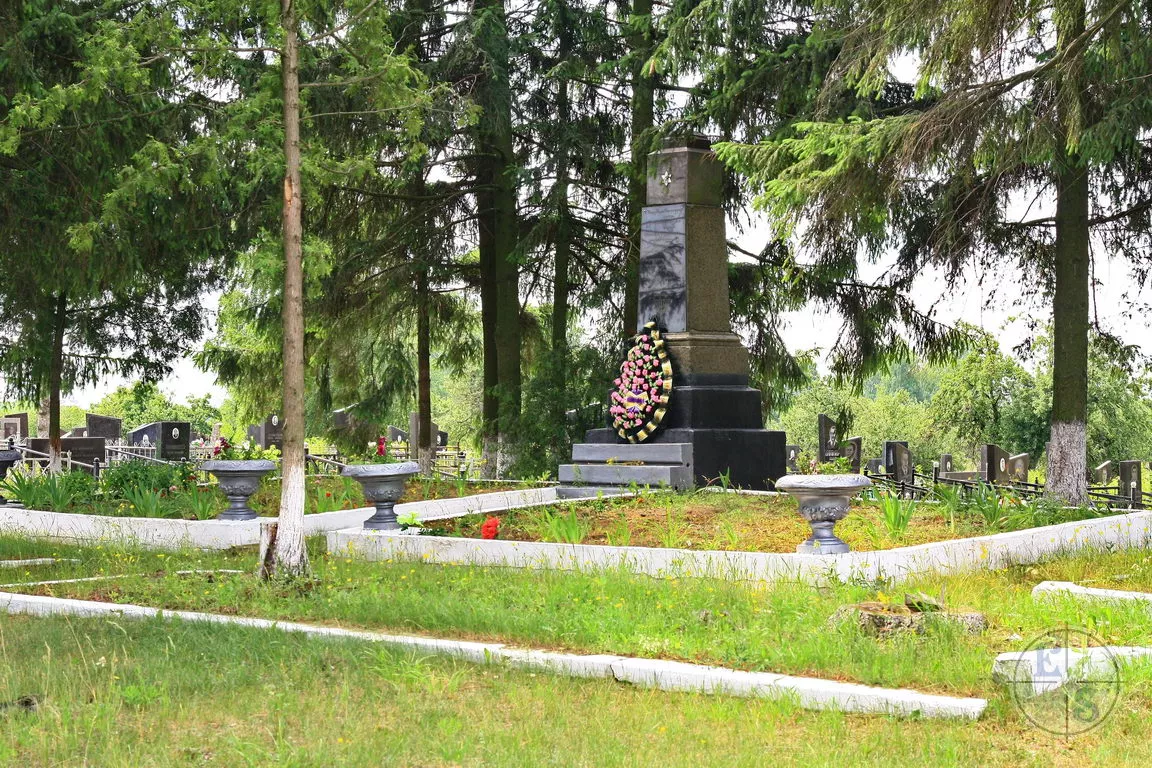
A small monument to the victims was once erected in Shcherbiv Yar. In the second half of the 1960s, the remains of the executed were reburied at the new Jewish cemetery, where this modest obelisk was also moved — it stands there to this day. For more details, see the article by historian Volodymyr Studinskyi “The Holocaust in Malyn: August–September 1941”.
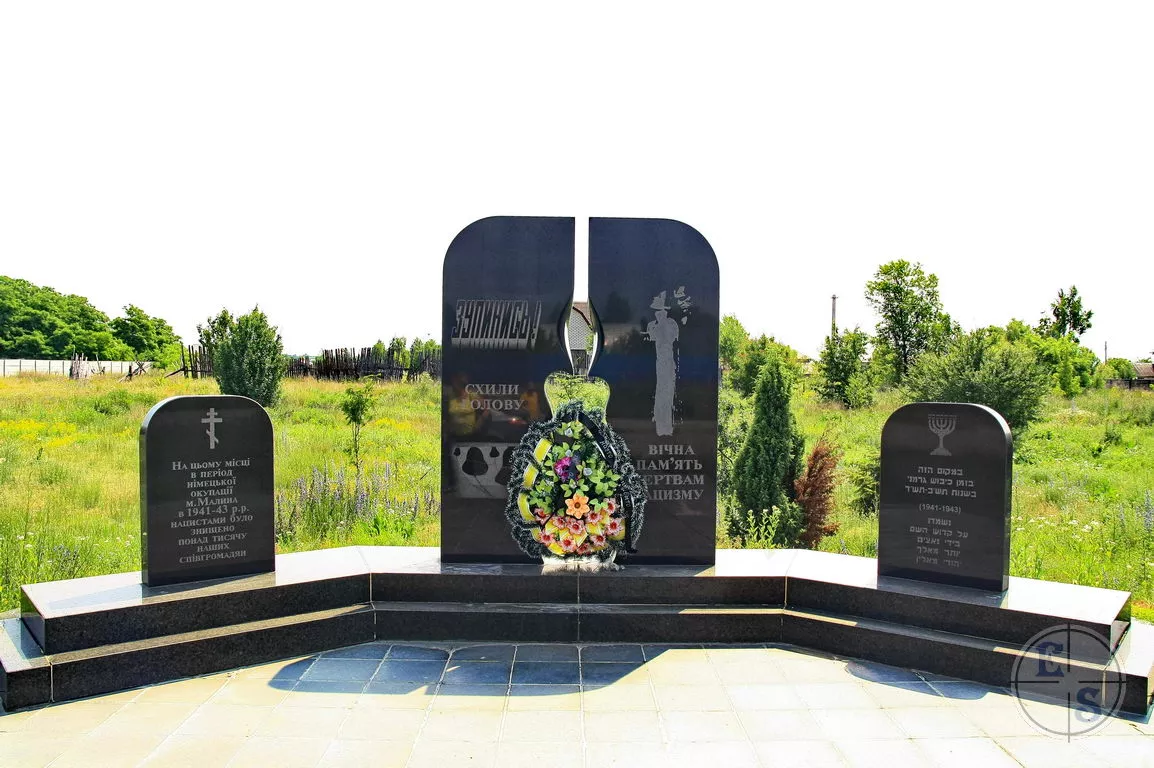
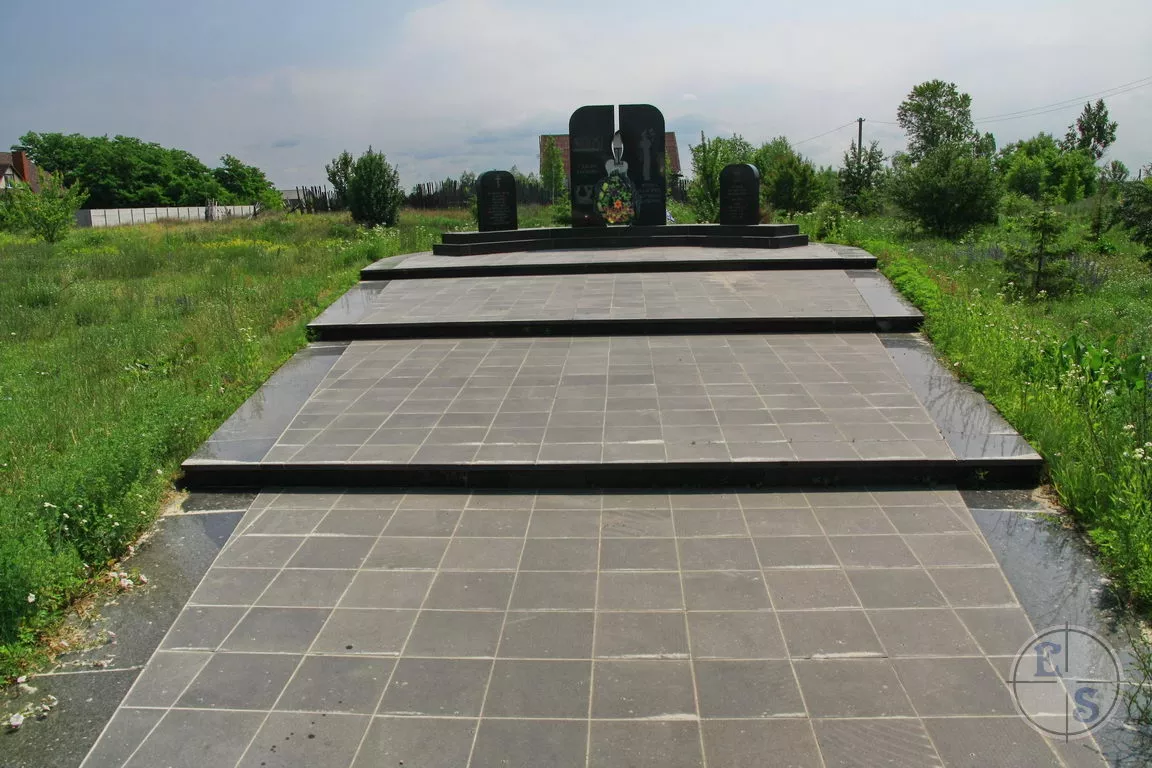
Today, at the execution site on Mashynobudivnykiv Street, stands a granite memorial reading “Stop! Bow your head” with inscriptions in Ukrainian and Hebrew. The building of the former synagogue has also been preserved.
Partisans and the Underground
As early as August 1941, a partisan detachment led by Ivan Brovkin began operating near Malyn. That same year, Pavlo Taraskin arrived in the town. In the autumn of 1941, on his initiative, an underground organization was created in Malyn and the surrounding villages. Its core consisted of Taraskin himself, Vasyl Afanasiev, Viktor Didkivskyi, Anatolii Meleshchenko, and Vasyl Burmanchuk.
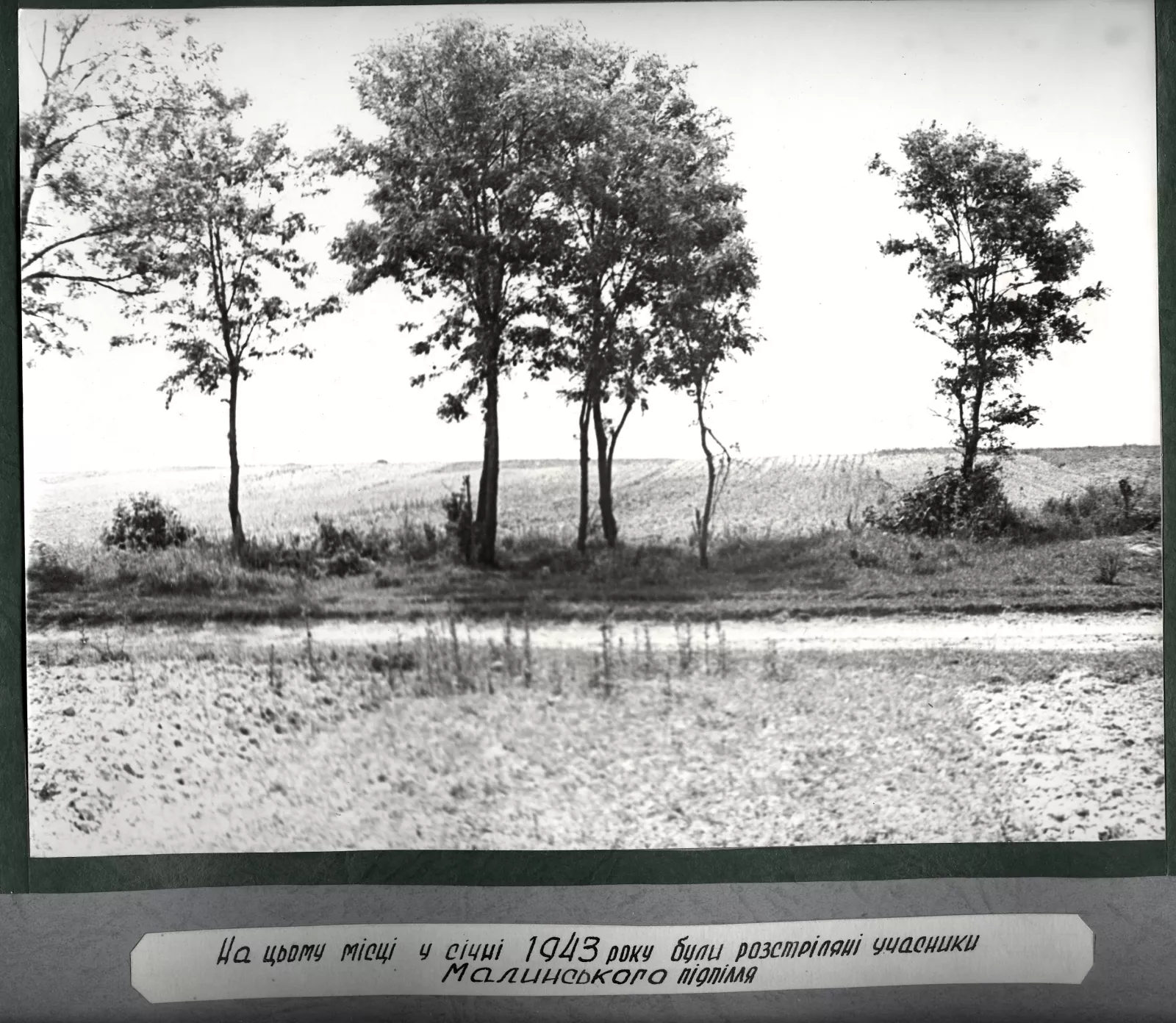
On January 16, 1943, the German security service tracked down the underground organization. Taraskin and his comrades were arrested and executed.
Nina Sosnina
After Taraskin's death, the underground was led by Nina Sosnina, a graduate of Malyn School No. 1. Many young people joined the organization: underground members passed weapons, ammunition, and medicines to the partisans and distributed leaflets among the population.
The organization's headquarters became the house of teacher Ye. F. Doroshok. On August 31, 1943, following an informant's tip, the Germans surrounded the house and burned it down along with the people inside. Nina Sosnina, her father Ivan Ivanovych Sosnin, and partisan Fedir Zinchenko—who was undergoing surgery at that very moment—were killed.
The Malyn underground operated for 630 days. Many of its members were decorated after the war, and Pavlo Taraskin and Nina Sosnina were awarded the title of Hero of the Soviet Union. We wrote about commemorating the underground fighters in the article “Serhii Smyrnov: Commemorating the Malyn Underground”.
Video: “The Sosnin Family”, Malynchany channel.
Liberation in November 1943
On November 12, 1943, troops of the 1st Ukrainian Front liberated Malyn. Soviet cameramen filmed the city in the first days after the liberation: ruined streets, people returning to the ashes of their homes, and a rally in the square.
Video: "Malyn, 1943", Kinokhronika Zhytomyra channel.
How these events are remembered today
In Malyn, there is a memorial to those who died in the Second World War — the Kurgan of Immortality, and School No. 1 is named after Nina Sosnina. At the same time, the memory of the Soviet underground in independent Ukraine is ambiguous: in the city, there are debates about renaming streets and memorials from the Soviet era, and Sosnina's bust has already become a target for vandals. This does not change the history of the occupation: thousands of Malyn residents died, and the city had to be rebuilt almost from scratch.
Another form of memory is military-historical reconstructions of the 1941 battles, which have been held in Malyn.
Video: "Military-historical reconstruction of the events of the beginning of the Second World War for Malyn", Oleksandr Skuratovskyi channel.
The 1967 feature film "The Sosnin Family" was partly filmed in Malyn itself — the city of the late 1960s is visible in the frame.
Video: "The Sosnin Family. 1967 film with episodes filmed in Malyn", InfoMalin channel.
About the photographs
The pictures in this material were taken by German soldiers in the summer and autumn of 1941. For decades, they lay in family albums in Germany, and later appeared on online auctions. Collectors gathered them and published them in the "EtoRetto" archive of old photographs. Several pictures retain the authors' captions: "Malin! 1941" and "Malin am 22 Juli genommen". The watermarks on the photos belong to the sellers and the archive.
Two photographs — "Silent Witnesses of 1941" and the execution site of the Malyn underground fighters — are from the archive of Malyn historian Volodymyr Studynskyi.
Pictures of the railway station and the water tower from 1941 are from the PastVu archive of old photographs. Pre-war views of the town, the synagogue, and memorials were photographed by the "Moi Shtetl" project about Jewish shtetls of Ukraine. Facts about the executions are based on data from Yahad-In Unum and the Yad Vashem Holocaust Memorial Center.