Andrushivka is a small town 47 km from Zhytomyr, on the Guiva River, with a population of under ten thousand. It received town status only in 1975 — before that it was long a small town, and even earlier, according to legend, it stood completely empty after another attack by "eastern raiders," as the locals called them. It is this gloomy start that explains why today one of the most interesting palace ensembles of the Zhytomyr region stands here: without sugar and without the Tereshchenkos, there would be nothing.
Sugar, Poles, and French Renaissance
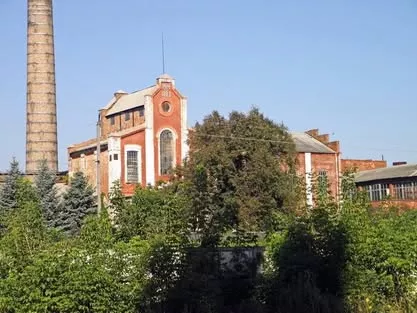
From the 17th century, Andrushivka (that is what the town was called back then — Polish influence is felt in the name as well) belonged to the Berzhynsky family. They built a palace on the bank of a pond, laid out a park — and essentially stopped at that. The real impetus was given by the sugar factory built in 1848 — the first in the Zhytomyr region. The Tereshchenkos, sugar magnates with big appetites and even bigger money, paid attention to Andrushivka quite quickly: in 1869 both the factory and the count's estate passed to them.
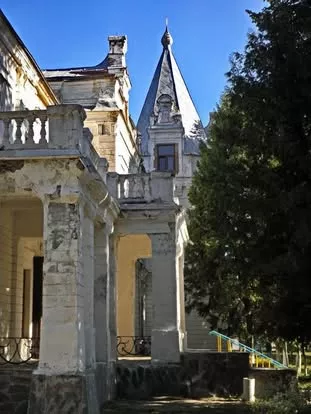
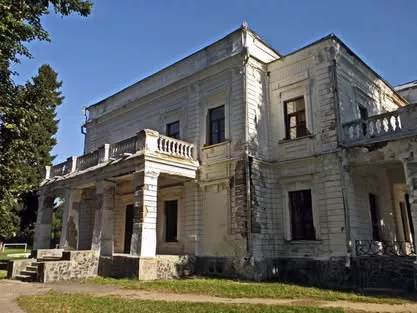
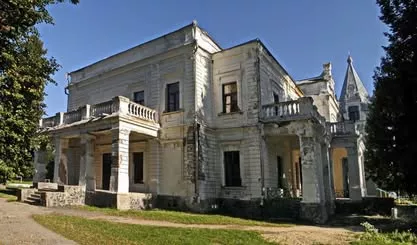
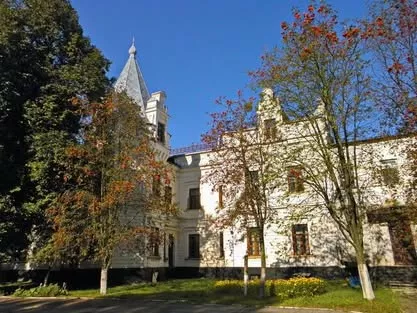
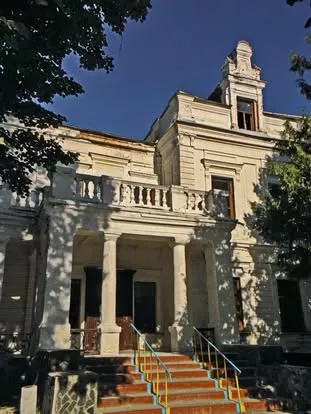
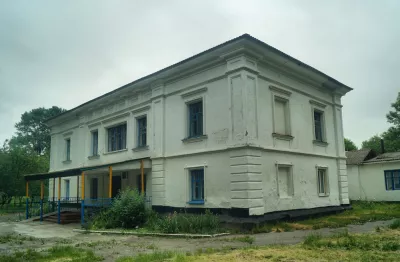
Artemiy Tereshchenko expanded the park. Mykola Ivanovych went further — the brick palace was rebuilt in the French Neo-Renaissance style, with all due whims: towers, oriels, a tent roof, balconies, and decorative pediments. The family almost never lived here — dropping by for short visits — but spared no money. In 1883–1914 the factory was modernized as well.
A Lyceum in a Palace — and That Is No Metaphor
Since 1920 a school has been operating in the palace — now Andrushivka Lyceum No. 1, and this, strangely enough, saved the building from complete ruin. Yes, in 1975 a second floor was added above the orangery that connected the palace to the utility building, but this did not destroy the overall appearance. Inside, the marble stairs have been preserved, and in one of the classrooms the remnants of an ornament stylized after ancient Greek motifs are still noticeable. Somewhere deep inside the school stand an old Tereshchenko desk and a "rubel" — as an iron was once called. An exhibition about the Tereshchenko family has been set up in the foyer.
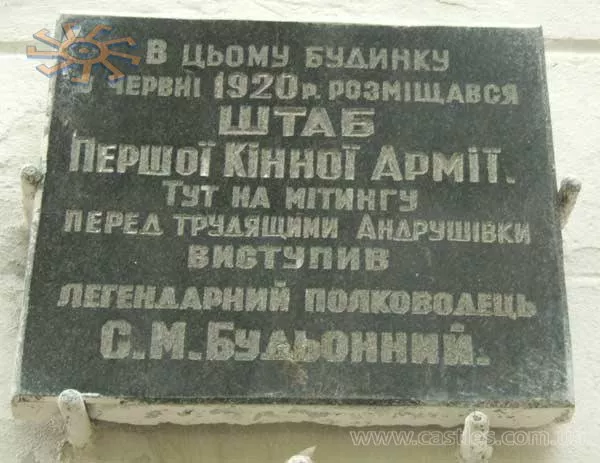
The palace also has a revolutionary page. On January 25, 1919, Baltic sailor M. Popel organized the first volost revolutionary committee here, and in June 1920 the headquarters of the First Cavalry Army was located within these walls — a memorial plaque on the facade still reminds of this. Perhaps it was precisely this "correct" biography that saved the building from Soviet demolition.
What Lies Ahead for the Palace
The community plans to turn the estate into a cultural center with exhibition halls, an event space, and tourist routes. For this, the lyceum needs a new building: the town is looking for donors to construct it, negotiations are underway with Norwegian partners, and the design project has already been developed. In the meantime, the palace operates as a school.
The Park, Swans, and Dormitory Birdhouses
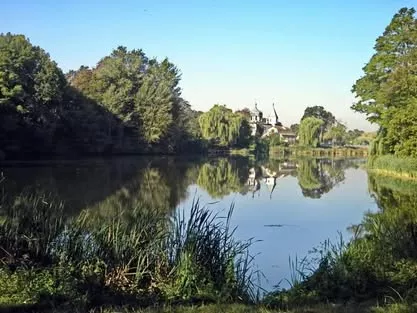
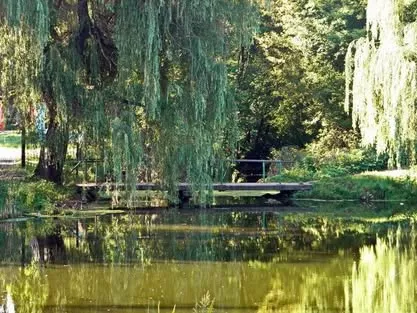
The park around the palace has survived — and it is a separate delight. Cedar and cork trees, rare for these latitudes, grow here. Swans return to the ponds every year — a tradition dating back to the times of the Tereshchenkos, when grandfather Kalenyk looked after the birds and the park. Andrushivka still remembers the name of the simple gardener, but has forgotten the names of many owners.
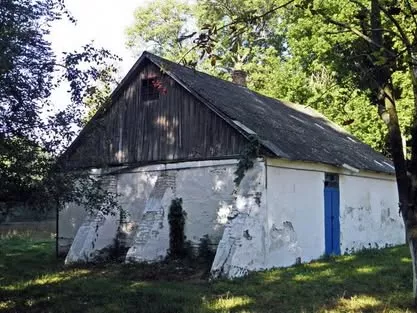
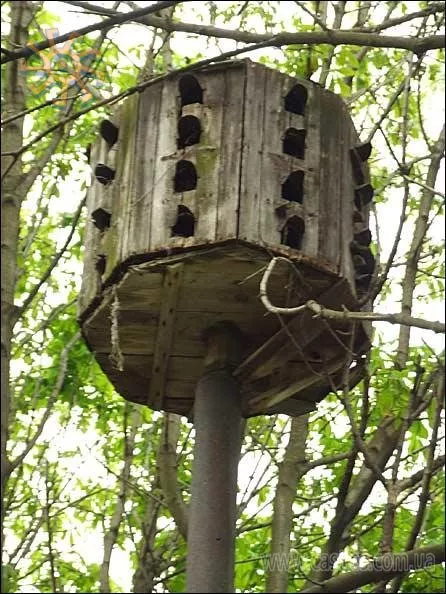
Near the palace, one should pay attention to the dormitory birdhouses — structures where several nesting compartments are combined into one shared "house." The idea is naive and good-naturedly funny: it is hard to imagine that starlings would agree to live communally. A large old fountain has been preserved at the back of the palace, and nearby stand utility buildings — including stables and a few smaller houses.
The Jewish Cemetery: A Separate and Important Stop
From the large Jewish community that lived here starting in 1784, a kirkut remains. In 1926 the community numbered 655 people. The cemetery was founded in the 19th century and is located, strangely enough, not on a hill. The last Hasidic grave dates back to 1994. After the laying of the railroad in 1939, the kirkut significantly decreased in size. The wicket gate is unlocked — you can go in and walk through the bush-overgrown territory. About 100 burials have been preserved, 21 of which date back to 1920 — researchers cautiously suggest a pogrom.
A difficult place to perceive, but honest. There are fewer and fewer such cemeteries left in Ukraine.
How to visit
The palace stands in a park by a pond in the center of the town — you won't get lost. The park is open around the clock, the palace can be viewed from the outside at any time, and the inside only on weekdays while the lyceum is operating.
What's nearby
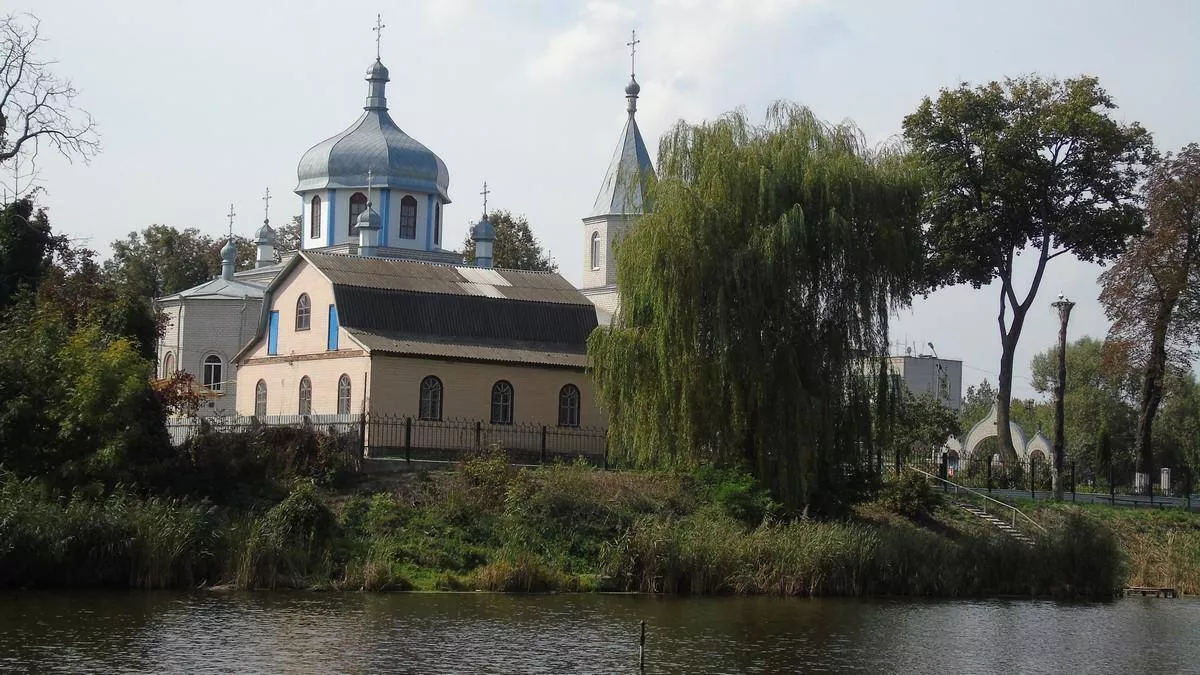
Opposite the central entrance to the park is the Roman Catholic Church of Saint Blaise, built in 2007–2010. A 10-minute drive away, in the village of Halchyn, is the private astronomical "July Morning" observatory, where hundreds of new asteroids have been discovered; one of them was named after Andrushivka itself. The palace and the observatory fit together wonderfully into a single itinerary.
Life hacks
When to go: in spring — the swans have returned, the park is green and quiet. Avoid Sunday — you won't get into the school.
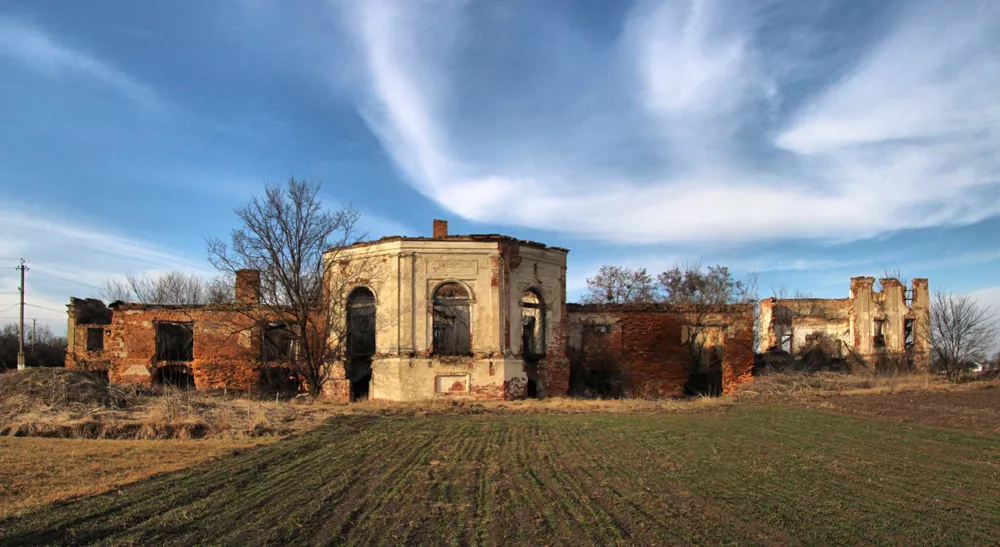
Combine with: the Grocholski-Tereshchenko palace in neighboring Chervone (a 15-minute drive) and the estate in Turchynivka — it makes for a rich one-day trip across the Zhytomyr region. Nearby are also the ruins of the Stsybor-Rylsky estate in Brovky Pershi.
Bring along: food for a picnic in the park — there are cafes in town, but the choice is minimal.