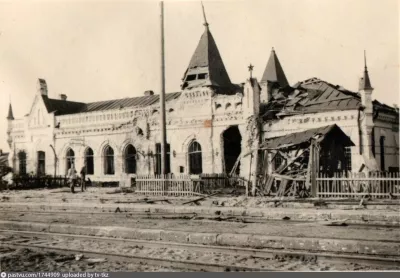

At the end of October 1926, Korosten became the center of Jewish religious life in Soviet Ukraine for three days. From October 26 to 28, rabbis and representatives of Jewish communities gathered in the town—formally from three okruhs: Korosten, Zhytomyr, and Shepetivka, but in reality from Kyiv, Odesa, Poltava, Bakhmut, Novozybkov, and even Leningrad. The Warsaw Jewish newspaper *Ha-Tzfira* called this event the "first congress of rabbis of Soviet Russia." As far as is known today, no such representative, officially sanctioned gathering of rabbis took place in the USSR either before or after. In October 2026, the congress marks its one-hundredth anniversary.
Jewish Korosten of the 1920s
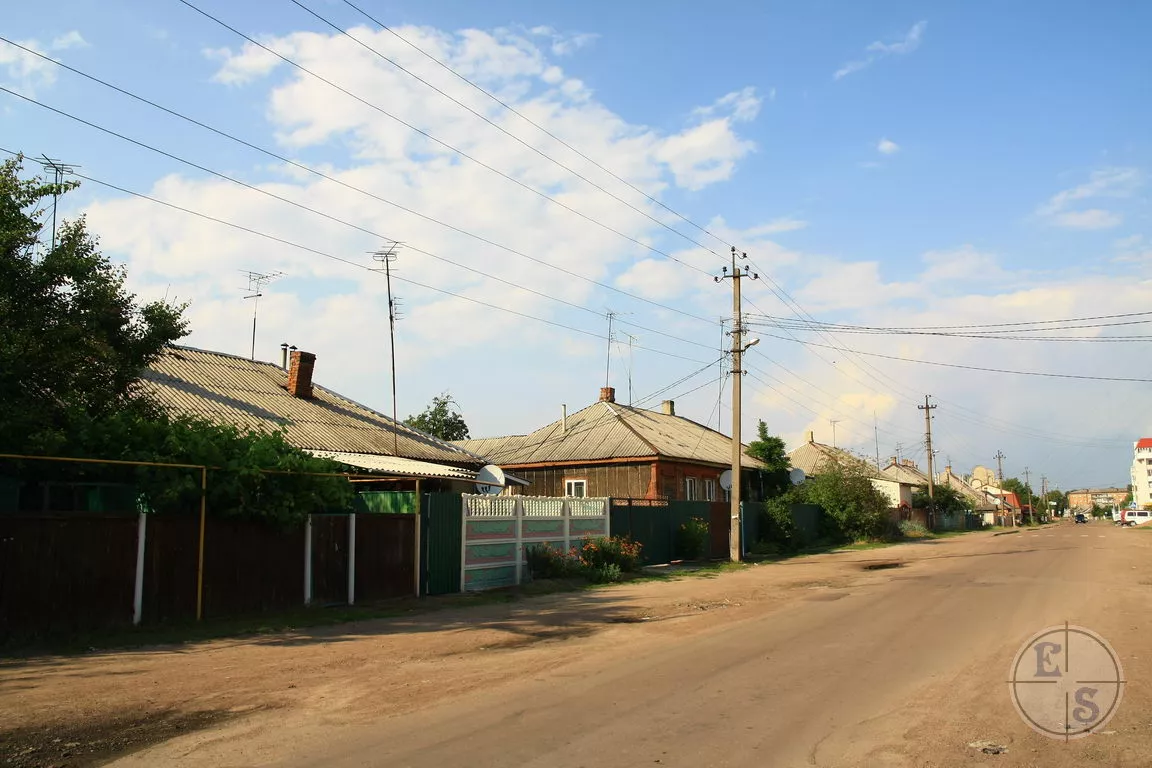
According to the 1926 census, 6,089 Jews lived in Korosten—almost half of the town's population. Synagogues, houses of prayer, mikvahs, and religious communities operated here, while family and trade connections extended to all the small towns of Volhynia. Another advantage was the railway: Korosten was already a major junction from where trains ran to Kyiv, Zhytomyr, Zviahel (Novohrad-Volynskyi), and Ovruch. This is precisely what the organizers cited in their petition to the authorities: the town was chosen as "the most convenient for the specified okruhs in terms of transport connections."
How the Congress Was Prepared
The organizing committee included Zusia Vihraiser from Korosten, Ovruch rabbi Shmuel Kipnis, Olevsk rabbi Yakiv Levytskyi, and Malyn rabbi Shulim Hohman. No later than June 18, 1926, they appealed to the Korosten Okruh Administrative Department requesting permission for the congress. Among the issues proposed were the union of religious communities, the production and sale of kosher food, the maintenance of mikvahs, and other needs of religious life.
The approval process dragged on for months. The matter was considered in Korosten and in Kharkiv, then the capital of the Ukrainian SSR, at the People's Commissariat of Internal Affairs. The congress planned for August 15 in the Hornostaipil Synagogue on Bannia Street did not take place. The okruh administrative department issued final permission on September 7: the congress was to be held on October 26–28 in Korosten's "Ovruch" Synagogue. The authorities reduced the agenda to just two issues—the unification of communities and mikvahs. After the congress, the minutes and all materials were to be handed over to the NKVD.
Three Days in the "Ovruch" Synagogue
On October 26, 1926, at twelve o'clock noon, the congress was opened by Olevsk rabbi Yakiv Levytskyi. He spoke about the position of traditional Jewry and expressed hope that the Soviet authorities would continue to permit religious life within the boundaries of the law. According to the official list, there were 50 delegates and another 22 guests from other cities at the congress, but the synagogue hall was overcrowded with local residents.
Korosten Jews hosted the guests in their homes. *Ha-Tzfira* wrote about people crying with emotion and reciting the "Shehecheyanu" blessing—a prayer of gratitude for living to see this day. The Soviet commissioner monitoring the congress also noted that the synagogue was packed to capacity, although some workers, employees, and young people were critical of the gathering.
Who Came to Korosten
The central figure of the convention was Rabbi Shlomo-Yosef Zevin, who was serving in Novozybkov at the time. He delivered the main report — on the unification of religious communities. Later, Zevin became a renowned scholar and editor-in-chief of the fundamental "Talmudic Encyclopedia". Rabbi Levi Grossman delivered a co-report, and a separate report was dedicated to mikvahs.
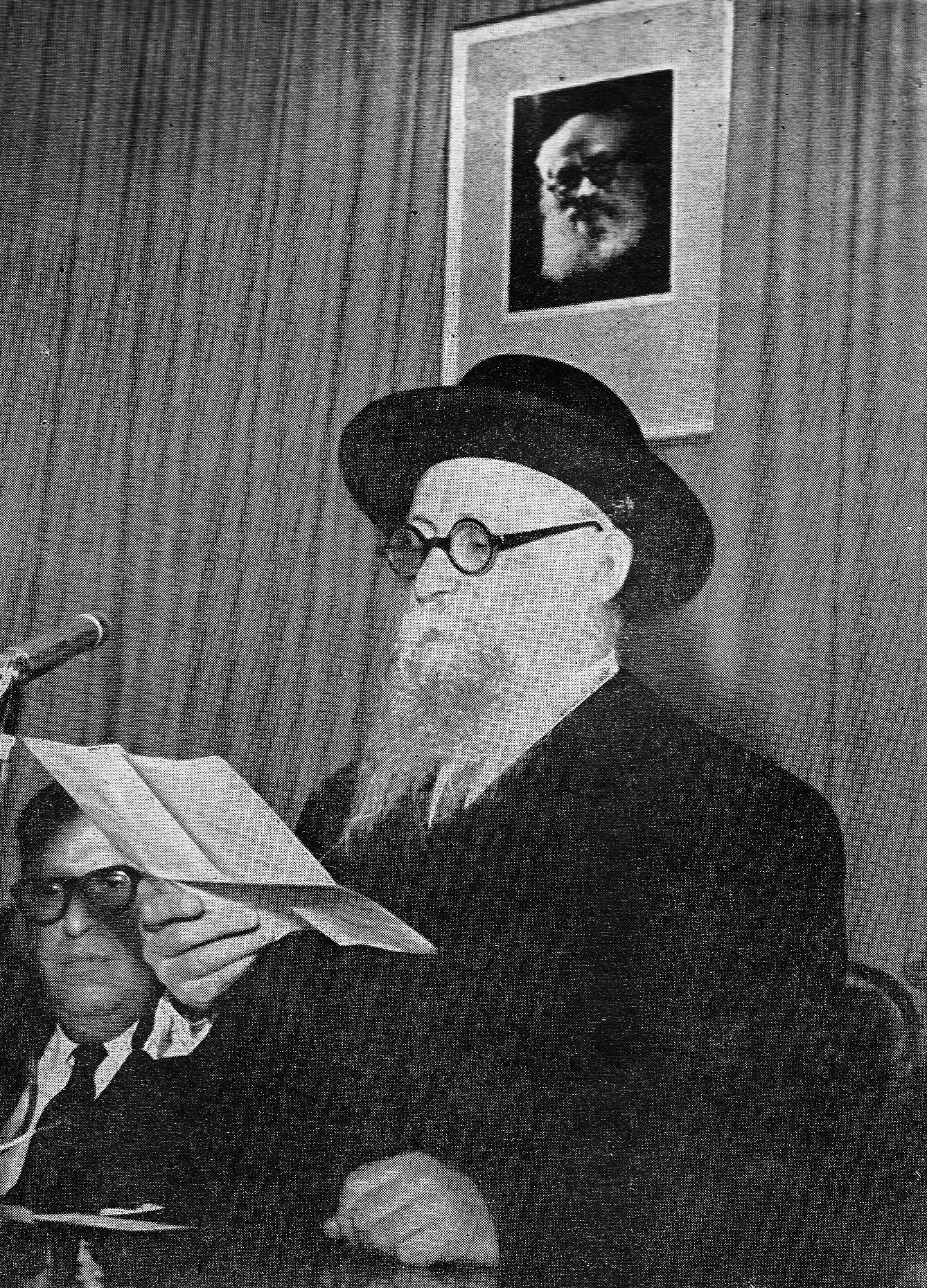
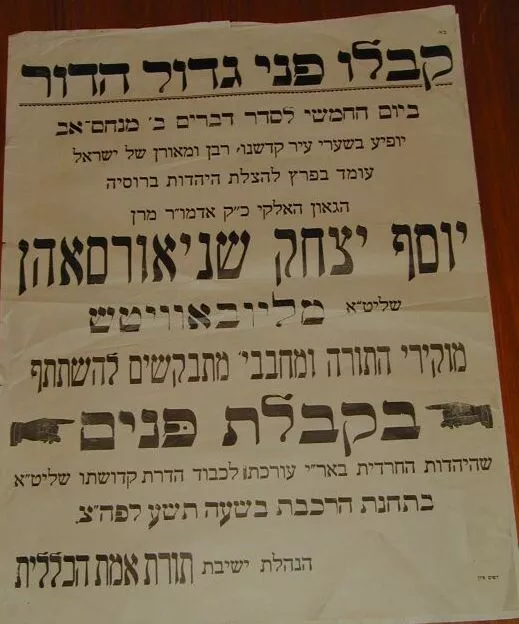
At the first session, Yosef-Yitzchak Schneersohn — the sixth Lubavitcher Rebbe, who was then living in Leningrad — was elected in absentia as honorary chairman of the convention. In response, the Rebbe sent a telegram of greetings, which was read aloud in the synagogue. Greetings also arrived from other cities across the Soviet Union.
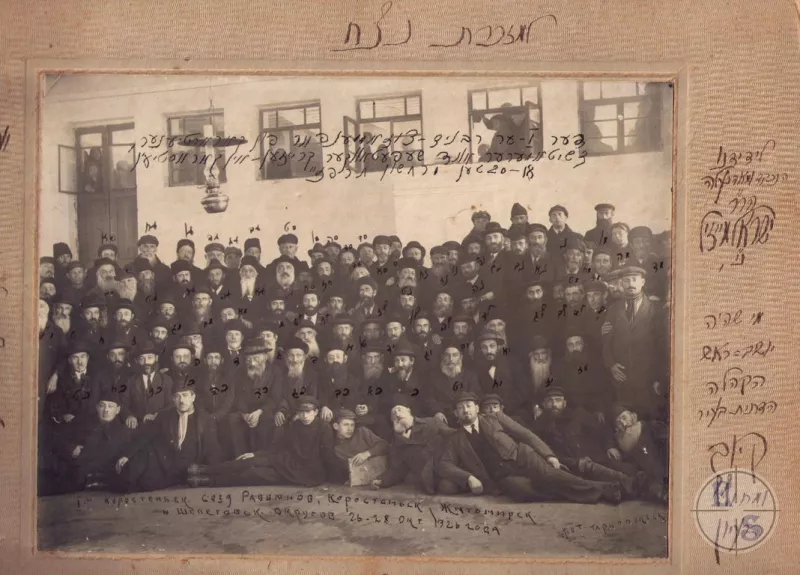
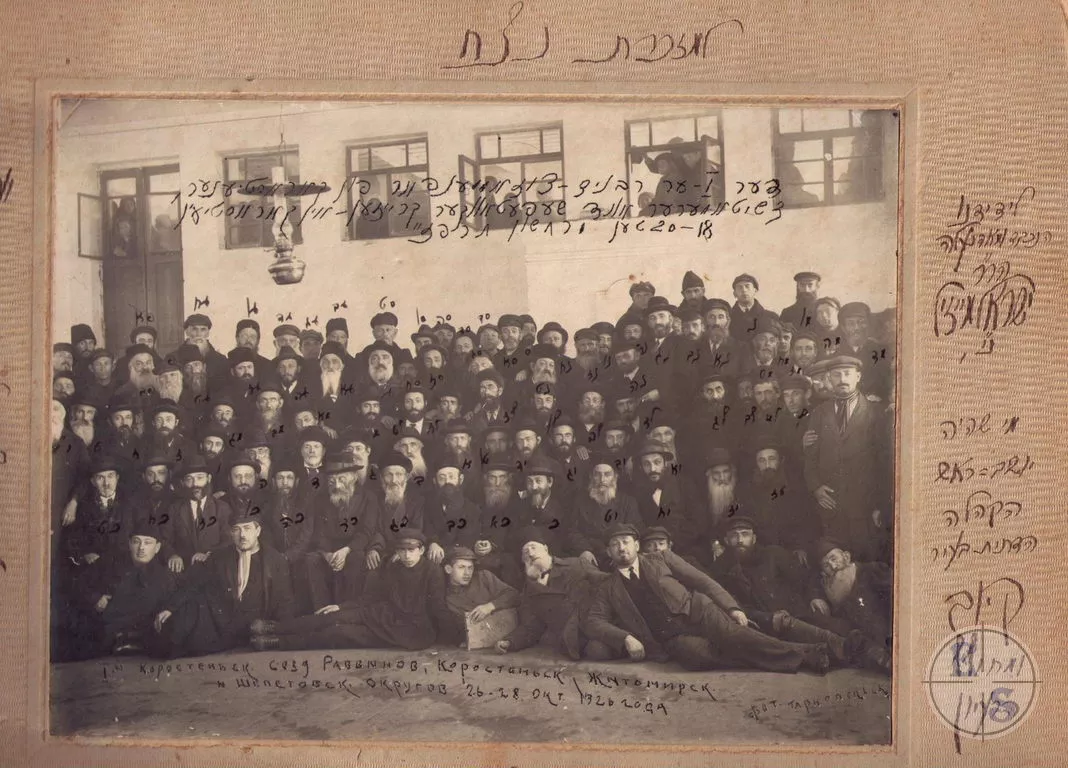
Among the guests was the Kyiv rabbi Chaim-Yehoshua Matusov. His arrival had been noted even before the convention in an anonymous denunciation to the GPU. The young Admor of Malyn, Aron Tversky, was also present at the convention — one of the few people who can be recognized in the group photograph today.
However, the Korosten rabbi Eliezer Shechtman could not attend: he had been in exile since 1923. On October 27, his telegram greeting the participants arrived from Tyumen, signed "Rabbi of the town of Korosten".
What was discussed
The main issue was the unification of Jewish religious communities: the participants wanted to have a joint representative before the authorities and to solve daily problems together — the maintenance of synagogues and mikvahs, kosher slaughter, and religious education for children. An executive body of nine people was elected to continue the work. The minutes, reports, resolutions, and telegrams have been preserved in an archival file.
At the end, Zevin called for continuing the work that had been started and strengthening ties between communities, while Grossman thanked the Jews of Korosten for their hospitality. According to "Ha-Tzfira", after the official closing, people did not disperse for a long time, and Hasidic tunes — unheard in Soviet Russia for many years — echoed in the hall.
Under the authorities' surveillance
The authorities monitored the convention from the very beginning. On October 22, four days before the opening, the okruh anti-religious commission considered the issue "On the convention of rabbis in the town of Korosten": permission was confirmed, but the issue of kosher meat was removed from the agenda as "economic". Two official representatives were appointed to the meetings, and it was decided to conduct an "explanatory" campaign among the population.
On November 15, after the convention, the same commission recognized the permission as a mistake, and the GPU representative stated that his agency had not given its consent. Officials acknowledged that the convention had acquired "All-Union significance", and they were most concerned by the communities' desire to unite and create a permanent body.
A telling episode: on November 2, a telegram from the Deputy People's Commissar of Internal Affairs arrived in Korosten from Kharkiv — asking to find out whether the convention had assembled and, if not, to revoke the permit. By that time, the convention had already ended five days earlier.
What happened after the convention
Shortly after the convention, one of its organizers, Rabbi Shmuel Kipnis of Ovruch, was arrested and spent several weeks in custody. On February 14, 1927, under pressure, the rabbis elected to the executive body announced its dissolution. The idea of a new rabbinical gathering, particularly in Leningrad, was never realized. In the summer of 1927, the Lubavitcher Rebbe himself was arrested in Leningrad; the Korosten convention also featured in Soviet case files against his inner circle.
The Korosten convention turned out to be a brief "window of opportunity." In the following years, pressure on religion intensified: some participants faced repression, while others emigrated.
Photograph of the Participants
A large group photograph from the convention has survived and is held in the National Library of Israel. Rabbis, community representatives, and guests pose in the hall: some are standing, some sitting, a few people are seated on the floor in front of the first row, while curious onlookers watch the photoshoot from the windows above. At the bottom, there is a printed caption: "1st Korosten Rabbinical Convention of Korosten, Zhytomyr, and Shepetivka Okrugs, Oct. 26–28, 1926." The participants in the photo were numbered, but far from all names could be identified.
Memory Today
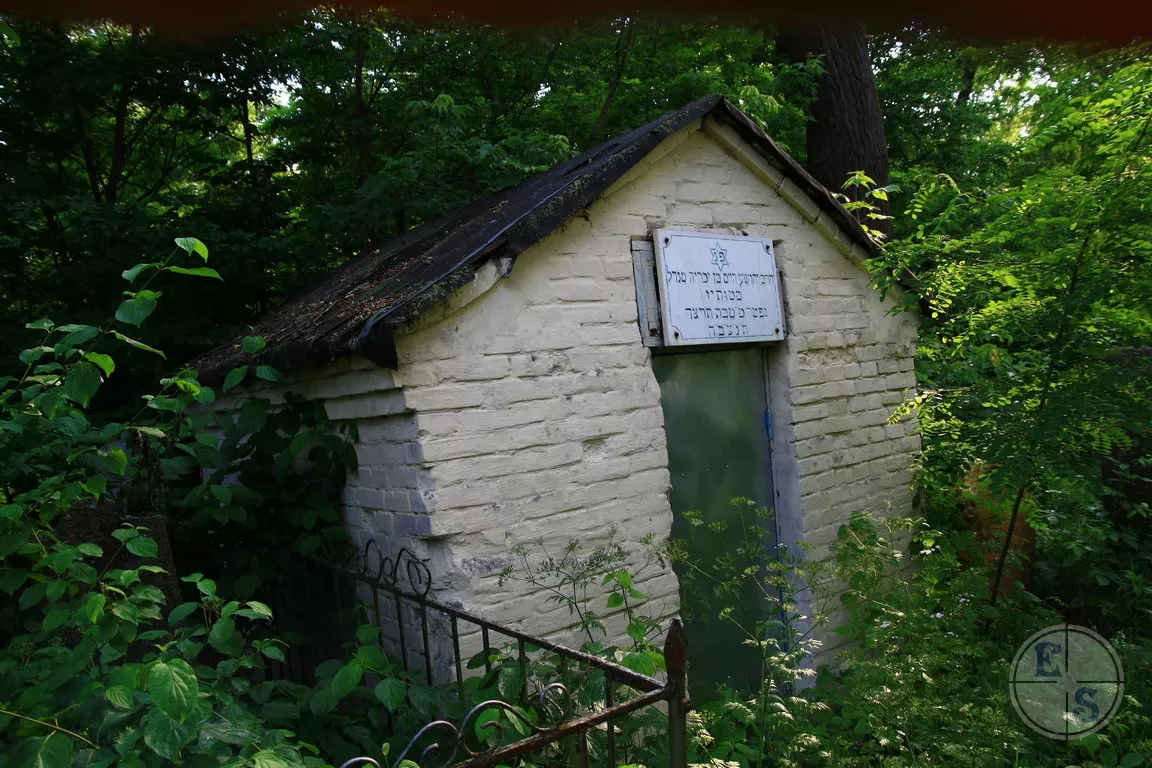
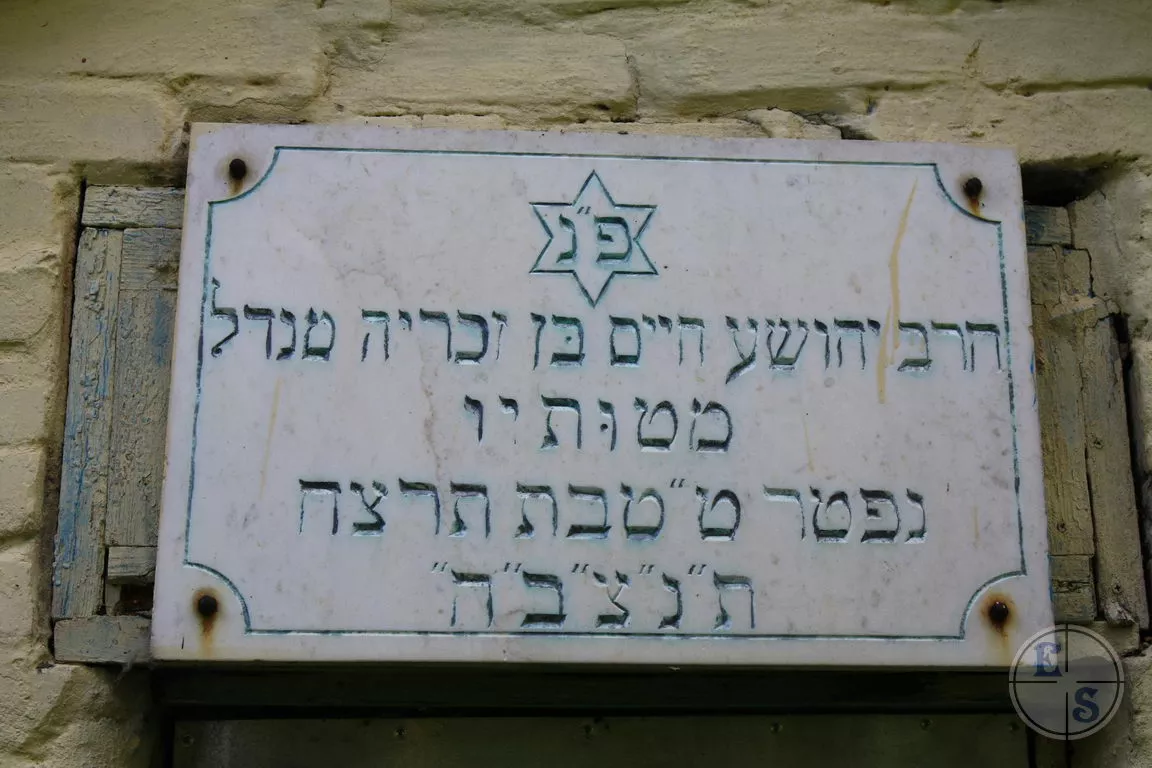
Rabbi Chaim-Yehoshua Matusov, who came to the convention from Kyiv, later became the rabbi of Korosten. He died in December 1937. His tomb-ohel has been preserved in the Korosten cemetery.
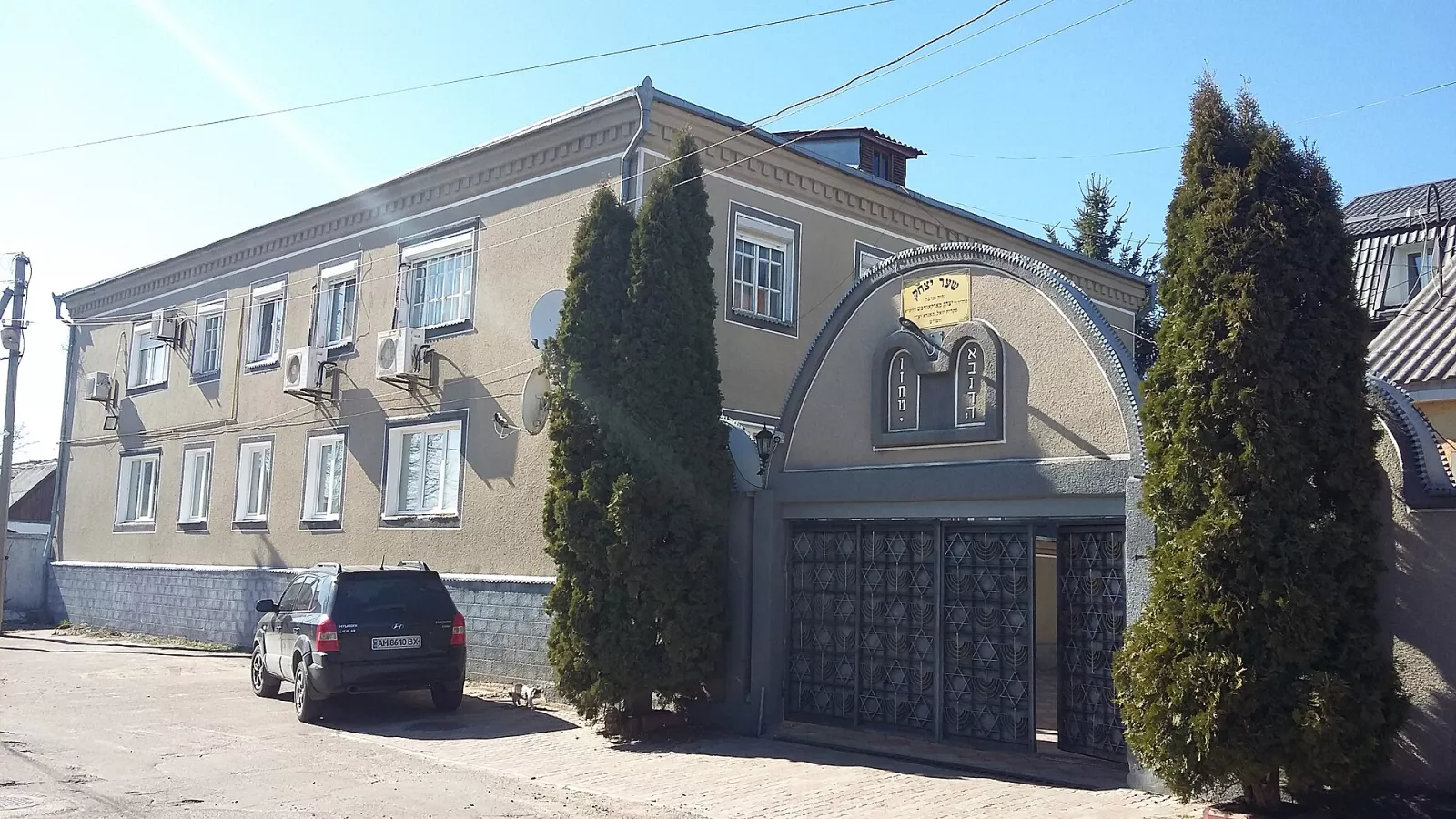
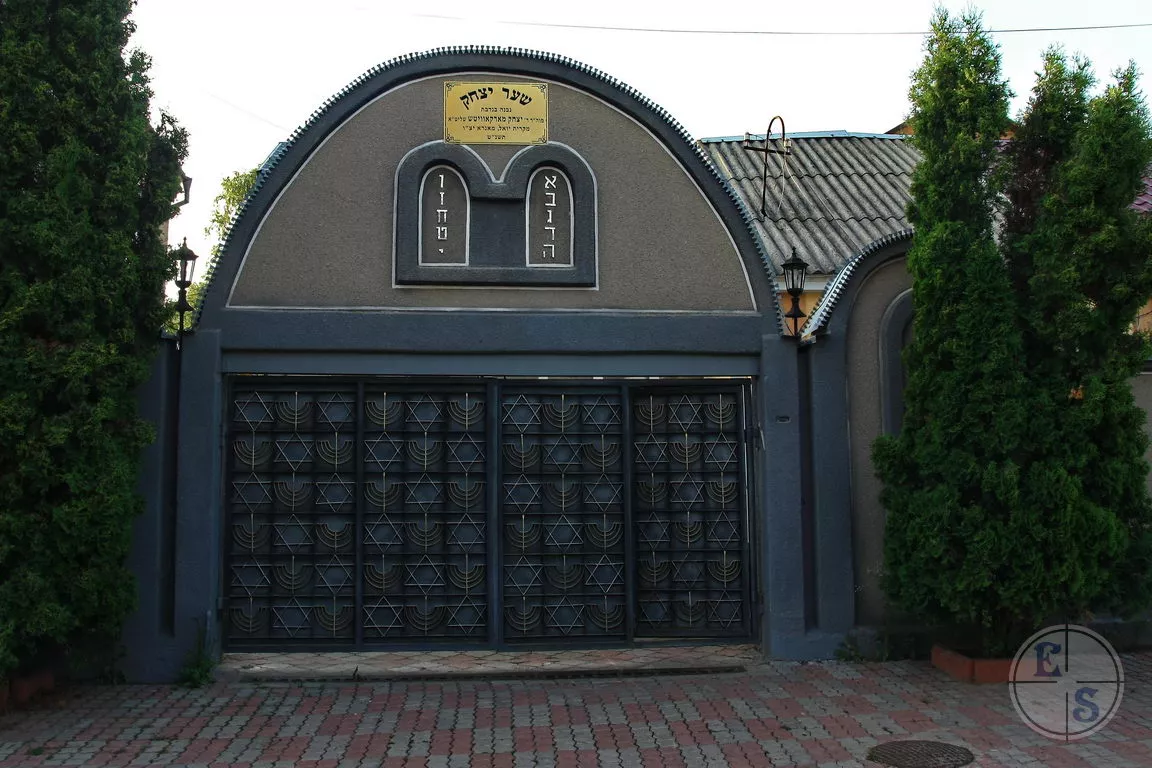
A Jewish community exists in Korosten to this day: an active synagogue operates in the city.
This article was prepared based on research by local historian Oleh Hrushko, "Korosten, 1926: A Unique Rabbinical Convention" (zhytomyr.city, 2026), which relies on archival documents of the convention, official correspondence, and publications from the newspaper Ha-Tsfira, as well as data from the "Moy Shtetl" project and the "Jewish Ukraine" portal.