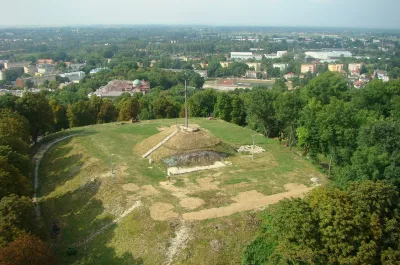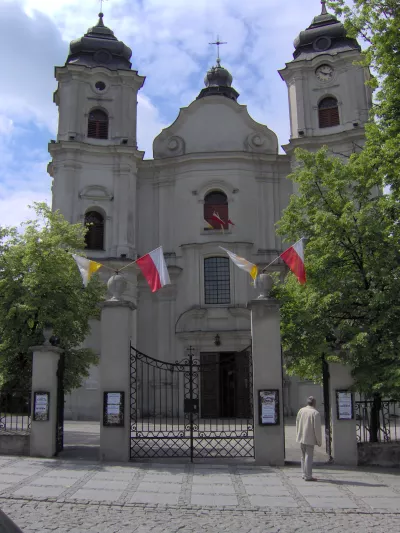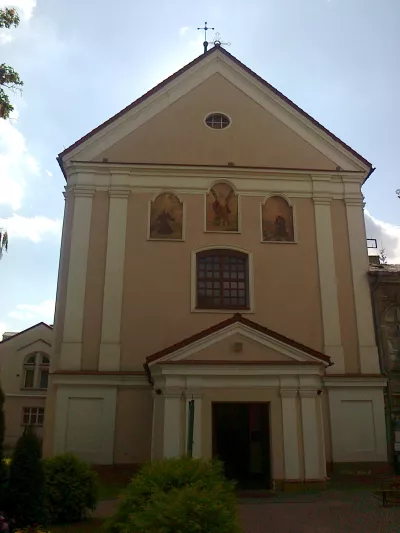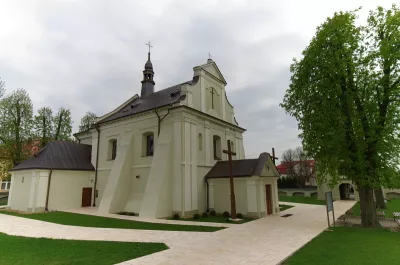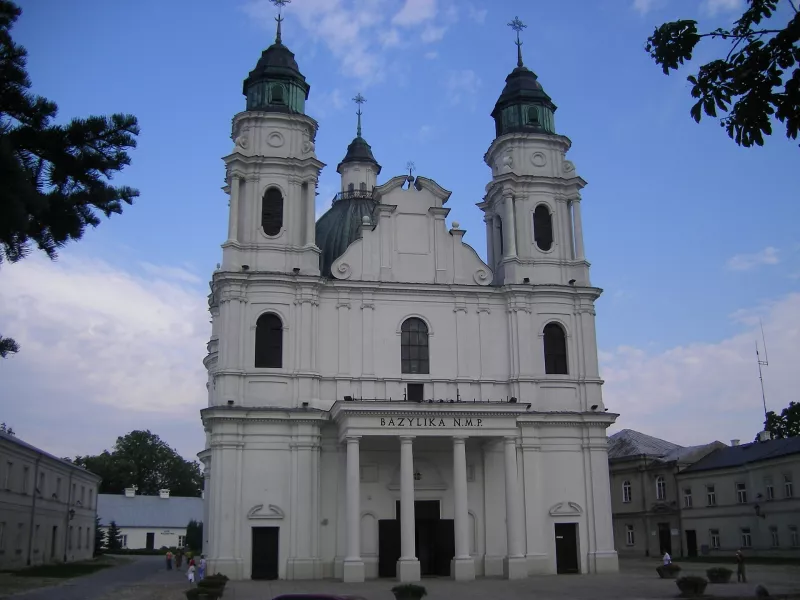
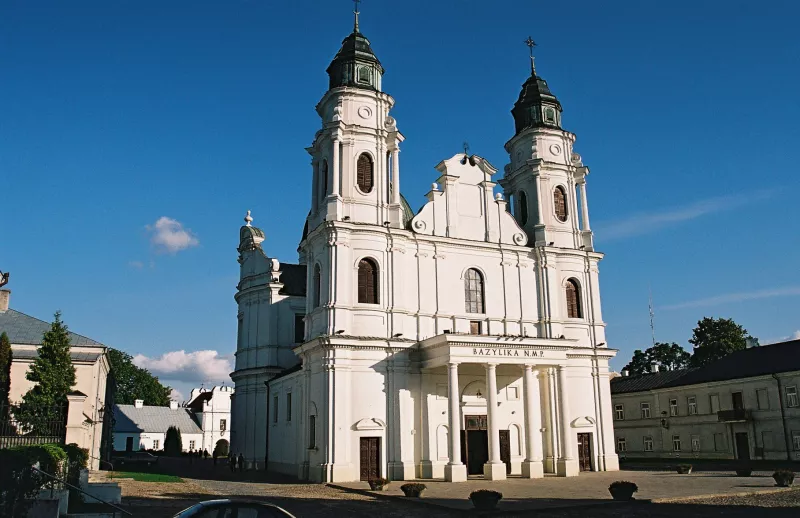
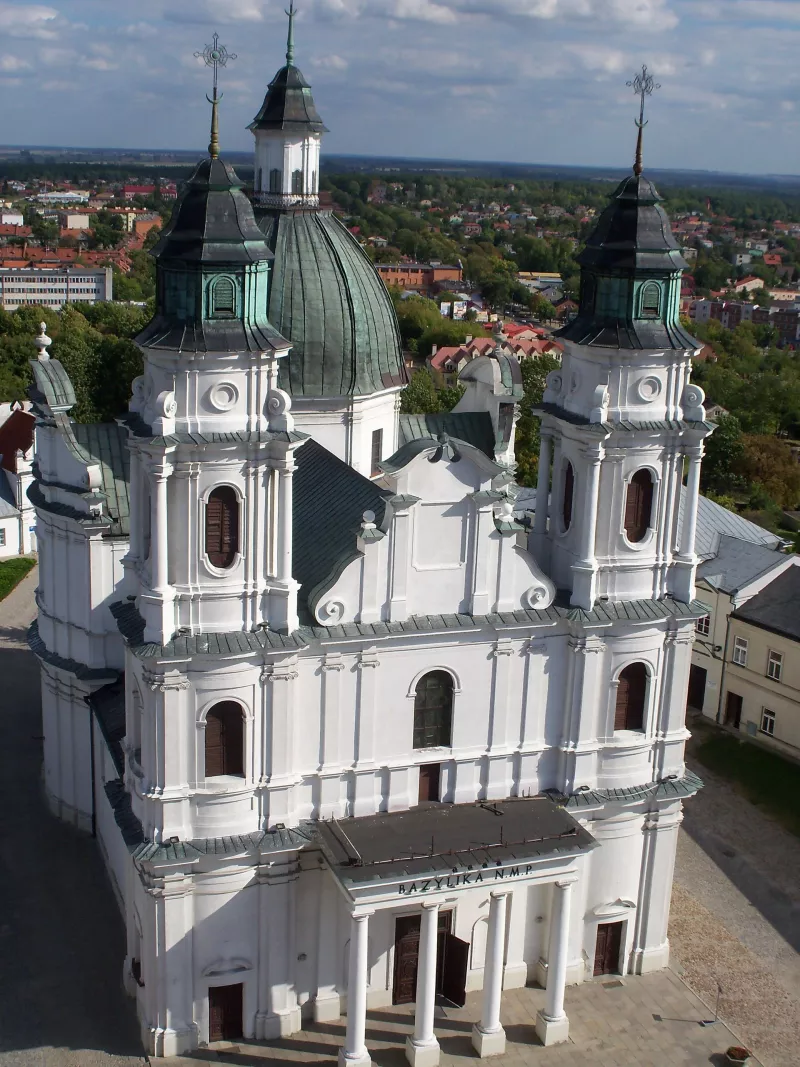
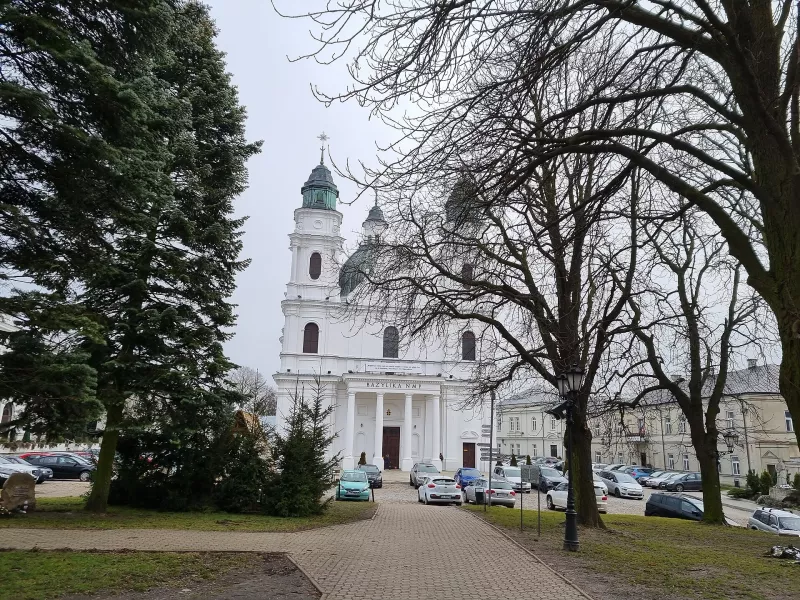

The Cathedral of the Nativity of the Blessed Virgin Mary is the main shrine of Chełm and the heart of the ensemble on the Cathedral Hill (Górka Katedralna), next to Vysoka Hirka, where the residence of Danylo Halytskyi once stood. The current late Baroque church was built in the 18th century as the cathedral of the Chełm Greek Catholic (Uniate) bishops. Today it is a Roman Catholic basilica and a sanctuary of the Chełm Mother of God. Beneath it are crypts and the remains of an earlier church founded by King Danylo himself.
From Danylo’s Church to the Uniate Cathedral
Making Chełm his capital, Danylo Romanovych moved the episcopal see here from Uhrovesk, near present-day Uhruisk, and built a large Church of the Mother of God. The chronicle describes its icons and a carved chalice made of Hungarian marble, which the prince placed before the royal gates. In 1264, Danylo was buried in this very church. Since 2013, Ukrainian and Polish archaeologists have been studying the remains of the medieval church and burials from the 13th–17th centuries beneath the cathedral; the exact burial place of the king has not yet been determined.
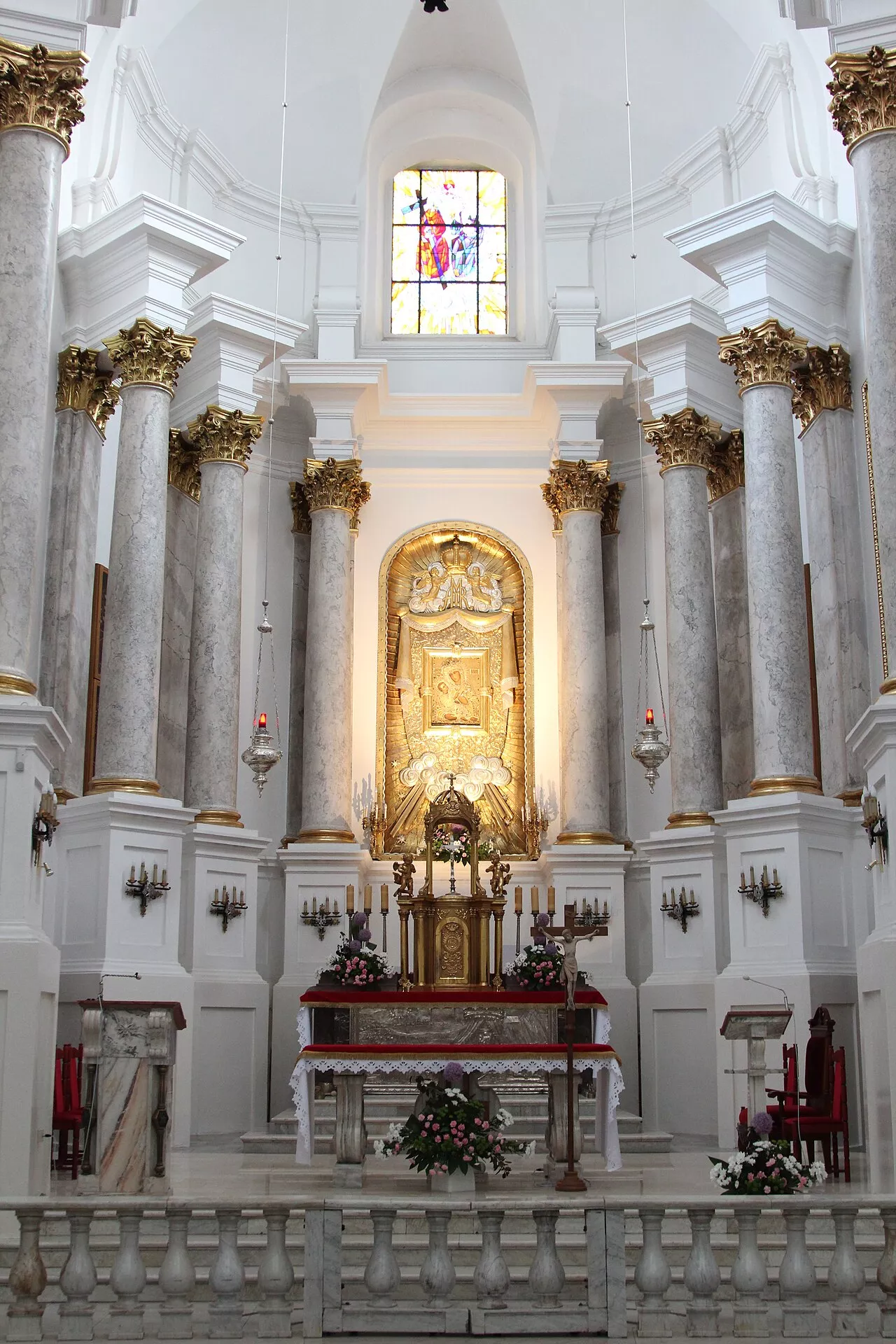
In 1596, the Chełm bishop Dionysius Zbiruyskyi signed the Union of Brest, and the cathedral became a Greek Catholic cathedral. It was rebuilt several times, and between 1735 and 1756 the old church was dismantled and a new one was erected according to a design by Paolo Fontana under the supervision of Tomasz Rezler. Construction was started by Bishop Philip (Felician) Volodkovych and completed by Bishop Maksymilian Ryło, with carved decoration executed by the Lviv master Mykhailo Filevych. In 1802, the cathedral caught fire and was restored until 1839.
Century of Changes
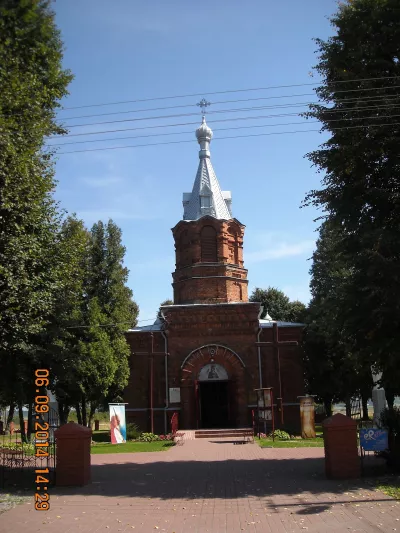
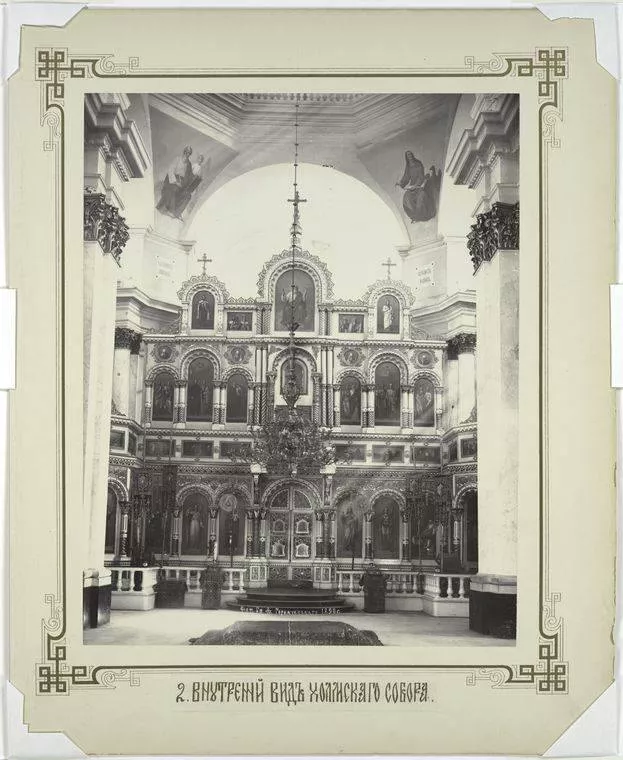
After the abolition of the Union in 1875, the church was handed over to the Orthodox and rebuilt in the Russian-Byzantine style: the towers received onion domes, and a four-column portico appeared, which has survived to this day. During World War I, the Austrians used it as a weapons depot. In 1919, the cathedral passed to the Roman Catholics; in the 1930s it was restored, returning Baroque features, but the old interior and iconostasis did not survive. From 1940 to 1944, the cathedral was again Orthodox — the cathedral of the Chełm-Podlasie Eparchy, headed by Archbishop Ilarion, the renowned linguist Ivan Ohienko. Since 1944, it has been a Roman Catholic parish church, and in 1988 Pope John Paul II granted it the title of a minor basilica.
Icon and Treasures
The greatest shrine of the church is the Chełm icon of the Mother of God. According to the chronicle, the icons were brought to Chełm from Kyiv by Danylo himself, and according to an older tradition, the image originates from Prince Volodymyr. In 1915, the original was taken to Russia; it is now kept in the Museum of Volyn Icon in Lutsk, while a copy from the late 1930s, crowned three times, is in the cathedral’s main altar. Surviving treasures include a silver antependium from the 1720s–1750s depicting a scene of thanksgiving to the Mother of God by King Jan Kazimierz after the Battle of Berestechko in 1651, and two paintings by Franciszek Smuglewicz. Beneath the altar and the transept are the crypts of the Chełm bishops, opened to visitors for the first time in 2018. Nearby stands a separate bell tower from 1878, extended at the end of the 1930s; since 2008 tourists have been allowed to climb it.
How to get there
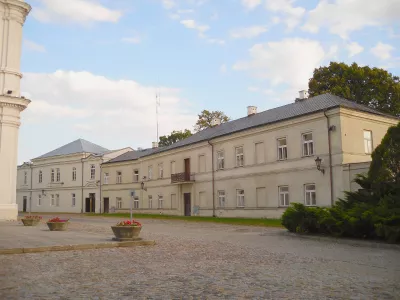
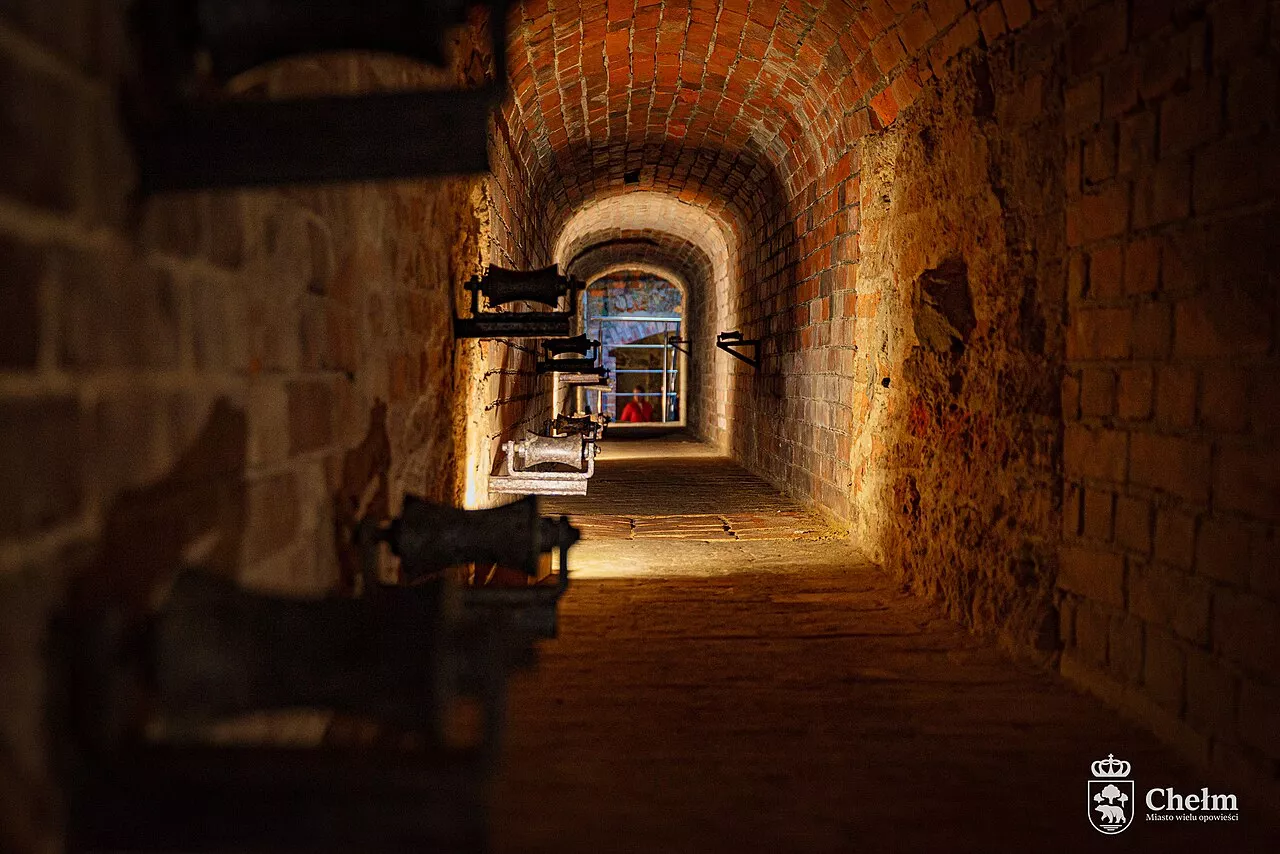
The cathedral stands on the top of a hill above Lubelska Street (Lubelska 2); the ensemble is approached through the baroque Ustyluzka Gate of 1616. Chełm lies on route No. 12 Lublin — Dorohusk: about 70 km from Lublin, about 25 km from the Dorohusk — Yahodyn border crossing with Volyn. The church is open during services; it is best to check the visiting hours of the crypts and the bell tower locally. On the same hill are Vysoka Hirka with the foundations of Danylo’s residence and the palace of the Uniate bishops; below are the Church of the Sending of the Holy Apostles and the Chełm chalk undergrounds. An overview of the region is in the article “Polish Polissia”. Ukrainian citizens need a foreign passport.