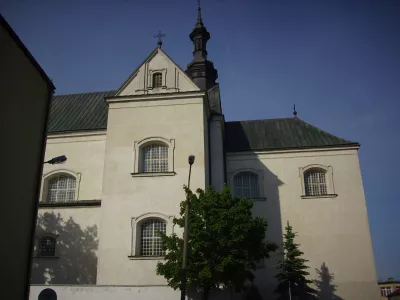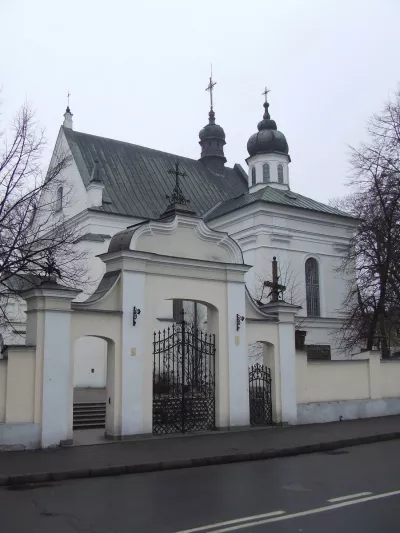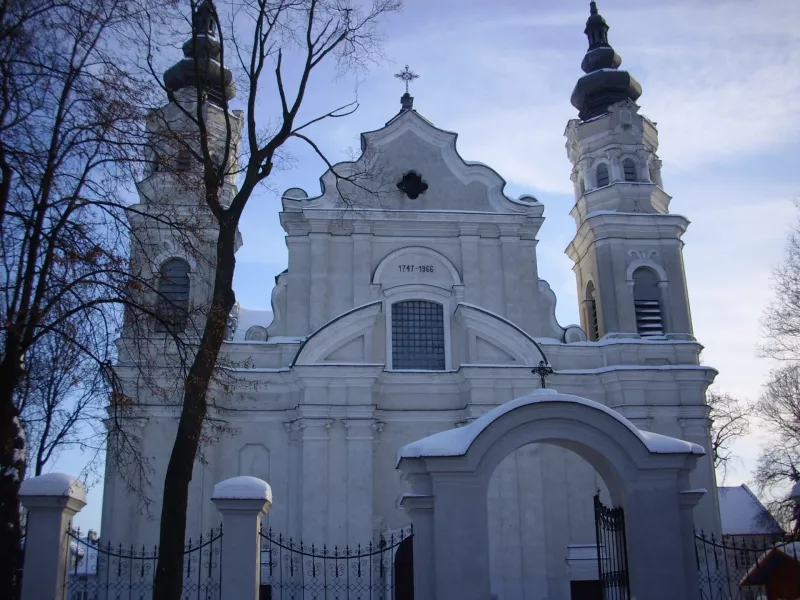
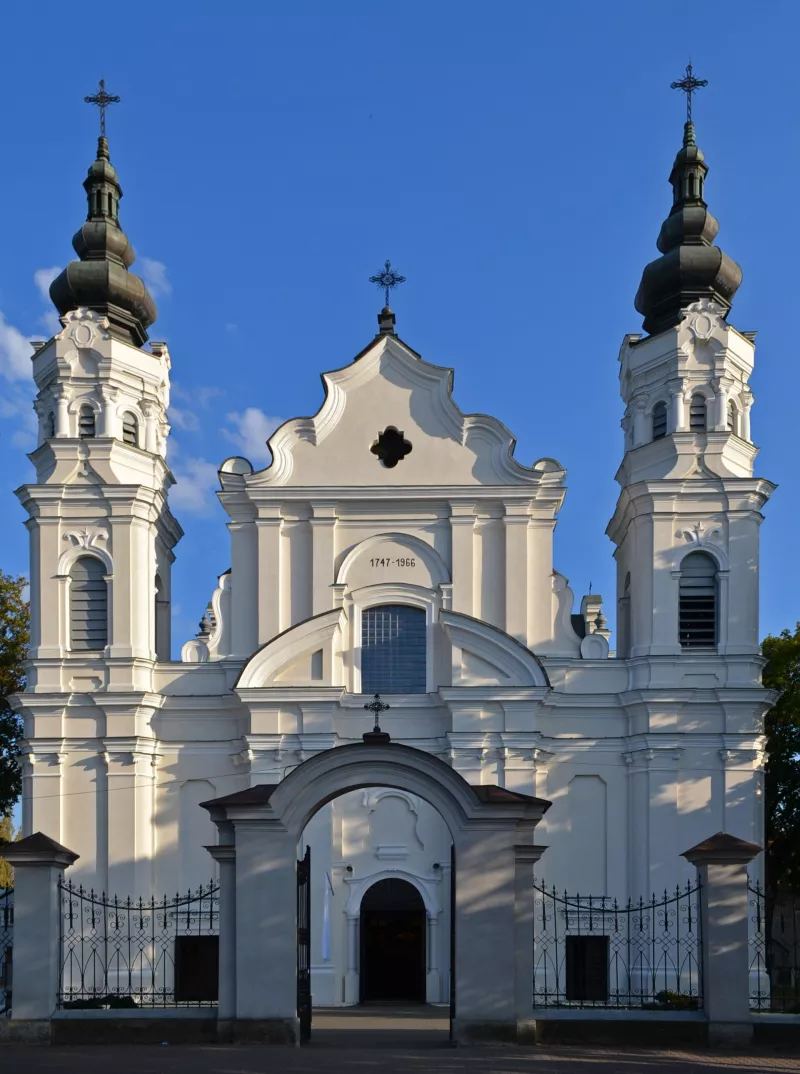
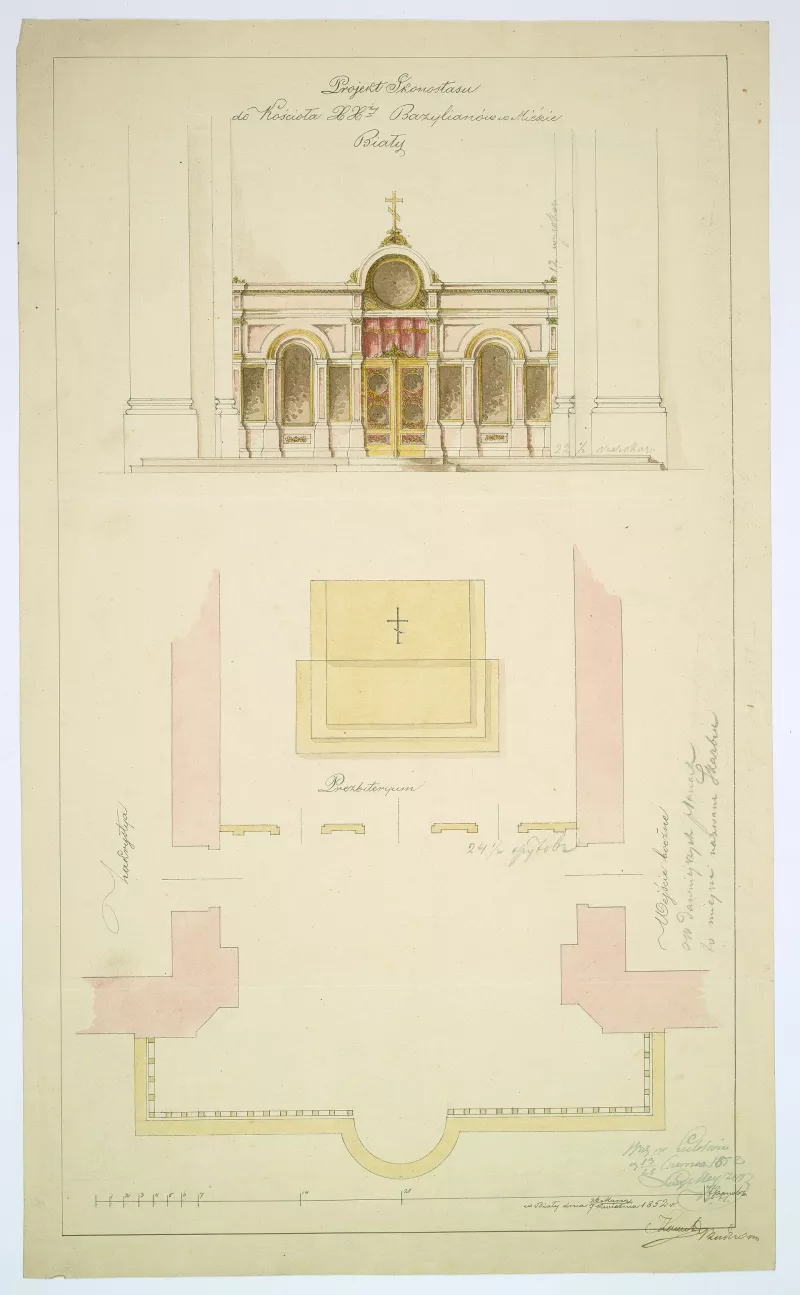
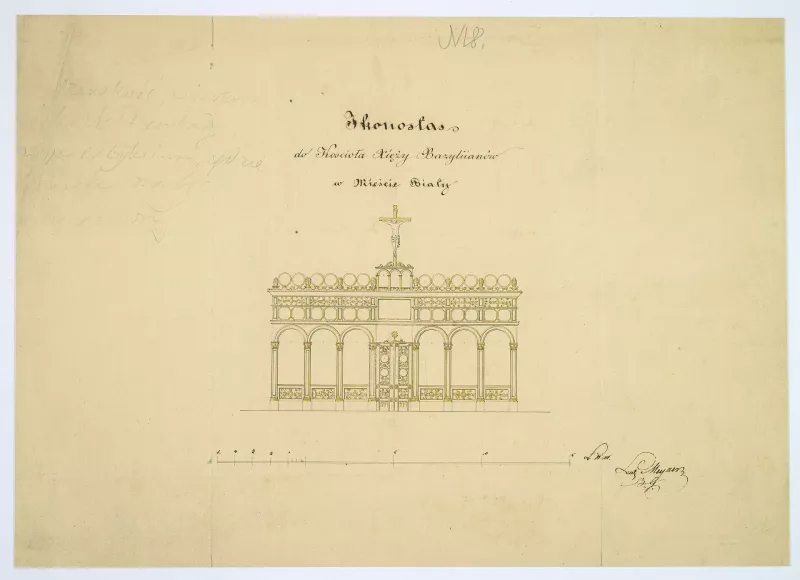

The two-towered church on Brzeska Street is the most prominent Baroque building in Biała Podlaska and one of the most complex in terms of its history. It was built as the Uniate Church of Saint Barbara with a Basilian monastery; for over a hundred years, the relics of Josaphat Kuntsevych were kept here. Later, the church became Orthodox, and since 1919 it has been the Roman Catholic Church of the Nativity of the Blessed Virgin Mary.
The Shrine of Josaphat Kuntsevych
The appearance of the church is connected with a long dispute between the Basilians and the Radziwiłł family over the relics of the Uniate Archbishop of Polotsk, Josaphat Kuntsevych, who was killed in Vitebsk in 1623. The Radziwiłłs hid the coffin in the castle chapel. In 1743, through the mediation of a delegate of the Holy See, it was decided that the relics would remain in Biała, but the owners of the town had to build a shrine under the care of the Basilians. Between 1747 and 1759, on the edge of the town, on the site of the 1690 church, a monumental church in the shape of a Latin cross was built. In 1765, the relics were solemnly transferred here, and Catholics of both rites from all over the Polish–Lithuanian Commonwealth began to come to the shrine for the November indulgences.
Uniate, Orthodox, Catholic
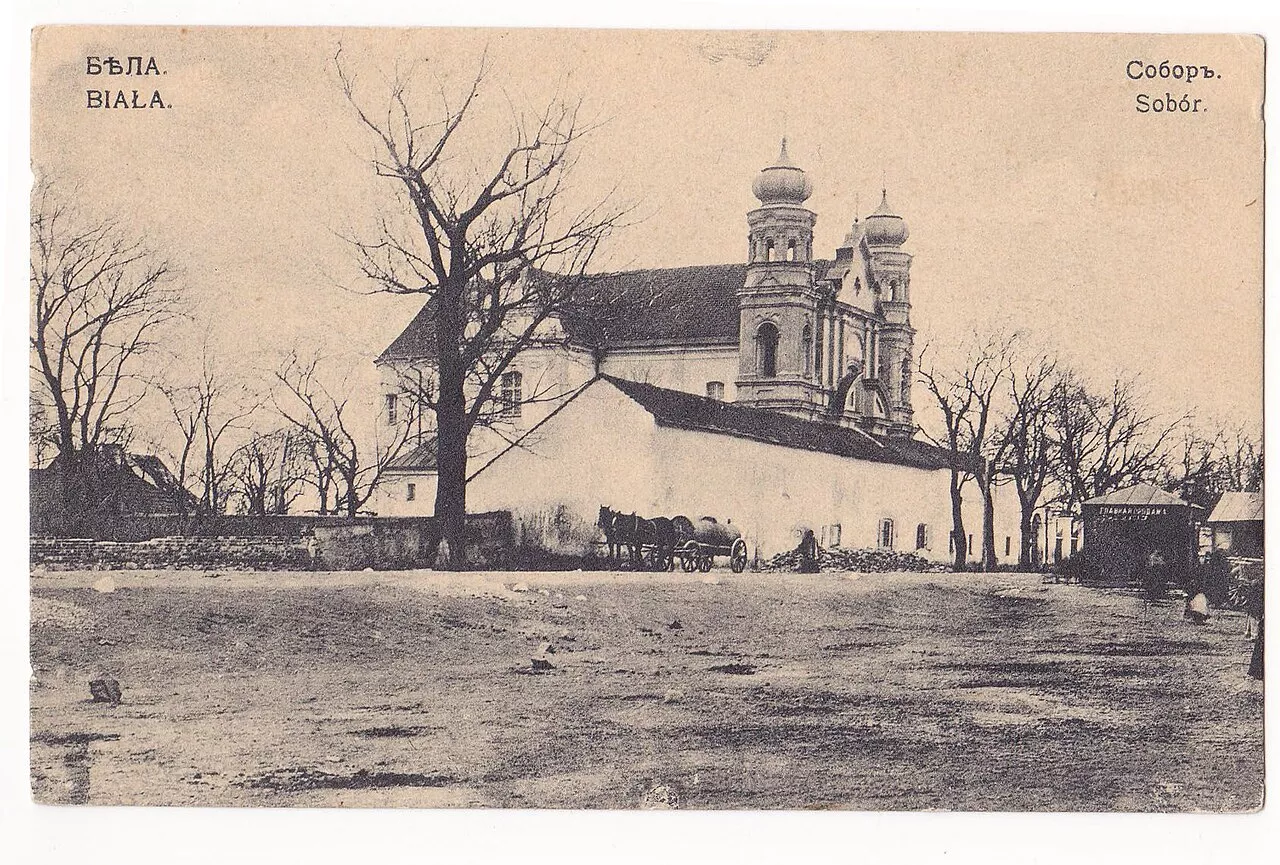
In 1864, the monastery was closed, and in 1875 the parish passed to the Russian Orthodox Church: in January of that year, a ceremony took place here for the conversion to Orthodoxy of 50,000 Uniates and 26 priests from 45 surrounding parishes. Even before that, the church was rebuilt according to a design by Viktor Sychugov, adding onion domes to the tower, and in 1873 Josaphat’s coffin was walled up in one of the crypts to stop pilgrimages. After a new reconstruction in 1891, the church was consecrated as the Church of the Nativity of the Mother of God.
In 1915, with the retreat of the Russian army, the Orthodox clergy left, and the Germans turned the church into an evangelical garrison church. In 1916, during excavations, the Austrians found the coffin of Saint Josaphat and in 1917 took it to Vienna. Later, the relics were transferred to Rome, where they now rest in St. Peter’s Basilica. In 1919, the church was handed over to the Roman Catholic parish and received its current title.
Architecture
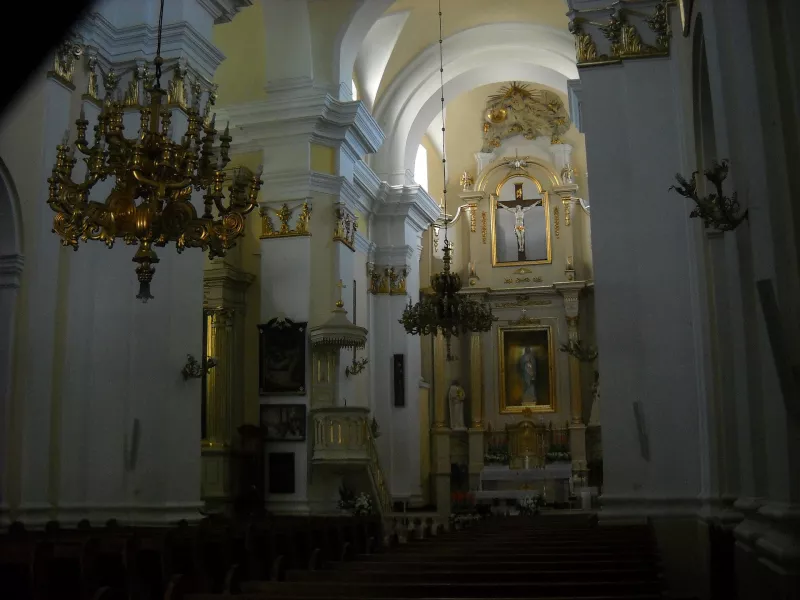
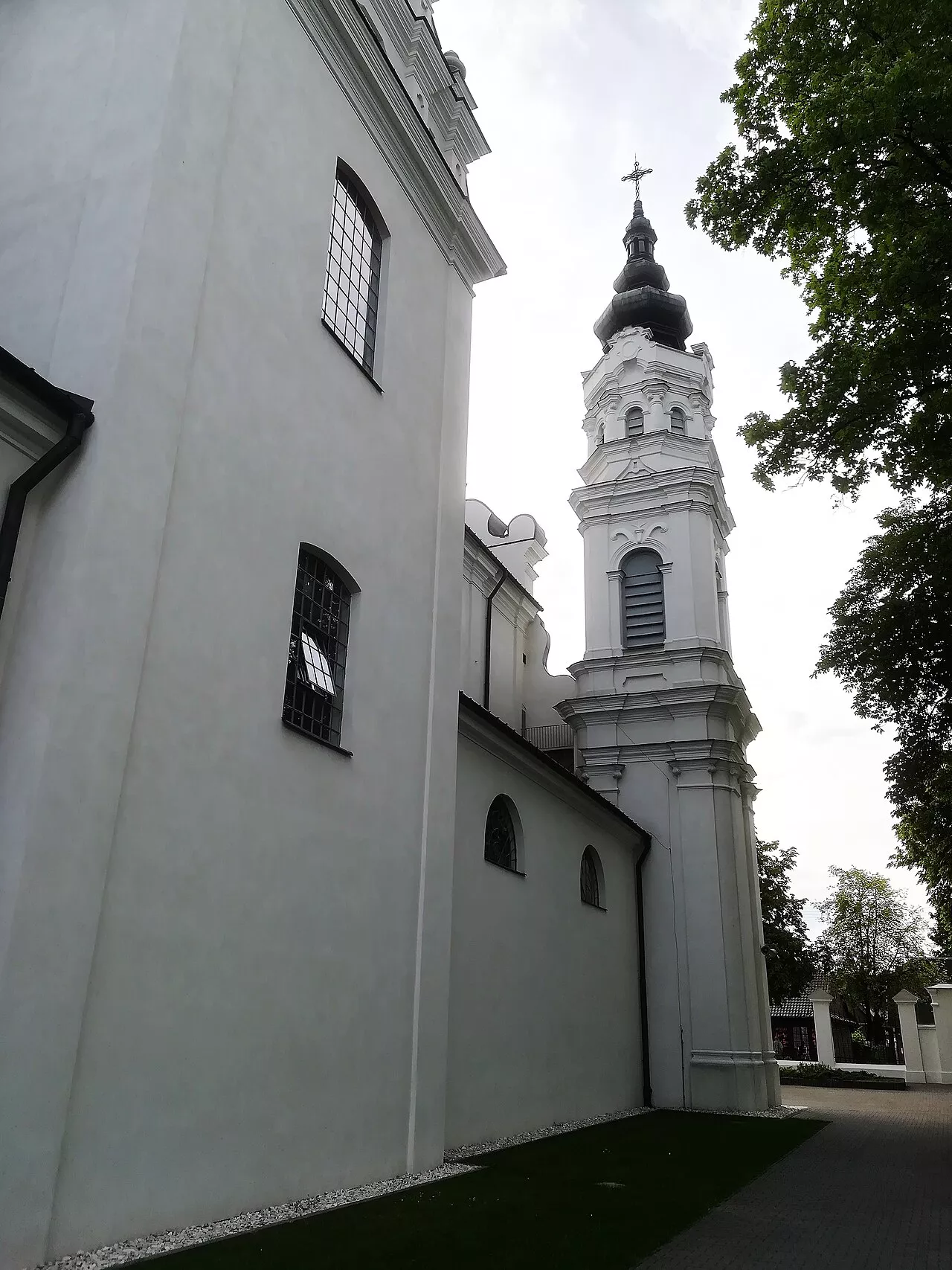
This is a late Baroque two-towered building with a high nave and transept. The interior was rearranged after 1919 for the Latin rite. Nearby stand the former monastery buildings and a brick fence. The memory of Josaphat’s shrine is alive in the town: in 2019, during repairs of the castle chapel, the place where the Radziwiłłs once hid his coffin was found, and in 2024 a scientific symposium about the saint took place in Biała.
How to get there
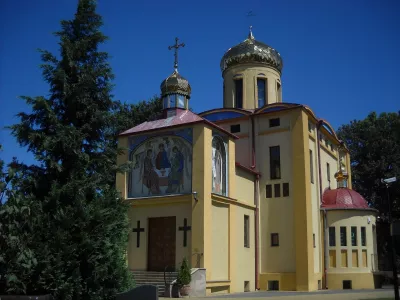
The church is located at 33a Brzeska Street, east of the center. Biała Podlaska lies on the Warsaw — Terespol railway and on the A2 highway; for Ukrainians this is Poland, a passport is required. Open during services. Nearby are the Church of Saint Anna, the Church of Saint Anthony, and the Church of Cyril and Methodius. More about the region in the article Polish Polissia.