
The Chornobyl Exclusion Zone is a realm of large herbivores. Without hunting or economic activity, elk, red deer, roe deer and wild boars have multiplied here, and apart from wild animals, the zone is also home to an unusual herd — cows that have gone feral and manage without humans. The Chornobyl Radiation and Ecological Biosphere Reserve tells about them.
Elk and Deer
The elk is one of the most frequent "guests" of the zone's camera traps. In the winter of 2024, the reserve showed a shot of a female elk with an almost grown calf. Forests, marshes and overgrown fields of abandoned collective farms provide elk and deer with plenty of food. Red deer and roe deer keep to forest edges and clearings, and come out to meadows at night.
Wild Boars
Wild pigs live in the zone in large groups and often root around near abandoned homesteads where there used to be vegetable gardens. The reserve warns that a wild boar is a dangerous animal and one must not approach it closely. Nighttime footage from camera traps shows wild boars foraging next to former houses.
Feral Cows
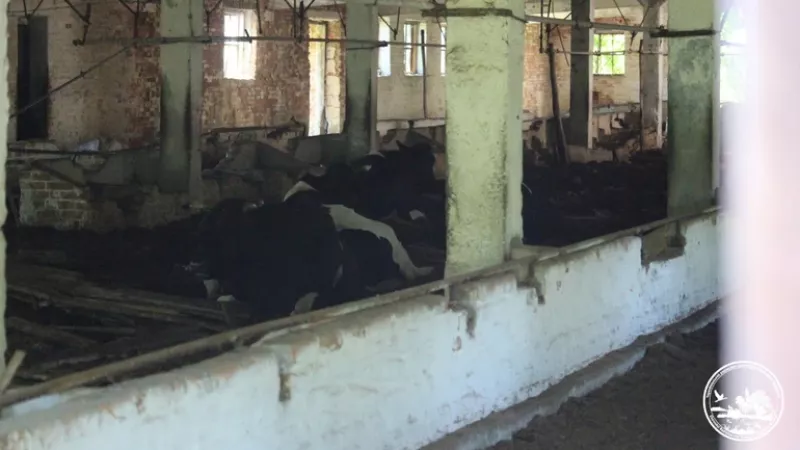
The most unusual inhabitants of the zone are a herd of cows that live on their own. Without veterinarians and barns, the animals have formed their own hierarchy, reproduce and survive even winters. From bad weather, the cows hide in old farms of former collective farms — it is precisely there that the reserve's workers film them.
Who Keeps Them in Balance
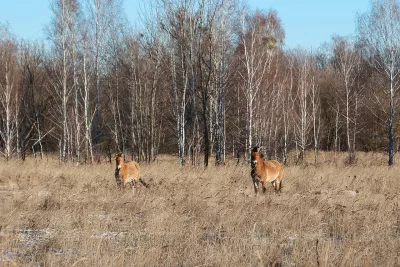
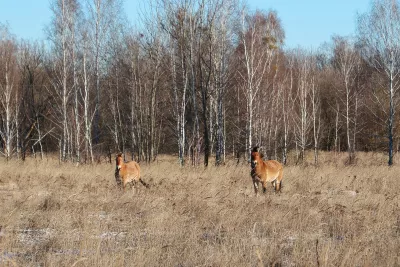
The large number of herbivores is the food base for the zone's predators: wolves and lynx. Thus, the natural chain that has long been absent in the rest of Polissia has been restored in the Exclusion Zone. Read more in the articles "Predators of the Chornobyl Zone" and "Przewalski's Horses in the Chornobyl Zone".
How to See Them
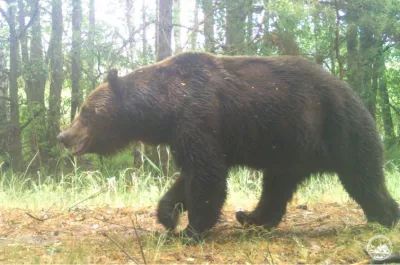
Visiting the zone during martial law is restricted and possible only with permission and accompanied; part of the territory is mined. The best way to see the animals is through camera trap footage published by the reserve.