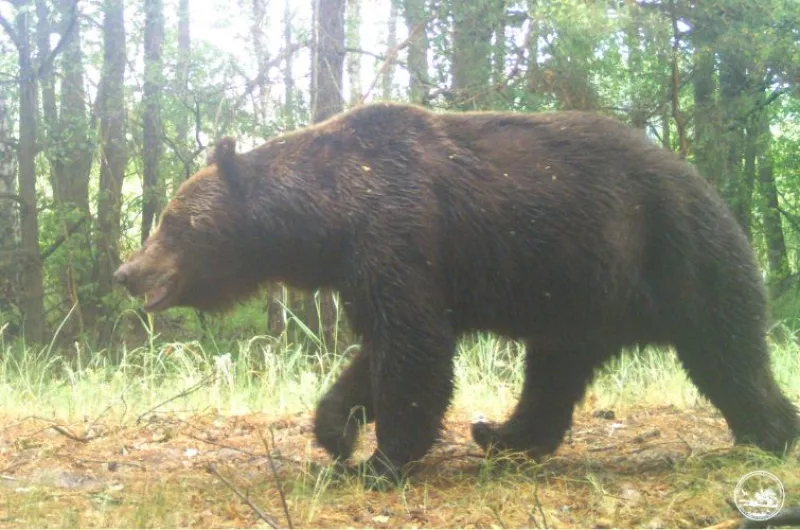

Without people, the Chernobyl Exclusion Zone has become home to what the rest of Polissia lacks: large predators. Wolves and lynxes live here, and in recent years, camera traps of the Chernobyl Biosphere Reserve have even recorded a brown bear — an animal that disappeared from Ukrainian Polissia back in the last century.
Wolves
The wolf is the main predator of the zone. According to the head of the reserve’s scientific department, Denys Vyshnevskyi, about eight wolf packs live on the Ukrainian side, meaning 50–60 animals, with some packs also roaming into Belarusian territory. Wolves have plenty of prey: the zone is rich in moose, deer, roe deer, and wild boars. Stories about “mutant wolves” are fiction: these are ordinary Polissian wolves simply left undisturbed.
Lynx
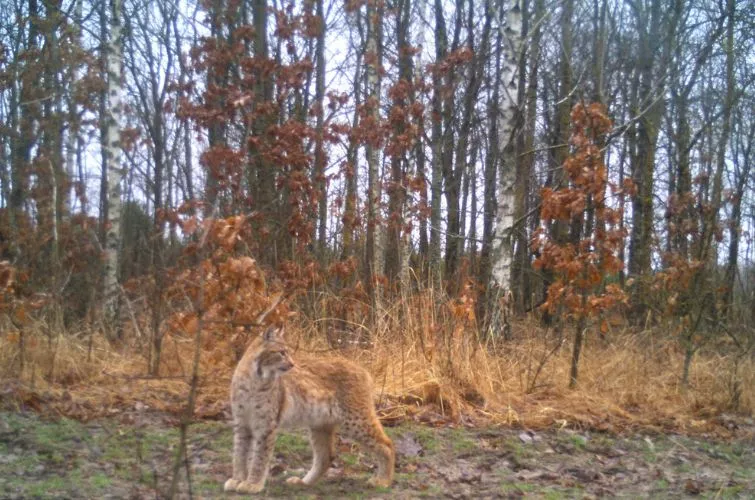
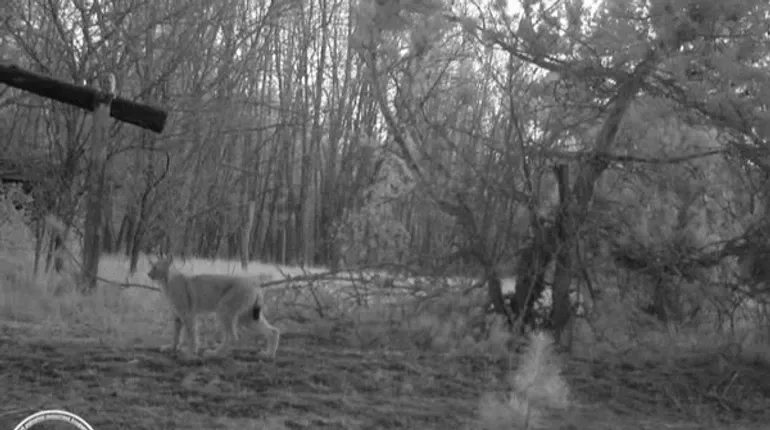
The Eurasian lynx is a rare Red Book species. In the last century, it disappeared from most of Ukrainian Polissia, and by early 2020, its population in Ukraine was estimated at only about 40 individuals. The lynx has resettled and is reproducing again in the exclusion zone. Camera traps catch it both during the day and at dawn: in autumn 2025, two predators—a lynx and an owl—were captured in the same frame.
Brown Bear
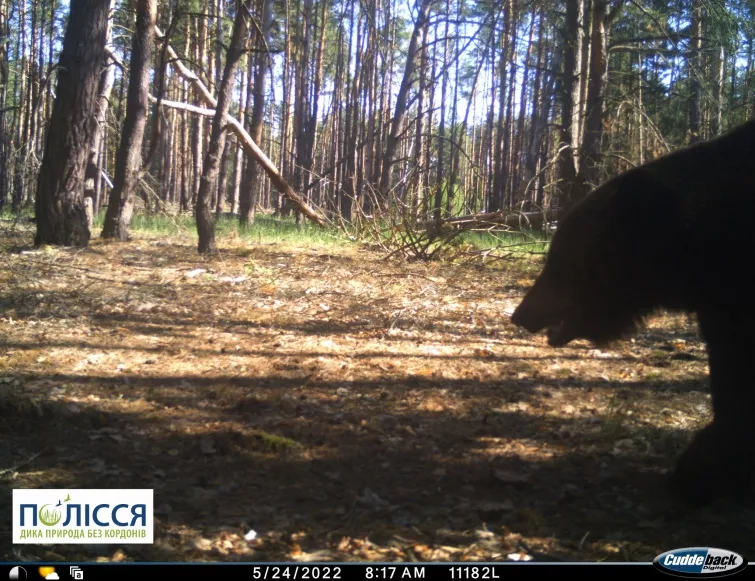
The brown bear is a real sensation for Ukrainian Polissia. The reserve’s camera traps recorded it in 2020, twice in 2022—on May 24 and August 19—an adult male was filmed in November 2023, and the bear was spotted again in summer 2025. The reserve emphasized that the animal did not leave the area even during the war. Whether the bear lives here permanently is still unknown: reproduction and wintering have not yet been confirmed.
Why There Are So Many Predators
The exclusion zone covers over 2600 km² without hunting, logging, or roads with active traffic. Forests have regenerated here, along with prey for predators. Scientists consider footage of large animals direct evidence that the natural complexes of Polissia in the zone are intact and complete. During the 2022 occupation, the ecosystem generally was not harmed, although mines and fires remain a threat.
How to See Them
It is not allowed to search for predators in the zone independently: it is a restricted area, some of which is mined, and visits are limited during martial law. The best way is to follow the reserve’s camera trap footage. Articles about the zone’s herbivorous inhabitants can be found in “Przewalski’s Horses” and “Moose, Deer, and Feral Cattle.”