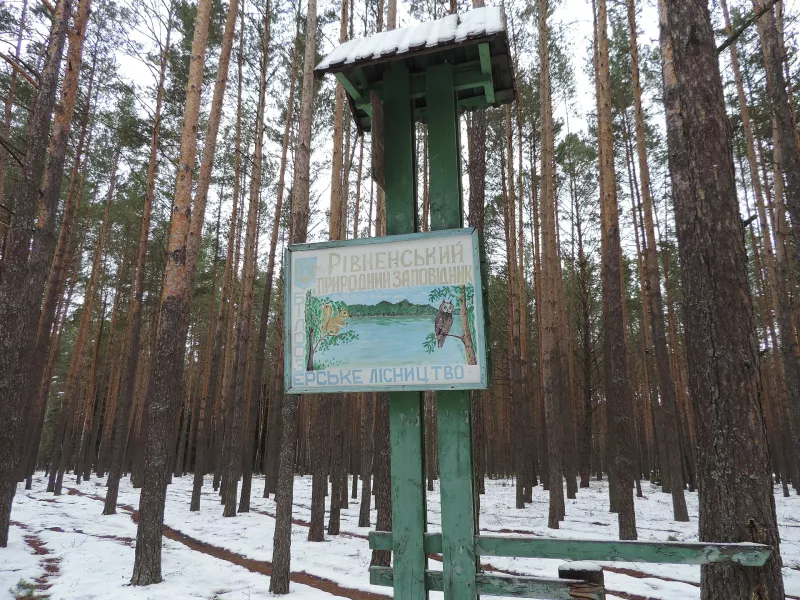
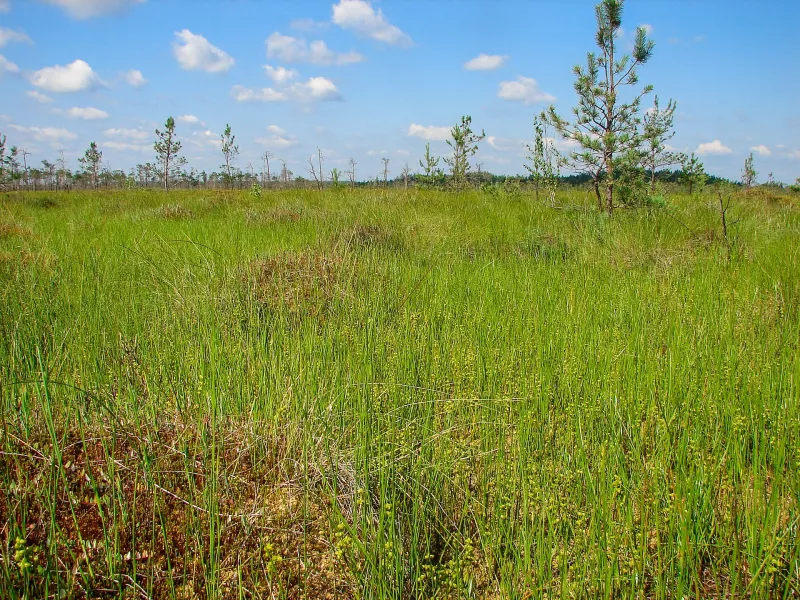
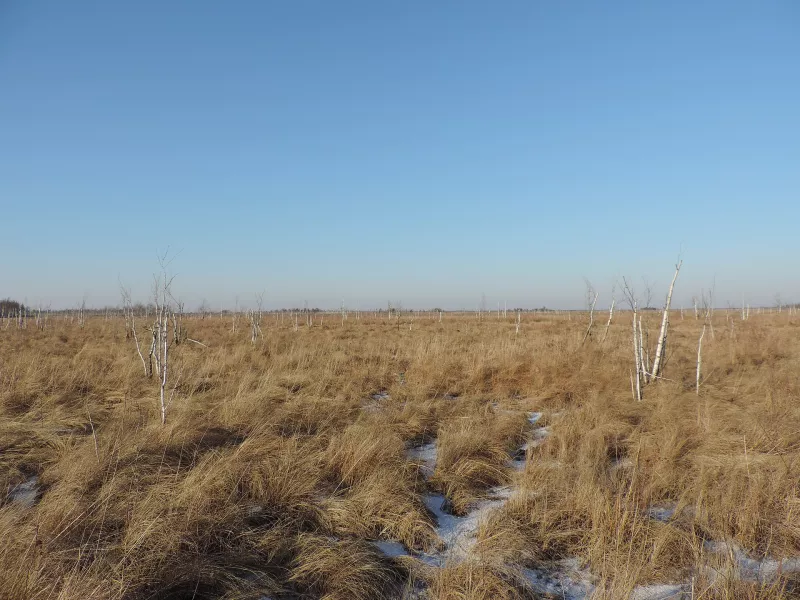

Rivne Nature Reserve is the second largest protected area of its kind in Ukraine and the main natural treasure of Rivne Polissia. It lies in the very north of the region, in Sarny and Varash districts, and protects what is now rare in Europe: large natural-state swamps, pine forests among them, and clean forest lakes. The reserve was established by a presidential decree on April 3, 1999, to preserve the typical and unique natural complexes of Ukrainian Polissia.
This is not a park or a recreational area. The reserve is the strictest category of nature protection, so most of its lands are closed to free walking. But what it borders on, what lives there, and where you can at least see it from the edge — we explain below.
Four Massifs
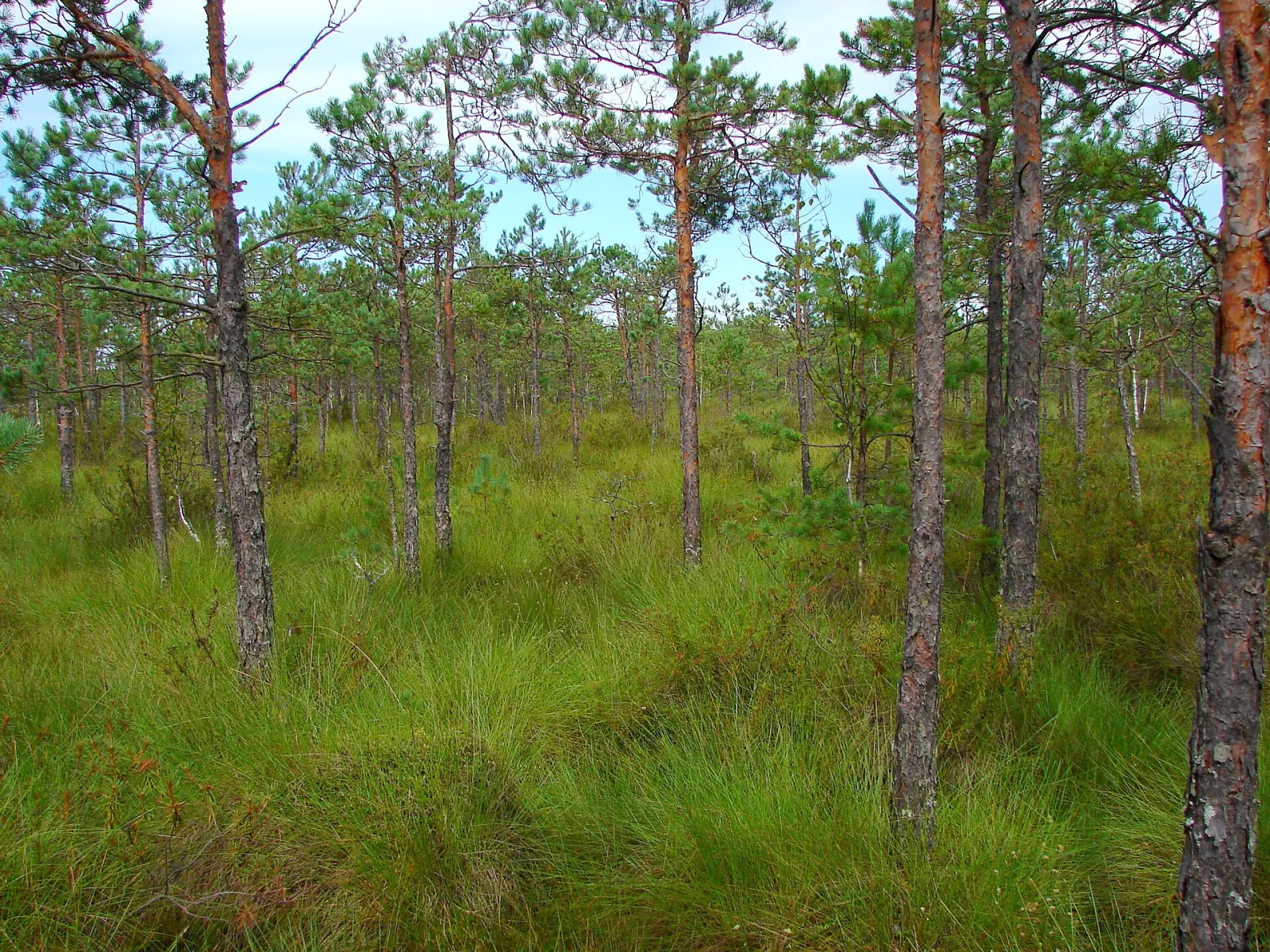
The reserve consists of four separate plots scattered across the north of the region. One massif — Bilozerka — lies northwest of Varash, the other three — Perebrody, Syra Pohonia, and Somyne — lie northeast of Sarny. To the northeast, the protected lands reach Zhytomyr region, to the northwest — Volyn, and to the north — the border with Belarus. Protection is managed by six forestry enterprises: Pivnichne, Starosilske, Belske, Bilozerke, Karasynske, and Hrabunske.
These plots were protected before as well: since 1984 each had the status of a national nature reserve — landscape “Bilozerke”, general zoological “Perebrody”, botanical “Syra Pohonia”, and hydrological “Somyne”. The reserve united them and strengthened the regime. By decree, over 47 thousand hectares were allocated to it, and a little more than 42 thousand hectares were transferred for permanent use.
Perebrody
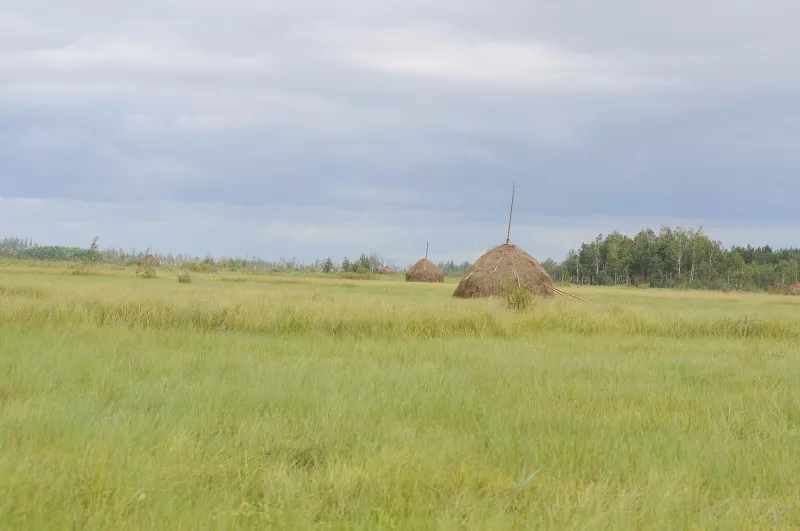
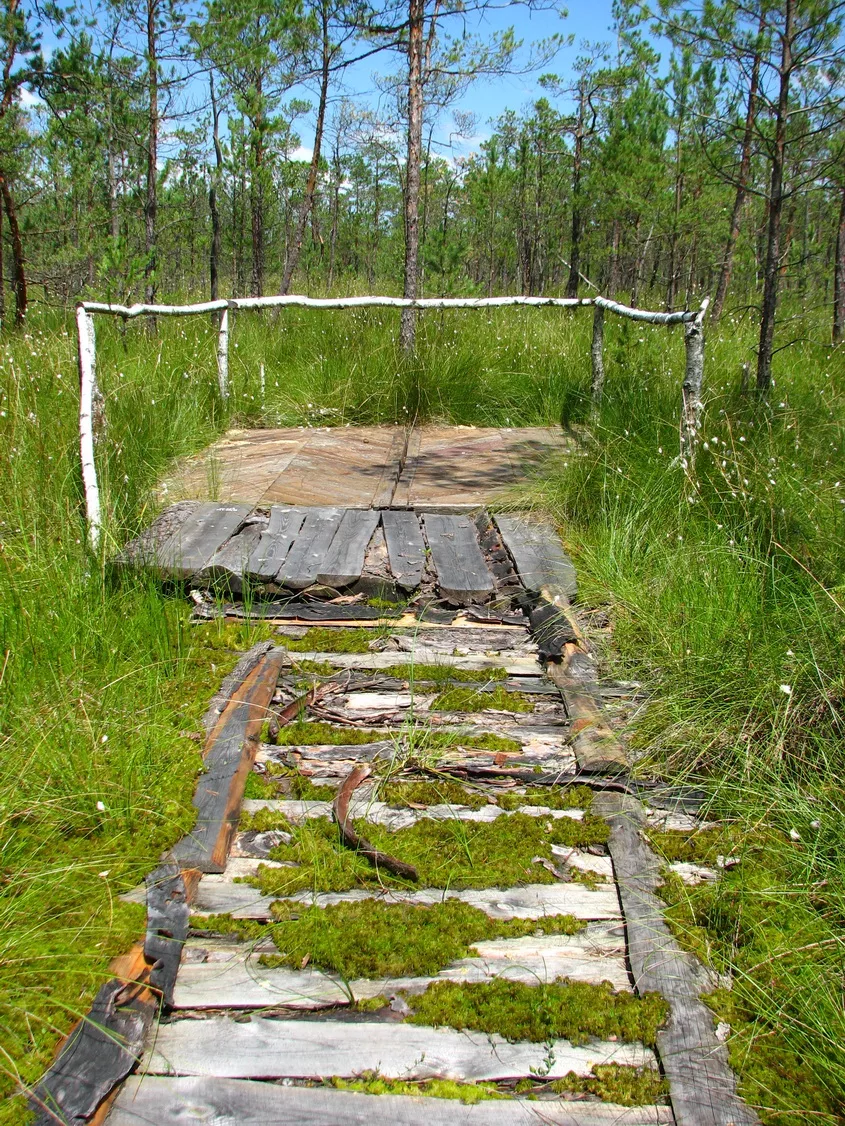
Perebrody is a heavily waterlogged swamp massif, from which, they say, the name came: one had to “wade through” here. The swamp develops in a rare way for Ukraine — from the edges to the center: transitional sedge-sphagnum areas with Scheuchzeria palustris, sundew, and bog willow dominate on the periphery, while in the most waterlogged center — lowland reed-sedge swamps. Forest islands with pine, heather, blueberry, and cowberry are scattered on mineral ridges. Lynx are found precisely in Perebrody. In 2004 the massif was included in the list of wetlands of international importance under the Ramsar Convention.
Syra Pohonia
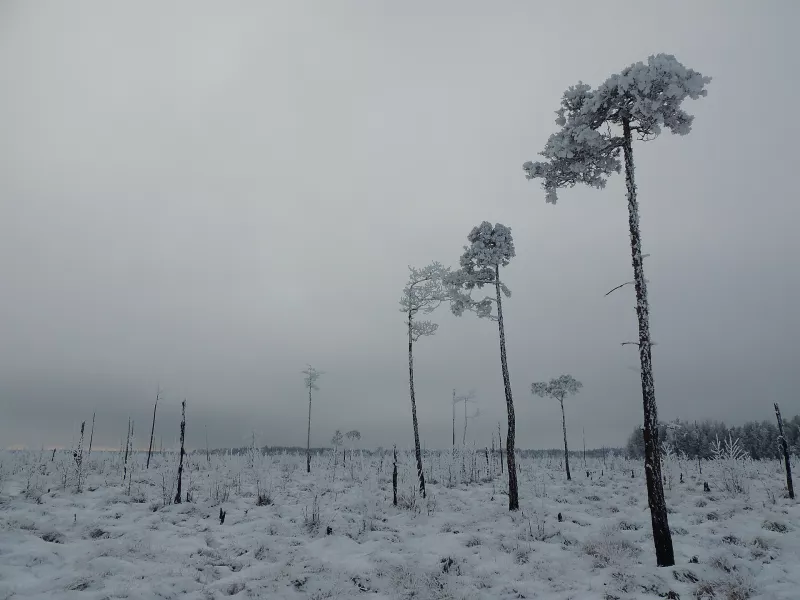
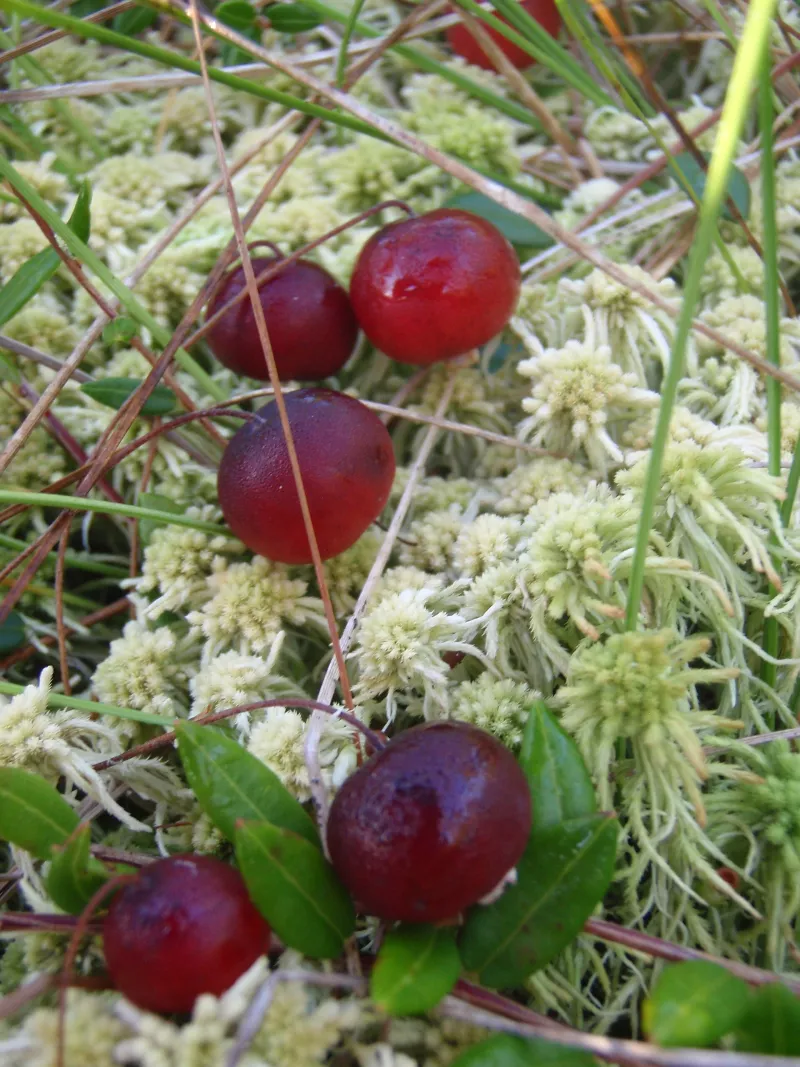
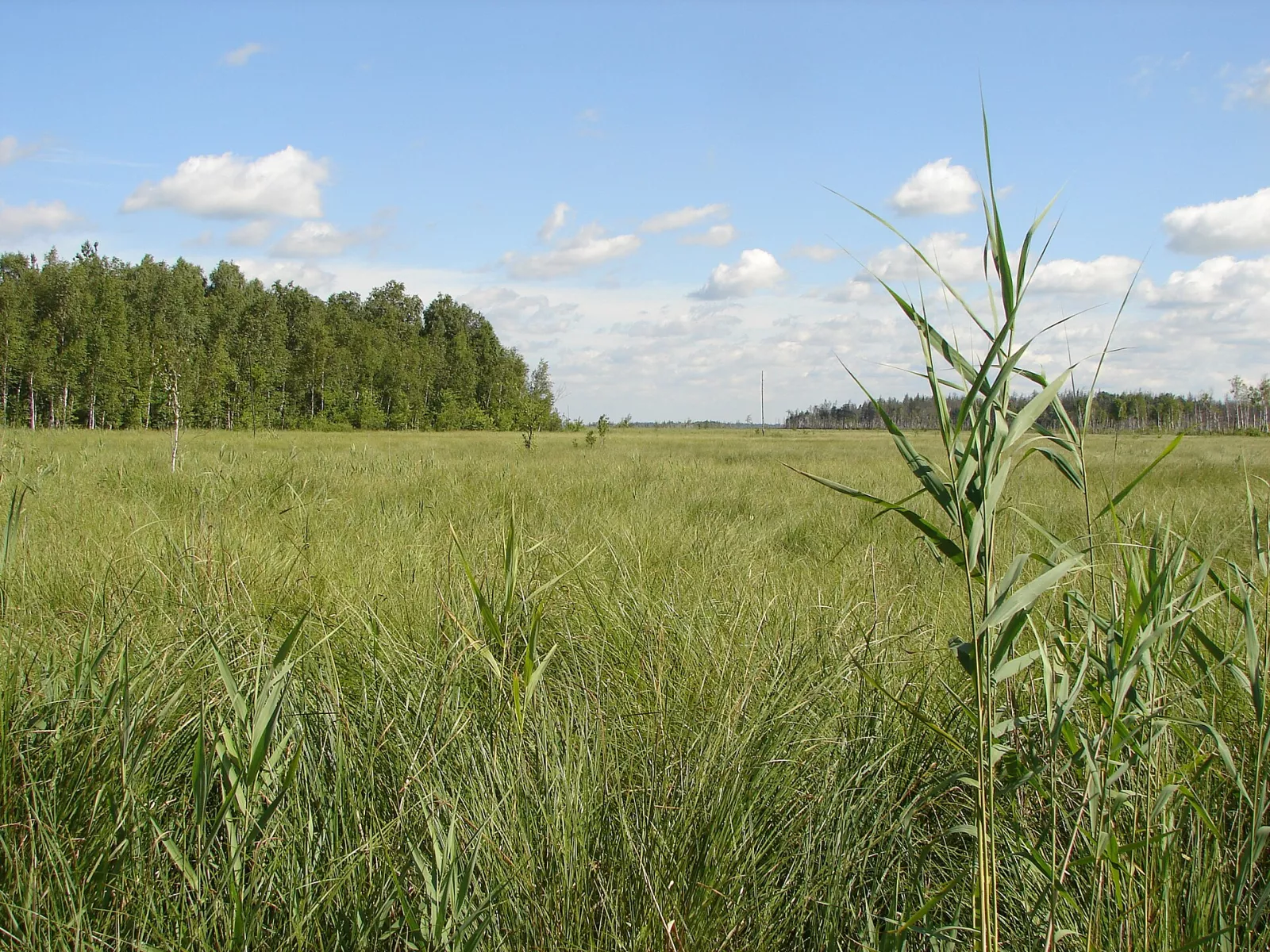
Syra Pohonia is the only swamp massif in Ukraine with a hilly-mire complex, which usually occurs in the northern swamps of Scandinavia and the Baltics. The hills are covered with low pines on a sphagnum carpet, between them are waterlogged mires covered with moss. Here grow small cranberry from the Red Book of Ukraine, round-leaved sundew, three-leaved crowfoot, and other northern swamp plants.
Somyne
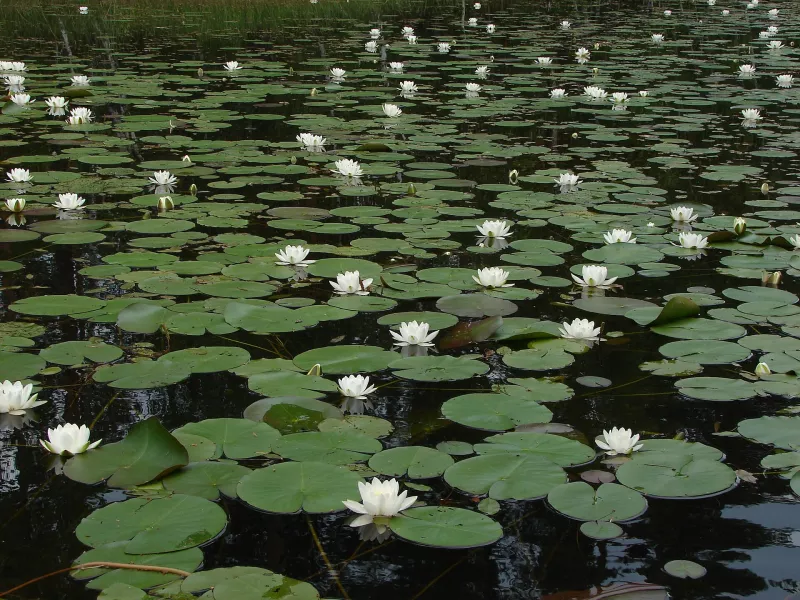
The Somyne massif is the southwestern edge of the large Kreminne swamp massif between the Lva and Stvyha rivers. This is one of the richest plant areas of the reserve: transitional sedge-sphagnum swamps, swampy birch forests, and relict species such as Lapland willow. In the middle of the swamps lies Somyne Lake of karst-erosion origin: its area is about 56 hectares, maximum depth 13 meters. On it, as well as on Bile Lake, the mute swan lives.
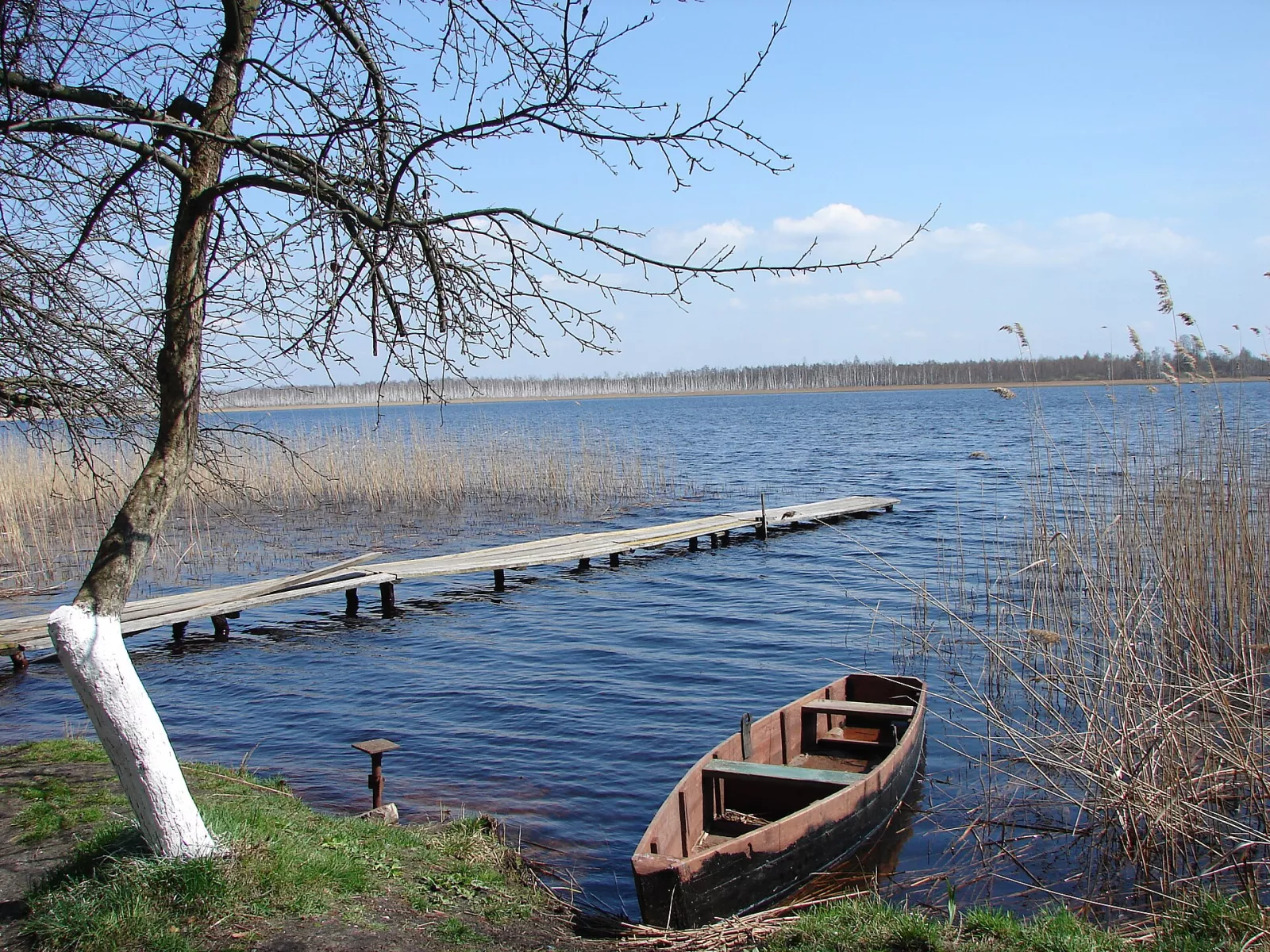
Biloozerskyi Massif and Bile Lake
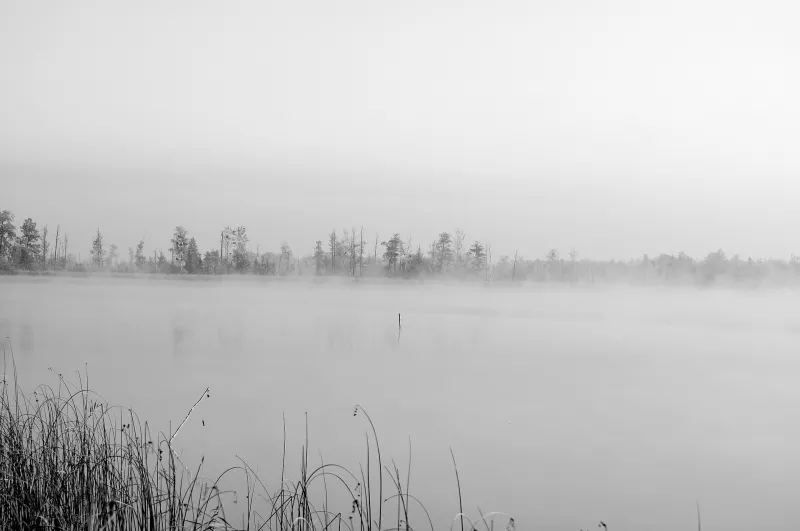
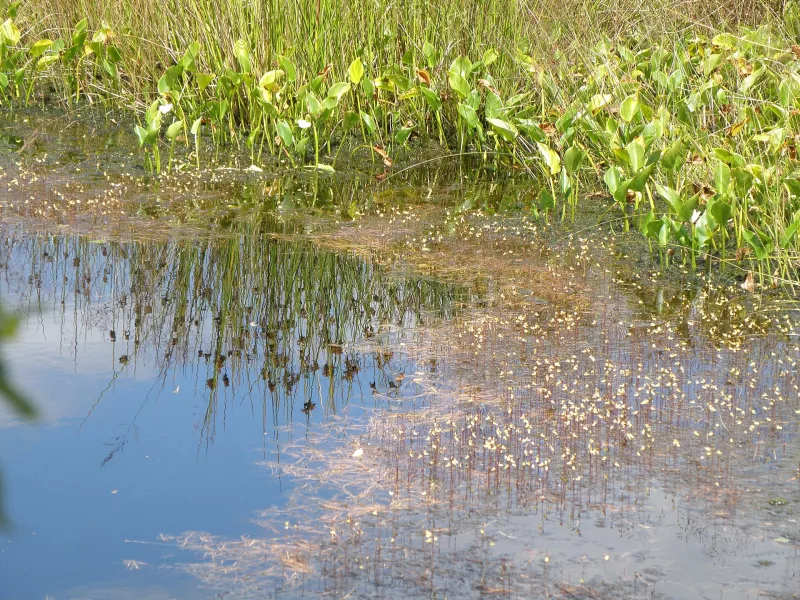
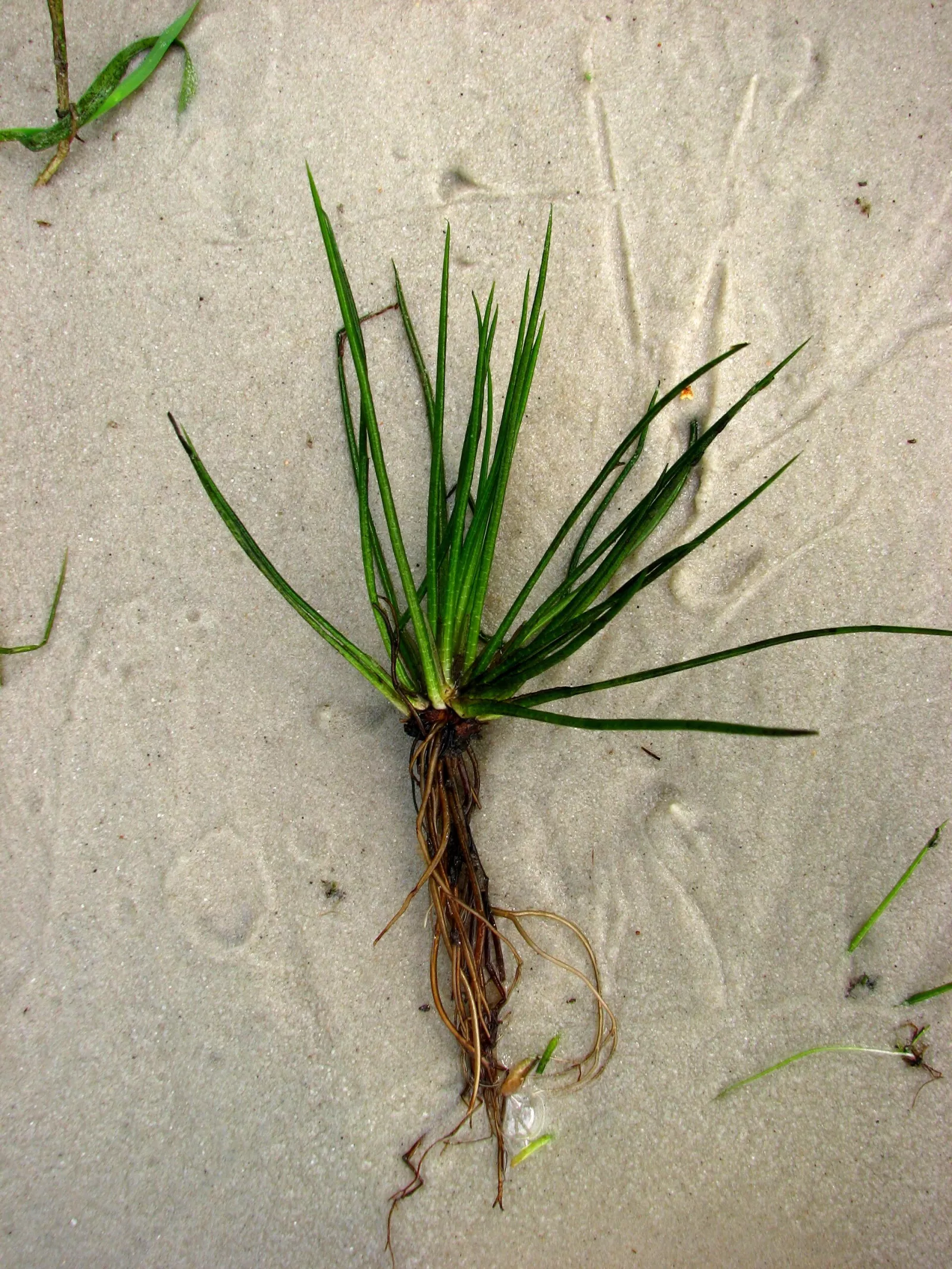
The Biloozerska section is the most diverse: in the valley of the Berezyna River, almost the entire range of Polissia’s swamp communities is gathered here — from sedge-hypnum to sedge-sphagnum, and on the elevations stand green moss, blueberry, and lichen pine forests. The main highlight of the massif is Bile Lake near the village of Rudka, one of the largest lakes in the region: about 453 hectares, with depths in the deepest funnels reaching up to 26 meters. Its name comes from the light limestone stones on the bottom, visible through the clear water. The rare lake quillwort grows on the lake bottom. Nearby, on the border with Volyn, lies the Koza-Berezyna swamp — one of the least affected by land reclamation swamps in Ukraine.
Plants and Animals
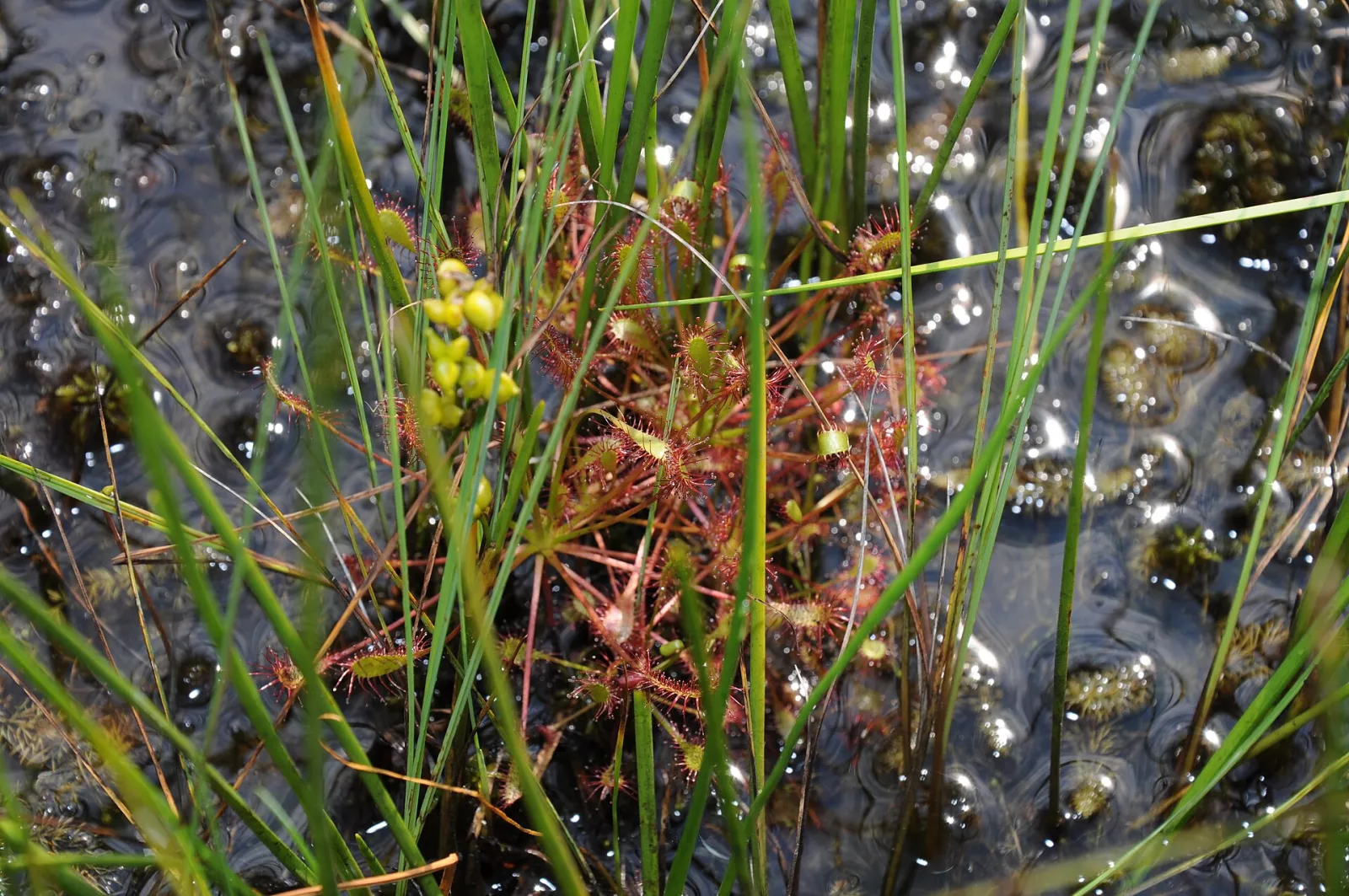
Forests and swamps in the reserve occupy almost equal areas — about 48 percent each. Among the swamps, transitional and raised sphagnum dominate, while lowland swamps make up only a tenth to a fifth. Researchers count over 560 species of vascular plants here, 28 of which are listed in the Red Book of Ukraine: Scheuchzeria palustris, common and English sundews, small cranberry, several orchid species. Ten plant communities are included in the Green Book of Ukraine.
There are over two hundred species of vertebrate animals. There are 26 mammals: foxes, wolves, raccoon dogs, stoats, otters, and in Perebrody — a lynx. Among 165 bird species, northern taiga species stand out: black grouse, hazel grouse, and occasionally capercaillie. Gray cranes and Eurasian curlews nest in the swamps; in the remote pine forests near the swamps — black storks; and among rare birds of prey — greater spotted eagle, white-tailed eagle, and bearded owl. Fifteen fish species live in the reserve’s water bodies, and eels are even found in Bile Lake.
Swamps That Return Water
Part of Polissia’s swamps were previously drained by reclamation canals: water flowed away quickly, peat dried out and burned. On the Syra Pohonia and Somyne massifs, a large restoration of the natural water regime has begun — earth dams are being built on the canals and wooden flap gates installed to retain water in the swamp. The work is carried out together with the Frankfurt Zoological Society as part of the “Wild Polissia” program, and groundwater levels are monitored by automatic sensors. This is the first project of such scale in Ukraine: it covers about twenty thousand hectares.
Can you go there
A nature reserve is not the same as a national park. Any activity that disturbs the natural state is prohibited on its lands: logging, hunting, fishing, berry and mushroom picking, making fires, driving vehicles off roads. You cannot freely walk through the Perebrody, Syra Pohonia, or Somyne areas, and walking through the swamps without a guide is also dangerous. Scientific, educational, and ecological visits are only possible with the approval of the reserve administration — check with the administration before your trip which routes are open and under what conditions.
The easiest way to see the protected nature is at Bile Lake. Near Rudka, there are places arranged for rest and swimming, while the rest of the shores and surrounding forests are protected, so the rules of the nature conservation area apply here: cars are not parked near the water, fires are not lit outside designated spots, and trash must be taken with you. About the beaches, depth, and fishing — see the article Bile Lake.
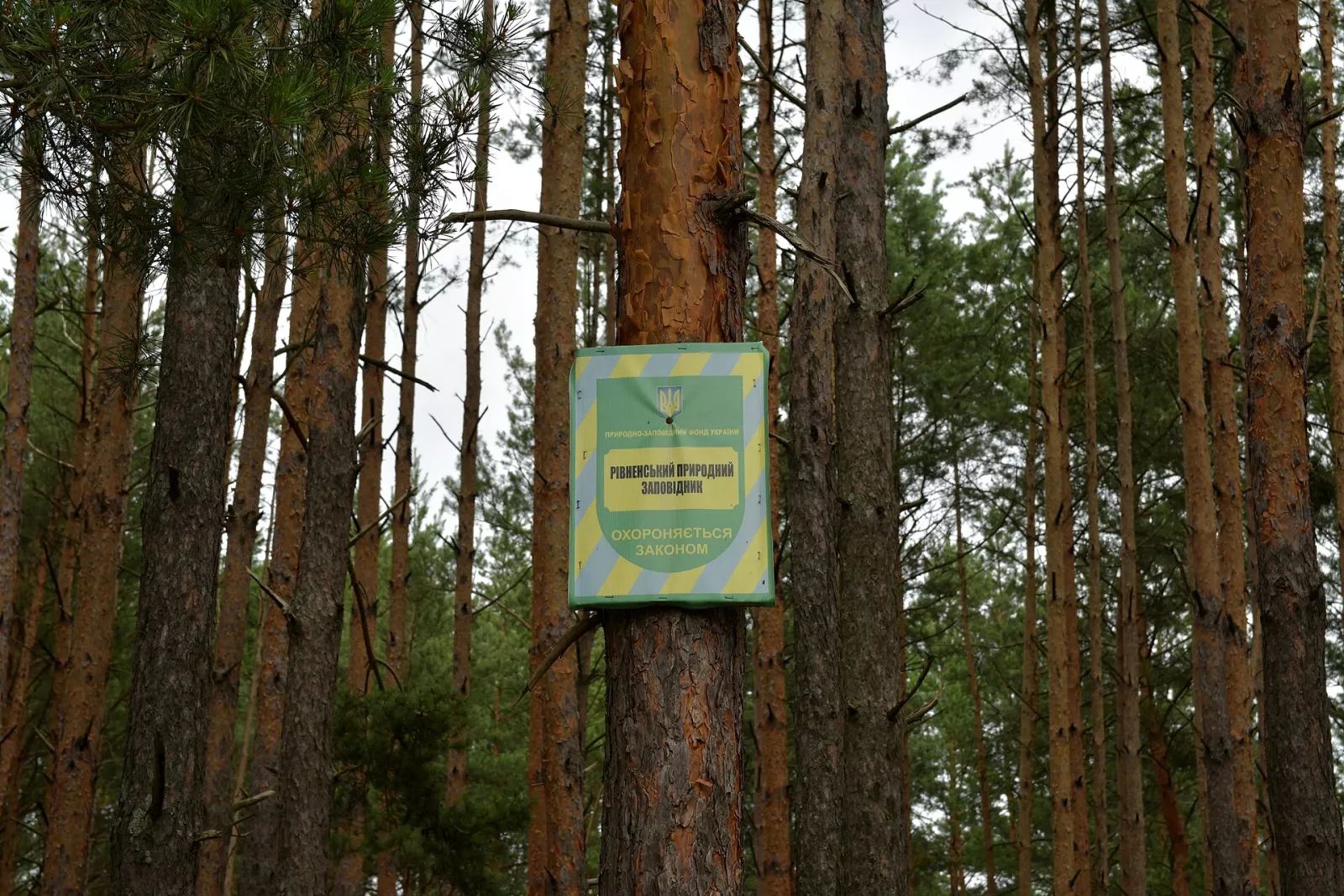
The northern part of the region borders Belarus, so restrictions on presence and movement may apply in border communities. Check announcements from the State Border Guard Service and the regional administration before your trip.
How to get there
The most convenient way to get to Bile Lake is via Varash and Volodymyrets: from Varash to Rudka it is about half an hour by car, from Rivne — two and a half to three hours. The areas east of Sarny lie deep in the Sarny district, among forests and swamps, accessible by dirt forest roads. Sarny is a major railway hub, so it is convenient to use it as a base for trips to the northern part of the region.
What’s nearby
To the west of Bile Lake are Nobel Lake on the Pripyat, Ostrivske Lake, and Omyt. About the whole region — see the article Rivne Polissia: where to go and what to see, and about the districts — in the guides Sarny District and Varash District.