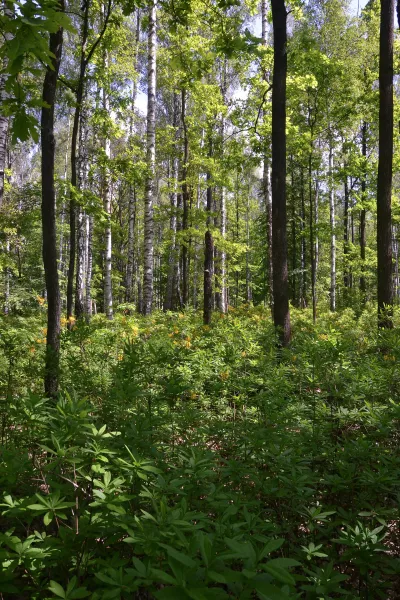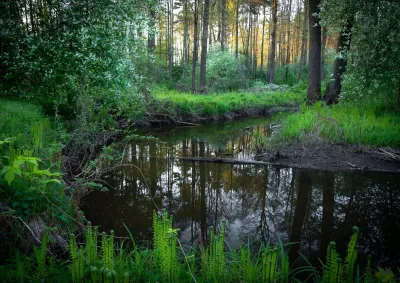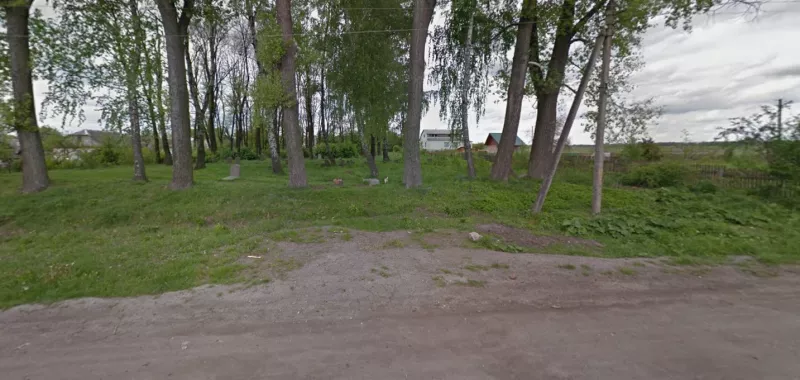

At the intersection of Liza Chaikina and Romanenko streets in Malyn lies a Jewish cemetery, which locals call the old one. However, it was not the oldest: an even older Jewish cemetery once stood on the site of the current bus station, but it was long ago destroyed. About a hundred tombstones remain here, most of them fallen, and the area is densely overgrown with acacia. The oldest found tombstone is dated 1908. In the back stands an ohel over the grave of a rabbi.
Ohel of Rabbi Gedalia
Above the white tombstone stands a simple metal canopy, and on the slab in Hebrew it says: here lies the righteous Rabbi Gedalia, son of the righteous Rabbi Israel, “from Malyn.” Local publications as early as 2016 wrote that a prominent Jewish clergyman was buried in this cemetery, but the name was not mentioned; the plaque now reveals who it is. No further information about the rabbi was found in available sources, so we do not add any assumptions.
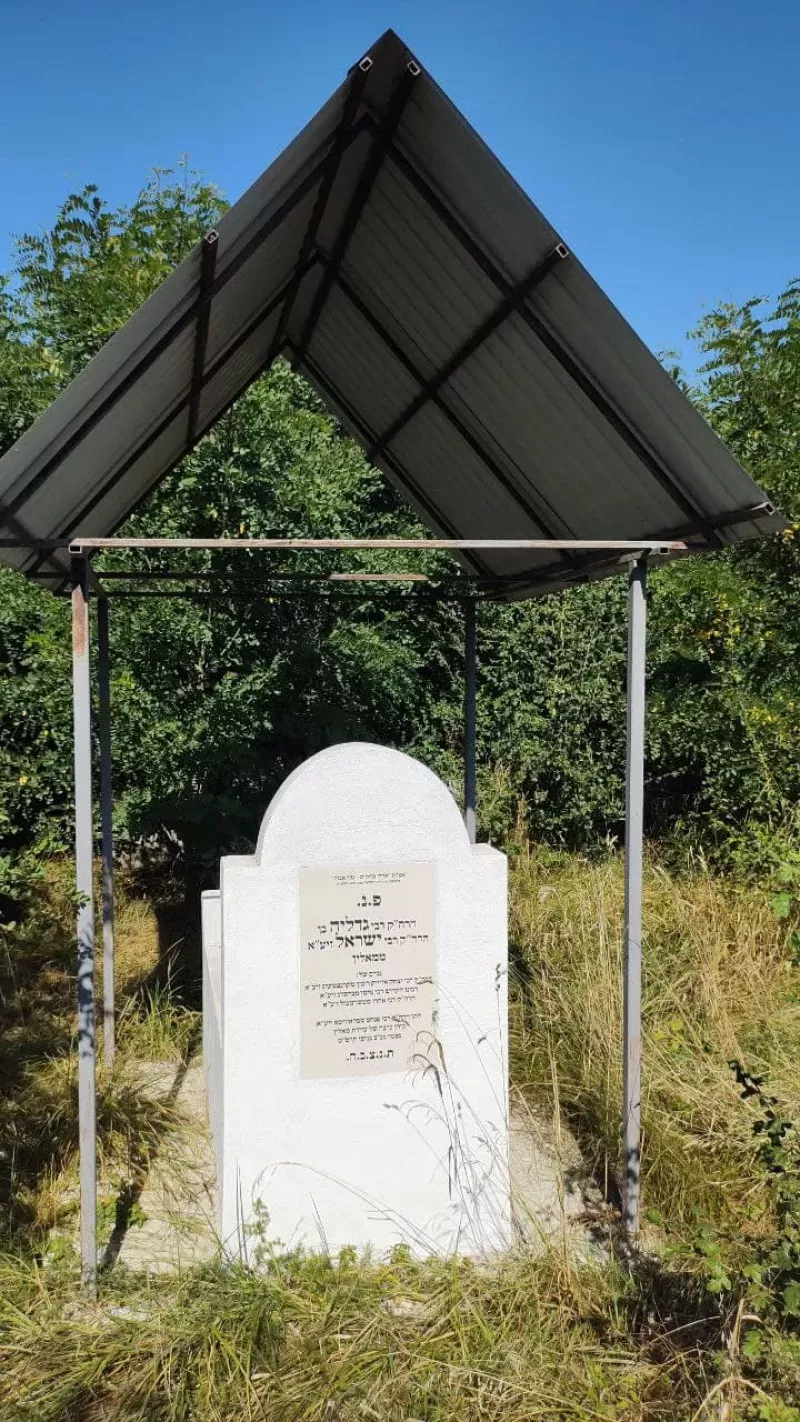
Ohel of Rabbi Gedalia at the old Jewish cemetery in Malyn. Photo: Polissya.today editorial office
According to locals, some tombstones were long ago moved for reburial, and the ohel was erected by a Jewish organization; they do not remember exactly when.
Three cemeteries easily confused
Malyn had three Jewish cemeteries. The oldest was located on the site of the bus station on Vynnychenko Street: it was established in the 19th century, appears on maps from the 1900s, and was destroyed roughly during World War II. The second, discussed here, lies at the intersection of Liza Chaikina and Romanenko streets. The third, the new one, on Kutuzova Street, is maintained. The 1908 tombstone belongs to the second cemetery, not the one near the bus station.
Malyn community and cemetery decline
In 1847, the “Malyn Jewish Society” numbered 1,064 members, and according to the 1897 census, out of 4,256 Malyn residents, 2,547 were Jews, almost 60%. All trade, including the bank, belonged to Jews. Golda Lishanska (1886–1979), known as Rachel Yanait Ben-Zvi, one of the founders of Kyiv’s Poalei Zion and wife of Israel’s second president Yitzhak Ben-Zvi, was born in Malyn; her sister Batya Lishanska became a sculptor in Israel. In 1939, the Jewish population was 3,607 (32%), about 1,200 in 1959, and by 2016 fewer than forty people remained in the community.
The old cemetery fell into neglect after the war. In 2016, there were about a hundred graves here, most fallen, with sand, bricks, and slate lying underneath. The cemetery was not listed on the balance sheets of municipal enterprises or the city council, so it was not maintained for decades. A local resident said that there used to be a Jewish children’s cemetery here as well: the slabs were turned into garden plots, and a house was started on this site but never completed.
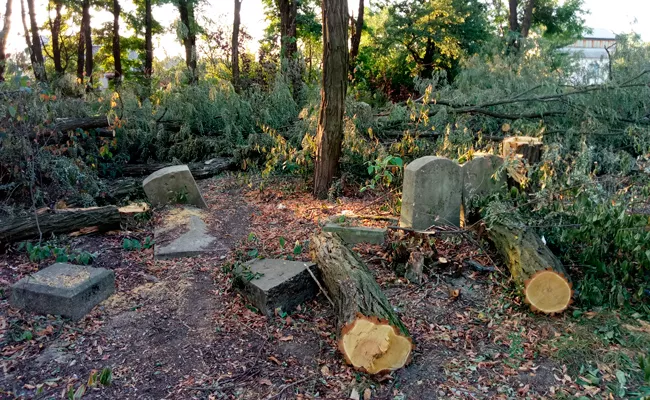
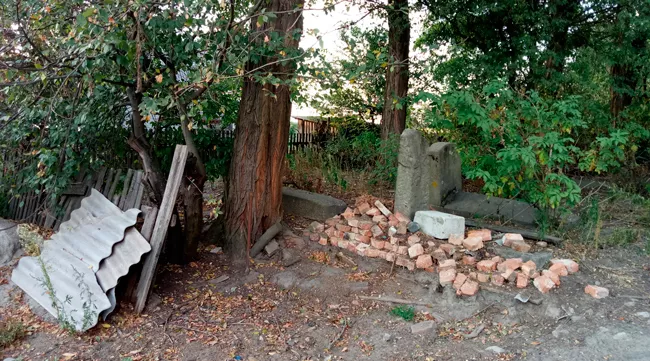
Photo by Maryna LISNICHUK.
In 2016, activists, supported by the Jewish community, began clearing the cemetery: the environmental inspection allowed cutting down hazardous poplars, and sponsors from the Jewish community provided funding. They planned to fence the area and create a memorial park zone here. According to ESJF’s assessment, fencing is urgently needed; the land is communal.
Jewish grave in the Czech cemetery
There is also a separate Jewish grave in Malyn’s Czech cemetery, among modern burials: a granite pillar shaped like a trunk (“tree”) with an oval medallion. This form of tombstone is often found in Jewish cemeteries of Polissia.
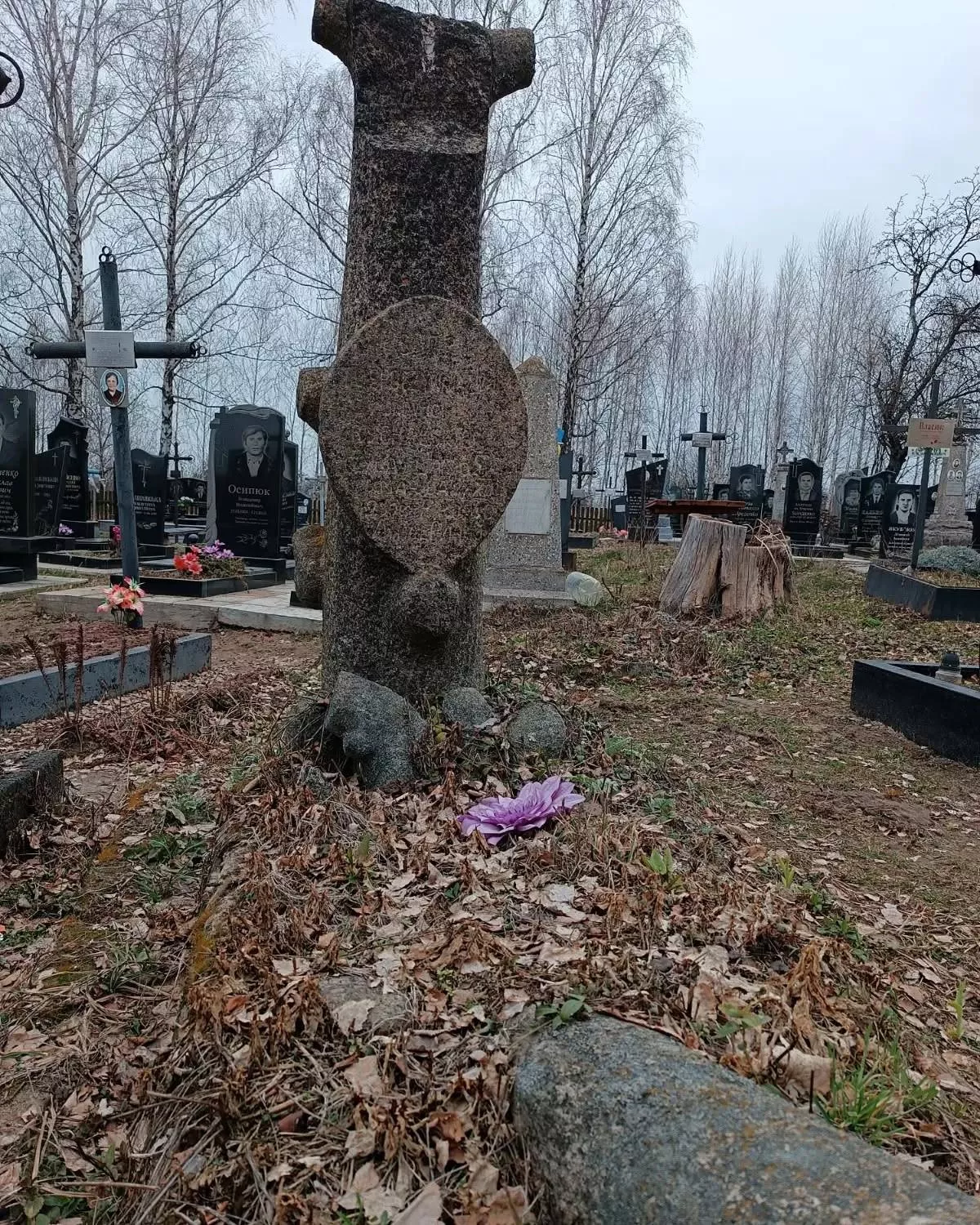
Jewish grave at the Czech cemetery in Malyn. Photo: Polissya.today editorial team
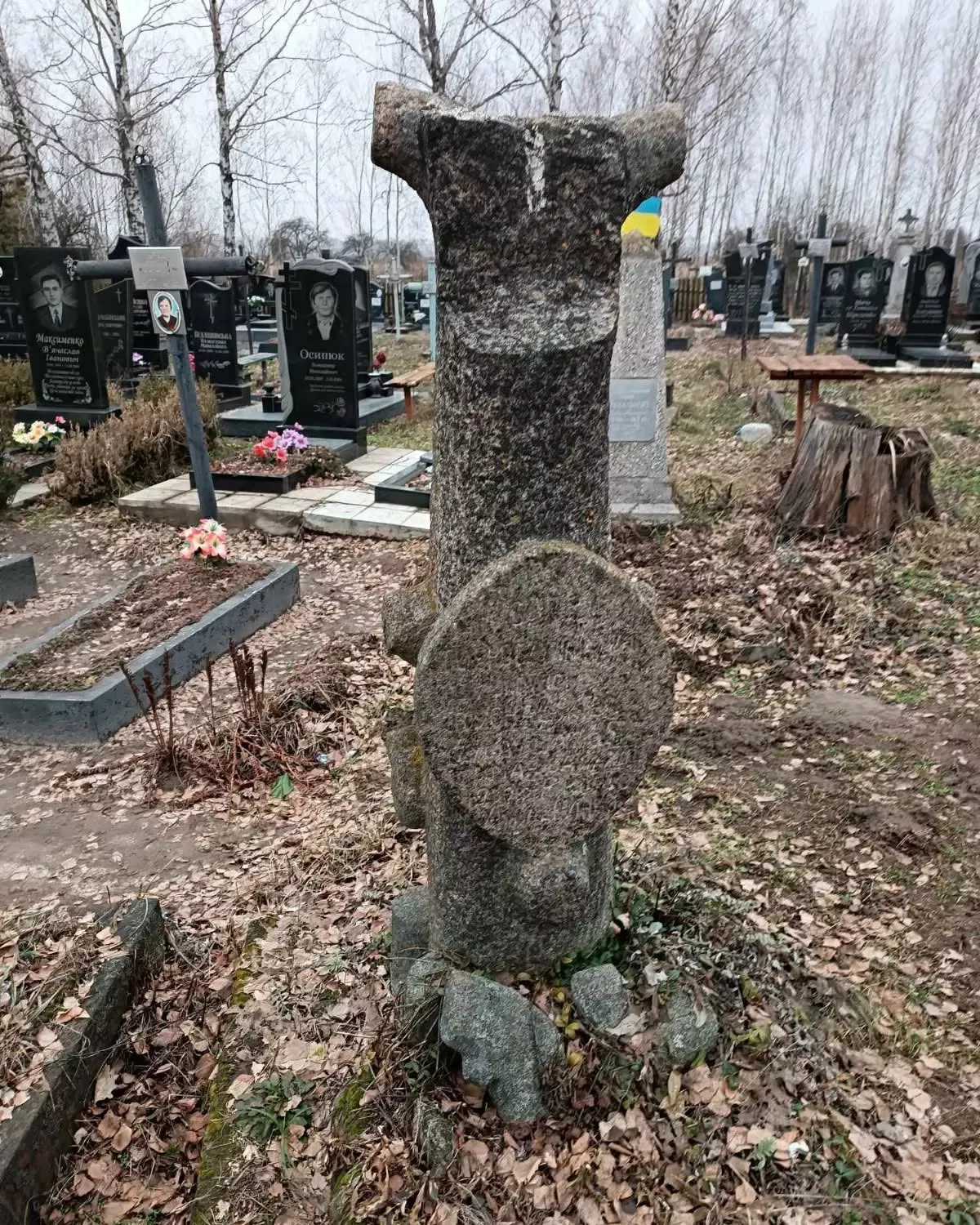
The same gravestone from the other side. Photo: Polissya.today editorial team
Read about the Holocaust in Malyn, Shcherbiv Yar, and the new cemetery where the victims were reburied in the articles «Holocaust in Malyn» and «A Brief History of the Jews of Malyn».