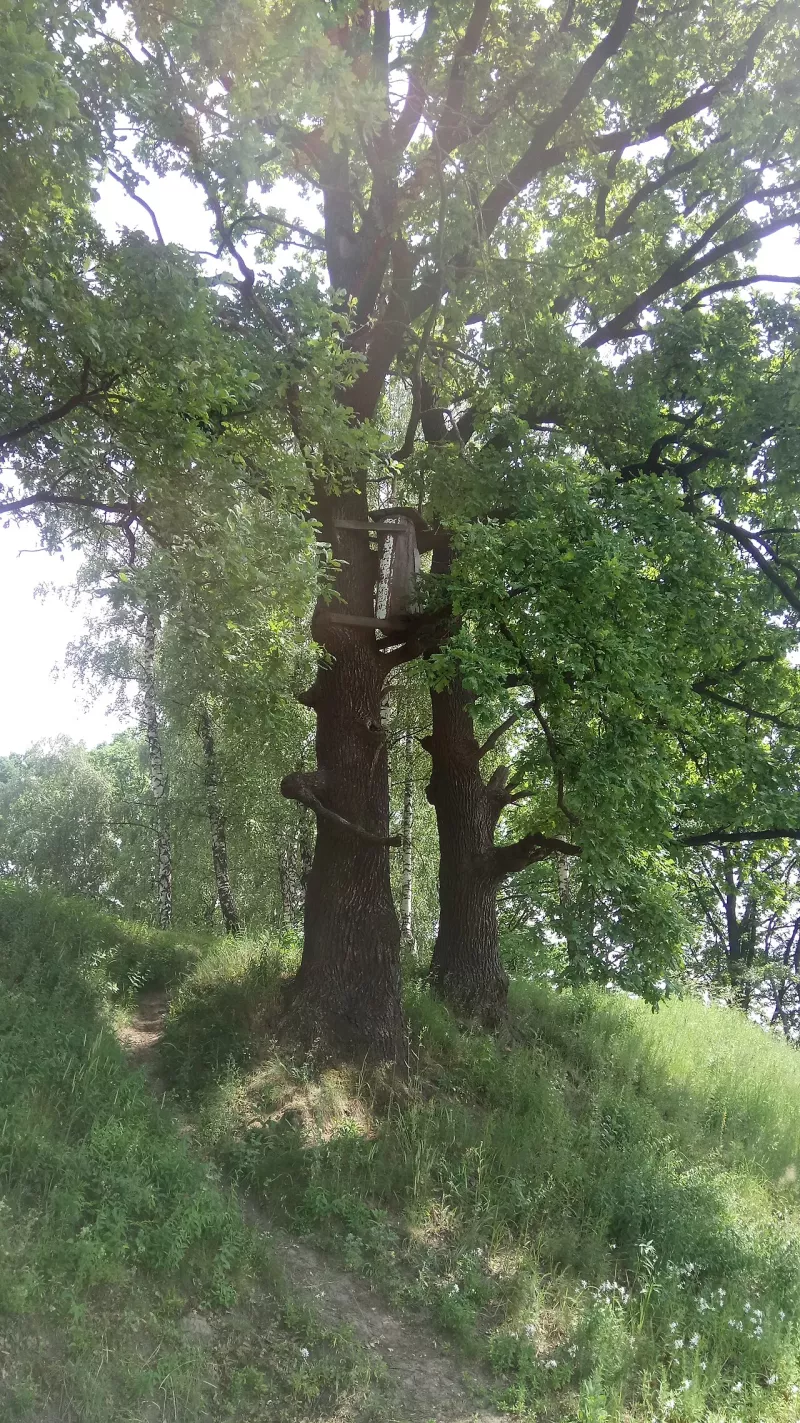
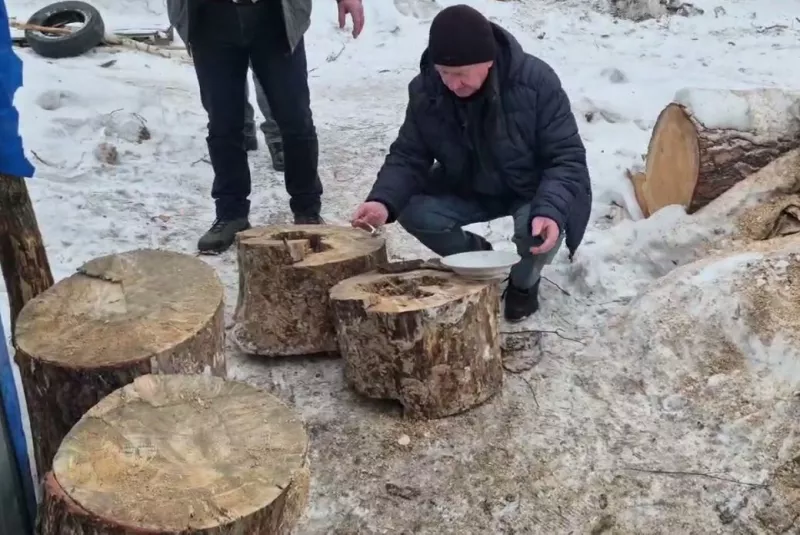

In the Olevsk community in the north of Zhytomyr region, traditional beekeeping is being revived — the harvesting of honey from wild bees living in tree hollows. According to local historian and history teacher Anatolii Shynkar, at the beginning of 2026, almost every village in the community had two or three men making new borts. The beekeeping traditions of Zhytomyr and Rivne regions are included in the National List of Elements of the Intangible Cultural Heritage of Ukraine.
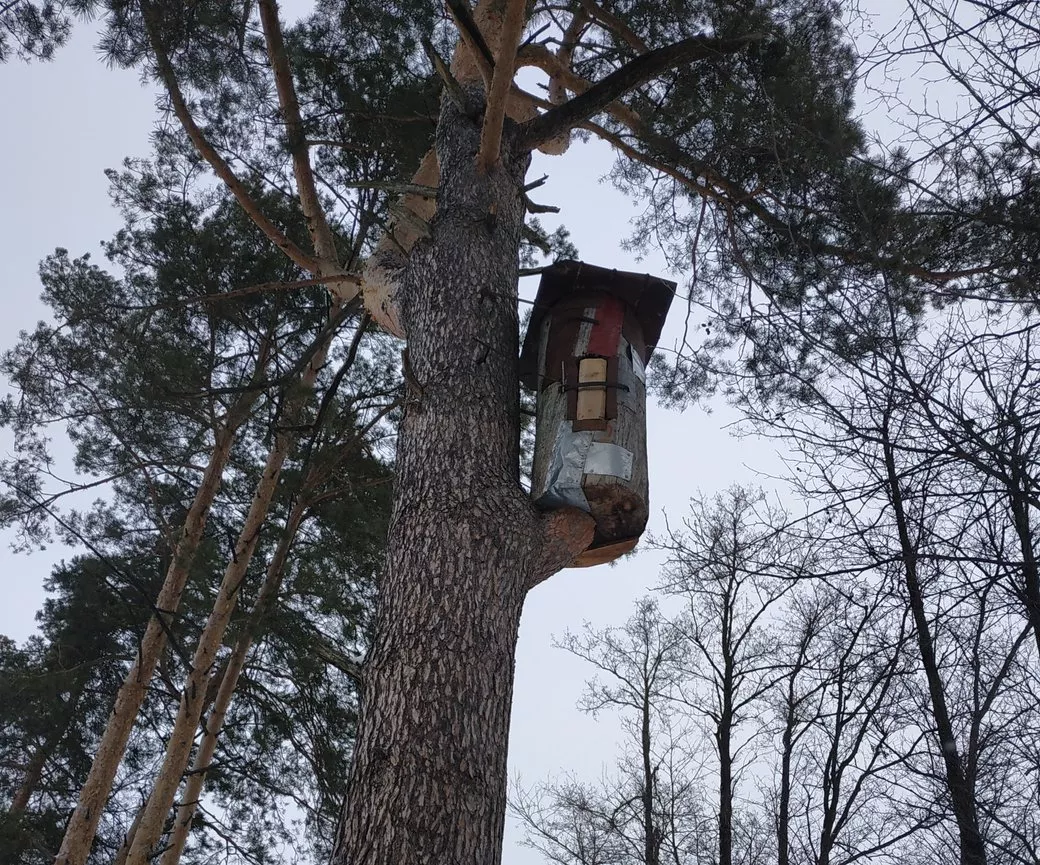
Photo: Anatolii Shynkar / Suspilne Zhytomyr
Beekeepers of Olevshchyna
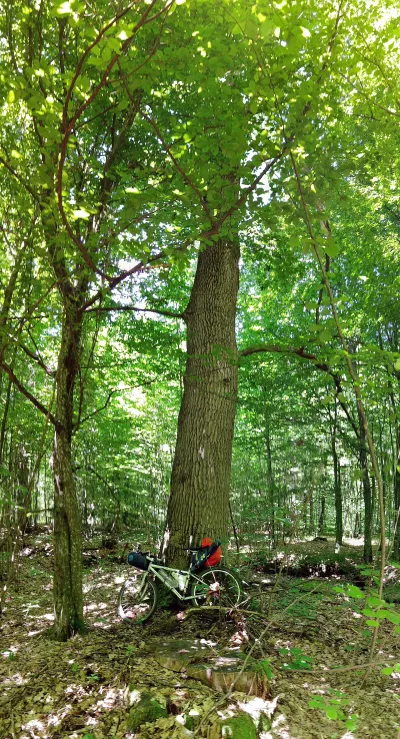
The most well-known local beekeepers are Mykola Renkas, Volodymyr Dvoretskyi, and Vasyl Burmaka. In the community’s forests, there are both vertical borts carved into tree trunks and horizontal logs. Burmaka in the village of Maidan-Kopyshchenskyi recreates the oldest, so-called mother bort: the hollow is made directly in a live, raw tree, which is first burned out. He now has three such borts, and bees have already settled in two of them.
Shynkar identifies three stages of beekeeping. The first is the nesting stage, when a swarm found a hollow on its own. The second is actual beekeeping, when a person prepared the hollow for the bees. The third began in the 19th century after the Ukrainian beekeeper Petro Prokopovych invented the frame hive.
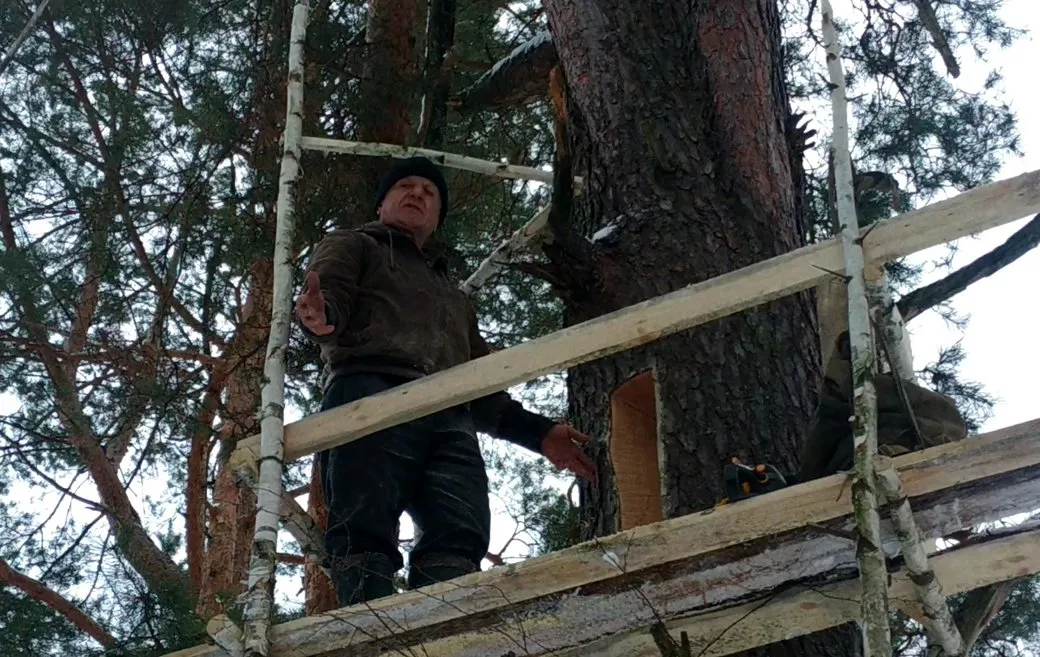
Photo: Anatolii Shynkar / Suspilne Zhytomyr
Honey in Firewood
Wild bees still live in the Olevsk forests. In February 2026, dry pine intended for firewood for the boiler room was cut at Olevsk Lyceum No. 1, and an abandoned nest was found inside: more than three kilograms of honey were taken from the logs. Shynkar also recalls an older case known from his father’s stories. In 1946 near Khochyn, in the Yablonytsia tract, a construction battalion was harvesting timber to rebuild the Donbas mines and cut down an oak tree aged 300–400 years. Honey was found in the trunk and almost all the branches.
What Museums Show
The Olevsk Local History Museum opened in 1995. In addition to halls dedicated to military glory and nature, it has a hall of antiquities featuring the crafts and trades of Polissia residents and a hall of regional history: finds from excavations in the Babyna Hora tract, exhibits about the “Republic of Olevsk” and the Polissia Sich of Taras Bulba-Borovets, about the city’s Jewish community, and amber. In 2020, the museum, together with museums from Zhytomyr, Rivne, Sarny, Vyshhorod, Pereiaslav, and Pyrohiv, created a virtual beekeeping museum as part of the project “Beekeeping of Polissia: an archaic tradition in a modern dimension.”
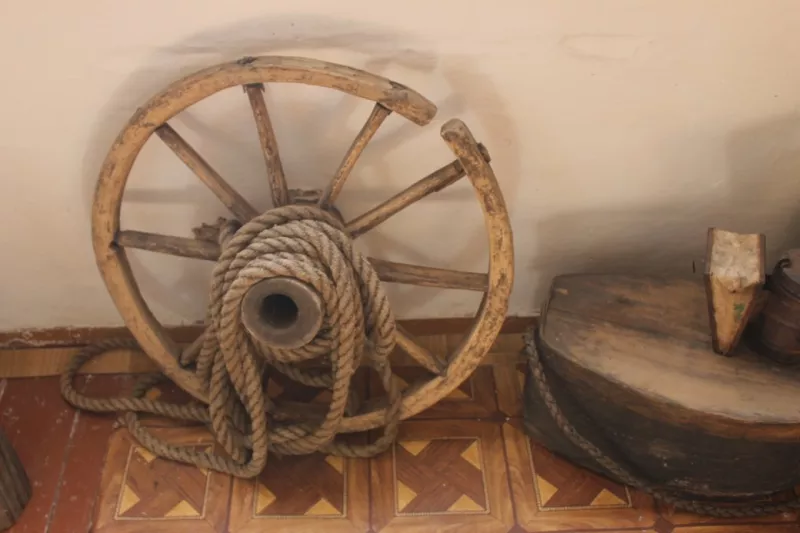
Beekeeping tools can also be seen in the village of Khochyn, 10 kilometers from the Belarusian border. In 2025, a folk museum “Polissia House” was opened in the former paramedic-obstetric station, featuring over 800 items donated by residents of Khochyn, Perha, Rudnia-Khochynska, and Rudnia-Perhanska. Among them are a lifting wheel, a honey box, and a zhen made of elk leather: this rope with a board was used by beekeepers to pull themselves up to the bort high in a pine or oak tree. Near Khochyn, on the bank of the Uborot River, a pine dugout canoe almost 9 meters long was found, made in the 14th–16th centuries; it was named “Khochen” after the village’s old name.
Olevsk Local History Museum: the city of Olevsk, Korosten district, Zhytomyr region. Polissia Hut Museum: the village of Khochyne, Olevsk community.