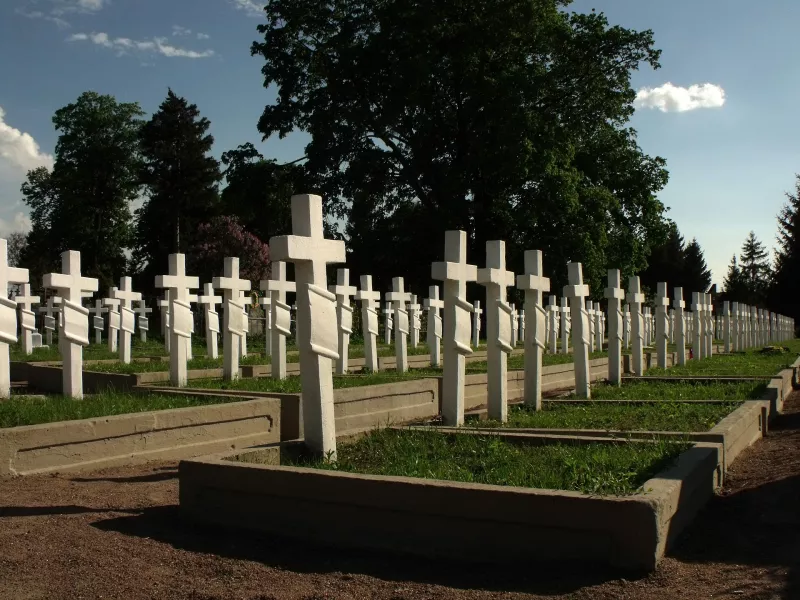
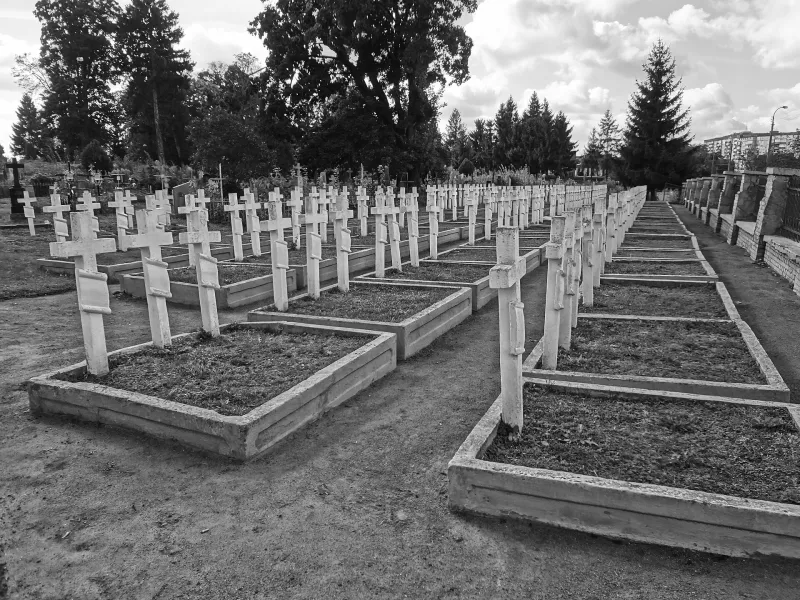
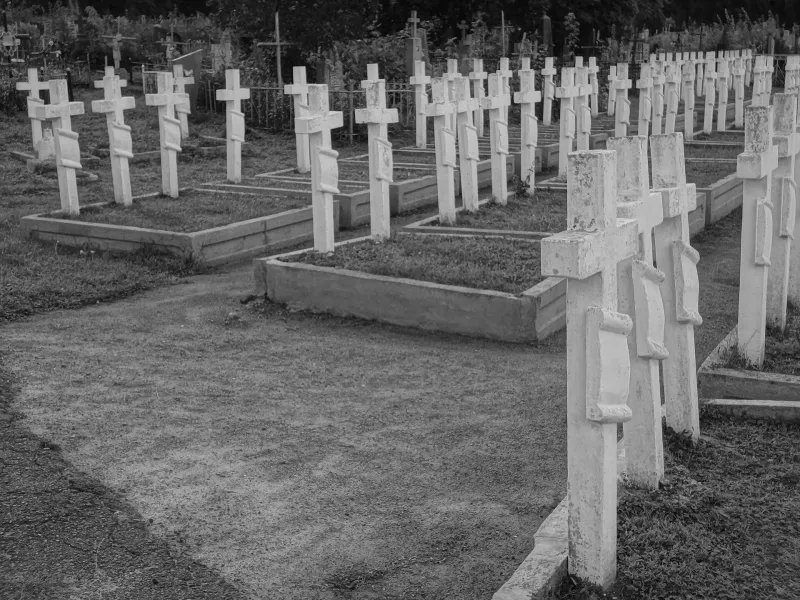
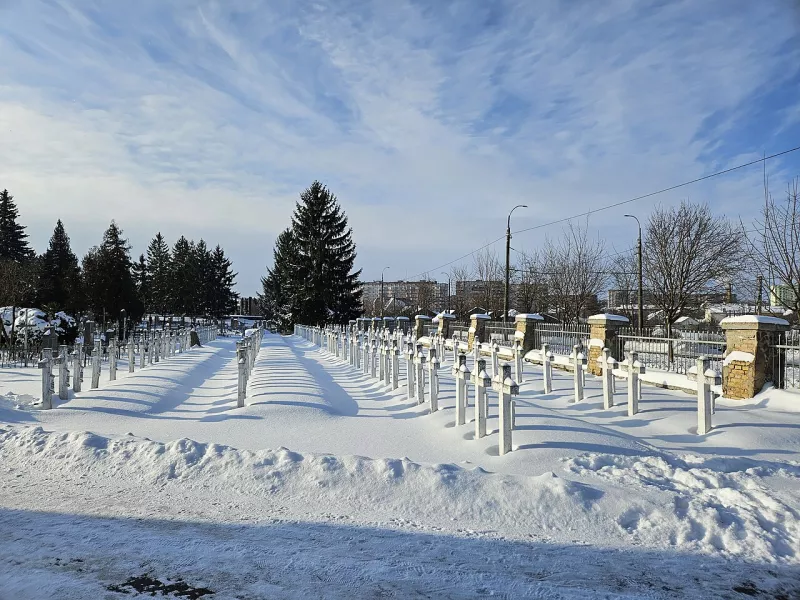
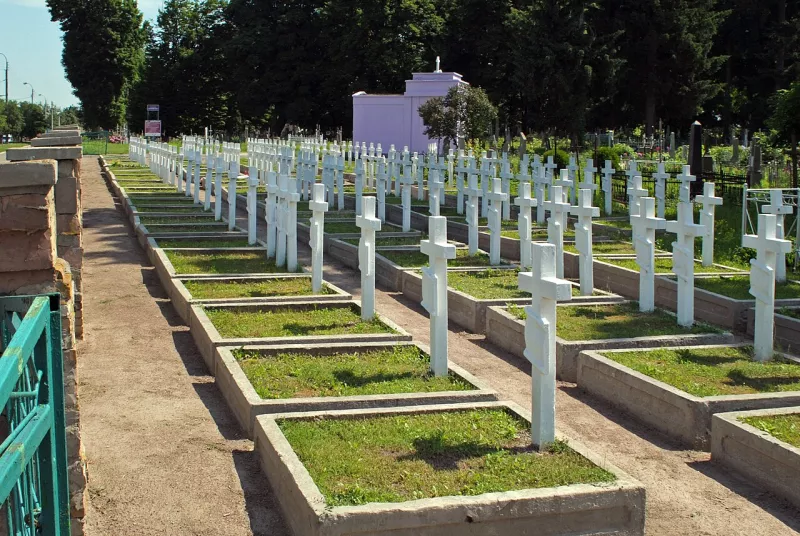

Almost two hundred white crosses have been preserved at the Dubenske cemetery in Rivne — the graves of Polish soldiers who died during battles with Bolshevik forces in 1919–1920. For a long time, most of the graves remained nameless. On May 6, 2026, a memorial carved with the names of 327 fallen soldiers was unveiled here.
The burials are located in the old military section of the Dubenske cemetery. In local historical materials, these soldiers are often called Polish legionnaires. They fought against Bolshevik troops, in particular alongside units of the army of the Ukrainian People's Republic under Symon Petliura.
Battles for Rivne in 1920
One of the most important pages in the history of these burials was the battles for Rivne in the summer of 1920 during the Polish-Soviet War.
From July 2 to July 9, the city changed hands repeatedly. Polish troops resisted Bolshevik units, including the cavalry of Semen Budyonny. Hundreds of military personnel died in the battles.
According to historical research, Polish soldiers who died during combat operations in Rivne and near the city were buried at the Dubenske cemetery. Most of them fell in July 1920.
At the same time, historians do not have complete information about how these burials were formed. Presumably, the dead were brought here not only from the city, but also from the surrounding areas.
Almost Two Hundred White Crosses
Almost two hundred white crosses stand in the military section of the cemetery. For decades, most of them bore no inscriptions with the surnames and dates of life of the deceased.
The exact number of people in each grave is unknown. There are burials with a single cross, and others with two, three, or even four. Therefore, the number of crosses does not correspond to the number of people buried.
For a long time, one of the few known names was Alfred Kelle — a Polish soldier who died on February 4, 1920, at the age of 23. His grave has a tombstone with his name and dates of life.
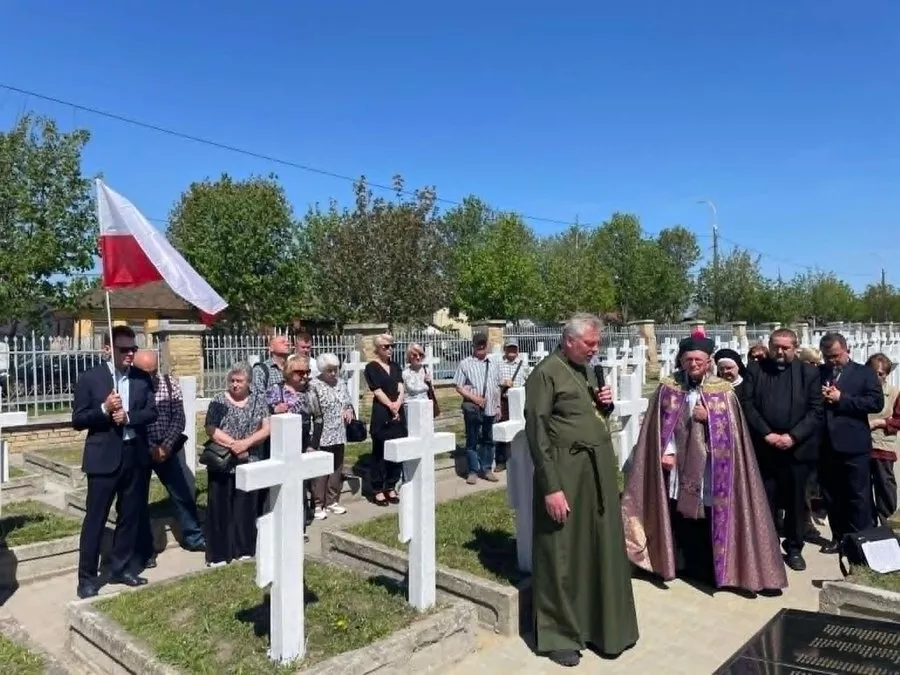
A monument to Polish legionnaires who fought against the Bolsheviks was unveiled at the Dubenske cemetery in Rivne. Yaroslav Kovalchuk
How the Names of 327 Fallen Soldiers Were Established
Local historians from Rivne and representatives of the Polish community worked on searching for information about those buried. Significant work was carried out by historian, archivist, and local researcher Czesław Chytry. He reached out to Polish state and civic institutions, examined archival documents, and sought information about military personnel who died in Rivne Oblast.
As a result, the names of 327 Polish soldiers buried at the Dubenske cemetery were established. Among them are mostly young soldiers, as well as a colonel and a woman who served as a field hospital nurse.
On May 6, 2026, a memorial listing the names of the fallen was solemnly opened at the cemetery. A cross and memorial plaques with the surnames and names of the servicemen were installed on it.
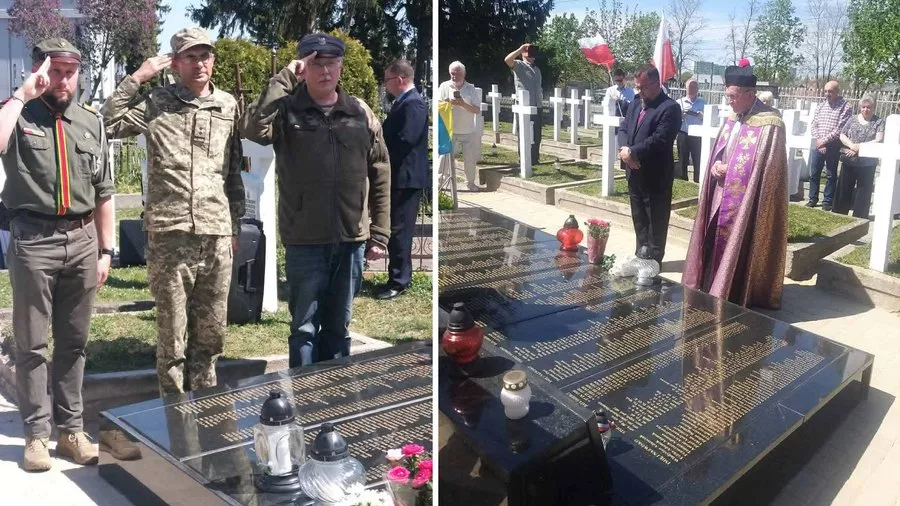
A monument to Polish legionnaires who fought against the Bolsheviks was unveiled at the Dubenske cemetery. Yaroslav Kovalchuk
The project was implemented with the support of the Ministry of Culture and National Heritage of Poland. Representatives of the Consulate General of Poland in Lutsk, local authorities, clergy, Polish organizations, and the public took part in the opening.
Now, visitors to the Dubenske cemetery can see not only the rows of old white crosses, but also the names of people who died during the fighting more than a hundred years ago.