
Eurasian curlew in Polissia
Numenius arquata
Red Data Book of Ukraine: endangered
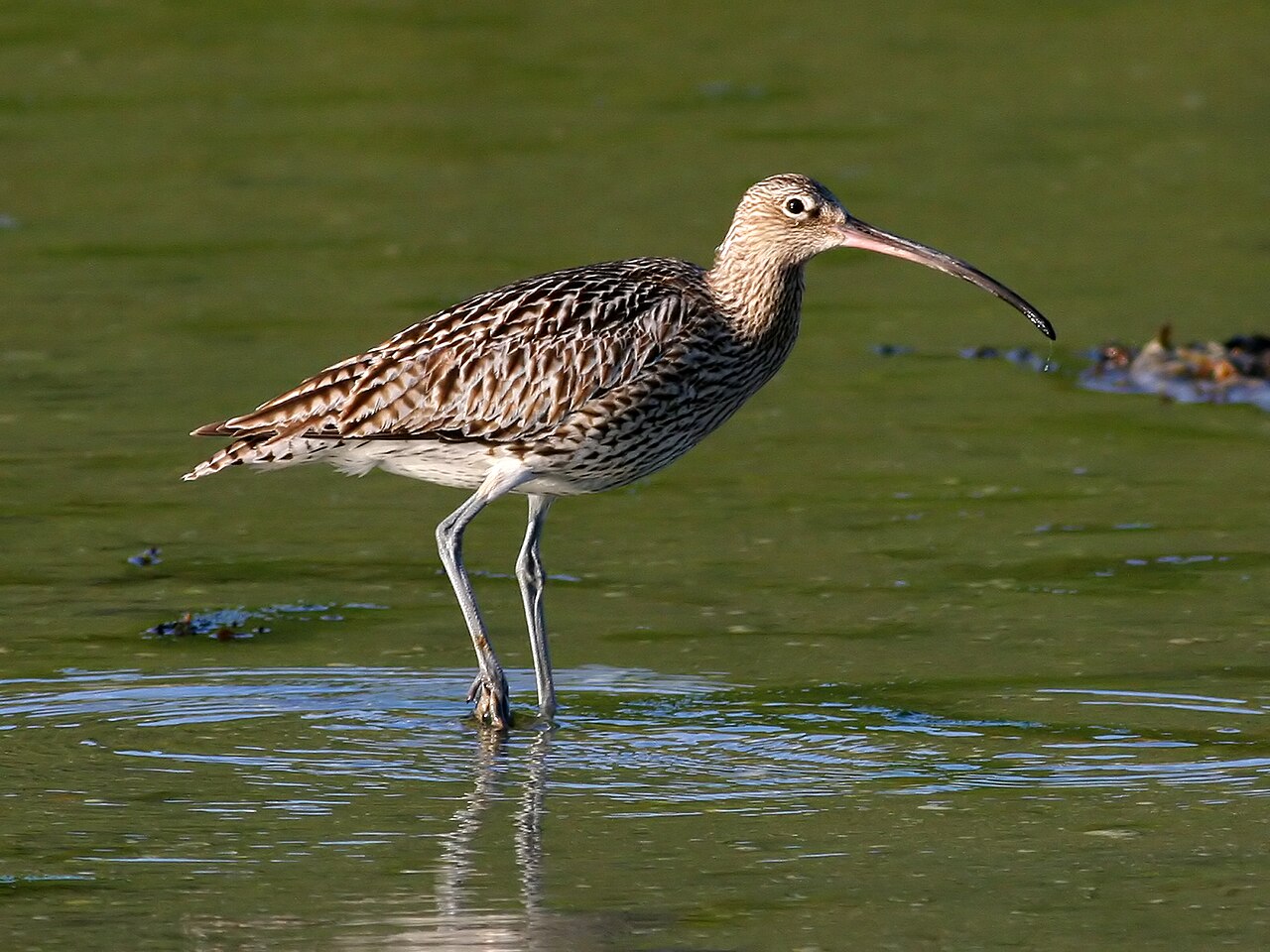
The Eurasian curlew is the largest wader of our fauna, the size of a chicken. Its plumage is grey-brown with dark streaks, its legs are long, and its bill is very long and curved downwards. Its call is a melodious, whistling “cour-lee”. In Ukrainian the bird is also called kronshnep.
The curlew breeds in wet meadows, floodplains and open bogs. In Polissia it occurs in the floodplains of the Prypiat and Stokhid and on the large bog areas of Rivne region and Volyn.
In spring the birds perform display flights over the meadows, giving long, ringing trills. The nest is a scrape in the grass, and the chicks walk with their parents from the first days. The curlew feeds on worms, insects and molluscs, which it pulls from the mud with its long bill.
The Eurasian curlew is listed in the Red Data Book of Ukraine. It suffers from bog drainage, the ploughing of meadows and early mowing, and dogs should be kept on a lead on breeding meadows.
When to see: April–July
Where it was seen in Polissia
Observations from the open scientific database GBIF since 1990. Locations are shown approximately, to within 10 km.
More in “Birds”
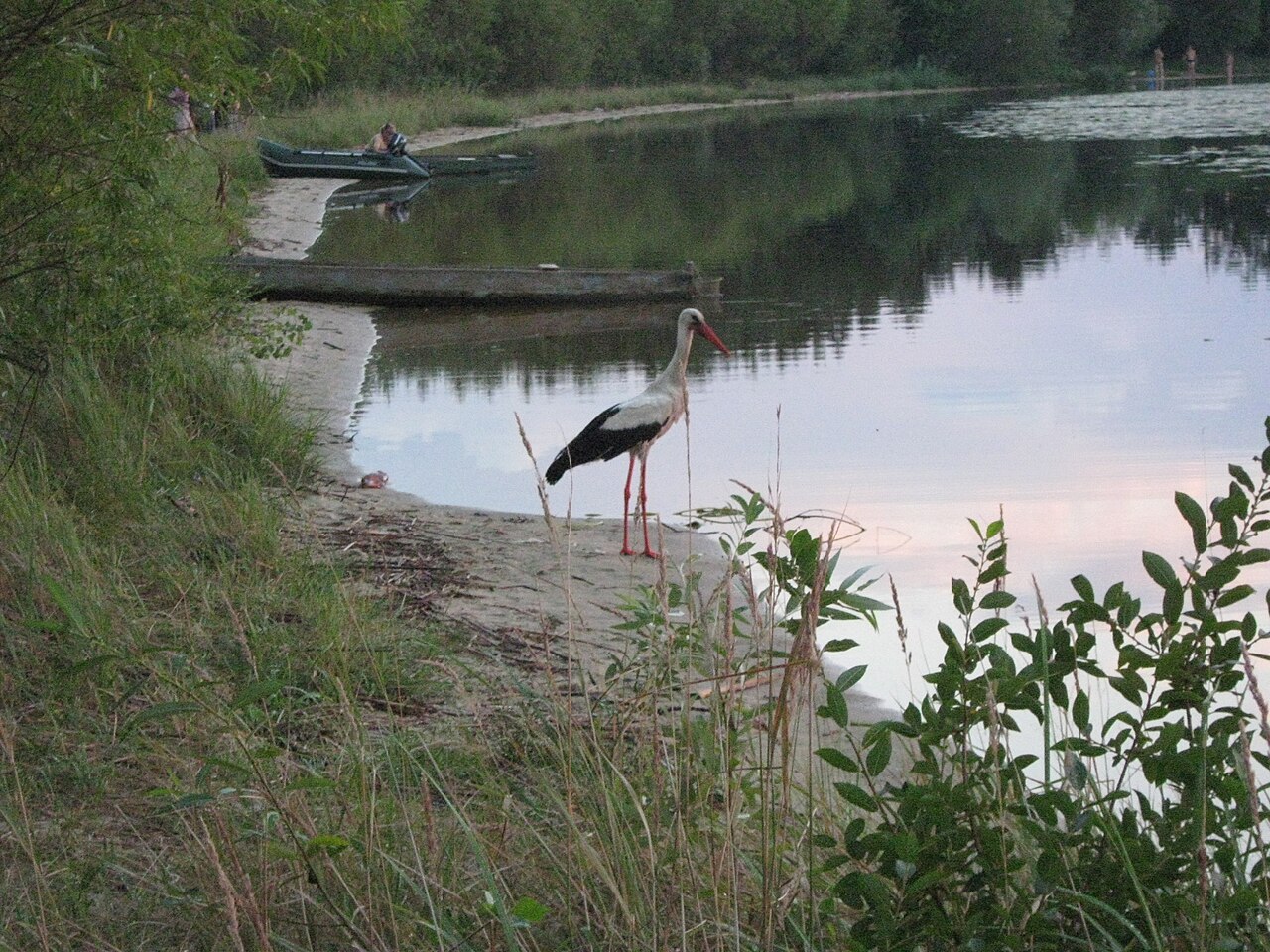 White stork
The symbol of the Polissia village: white stork nests on poles, trees and roofs are found in almost every settlement.
 Black stork
A secretive relative of the white stork that nests in Polissia's remote old forests near bogs and forest rivers.
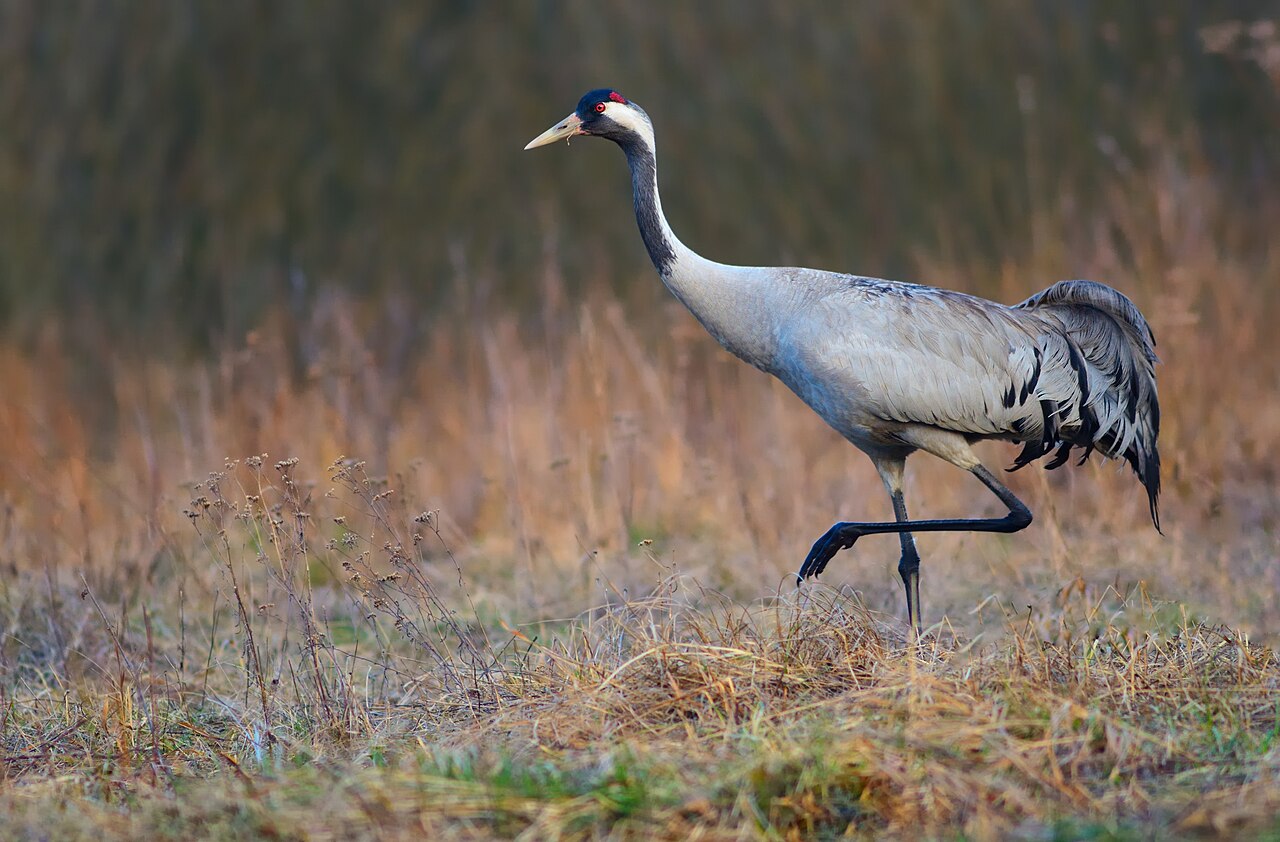 Common crane
A large bird of Polissia's bogs, whose trumpeting call in spring is one of the most distinctive sounds of Polissia.
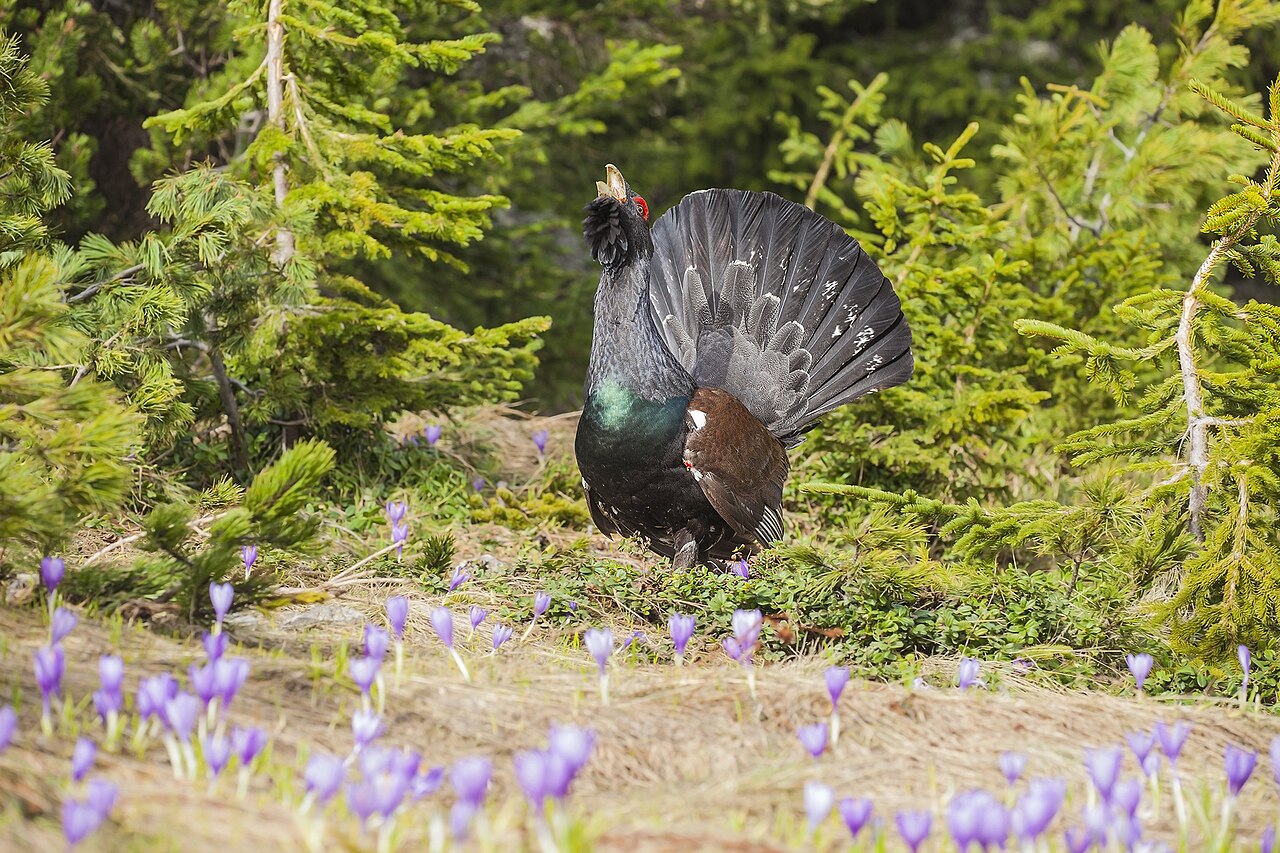 Western capercaillie
Europe's largest forest grouse, a dweller of the old pine forests with bogs in Polissia.