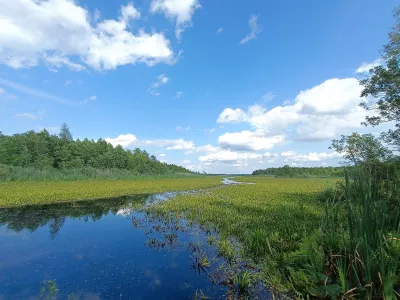
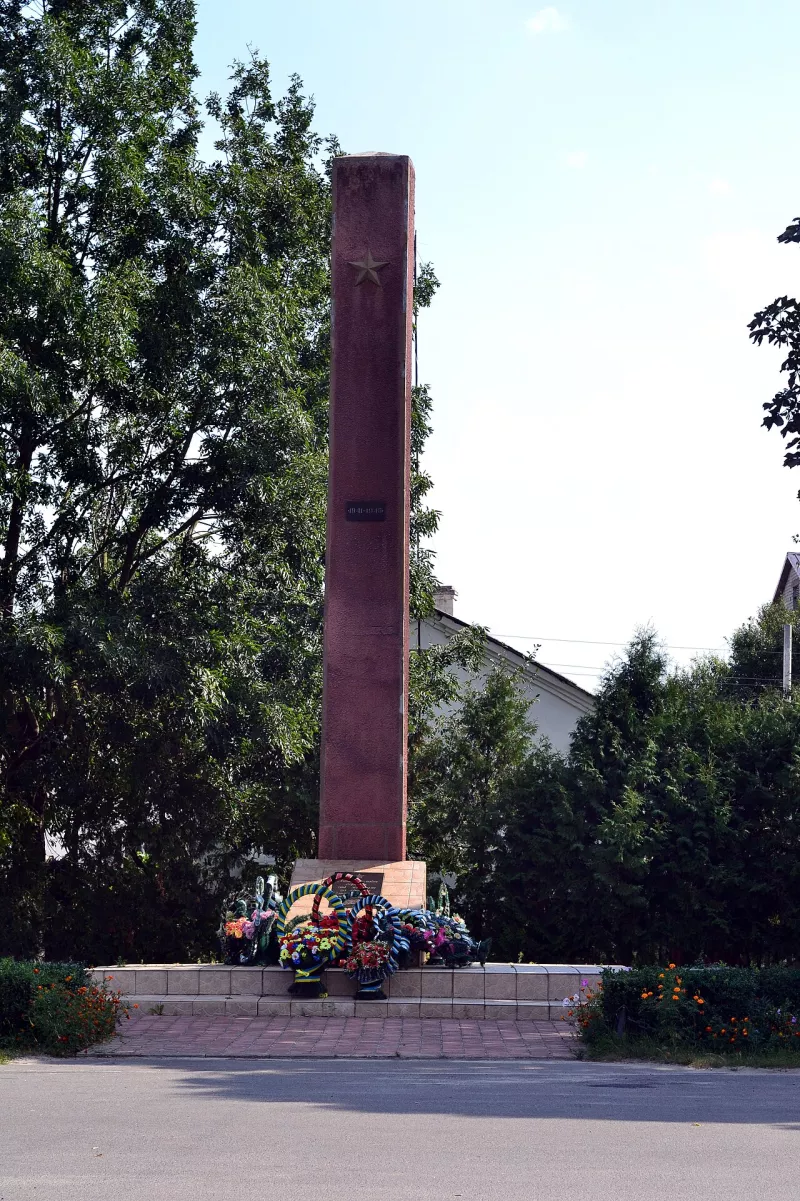
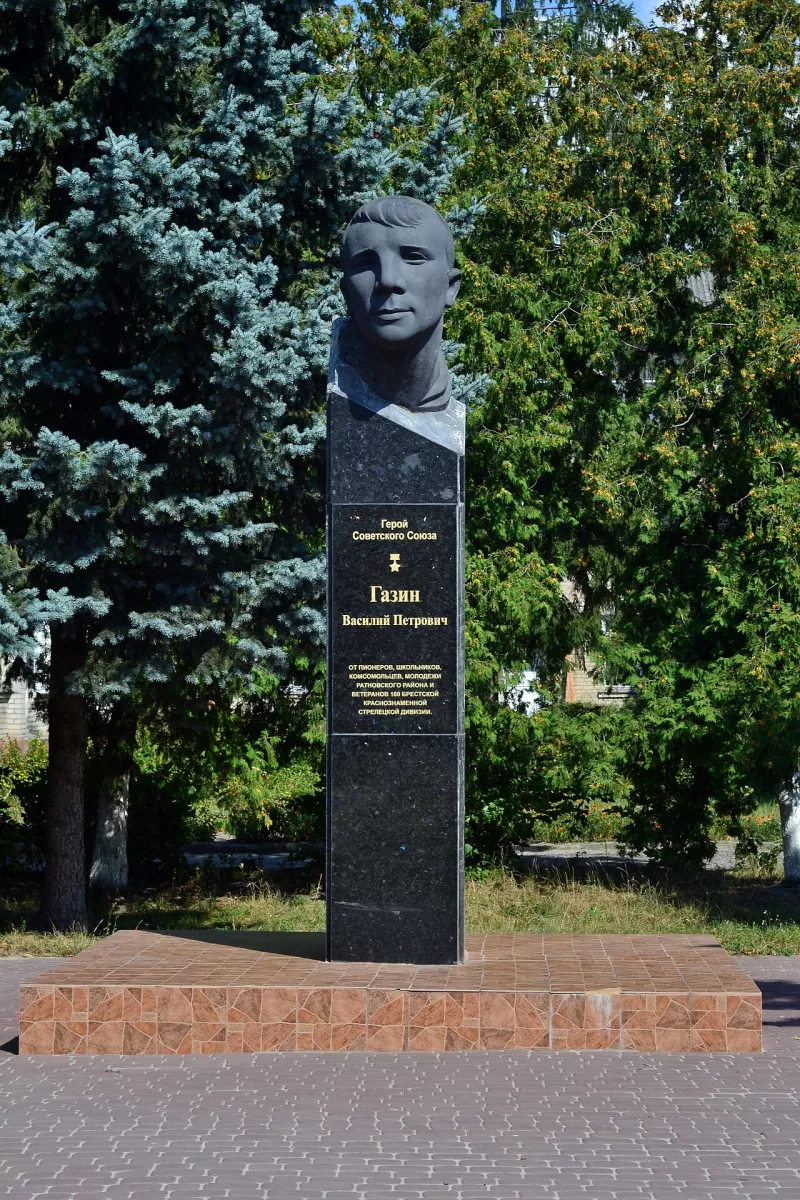
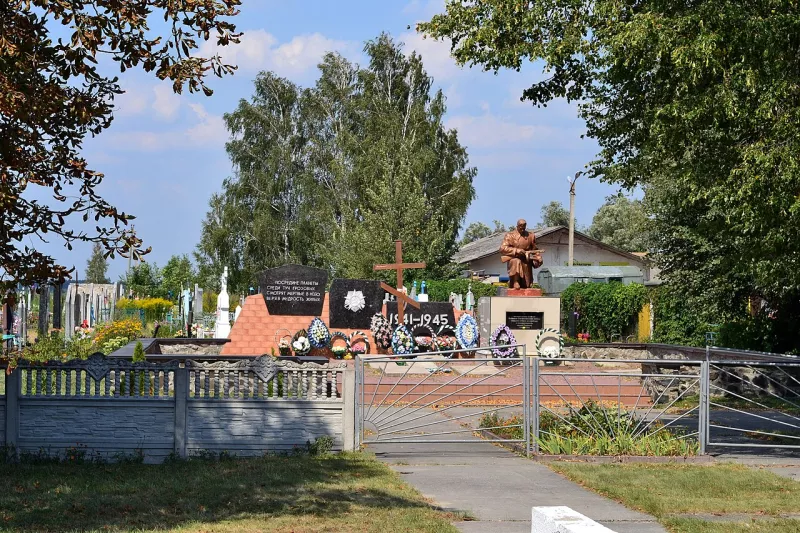
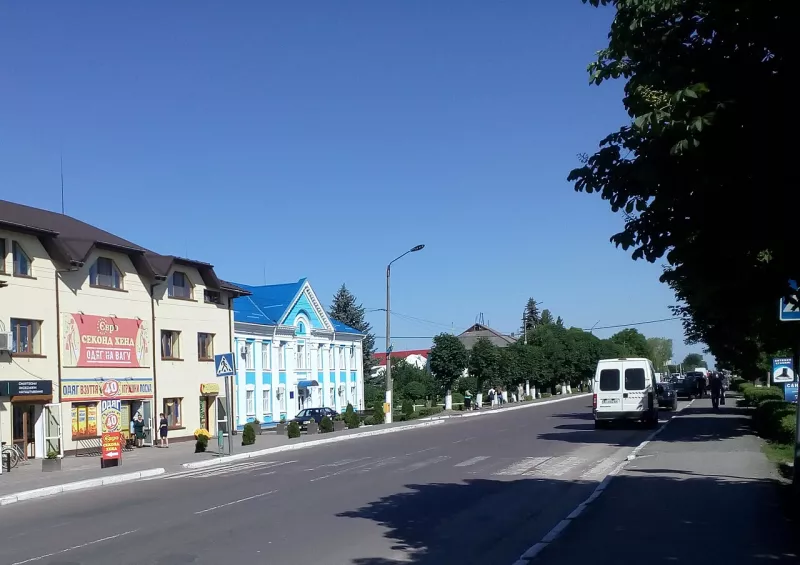

Ratne is an urban-type settlement on the Prypiat River in northern Volyn, the center of Ratnivska community in Kovel Raion. The M19 highway to the Belarusian border passes through it. Today it is a quiet Polissia town, but once there was a border castle here, and the name Ratne, it is believed, comes from the word “rat” — army.
Border Town
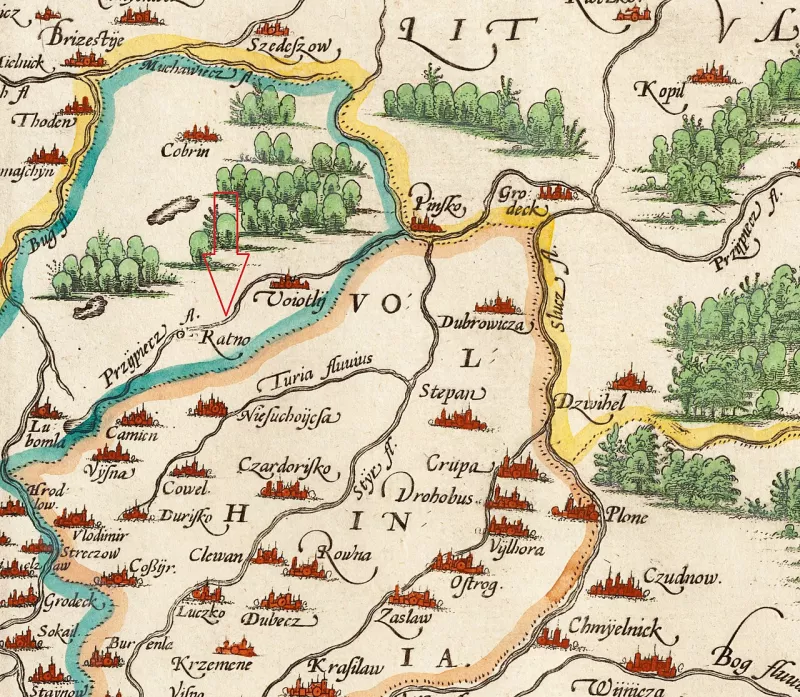
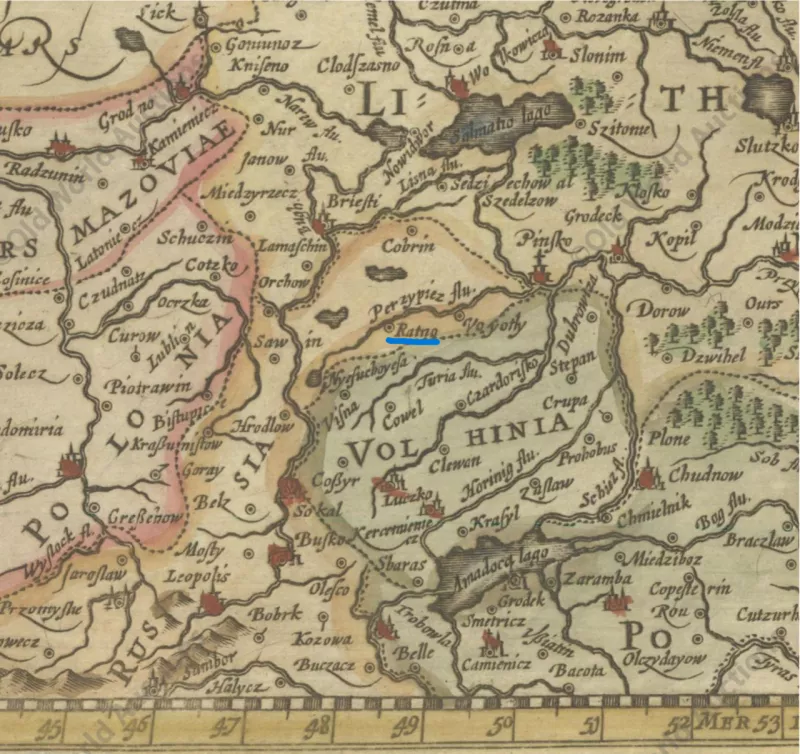
Ratne is first mentioned at the end of the 12th — beginning of the 13th century. Old Rus’ documents call it variously: Ratno, Ratnoie, Ratev, Ratyn. It was a border town of the Halych-Volhynian state where troops were stationed — hence, according to a common version, the name. At the beginning of the 14th century, a castle already stood here between the Prypiat and Vyzhivka rivers.
In August 1431, Lithuanian troops attacked Ratne — an important royal fortress on the Prypiat — and burned the town along with the castle. In 1432, Grand Duke Sigismund Kęstutaitis left Ratne among the disputed Volyn districts between Lithuania and Poland, and in the 1440s Ratnivshchyna passed to Poland and became part of Chełm Land. In 1440, Ratne received Magdeburg rights and its own seal.
City of the 16th–17th Centuries
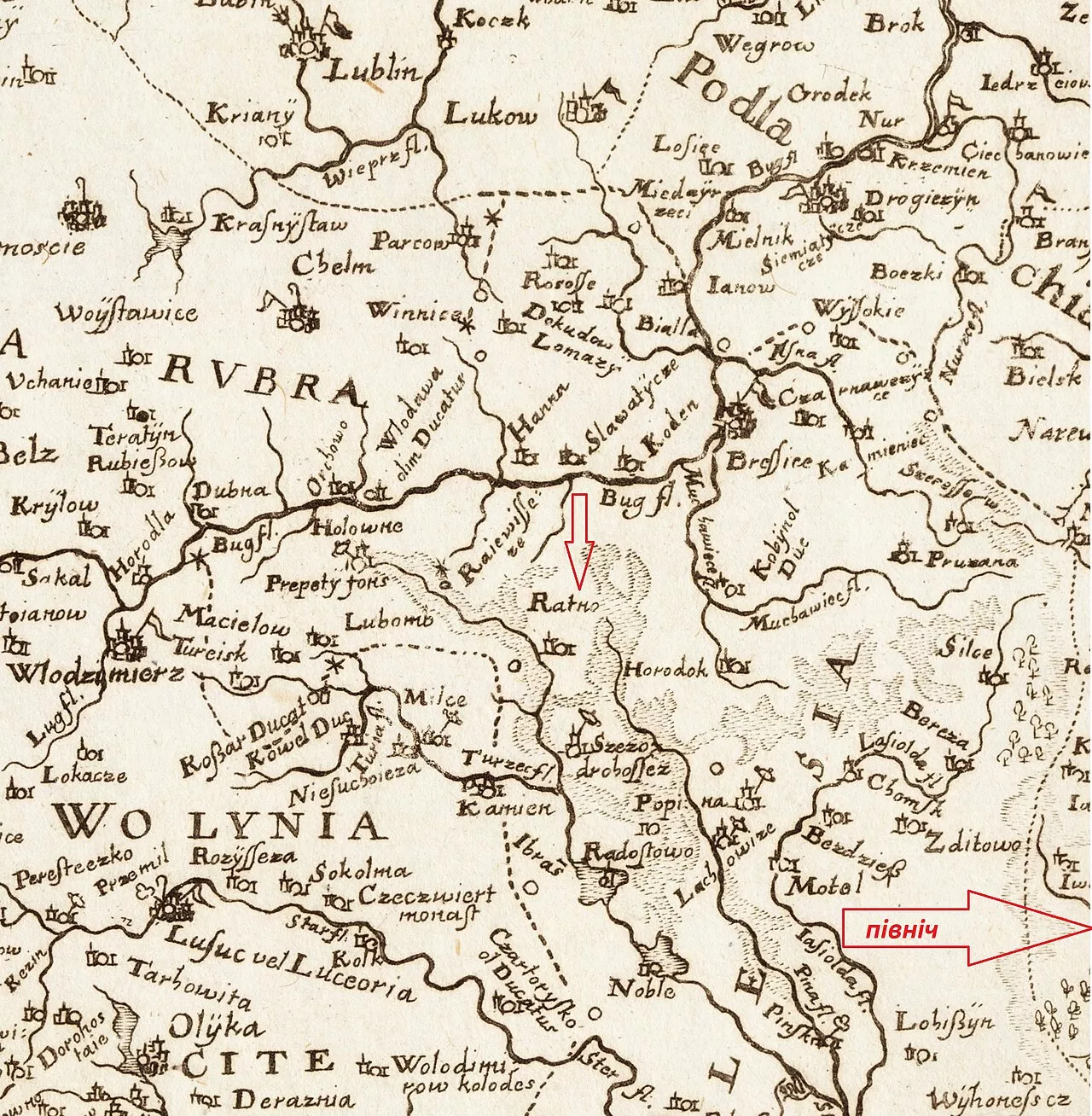
In 1512, an inventory of the castle was compiled listing the castle servants. Ratne was the center of a starostwo and a notable town: in 1556, there were 220 houses, by the end of the 16th century almost 280, and the population reached 1600–1700 people. Three water mills operated. In 1519, King Sigismund I condemned starosta Yakub Sekluczky for excessive taxes on Orthodox churches.
The mid-17th century was a disaster for Ratne: in 1648 the town was looted, the church was devastated, and the 1661 lustration recorded 132 destroyed houses. The population decreased by more than half, and since then Ratne was called a small town. In 1795 it passed to the Russian Empire and became a trade center of Kovel County.
Coat of Arms
The modern coat of arms of Ratne features a golden walled gate with a tower, three silver swords arranged in a star, and a red shield with a cross. The swords recall the “rat” (army), and the cross signifies belonging to Volyn. On old seals from the 16th–18th centuries, Ratne had a different emblem — a wild boar against the background of three trees.
What to See
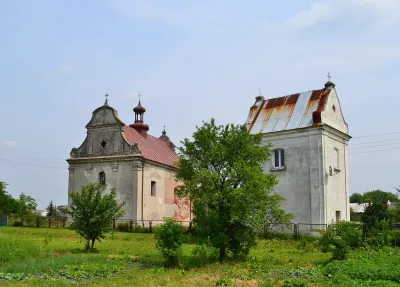
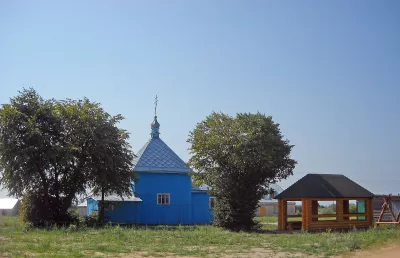
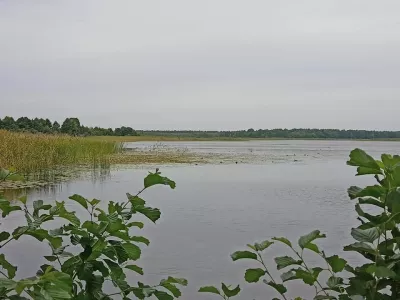
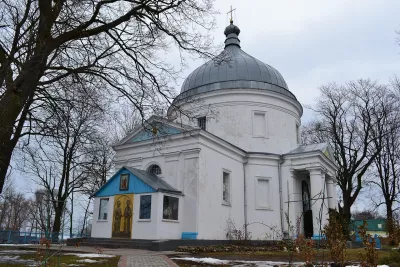
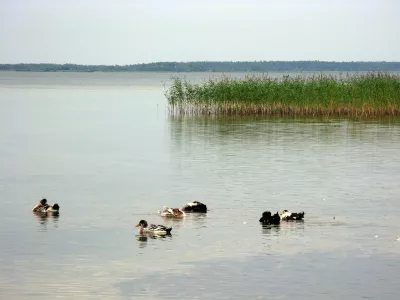
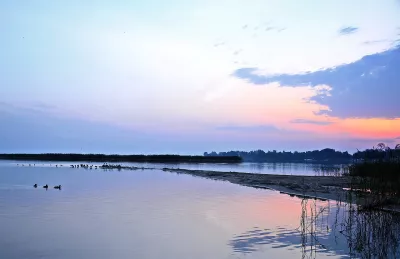
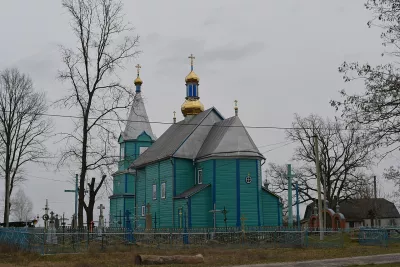
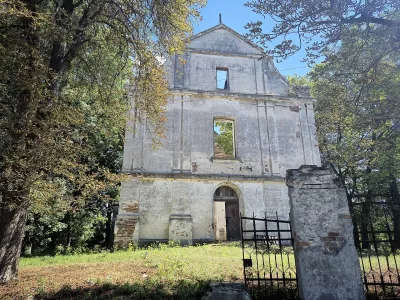
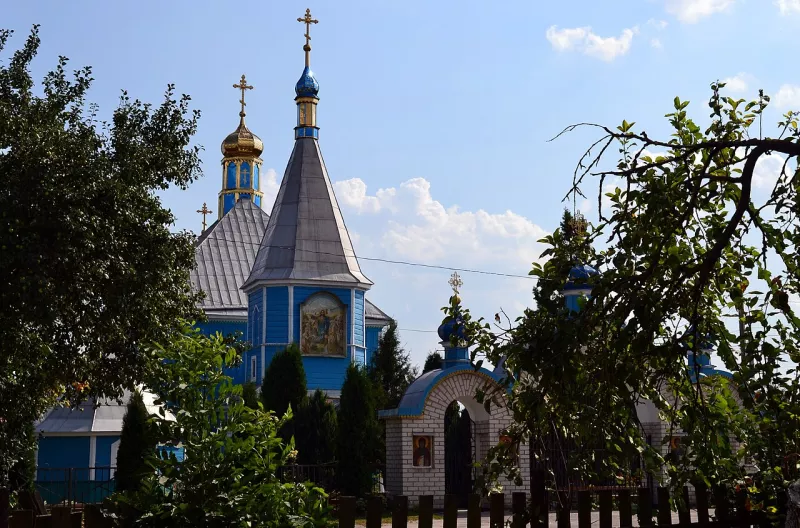
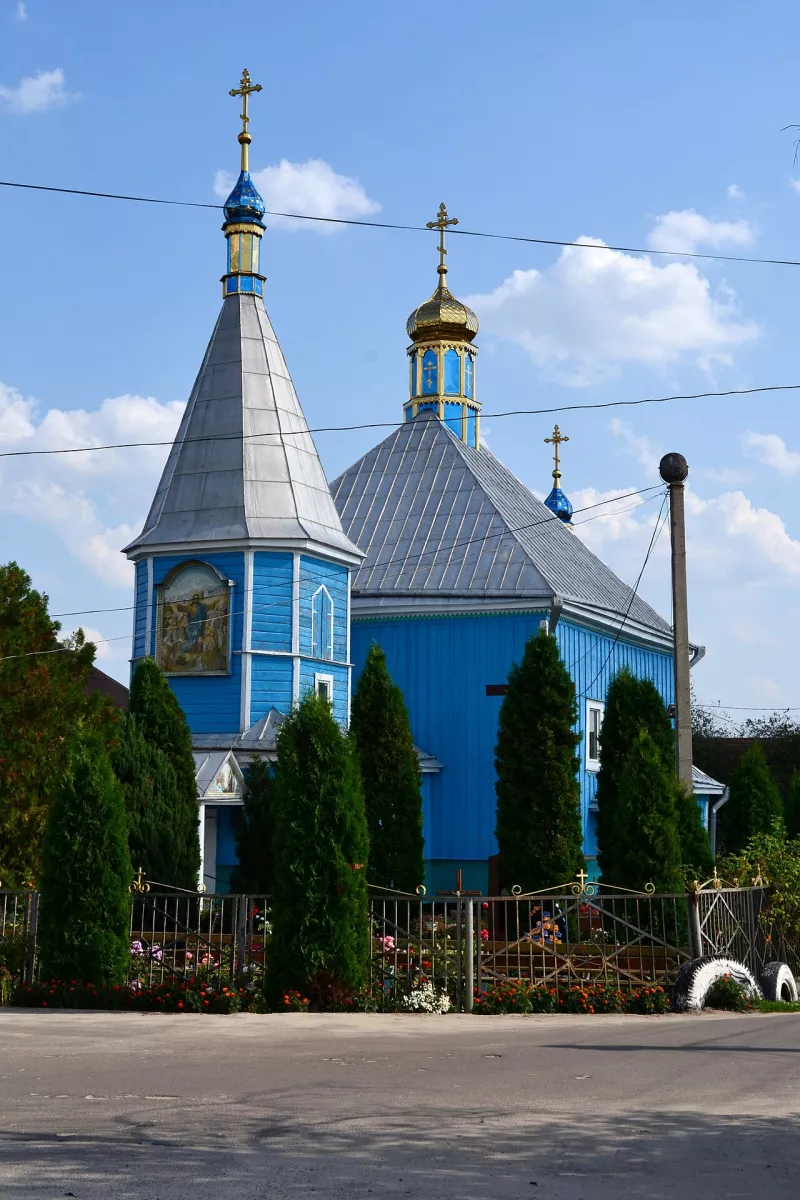
The main attraction is the wooden Church of the Nativity of the Blessed Virgin Mary from the 18th–19th centuries. A church with this name is mentioned as early as 1614, and the town also long had the Resurrection (mentioned in 1565) and Trinity churches, as well as a Catholic church with a school and hospital. Nearby is the Prypiat with its wide floodplain, and not far away are the lakes Tur and Samara, popular with fishermen.
Ratne on Video
Nearby
Stara Vyzhivka — along the M19 highway, Kovel — about an hour’s drive. More in the article Kovel Raion.
How to Get There
Ratne is located on the M19 highway Kovel — Belarus border. Buses run from Kovel and Lutsk.