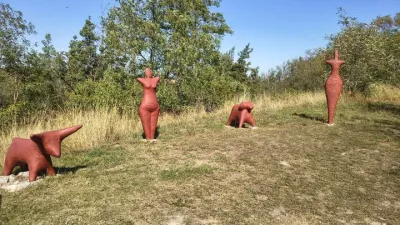
The village of Savertsi is located in the Popilnia hromada of Zhytomyr Raion (until 2020 — Popilnia Raion); according to the 2001 census, 751 people lived here. This is one of the places where the history of the Weker family and their estate intertwines with the architectural heritage of interwar Europe. We tell the story of the manor, the Weker lineage, the fate of the estate after the revolution, and the life of architect Wacław Weker, whose buildings still stand in Warsaw.
Savertsi: from 1585 to the present day
The village has deep roots: it was first recorded in documents in 1585. Before the 1917 revolution, it was also known under the name Savartsi — an example of how place names changed in Ukrainian lands.
According to the 1789 register of the Kyiv Voivodeship, the settlement was part of the Pavoloch key belonging to Prince Kasper Lubomirski. At the end of the 18th century, the village was pledged (leased) to the local landowner Trziciński — a typical practice for large magnate estates of that time.
Biliński: the first landowners of Savertsi
A turning point in the history of the village occurred in 1814, when the szlachcic Jakub Biliński purchased it together with neighboring Novoselytsia. From this very moment begins the family history that later intertwined with the Weker name.
In 1868, among the nobles who owned the estate, Apolinary Biliński and his son Henryk are mentioned.
At the beginning of the 20th century, Savertsi was a typical large estate: 190 households and over 1,000 residents, 801 desiatynas of landlord land, and 7 windmills that supported the local economy. Many peasants went to work in the southern provinces of the Russian Empire.
The Weker family
Cecylia Bilińska and Roman Weker
A turning point was the marriage of Cecylia Bilińska, daughter of Henryk Biliński, to Roman Weker. Roman came from a Courland noble family of the Dragomir coat of arms, which had extensive ties in Podillia and the Kyiv region.
Polish historian Tadeusz Epsztein in his works on landowners of the late 19th century records that by 1900, Cecylia Weker was already the full owner of the estate. Unlike many landowners of that time, she personally managed the farm — a rare phenomenon for female landowners.
A new manor: the architectural symbol of an era
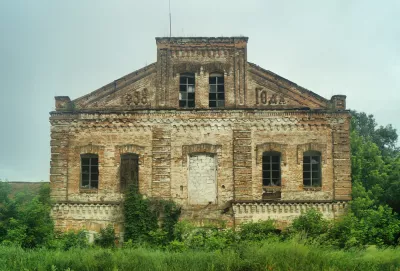
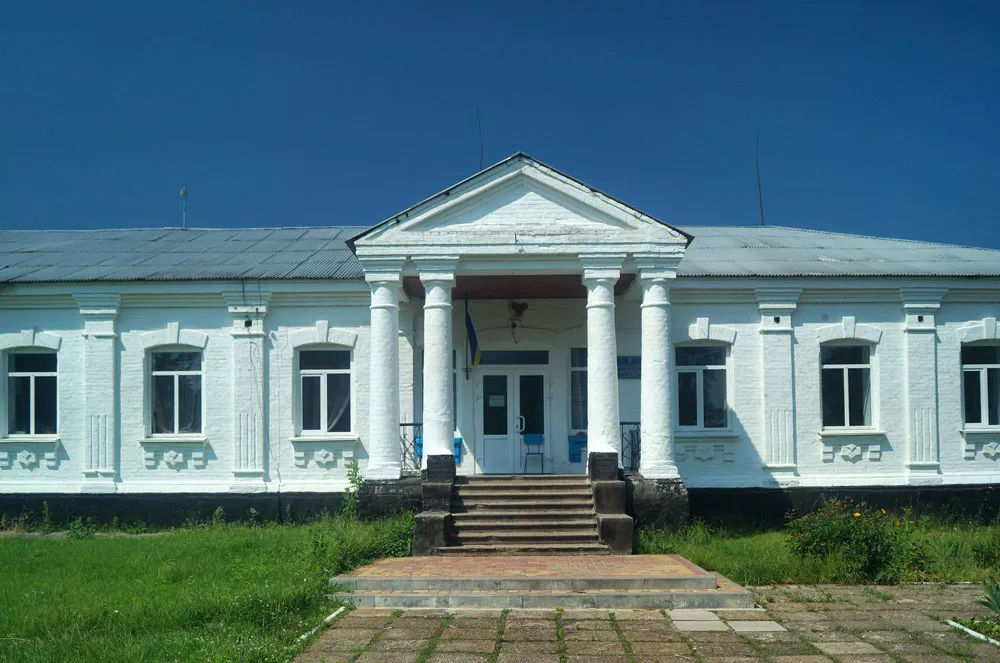
The most significant event in the history of the estate was 1904 — the construction of a new manor house, a symbol of the Weker family's prosperity at the beginning of the 20th century.
Nearby stood the old Biliński manor, but it was burned down by peasants in 1918. In contrast, the new Weker house survived the revolutionary storm.
The hardships of the revolution: refugees and emigration
Maria and Cezaryna Weker
Details about the fate of the family have been preserved in the interrogation protocol of Skvyra priest Franciszek Bujalski dated May 5, 1927. From it, we learn that in March 1921, Cecylia's two daughters — Maria (35 years old) and Cezaryna (15 years old) — found shelter in the Abramowicz house in Skvyra along with other Polish refugees. Both were teaching at the Polish gymnasium at the time.
The path to Poland
An attempt to move to Poland as refugees in May–June 1921 failed: they missed the deadline when crossing the border legally was permitted. Only in the summer of 1922 did the sisters receive permission and permanently relocate to Poland.
From Warsaw, Maria Weker maintained contact with Father Bujalski, sending him books — an eloquent sign that even in times of turmoil, the intelligentsia preserved their connection to culture.
Wacław Weker: architect of interwar Warsaw
Among the children of Cecylia and Roman Weker, Wacław Weker (1891–1944) stands out — an architect whose works left a noticeable mark on the architecture of interwar Warsaw.
Education and formation
Wacław Weker was born on October 22, 1891, in Krasyliv to the family of Roman Weker and Cycylia, née Bilińska.
- studied at the gymnasium and the First Commercial School in Kyiv;
- in 1910–1914, studied architecture at the School of Fine Arts (École des Beaux-Arts) in Paris;
- in 1923, graduated from the Faculty of Architecture of the Warsaw University of Technology.
Military Service
In November 1918, he volunteered for the artillery regiment and fought in the ranks of the Polish Army in 1919–1920.
Architectural Career
- after his studies, he worked in the architectural bureau of the Warsaw Directorate of Polish Railways;
- in 1927–1939, he ran his own workshop in Warsaw, working in the functionalist style;
- he designed, in particular, an apartment building at 5 3 Maja Avenue in Warsaw and mountain refuges in Chochołowska Polana and in Rafailivka.
Tragic End and Legacy
Wacław Weker's career was cut short by World War II. He was a member of the Home Army (Armia Krajowa); during the Warsaw Uprising on August 20, 1944, he was wounded during the assault on the PAST building and died in the hospital.
He is buried at the Powązki Military Cemetery in Warsaw. In 2019, through the efforts of his family, his burial site was located and a commemorative plaque was unveiled.
Other Members of the Weker Family
Cycylia Weker: A Political Drama of the 20th Century
Another daughter of Cycylia and Roman, also named Cycylia, became one of the main defendants in 1951 in a political trial against members of the Workers' Party faction in communist Poland.
Elżbieta Weker
According to Polish historians, in 1905–1908, poems were written by Elżbieta Weker, likely another daughter of Cycylia and Roman.
Descendants in Modern Poland
Descendants of Wacław Weker's brothers and sisters live in Poland and preserve the memory of their family, whose roots trace back to Ukrainian lands.
The Estate After the Revolution: From Manor to School
A Commune in the Master's Estate (1922)
After the establishment of Soviet rule, the estate lost its original function. In 1922, a commune was founded in Savertsi, where about a hundred communards settled.
The School (from 1926 to the Present Day)
The estate's longest-lasting transformation became the school: in 1926, the building was handed over to an educational institution, which operates to this day.
- during the German occupation, the estate housed a military hospital;
- in 1967, classrooms were added to the building;
- ancient stucco molding has been preserved in the original interiors.
The memory of Wacław Weker—an architect, patriot, and victim of World War II—lives on in his descendants and in the buildings of Warsaw. The history of Savertsi reminds us that even great upheavals cannot erase all traces of human creativity and dignity.
This material was prepared based on research by Ihor Dorozhko, Roman Malenkov, and Serhii Shcherbii.