A trip from Kyiv to the west along the M-06 highway passes for a long time through areas where historical buildings have hardly survived. Numerous architectural monuments of the Kyiv region were lost as a result of wars, alterations, and targeted destruction in the 20th century. The ancient churches of Makariv and Brusyliv have not survived to our time, and the first tangible traces of the historical heritage appear already in the Zhytomyr region.
It is here that wooden churches of the 18th and 19th centuries have been preserved in the traditions of Ukrainian folk and diocesan architecture, as well as rare examples of Polish Baroque—a style that is almost unrepresented in modern Kyiv region. Among such monuments, a special place is occupied by the Church of the Nativity of the Virgin in the village of Starosiltsi.
Geography and current state of the village
Starosiltsi are located about 10 kilometers north of Korostyshiv, near the confluence of the Myka and Svynoluzhka rivers. Today, this is the center of the Starosiltsi hromada of the Zhytomyr district. The village has a compact layout and preserves the features of a traditional settlement of the region. About 770 people live here—almost the same number as at the end of the 18th century.
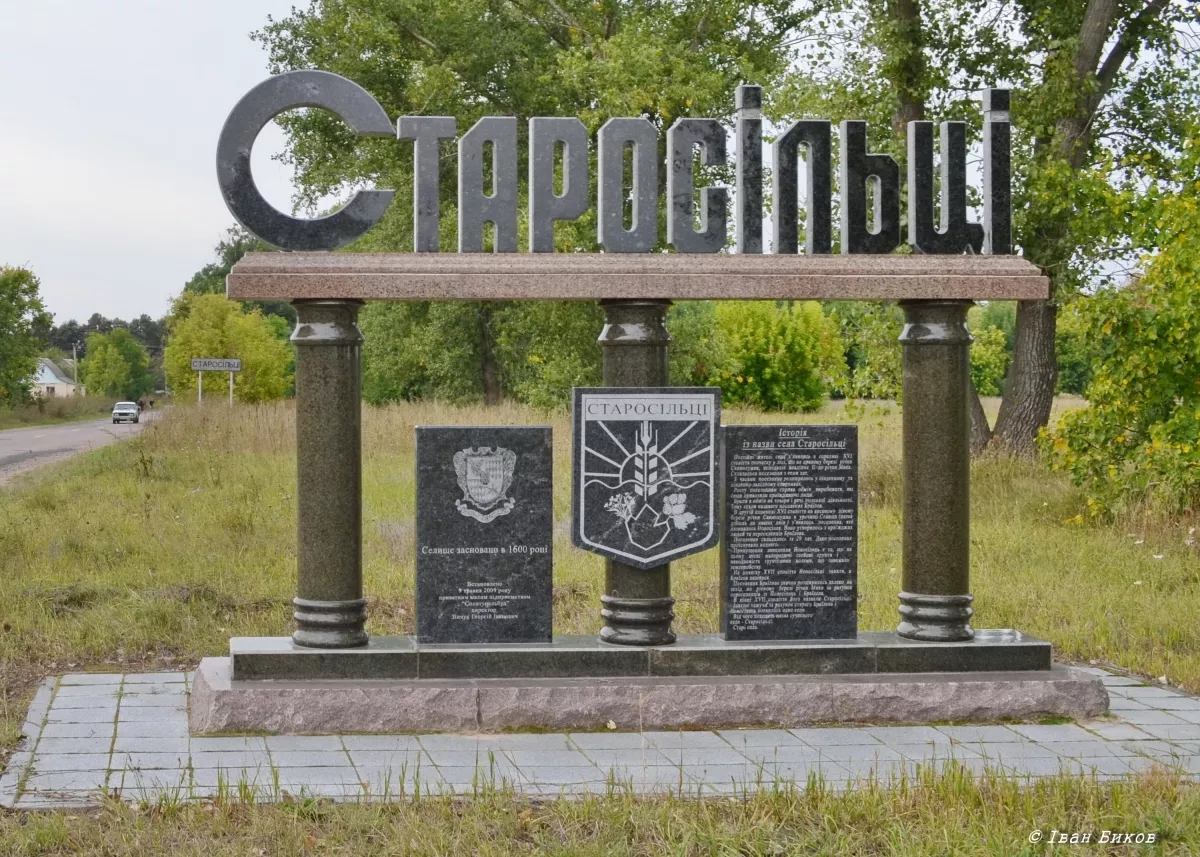
At the entrance to Starosiltsi, a granite memorial sign has been installed with a brief history of the settlement and the symbols of the hromada. It has become a kind of business card of the village and a reminder of its centuries-old past.
Origin and early history of Starosiltsi
The first permanent settlements in this area emerged in the mid-16th century. In written sources, the village is first mentioned in 1584, and 1600 is considered the traditional founding date. At first, the settlement was named Brailiv.
In the second half of the 16th century, some of the residents founded the nearby hamlet of Novosiltsi, but later abandoned it. Returning to their previous location, the community assigned a new name to the village—Starosiltsi, which pointed to the "old", restored settlement after a period of desolation.
In the 19th century, the researcher Lavrentii Pohylevych recorded the accounts of local residents that before the re-settlement there was only a small group of houses among the forest. The names of the tracts and the surrounding landscape confirm the multi-layered character of the settlement of the area.
Noble owners and development of the village
In different periods, Starosiltsi belonged to several noble families. Among them are mentioned the Minichs, Strybols, Yaroshevychs, and Korchevskys. In the first half of the 18th century, the nobleman Jan Antoni Toporczyk-Jakubowski, the podstoliy of Zhytomyr, became the owner of the village.
The greatest impact on the development of Starosiltsi was made by his son Józef Jakubowski, the stolnik of Ovruch and Kyiv. He resettled part of the residents to fertile lands, founding the neighboring village of Slobidka, and actively supported the local Greek Catholic community, granting it significant privileges.
Church of the Nativity of the Virgin — the architectural pearl of the region
Religious life in Starosiltsi has deep roots. Initially, a wooden chapel existed here, on the site of which a three-domed Greek Catholic church was built in 1726. At the end of the 18th century, it was decided to erect a stone church worthy of the importance of the local spiritual center.
The foundation of the Church of the Nativity of the Virgin was laid in 1773. Józef Jakubowski died in 1782, so construction was completed in 1789 under the supervision of his steward Amalytskyi. The founder himself, Amalytskyi, and the priest Dmytriy Matskevych are buried under the altar of the church. The old wooden church was moved to Slobidka in 1790.
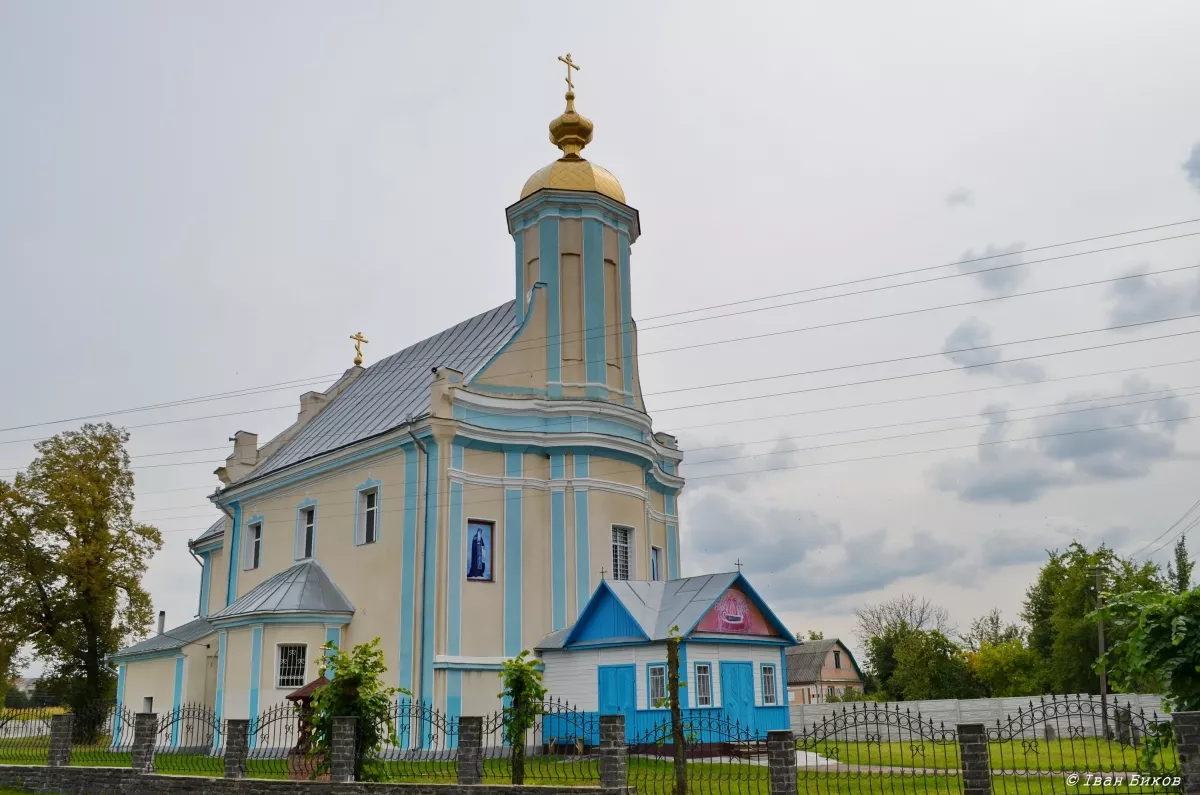
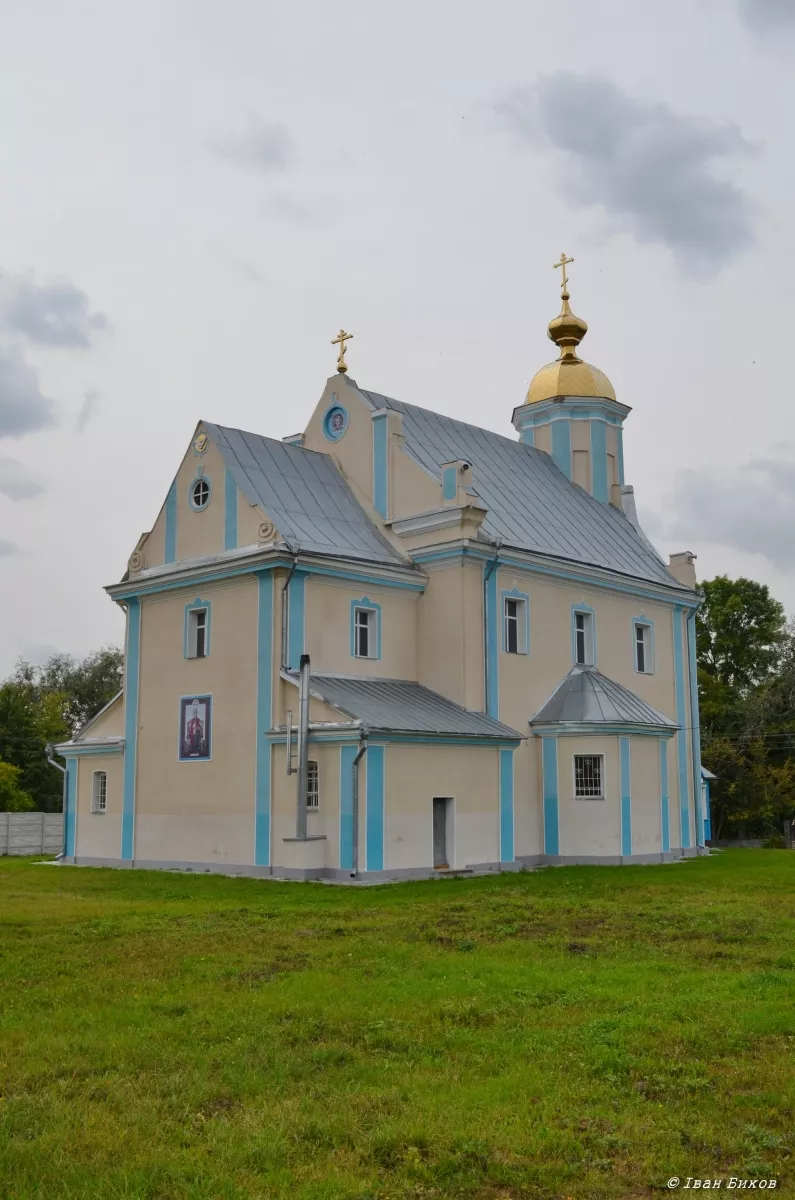
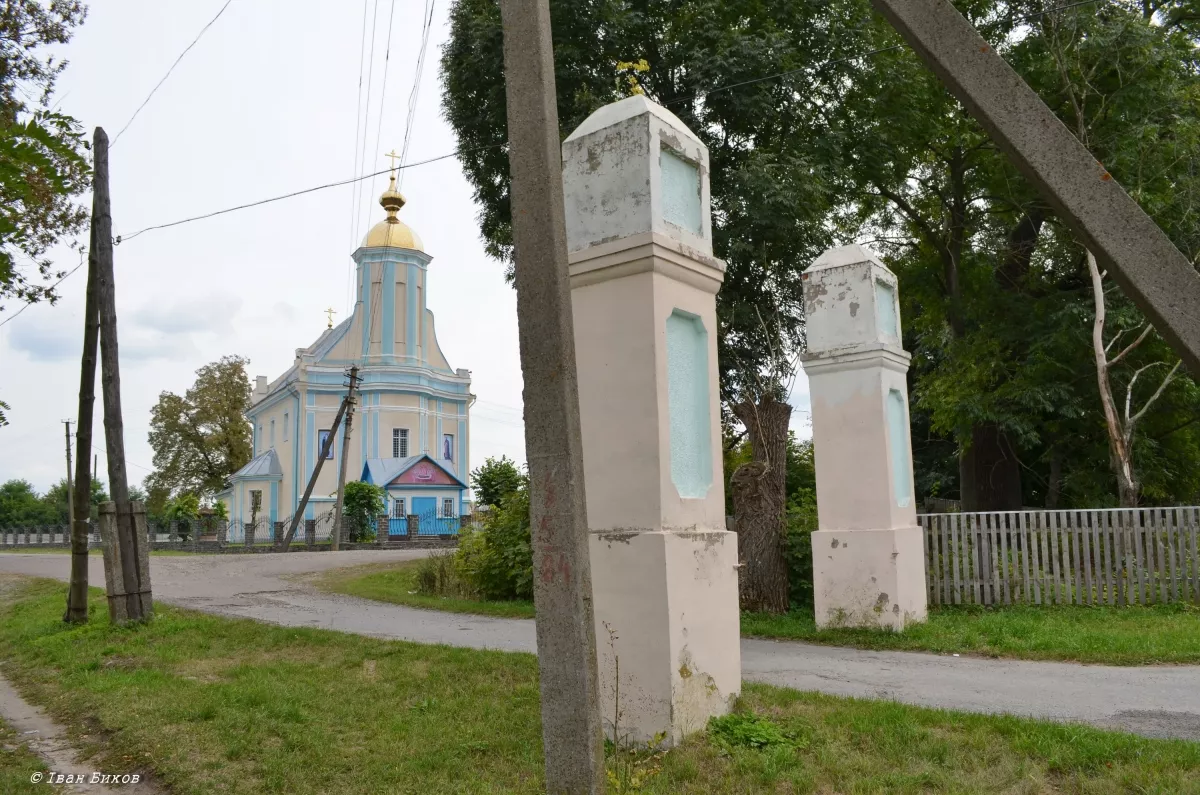
The church was built in the Polish Baroque style, which is why it resembles a Roman Catholic church. The building has a basilical plan, a rectangular altar, and a distinct western facade with a multi-tiered bell tower-belfry topped with a dome.
The architectural decor is distinguished by restraint: pilasters, cornices, pediments, and volutes create a harmonious image without excessive splendor. Inside the church, a miracle-working icon of the Mother of God was kept, which had been especially revered for centuries.
Further fate of the church and current state
In the 19th century, following the liquidation of the Uniate Church on the Right Bank, the church in Starosiltsi passed to the Orthodox jurisdiction. Despite the change in confessional affiliation, the building has preserved its original architectural appearance.
In the modern period, the church underwent a major overhaul, which helped halt its deterioration. Although certain elements of the exterior decoration were updated in a modern style, the most important thing is that the landmark has been preserved for future generations. The church is active.
Significance of Starosiltsi for the Cultural Heritage of Zhytomyr Region
The Church of the Nativity of the Virgin in Starosiltsi is an architectural monument of local significance. It is one of the few surviving examples of Polish Baroque near Kyiv and an important testament to the cultural heritage of the Polish-Lithuanian Commonwealth era.
Starosiltsi is an example of a village where history, architecture, and local memory form a cohesive image of the past of the Zhytomyr region—little known, but extremely valuable for researchers and connoisseurs of Ukrainian history.
Photo by architect Ivan Bykov (working material for the book "Kyiv Region and Surroundings. Architectural Treasures")
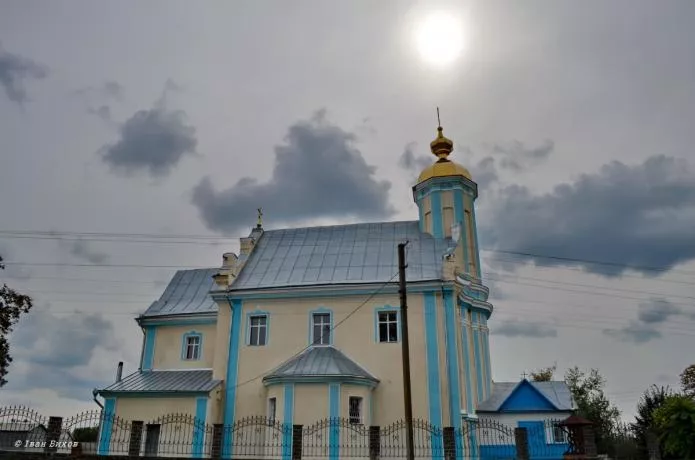
Starosiltsi. Church of the Nativity of the Virgin. 1773–1789.