The village of Novyi Zavod in the Pulyny hromada of Zhytomyr Raion, despite its name which is often associated with the Soviet era, has nothing to do with the USSR. It emerged much earlier — in 1823 — as a settlement of Polish colonists. The name comes not from industry, but from the Polish word zawód, which means "profession" or "trade". The stress falls on the second syllable, and the original meaning of the name is "a new occupation" that the settlers decided to take up.
The first inhabitants were poor colonists looking for an opportunity to start a new life in the Polissia lands. For some time, the settlement had the clarifying name of Novyi Zavod-Bialarskyi. The word "bialari" referred to the craft of the local residents — making wooden barrel staves. Over time, this part of the name fell out of use, leaving only Novyi Zavod.
Schlenker and the Shaping of the Rural Space
At the end of the 19th century, the surrounding lands were bought by the German colonists Karol Schlenker. It was his activity that significantly influenced the development of the village. In 1905, Schlenker allocated a plot and financed the construction of a Roman Catholic church, as well as a school, which became important centers of community life. His estate formed the local administrative and cultural center, the remains of which have survived to this day.
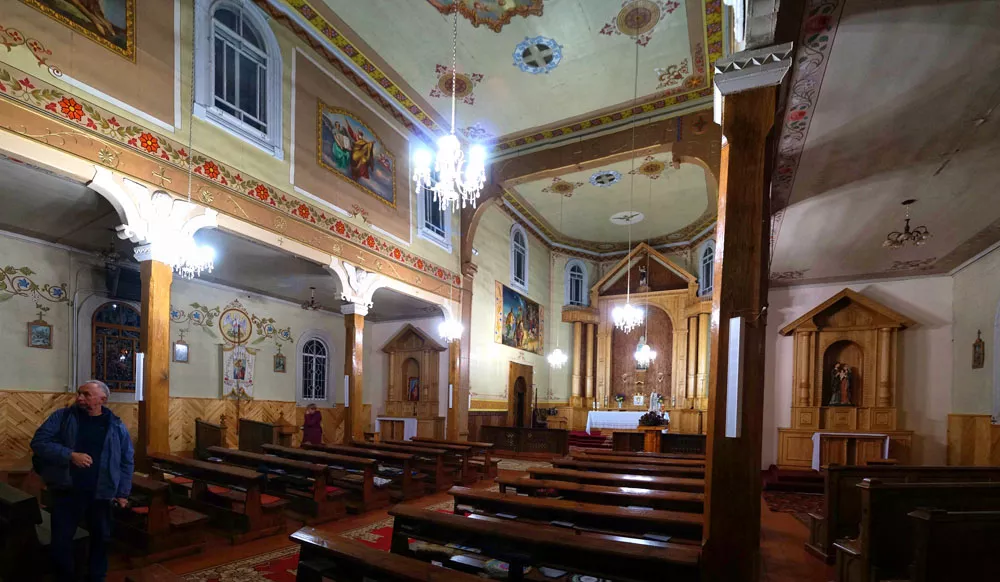
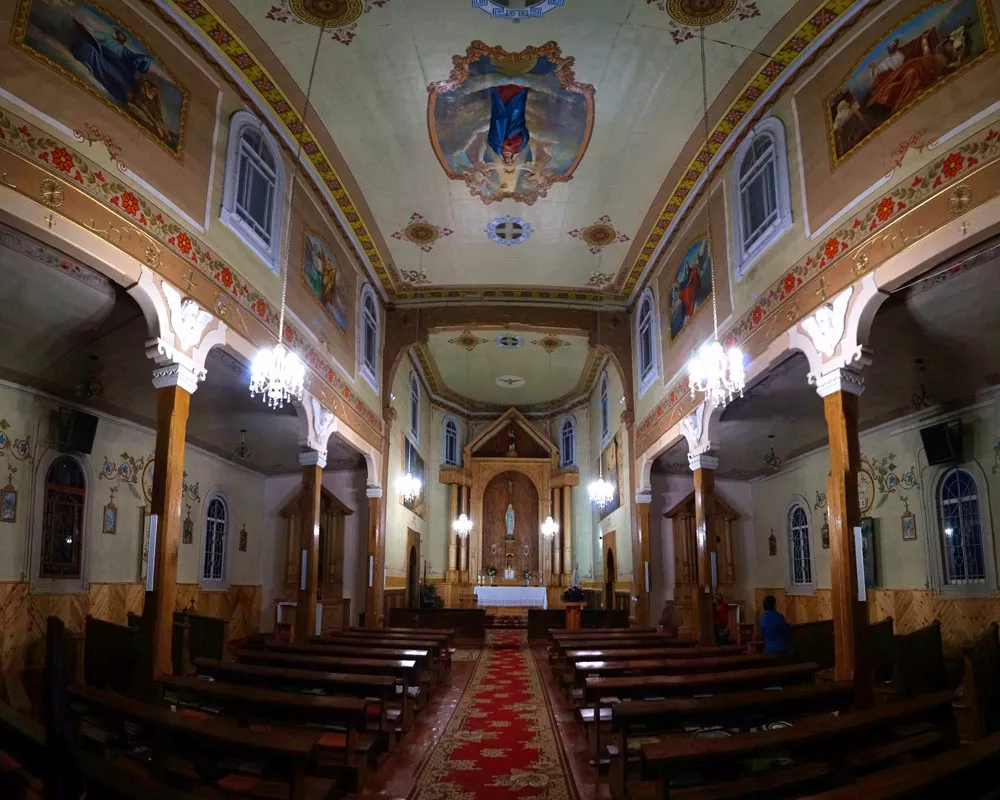
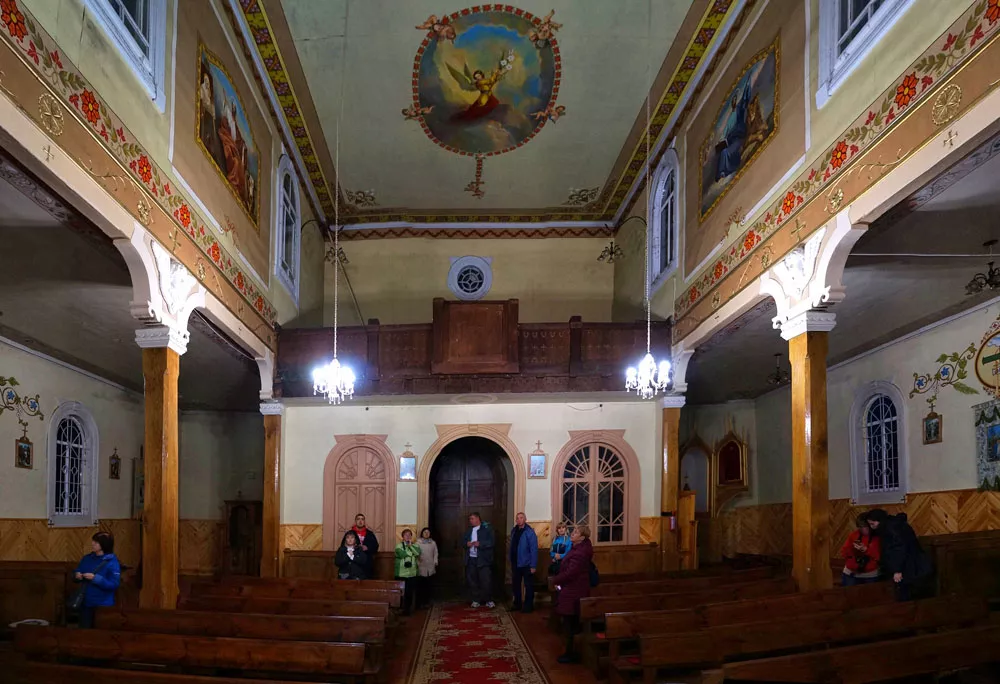
Church of the Immaculate Conception of the Blessed Virgin Mary
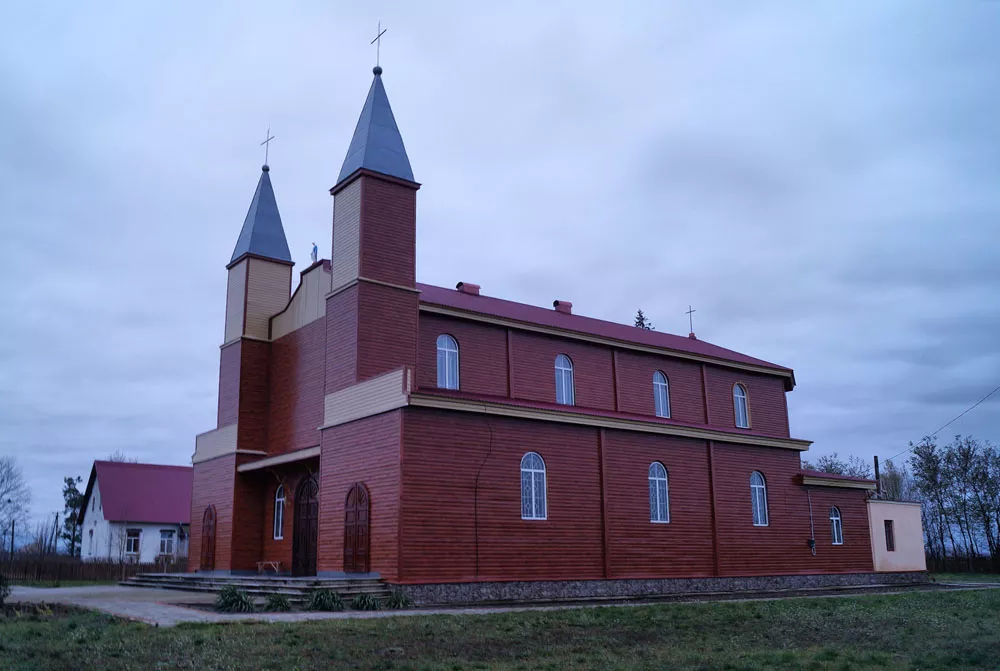
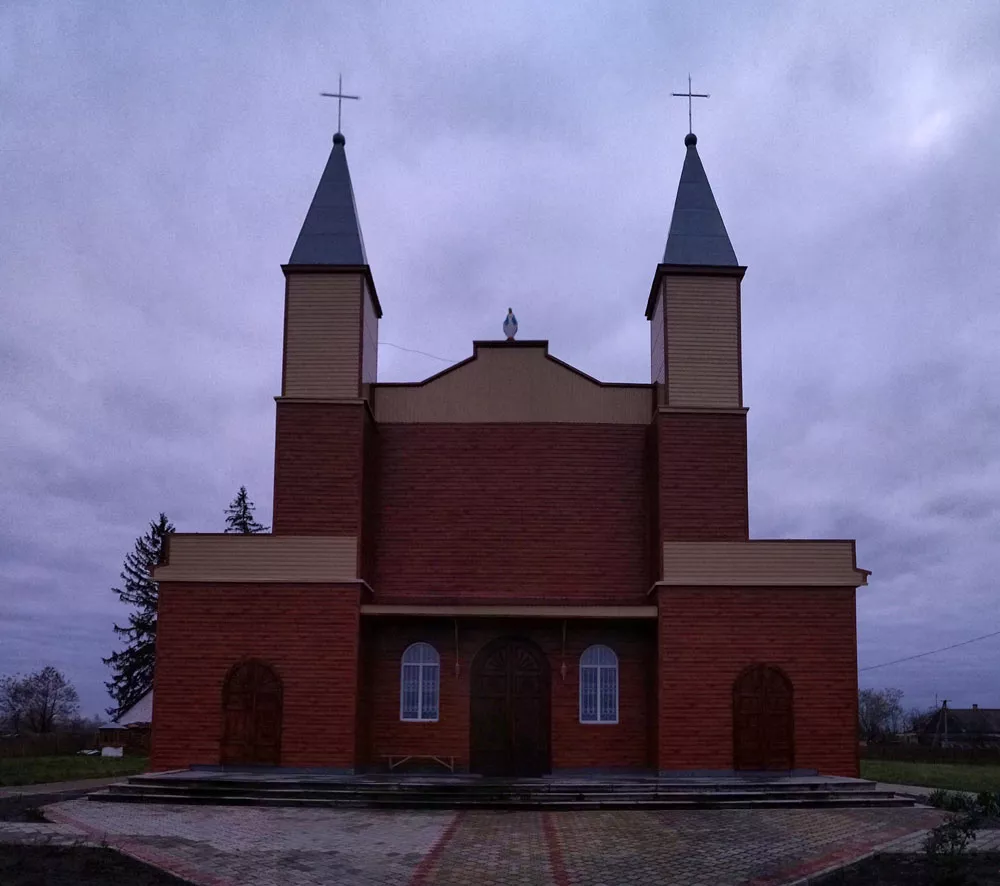
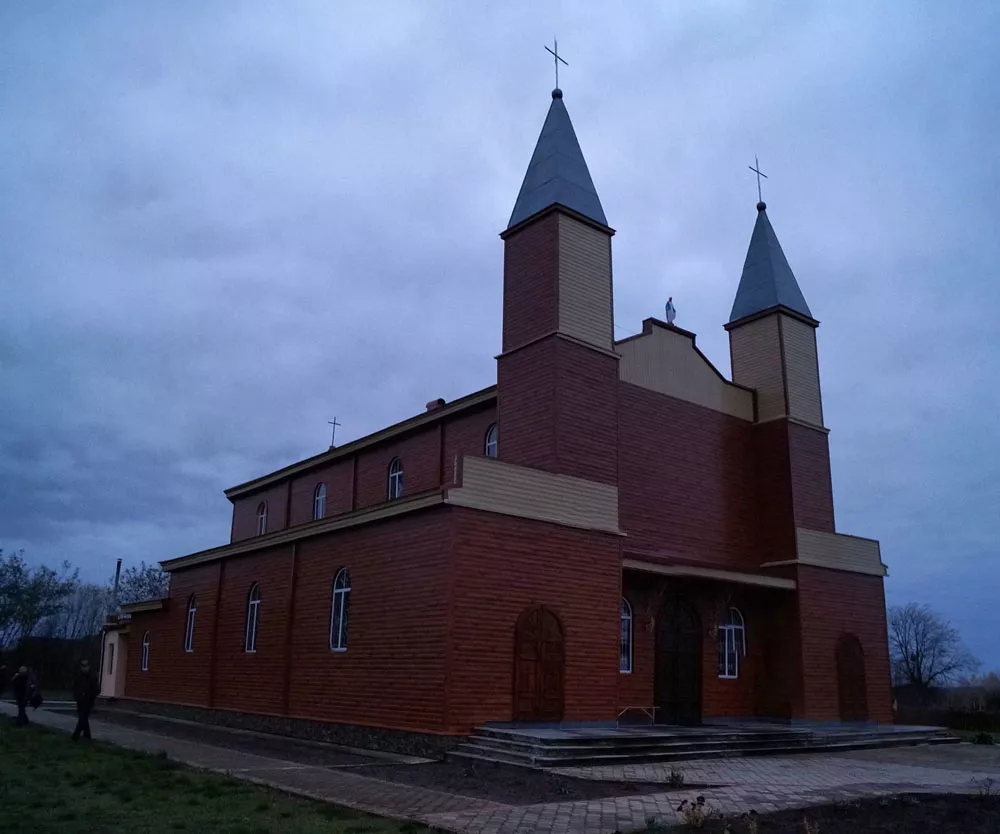
The main architectural landmark of the village is the Church of the Immaculate Conception of the Blessed Virgin Mary, consecrated in 1906. This is a large wooden Roman Catholic church typical of the Polish colonies of Volhynia and Polissia in the early 20th century. Such structures are rare today: most wooden churches did not survive the 20th century.
In 1935, during the anti-religious campaign, the Soviet authorities closed the church and converted it into a village club. The rectory was used as a medical facility. Only after Ukraine's declaration of independence was the church returned to the religious community, and services resumed.
Today, the church's facade is clad with metal profiling that imitates wood. According to the rector, this is a forced and temporary solution: a ventilation gap was left between the metal and the wooden walls to prevent the wood from rotting. The interior is covered with fiberboard and painted — the space turned out peculiar, somewhat naive, but warm and lively.
Schlenker Estate and Research Potential
The buildings of the former estate of Karol Schlenker have also been preserved in Novyi Zavod. They require detailed study and documentation, as they are an important part of the village's historical landscape. It is precisely such objects that give impetus to local history research and restore interest in small settlements of Polissia.
Novyi Zavod is an example of how a simple name can conceal a complex history of colonization, crafts, religious life, and preserved wooden architecture. This village is not about a "Soviet factory", but about a new trade, a new life, and the memory of the people who created it.
Photos by Roman Malenkov, Serhii Shcherbii.