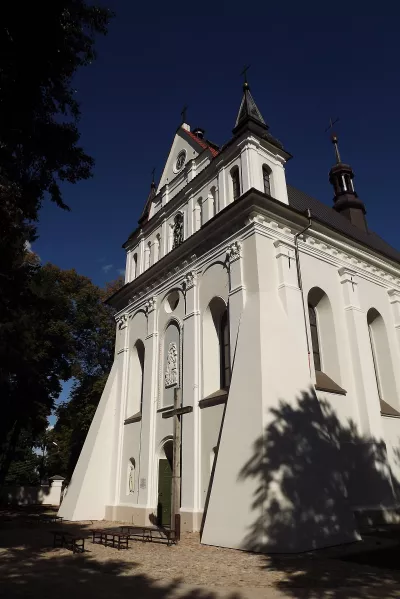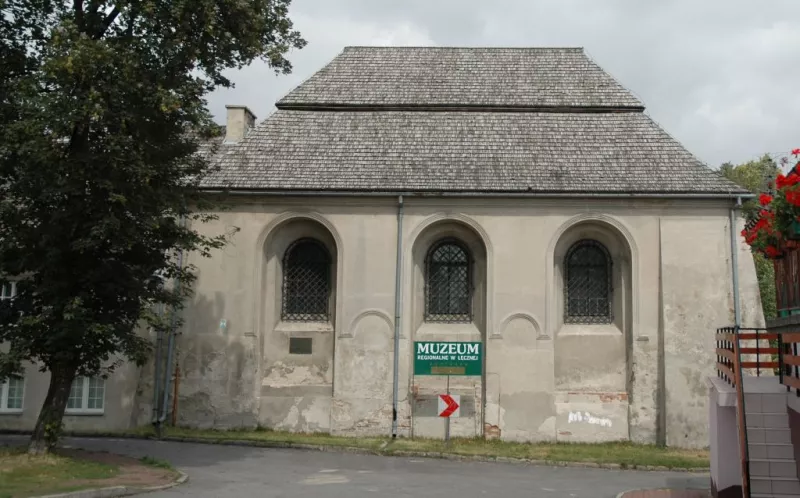
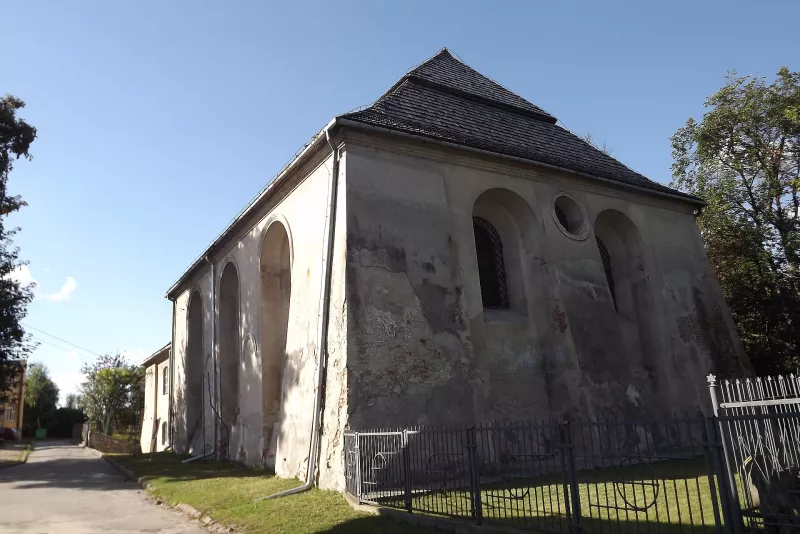
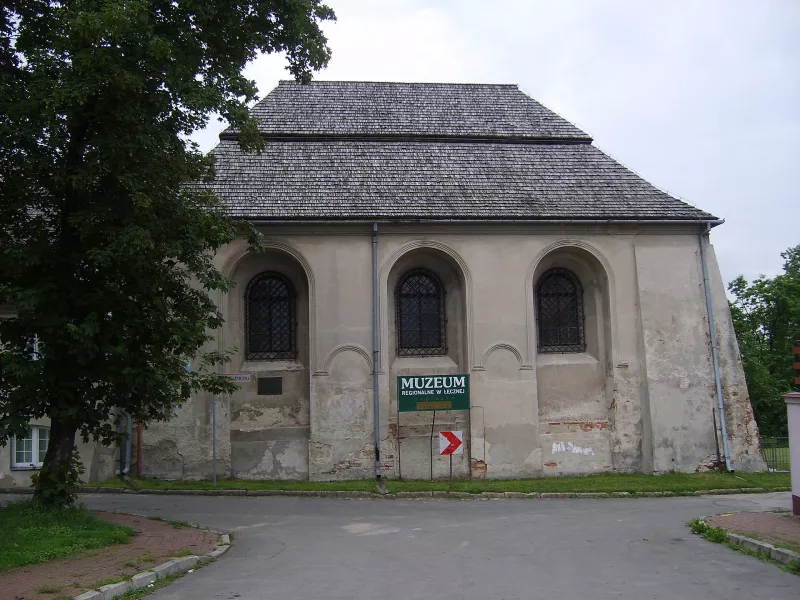
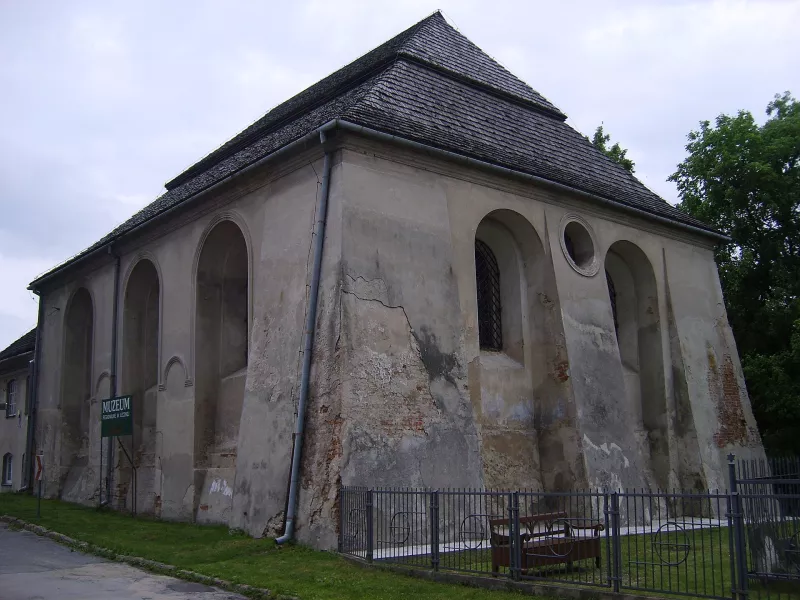
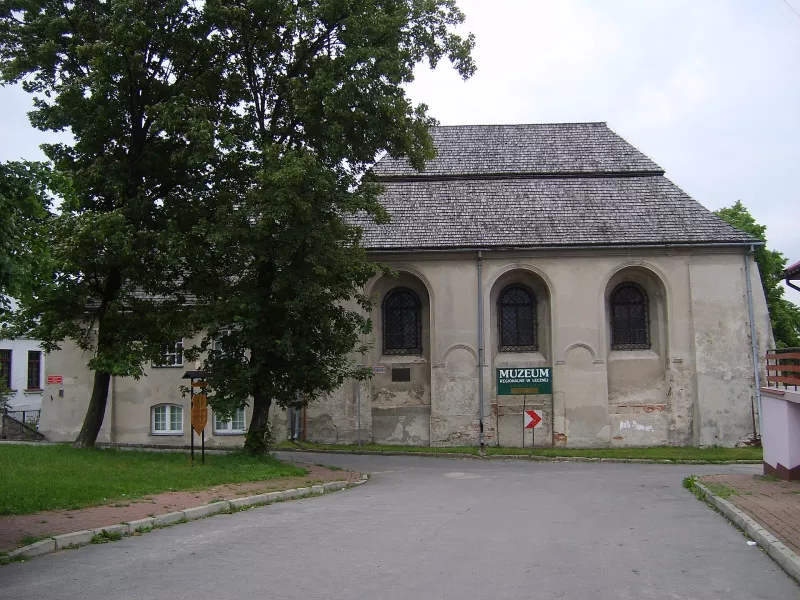

The Great Synagogue stands in Łęczna on Bożnicza Street, near the oldest town market, beneath the hill with the Church of St. Mary Magdalene. It is one of the best-preserved synagogues in the Lublin Voivodeship, built in the mid-17th century. Inside, a rare Renaissance bimah and aron ha-kodesh have survived, unusual for Poland. It is not currently a museum: the building is closed and is being prepared for restoration.
The Fair Town Community
Jews began settling in Łęczna shortly after it was granted town rights, mostly to the north of the market. The town was famous for its large fairs, and the Jewish community played a significant role in trade. In 1648, the community received permission to build a masonry synagogue from Kraków bishop Piotr Gembicki and the town’s owner Katarzyna z Firlejów Noskowska. The building was completed around the mid-1650s. The synagogue burned down in 1846 and 1881, and each time it was rebuilt; after the first fire, the women’s section and vestibule were probably added.
Bimah and Aron Ha-Kodesh
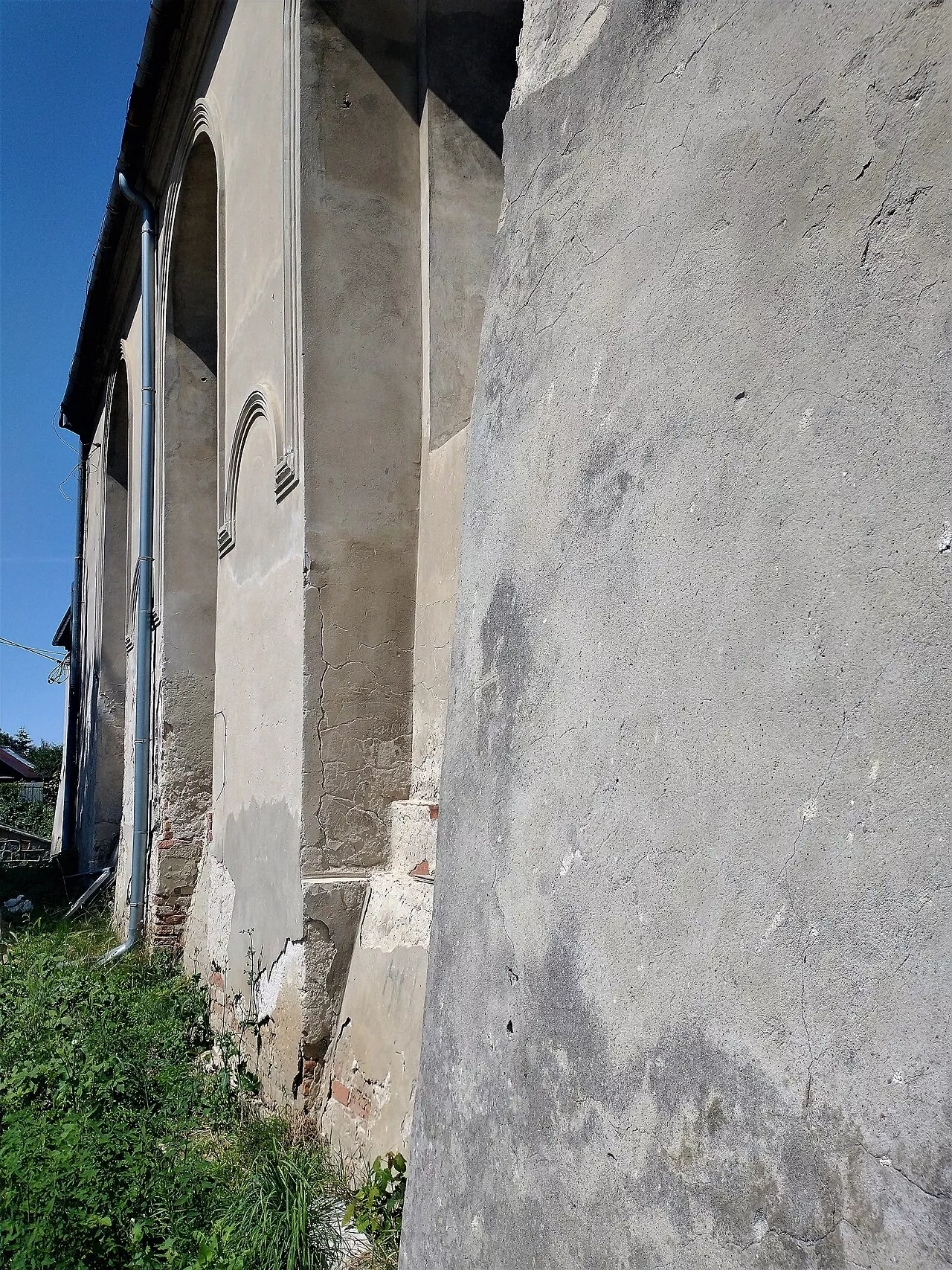
The synagogue is built of local limestone and partly of brick, rectangular in plan measuring 9.4 by 15.8 meters. Walls up to 2.4 meters thick are supported by buttresses: the building stands on a slope, and the soft limestone could have shifted. The broken four-sloped roof, covered with shingles, was reconstructed in the 1950s based on 18th-century synagogue models.
In the middle of the main hall stands a two-tiered bimah 4 by 4 meters, richly decorated with late Renaissance stucco and polychrome. Its four low Tuscan columns on tall pedestals support the ceiling; at the top they are connected by arches, and inside the bimah is crowned by a small dome. There is no other bimah like this in Poland. On the eastern wall, in a deep niche, is a two-tiered aron ha-kodesh with stucco decoration from the mid-17th century and an inscription from the Talmud: “Know before whom you stand — before the King of kings.” On the western wall are six small windows through which women in the women’s section watched the service.
War and Memory
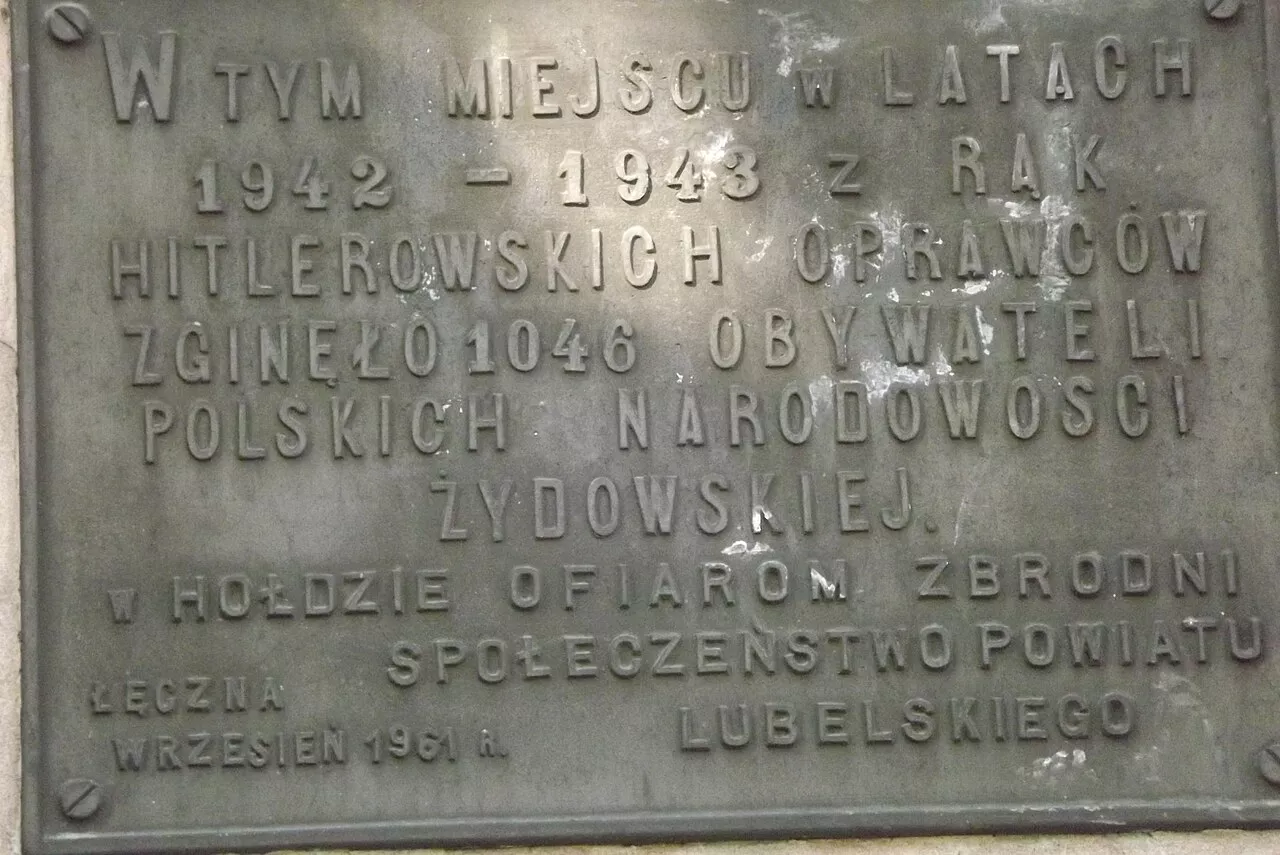
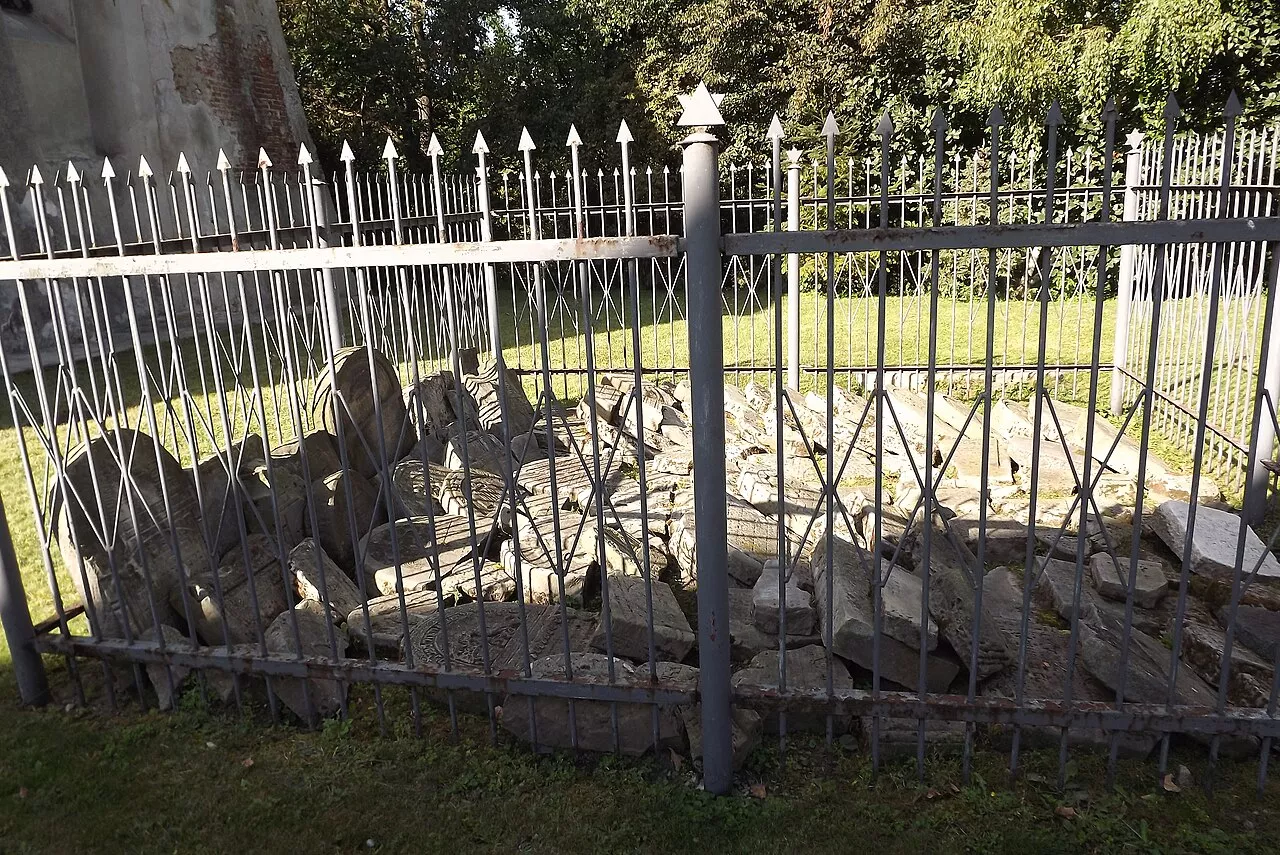
On January 7, 1940, the Germans established a ghetto in Łęczna, where about three thousand Jews were confined. The synagogue was plundered and turned into a warehouse. A black marble plaque hangs on the building’s wall in memory of 1,046 Jews whom the Nazis murdered between 1940 and 1942 on the embankment near the synagogue. Near the building is a small lapidarium with matzevot from the local Jewish cemetery.
From Ruin to Museum — and Back to Renovation
After the war, the abandoned synagogue fell into disrepair, and in 1952 the city authorities even decided to dismantle it. Due to lack of funds, the decision was reversed, and from 1953 to 1964 the building was repaired: the wooden ceiling was replaced with a reinforced concrete coffered one, the bimah and aron ha-kodesh were restored, and a new annex was built instead of the destroyed one. From 1966 to 2014, a regional museum operated here — a branch of the Lublin Museum with a rich collection of Judaica. On April 30, 2014, the building was returned to the Jewish community, and the museum was closed.
Today the synagogue belongs to the Foundation for the Preservation of Jewish Heritage, which leased it to the town for 60 years. In 2025, Łęczna received funding for the restoration of both synagogues — the Great and the neighboring Small Synagogue (which has housed the city library since the 1990s). The Great Synagogue is planned to be transformed into a cultural and educational center.
How to get there
Łęczna is 25 km northeast of Lublin, with frequent buses going there. The synagogue stands in the old town, a few minutes’ walk from the market square. While preparations for renovation are underway, the building can only be viewed from the outside. Read about other Jewish landmarks of Polissia in the articles “Synagogues of Włodawa” and “Museum and Memorial in Sobibór”. For Ukrainian citizens, this is Poland: a foreign passport is required.