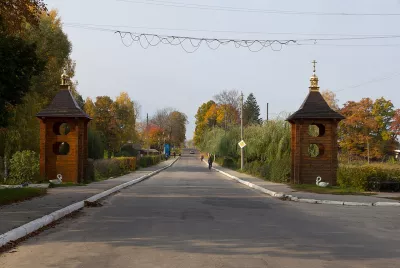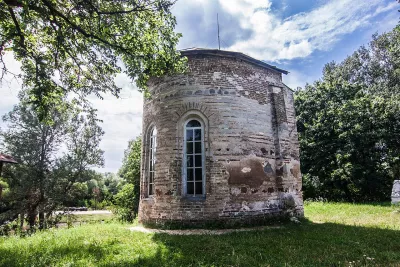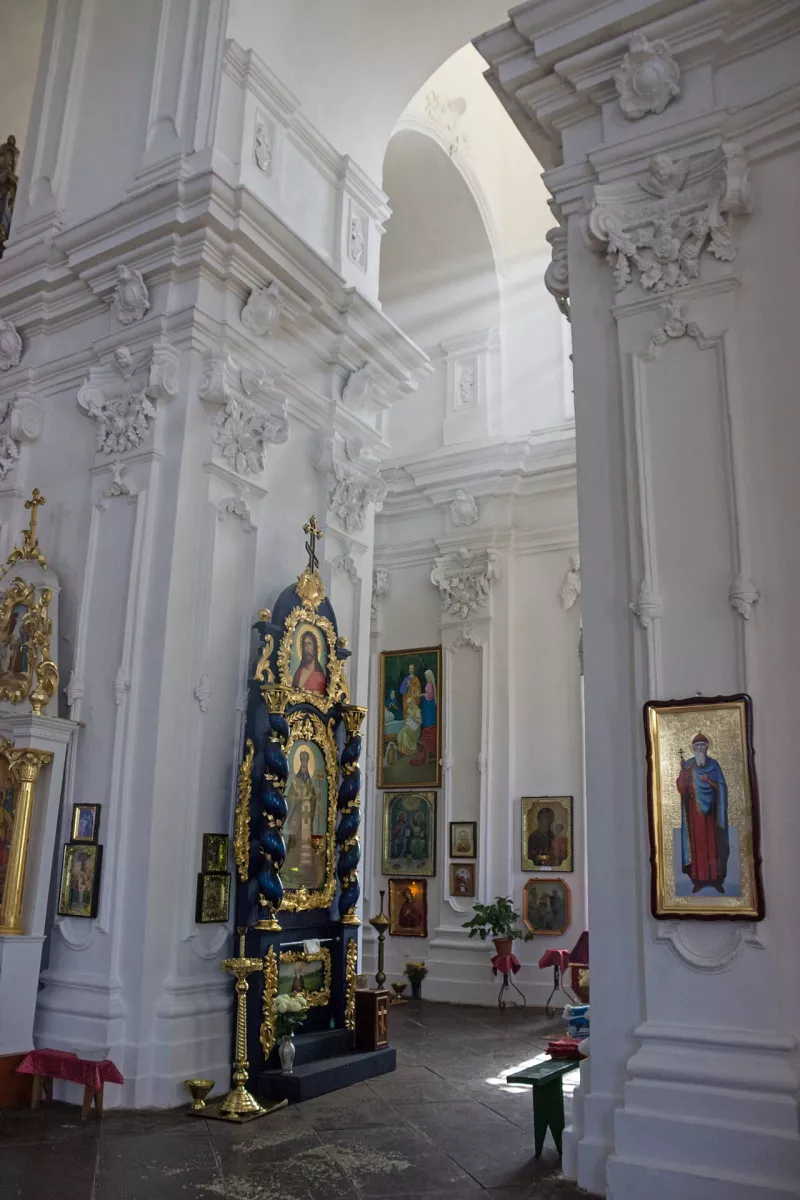

Kozelets is a urban-type settlement on the Oster River near the Kyiv – Chernihiv highway, the centre of the Kozelets hromada, inhabited by about 7.5 thousand people. In the 18th century, it was a regimental town, and its greatest adornment is the Nativity of the Theotokos Cathedral, which is considered one of the finest architectural works of the 18th century in Ukraine.
Origin of the Name
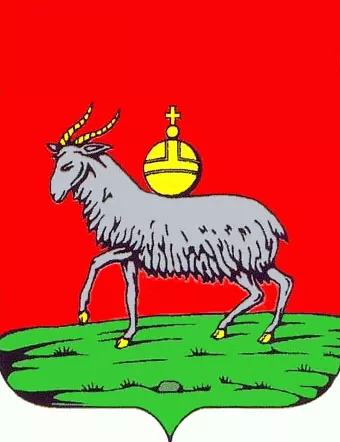
Some trace the name to kozelets, wild flowers that in spring cover the banks of the Oster, while others derive it from the word "kozel" in the sense of a deep whirlpool. There is also mention of an ancient forest "kozeles" where many wild goats lived. The town coat of arms features a silver goat with golden horns. The accent is placed on both Kozelets and Kozelets.
Regimental Town
Kozelets has been known since the 17th century as a fortified town of the Polish–Lithuanian Commonwealth. From 1649, it was a sotnia town of the Kyiv Regiment; in 1656, Bohdan Khmelnytskyi granted it Magdeburg rights. In 1662, Yakym Somko was elected hetman here at a senior officers' council. From 1708 to 1781, the administration of the Kyiv Regiment was located in Kozelets.
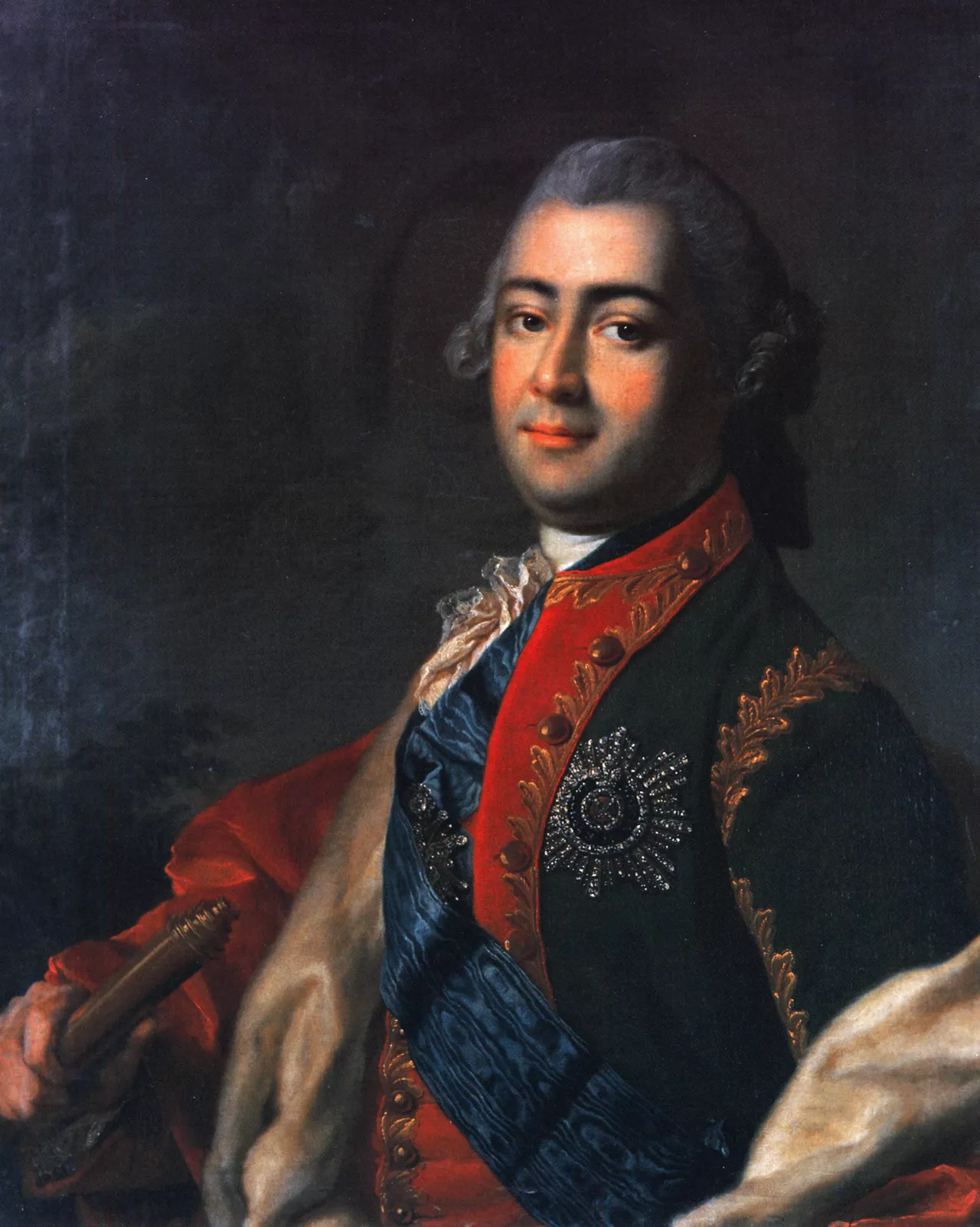
Its greatest prosperity occurred in the mid-18th century. This was facilitated by the rise of Oleksii Rozumovskyi, a native of the neighbouring village of Lemeshi, a Cossack son who became the favourite of Empress Elizabeth, and his brother Kyrylo, the last hetman.
Nativity of the Theotokos Cathedral
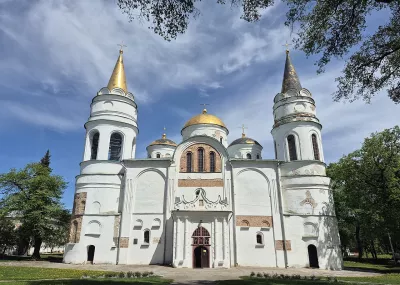
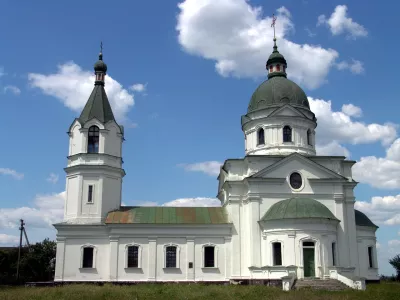
The cathedral was built in 1752–1763 by order of Countess Nataliia Rozumovska – Rozumykha, the mother of Oleksii and Kyrylo, as a sign of gratitude to God for the happy fate of her sons. The project was designed by the architect Andrii Kvasov, and the decor by Ivan Hryhorovych-Barskyi. A four-tiered bell tower was erected nearby in 1766–1770.
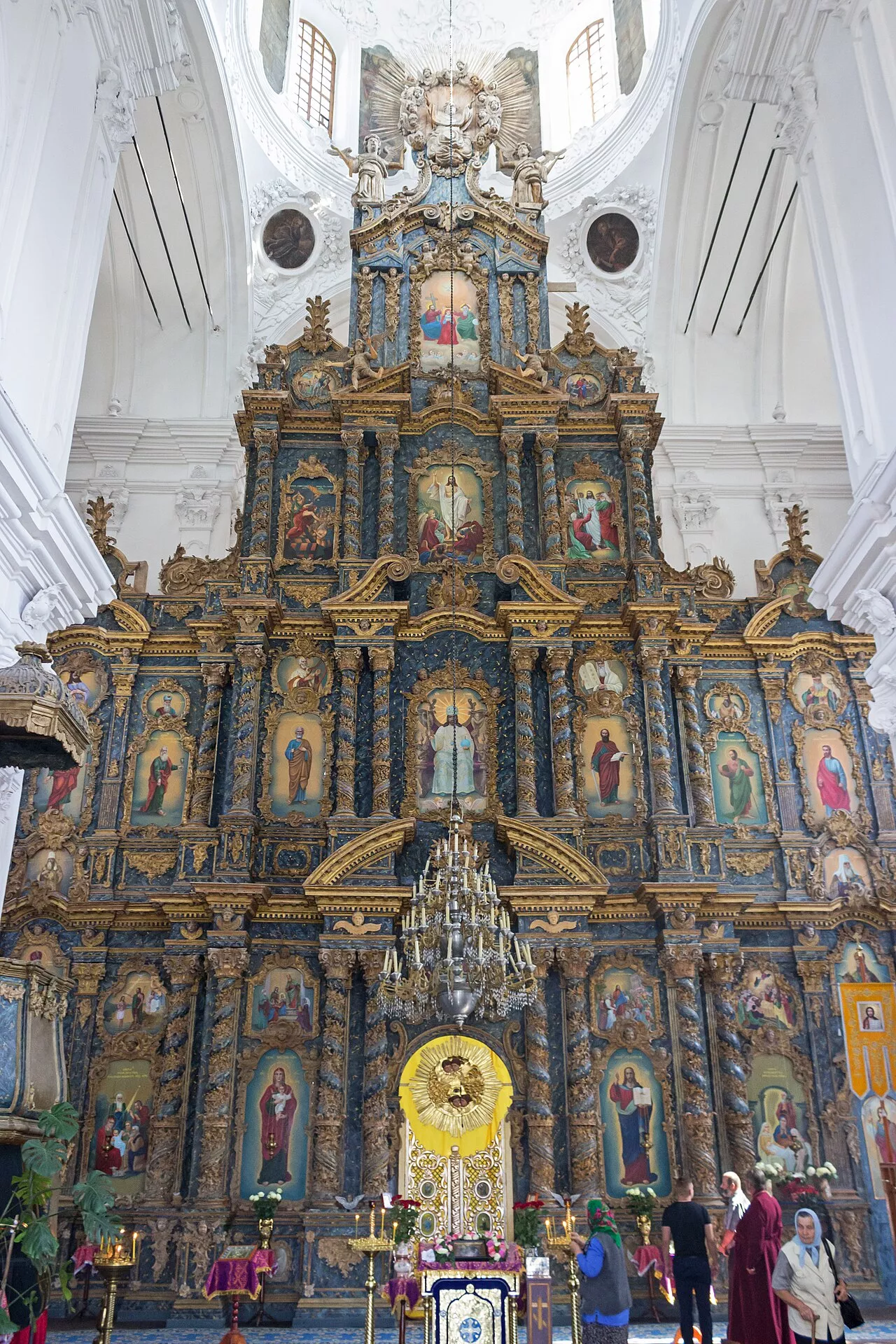
The church is cross-shaped, two-tiered, with five domes placed diagonally. The stucco decor combines Baroque, Rococo, and Classicism. On the lower tier is the "warm" Church of Adrian and Natalia, the burial vault of the Rozumovskis; semi-circular porches with colonnades lead to the upper tier. The adornment of the interior is an 18th-century iconostasis carved from linden wood, in the creation of which Rastrelli is believed to have participated: the icons of 1753 were painted by Hryhorii Stetsenko, and carved by Sysoi Shalmatov. A new iconostasis for the Katerynynskyi Church in Chernihiv was created in 2016 following this iconostasis.
During the Second World War, prisoners of war and horses were kept in the cathedral, after which a warehouse was set up there. It was restored in 1961–1982, and solemnly opened in 1993.
What Else to See
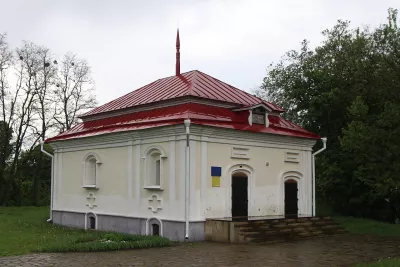
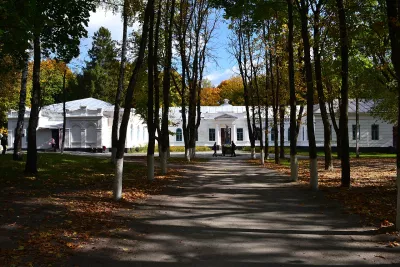
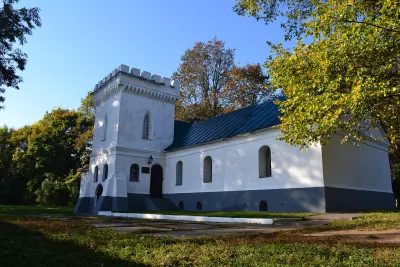
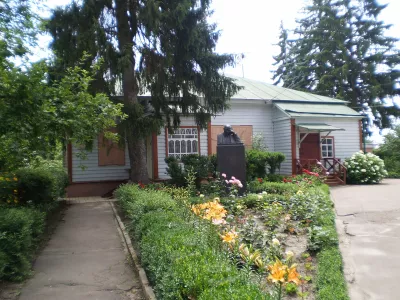
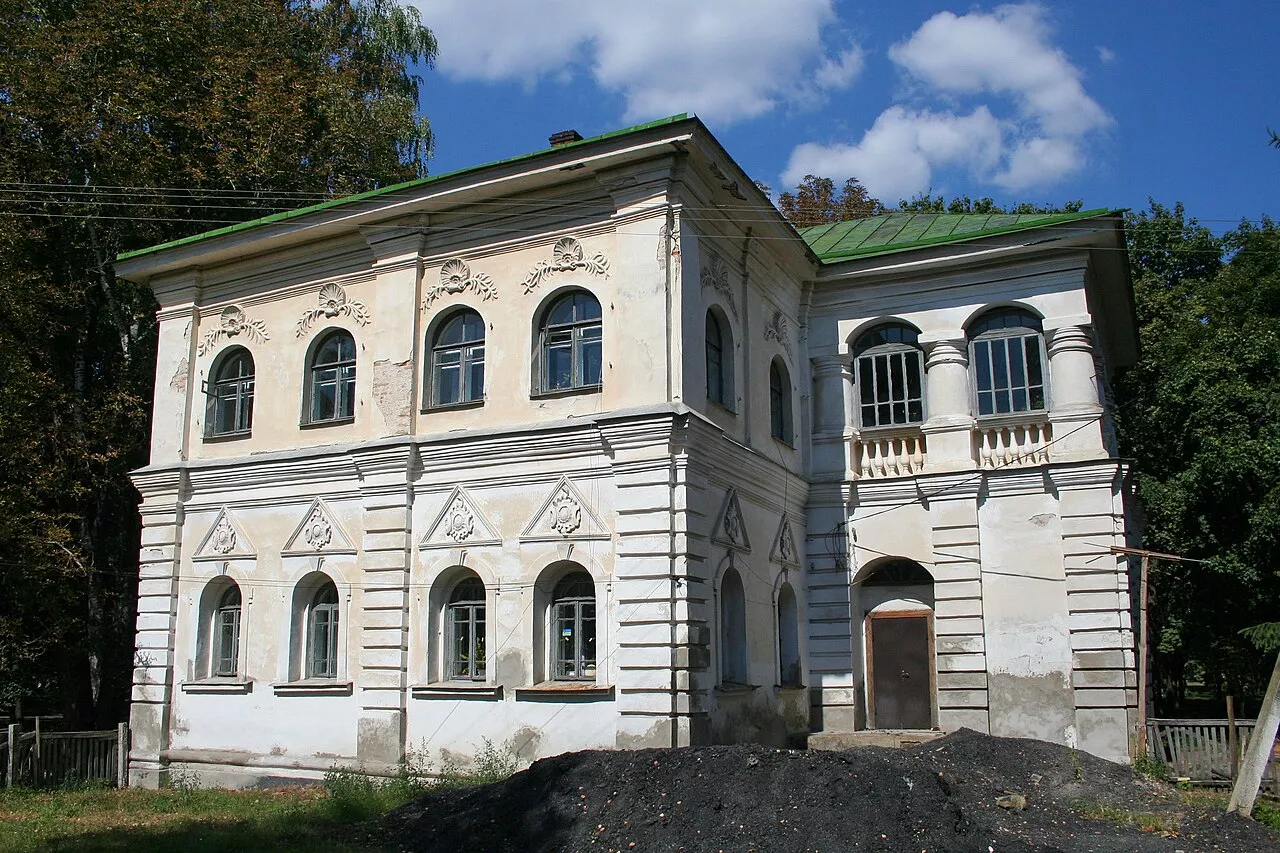
Near the cathedral stands the Regimental Chancery building of 1756–1760. It is also worth seeing the 1784 St. Nicholas Church and the Ascension Church. The Museum of History of Weaving of Chernihiv Region operates in the settlement. In the spring of 1846, Taras Shevchenko visited Kozelets and later described the town in the novella "Knyhynia".
Coat of Arms and Flag
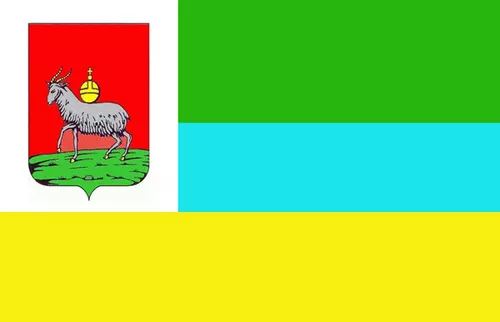
The coat of arms of Kozelets features a silver goat with golden horns and hooves, and a golden globe with a cross on its back. The coat of arms has been known from seals since 1656, and the globe with a cross recalls that Kozelets was a sotnia town and later a regimental town. The flag is a green-blue-yellow banner with a white square at the top near the hoist.
How to Get There
Kozelets lies on the Kyiv — Chernihiv highway, approximately halfway between the cities; buses stop here constantly. Nearby is Oster with the St. George's Chapel, and in Chernihiv you can find St. Catherine's Church with an iconostasis modeled after the one in Kozelets.