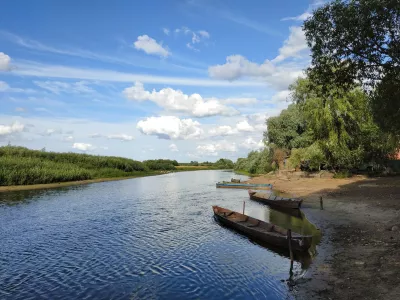
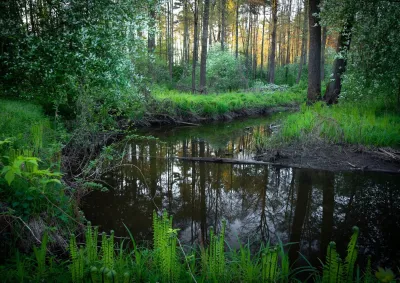
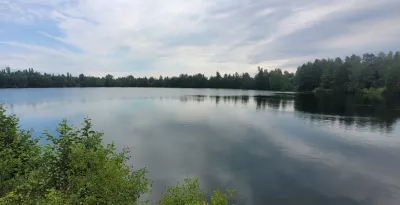
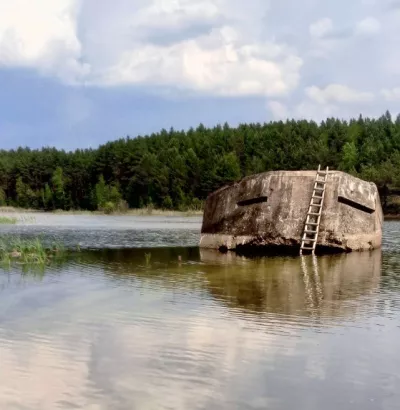
Deep in the Polissian forest in the Zhytomyr region, where the Irsha River murmurs and the pine forest smells of resin, an unusual spring bubbles from beneath the earth. Locals have long called it Kypyache — according to legend, the water once churned with such force that it seemed the earth was boiling. Today, this place attracts thousands of pilgrims, tourists, and travelers every year who seek peace, pure water, and the atmosphere of a monastery amid the living nature of Polissia.
Why the spring was named "Kypyache"
The Kypyache tract is located on the right bank of the Irsha River, approximately 5 kilometers southwest of the urban-type settlement of Chopovychi (Chopovychi hromada, Korosten district). According to tradition, the water here "boiled" — churning and foaming as it burst upward with astonishing force. Thus, local residents christened this place Kypyache, and this name has survived to this day. It is also said that the spring never freezes, even in the harshest frosts.
"The water in the spring burst with such force that it resembled boiling" — this is how locals and everyone who heard this legend in childhood describe the place.
The chemical composition of the water was studied in an ecological laboratory: the water is extraordinarily soft, with a negligible content of heavy metals, nitrates, and chlorides — almost distilled in its purity. However, specialists warn that one should not drink it in large quantities, because overly soft water flushes necessary salts from the body.
The legend of the apparition of the icon in 1911
The year 1911 became a turning point for Kypyache. It was then, according to tradition, that the icon of the Most Holy Theotokos of Kazan appeared from the waters of the spring in a fiery radiance. Word of the healing spring spread far beyond Polissia, and pious Chopovychi residents built a small chapel over it. Accounts of "miraculous recoveries" are preserved in the living memory of the residents of the surrounding villages.
The founding of the monastery: from the First World War to Soviet repressions
After the First World War, the first monks came to the banks of Kypyache. They built a wooden church and monastic cells. Hegumen Kostiantyn (Chopovskyi) became the first abbot of the monastery, which was officially named the Saviour-Transfiguration Monastery. In its best years, about thirty monks lived here.
In the 1920s and 1930s, tragedy befell the monastery: bandits killed the abbot and monks and burned the cloister. In 1934, the Soviet authorities dispersed the remaining monks, the church was dismantled, and the spring was covered with stones. Yet it broke through the rubble.
Revival: two monasteries in one tract
St. Kazan Icon of the Mother of God Men’s Monastery
The revival began in 1991. The official decision to establish the St. Kazan Men’s Monastery was made by the Synod of the UOC on December 27, 2002. The monastery belongs to the UOC (Moscow Patriarchate). Right here, near the chapel, the spring flows out — water gushes from the wall directly beneath the icon.
Athonite Icon of the Mother of God Women’s Monastery
About 2 km from the men’s cloister is the women’s monastery, which also belongs to the UOC (MP). In 2001, a skete was founded here; in 2007, it received the status of a monastery; and on October 7, 2008, the wooden church of the Athonite Icon of the Mother of God on a high stone foundation was consecrated. The church stands on 12 pillars made of stones from Mount Athos. Over 60 female monastics live here. Among the shrines are a particle of the Belt of the Mother of God, the relics of 24 Athonite elders, and the "Three-Handed" icon.
The bathhouse and the spring: what awaits the visitor
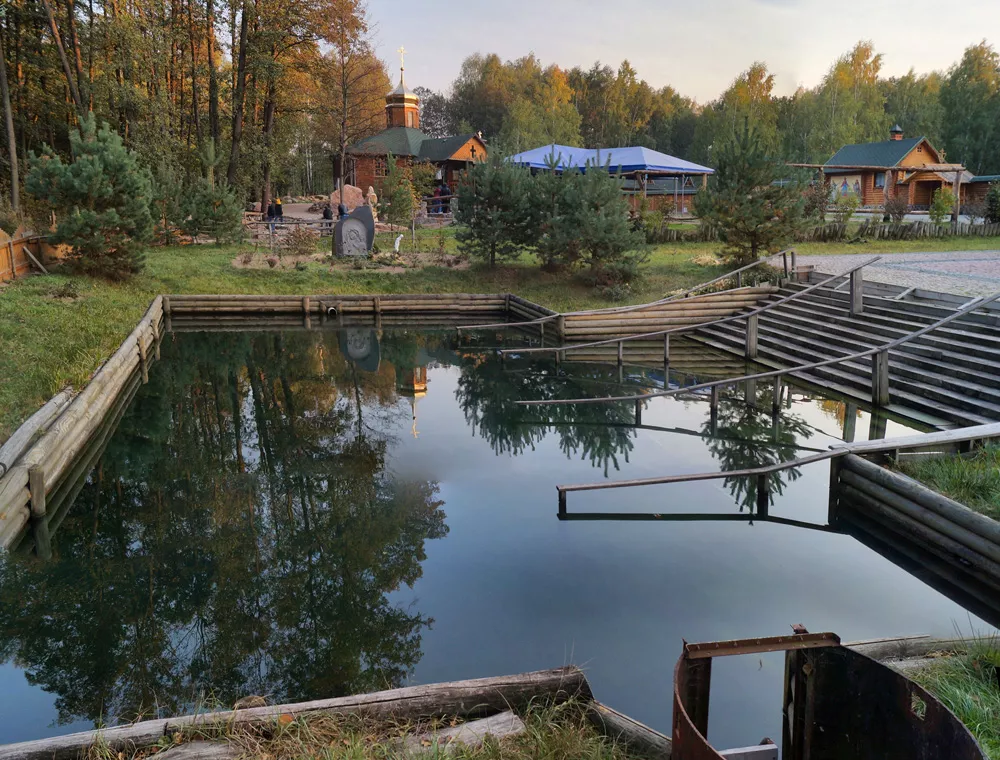
A bathhouse has been arranged near the men’s monastery, where those wishing to immerse themselves come — regardless of the time of year. The water is cold, but "living." All around is a picturesque pine-oak forest, the quiet Irsha, and Polissian nature in all its beauty.
Important: it is forbidden to be in a state of intoxication or undressed after bathing on the territory of the monastery. On the days of major Orthodox holidays — Epiphany, Trinity, the day of the Kazan Icon — thousands of people gather here.
How to get to the Kypyache spring
By car from Kyiv (about 130 km): along the M-07 highway to Malyn, then via Yosypivka to Chopovychi. In the settlement near the shop, turn left. Past the settlement: on the left is the convent (domes visible), on the right is the men's monastery (about 5 km through the forest).
By commuter train: from Kyiv (Sviatoshyn stop) to Chopovychi station, then by bus to the "School" stop, and then on foot following locals' directions.
From Zhytomyr — about 100 km.
What else to know before the trip
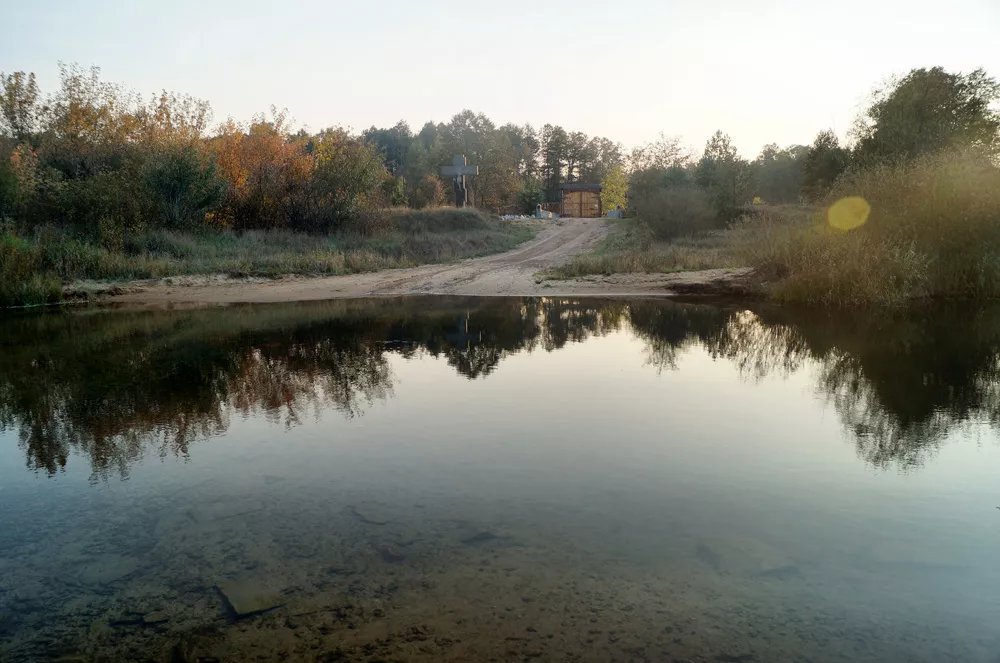
Kypiatche is both a pilgrimage site and a natural landmark. The Polissian forest around the tract is great for walks, and the Irsha River for contemplation. It is especially nice here in summer: the shade of pine trees, birds singing, and the babbling of the spring create an atmosphere hard to find in a noisy city.
Frequently asked questions about the Kypiatche spring
Where exactly is the Kypiatche spring located?
In the Kypiatche tract on the right bank of the Irsha River, approximately 5 km southwest of the settlement of Chopovychi in Korosten Raion of Zhytomyr Oblast, on the territory of the men's monastery.
Can you swim in the spring?
Yes. A bathing facility has been set up near the spring, open year-round. After bathing, you must get dressed — staying unclothed on the territory of the monastery is prohibited.
How many monasteries are there in Kypiatche?
Two: the men's Monastery of the Kazan Icon of the Mother of God (officially since 2002) and the women's Convent of the Athonite Icon of the Mother of God (status since 2007).
Can you drink water from the spring?
In moderate quantities. The water is extremely soft and pure, so drinking it in large volumes is not recommended — soft water washes necessary salts out of the body.
When is the best time to visit Kypiatche?
The place is open all year round. The largest crowds are during major Orthodox holidays (Epiphany, Trinity, the Day of the Kazan Icon). Summer or early autumn are best for a quiet visit.
Photos by Roman Malenkov.