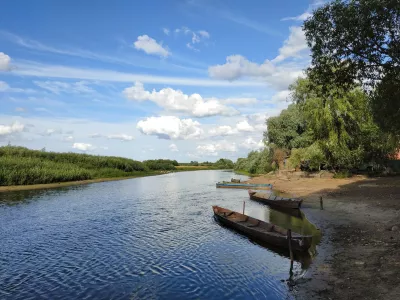
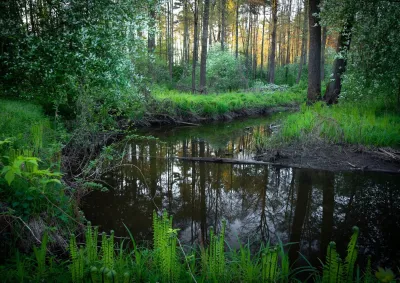
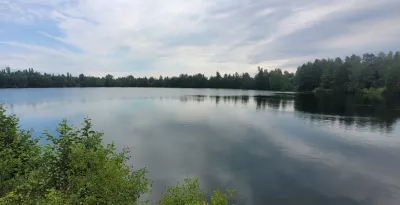
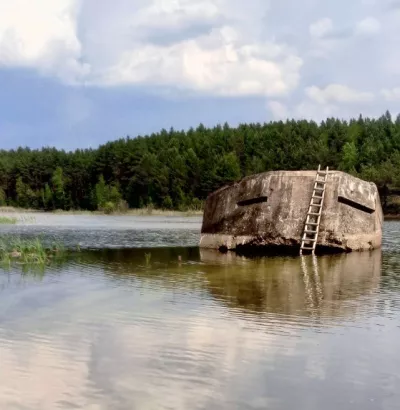
The Rostavytsia River is neither the widest nor the longest in Ukraine. But among local lore enthusiasts, it is particularly famous: no other river of comparable length has preserved as many ancient water mills as this quiet tributary of the Ros in Zhytomyr region. Along the road between Ruzhyn and Verkhivnia, over a distance of some fifteen kilometers, at least four such structures can be found — silent witnesses to how local villages lived and worked a hundred-plus years ago.
One of the most interesting places in this area is the village of Karabchiyiv in the Ruzhyn hromada: both the old mill and the brick Church of St. John the Theologian, erected back under Nicholas I, have been preserved here. This pair — an industrial ruin and an active church — forms an unexpected yet expressive historical ensemble over the water.
Rostavytsia: the river that ground flour for an entire region
Rostavytsia originates between Koziatyn and Tytusivka in Vinnytsia region, flows through the forest-steppe, and flows into the Ros opposite the village of Pylypcha in Kyiv region. Its length is 116 kilometers, and its basin area is about 1,465 km². There are many ponds on the river and its tributaries, and three reservoirs have been built in the lower reaches.
However, Rostavytsia was most famous for its water mills. The river has a sufficient drop in height and a stable current, which made it an ideal engine for milling. Dams on the Rostavytsia have been built since ancient times: 1848 documents already mention two mills in the village of Buky alone. According to legend, the mill in Trubiivka even sent flour to America at one time.
"The left tributary of the Ros breaks all records for the number of ancient water mills relative to its length" — this is how the researcher from "Ukraine Incognita", who drove the entire route, describes the Rostavytsia.
Water mills on the Rostavytsia — famous spots
- Buky — the most famous mill from 1854, built by a local landowner;
- Chubyntsi — two mills in the same village, one preserved below the reservoir dam;
- Shamrayivka — a mill with a preserved dam;
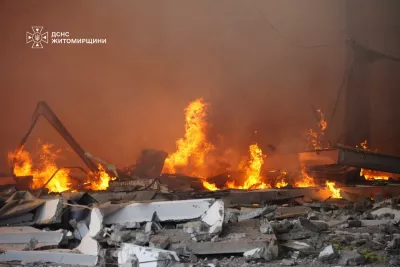
- Yahnyatyn — a four-story mill from the 19th to early 20th century, retrofitted with a power plant in the 1960s; nowadays, unfortunately, burned down (more details in the article about the water mills of Rostavytsia and Yahnyatyn);
- Karabchiyiv — an abandoned early 20th-century mill overgrown with trees;
- Verkhivnia, Pavoloch, Derhanivka, Ruzhyn, Strohiv — five more locations with milling heritage along the route.
The mill in Karabchiyiv: an industrial ruin over the water
The water mill in Karabchiyiv was built at the beginning of the 20th century on the banks of the Rostavytsia. It served for grinding grain from the surrounding villages and was a true center of the economic and social life of the community. People came here with sacks of grain not only from Karabchiyiv, but also from neighboring villages.
Today the building is abandoned. Trees and shrubs are gradually embracing its walls. But it is precisely this that gives the place a special atmosphere: not a restored tourist attraction, but a real ruin with living nature all around — a dream for a local historian or architectural photography enthusiast.
Similar structures are disappearing all over Ukraine — and each of them takes away a piece of the region's living memory.
Church of St. John the Theologian: classicism among the churchyard grove
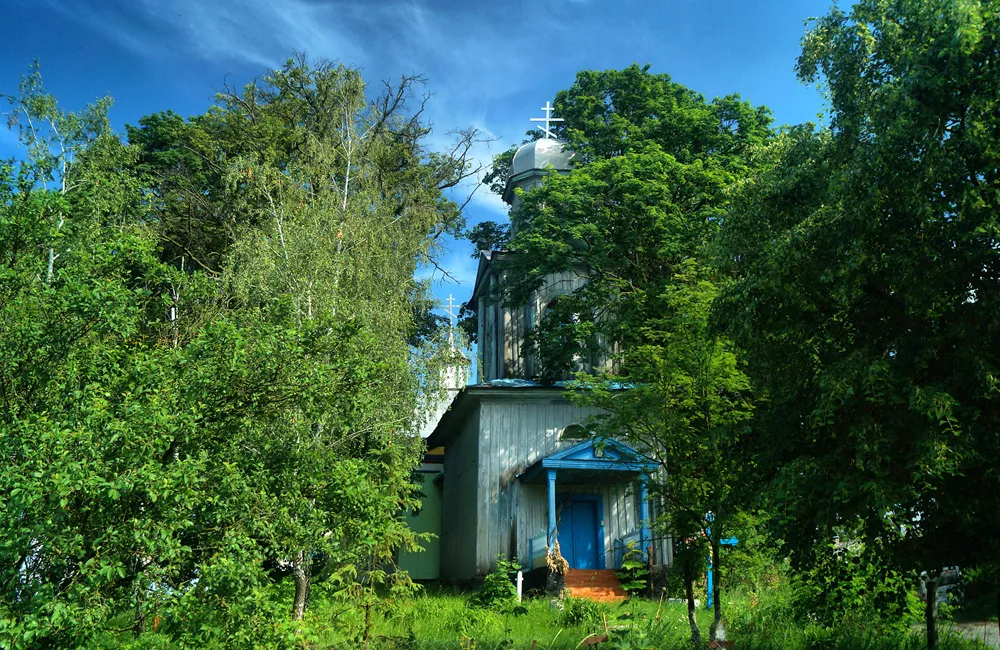
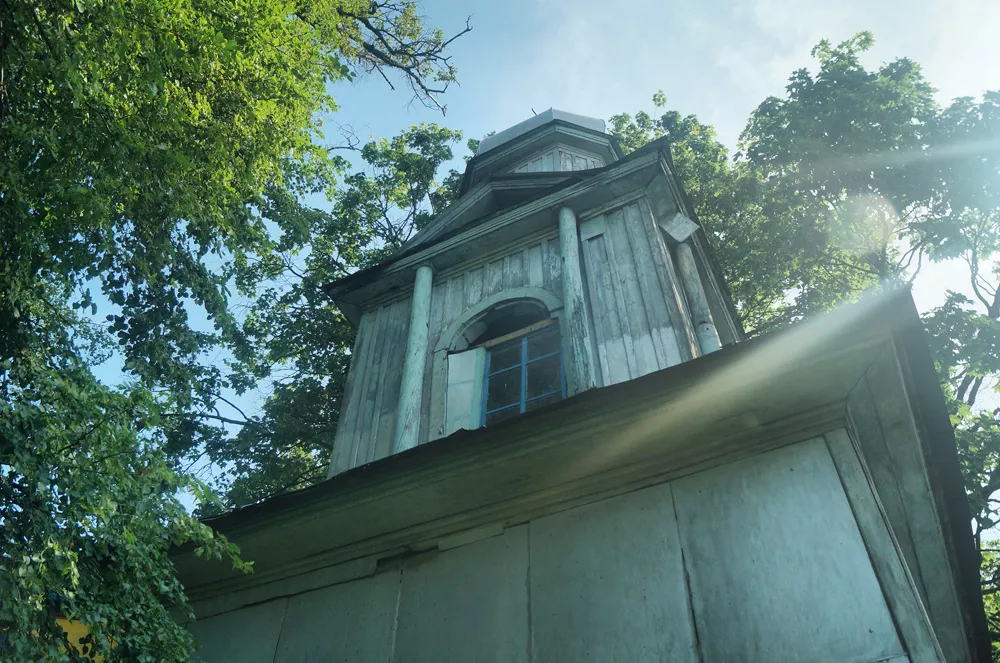
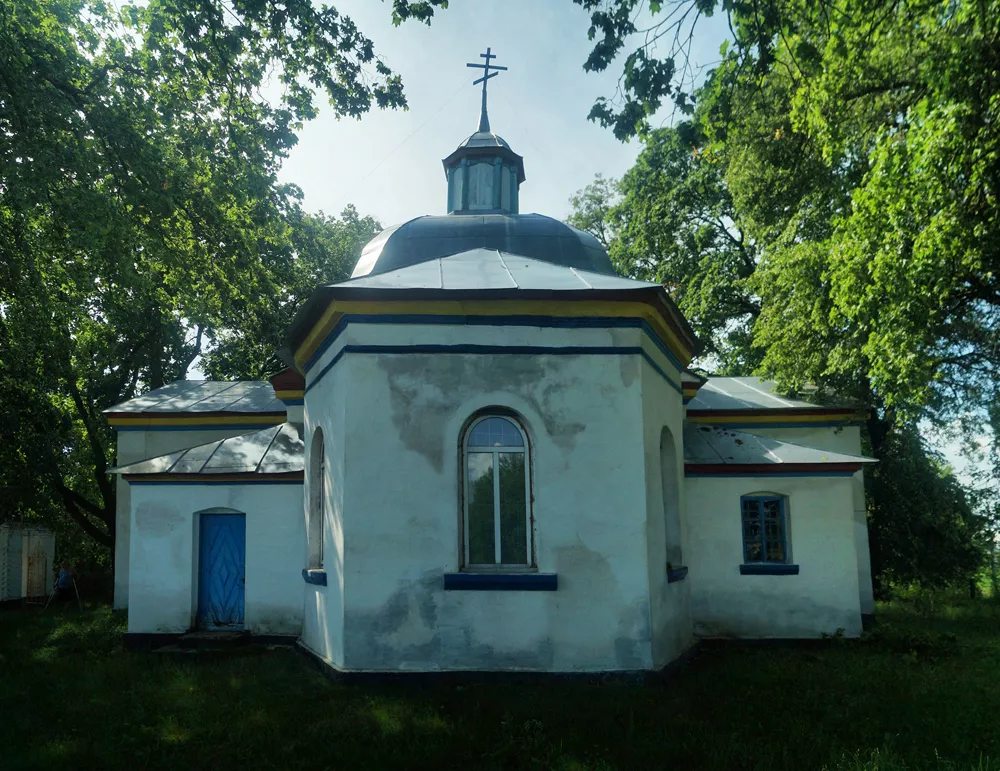
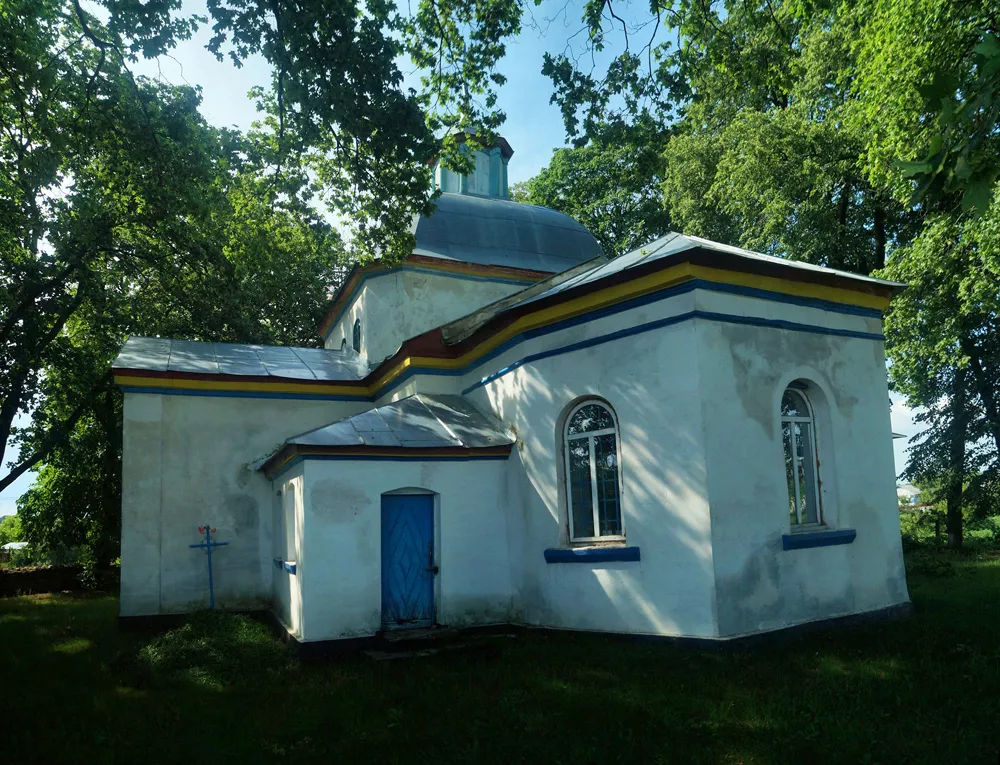
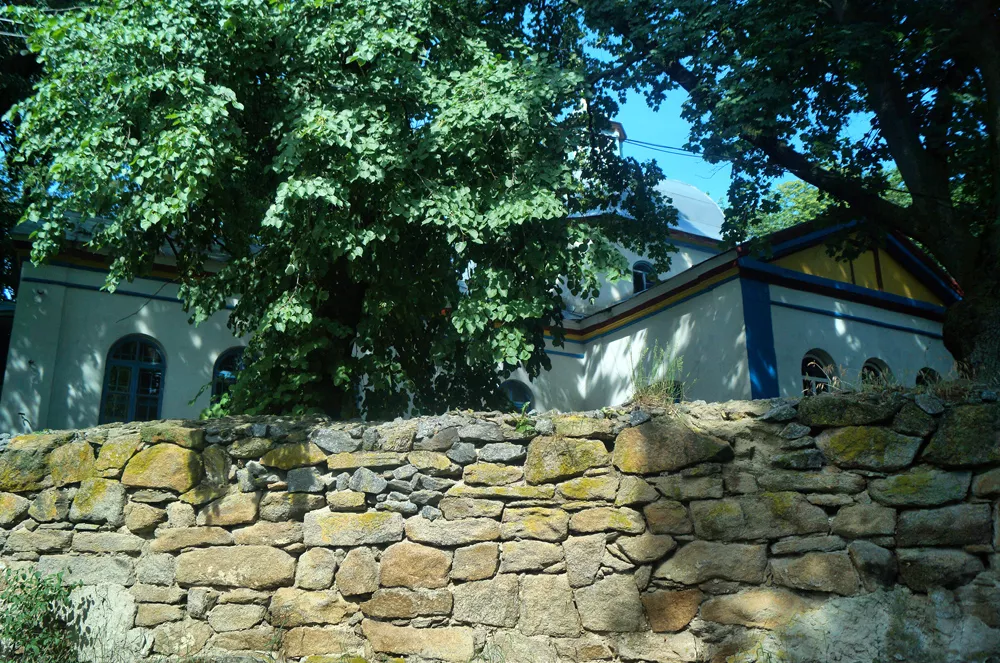
A few hundred meters from the abandoned mill rises the neat brick Church of St. John the Theologian, built in 1832. The initiator of the construction was the local priest Tymofiy Kolhunovskyi together with his parishioners. The church was erected on the site of an older wooden church. In 1886, a wooden bell tower appeared nearby.
A dense church grove envelops the entire ensemble, making it impossible to take it in all at once. The distinctive feature of the church is its wooden upper tier with classicist decoration, refined and lyrical. The church is in good condition and is a local architectural landmark. The parish is active to this day.
Ruzhyn — Verkhivnia Route: One Day — Five Epochs
The final point of the route is Verkhivnia, where Honoré de Balzac lived and worked in the estate of Ewelina Hańska from 1847 to 1850. After seventeen years of correspondence, he married Hańska in March 1850 at the Church of Saint Barbara in Berdychiv. The Hańska Palace is now the Honoré de Balzac Literary-Memorial Museum.
One-Day Route (25–30 km, car or bicycle)
- Ruzhyn — starting point of the route;
- Shamraivka — a mill with a preserved dam;
- Yahniatyn — a four-story mill on the Rostavytsia;
- Karabchiyiv — an abandoned mill and the 1832 Church of Saint John the Theologian;
- Verkhivnia — the Hańska estate, the Balzac Museum, Balzac's Well, and the burial chapel.
How to Get There
From Zhytomyr (about 90 km): along the highway toward Berdychiv, then toward Ruzhyn and along the Rostavytsia to Karabchiyiv and Verkhivnia.
From Kyiv (about 180 km): via highways to Ruzhyn, then following the route along the Rostavytsia. The nearest major railway station is Berdychiv.
Important: The mill in Karabchiyiv is an overgrown building without a fence; entering inside is dangerous. The Church of Saint John the Theologian is active. It is best to check the working hours of the Balzac Museum in Verkhivnia before your trip.
Why You Should Visit
The appeal of the route lies in its authenticity. There are no restored attractions here. What you will find are real remnants of the past: mills slowly yielding to nature, a church that is almost two hundred years old, and a park with a well where one of the world's greatest novelists used to walk. All of this is within a single short route far away from the crowds.
The Rostavytsia remains a river that preserves more old mills than any other in Ukraine. And while they are still standing, they are worth seeing.
Frequently Asked Questions About the Rostavytsia Mills and Karabchiyiv
Where is the water mill located in Karabchiyiv?
In the village of Karabchiyiv, Ruzhyn hromada, Berdychiv Raion, Zhytomyr Oblast, on the banks of the Rostavytsia River, between Ruzhyn and Verkhivnia.
How many water mills are there on the Rostavytsia?
At least ten: in Buky, Chubyntsi (two), Shamraivka, Yahniatyn, Karabchiyiv, Verkhivnia, Pavoloch, Derhanivka, Ruzhyn, and Strokove. The Rostavytsia holds the record among Ukrainian rivers for the number of ancient mills per unit of length.
When was the Church of Saint John the Theologian built in Karabchiyiv?
In 1832 at the initiative of priest Tymofiy Kolhunovskyi. In 1886, a wooden bell tower was built nearby. The church is a local architectural landmark and remains active today.
What else is there to see nearby?
The Ruzhyn — Verkhivnia route includes mills in Shamraivka and Yahniatyn, and in Verkhivnia, the Hańska estate with the Honoré de Balzac Museum. The distance between points is 10–15 km.
Can you visit the mill in Karabchiyiv?
The mill stands in an open area, and you can walk up to it. Entering the interior is dangerous due to the dilapidated state of the building.
Photos by Roman Malenkov, Serhiy Shcherbiy.
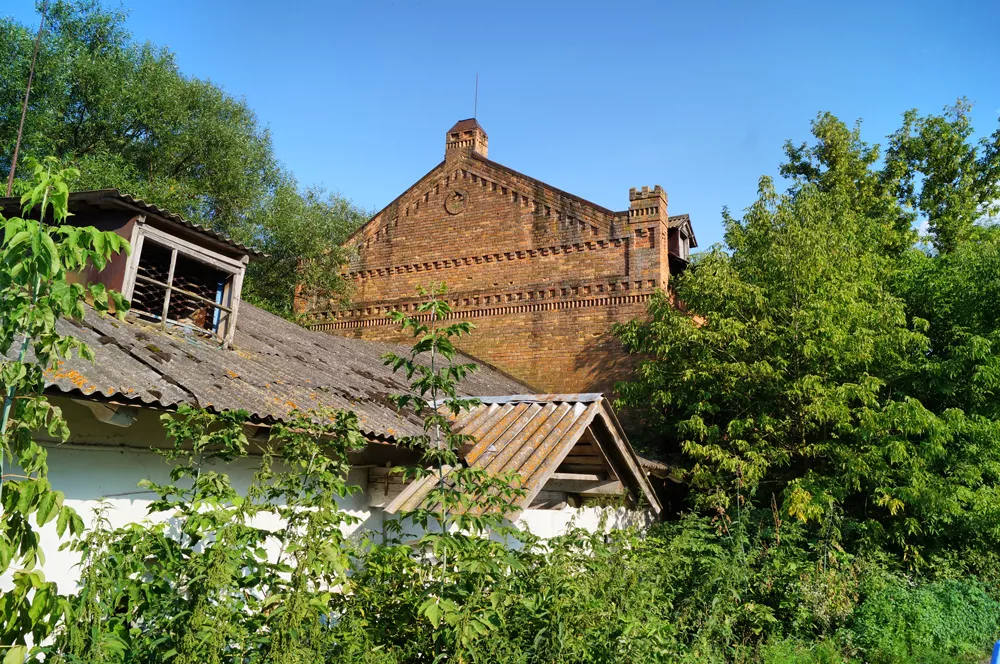
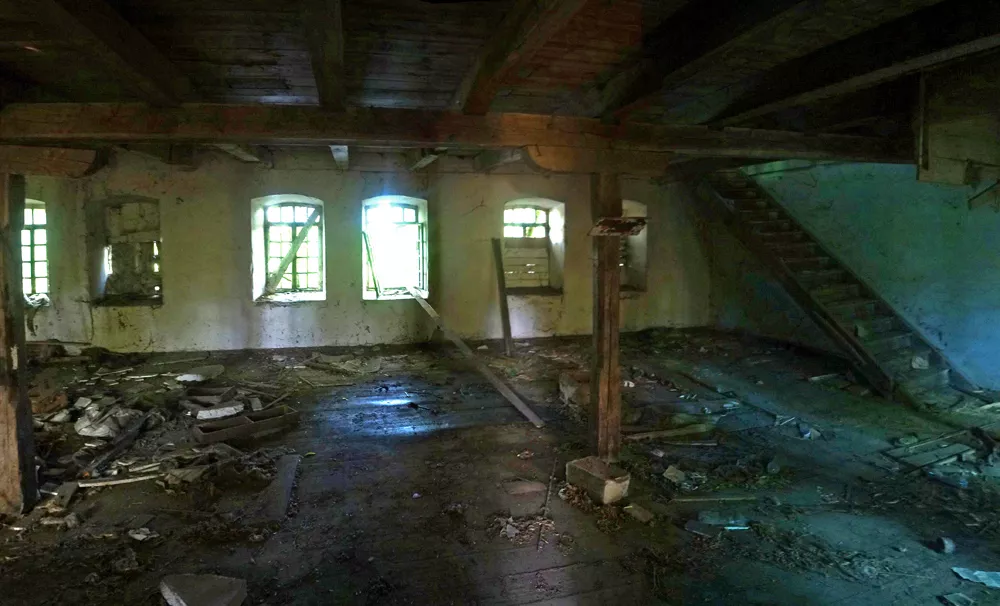
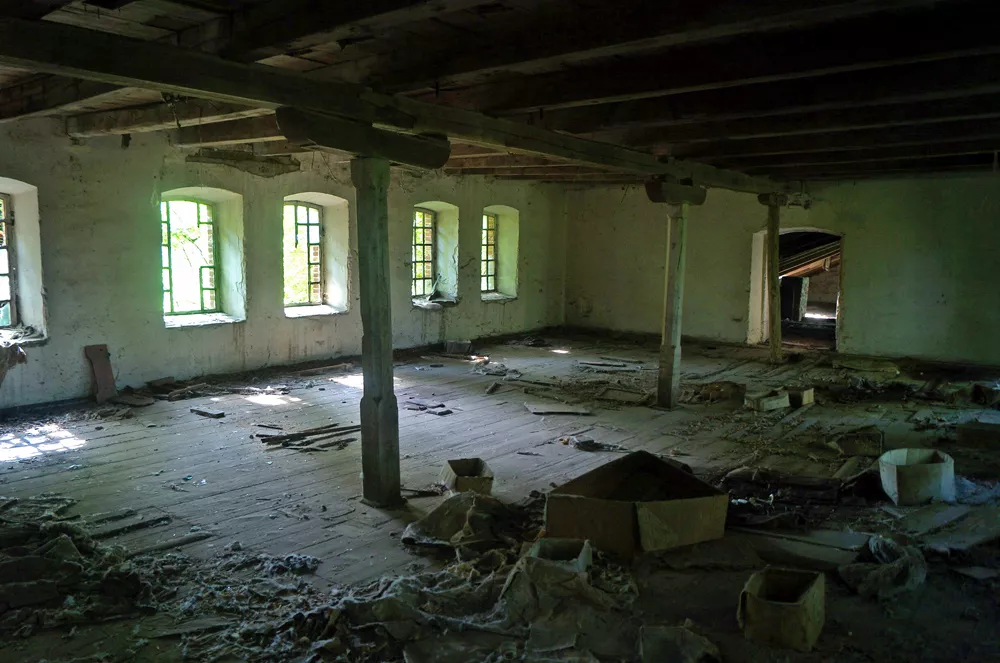
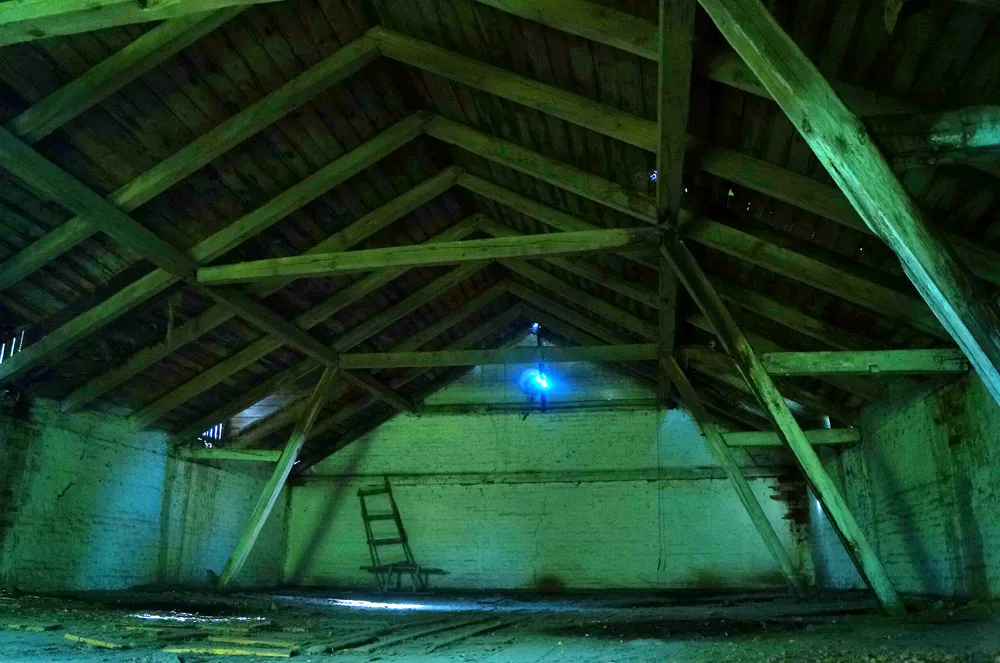
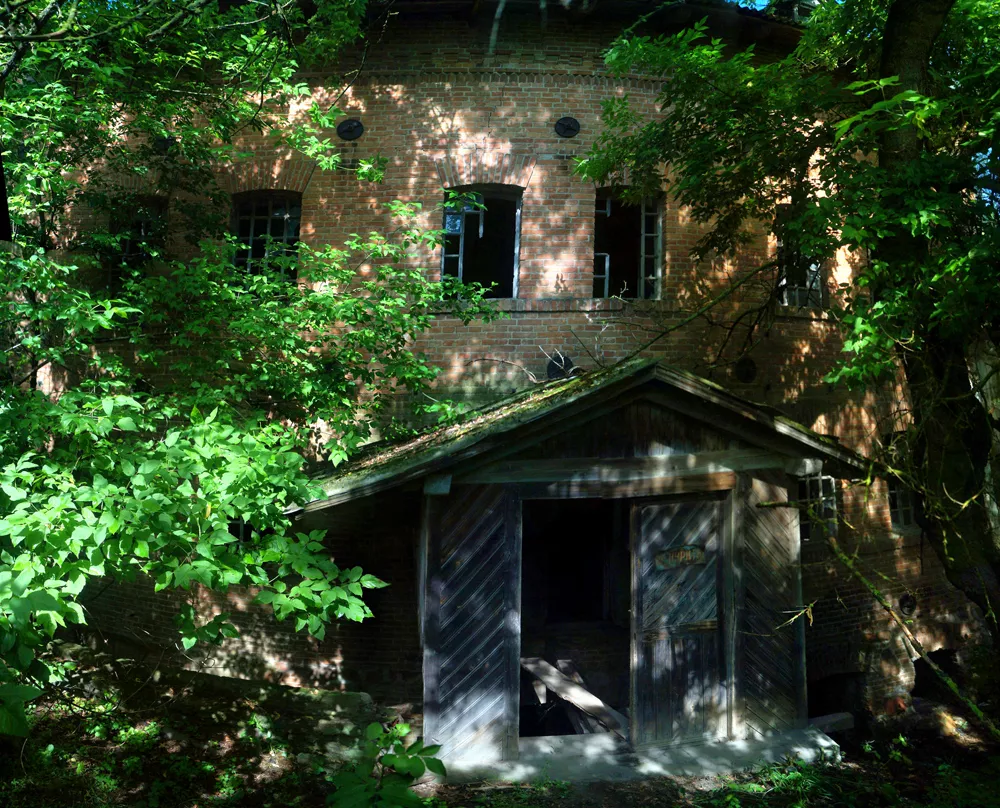
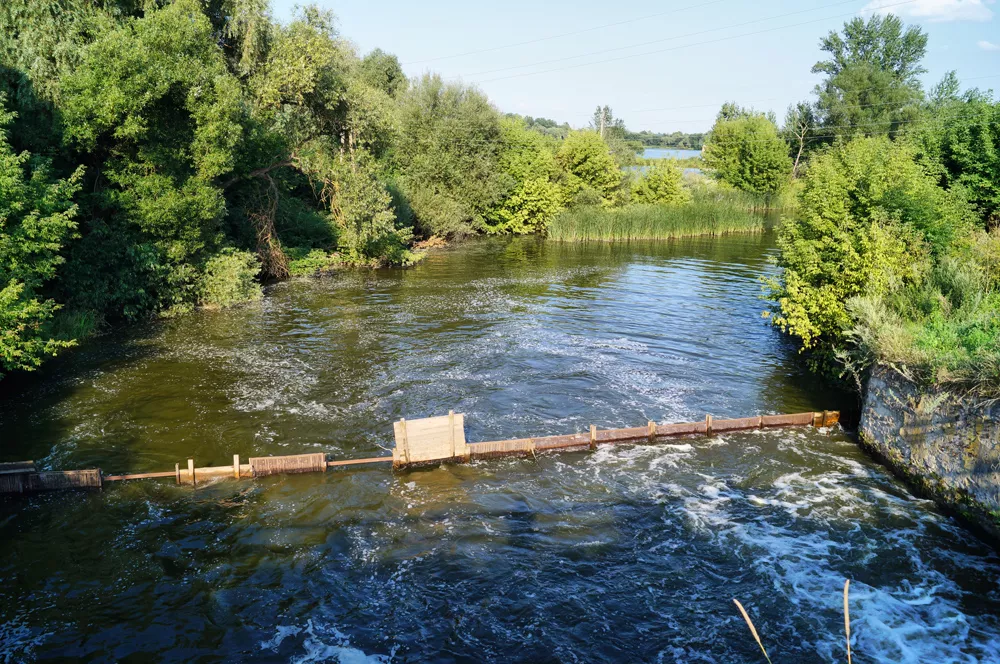
Water mill and the Rostavytsia River.
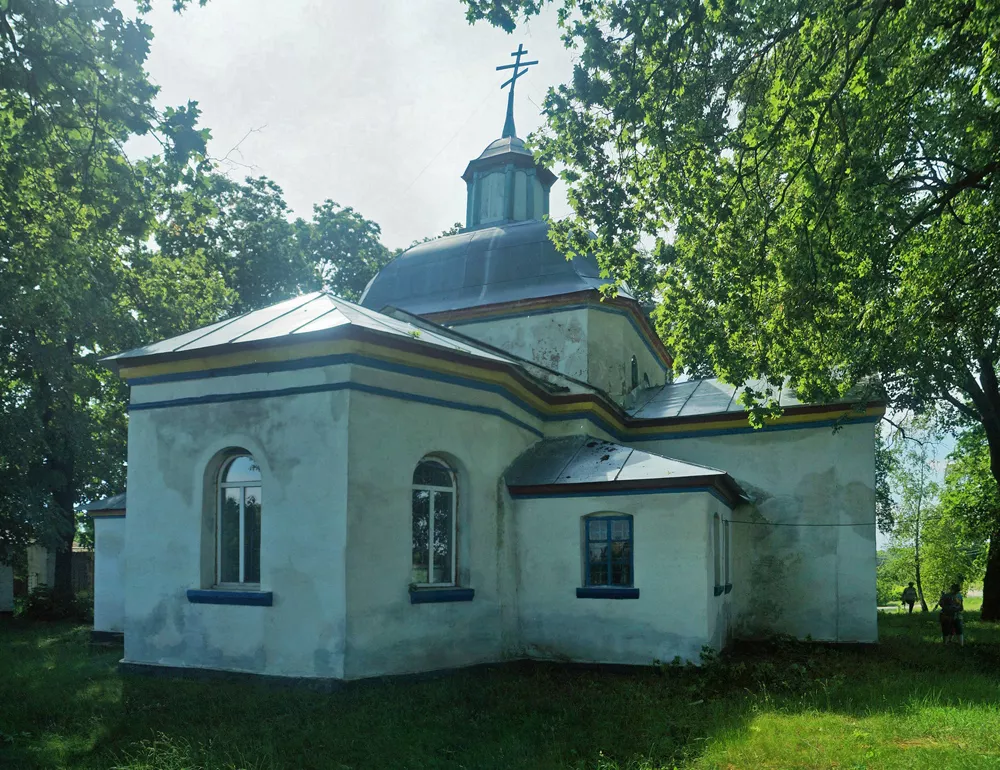
Church of St. John the Theologian.