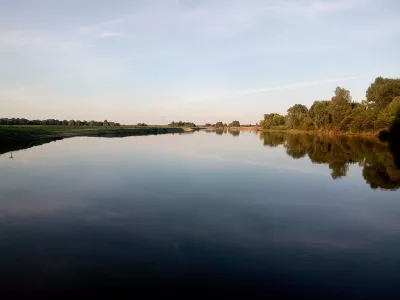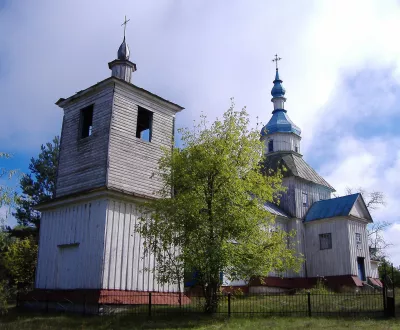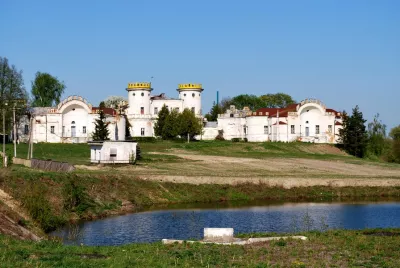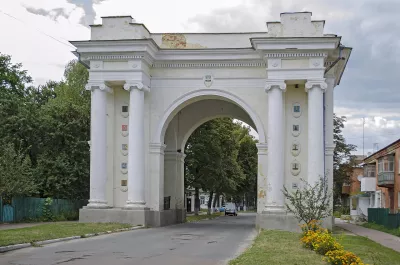

Mezynskyi Archaeological Museum stands in the village of Mezyn on the Desna, next to the mammoth hunters' site where tusk bracelets with a meander pattern — one of the oldest known designs — were found. The hunters lived here in the Upper Paleolithic.
Villagers stumbled upon mammoth bones in 1907 while digging a cellar; the following summer, Fedir Vovk excavated the first test pit here. Excavations continued intermittently until 1961: over an area of about 1,200 m², five complexes were uncovered with the remains of dwellings reinforced with mammoth bones, hearths, workshops, storage pits, and more than 113 thousand stone artifacts.
Art from tusk and bone
In addition to the bracelets, 18 schematic figurines made of mammoth tusk and bone painted with red ochre were found in Mezyn; archaeologist Serhii Bibikov considered these bones to be a set of percussion musical instruments. According to radiocarbon dates, the figurines are 18.8–17.4 thousand years old.
From a school museum to a park
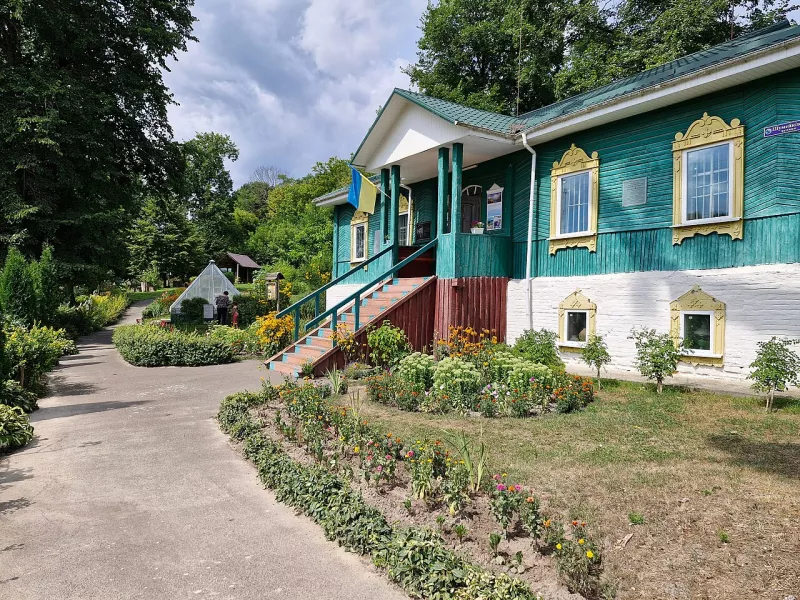
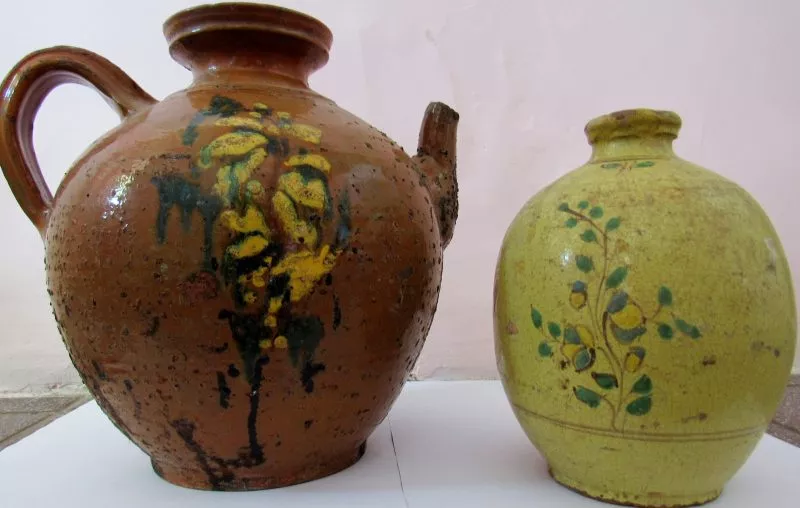
The museum was founded by local art teacher and archaeologist Vasyl Kurylenko: on 17 September 1965, he opened it at the school without any funding and replenished it every year with thousands of finds from his own excavations. Today, it is the V. Ye. Kurylenko Mezynskyi Archaeological Research Museum within the Mezynskyi National Nature Park. The park also researches the region's later crafts — in particular, the pottery workshop of Musii Puzyr (1812–1895) from neighboring Radychiv, who learned the craft from German Hutterite colonists. His workshop, equipped with three potter's wheels, made pitchers, plates, bowls, and smoking pipes with floral painting in blue, green, yellow, and purple-brown colors; his son Hryhorii continued the trade until collectivization.
Photos: Alla Nalyvaiko / Wikimedia Commons, CC BY-SA 4.0, Mezynskyi National Nature Park.