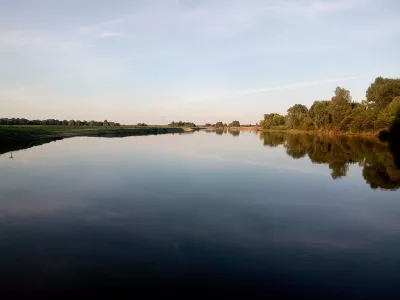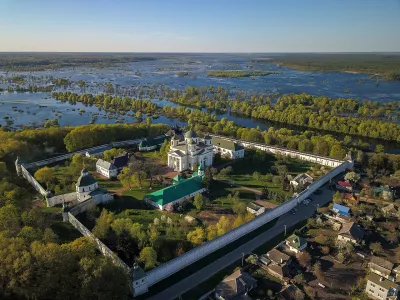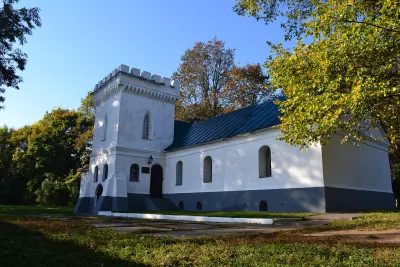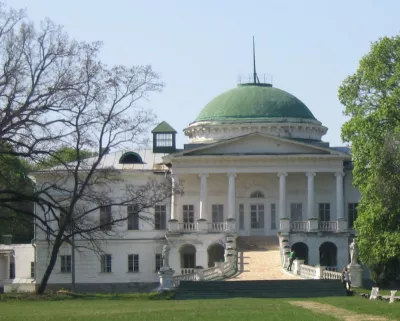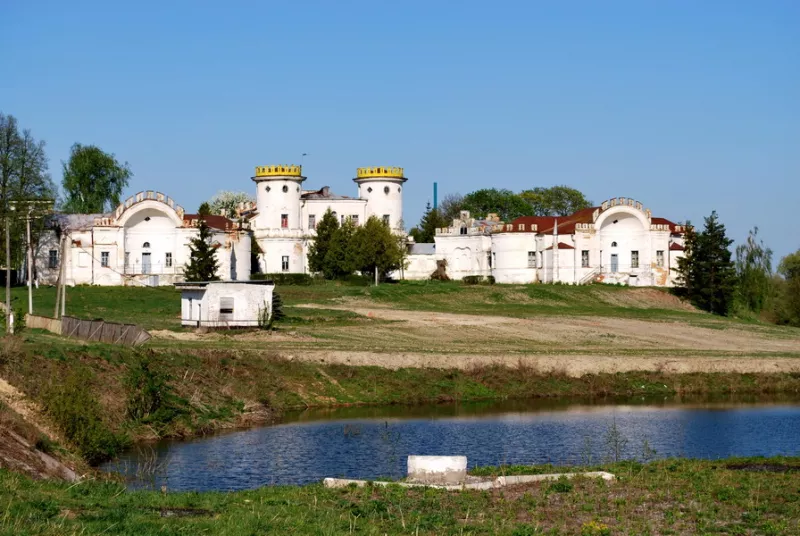
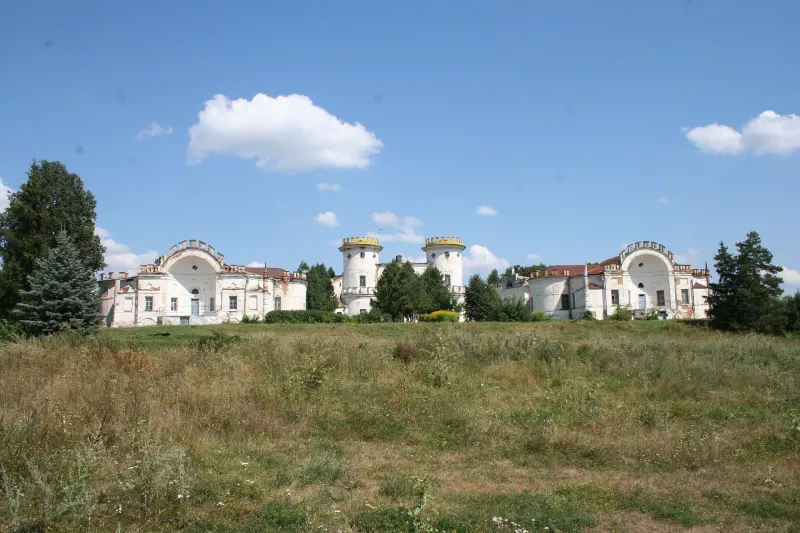
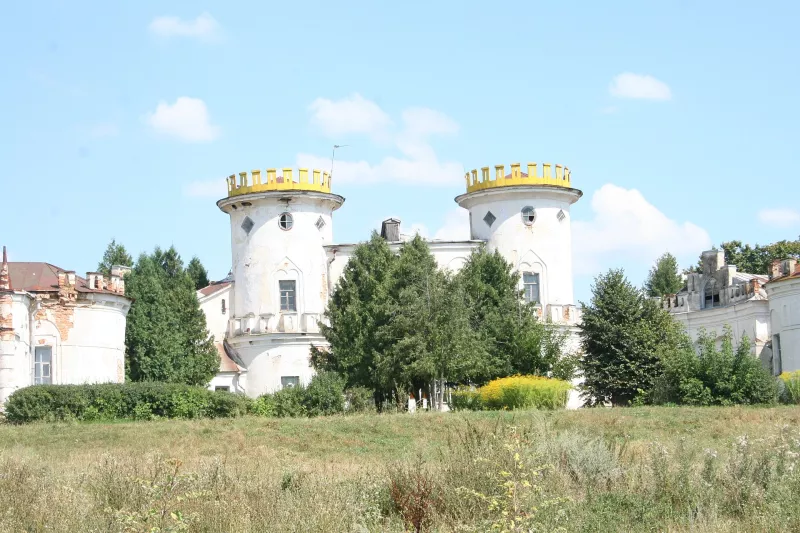
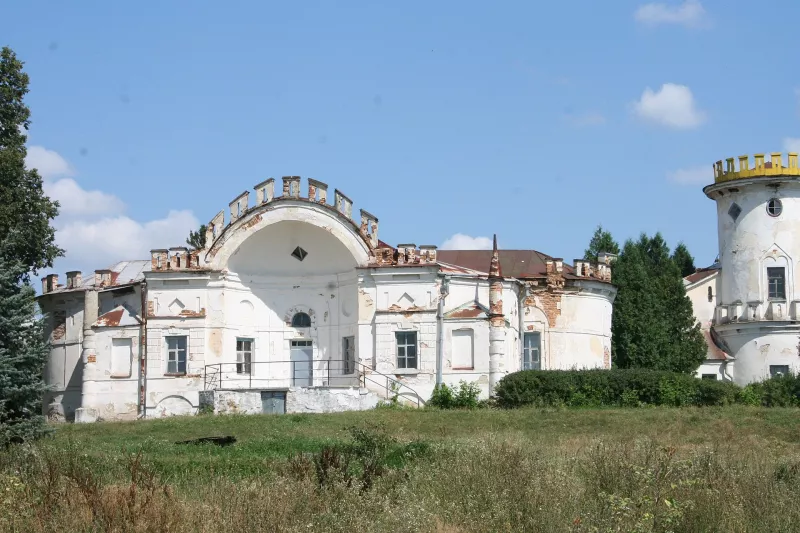

In the village of Vyshenky in the Chernihiv region, approximately 15 kilometres northeast of Korop, on a high bank of the Desna stands one of the most extraordinary architectural monuments of the region: the palace of Count Petro Rumyantsev-Zadunaisky. Its unusual appearance resembles a medieval castle; round towers, decorative crenellations, arched galleries and whimsical facades create the impression of a fairy-tale structure.
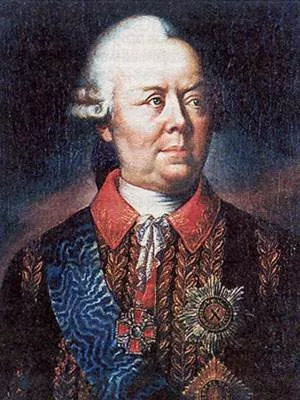
The palace was part of a large estate complex that encompassed Vyshenky and the neighbouring Chereshenky. The construction of the manor lasted from 1782 to 1787. Only a part of the former residence has survived to this day, whereas the majority of the estate's structures have not been preserved.
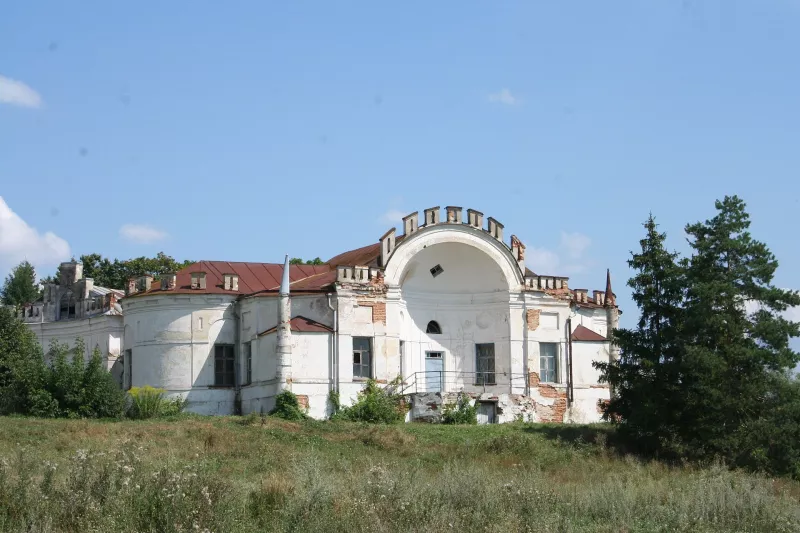
The architecture of the palace is distinguished by a combination of different stylistic motifs. The basis of the composition is classicist symmetry, yet gothic and oriental motifs are noticeable in the exterior decoration. The central body with towers is connected by arcuate galleries to the side parts of the building. Thanks to this, the structure has an unusual silhouette and resembles a fantasy castle. This architectural manner was characteristic of the era of fascination with romantic and exotic forms in 18th-century European manor construction.
The history of the palace's creation remains shrouded in riddles. There is no definitively established author of the project. Among the architects credited with its creation are Vasyl Bazhenov, Giacomo Quarenghi and Maksym Mostsipanov. The construction work was managed by the architect Dmytro Kotlyarevsky, who is connected with Mostsipanov's creative circle. Thus, the authorship of the palace still remains a subject of discussion.
Catherine II's journey to Crimea is connected with the palace. In January 1787, the empress visited Vyshenky and inspected Rumyantsev's residence. The unusual architecture made an impression on her: in her notes, Catherine II called the stone building constructed "in the gothic taste". This mention indicates that the original appearance of the palace attracted the attention of contemporaries already.
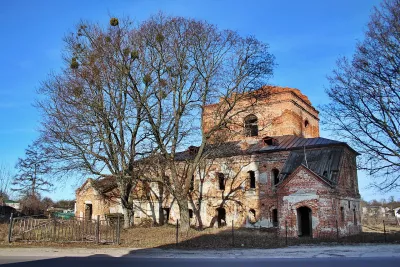
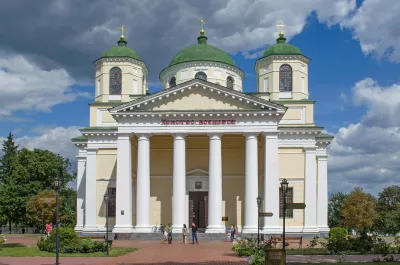
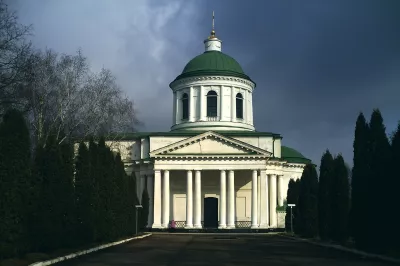
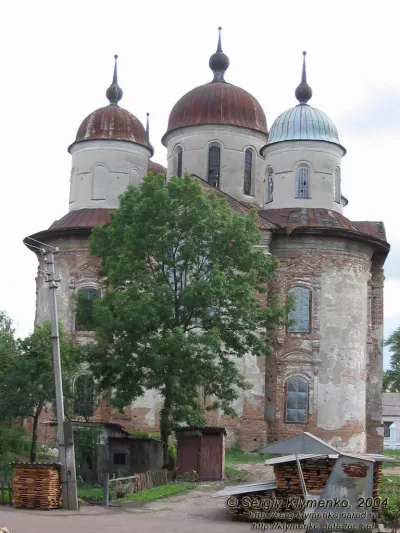
The manor ensemble was complemented by the Assumption Church, erected in the late 18th century. According to legend, the temple was consecrated on the eve of Catherine II's arrival. The church became an important part of the architectural complex and remains one of the historical ornaments of Vyshenky to this day.
The further fate of the palace was not easy. At the beginning of the 19th century, part of the structure was dismantled. According to local history data, the bricks were used to build a church in Raihorodok. There is also a local legend that the destruction was connected with an unsuccessful attempt to sell the estate to the landowner Sudiyenko: supposedly, after concluding the agreement, the owner changed his mind and ordered part of the palace to be dismantled.
In April 1797, Vyshenky was visited by the famous commander Oleksandr Suvorov. This episode adds another famous figure to the history of the village and connects it with the events of the late 18th century.
In the mid-19th century, the remnants of the estate were repaired under a new owner, Prince Dolgorukov. Local history materials mention the year 1840. However, the former scale of the manor could no longer be restored, and over time, most of its structures finally disappeared.
In the Soviet period, the territory of the former estate was used for children's recreation: a pioneer camp operated here, and later — the "Suzirya" health resort. However, the new purpose did not save the historical structure from gradual decay.
Today, the Rumyantsev-Zadunaisky palace has the status of an architectural monument of national significance. It needs restoration and proper care, because without appropriate measures, the unique structure continues to deteriorate.
The palace in Vyshhenky is not just a remnant of former gentry luxury. It is a rare example of 18th-century architectural exploration that combines classicist orderliness, gothic imagery, and eastern decorativeness. Its history preserves the memory of Petro Rumyantsev-Zadunaisky, imperial journeys, changing owners, and the gradual disappearance of the former estate ensemble.
How to get there
Vyshhenky lie on the banks of the Desna, 10 km from Korop. It is most convenient to travel by car from Korop. Nearby, a church consecrated before Catherine II's arrival has been preserved. The trip can be combined with the Mezyn Park and Novhorod-Siverskyi.