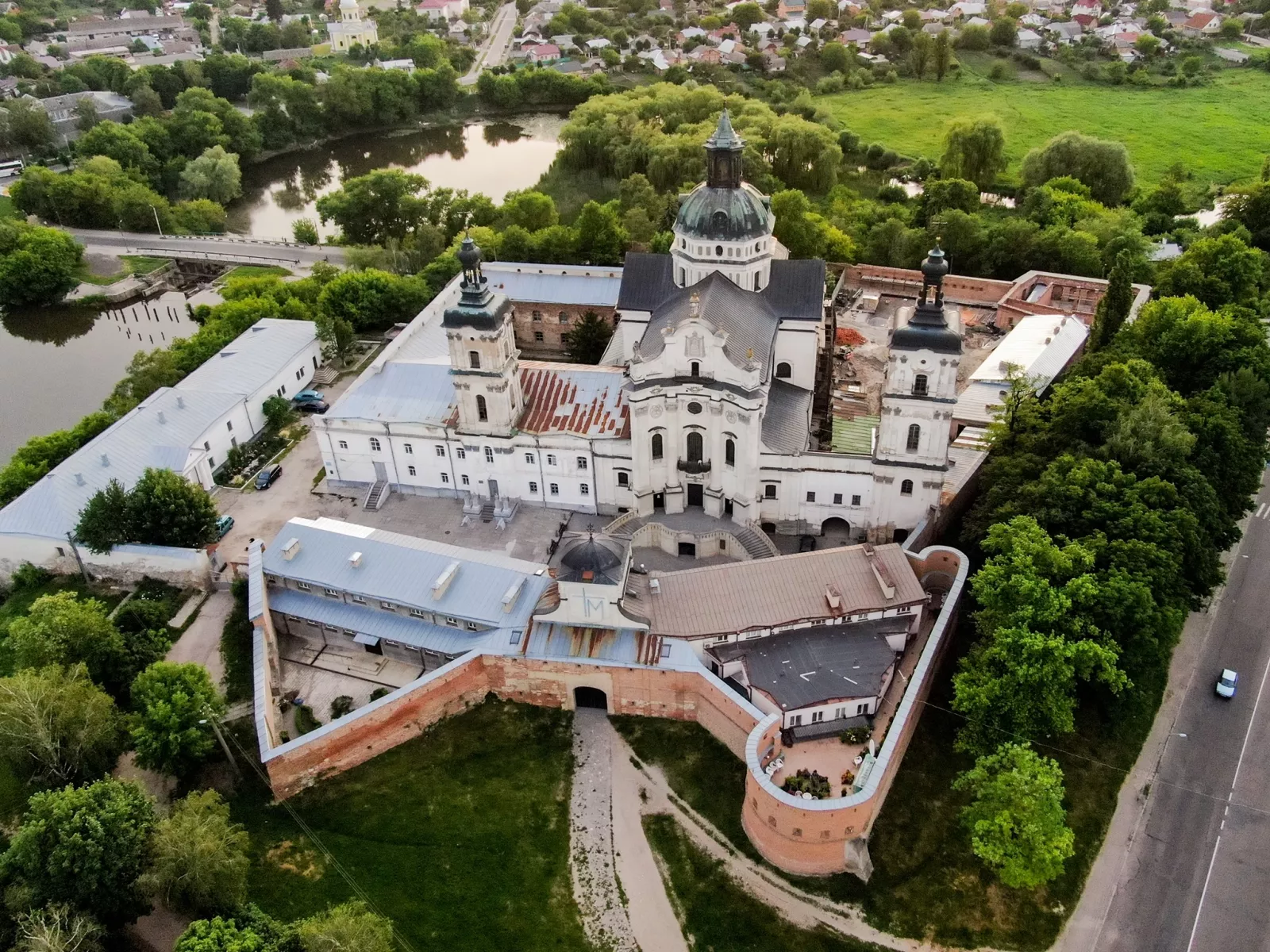
The Monastery of the Discalced Carmelites in Berdychiv is not just an architectural monument, but a place where religion, wars, politics, and the fate of an entire region are intertwined. Its history begins in 1627, when Janusz Tyszkiewicz, the Voivode of Kyiv, according to legend, made a vow to the Mother of God to build a monastery if he was freed from Tatar captivity. Initially, it was not only a spiritual sanctuary, but also a powerful fortress that remained one of the strongest fortified structures in these lands for two centuries. Even today, the massive walls of the monastery, which locals simply call the "fortress," make a strong impression and serve as a reminder of its defensive past. The complex is an architectural monument of national significance, and in 2024 the church was granted the honorary status of a minor basilica.
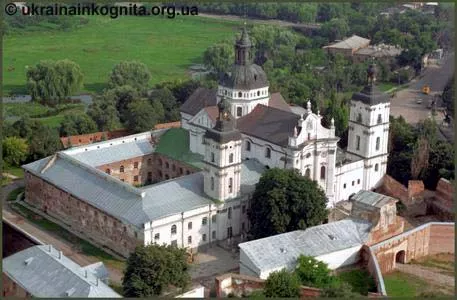
Photo by Valerii Melnykov
Foundation and First Shrines
In 1630, Tyszkiewicz handed over his castle to the Carmelites along with the surrounding villages and financial support. This marked the beginning of the active development of the monastery. In 1634, the monks began the construction of an underground Marian church, as well as commercial premises and fortifications. The consecration of the lower church took place on July 22, 1642, and it was then that the monastery received one of its main shrines — the icon of the Mother of God, donated by the Tyszkiewicz family. Over time, this icon became famous due to numerous accounts of miracles and attracted thousands of pilgrims to Berdychiv.
The monastery quickly transformed not only into a spiritual but also an economic center. It was around it that Berdychiv began to actively develop — craftsmen, merchants, and pilgrims flocked here. The Polish royal authorities viewed the monastery as an important outpost of their presence in Ukrainian lands and strongly supported its fortification. At the same time, this role also made it a center of conflict. As early as the 17th century, a struggle for control over resources unfolded around the monastery, giving rise to religious confrontations. The forced spread of the Union and economic pressure caused dissatisfaction among the local population, which eventually escalated into open hostility.
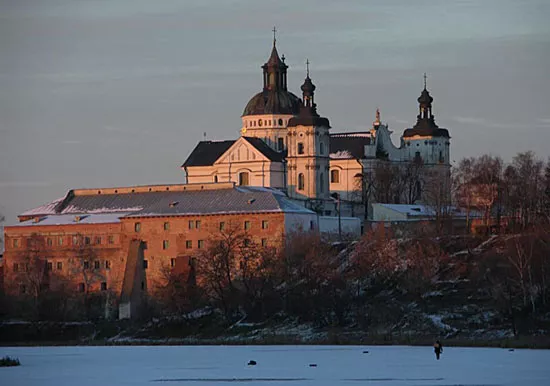
The monastery seen from the Hnylopiat. Photo by Maksym Melnykov
Wars of the 17th–18th Centuries
During the Cossack uprising of 1648, the monastery found itself at the epicenter of events. The Carmelite fortress, along with Tyszkiewicz's troops, attempted to resist, but was defeated. After this, the Cossacks captured the monastery, and the monks were forced to flee, taking their most valuable possession with them — the icon of the Mother of God, which was moved to Lviv. The Carmelites returned to Berdychiv in 1663, but the icon remained in Lviv for 73 years. Peace did not follow: in 1684, the monks were expelled again by Tyszkiewicz's heirs, and only a ruling by the Lublin Tribunal in 1717 allowed them to restore their rights and reclaim the monastery along with its property.
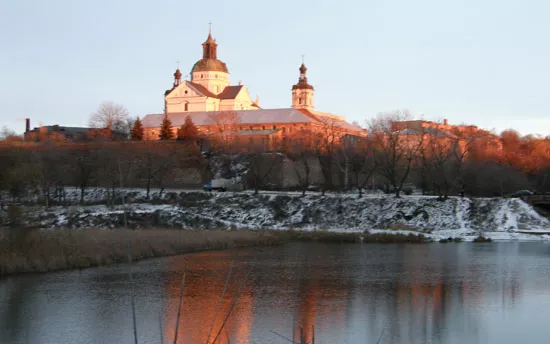
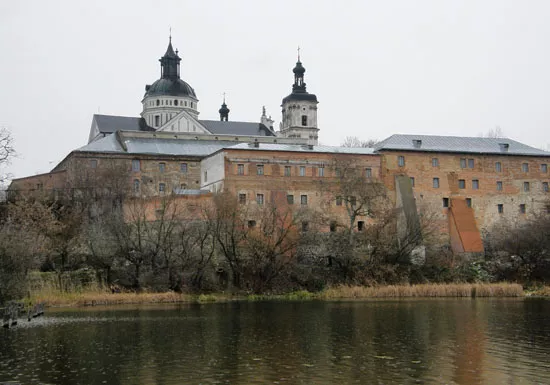
Photo by Roman Malenkov
At the end of the 17th and early 18th centuries, Berdychiv was experiencing a new wave of turmoil. Cossack-peasant uprisings led by Semen Paliy once again dragged the monastery into the struggle. Only in 1717 did the Carmelites finally establish themselves in Berdychiv, and in 1721 they returned the icon of the Mother of God. After this, they focused on strengthening the fortress: they built new walls and towers, made the main entrance in the form of winding gates, added two gatehouses, and the garrison had up to 60 cannons. Nowhere else in the world, except in the Polish-Lithuanian Commonwealth, did Discalced Carmelite monasteries serve simultaneously as fortresses. In 1732, the monastery became a refuge for the nobility during the Haidamak uprisings.
Baroque Flourishing and Coronation of the Icon
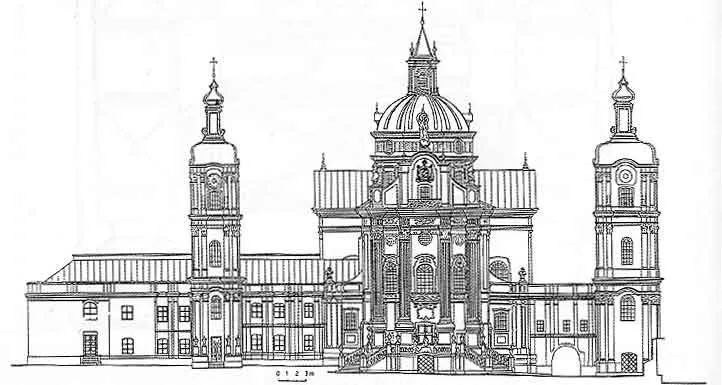
In the mid-18th century, the monastery experienced its architectural flourish. In 1739–1754, a new Baroque church was built, engaging architects from Germany and Poland for the work. The interior was decorated with gilding, stucco molding, and wall paintings, and Pope Benedict XIV sent crowns for the icon of the Mother of God. On July 16, 1756, its solemn coronation took place, bringing together magnates and numerous religious fraternities. It was then that the monastery became one of the main pilgrimage centers in the region, which brought significant income and contributed to the city's development. When the original crowns were stolen, the icon was crowned a second time in 1854 with crowns sent by Pope Pius IX.
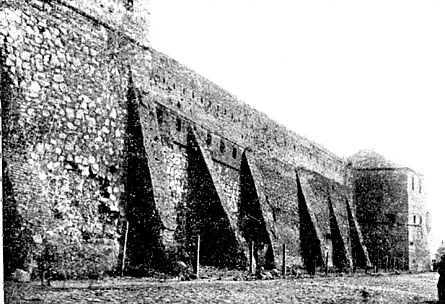
Western wall of the monastery at the beginning of the 20th century
An important step was also the opening of a printing house in 1758, brought from Austria. It transformed the monastery into a cultural hub where religious and educational publications were printed. Together with a large library, this made it a center of intellectual life. From 1794 to 1832, a Carmelite school operated at the monastery, which, due to its level of instruction, received the status of a provincial gymnasium; among others, Petro Hulak-Artemovsky taught here. In 1765, Berdychiv was granted the right to hold large trade fairs, which further strengthened the city's economic importance.
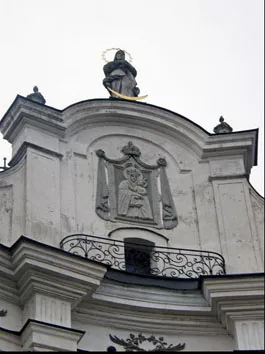
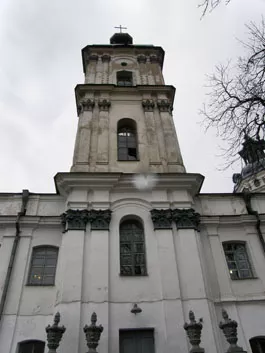
Photo by Roman Malenkov
The Siege of 1768 and Decline
In 1768, the monastery found itself at the center of new conflicts — between the Haidamaks, the Polish Bar Confederates, and Russian troops. This was the final siege of the fortress: taking the fortress by storm failed, and the defense ended with the surrender of the Confederates. Ever since, cannonballs have remained embedded in the church walls. After the partitions of Poland and the establishment of Russian rule, the monastery gradually lost its role.
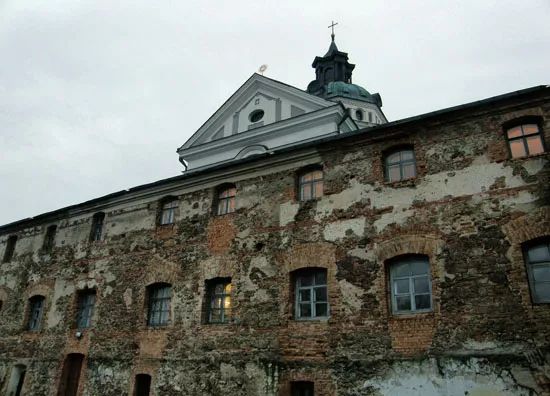
Photo by Roman Malenkov
In the 19th century, the monastery once again found itself at the center of political events during the Polish uprisings of 1831 and 1863. After their suppression, the Russian authorities imposed repressions: they closed the schools and banned the printing house. After the death of the last monk in 1926, the Soviet authorities nationalized the monastery; a museum was placed within its walls, and a cinema in the church. The original miraculous icon was most likely lost during a fire in 1941.
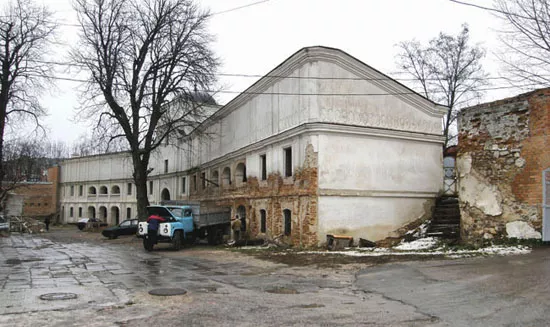
Gatehouse. Photo by Roman Malenkov
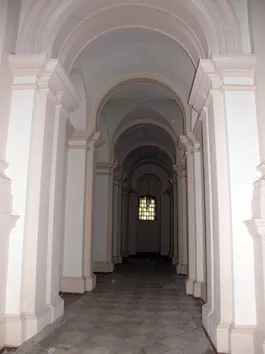
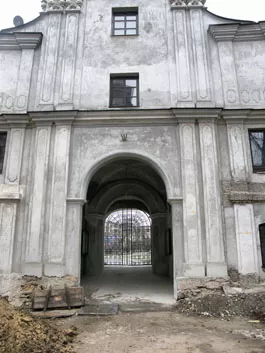
Photos by Roman Malenkov
Return and Revival
Only in 1991, after decades of decline, was the monastery returned to the religious community. On December 8 of the same year, the first service after a 65-year break took place here. Polish artist Bożena Mucha-Sowińska painted a new icon of Our Lady of Berdychiv, which was crowned in 1998 by Pope John Paul II — since then, Berdychiv has held the status of the All-Ukrainian Sanctuary of Our Lady of the Holy Scapular and is considered the main pilgrimage site for Roman Catholics in Ukraine. In June 2001, during Pope John Paul II's Mass in Kyiv, it was the Berdychiv icon, brought specially from the monastery, that stood behind him.
Since 1992, large-scale restoration work has been underway, initiated under the leadership of Father Tobiasz Zarzecki. One of the main problems was humidity, which damaged the walls, and while clearing the underground vaults, human bones were discovered, which were later reburied in a mass grave. The restoration of the monastery continues today — the facades, bas-reliefs, and interiors are gradually being restored.
Architecture
Architecturally, the monastery is a unique complex. It is located on a hill above the Hnylopiat River and is surrounded by defensive walls built under the direction of the architect Jan de Witte. The main church has three naves, a dome with a lantern, and a rich interior with paintings and a marble floor. The monastic cells form an enclosed quadrangle with an inner courtyard. Once, there was a large library here and numerous utility rooms.
The complex consists of an upper and a lower church. The upper church, decorated with frescoes and sculptures, hosts the main services and solemnities. The lower one, the oldest, is intimate and quiet; since December 3, 2008, it has housed a museum dedicated to Joseph Conrad, the writer who was born in the Berdychiv region. The sanctuary grounds also feature a museum of the history of the cult of Our Lady of Berdychiv and a shop selling religious literature.
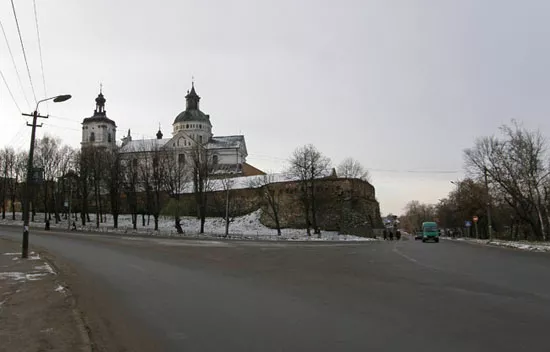
Photo by Roman Malenkov
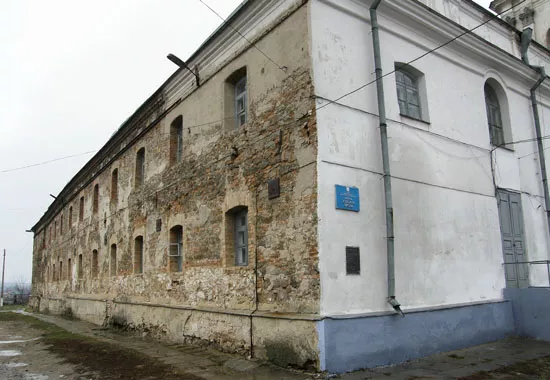
Photo by Roman Malenkov
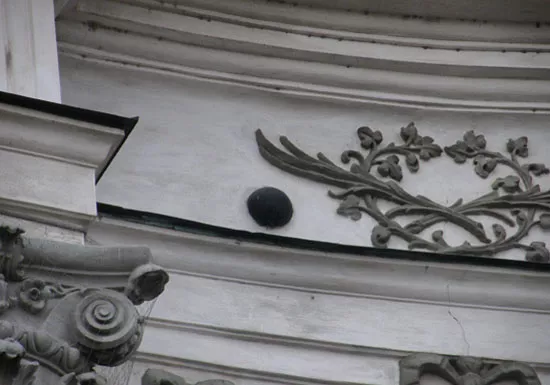
Cannonball in the church wall. Photo by Roman Malenkov
Icon of Our Lady of Berdychiv
A special place in the history of the monastery is occupied by the Icon of Our Lady of Berdychiv. It became the main shrine and symbol of the monastery. The original icon was lost during the events of 1941, but in 1991 a new copy was created, which today once again gathers believers and pilgrims. The main feast day of Our Lady of Berdychiv annually gathers thousands of pilgrims from Ukraine and other countries for prayers, processions, and blessings.
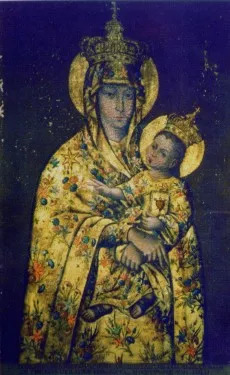
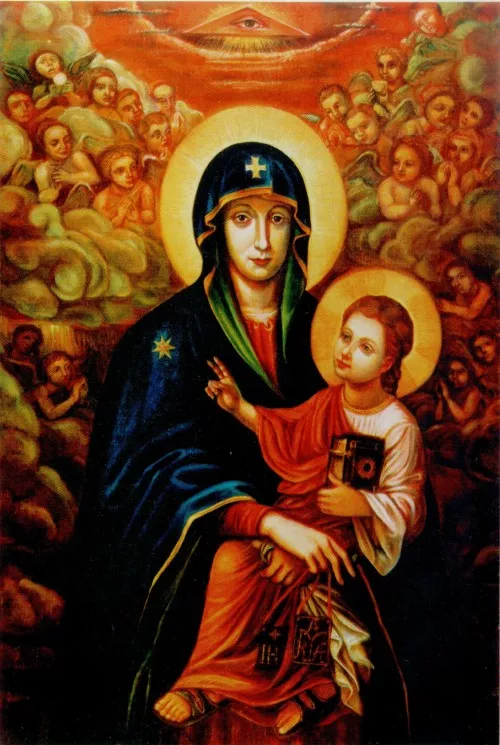
Icon of Our Lady of Berdychiv. The lost original and the new copy
Visiting
The sanctuary is open to visitors throughout the year; group tours should be arranged in advance with the monastery administration. Visitors to the church should dress modestly and observe silence during services. Since a bypass road was built around Berdychiv, transit tourists often pass the town by — yet it is the closest fortress-monastery to Kyiv in Ukraine, well worth a dedicated stop.
How to get there
The monastery stands in the center of Berdychiv, on Soborna Square above the Hnylopiat River. Berdychiv is about 45 km from Zhytomyr and about 180 km from Kyiv. Buses run to Berdychiv from Kyiv and Zhytomyr. Read more about the city on the page Berdychiv — “Volhynian Jerusalem”.