Berdychiv is a city with a unique history, which in the 18th–19th centuries transformed into one of the largest centers of Jewish life not only in Ukraine, but across all of Europe. It was not called the "Volhynian Jerusalem" for nothing — culture, religion, education, and trade were formed here, exerting an influence far beyond the region.
Berdychiv is one of those cities whose history is much greater than its present scale. Today, it is the second-largest city in Zhytomyr Oblast (around 74,000 residents) and the center of Berdychiv Raion. But in the 19th century, it was known far beyond Ukraine as a major hub of Jewish life, trade, crafts, religion, and culture. It was a city where the Jewish community set the rhythm of life, shaped the economy, created a cultural environment, and influenced the development of an entire region. Even after the catastrophes of the 20th century, Berdychiv remains an important place of memory for Jews around the world, a shrine for Catholics, and a city known across three continents.
First Mentions and Origin of the Name
There are several versions regarding the date of Berdychiv's founding. Older local history studies cited the years 1320 and 1430, but these are not supported by documents. The first documented mention of Berdychiv is found in a lustration (inventory) from 1545–1546, where the town is listed as the property of Vasyl Tyshkevych.
The origin of the name is also explained in various ways: from the Old Slavic "berdo" — a cliff or precipice; from the personal name Berdych; from "berdnyky" — craftsmen who made "berdo", a type of weaver's reed; or from the Turkic tribe of Berendiches, whom the Kyiv princes resettled along the Ros River to defend the southern borders of Rus.
The Tyshkevych family owned almost the entire Berdychiv region and repopulated lands devastated by Tatar raids. It was the Voivode of Kyiv, Yanush Tyshkevych, who, after returning from Tatar captivity in 1630, handed over his Berdychiv castle to the Order of Discalced Carmelites — thus beginning the history of the monastery-fortress that became the symbol of the city. During the Khmelnytsky Uprising and the Ruin, Berdychiv suffered devastation several times, and its true rise began only in the 18th century.
Establishment of the Jewish Community
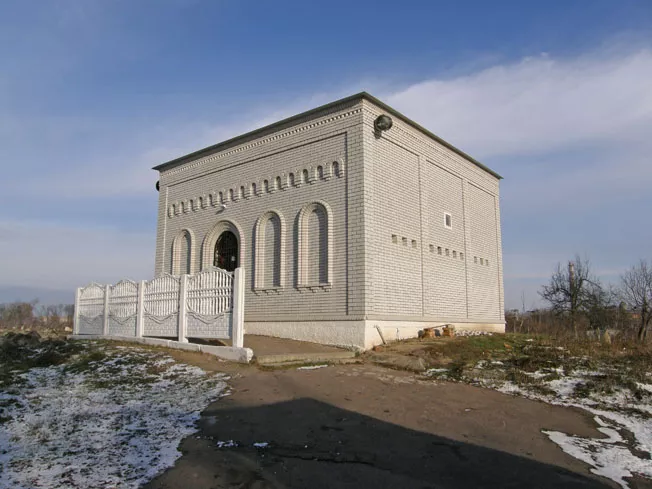
Mausoleum of Hasidic Tzaddik Levi Yitzchok of Berdychiv. Photo by Roman Malenkov
The first mention of a Jewish community in Berdychiv dates back to 1712. It was then that a qahal was established here, meaning that the Jewish population already had sufficient numbers and influence to organize a full-fledged community life. In 1765, 1,220 Jews lived in the city, and by 1787, around 1,500. By that time, Berdychiv was gradually transforming into an important spiritual center. In the last quarter of the 18th century, it became one of the centers of Hasidism in Ukraine. In 1785, Levi Yitzchok ben Meir became the rabbi of Berdychiv — one of the most revered figures in Hasidic tradition, known for his wisdom, simplicity, and spiritual power. He remained the city's rabbi until his death and earned the moniker "advocate for the Jewish people" among the people for his prayers, in which he relentlessly asked God not to be angry with Jews. To this day, his tomb remains a pilgrimage site for Hasidim from Ukraine, Israel, the United States, and other countries. At the end of the 18th century, a Jewish printing house also began operating in Berdychiv, making the city one of the major centers of Jewish book printing.
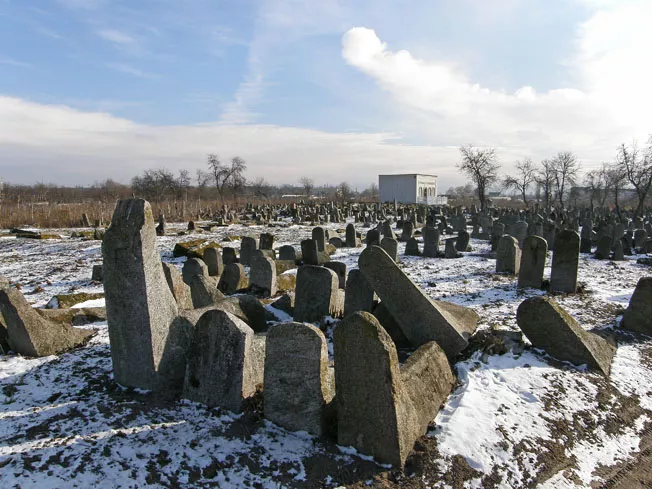
Jewish cemetery. Photo by Roman Malenkov
Following the second partition of Poland in 1793, Berdychiv passed under Russian rule. Initially, it belonged to the Bratslav Viceroyalty, later to Volhynia Governorate, and from 1846 it became a district town of Kyiv Governorate. By the late 18th century, Berdychiv was already a large and bustling town. In 1798, there were 864 houses and 4,820 residents here. Two silk factories, a leather tannery, a brickyard, and two mills operated in the town. Its location within the Pale of Settlement contributed to an influx of Jewish artisans and merchants.
Ukraine's Largest Trade Center
In the first half of the 19th century, Berdychiv grew rapidly both in population and in the scale of its trade. The town lay on trade routes from Europe to Russia and from Russia to Crimea, at the intersection of Kyiv, Volhynia, and Podolia governorates, which is why the main customs office of the Right-Bank region appeared right here. Up to ten fairs took place annually; the largest ones—the winter Demyan and the summer Onufriy fairs—lasted for a month and a half, and their goods turnover was compared to that of Leipzig. Major Jewish firms such as Manzon, Ephrussi, Horwitz, Frenkel, Trachtenberg, and others operated here. Kyiv Governor-General Ivan Fundukley explicitly called Berdychiv a Jewish town, emphasizing that seven-eighths of its population were indeed Jews. In the mid-19th century, Berdychiv already had 1,785 houses, 85 of which were made of stone, and the population exceeded 41,000 people—almost matching that of Kyiv at the time.
This fame also had a downside: Berdychiv was considered one of the main centers of smuggling in Eastern Europe. In 1867, a special commission discovered 130 underground passages and 78 cellars beneath the town's streets. In 1888, out of nearly 78,000 town residents, over 62,000 were adherents of Judaism.
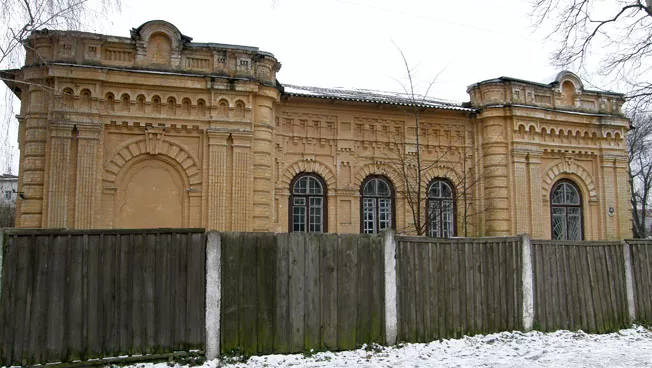
Over time, Berdychiv's role as a major trade center began to weaken: the Kyiv–Odesa and Kyiv–Brest railways bypassed it, and goods began to go directly to their destinations. Already from the 1850s, trade was losing its previous positions, but instead, the significance of industrial enterprises and artisanal labor grew. Jewelers, tailors, shoemakers, watchmakers, carpenters, turners, blacksmiths, and representatives of dozens of other crafts worked in the town. The Jewish population largely provided this economic versatility. At the same time, behind the outward image of a wealthy and business-like town, another reality was hiding. Only about 20% of Berdychiv's Jews could be considered well-off. Approximately 70% owned no property other than personal belongings, and a significant portion of the people lived in overcrowded housing and conditions of poverty. Yet another 20% of the population survived thanks to charity. This was a community with huge internal contrast: alongside wealthy merchants existed artisans, petty traders, and outright poor families.
Education, Culture, and Prominent Figures
At the beginning of the 19th century, the ideas of Haskalah, the Jewish Enlightenment, began to spread among the wealthier part of the community. One of the key figures of this movement in Berdychiv was the writer Yitzchak Baer Levinsohn, on whose initiative the "lovers of education" circle was formed. The educational movement did not encompass the entire community, but it left a noticeable trace. In 1850, the first state-run Jewish school was opened, and in 1860, the second one. However, education remained accessible primarily to children from wealthy families. Dr. Rothenberg also played an important role in the development of the educational environment, thanks to whom a gymnasium was opened in the city and a public library was built. Yet even at the beginning of the 20th century, just over 18,000 Jews were literate, which was 44% of the Jewish population of the city. Before the First World War, there were 21 educational institutions operating in Berdychiv, including a commercial school, three gymnasiums, and a higher primary school. In addition to schools, theaters, libraries, cinemas, and clubs operated in the city.
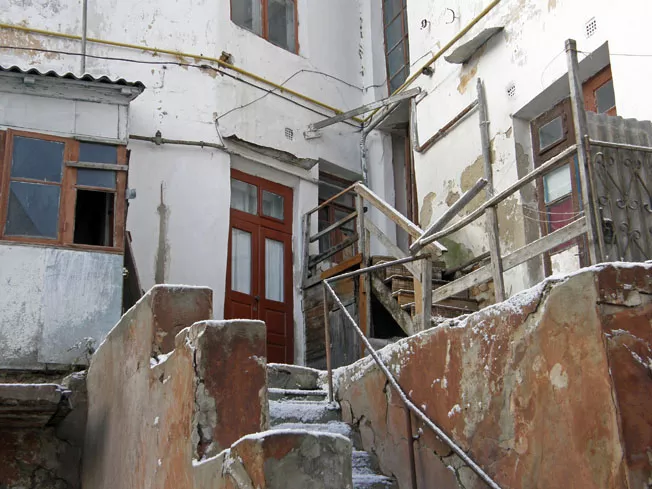
In the former Jewish quarters of Berdychiv, one can still come across the whimsical lace of rickety stairs. Photo by Roman Malenkov
Despite the influence of Enlightenment ideas, Berdychiv in the 19th century remained primarily a stronghold of Hasidism. It resisted assimilation, adhered to its religious traditions, and was proud of its status as one of the largest Jewish centers in Eastern Europe. At the same time, an educated, wealthy stratum of Jewish society emerged here, actively engaging in broader cultural processes. The Rubinstein family, which gave the world the musician brothers Anton and Nikolai, originated from Berdychiv. Mendele Mocher Sforim, the "grandfather of Jewish literature," lived and worked here, and in the 1880s, Sholom Aleichem, the classic of Jewish and world literature, was connected with the city.
Berdychiv remembers not only Jewish writers. In 1850, Honoré de Balzac was married in the Church of Saint Barbara, and in 1857, Józef Teodor Konrad Korzeniowski — the future classic of English literature Joseph Conrad — was born in the Berdychiv region. Berdychiv is officially indicated as his birthplace, but there are versions pointing to the neighboring villages of Terekhove and Ivankivtsi. A Polish child who did not know English until the age of 20 became one of the most prominent English prose writers: his novel Heart of Darkness inspired Francis Ford Coppola to make the film Apocalypse Now. Since 2008, a Joseph Conrad museum has been operating in the lower church of the Monastery of the Discalced Carmelites.
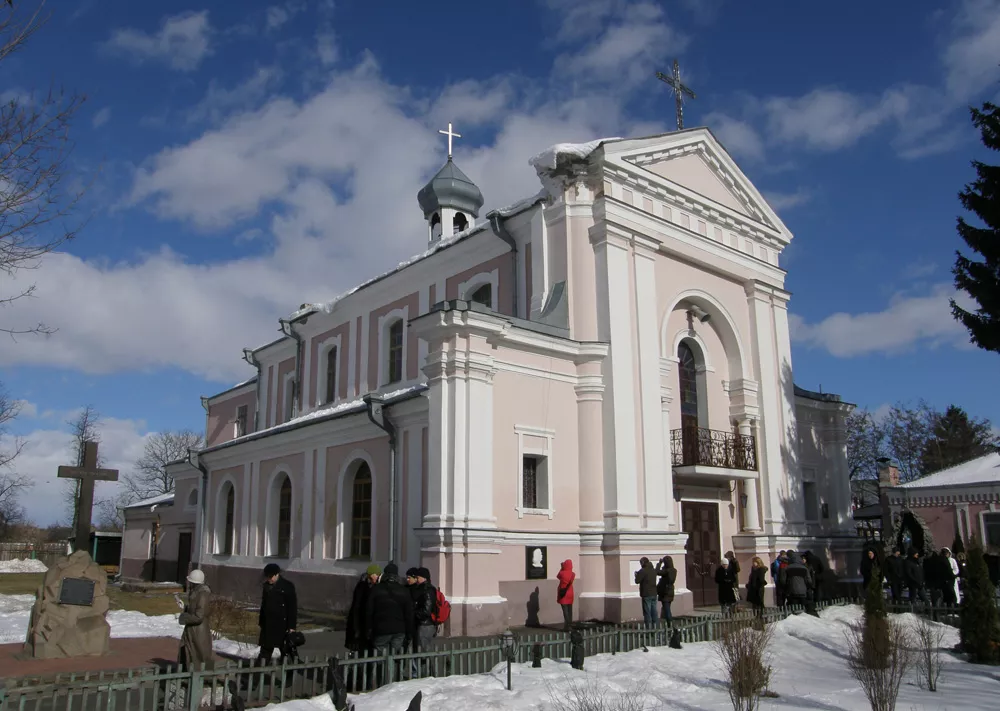
Balzac and the Church of Saint Barbara
The most romantic page of the city's chronicle is connected with the French writer. His correspondence with Countess Ewelina Hańska, the owner of the estate in Verkhivnia in the Zhytomyr region, began in 1832 with an anonymous letter signed "The Foreigner." Their first meeting took place in Switzerland in 1833, but Ewelina was married. Even after Wacław Hański's death in 1842, the lovers had to wait several more years: according to the condition set by Emperor Nicholas I, in the event of marriage to a foreigner, the countess had to transfer her estates to relatives — and she signed the estate over to her daughter.
The wedding took place on March 14, 1850 (March 2 Old Style) at the Church of Saint Barbara, early in the morning and in the presence of a few witnesses. Among those present were Evelina’s daughter Anna with her husband Count Yuriy Mniszech; the ceremony was performed by Prelate Wiktor Ożarowski. The marriage record has been preserved in the church register. After the ceremony, Balzac wrote to a friend that he had married the only woman he had ever loved. The happiness was short-lived: five months later, the writer died in Paris. Later, Chekhov put the phrase "Balzac was married in Berdychiv" into the mouth of a character in "Three Sisters" — as a symbol of provincial surprise that astonished all of Europe.
In 1999, for the writer's bicentenary, a new memorial plaque was unveiled on the wall of the church. Today, Berdychiv is a cult destination for French tourists. And in the 1820s, according to legend, the young Fryderyk Chopin played in this church.
City of Three Religions
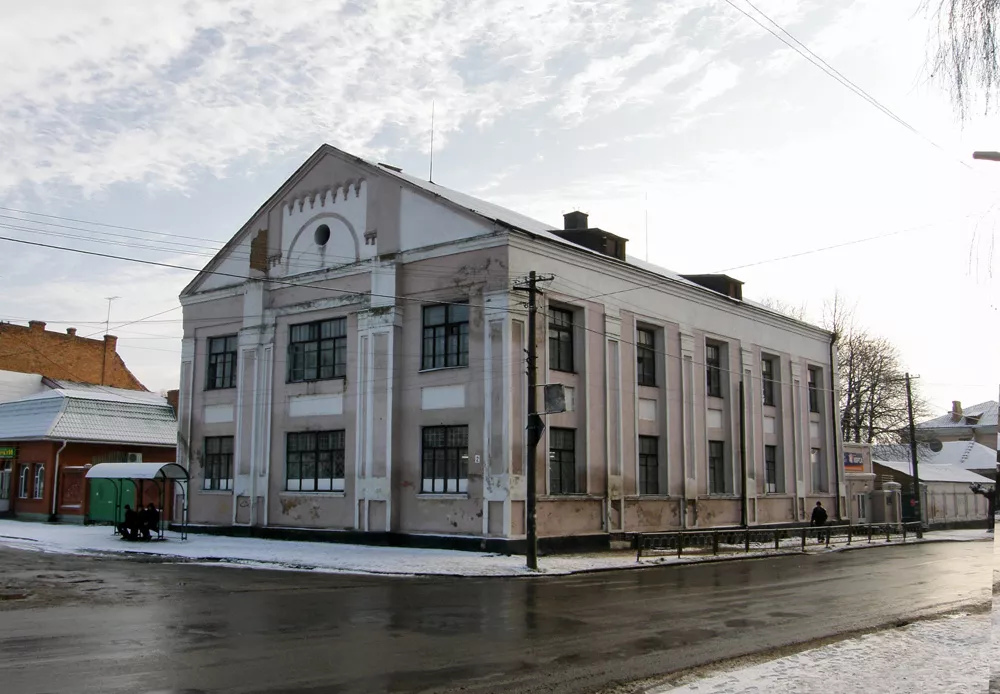
Berdychiv, with the Monastery of the Discalced Carmelites and the Church of Saint Barbara, is a holy place for Catholics. Berdychiv, with its large Jewish cemetery and the grave of the tzaddik, is a holy place for Jews. Berdychiv, with the Saint Nicholas Church (built in 1910 on the site of a wooden church from 1748) and the Holy Trinity Church, is an important center for Orthodox Christians. Here, Christmas and Easter are celebrated twice, and the New Year three times: according to the new style, the old style, and the Jewish calendar.
Revolutions and Interwar Years
During the tsarist era, Berdychiv, unlike many other cities, avoided major pogroms. However, after the revolutionary upheavals, the situation changed dramatically. On January 5–6, 1919, one of the first Jewish pogroms in Ukraine took place here. At that time, 17 people were killed, about 40 were wounded, and hundreds became victims of robbery and violence. The abolition of the Pale of Settlement caused mass migration. According to the 1926 census, Jews made up only half of the city's population, although previously their share had reached approximately 80%.
The establishment of Soviet power dealt a heavy blow to the religious life of the community. The main choral synagogue was turned into a "club of militant atheists," and most of the roughly 80 synagogues that existed before the revolution were closed. However, in the 1920s and 1930s, cultural life remained quite active. In 1920, the city drama theater opened, and in 1928, the Berdychiv Historical and Cultural Reserve was established. For a time, Jewish schools operated, amateur Yiddish art developed, and the newspaper "Der Arbeter" was published. But already in the early 1930s, restrictions on the use of Yiddish began, and by the start of the Second World War, full-fledged Jewish cultural life in Berdychiv had effectively faded away.
In the interwar decades, Berdychiv was associated with the life and work of several Jewish writers, including Moisey Hartsman, Arkadiy Kagan, and Vasyl Grossman. Before the German-Soviet war, about 75,000 people lived in the city, and half of them were Jews. In pre-war Berdychiv, there were 47 medical institutions and 22 schools where 9,500 students studied.
The Catastrophe of 1941
With the outbreak of the war, the city faced a catastrophe. From July 1, 1941, the evacuation of the families of officials began, but there was no organized rescue for the majority of the population. After the bombing of the city on July 4, hundreds of residents tried to flee. The bridges across the Hnyylopiat River were blown up, and people from the western part of the city were forced to cross by boat. Many Jewish families gathered at the railway station hoping to board evacuation trains, but they never arrived. In total, about 10,000 people managed to escape the city — only a third of the Jewish population. In addition, Jews from surrounding towns and villages flocked to Berdychiv before the occupation, hoping to find salvation there. In reality, the city was turning into a trap.
On July 7, 1941, German troops entered Berdychiv. Almost immediately, persecution and violence against the Jewish population began. In August 1941, the mass deportation of people to the ghetto began, which was set up in a poor district between the Yatky market and the Hnylypyat River. The apartments left behind after the deportation were looted by German soldiers and the local police. In August 1941, the Nazis shot 300 Jews in the courtyard of the Berdychiv History and Culture Preserve, as well as hundreds of communists, Soviet officials, and representatives of other nationalities. In early September 1941, near the village of Khazhyn, more than 10.5 thousand Berdychiv Jews were destroyed, having been taken away under false pretenses allegedly for agricultural work. Women, children, and the elderly remained in the ghetto. On September 15, more than 15 thousand Jews were taken to the pits near the airfield and shot. In October 1941, the ghetto was finally liquidated. Even the 400 specialists who were initially left alive were later also taken out for execution. On July 16, 1942, young Jews were shot on Lysa Hora. The last groups were destroyed in November 1943 and early January 1944, on the eve of the city's liberation. According to the Extraordinary State Commission, over 38 thousand people were killed in Berdychiv during the occupation, of whom about 30 thousand were Jews.
On January 5, 1944, Soviet troops liberated Berdychiv. After the war, some of the Jews returned to the city, but the community that once made Berdychiv the "Volhynian Jerusalem" was practically destroyed. According to the 1979 census, 4,637 Jews lived in the city (5.8% of the population), and in 1989, 3,512 people (3.9%). Since 1988, the repatriation of Berdychiv Jews to Israel and partly to the USA began, and by the end of the 1990s, fewer than 700 remained.
Memory and Revival
In 1953, with funds from the residents of Berdychiv, a monument was erected at the site of the mass shooting of Jews near the airfield, but it stood for only one day and was dismantled by order of the authorities. Only 25 years later was this monument accidentally found in the old Jewish cemetery, and in 1990 it was installed at the entrance to it. In 1983, at the 5th kilometer of the Berdychiv — Rayhorodok highway, a memorial sign appeared at the site of the mass destruction of Jews in 1941, though back then without any indication of the victims' nationality. Only in 1991 did the Star of David appear on the memorial plaques. On September 15, 1991, on the 50th anniversary of the tragedy, a multi-thousand mourning rally took place in the city, attended by former Berdychiv residents from all over the world.
In the late 1980s and the 1990s, a cautious revival of Jewish public life began in Berdychiv. In 1989, the Jewish Culture Society was created, and since the early 1990s, a Sunday Jewish school has been operating in the city. With the support of the diaspora, the synagogue was restored, with a yeshivah organized alongside it. In 1990, a pantheon was built over the grave of Levi Yitzchak of Berdychiv and his relatives. Every year on the day of the tzaddik's death and on Rosh Hashanah, Hasidim from all over the world gather here. For Kohanim — descendants of the Temple priests who are forbidden to step on burial ground — a special bridge was built over the cemetery so they could approach the tomb without touching the burial soil. Thousands of tombstones have been preserved in the cemetery, including unusual boot-shaped slabs.
Today, Berdychiv is no longer the Jewish city it was a hundred or two hundred years ago. But its history continues to live in the cemeteries, in the monuments, in the pilgrimage to the tzaddik's grave, in the memories of descendants, and in the very image of the city, which was once one of the spiritual and cultural centers of the Jewish world.
What to see in one day
- Discalced Carmelites Monastery on a hill above the Hnylyp'yat' — a fortress, a sanctuary of Our Lady of Berdychiv, and the Joseph Conrad Museum. Locals simply call it the "krepost". Plan for 1.5–2 hours.
- St. Barbara's Church (European St.) — the wedding place of Balzac, featuring a memorial plaque.
- Old Jewish Cemetery (Zhytomyr St.) — the mausoleum of tzaddik Levi Yitzchak, a bridge for Kohanim, and boot-shaped tombstones.
- St. Nicholas Church and the buildings of former synagogues in the old center.
How to get there
From Kyiv — about 180 km: via the M-06 highway to Zhytomyr and further to Berdychiv or via Brusyliv, about 2.5 hours by car; there are regular buses from the Kyiv Central Bus Station. From Zhytomyr — about 45 km, approximately 40 minutes.