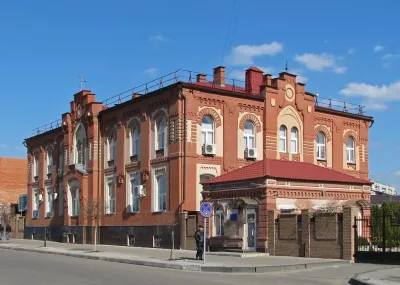
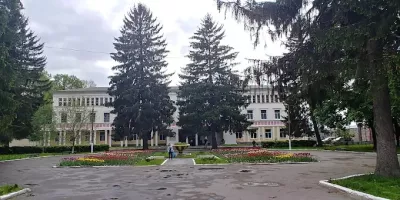
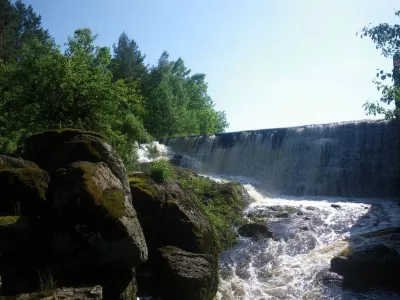
The Museum of Precious and Ornamental Stones in Khoroshiv is one of the most compelling and at the same time underrated locations in Zhytomyr Oblast. It is located in the town of Khoroshiv (until 2016, Volodarsk-Volynskyi) and is practically unique for Ukraine, as it specializes precisely in minerals, crystals, and gemstones. This is not just a museum "about stones" — it is a place where true natural treasures formed over millions of years are gathered.
Its history is directly connected to the Volyn pegmatite deposit, one of the most valuable in Europe. Quartz, topazes, beryl, and the famous morion were mined right here. Collections began to be gathered as early as the 1930s, a mineralogical museum was registered in 1958, and on December 11, 1996, by a resolution of the Cabinet of Ministers, a state museum was established and the collection of the Kvartzsamotsvity enterprise was transferred to it.
Today it is a state institution subordinate to the Ministry of Finance. In 2001, the museum received the status of a scientific facility constituting a national heritage, and in 2004 its collection was included in the Historical Fund of Precious Metals and Gemstones of Ukraine.
What is inside the museum
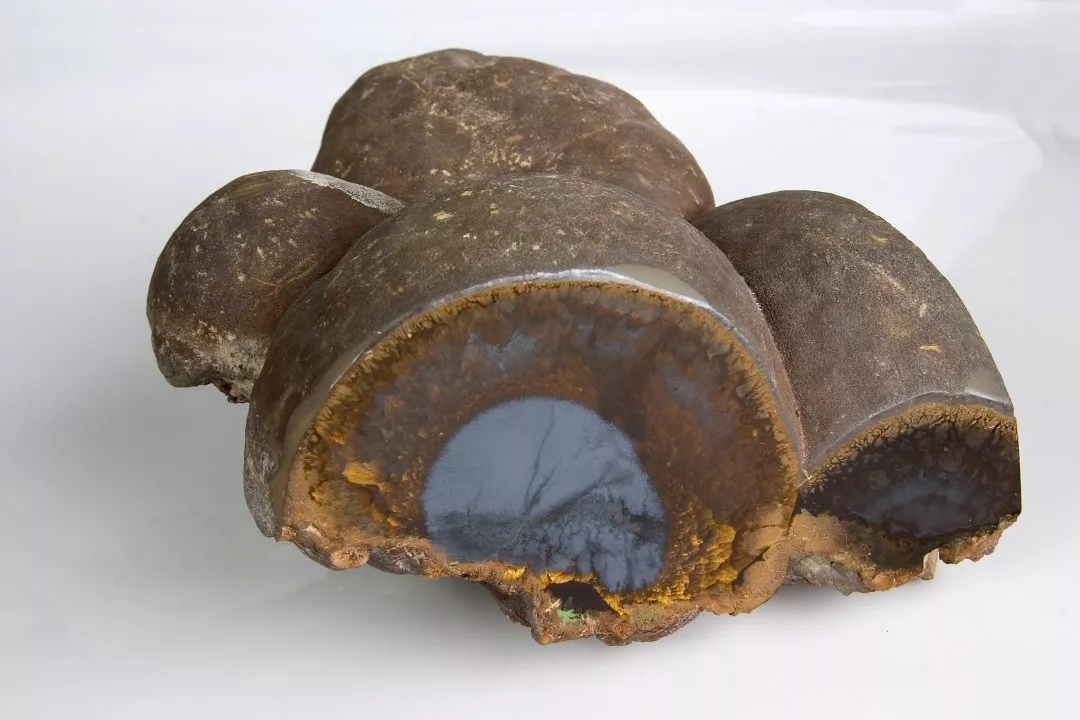
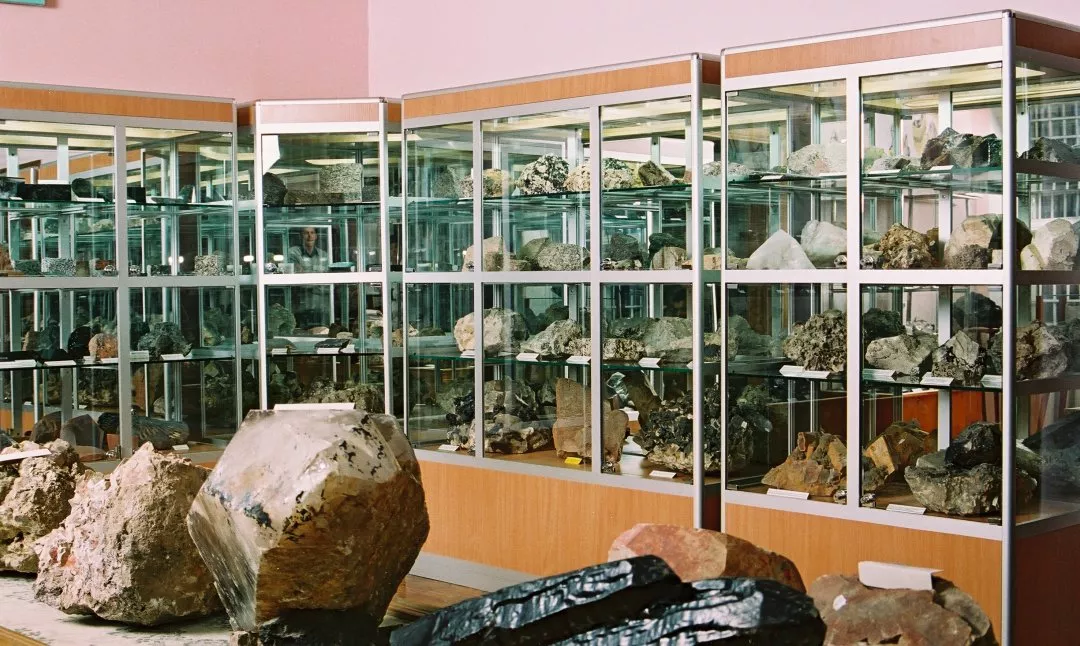
The exposition is located in five halls, and each has its own logic and theme. In total, the museum counts over 1,800 specimens of minerals and rocks not only from Ukraine, but from all over the world.
The first hall presents the so-called "lithotheque" — samples of facing and decorative stone: granites, labradorites, marble, gabbro. Here you can clearly see what the materials we are used to seeing already in processed form look like.
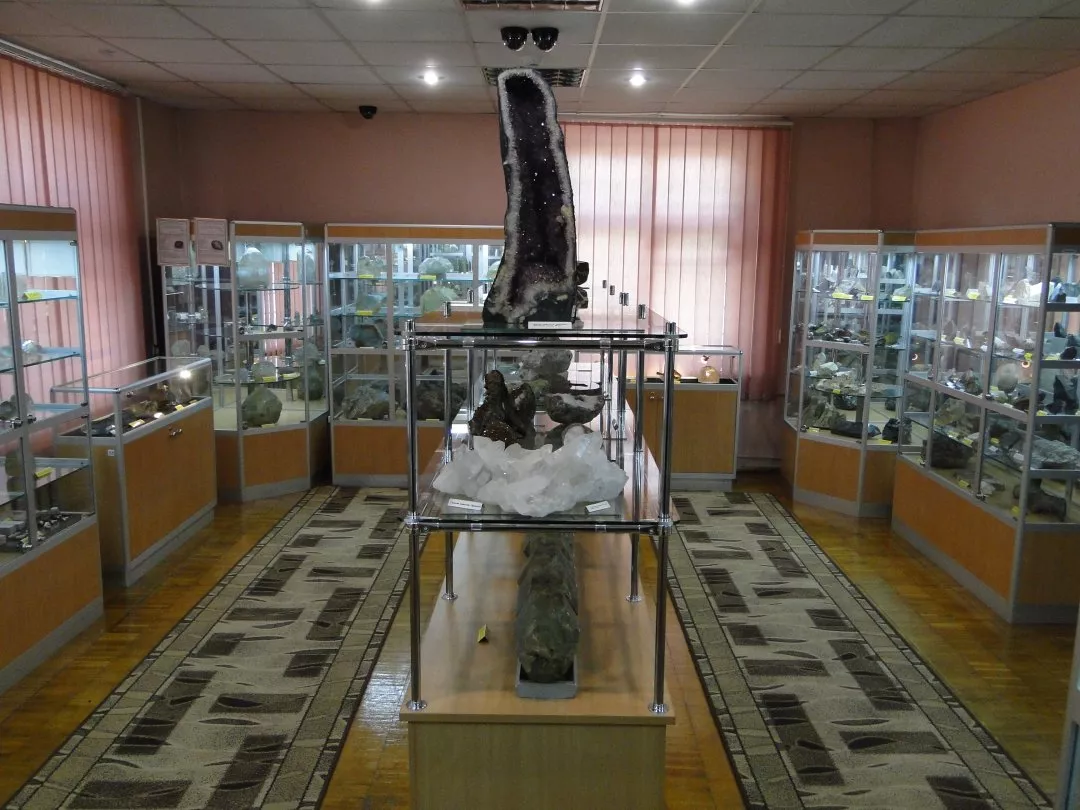
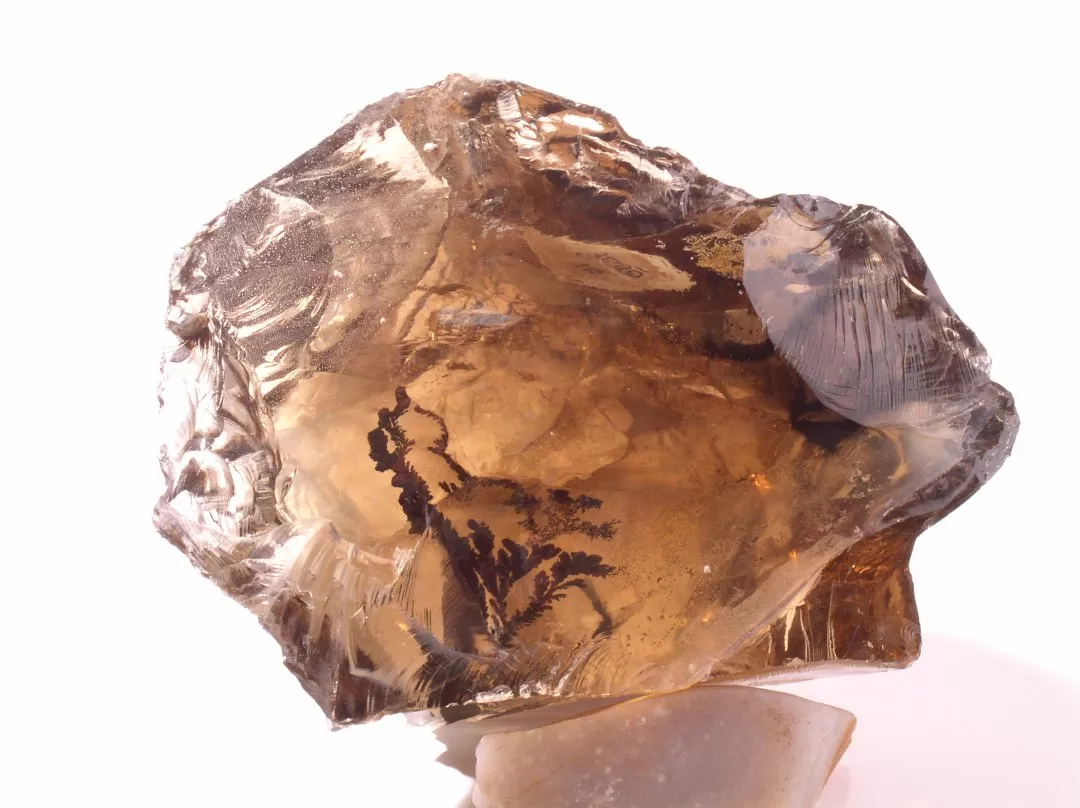
The second hall is the heart of the museum: minerals of the Volyn deposit. Here you can see unique crystals of quartz, morion, and other samples that have not only aesthetic but also scientific value.
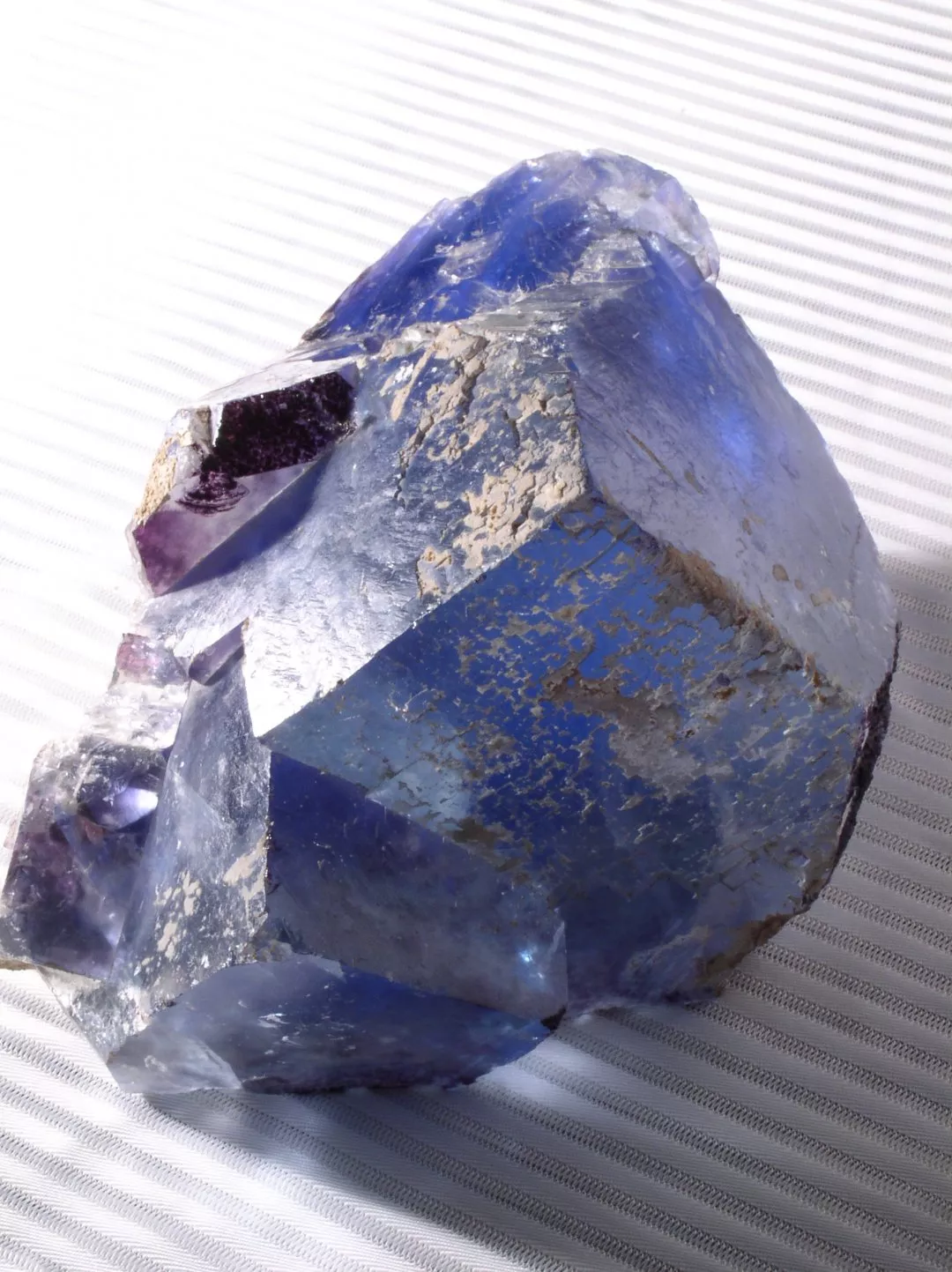
In the following halls, there are stone products, jewelry works, and mineral specimens from various corners of the world: Brazil, Africa, China. Here you can see rock crystal, amethysts, beryl, topazes, and even rare natural formations like "desert roses".
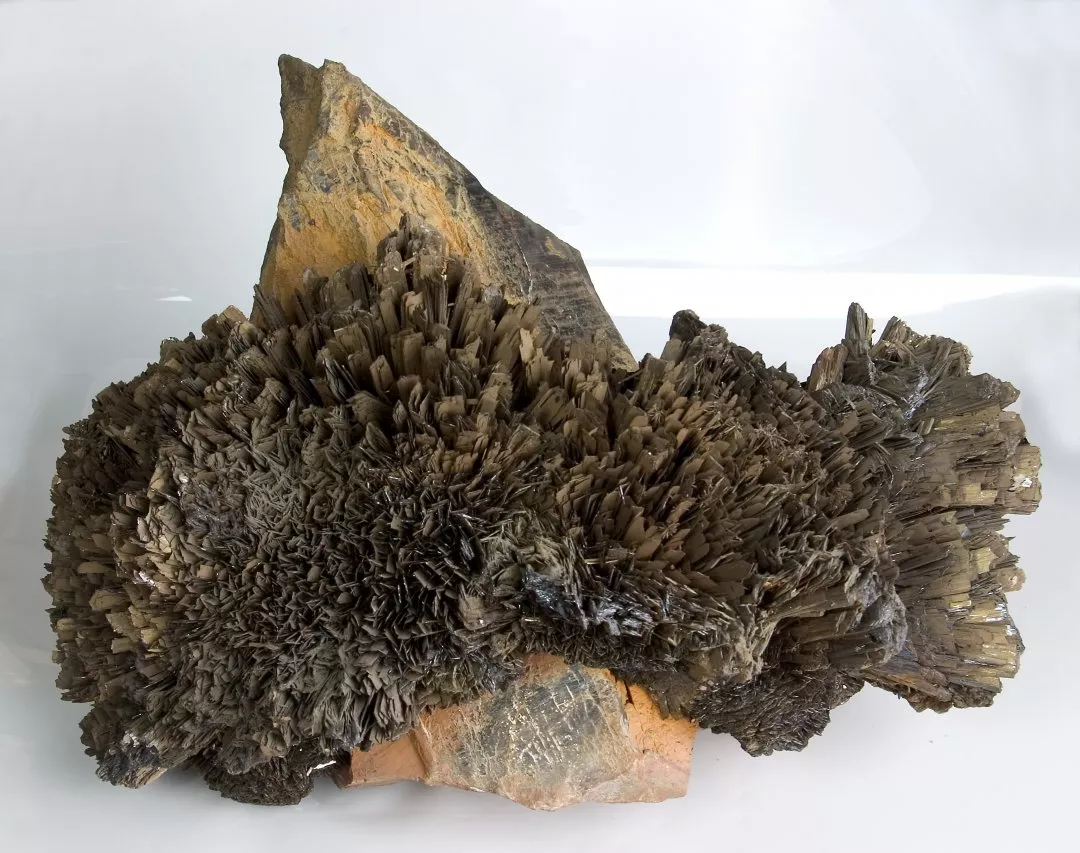
One of the main exhibits is a 361-kilogram black quartz (morion) druse. This is one of the largest similar specimens, which immediately attracts attention with its scale and shape. Ukrainian rocks are no less impressive, in particular the dark raspberry granite of the Tokivske deposit and the labradorite of the Fedorivske deposit with its bright orange-greenish iridescence.
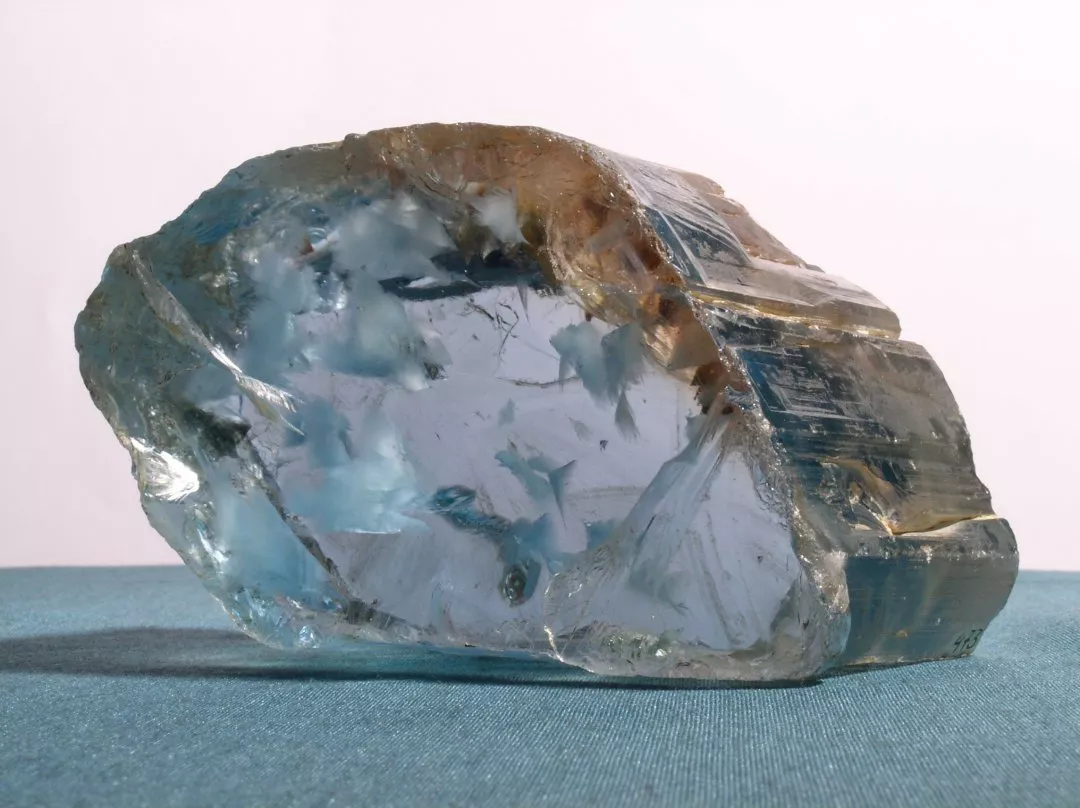
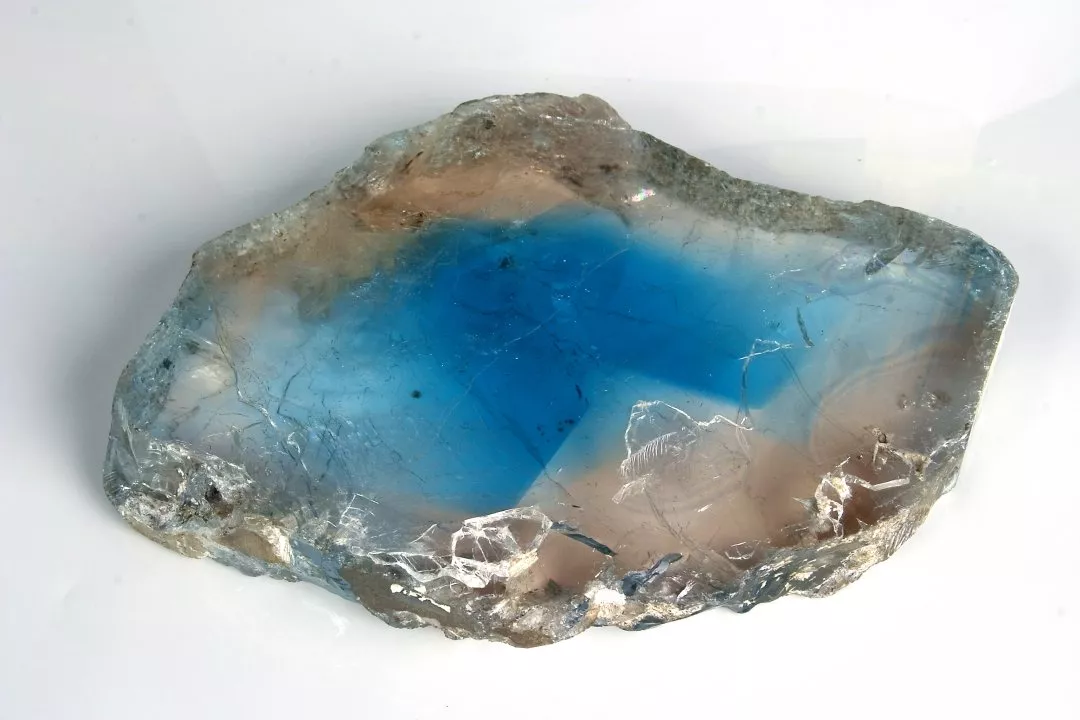
Particular attention is drawn to the collections of gemstones: golden citrines, Marmarosh diamonds, as well as rare specimens from various corners of the world — Ural malachite of a rich green color, blue aquamarines from Pakistan and Brazil, juicy red rubies, and turquoise from Central Asia with its characteristic deep shade.
One of the most interesting highlights of the museum is regolith, that is, lunar soil. This is one of those exhibits that goes beyond the scope of an ordinary museum and adds a cosmic scale to the exposition.
The museum is also famous for its named specimens of mineral and raw material resources of Ukraine. Among them are:
- the "Apostles Peter and Paul" beryl;
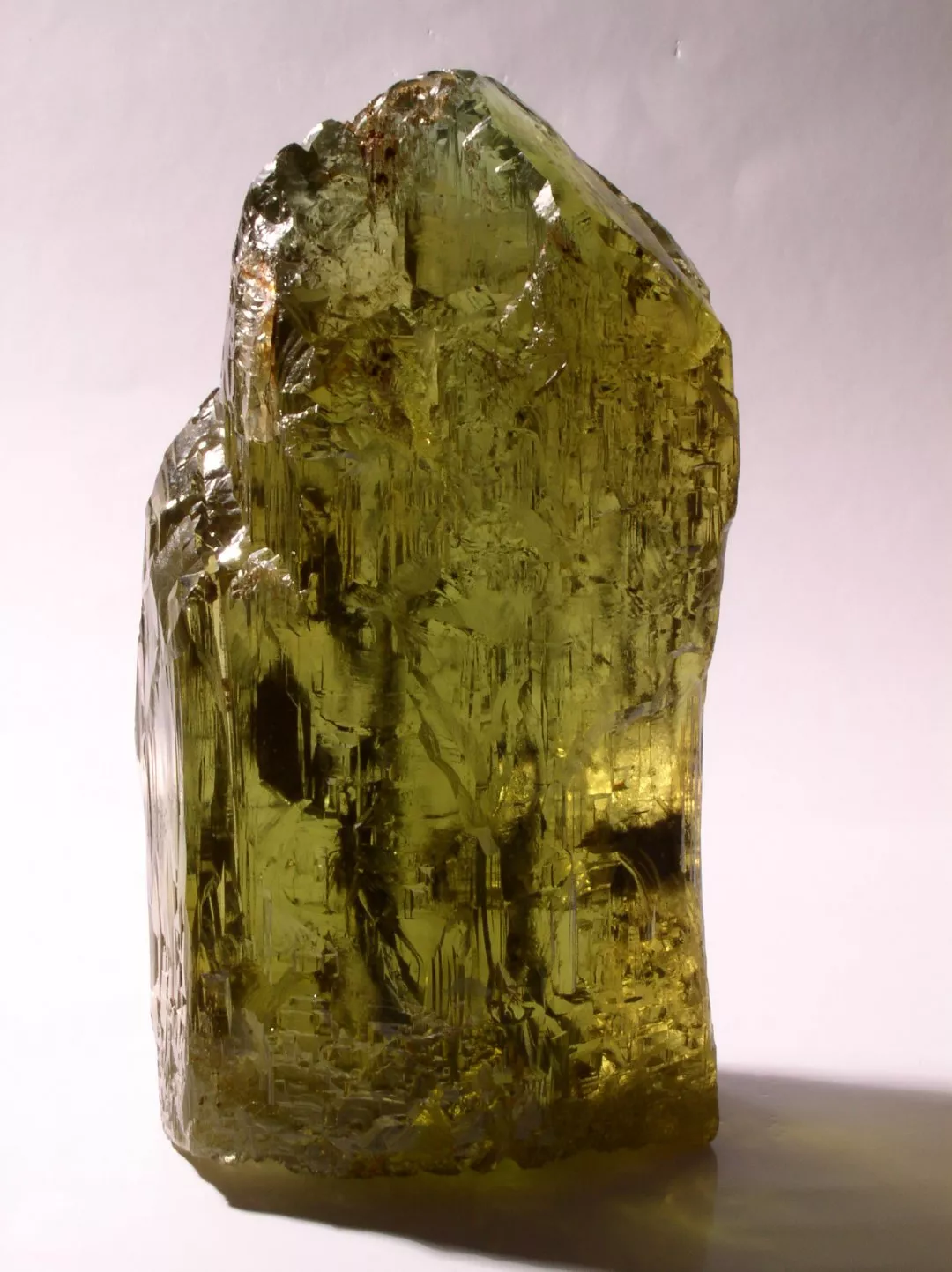
- the "Academician Yevhen Lazarenko" beryl;
- the "Dzhereltsia", "Kazka", "Zolote Polissia", and "Academician Oleksandr Fersman" topazes.
These specimens were entered into the State Register of Ukraine in 2001, and later into the Historical Fund of Precious Metals and Gemstones. Each of these crystals has its own official certificate — practically a "passport".
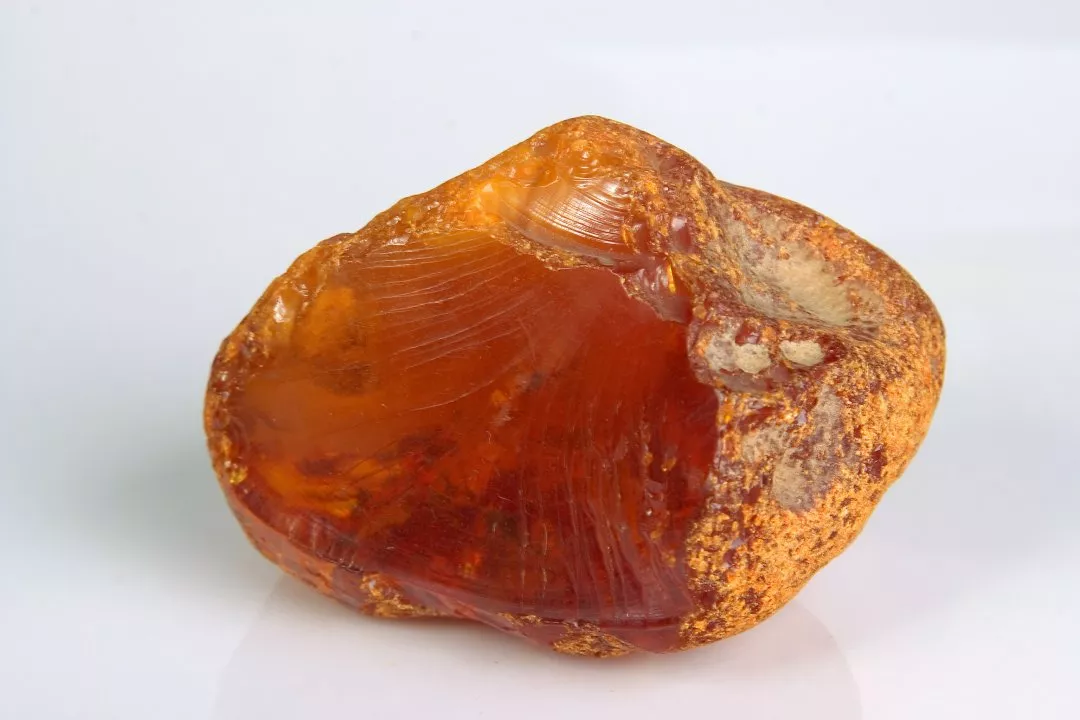
A separate hall is dedicated to finished stone products. Here, these are no longer just natural forms, but full-fledged art — jewelry and decorative pieces that are hard to look away from. In this same hall, you can see the "sunstone" — amber, as well as a variety of gemstones from the Volyn deposit.
What makes this museum special
This is one of the few museums where stones are showcased not as an "addition," but as the main theme. You are looking not just at beautiful things, but at the result of natural processes that lasted for millions of years.
Another feature is the scale. Some of the exhibits are truly gigantic, and this gives a completely different feeling than in standard museums. Furthermore, there is the geography: specimens from various continents show how diverse the Earth's structure is.
And an important point is that this is not a "dead museum." Tours, exhibitions, and lectures are held here, and it actively operates as a cultural and scientific center.
How to get there
From Zhytomyr: about 50–60 km to the northwest, to Khoroshiv — most conveniently by car.
By public transport: buses and fixed-route minibuses run from Zhytomyr to Khoroshiv.
What is nearby
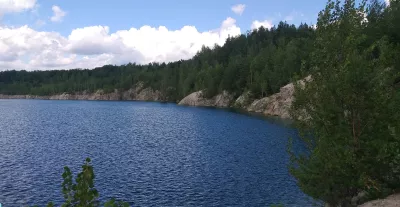
Nearby is Polissian nature, forests, and historical sites of the region. This is not a "city center with cafes," but rather a day trip format, so the museum is often combined with other locations in the Zhytomyr region into a single itinerary.
What is worth knowing
- this is not a 10-minute museum — allow at least an hour;
- it is better to take a guided tour, otherwise some of the exhibits will simply look like "stones";
- it is suitable even for those who do not particularly like museums.
The Museum of Precious Stones is one of those locations that unexpectedly "clicks." You go to look at stones, and you get an experience of nature, history, and scales that are hard to imagine. If you want something truly unusual in the Zhytomyr region, this is a top choice.