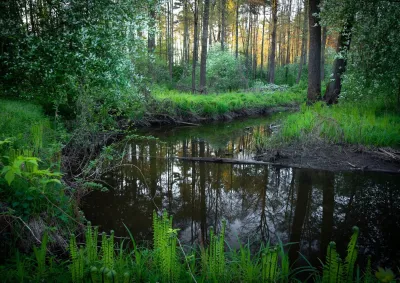
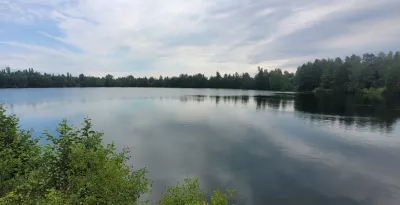
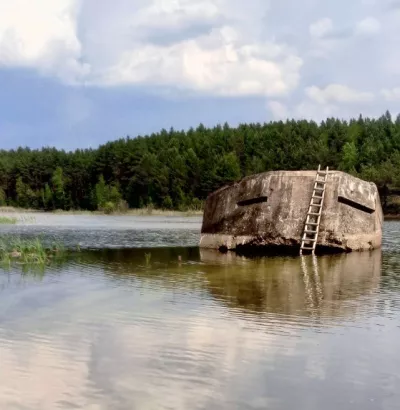
Ruzhyn is an urban-type settlement in the Berdychiv district of Zhytomyr Oblast, and the center of the Ruzhyn settlement hromada. It lies on the Rostavytsia River between Berdychiv and Bila Tserkva. The first mentions of the settlement date back to 1071 under the name Skorhorodok, and after the Mongol-Tatar invasion, it was revived as Shcherbiv. The town has had its current name since 1591, when it was acquired by the nobleman Kyrylo Ruzhynskyi.
Over the centuries, Ruzhyn suffered destruction multiple times during Tatar raids: in 1399, 1416, and 1482.
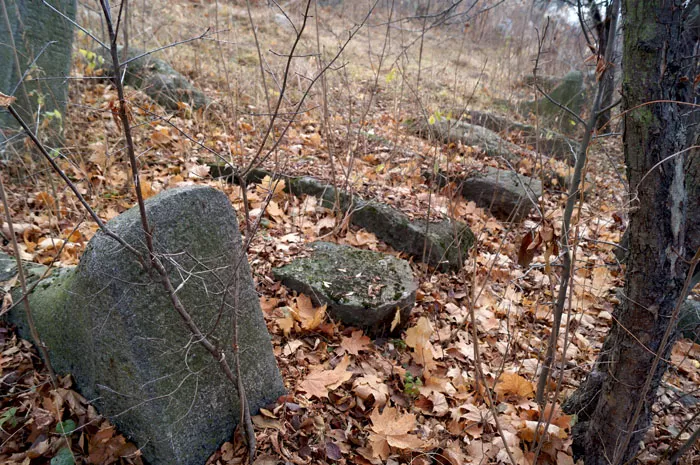
Jewish Cemetery (Kirkut)
Not far from the hospital on the hill, there is a Jewish cemetery with massive granite tombstones of a characteristic boot-like shape. Such a shape is rare in Ukraine and, according to one version, symbolizes a fallen tree with uprooted roots.
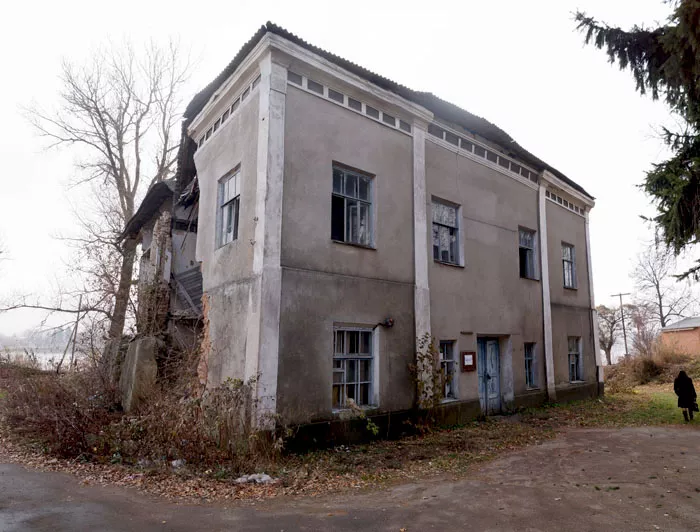
Ruins of the Synagogue
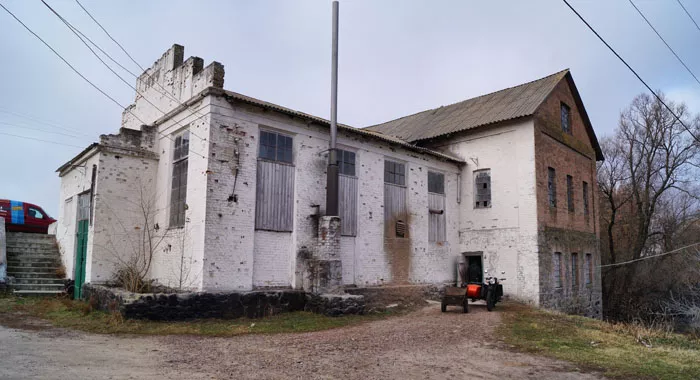
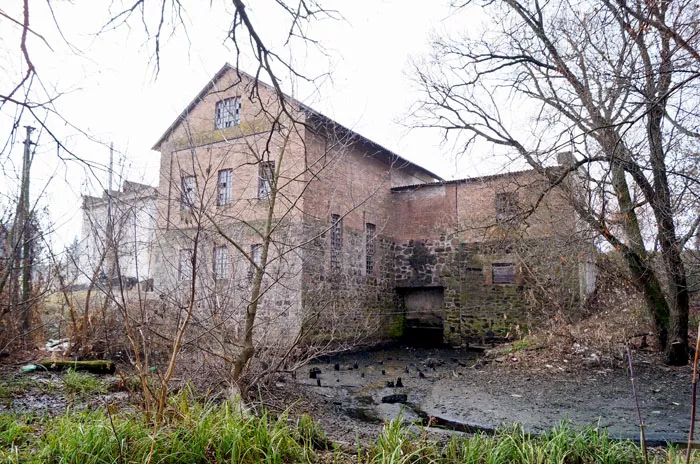
On the bank of the Rostavytsia, the remains of the former synagogue, which belonged to Ruzhyn's large Hasidic community, have been preserved. The exact age of the structure is difficult to determine; in Soviet times it was significantly rebuilt.
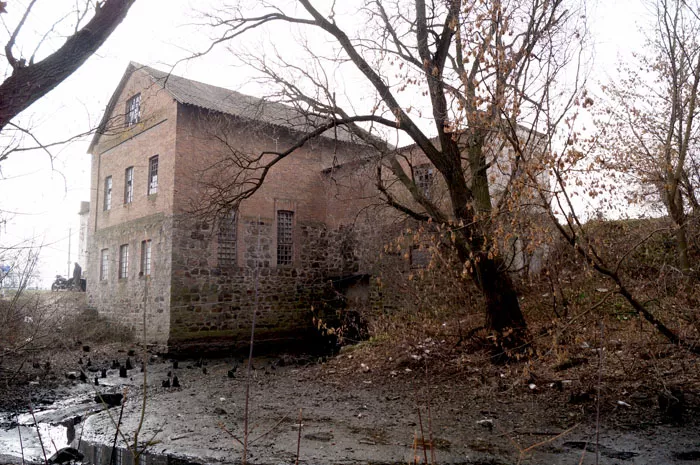
Water Mill
Another landmark on the Rostavytsia is the mill building, constructed in 1926 as a power plant; since 1929 it has operated as a water mill. The mill stands between the center of Ruzhyn and the village of Zarichchia.
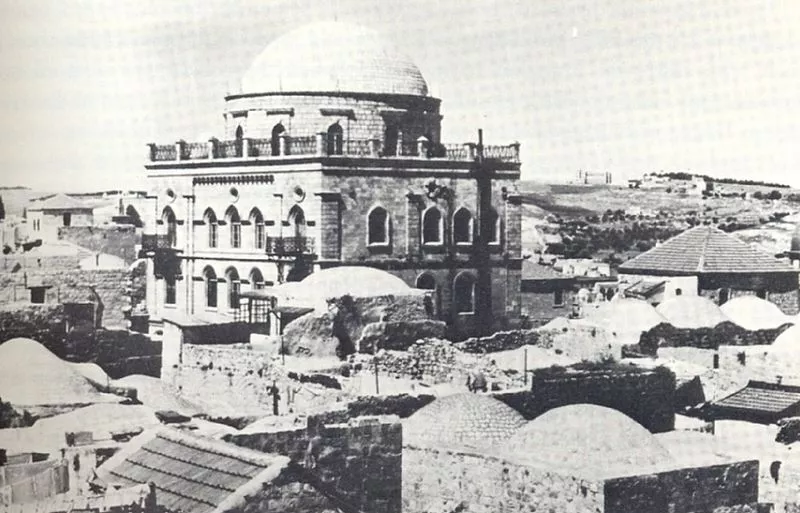
The Tiferet Yisrael Synagogue in Jerusalem, named after the Ruzhyn tzaddik, was destroyed in 1948 (photo from Wikipedia).
Ruzhyn's Jewish Community and Hasidic Court
A special place in the history of Ruzhyn is held by the Jewish community, which began to actively form in the 18th century. A favorable location on the trade route between Berdychiv and Bila Tserkva contributed to the development of crafts and trade. Over time, Ruzhyn became one of the important centers of Hasidism.
The greatest influence in the town was held by the tzaddik Yisroel Friedman, known as Reb Yisroel Ruzhiner, a great-grandson of the Maggid of Mezhyrich, one of the first disciples of the founder of Hasidism, the Baal Shem Tov. According to legend, his lineage descended from the biblical King David. In Ruzhyn, he created a lavish Hasidic court with great influence and significant funds.
In 1838, a loud scandal erupted around the court: the tzaddik was accused of involvement in the execution of informers, a large-scale investigation began, hundreds of people were arrested, and dozens were sent to hard labor and exile.
Yisroel Ruzhiner himself spent almost two years under arrest, but escaped punishment. In 1842, he left for the Austrian Empire and re-established his court in Sadhora near Chernivtsi. He never returned to Ruzhyn.
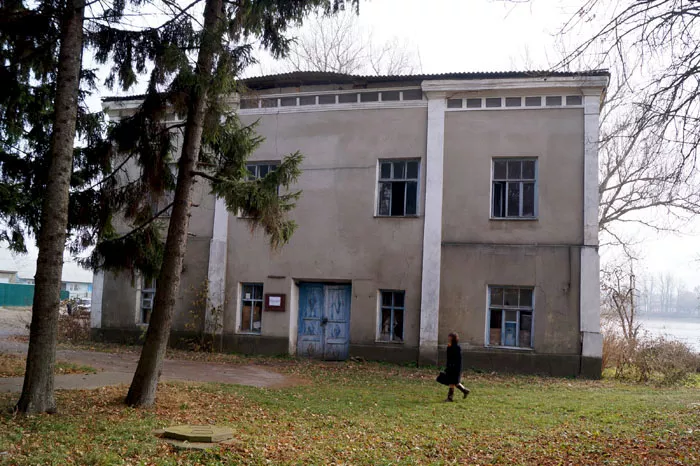
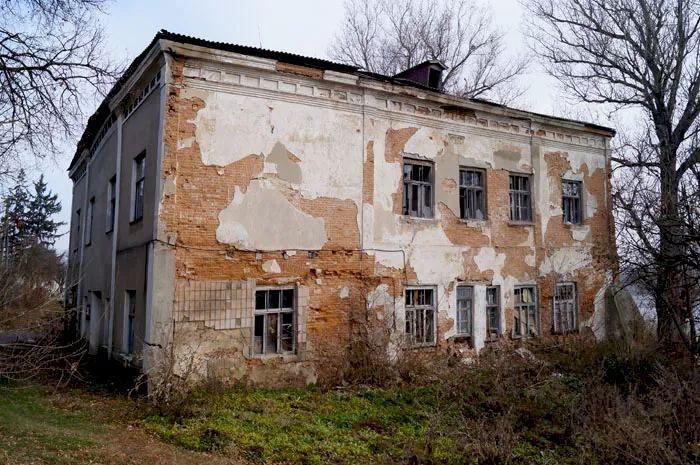
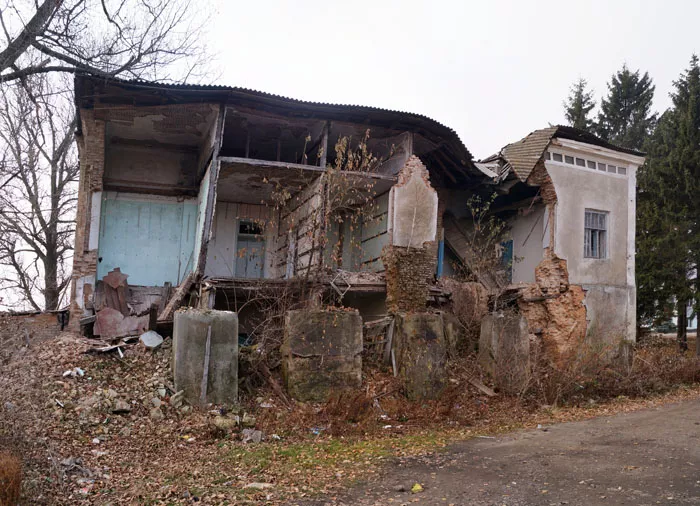
Today, the former glory of the Jewish community is recalled by the ruins of the synagogue on the banks of the Rostavytsia and the cemetery on the hill near the hospital.
The synagogue is currently in a dilapidated state. Due to Soviet alterations, it resembles a two-story building from the Stalinist era, yet the remains of massive buttresses indicate a much earlier origin. Part of the walls has already collapsed, and the structure is gradually disappearing.
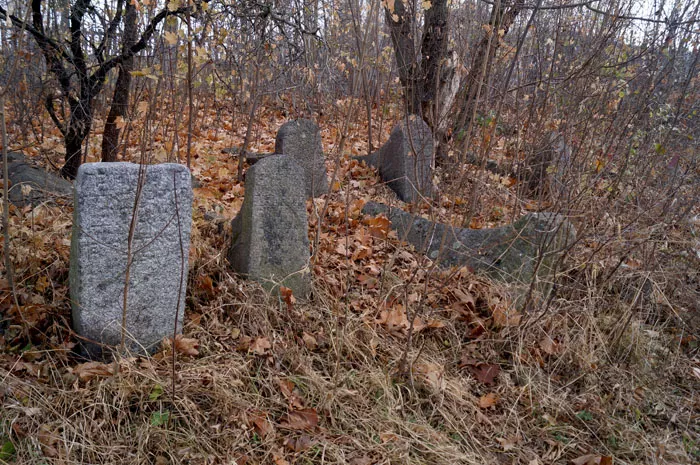
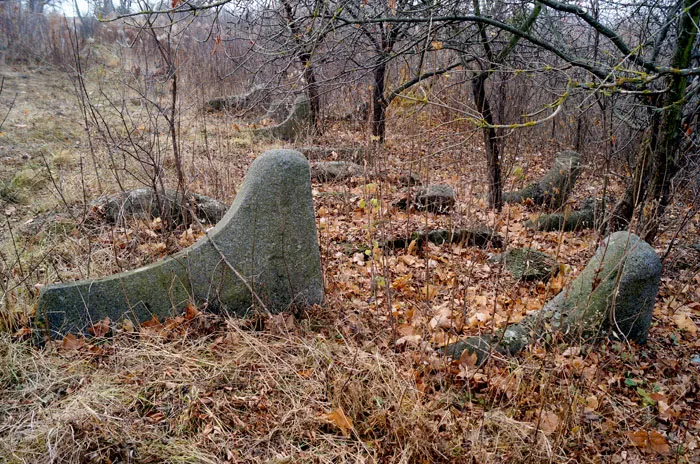
The Jewish community of Ruzhyn suffered significant oppression, but did not vanish. In 1863, about two thousand Jews lived here out of a total population of 2,663. According to the 1897 census, Ruzhyn had 4,329 residents, 2,917 of whom were Jews. The tragic end of the community was brought by the Nazi occupation: in September 1941, about 750 Jews were shot near the old airfield.
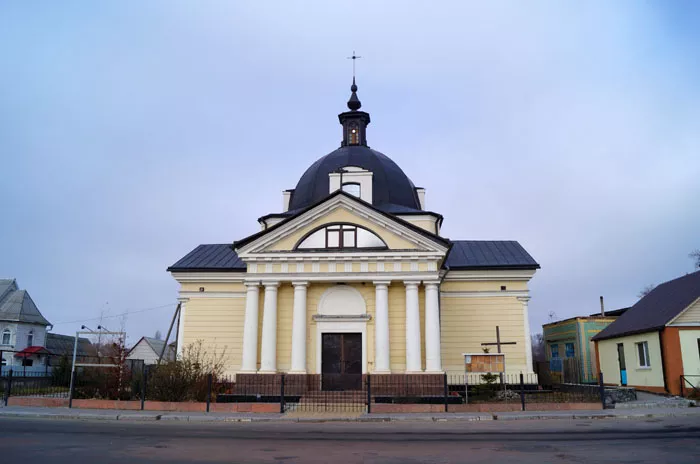
The Zlotnytsky Palace and the Church of Corpus Christi
In the 19th century, the major landowners in Ruzhyn were the Chelischevs, but in 1856 their lands were acquired by Zlotnytsky, who in 1860 built a palace styled after an Italian villa and laid out a park. In the 1920s, communal settlers from Canada settled in the palace, and numerous alterations almost completely destroyed its original appearance.
The main architectural adornment of Ruzhyn remains the Roman Catholic Church of Corpus Christi, erected in 1817 at the expense of Emilia Kalynovska, later the wife of Count Chelischev. In the Soviet period, the church was used as a car repair shop; in the early 2000s, it was restored at the expense of the community and patrons, and today it is active once again.
According to the 2001 census, 5,067 people lived in Ruzhyn. Almost no Jewish community remains, but its trace in the town's history is still felt today. Ruzhyn is an example of a Ukrainian town with a multi-layered history where princely times, Polish nobility, Hasidic mysticism, and Soviet heritage have intertwined.
Photos by Roman Malenkov, Serhii Shcherbiy.
How to get there
Ruzhyn is located approximately 111 km from Zhytomyr by road, making it convenient to visit on a day trip from Zhytomyr or Kyiv. The nearest railway station is Zarudyntsi, 10 km away. The best time to visit is spring, summer, or autumn, when you can not only sightsee but also walk along the banks of the Rostavytsia.
What's nearby
Just across the river is the village of Zarichchia with the Church of Saint Paraskeva Friday, and nearby are the water mill and the Church of St. John the Theologian in Karabchiyiv and other water mills of the Rostavytsia.