In early May 1986, the residents of the village of Tovstyi Lis were evacuated within a matter of days — forever. Along with them, the living parish community of the Holy Resurrection Church left the exclusion zone. The unique wooden Cossack Baroque architectural monument built in 1760, erected without a single nail and listed among the architectural monuments of the Ukrainian SSR, was left without people, without maintenance, and without protection.
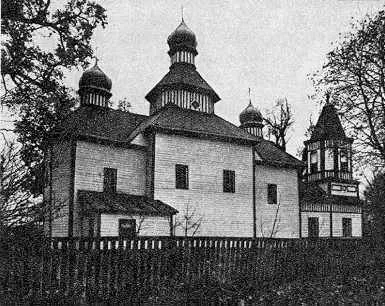
View from the northeast. Photo from the publication "Pamyatniki gradostroitelstva i arkhitektury USSR" (Kyiv: Budivelnyk, 1983, vol. 1, p. 147).
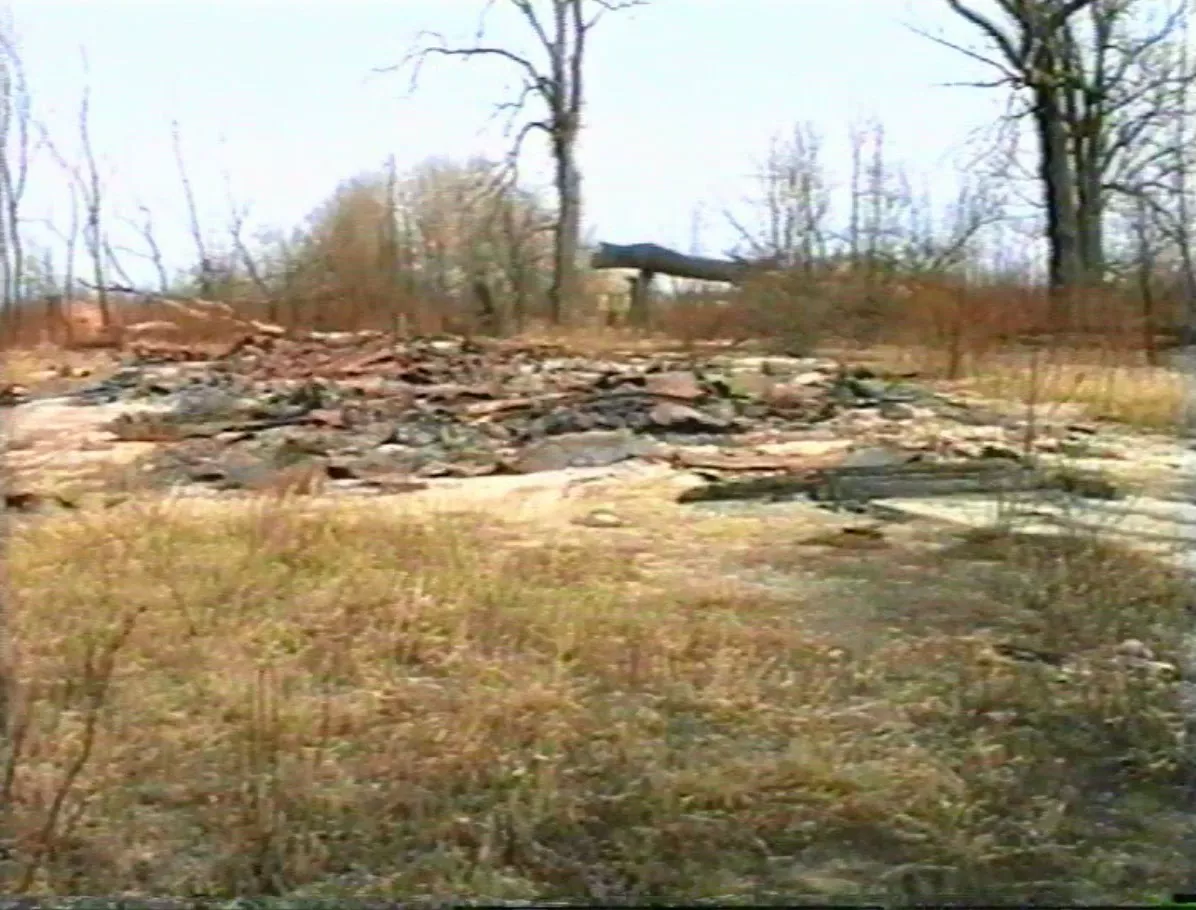
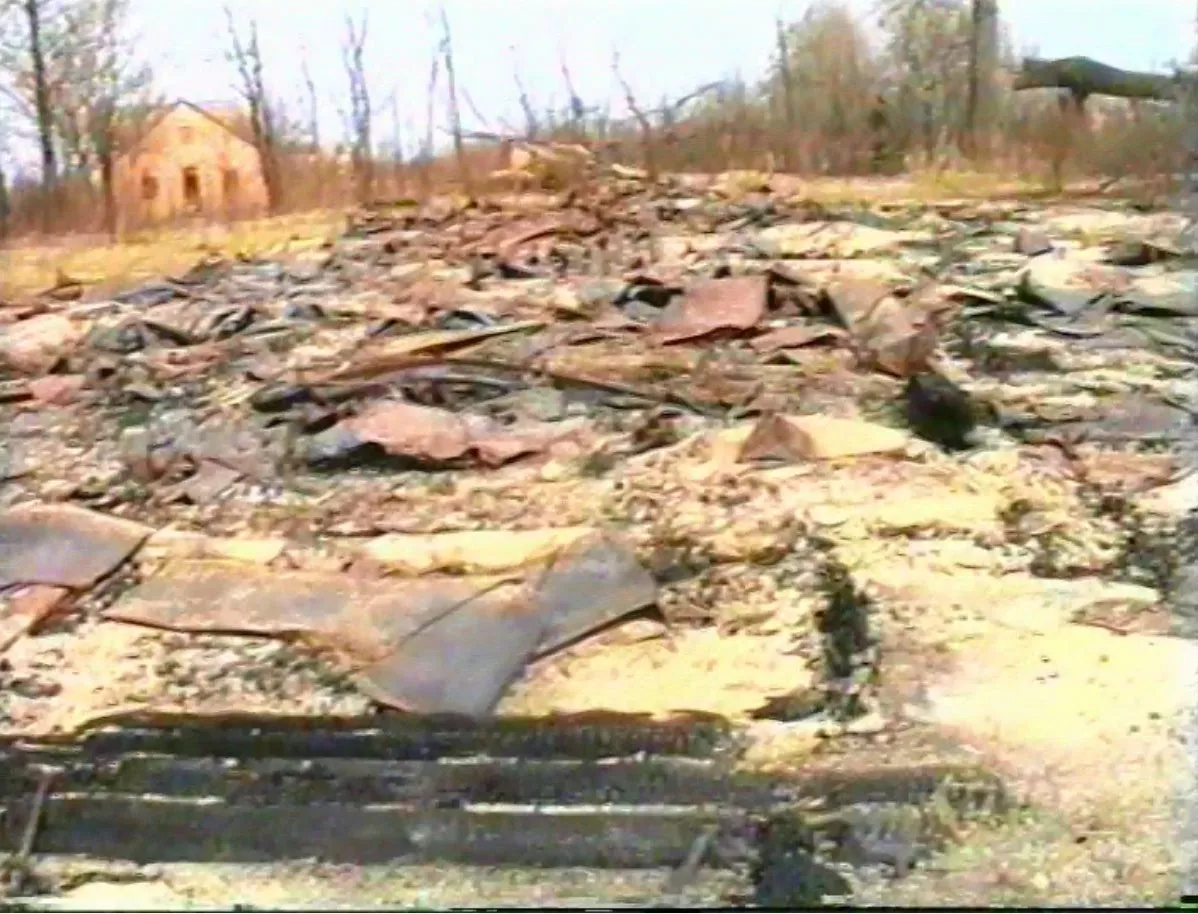
At first, the temple was looted by marauders, and then it burned down. In April 1996, ten years after the catastrophe, the church disappeared along with the ancient village — completely.
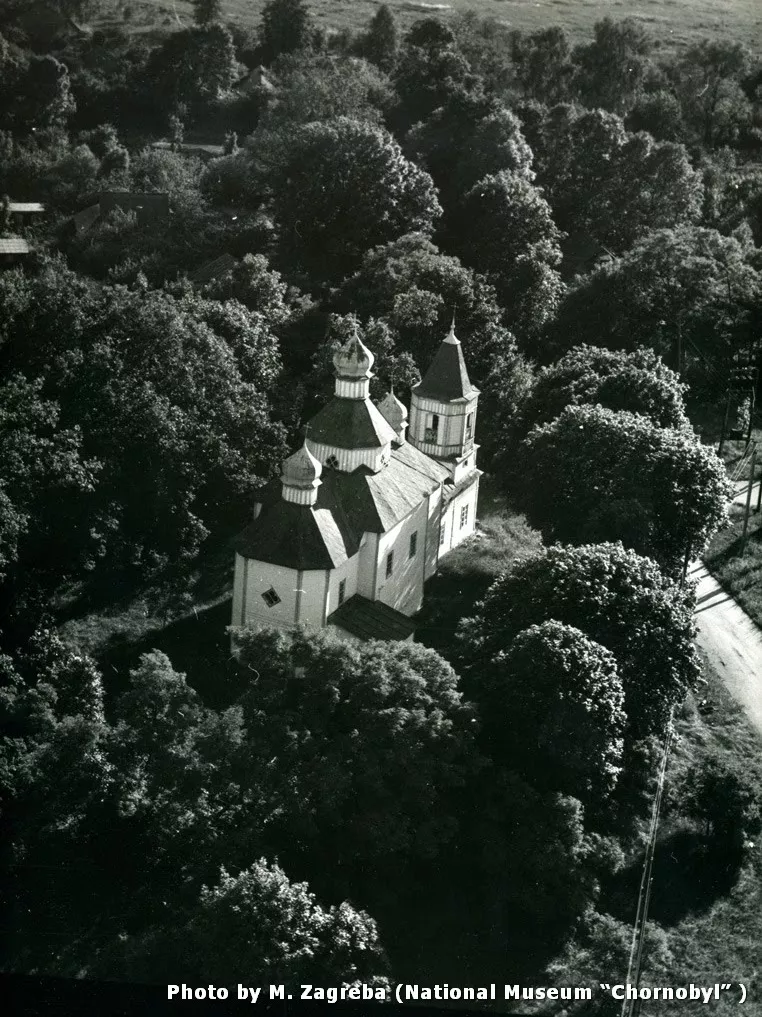
Tovstyi Lis: a village with a nearly six-century history
Tovstyi Lis is an ancient settlement. The first documentary mention of it dates back to 1427: in a charter of the Grand Duke of Lithuania Vytautas, the village was granted to the St. Nicholas Monastery. Thus, by the time of the Chornobyl disaster, it had more than five and a half centuries of documented history behind it.
In 1886, 912 Orthodox Christians, 5 Catholics, and 62 Jews lived here. It was a large and religiously diverse Polissian village by the railway. During the years of Nazi occupation, people were taken from here for forced labor to Germany, and the surrounding district was a significant center of the partisan movement.
The 1760 Church: Cossack Baroque without a single nail
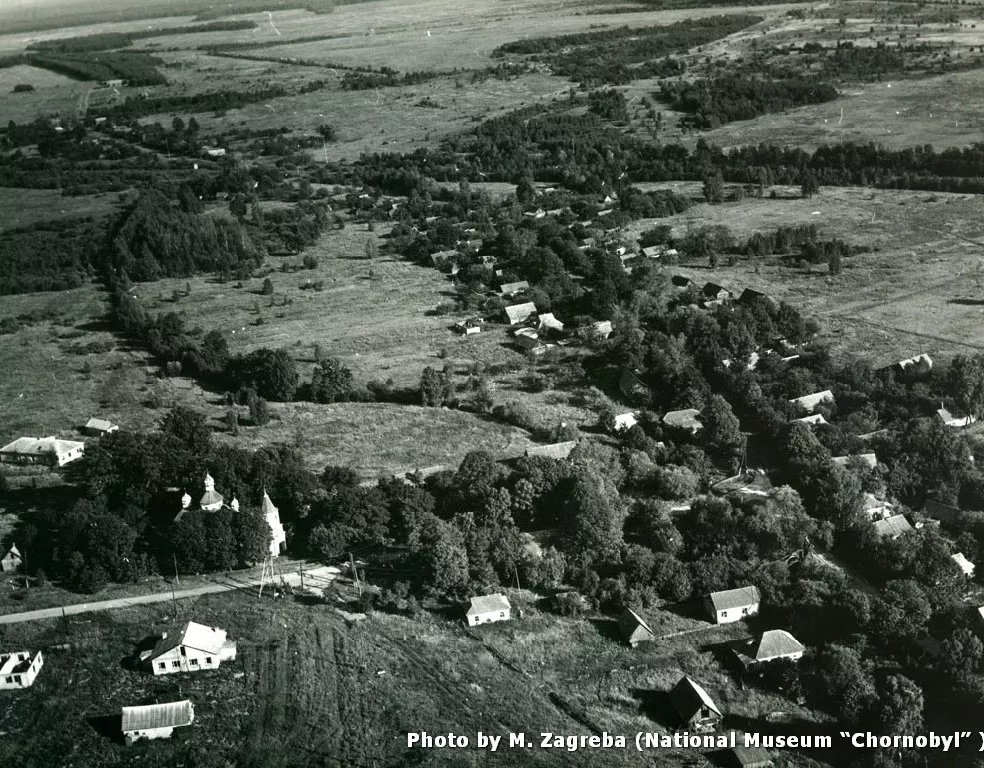
In the center of the village stood the Holy Resurrection Church (Church of the Resurrection of the Lord) — a prominent architectural monument.
It was consecrated in 1760 on the site of an older, dismantled temple. It was an example of Ukrainian Cossack Baroque, and its main feature was not a single nail: the entire structure was built using traditional Polissian carpentry technologies, where elements were joined without metal fasteners.
The church was three-part — the central log structure, the altar, and the narthex. The temple had three domes: the central one was illuminated, with windows providing natural light; the two side ones were blind, hidden externally under the roof. Inside, 19th-century paintings were preserved.
In 1897, a square two-tiered bell tower was added to the narthex. Its architecture is laconic and expressive: the low lower tier — a quadrangle — transitioned into an octagonal upper tier, covered with a tent roof.
The church was included in the official list of architectural monuments of the Ukrainian SSR — meaning the state recognized its exceptional cultural value.
1986: Evacuation and the beginning of the end
On May 2–3, 1986, the residents of Tovstyi Lis were resettled to the villages of Havronshchyna and Plakhtianka in Makariv District of Kyiv Region due to significant radioactive contamination following the Chornobyl Nuclear Power Plant accident.
Along with the people, the parish community left the village. The church found itself in a vacuum — without masters, without guards, in a restricted access zone. For marauders, this meant complete impunity.
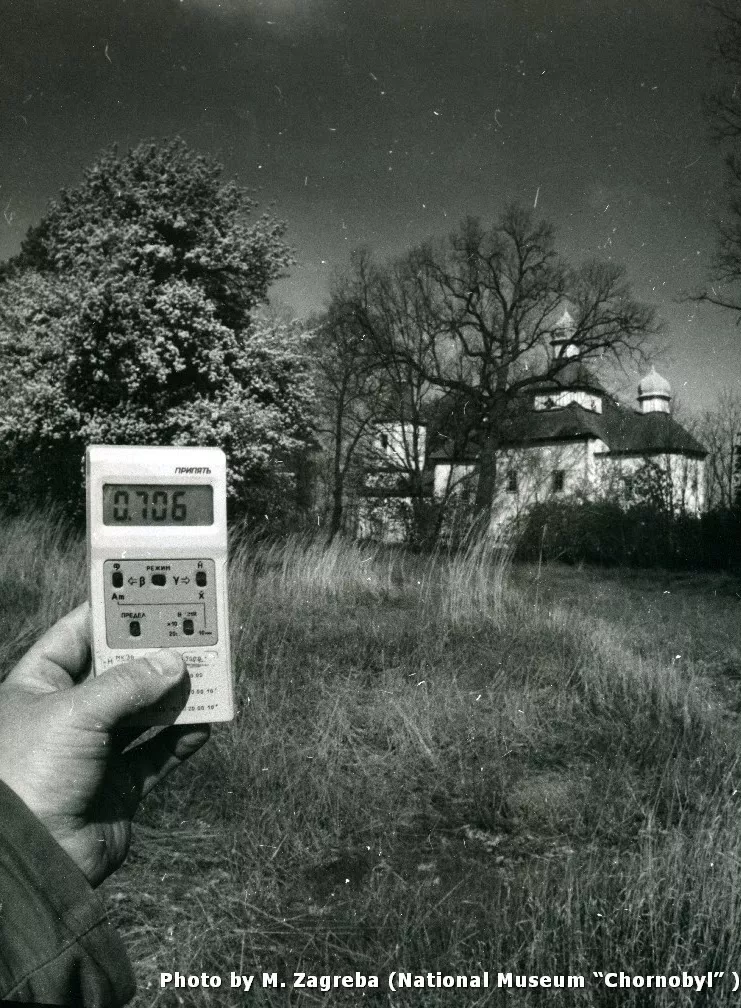
The church was mercilessly looted. Everything that could be carried away disappeared: ancient icons, church utensils, and decorations. The marauders were not even stopped by the radioactive contamination. Scientists who inspected the church in 1995 recorded 1,500 microroentgens per hour under its roof, against a natural background of 10–20 microroentgens per hour. Those who plundered the church risked their health, consciously or not.
April 1996: Fire takes the rest
What the looters did not manage to take was destroyed by fire.
In late April 1996—almost exactly ten years after the disaster—the Holy Resurrection Church burned to the ground along with the ancient village. The fire destroyed both the structure itself and everything that remained inside it.
Thus, the architectural monument, which was 236 years old at the time of its destruction, disappeared forever.
What was saved
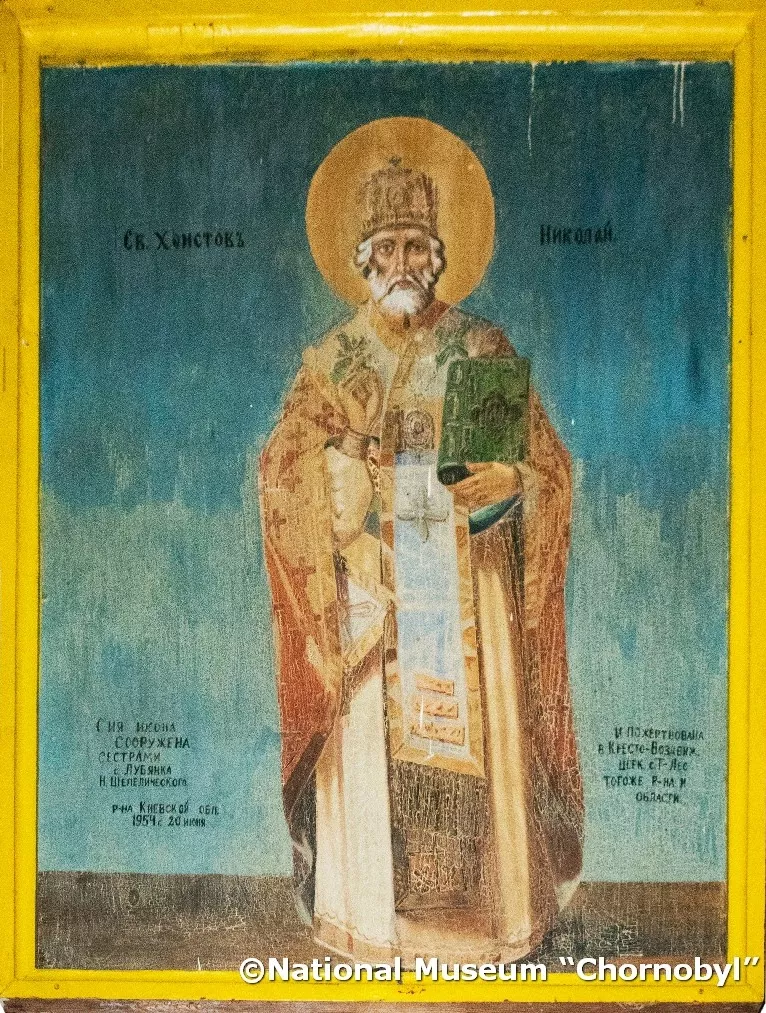
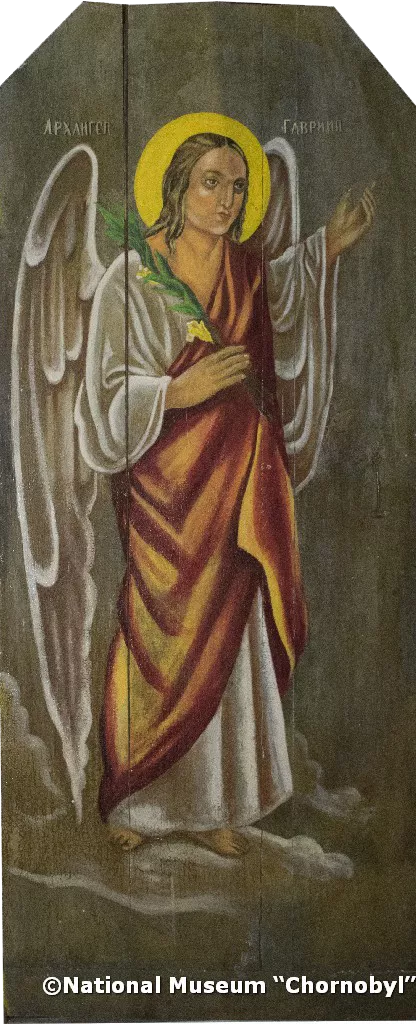
Not everything is irretrievably lost. Even before the fire, during exploratory expeditions to the exclusion zone, scientists from the National Chornobyl Museum managed to evacuate some of the preserved items.
Today, the permanent exhibition of the National Chornobyl Museum in Kyiv houses icons from the Holy Resurrection Church and fragments of the iconostasis decoration. Next to them are relics from the Church of the Archangel Michael in Krasne, found during the same expeditions of 1993–1995. Together, they form a museum memory of the lost sacral heritage of the Chornobyl region.
Tovstyi Lis after the church
On August 19, 1999, the village of Tovstyi Lis was deregistered due to the lack of residents. 13 years passed between the evacuation and its legal disappearance—a protracted liquidation typical of the Chornobyl region. Today, this territory belongs to the Ivankiv hromada of the Vyshhorod district in Kyiv Oblast.
Emptiness remains at the site where the church stood. All that is left of the ancient village are overgrown yards and foundation fragments—and a few rescued icons in museum display cases in Kyiv.
Can you visit here
Tovstyi Lis lies within the Chornobyl Exclusion Zone, where free access is prohibited. Tourist trips to the zone have been suspended since the beginning of the full-scale war in 2022; you can only get here with an official permit from the State Agency of Ukraine on Exclusion Zone Management. Therefore, today this is a place of memory to be experienced through the Chornobyl Museum in Kyiv rather than through an independent trip.
What this loss means
The Holy Resurrection Church in Tovstyi Lis is one of the most striking examples of the cultural losses caused by the Chornobyl disaster. Several tragedies converge here at the same time: the fate of an architectural monument that stood for almost two and a half centuries and perished ten years after the accident; looting that was not stopped even by radiation; and the fate of the village itself—over five centuries of history that were cut short in a few days in May 1986.
The church is no more. But what the researchers managed to save — icons and fragments of carving — remains a material testament to what once stood here.