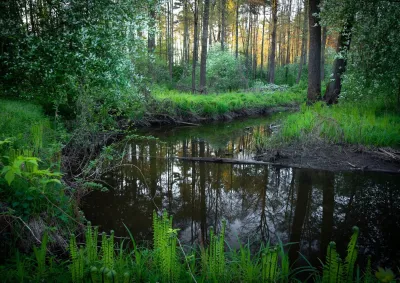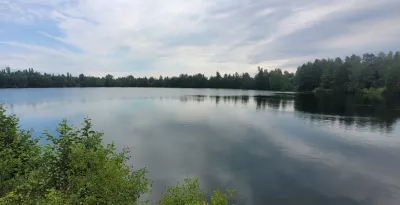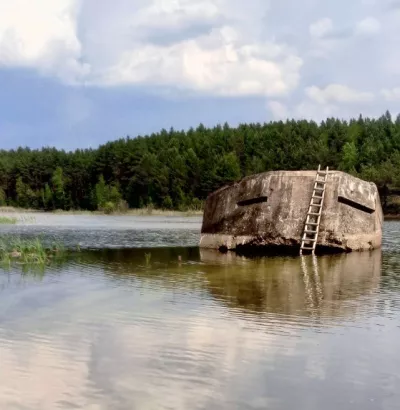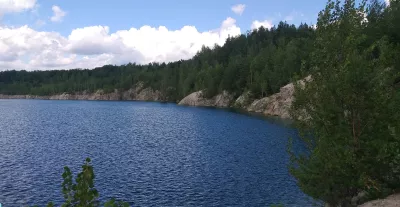

Few people know that an hour and a half away from Kyiv, there is a river section that kayakers themselves call the most extreme on the entire Teteriv River. The Zhytomyr — Korostyshiv stretch is about 43 kilometres of rapids, riffles, granite outcrops, pine forests, and wild woodland thickets, culminating in one of the most spectacular locations in Zhytomyr Oblast: the turquoise Korostyshiv Quarry. This is a route for those who want to experience an "almost mountain" river on the plains, and finish where you can swim among the rocks, as if somewhere in Croatia.
We tell the story of this entire stretch: what you encounter along the way, where that mysterious "Zhytomyr geyser" is, and why the final destination — Korostyshiv — is worth a separate trip even without a kayak.
A river with character: why this particular stretch
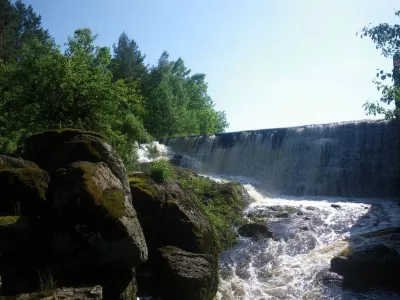
For most of its course, the Teteriv is a calm lowland river. But it is precisely between Zhytomyr and Korostyshiv that it reveals a completely different face. Here, the Teteriv cuts through the Ukrainian Shield, and granite banks, steep slopes, small rapids, riffles, and rippling currents appear in the riverbed. At high spring water levels, these rapids add genuine adrenaline to a kayaking trip, while at low water, they expose the picturesque rocky bed.
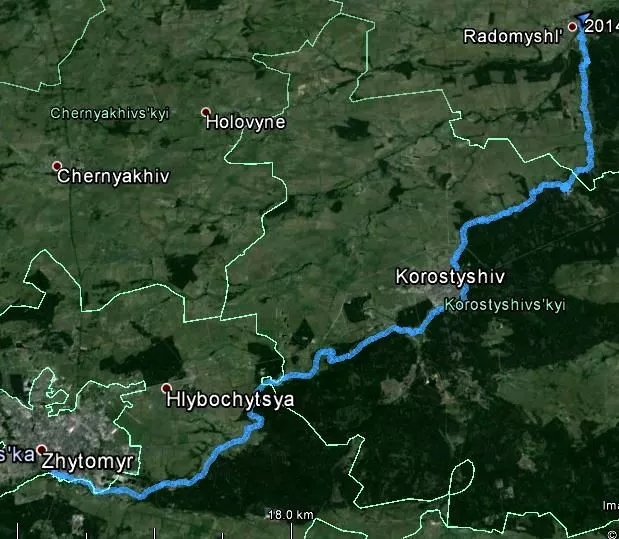
The "Shatun" kayaking club, which traversed this route in late May, estimated its length at 43 km and called it the "most extreme" part of the Teteriv — though with the caveat "for our water levels," meaning the rapids here are not at the Carpathian level, but are entirely manageable for a trained tourist. The optimal time is spring and early summer, while the river is full.
What you encounter along the way
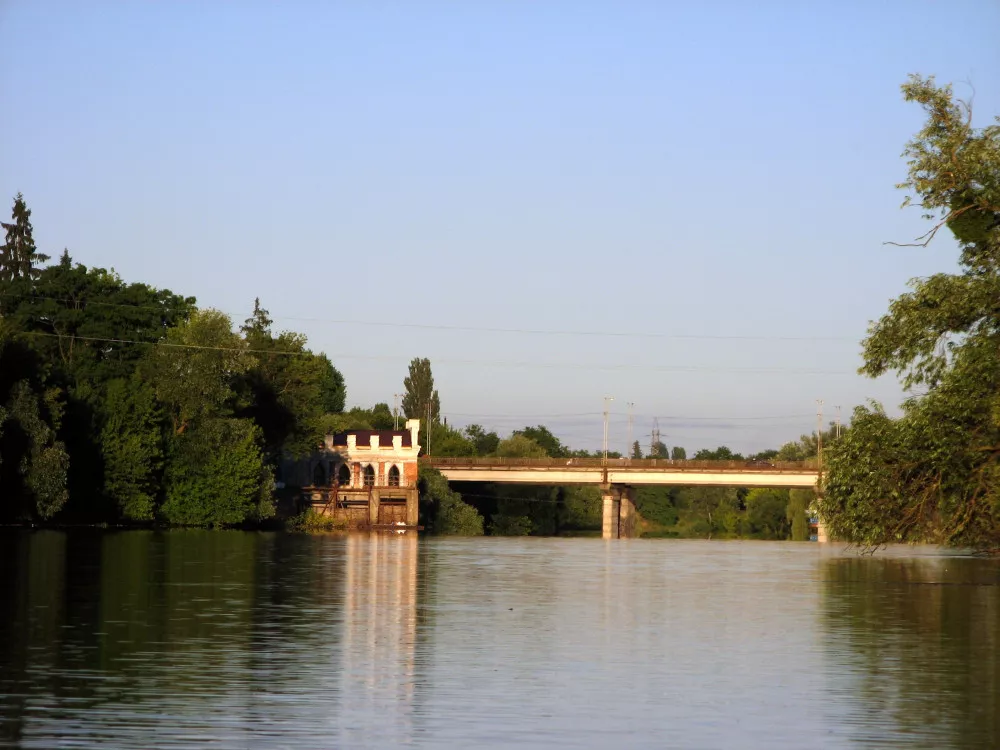
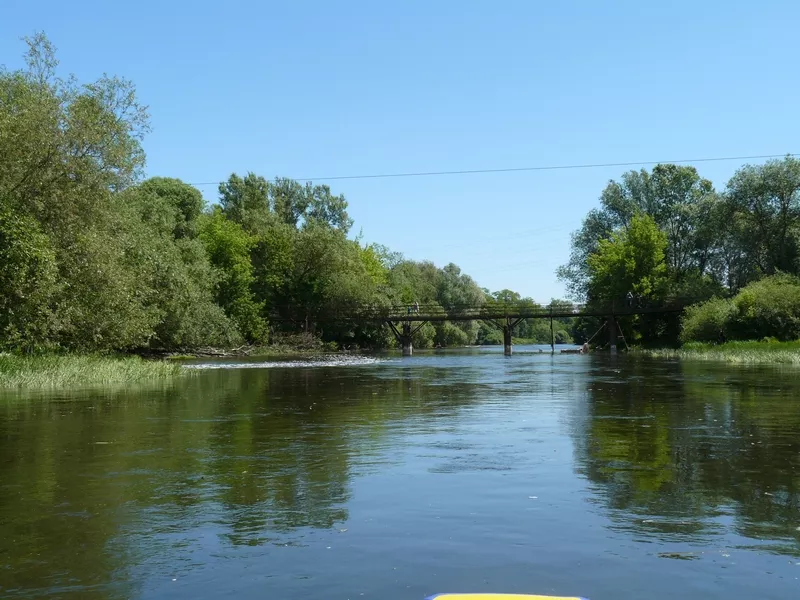
The route begins slightly downstream from the last of the three Zhytomyr dams (yes, there are as many as three dams on the Teteriv right in Zhytomyr). Further on, the river leads past a series of bridges and natural attractions:
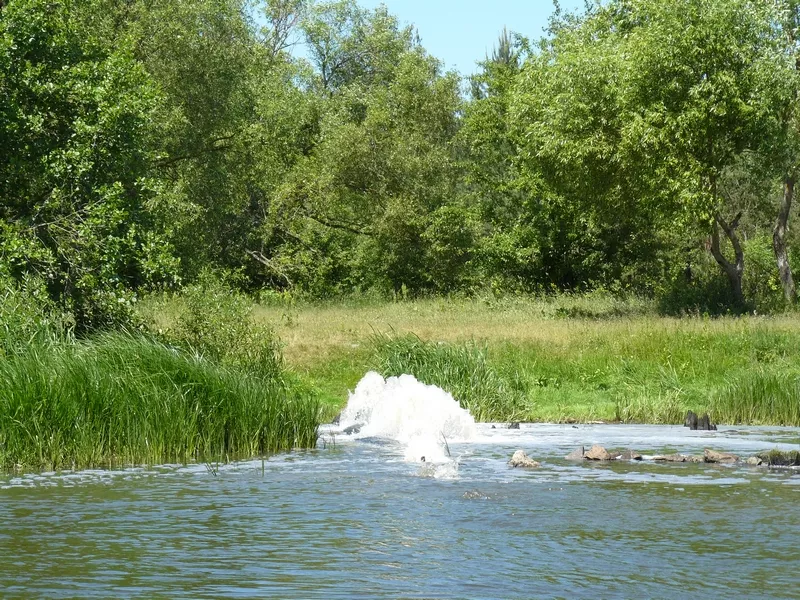
- The "Zhytomyr geyser" — one of the local curiosities on the left bank before the first railway bridge as you leave the city. The name is, of course, a joke: there are no actual geothermal geysers in Polissia; this is rather a powerful discharge of water (from a pipe or spring) that shoots upward and resembles a mini-fountain. But as a landmark and a photo opportunity, it is quite a local attraction.
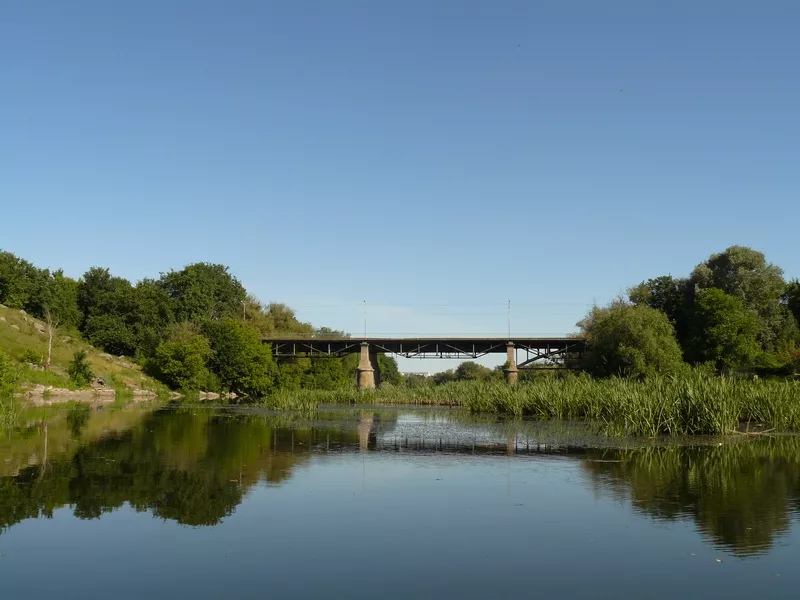
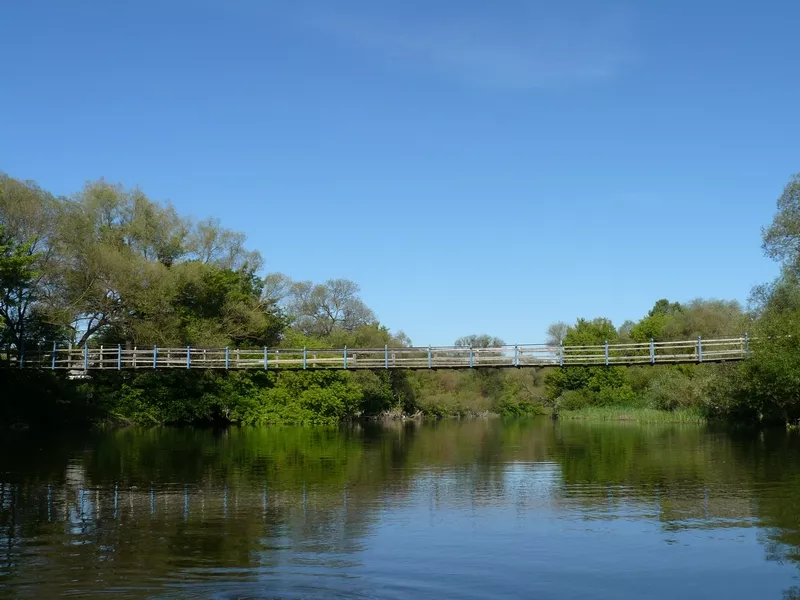
- Bystri village — the very place near which a railway bridge for the first Zhytomyr railway was built back in 1895; there is a pedestrian footbridge here.
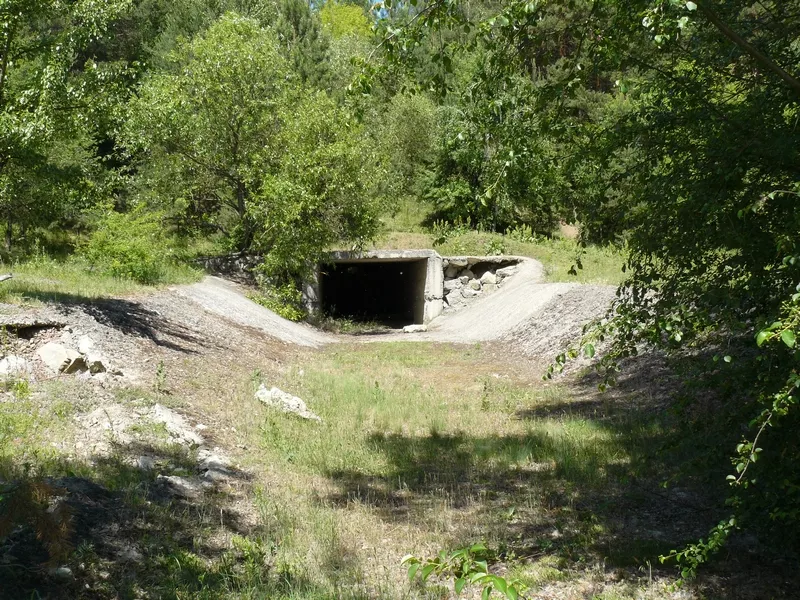
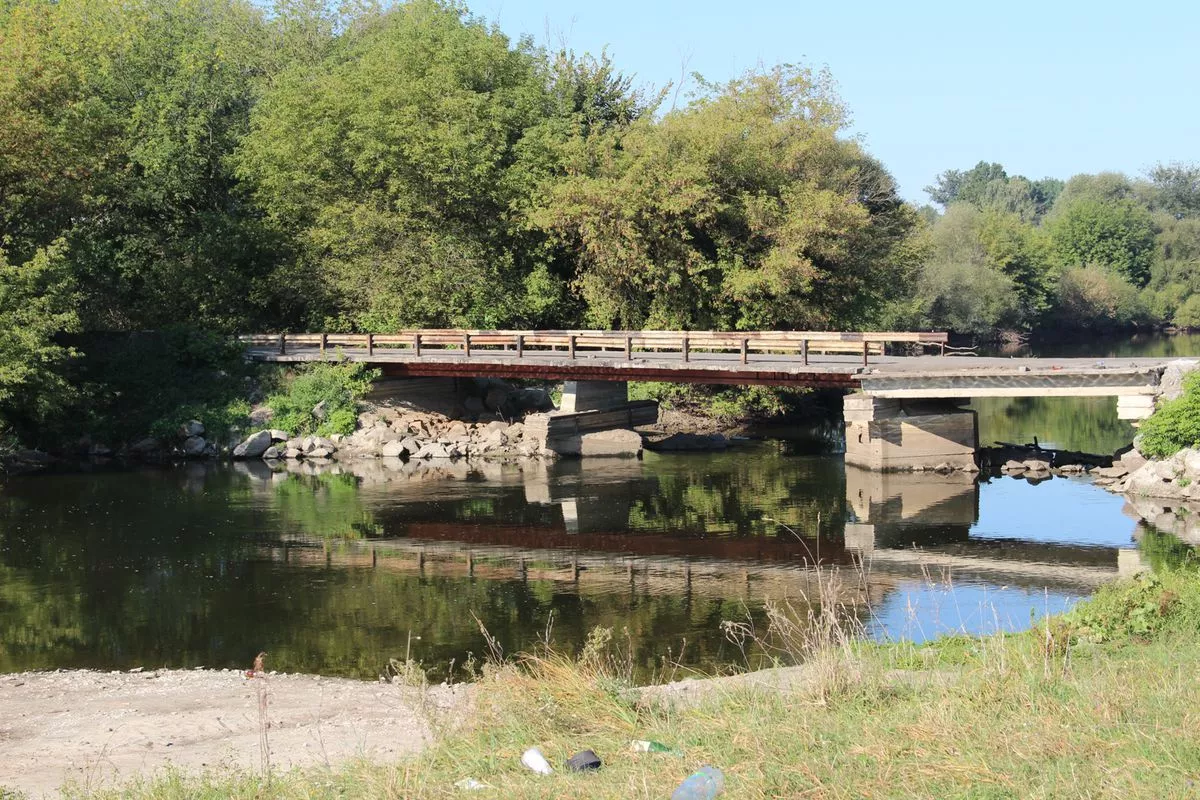
- Levkiv settlement — with a road bridge and a small rapid at the exit; beyond it, the Teteriv enters beautiful but almost impassable woodland thickets where there are hardly any places to camp.
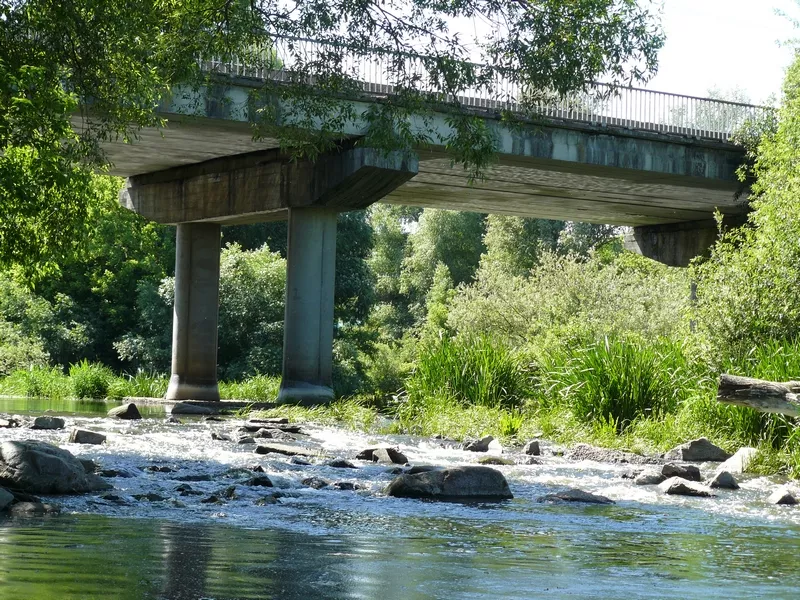
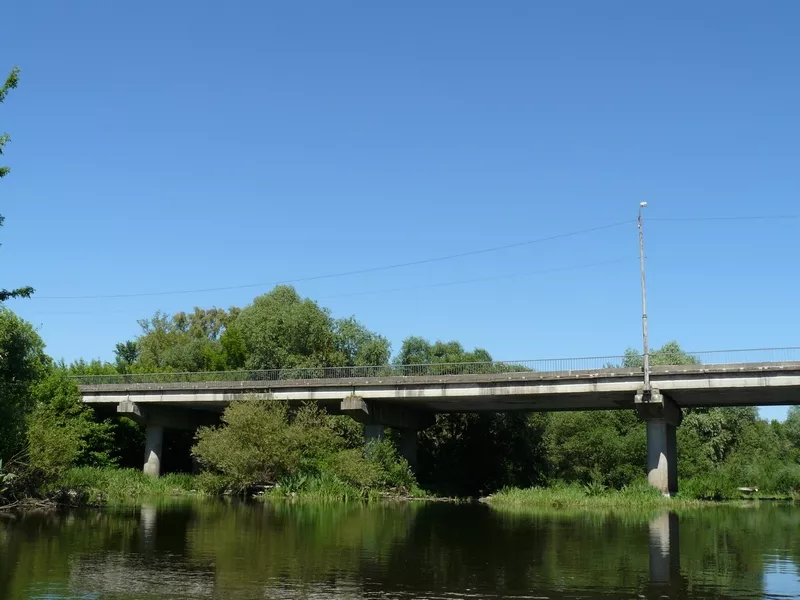
- Mali and Velyki Kosharyshcha — a very scenic section with riffles.
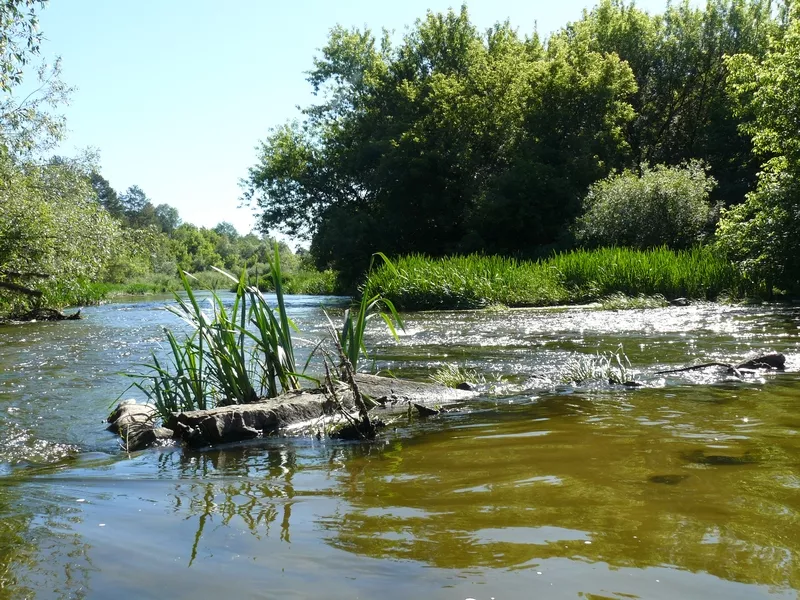
- Dam in the village of Kharytonivka — a hydraulic structure that has to be portaged.
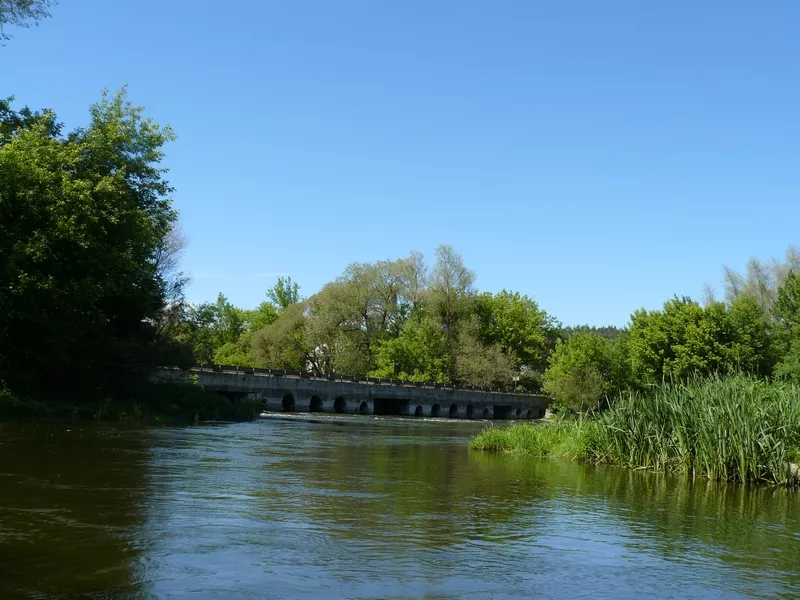
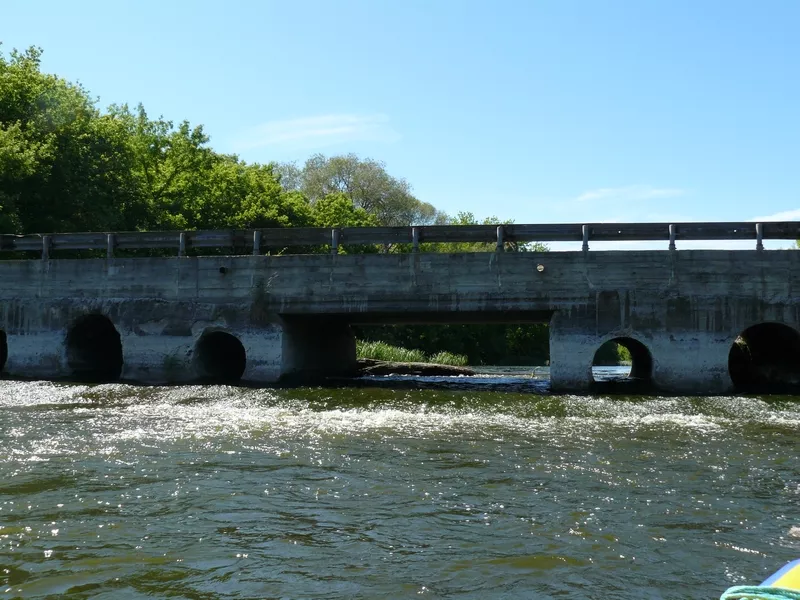
- The final stretch — past the Korostyshiv recreation area to the take-out point near the monument on the left bank before the road bridge.
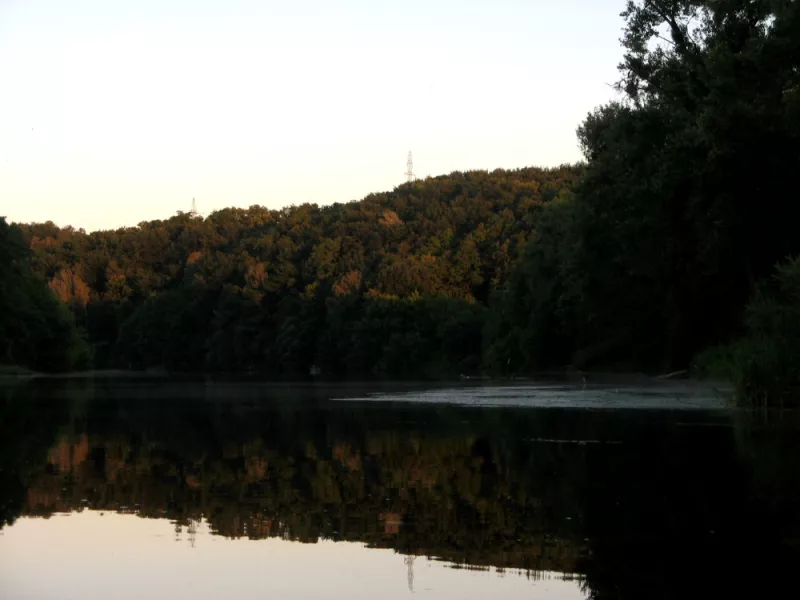
Along the entire route, you will find pine and mixed forests, small sandy beaches in the shade of trees, and numerous anglers for whom this section of the Teteriv is also a favourite.
Main reward: Korostyshiv Canyon
The final point of the route is the town of Korostyshiv, and near it hides the true star of Zhytomyr region, for the sake of which even those who have never set foot in a kayak come here. This is the Korostyshiv Canyon — a flooded granite quarry with clear turquoise water, surrounded by rocky banks and a pine forest.
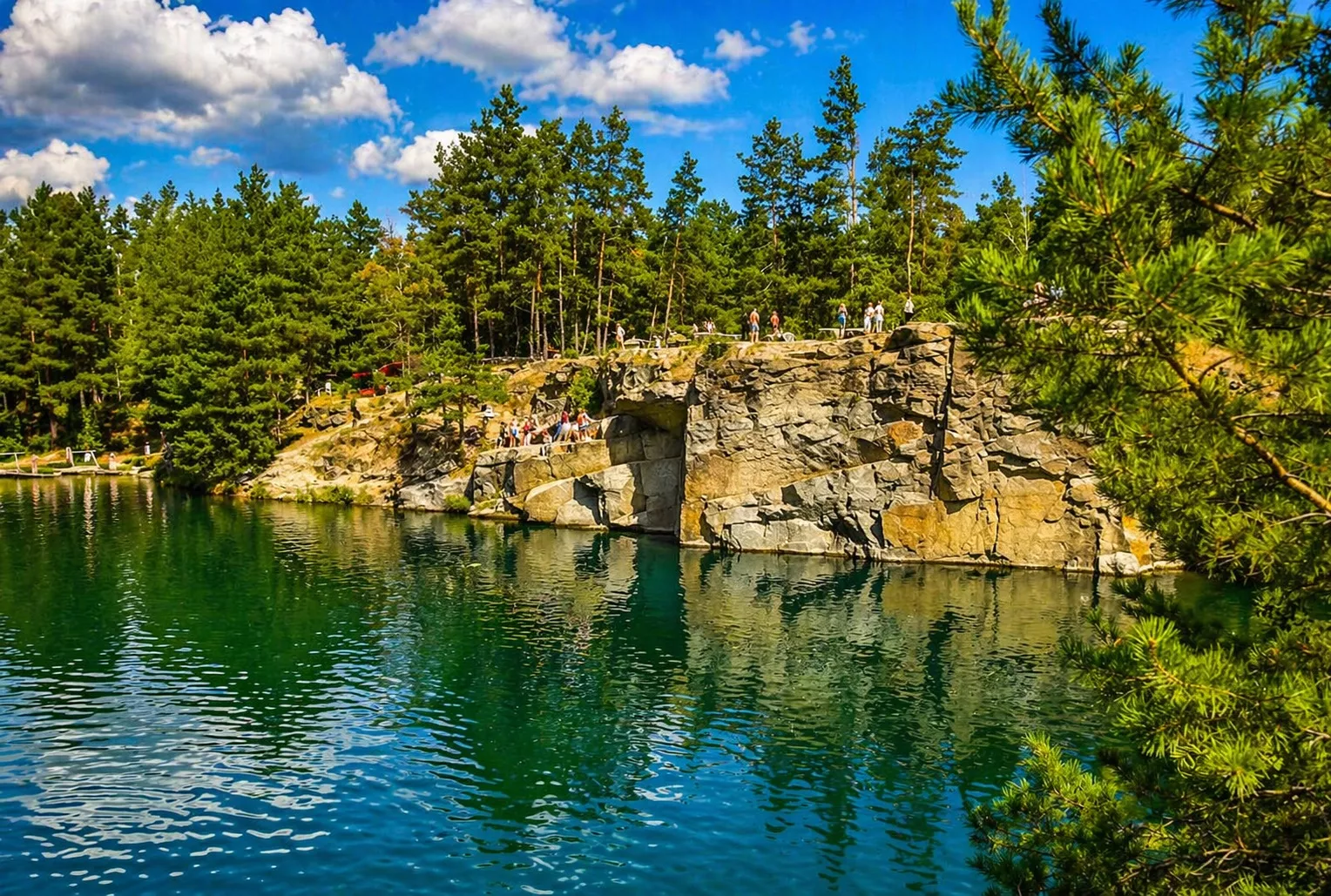
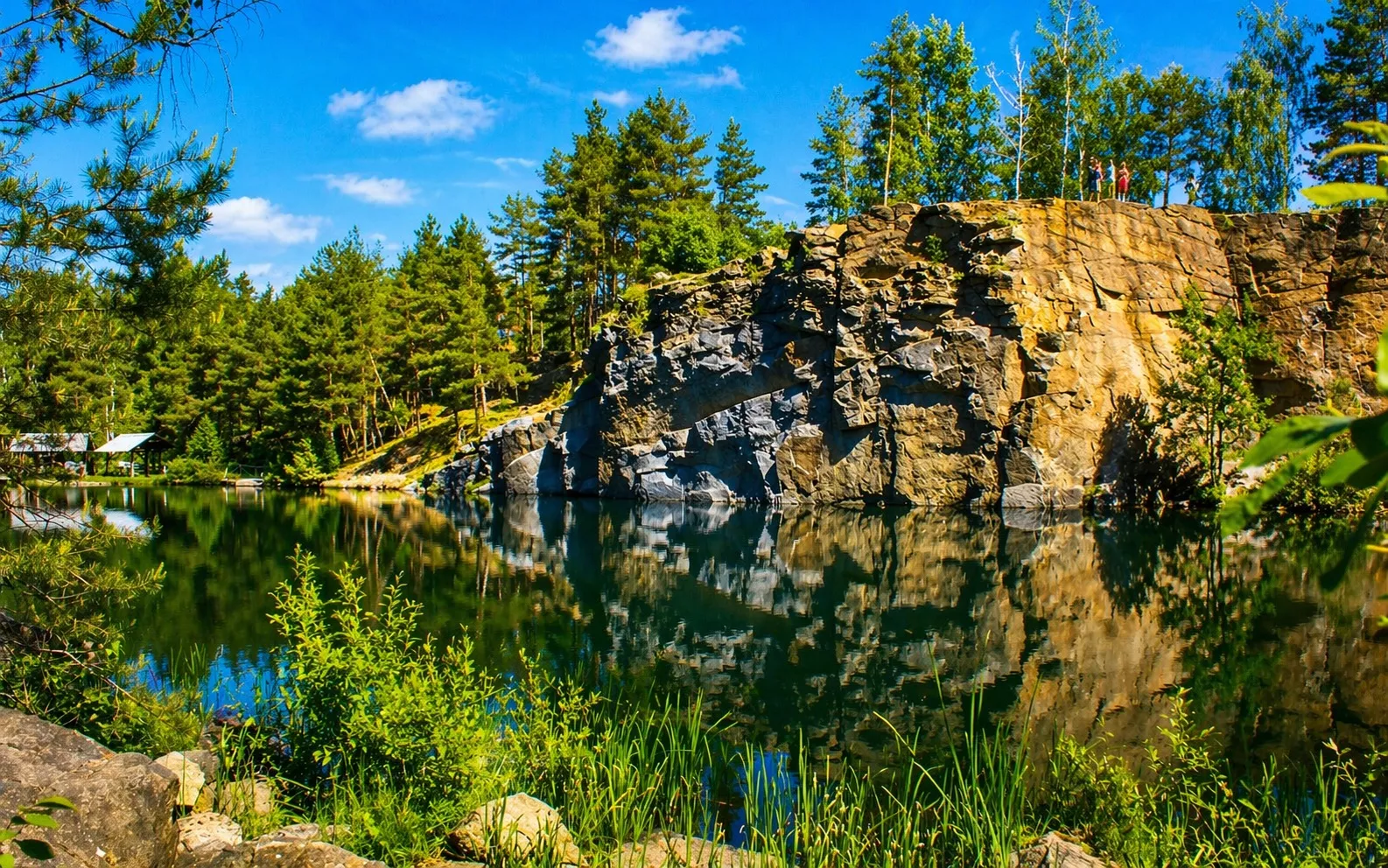
A few important things about this place:
- This is not a single lake, but several flooded quarries side by side. The largest one is on the right side of the entrance to Korostyshiv, surrounded by a rocky shore; there are smaller ones, no less picturesque. Experienced tourists advise visiting several ponds in a single trip.
- Due to the high stone walls (cliffs on three sides, only one gently sloping shore), the small quarry was nicknamed the "canyon". The water here is transparent and has a characteristic blue-turquoise hue.
- In summer, people swim here, sunbathe right on the rocks, pitch tents, and barbecue; there is a cafe on the shore. But precisely because of its popularity in season, it can be very crowded and noisy — so for the sake of peace and quiet and good photos, it is better to go in spring, autumn, or on a weekday morning.
- Caution: the quarry is deep, with rocky ledges — swimming should only be done in proven spots, and diving from the cliffs at unfamiliar points is dangerous.
A bit of history: stone extraction here began back in the 1890s — labradorite, gabbro, and gray granite were mined. When mining in these areas was shut down after the collapse of the USSR, water filled the quarries, thus giving birth to today's canyon-lakes. And Korostyshiv remains to this day one of the main centers of the granite-mining industry of Ukraine. A local legend is also connected with the canyon — about the "phantom bride": a girl who fell in love with a quarry worker, but her father separated the lovers. The canyon has also long been favored by rock climbers (granite walls of varying difficulty) and filmmakers.
What else to see in Korostyshiv: the city of the count, Balzac's friend
Korostyshiv is not just a "city by the quarry". An astonishingly rich history is hidden behind it, at the center of which stands the noble Olizar family, who owned the city from 1565 to 1873, and its most prominent representative — Count Gustav Olizar (1798–1865).
This is a man worthy of an adventure novel. A count-poet and memoirist, he was friends with Alexander Pushkin (who dedicated the poem "To Count Olizar" to him) and with Honore de Balzac — and was even a groomsman (witness) at Balzac's wedding to Ewelina Hanska in Berdychiv in 1850. In 1826, Olizar was arrested in the Decembrist case and imprisoned in the Peter and Paul Fortress, and during the Polish uprising of 1830–1831, he was exiled to Kursk. A separate romantic detail: Olizar himself passionately but unrequitedly loved Maria Raievska (the future wife of the Decembrist Volkonsky) — she rejected him in 1824, and Pushkin's poem is connected precisely with this marriage proposal. Upon returning, Olizar developed Korostyshiv: erecting buildings, collecting a library and paintings, founding a health resort "on the waters" and one of the finest parks of his time.
What of this heritage can be seen today:
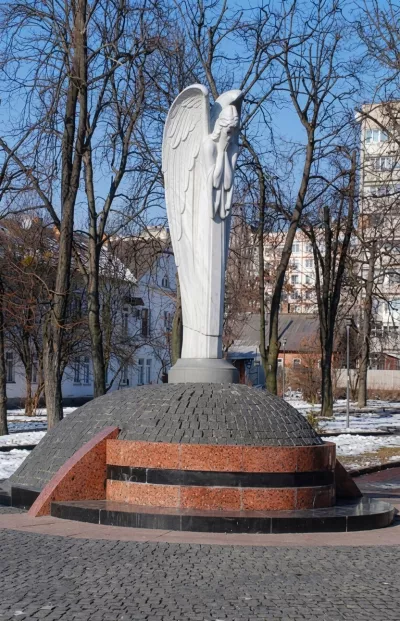
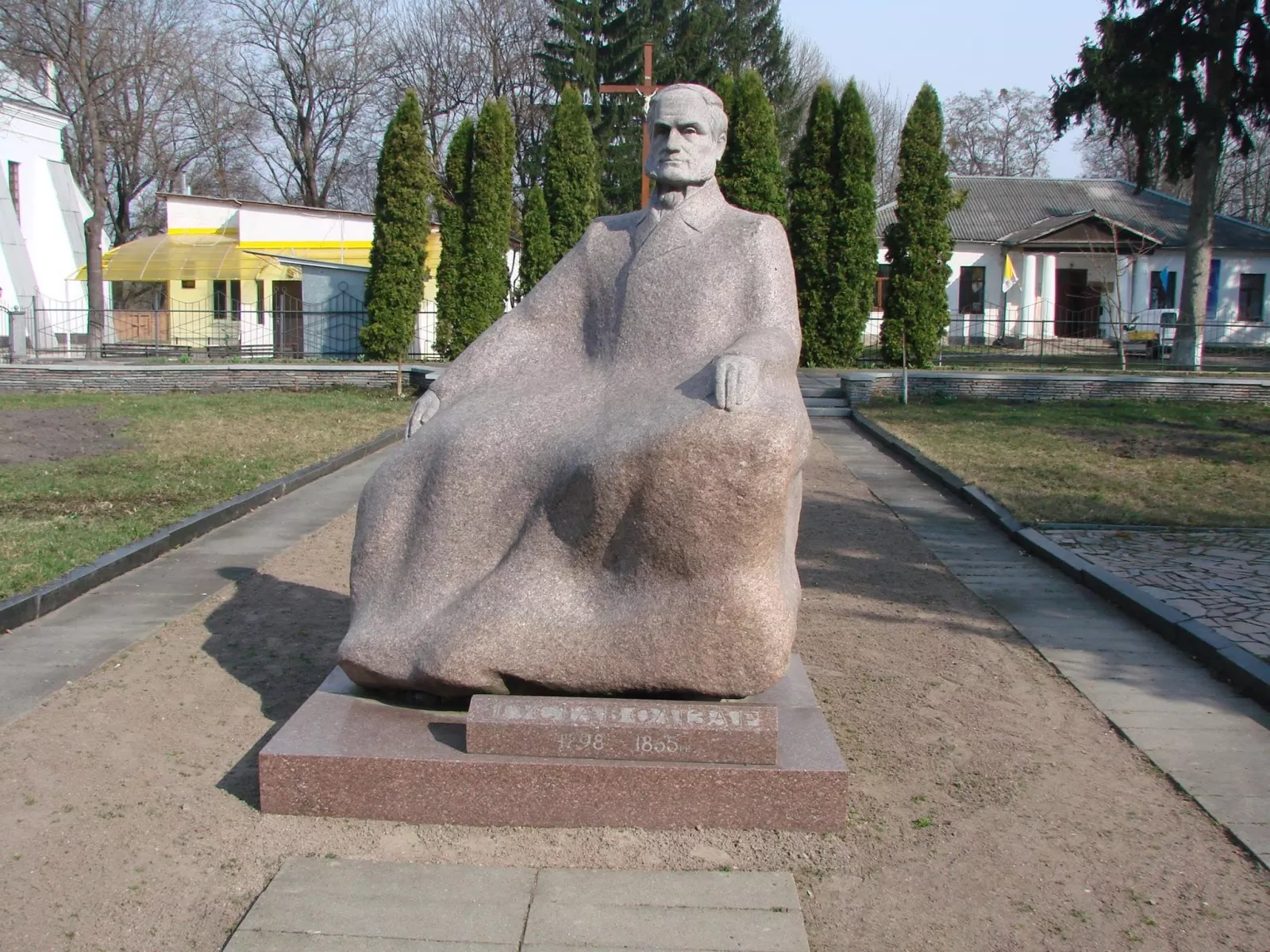
- Monument to Gustav Olizar — near the church and city park, erected in 1999. Its author, sculptor Vitalii Rozhyk, made the monument in an unusual style: it is not a classic figure, but a smooth transition from rough granite mass to a human image — symbolic of the "city on granite".
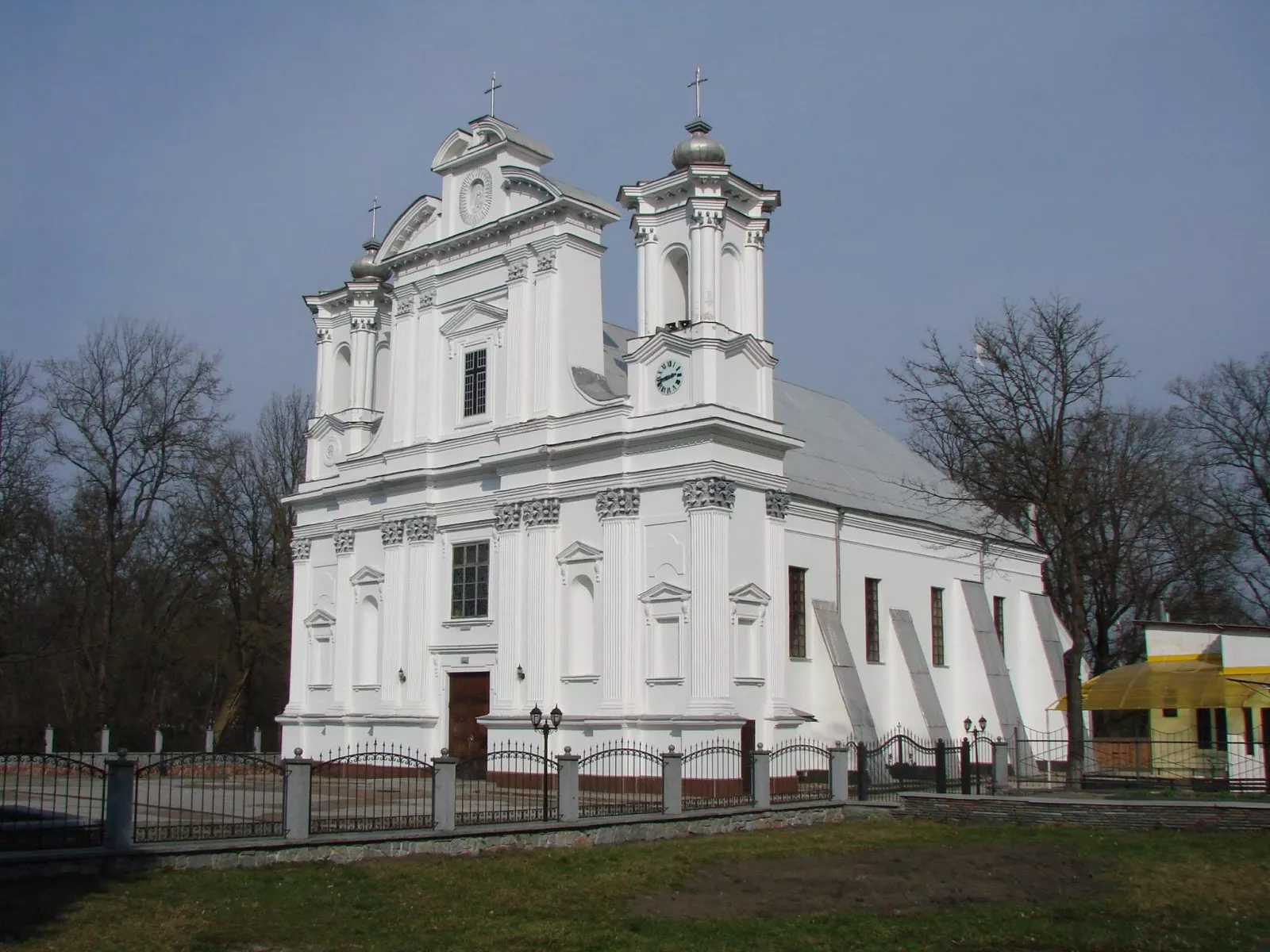
- Church of the Nativity of the Blessed Virgin Mary — the Olizars laid the first wooden temple on this spot back in 1608, and the current masonry Baroque church was built at the end of the 18th century; nearby is the Olizars' family burial chapel.
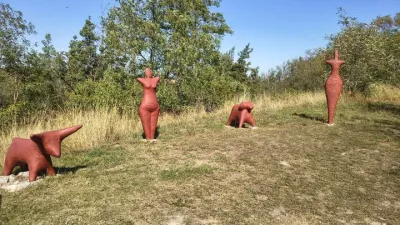
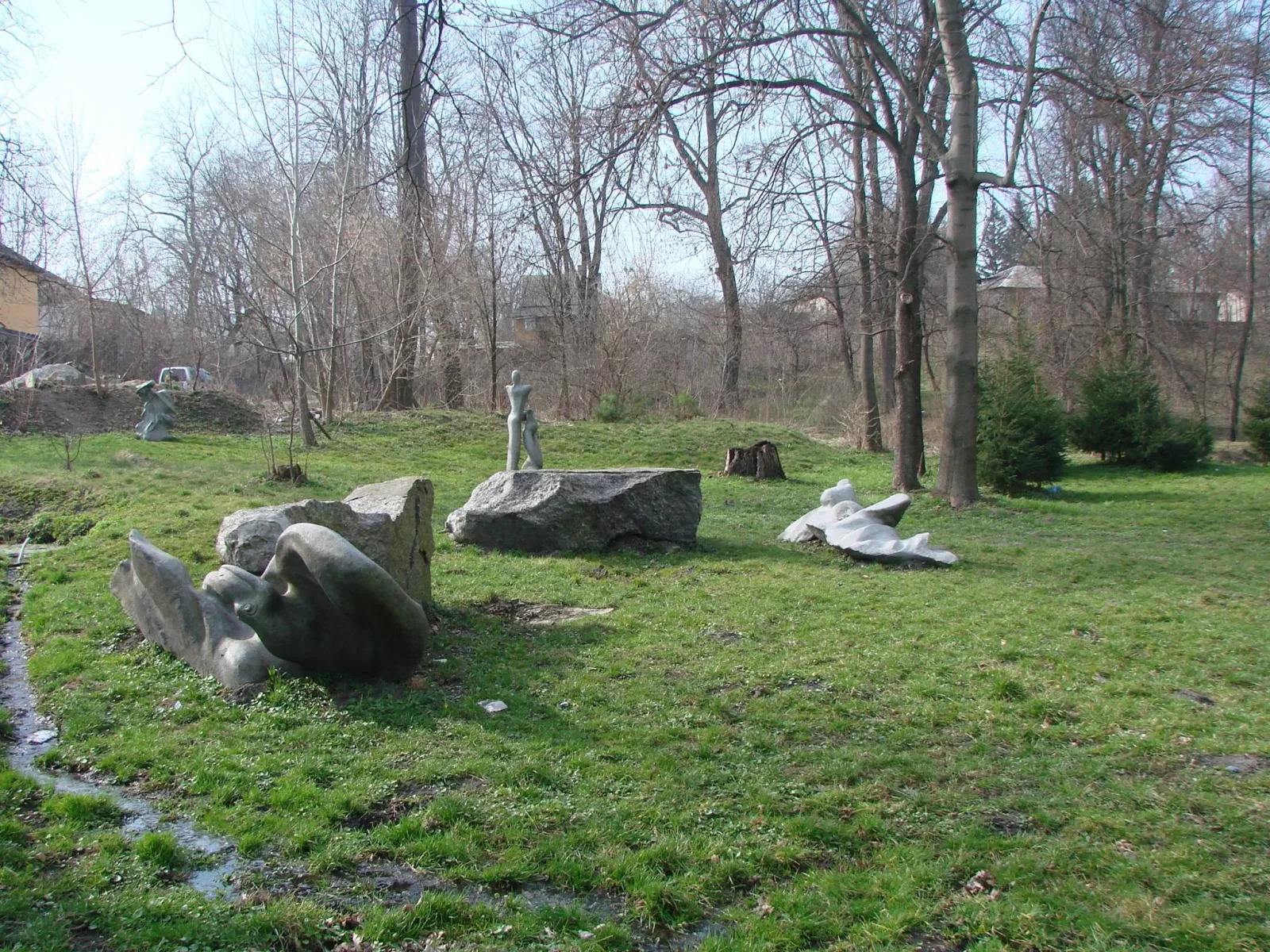
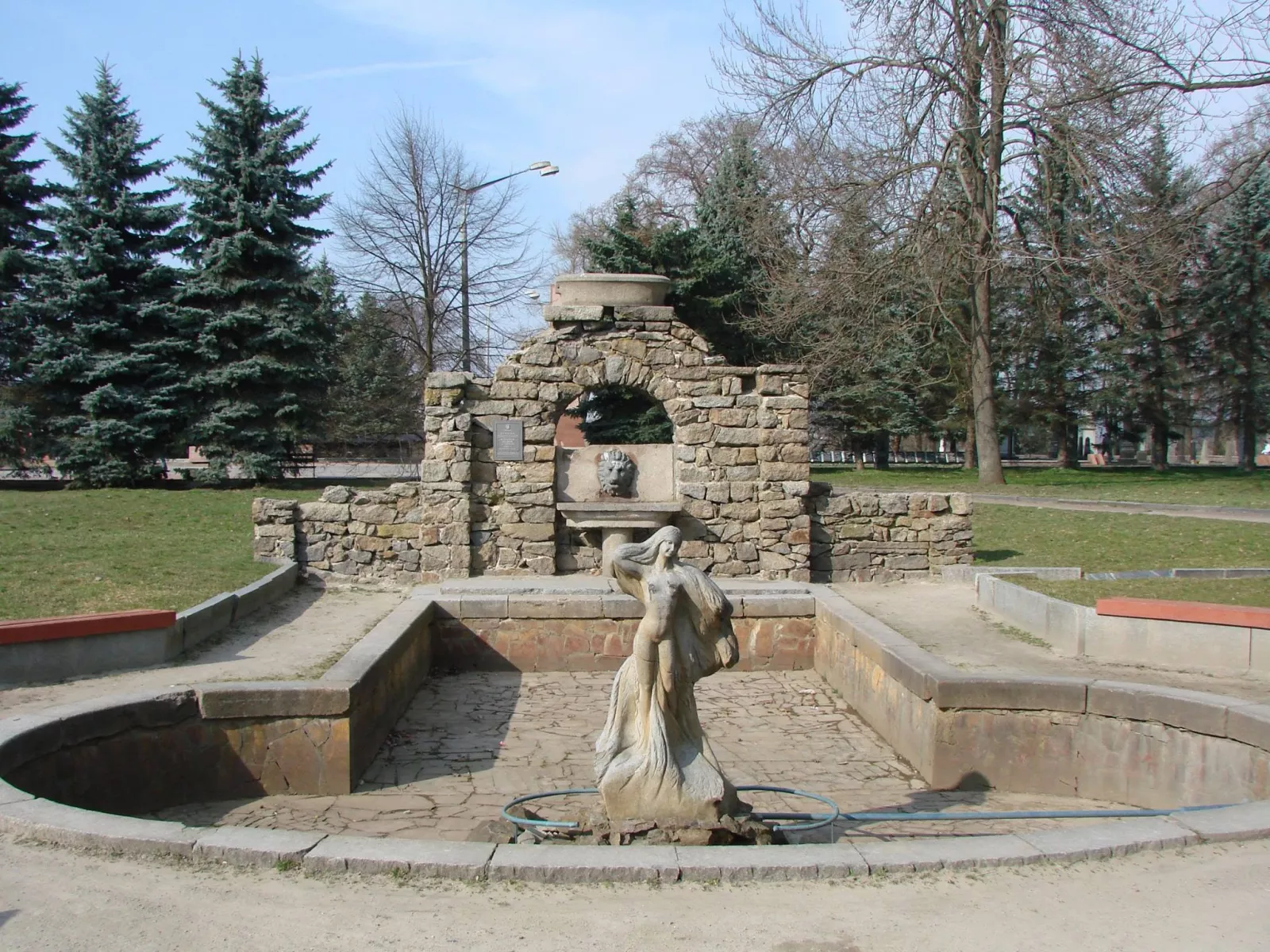
- Vitalii Rozhyk City Park with its "slightly crazy" stone sculptures—animals, mythical creatures, and prominent people. From the former Olizar estate, only a few columns and an old bathhouse with a characteristic "lion's muzzle" have been preserved here.
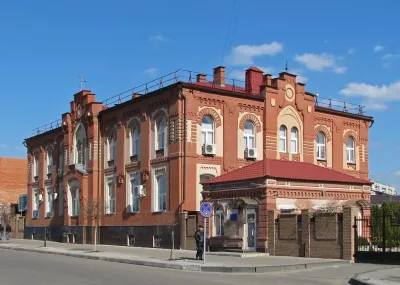
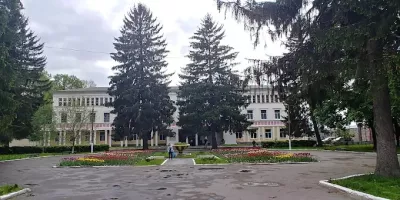
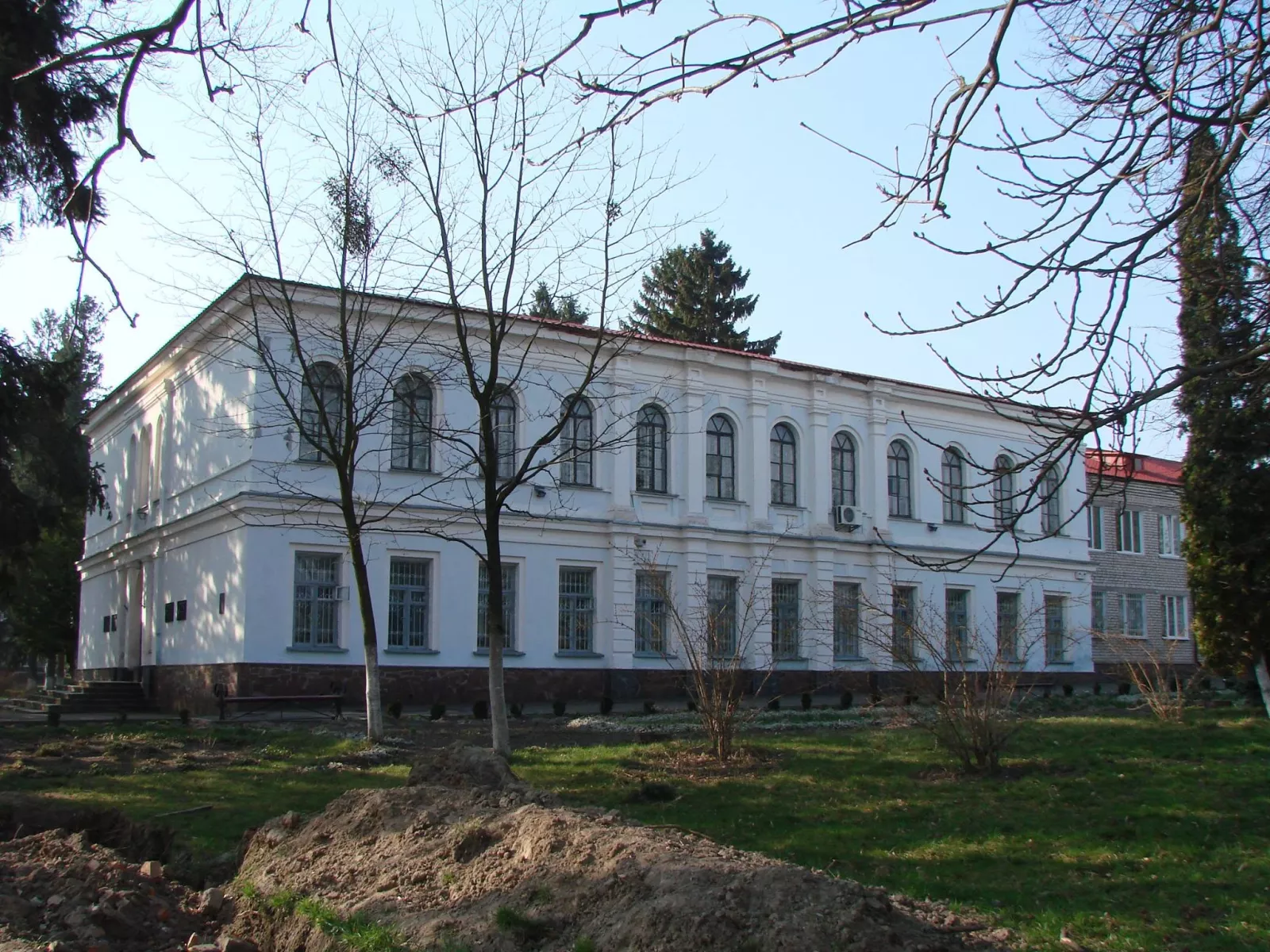
- Teachers' Seminary—Korostyshiv was a notable educational center: one of the famous teachers' seminaries with an exemplary two-grade school attached to it operated here. Its two-story brick building from the 1870s has survived—today it houses the Ivan Franko Pedagogical Professional College.
And Korostyshiv is literally a "city on granite": stone is everywhere here, even the curbs along the streets are made of granite, and a 500-year-old oak tree grows nearby. A beautiful view opens up from the bridge across the Teteriv.
Practical Information
- By car: Korostyshiv lies between Kyiv and Zhytomyr, about 1.5 hours from the capital; however, the highway bypasses the city, so you need to turn off.
- By public transport: Kyiv – Zhytomyr buses run regularly, but you need the specific one that enters Korostyshiv (not all of them do, as the highway passes by). There is practically no regular railway connection from Kyiv to Korostyshiv. From the Korostyshiv bus station to the quarry is about 2 km on foot.
- Advice from experienced tourists: "the main thing is not to get to Korostyshiv, but to get back out of there"—planning the return trip is more important here than the trip itself, because transport is irregular; factor in time for this.
- For rafting: the Zhytomyr – Korostyshiv route (43 km) is designed for 2–3 days with overnight stays; experience, life jackets, and shoes that you don't mind getting wet are required.
- Infrastructure at the canyon is limited (there is a café, but not always)—bring water, food, and a trash bag with you.
Frequently Asked Questions
Where does this route start and end?
From Zhytomyr (slightly below the last of the three city dams) to the city of Korostyshiv; the length is about 43 km.
Why is this section considered extreme?
Here the Teteriv cuts through the granite shield and has rapids, riffles, and drops that are not found on calmer sections of the river.
What is the "Zhytomyr geyser"?
A local humorous name for a powerful water discharge on the left bank before the first railway bridge; there are no real geothermal geysers in Polissia.
Can you swim in the canyon?
Yes, but the quarry is deep and has rocky ledges—swim only in proven spots and do not dive blindly off the cliffs.
How much time is needed to raft the entire route?
Usually 2–3 days with overnight stays on the banks.
Who was Gustav Olizar?
A count, poet, and memoirist, owner of Korostyshiv, friend of Pushkin and Balzac, witness at Balzac's wedding to Ewelina Hańska in Berdychiv in 1850; a monument to him has been erected in the city.
Since when has granite been quarried in Korosten?
Industrial stone mining (labradorite, gabbro, gray granite) began in the 1890s; today the city remains one of the centers of granite mining in Ukraine.